
Bucks Hire Taylor Jenkins As Head Coach
April 30: A week after it was first reported, the Bucks officially confirmed that they have hired Jenkins as their new head coach, announcing the news in a press release.
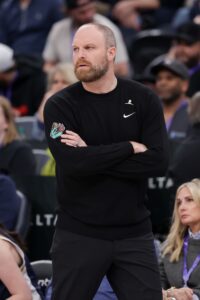 “Taylor’s attention to detail, toughness and communication skills make it clear that he knows how to cultivate a winning culture,” Bucks owners Wes Edens, Jimmy Haslam, Dee Haslam, and Jamie Dinan said in a statement. “We are excited to work together toward our collective goal of sustained success and winning championships.”
“Taylor is an innovative and driven coach who embodies the culture of winning and hard work,” said general manager Jon Horst. “His basketball intellect, comprehensive experience and leadership ability have played a key role in building successful teams throughout his career. He’s the right fit to take our team to the next level.”
April 23: The Bucks are finalizing a contract agreement with Taylor Jenkins and will hire him as their new head coach, sources tell ESPN’s Shams Charania and Ramona Shelburne (Twitter link).
Milwaukee had been in the market for a new coach after the franchise parted ways with Doc Rivers at the end of the regular season in a split that Rivers stated was “100%” his decision. According to Charania (Twitter link), Jenkins was viewed as a top candidate on the coaching market this spring, with the Bucks high on his track record of player development, culture-setting, and competitiveness.
Even before Rivers’ exit, Jenkins was being linked to Milwaukee, and reporting from The Athletic earlier this week indicated that the two sides had met since Rivers’ departure. Charania says the first meeting happened last week in Memphis before Jenkins and the Bucks met again this Tuesday to engage in more serious discussions about the job.
A former assistant in Atlanta and Milwaukee under Mike Budenholzer, Jenkins was hired in 2019 as the head coach of the Grizzlies. He led the team to a 250-214 (.539) regular season record across nearly six full seasons before being dismissed with only about two weeks left in the 2024/25 campaign.
Although Jenkins helped guide the Grizzlies, who had registered consecutive sub-.500 seasons prior to his hiring, back to the playoffs, the team was never able to get over the hump during his time in Memphis. The Grizzlies advanced to the second round in 2022 but experienced first-round exits in 2021 and 2023. Under Jenkins’ replacement, Tuomas Iisalo, Memphis was also bounced in the first round in 2025 and now appears headed for a rebuild.
Whether the Bucks are headed for a retooling phase of their own remains to be seen, but it’s probably safe to assume that Jenkins accepted the position without a guarantee that Giannis Antetokounmpo will still be on the roster when the 2026/27 season tips off.
Bucks co-owner Wes Edens suggested last month that the superstar forward figures to be either extended or traded within the next year, and that was before a late-season disagreement between Antetokounmpo and the team about his knee injury created even more tension between the two sides. For what it’s worth, Giannis later expressed that he wasn’t thrilled about Edens’ comments either.
Once the Bucks formally finalize a deal with Jenkins, it will leave the Bulls and Pelicans as the two teams actively seeking a new permanent head coach, though more clubs could join that list as the spring progresses.
Eastern Notes: Embiid, Grimes, Schröder, Cavaliers
Less than three weeks after an emergency appendectomy, Joel Embiid was the best player on the court as the Sixers staved off elimination in Tuesday’s Game 5 victory at Boston, according to Tony Jones of The Athletic.
“I was proud of him tonight,” said Tyrese Maxey, who finished with 25 points, 10 rebounds and five assists. “To see him go out there under those circumstances and play like that — he was dominant, especially in the second half. He did a great job of inserting himself into the game. He carried us tonight.”
The seven-time All-Star started the game slowly, only converting one of his first seven field goal attempts. However, he made 11 of his next 16 attempts, finishing 12-of-23, and went 9-of-10 from the foul line for a total of 33 points. Embiid also contributed eight assists and four rebounds, but most importantly he was a mismatch down low and the Celtics had no answers to stop him, Jones writes.
“I don’t want to go home,” Embiid said. “That’s one of the reasons I’m glad we won tonight. Because I didn’t want to go home and look back this summer and wonder what could have happened if I were healthy. I’ve dealt with a lot of stuff in my career. I want to give this all that I can.
“We were better defensively tonight than we had been. It’s a little easier when you’re making shots. When I started the game, me taking jumpers wasn’t working. I had to adjust. I wanted to impose myself and get into the paint a little bit more. When I’m playing one-on-one, I feel good about my chances of scoring on anyone in this league.”
As Embiid alluded to, Philadelphia held Boston to just 97 points on Tuesday after the Celtics blitzed the 76ers 128-97 in Game 4.
The 32-year-old center is probable to suit up for Thursday’s Game 6 in Philadelphia, per Adam Aaronson of PhillyVoice.
Here’s more from around the Eastern Conference:
- Boston’s bench had outplayed Philadelphia’s reserves through the first four games of their first-round series, but Sixers guard Quentin Grimes helped flipped that script in Game 5, writes Gina Mizell of The Philadelphia Inquirer. The impending free agent scored a highly efficient 18 points in 24 minutes while playing strong perimeter defense, Mizell notes. “Obviously, he gave us a great lift on both ends,” head coach Nick Nurse said of Grimes on Wednesday. “ … I’m glad he kind of looked more like himself.“
- Veteran point guard Dennis Schröder didn’t play much in the first four games of the Cavaliers‘ matchup with Toronto, averaging just 11.3 MPG, but he spoke up at halftime of Game 5 after Cleveland gave up 74 points in the first half and then played the entire fourth quarter to help lead the team to a comeback victory, as Jamal Collier of ESPN details. The 32-year-old German urged his teammates to bring more energy and assertiveness and to play through big men Evan Mobley and Jarrett Allen, according to Collier. Schröder had 19 points in 21 minutes, including 11 in the final period as the Cavs outscored the Raptors 25-17.
- While the Cavaliers showed some promising signs in Tuesday’s win, particularly in the fourth quarter, the fact that they’ve struggled for most of the the past three games may not bode well for the rest of the playoffs, argues Jason Lloyd of The Athletic. According to Lloyd, the Cavs will have to do more than eke out a home win against a banged-up Raptors team to prove their mettle, which has been repeatedly questioned the last few years following early postseason exits.
Suns Rumors: Brooks, Gillespie, Goodwin, Williams, Booker, Izzo
The Suns are interesting in signing forward Dillon Brooks to a contract extension this offseason, reports Jake Fischer of The Stein Line (Substack link). Brooks, who will be entering the final year of his current deal, would be eligible to sign for up to four years and a little over $125MM.
However, the Suns are unlikely to go all the way up to that maximum for Brooks, according to Fischer, who explains that the team is cognizant of the fact that a new deal would begin in the Canadian’s age-32 season. And while Brooks averaged a career-high 20.2 points per game in 2025/26, his efficiency was “spotty” and his scoring average was buoyed by the fact that Jalen Green missed significant time due to injury, Fischer notes.
For his part, Brooks sounds enthusiastic about sticking with the Suns, expressing at the end of the season that he wants to “run it back” with his teammates and is optimistic about the club taking another step forward next year, per Duane Rankin of The Arizona Republic.
“I’m just happy that (Suns general manager Brian Gregory) and the Suns traded for me and believed in me and understood how I work,” Brooks said. “And what I can do for the team and just let me go and be myself and I’m happy for that.”
Phoenix will also be facing a handful of free agent decisions this summer, and John Gambadoro of Arizona Sports 98.7 (Twitter links) expects the team’s top two priorities on that front to be re-signing guards Collin Gillespie and Jordan Goodwin. Addressing readers’ inquiries about how Mark Williams fits into the Suns’ offseason plans, Gambadoro followed up to clarify that he believes the front office wants to retain the restricted free agent center as well, but that it may be behind new deals for Gillespie and Goodwin on the club’s to-do list.
We have more on the Suns:
- Speaking to the media on Thursday, Suns owner Mat Ishbia sought to shut down any potential offseason Devin Booker trade rumors before they begin, as Rankin relays (Twitter video link). “Devin Booker’s our franchise player,” Ishbia said. “I love Devin Booker. Devin Booker loves to be here. Our coach loves Devin Booker. Our GM loves Devin Booker. Devin Booker’s going to be here. Devin Booker’s going to lead us to a championship here in Phoenix, that’s what he’s going to do. … The national media just says stuff to say stuff sometimes. Sometimes I like to respond and sometimes I don’t, because it’s just ridiculous, but Devin Booker’s not getting traded.”
- Ishbia also said during today’s presser that the comments Tom Izzo made about the Suns’ coaching job several weeks ago were “misunderstood” (Twitter video link via Rankin). Izzo suggested during a TV interview that he was offered Phoenix’s head coaching position in 2025 before the team hired Jordan Ott, but Ishbia disputed that claim while noting that he talks to the longtime Michigan State coach “about everything, all the time.”
- Within a breakdown of Phoenix’s upcoming offseason for The Arizona Republic, Rankin writes that upgrading at power forward should be one of the front office’s primary goals in the coming months after the team ranked 27th in defensive rebounding rate in 2025/26. Rankin also wonders if the Suns will remain comfortable moving forward without a true point guard after only getting a look at the Booker/Green duo for 27 games together.
Lakers Relocating G League Team To Coachella Valley
The South Bay Lakers will become the Coachella Valley Lakers for the 2026/27 season, according to a press release from the team.
The Lakers‘ G League affiliate, which has played its games in recent years at the UCLA Health Training Center (also the NBA team’s practice facility) in El Segundo, will call the Greater Palm Springs region home beginning next season and will host games at Acrisure Arena in Palm Desert.
“Moving the Lakers G League team to the Coachella Valley is an incredible opportunity for the organization,” Lakers president of business operations Lon Rosen said in a statement. “The Lakers have had a strong presence in the region for decades, from the Showtime Lakers holding training camp in the 1980s to more recent preseason games. We are looking forward to extending that experience and becoming a staple for Coachella Valley sports and entertainment. Acrisure Arena is the perfect modern venue that provides an incredible fan-first experience, while ensuring players have the premium facilities and space they need on game day.”
Generally, when an NBA team relocates its G League affiliate, the goal is to move it closer to where the NBA franchise operates, which makes it easier to shuttle players back and forth between the two squads and for G League players to have access to NBA staffers and amenities.
However, the South Bay Lakers’ home arena was one of the smallest buildings in the G League, with a reported seating capacity of 750, whereas the team’s new home in Palm Desert is a newer arena with a far greater capacity — it opened in December 2022 and can hold 11,000+ fans.
As Dan Woike of The Athletic points out (via Twitter), the Lakers’ NBA and G League teams still won’t be too far apart geographically, and it’s a good opportunity for the franchise to expand their market, engage with more fans, and add a new revenue stream.
In their last season as the South Bay Lakers, the squad posted a 26-10 regular season record and earned the top seed in the NBAGL’s Western Conference. However, South Bay was eliminated in the conference finals by the Stockton Kings.
Hornets’ Moussa Diabate Wins 2025/26 Hustle Award
Hornets big man Moussa Diabate is the winner of the NBA’s Hustle Award for the 2025/26 season, the league announced today.
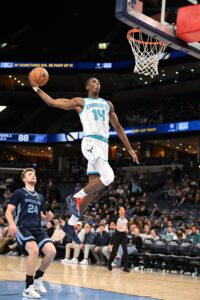 The Hustle Award, which debuted in 2017, isn’t voted on by media members, players, or executives like other end-of-season awards. It’s based on a statistical formula that utilizes several “hustle” stats and is designed to recognize players whose efforts might not appear in the box score but “impact winning on a nightly basis.”
Among qualified players, Diabate ranked first on a per-minute basis in offensive box outs, fourth in screen assists, eighth in offensive loose balls recovered, 10th in contested two-point shots, and 11th in defensive box outs and contested three-point shots.
Diabate set new career highs in games played (73), starts (47), and minutes per game (26.0) in 2025/26, helping provide some stability at the five for a Hornets team whose center position looked like a major question mark entering the season following the offseason trades of Mark Williams and Jusuf Nurkic. The 24-year-old was among the Hornets who played key roles in the team’s improvement from 19 wins in 2024/25 to 44 victories this season.
Hawks guard Dyson Daniels was the runner-up for the Hustle Award, per the NBA, with 2025 winner Draymond Green of the Warriors finishing in third. Grizzlies rookie Cedric Coward and Knicks swingman Josh Hart rounded out the top five.
Fischer’s Latest: Snyder, McCollum, Kennard, Bulls, Morant
After leading the Hawks on a 19-5 run to close out the season after the team traded away star point guard Trae Young, head coach Quin Snyder is believed to have “strong” front office support for a new contract, according to Jake Fischer of The Stein Line (Substack link), who notes that Snyder has one more year left on his current deal. Extension talks between Snyder and the Hawks are expected to happen soon after the team’s season ends, Fischer adds.
CJ McCollum, who will be an unrestricted free agent, was identified as a possible extension candidate shortly after he was acquired by Atlanta in January. Nothing that has happened since then has changed that, with Fischer suggesting there’s mutual interest between the veteran guard and the Hawks in working out a new deal this summer.
Here are a few more rumors from around the NBA, via Fischer:
- Although the Lakers could have a significant amount of cap room this summer, that will depend in large part on what happens with their own free agents. It remains to be seen whether LeBron James will be back, but Austin Reaves will almost certainly require a lucrative new deal, and according to Fischer, sharpshooter Luke Kennard is increasingly viewed as a player Los Angeles would like to re-sign. Kennard will only have Non-Bird rights, which would allow the Lakers to offer a starting salary worth up to $13.2MM (120% of his current $11MM salary), though they could theoretically go higher than that using cap room or – if they operate as an over-the-cap team – the non-taxpayer mid-level exception.
- Restricted free agent centers like Jalen Duren of the Pistons, Walker Kessler of the Jazz, and Mark Williams of the Suns are expected to try to generate interest from Chicago, Fischer reports. As he explains, the Bulls project to have the most cap room of any NBA team, so they have the means to make a big-money offer to an RFA center — the threat of an offer sheet could be the best way for a player like Duren, Kessler, or Williams to gain leverage and maximize his earnings, either with his current team or an outside suitor like Chicago.
- The Jazz aren’t viewed as a plausible landing spot for Ja Morant this offseason, so don’t expect him to reunite with his former Grizzlies teammate Jaren Jackson Jr., Fischer writes. However, Fischer has heard “predictive murmurs” that the trade market for Morant should be more active in the summer than it was in February, when league-wide interest in the star guard was “extremely minimal.”
Hoops Rumors Front Office Subscriber Chat Transcript: 4/30/2026
Hoops Rumors’ Arthur Hill held a live chat today exclusively for Trade Rumors Front Office subscribers. Topics included Anthony Davis' future with the Wizards, the depleted Timberwolves' chances to close out the Nuggets, Kawhi Leonard's next team, potential buyer's remorse regarding Kevin Durant and more!

Western Notes: Dosunmu, Champagnie, Martin, Kawhi, Pelicans
Already missing Donte DiVincenzo (Achilles tear) and Anthony Edwards (knee bone bruise), the Timberwolves are in danger of playing without two more key members of their backcourt in Game 6 on Thursday. Having already listed Bones Hyland as questionable due to left knee soreness, Minnesota has now added Ayo Dosunmu to its injury report too. Dosunmu is questionable due to right calf soreness (Twitter link).
Hyland set new personal series highs by playing 23 minutes and scoring 15 points in Game 5, while Dosunmu played a major role in the Wolves’ two home wins in Games 3 and 4, scoring a total of 68 points on 23-of-32 shooting (71.9%) in those victories.
Missing one or both players would be a major problem for the Wolves, who would likely have to lean more heavily on Mike Conley, Terrence Shannon Jr., and Kyle Anderson as they try to win one more game to close out their series vs. Denver.
[UPDATE: Hyland has been upgraded to available.]
Here are a few more notes from around the Northwest:
- Spurs wing Julian Champagnie, who hasn’t missed a game since March 2024 and made 68 starts during the regular season, showed in Game 5 why he has become such an important role player, per Tom Orsborn of The San Antonio Express-News (subscription required). After scoring in single digits in each of the first four games of the series, Champagnie had 11 points in the first quarter – and 19 overall – in Tuesday’s series-clinching victory. “All series they made an emphasis on trying to limit his touches, not let him get any good looks,” teammate Stephon Castle said. “So when he finally got the ones he was deserving, he knocked them down. I felt like he was doing all the little things all series and I thought he deserved to start a game like that.”
- Mavericks wing Caleb Martin has new representation, having signed with CAA, the agency announced (via Twitter). Martin will become extension-eligible this offseason as he enters the third season of the four-year, $35MM+ contract he signed in 2024, but after averaging a career-low 3.9 points per game in a limited role in 2025/26, he’s an unlikely candidate for a new deal at this time.
- What could a Kawhi Leonard trade look like if the Clippers decide to move their star forward this summer? ESPN’s Zach Kram and Andre Snellings offer up four hypothetical scenarios involving Leonard, with Bobby Marks evaluating which package L.A. would be most likely to accept.
- The Pelicans are hiring Kurt Joseph away from Nebraska to serve as their new director of strength and conditioning, according to Amie Just of the Omaha World-Herald (subscription required). Previous reporting indicated that the Pelicans are making significant organizational changes this offseason, with several openings in the medical and performance department.
Raptors Notes: Ingram, Barnes, Barrett, Murray-Boyles
The Raptors led Game 5 in Cleveland by as many as 12 points on Wednesday, but couldn’t hang on for the victory and will head back to Toronto down 3-2 and looking to stay alive in the series. Most concerning for Toronto now is the status of two of the team’s stars heading into that do-or-die game.
As Jamal Collier of ESPN details, forward Brandon Ingram exited Wednesday’s contest in the second quarter due to right heel inflammation, an issue that bothered him near the end of the regular season, forcing him to miss three games between March 23 and April 1.
“He reaggravated the heel on one play,” Raptors head coach Darko Rajakovic told Collier and other reporters after the loss. “We tried to re-tape him. At halftime, he tried to activate to see if he could be ready for the second half, and he was not ready to come and play in the second half. (Thursday) we’ll know more when we do more evaluations.”
Ingram hasn’t been at his best against the Cavs in the first round, making just 19-of-58 shots from the floor (32.8%), including a dismal 14-of-45 two-pointers (31.1%). Still, he was the Raptors’ leading scorer during the regular season, and not having him on the floor to attract defensive attention limits the club’s offensive ceiling.
“We needed him out there on the floor,” Raptors forward Scottie Barnes said after Game 5. “The way they guard him, his shot-making ability when he’s out there on the floor. He makes big plays for us on the defensive end as well.”
For his part, Barnes took a shot to his quad during the second quarter on Wednesday and admitted in his post-game session that it was bothering him for the rest of the night, even though he was able to stay on the court.
“Obviously, it had some effect,” Barnes said, per Collier. “I couldn’t play with that same pace that I was trying to play with. Had a little limp out there, but I was trying to push through it, trying to win the game. I can’t do nothing about it. Just got to get some recovery, let it rest a little bit and be ready Friday.”
We have more on the Raptors:
- With Ingram struggling, RJ Barrett has led Toronto in scoring in the first round, averaging 24.4 points per game on .535/.462/.581 shooting. As Josh Lewenberg of TSN.ca writes, Barrett has been huge for the Raptors in the series, having also taken on a wide range of defensive assignments that include guarding bigger players like Evan Mobley and Jarrett Allen or scorers like James Harden and Donovan Mitchell. Both Barnes and Jamal Shead described Barrett’s playoff performance as “big-time,” with Barnes lauding his defensive versatility and Shead expressing confidence in his shot-making. “There’s not a shot that he takes in those fourth quarters that we’re like, oh, that’s not RJ’s shot,” Shead said. “We’re cool with it.”
- 2025 lottery pick Collin Murray-Boyles has been a revelation for the Raptors in the playoffs, averaging 15.2 points, 6.8 rebounds, and 2.4 assists per game on 67.3% shooting. While Murray-Boyles was overshadowed during the regular season by rookies like Cooper Flagg, Kon Knueppel, and VJ Edgecombe, he’s proving that he’s another gem in what looks like an increasingly strong 2025 draft class, writes Eric Koreen of The Athletic.
- In case you missed it, Raptors veteran swingman Garrett Temple finished fourth in Teammate of the Year voting, earning 46 first-place votes from his peers.
John Wall Becomes President Of Basketball Ops At Howard
Howard University is hiring former NBA star John Wall as its president of basketball operations, reports Shams Charania of ESPN.
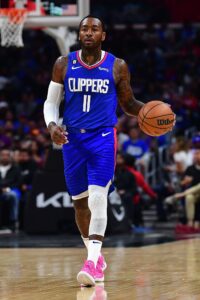 While it has become increasingly common in recent years for active and former NBA players to take on ceremonial general manager or assistant GM positions with their respective alma maters, this doesn’t appear to be merely a figurehead role for Wall.
The former guard, who spent his lone college season at Kentucky, has talked in the past about his desire to work in an NBA front office and expressed interest in taking on this sort of position at Howard back in January after serving as the team’s honorary captain for a game, per Charania.
As Charania details, while his hiring hasn’t yet been formally announced by the school, Wall has already been “hands-on” in his new role, taking part in meetings and evaluating recruits and potential targets in the transfer portal. He’s working with general manager Daniel Marks and head coach Kenny Blakeney in shaping the program’s “overall strategic vision,” Charania adds.
The first overall pick in the 2010 draft, Wall spent 13 seasons in the NBA, though he missed two full years during that time — one due to an Achilles tear and one because he reached an agreement with the Rockets not to report to the team. The longtime Wizards star earned five consecutive All-Star nods during his time in D.C. and also made an All-NBA third team in 2017 and an All-Defensive second team in 2015.
Wall, who officially announced his retirement last August, has been working as an analyst for Amazon Prime Video during the 2025/26 season.