
As we explain in our glossary entry on veteran contract extensions, rookie scale extensions used to be the most common form of contract extension in the NBA. However, recent Collective Bargaining Agreements have loosened the rules on eligibility for veteran extensions and made them more financially advantageous, especially for players who don’t expect mega-deals.
As a result, we’ve seen a substantial bump in veteran contract extensions in recent seasons. In every league year since 2021/22, at least 17 players have signed veteran extensions, including 27 in 2024/25. We’re not quite up to 17 yet in ’25/26, but there’s plenty of time for this season’s list to continue to grow, right up until June 30, 2026.
[RELATED: 2025/26 NBA Contract Extension Tracker]
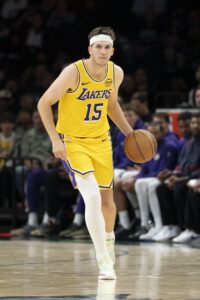 Certain extension-eligible players, such as Austin Reaves and Coby White, may prefer to wait until they reach free agency to sign a new contract, since their maximum extension would be far less than the maximum contract they’d be eligible to earn on the open market.
The maximum starting salary a player can receive in a veteran extension is up to 140% of his current salary. A player on a more modest contract can receive a maximum starting salary worth up to 140% of the NBA’s estimated average salary.
In 2025/26, 140% of the estimated average salary would work out to a $19,418,000 salary in the first year of a contract extension. A player who signs an extension that fits that bill could get up to four years and approximately $87MM. That’s far below market value for a player like Reaves, who turned down that offer from the Lakers at the start of the 2025 offseason.
Pacers wing Aaron Nesmith is an example of a player who did sign that sort of extension (starting at $19,418,000) in recent months, though his new deal is just for two years instead of four.
Now that the regular season is underway, the group of veterans eligible for contract extensions has shrunk, since players with more than one year left on their contracts aren’t permitted to sign an in-season extension. But there are still a number of veterans in the final year of their respective contracts who remain eligible for extensions right up until the last day of the current league year (June 30).
Listed below are the players who meet the criteria for a veteran extension. Players who were recently traded can be extended, but they have to wait for six months after the trade to sign a contract longer than four total years (including the current season) with a first-year bump of more than 20% or a subsequent annual raise exceeding 5%. If a player below is noted as having “limited” eligibility until a certain date, that’s why.
Once a player regains his full extension eligibility, he becomes eligible to sign an extension of up to five total years (including the current season) with a 40% first-year raise (or 40% of the estimated average salary).
Additionally, extension-eligible players with a player or team option for 2026/27 would have to eliminate that option year as part of an extension agreement in order to meet the necessary criteria.
Here’s the full list of veterans eligible for contract extensions during the 2025/26 season:
Atlanta Hawks
- Mouhamed Gueye
- 2026/27 team option must be declined.
- CJ McCollum
- Limited eligibility.
- Gabe Vincent
- Limited eligibility.
Boston Celtics
- Nikola Vucevic
- Limited eligibility.
- Jordan Walsh
- 2026/27 team option must be declined.
Brooklyn Nets
Charlotte Hornets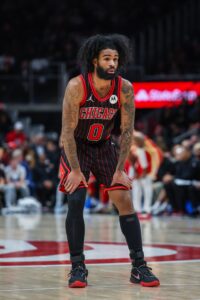
- Coby White
- Limited eligibility.
Chicago Bulls
- Zach Collins
- Leonard Miller
- Limited eligibility.
- 2026/27 team option must be declined.
- Nick Richards
- Limited eligibility.
- Collin Sexton
- Limited eligibility.
- Anfernee Simons
- Limited eligibility.
Cleveland Cavaliers
- Keon Ellis
- Limited eligibility.
- Craig Porter Jr.
- 2026/27 team option must be declined.
- Dean Wade
Dallas Mavericks
- Khris Middleton
- Limited eligibility.
- Dwight Powell
Denver Nuggets
- Jalen Pickett
- 2026/27 team option must be declined.
Detroit Pistons
- Kevin Huerter
- Limited eligibility.
Golden State Warriors
- Draymond Green
- 2026/27 player option must be declined.
- Kristaps Porzingis
- Limited eligibility.
Houston Rockets
- None
Indiana Pacers
- None
Los Angeles Clippers
Los Angeles Lakers
- Rui Hachimura
- Maxi Kleber
- Austin Reaves
- 2026/27 player option must be declined.
Memphis Grizzlies
- GG Jackson II
- 2026/27 team option must be declined.
Miami Heat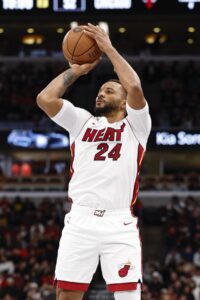
- Norman Powell
- Terry Rozier
- Andrew Wiggins
- 2026/27 player option must be declined.
Milwaukee Bucks
- Andre Jackson Jr.
- 2026/27 team option must be declined.
Minnesota Timberwolves
- Ayo Dosunmu
- Limited eligibility.
- Julian Phillips
- Limited eligibility.
- 2026/27 team option must be declined.
New Orleans Pelicans
- None
New York Knicks
Oklahoma City Thunder
- Luguentz Dort
- 2026/27 team option must be declined.
- Kenrich Williams
- 2026/27 team option must be declined.
Orlando Magic
- None
Philadelphia 76ers
- None
Phoenix Suns
- None
Portland Trail Blazers
Sacramento Kings
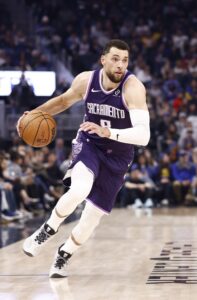 Zach LaVine
- 2026/27 player option must be declined.
San Antonio Spurs
- Harrison Barnes
- Julian Champagnie
- 2026/27 team option must be declined.
- Kelly Olynyk
Toronto Raptors
- Trayce Jackson-Davis
- Limited eligibility.
- 2026/27 team option must be declined.
Utah Jazz
Washington Wizards
- Trae Young
- Limited eligibility.
- 2026/27 player option must be declined.
If I was a gambling man, I would BET Rozier doesn’t get extended
Was thinking as I entered his name that it’s pretty hard to imagine a player less likely to get an extension.
Will be fascinating to see what happens with Draymond, would like to see your analysis on that Luke.
If I’m the Warriors FO, I’m talking with Draymond and his reps and trying to build a long-term plan that works for everyone.
Warriors may want him to opt in next year, to line up his FA with Curry and Butler and maximize their ‘27 cap space in hopes of signing a star.
Or the team might prefer a three-year deal where he declines his $27.7M option for next year and signs a 3/$60M extension. Getting Draymond on a lower figure for next year would open up ~$9M apron breathing room if they want to acquire an FA via S and T or use a taxpayer exception to sign an FA.
Draymond is also a sneaky trade-and-extend candidate. If the team doesn’t foresee offering him a market-value deal next time he hits FA, it makes sense for them to help Draymond find his next home now, while he’s healthy and playing great defense. That same 2/44M or 3/$60M extension structure could be pre-negotiated with the Pistons, with Tobias Harris working perfectly as matching salary.
Sending out Draymond, Kuminga, Moody, and Hield (likely to 3-4 different teams) allows the Warriors to take in a max salary at the deadline. It’s complicated but it’s possible.