
2026 NBA Offseason Preview: Boston Celtics
After winning their 18th title two years ago, the Celtics decided to run back the same core roster to try to defend their title in 2024/25, operating over the restrictive second tax apron to do so. A mysterious ailment caused Kristaps Porzingis' significant issues in the second half of that campaign, but Boston still entered last year's playoffs with an excellent 61-21 record and the team was considered to be on a short list of legitimate contenders.
After beating Orlando in a physical first-round matchup, the Celtics were upset by the 51-31 Knicks in a six-game second-round series. Disaster struck in Game 4, when star forward Jayson Tatum tore his Achilles tendon in the fourth quarter of a game Boston ultimately lost to fall behind 3-1 in the series.
Boston's unwillingness to be further hamstrung by the second apron led to the moves president of basketball operations Brad Stevens made last summer, when he traded Jrue Holiday's long-term deal for the expiring salary of Anfernee Simons (we'll circle back to him shortly) and sent Porzingis to Atlanta in a deal that brought back Georges Niang, who was subsequently flipped to Utah.
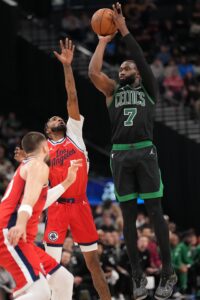 The cost-cutting maneuvers, combined with Tatum's injury, contributed to an outside perception that the Celtics wouldn't necessarily be upset if 2025/26 ended up being a "gap year." They were projected to win 42.5 games by sportsbooks, yet they wound up going 56-26, far exceeding external expectations and earning Joe Mazzulla a Coach of the Year award.
Boston's season was highlighted by the play of Jaylen Brown, who thrived as the primary offensive option with Tatum sidelined; the emergence of Neemias Queta as a starting-caliber center; another strong season from Payton Pritchard; the heady two-way play of Derrick White, who was named first-team All-Defense but struggled throughout 2025/26 with his outside shot (32.7% after converting 38.7% of his three-point looks in the three seasons prior); and the March return of Tatum, who looked healthy and capable of playing at or above his previous All-NBA level.
The Celtics also received positive contributions from their minimum-salary free agent additions (Luka Garza and Josh Minott, though Minott was later traded to Brooklyn); first-rounder Hugo Gonzalez was a pleasant surprise as a rookie; and young players like Jordan Walsh and Baylor Scheierman continued to improve and played rotation roles on the wing at different times.
Boston made another series of cost-cutting moves before the deadline to duck the luxury tax, including trading Simons to Chicago for Nikola Vucevic. Then Tatum came back, and suddenly the Celtics looked like contenders again.
However, after building a 3-1 lead in their first-round series against the Sixers, the Celtics collapsed, dropping the final three games to lose in seven. Tatum was reportedly dealing with some knee discomfort in Game 6 and wound up missing Game 7.
The Celtics' Offseason Plans
The Celtics have had a ton of success with Tatum and Brown as their top two players, making the Eastern Conference finals multiple times, advancing to the NBA Finals in 2022, and winning the championship in 2024. However, the team's heavy reliance on three-point shooting does lead to a considerable amount of offensive volatility. Boston doesn't put a lot of pressure on the rim or score much in the paint, which Stevens noted after the season; those comments subsequently led to speculation about a possible pursuit of Giannis Antetokounmpo.

2026 NBA Offseason Preview: Houston Rockets
The Rockets took major strides toward relevancy in the Western Conference playoff picture in both 2023/24 and 2024/25, increasing their win total from 22 to 41 to 52, and entering the '24/25 playoffs as the No. 2 seed.
However, the upstart Rockets were upset by the seasoned Warriors in the first round of last year's playoffs, with the lack of a go-to scoring option being a major factor in the team's seven-game loss. Houston averaged just 104 points per game in that series after averaging 114.3 PPG in the regular season.
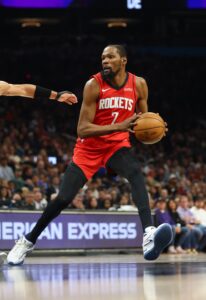 Recognizing they needed a top offensive talent to complement their young core of Alperen Sengun, Amen Thompson, Jabari Smith Jr., Tari Eason and Reed Sheppard, the Rockets traded Jalen Green, the 10th pick in last year's draft (Khaman Maluach) and Dillon Brooks to Phoenix for 12-time All-NBA forward Kevin Durant, a four-time scoring champion still playing at a high level late in his career.
Houston also re-signed Fred VanVleet to a more affordable contract ($50MM over two years instead of $45MM for one), extended Steven Adams, who played an important role anchoring the team's defense and bludgeoning opponents on the offensive boards, and signed three-and-D forward Dorian Finney-Smith using the non-taxpayer mid-level exception.
While the Durant trade mostly worked the way the Rockets hoped during the 2025/26 regular season, when he averaged 26.0 points, 5.5 rebounds, 4.8 assists and 0.9 blocks in 78 games (36.4 minutes per contest), the playoffs were another story: the 37-year-old managed to play in just one game during Houston's first-round loss to the Lakers due to knee and ankle injuries.
It was a disappointing outcome for the Rockets, who won 52 games again despite missing their on- and off-court leader in VanVleet, who tore his ACL last September and missed all of 2025/26. They also only had Adams for 32 games before he tore ligaments in his ankle in December, and Finney-Smith was a disappointing non-factor in 37 appearances after his '25/26 debut was delayed by offseason ankle surgery.
In some ways it's impressive that Houston managed to have the success that it did considering how little the team received in aggregate from those three players, who were earning a combined $51.8MM this season. The development of the Rockets' young players was an overall positive but was slightly choppy as well, with Smith and Sheppard taking strides forward while Sengun, Thompson and Eason were more up and down.
The Rockets have been a paper tiger for the past two seasons, ranking seventh and sixth in the NBA in net rating. They were in the top 10 in the NBA in both offensive (eighth) and defensive (sixth) rating in 2025/26, but struggled to replicate that success in the playoffs. Houston's core is still pretty young, but the team projects to be considerably more expensive in both 2026/27 and '27/28, leaving lingering questions about its long-term future.
The Rockets' Offseason Plans
General manager Rafael Stone didn't strike me as someone eager to make major changes when he discussed the Rockets at the end of the season. Instead, Stone projected confidence in the group he had assembled and lamented the injuries that never gave the roster a chance to reach its ceiling.
2026 NBA Offseason Preview: Charlotte Hornets
The Hornets finished the 2024/25 campaign with the third-worst record in the NBA (19-63) and missed the playoffs for the ninth consecutive year, which is the longest active drought in the league. Charlotte moved down one spot in the 2025 draft lottery, landing the fourth overall pick.
While Kon Knueppel was viewed as a contender to be selected at that spot, it wasn't considered a lock, with Ace Bailey and Tre Johnson among the other candidates. But the Hornets were absolutely right in believing in the 20-year-old wing, who exceeded all expectations in his debut season, nearly outdueling his former teammate and close friend Cooper Flagg for Rookie of the Year after averaging 18.5 points, 5.4 rebounds and 3.4 assists in 81 regular season games (31.5 minutes per contest). Knueppel posted an excellent .475/.425/.863 shooting line, became the first rookie in history to lead the league in three-pointers made (273), and helped Charlotte improve from 19 to 44 wins.
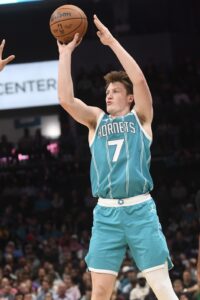 The addition of Knueppel was in retrospect the most noteworthy of the Hornets' 2025 offseason moves, but it certainly wasn't the only transaction. The team also added three other draft picks: one late first-rounder (Liam McNeeley, who went 29th overall), which was acquired in the Mark Williams trade with Phoenix, and two early second-rounders (Sion James and Ryan Kalkbrenner, Nos. 33 and 34, respectively), both of whom played rotation minutes as rookies.
Trading veteran center Jusuf Nurkic to Utah for Collin Sexton and a second-round pick was another one of head of basketball operations Jeff Peterson's moves last summer, though the 27-year-old guard's stay in Charlotte was brief. Sexton was traded to Chicago in February -- in one of the team's five deadline moves -- for Coby White, another impending free agent guard.
The start of 2025/26 looked like more of the same in Charlotte, as the team was just 11-23 following a one-point loss at Milwaukee on January 2. But the Hornets played like an entirely different team the rest of the season, blowing out the top-seeded Thunder in Oklahoma City a few days into the new year and beating several playoff teams later that month en route to a nine-game winning streak. The Hornets closed '25/26 with a 33-15 mark to finish 44-38, the No. 9 seed in the East.
While the team survived a wild overtime game vs. Miami to eliminate the Heat in the 9/10 matchup, the Hornets were embarrassed in Orlando with a chance to advance as the eighth seed, losing by 31 points and ending their surprising season on a sour note. The aforementioned nine-year playoff drought is now up to 10.
Creating a health plan for LaMelo Ball, who made 72 regular season appearances after averaging just 35 games per year in the three seasons leading up to 2025/26, was a key part of Charlotte's success. The 24-year-old point guard is a polarizing player for both on- and off-court reasons, but there's no question the Hornets have been a better team -- especially on offense -- when he's in the lineup.
Improved health from former No. 2 overall pick Brandon Miller was another key factor in Charlotte's 25-win improvement. After being limited to just 27 games in his second season due to wrist surgery, he made 65 appearances (30.3 minutes per game) in 2025/26, averaging 20.2 PPG, 4.9 RPG, 3.3 APG and 1.0 SPG on .435/.383/.892 shooting splits. The 6'7" wing notably improved his efficiency while playing more solid defense than he had in his first two seasons, despite dealing with a partially dislocated left shoulder he played through for several months.
Another key piece to the puzzle for the Hornets in 2025/26 was Moussa Diabate, an undersized French center with a relentless motor. The team had the equivalent of the top-ranked offense and the fourth-ranked defense when the 24-year-old big man was on the court this past season, which is pretty remarkable considering the Hustle Award winner had played a fairly modest role prior to 2025/26.
Peterson and the rest of Charlotte's front office have done a nice job utilizing the team's financial flexibility to add draft assets over the past two years. Now the Hornets need to decide whether their second-half run will lead to sustainable long-term success or whether the team needs outside help to go from a pretty good team -- they had the eighth-best net rating in the NBA -- to a club that's capable of making real noise in the playoffs.
The Hornets' Offseason Plans
The Hornets are one of six NBA teams with two first-round picks in the 2026 NBA draft. The team controls the final lottery pick (No. 14 overall) and has another selection a few spots later (No. 18). Their primary free agent is White, who has a $25MM cap hold, and they have one main extension candidate in Miller.
On the surface, Charlotte's offseason seems like it could be pretty straightforward: re-sign White, draft a couple of young players to add to their core, extend Miller if the deal is reasonable, and continue to build on the strong results of the latter portion of 2025/26. However, the Hornets also have financial flexibility, a significant cache of draft assets, and the right types of contracts (three mid-sized expiring deals) to be much more aggressive than that if they want to be.
Hoops Rumors Front Office Subscriber Chat: 6/11/2026
Hoops Rumors’ Arthur Hill held a live chat today exclusively for Trade Rumors Front Office subscribers. Topics included whether the Spurs should trade De'Aaron Fox, the wealth of guard prospects in this year's draft, the Bucks' next moves if they send Giannis Antetokounmpo to Miami, the Bulls' chances of landing another lottery pick and more!
2026 NBA Offseason Preview: Denver Nuggets
The Nuggets were widely lauded for the moves they made last offseason. The first domino to fall was a cost-cutting maneuver, as Denver traded Michael Porter Jr. and an unprotected 2031 first-round pick to the Nets for Cameron Johnson.
Swapping out Porter's $38.3MM cap hit for Johnson's $21.6MM saved the Nuggets a significant amount of money in 2025/26 and will do the same in 2026/27, when there will be a similar cap disparity between the two players ($40.8MM for Porter vs. $23.1MM for Johnson).
Since depth had been an issue for the Nuggets the past few years, their priority last summer was building out their roster with veterans who could play real minutes. They signed Tim Hardaway Jr. and Bruce Brown to minimum-salary contracts, then traded Dario Saric to Sacramento for Jonas Valanciunas.
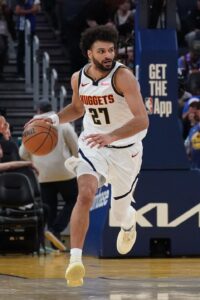 The final big 2025 offseason move for Denver was signing Christian Braun to a five-year, $125MM rookie scale extension shortly before the season started. The Nuggets prioritized locking up Braun, a full-time starter who had a strong third season, over fellow 2022 first-round pick Peyton Watson, who is now headed for restricted free agency.
Denver got off to an excellent start to the 2025/26 campaign, with a 20-6 record that belied the fact that Braun (serious ankle sprain) and Aaron Gordon (hamstring strain) both got hurt in November. Then Johnson (knee sprain/bone bruise) went down in late December, followed by Nikola Jokic (knee sprain/bone bruise) and Valanciunas (calf strain) a few days later. Each player missed multiple weeks.
Jokic was having a career year to that point, and while disaster was certainly averted, his numbers went from otherworldly historic to merely terrific. He wound up appearing in a career-low 65 games, including having to play in the final contest of the season to qualify for major postseason awards. The Serbian superstar tied an NBA record co-held by Celtics legends Bill Russell and Larry Bird by finishing either first or second (he was runner-up again) in MVP voting for a sixth consecutive season.
Watson, the primary beneficiary of all the injury absences, was having a career year prior to suffering a hamstring strain just before the trade deadline in early February. He showed real upside as an on-ball scorer and cutter on top of his defensive instincts, length, athleticism and versatility, which is why the team wants to retain him this summer.
Despite all the injuries -- Braun and Gordon combined to play 80 games, while Johnson and Watson played 54 apiece -- and a mediocre stretch in the middle of the season, the Nuggets ended the year on a 12-game winning streak and entered the playoffs as the No. 3 seed after going 54-28. Jamal Murray played a major role in the team's success, appearing in 75 games and posting terrific numbers en route to his first All-Star and All-NBA (third team) appearances.
The Nuggets' first-round opponent was one of their division rivals, the Timberwolves, who eliminated the Denver in the Western Conference semifinals in a seven-game series in 2024. The Nuggets were attempting to defend their title at the time, having won their first championship the year before.
Denver's lack of size, athleticism and defense against Minnesota this postseason was jarring. Jaden McDaniels not only prevented Murray from having any kind of offensive success with his smothering defense, he also targeted the Canadian guard on the other end of the floor. And Jokic had the least efficient playoff series of his career against Rudy Gobert. Crucially, Gobert was daring Jokic to shoot, and the superstar center converted just 19.4% of his 6.0 three-point attempts per game.
Injuries were a factor for both teams, with Watson missing the whole series and Gordon suffering yet another soft-tissue injury in Game 2. Donte DiVincenzo tore his Achilles tendon at the start of Game 4 for Minnesota, and Anthony Edwards sprained his knee later in that same contest. But the Wolves were the mentally, emotionally and physically tougher team, winning the series in six games.
After a disappointing first-round exit, the Nuggets have to figure out what steps to take with an aging core that will only get more expensive going forward.
The Nuggets' Offseason Plans
The main reason Denver's roster projects to be far more expensive going forward is the fact that Jokic will be eligible this summer for an extension that will pay him a projected $285MM over four years. He's reportedly expected to sign the deal after reiterating following the team's postseason elimination that he wants to be a "Nugget forever."
However, outside of Jokic, everything could potentially be on the table for the Nuggets, as president Josh Kroenke acknowledged at his end-of-season press conference. Murray and Gordon notably can't be ruled out as possible trade candidates after playing vital roles in the team's success for the better part of the past decade. A more likely outcome has long been presumed to be shedding Johnson's salary to re-sign Watson, though that's far from a fait accompli.
2026 NBA Offseason Preview: Minnesota Timberwolves
After making back-to-back appearances in the Western Conference finals in 2024 and 2025, the Timberwolves faced a cap crunch last summer. The team had three key free agents it hoped to retain, but - not wanting to operate above the second tax apron for a second straight year - ultimately decided it was prudent to re-sign only two.
That meant a new five-year, $125MM investment in big man Naz Reid and a three-year, $100MM contract for forward Julius Randle, while guard Nickeil Alexander-Walker departed for Atlanta on a four-year deal worth a little over $60MM.
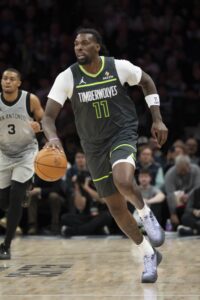 Randle was Minnesota's second option on offense behind Anthony Edwards, while Reid was an important part of the frontcourt who had emerged as a perennial Sixth Man of the Year contender, winning the award in 2024. So it made some sense that the Timberwolves' front office prioritized those two players over Alexander-Walker, a backcourt reserve who essentially functioned as a three-and-D role player.
A year later, it's fair to wonder if the Wolves should've given Alexander-Walker a chance to earn more responsibilities on offense. In his first year with the Hawks, the 27-year-old more than doubled his scoring average (from 9.4 to 20.8 points per game) while setting new career highs in field goal percentage (45.9%) and three-point percentage (39.9%). He was named the NBA's Most Improved Player this spring.
Hindsight is 20/20, of course, and it's not as if Alexander-Walker's exit resulted in a huge fall-off for the Timberwolves, who finished with a 49-33 regular season record identical to the one they posted in 2024/25. But with Mike Conley no longer playing a featured role in the backcourt and 2024 lottery pick Rob Dillingham not stepping up to earn more consistent minutes, Minnesota felt the need to add another guard at the trade deadline, sending Dillingham and four second-round picks to Chicago as part of a package for Ayo Dosunmu.
A year after opting against paying Alexander-Walker, the Timberwolves will be under pressure to pony up for a new deal for Dosunmu when he reaches unrestricted free agency this offseason. And even if they're able to work something out with Dosunmu, running back the same roster probably isn't an appealing option for president of basketball operations Tim Connelly and his front office after the Wolves failed to make it back to the Western Conference finals in 2026 -- an upset victory over the Nuggets in the first round was followed by a second-round loss to the ascendant Spurs.
Few teams have experienced the kind of postseason success that Minnesota has over the past three years. The Timberwolves' 24 playoff wins during that stretch rank fourth overall, behind two teams that have won titles (Boston and Oklahoma City) and one that's a pair of victories away from doing so (New York). Those 24 playoff wins across the past three years also exceed the 21 the Wolves registered during the franchise's 34 years in existence.
But winning just one playoff series this spring after advancing to the third round in each of the previous two years creates the impression that Minnesota took a step back. With Edwards becoming extension-eligible and reportedly feeling as if roster changes are necessary in order to make the Wolves a legitimate title contender, Connelly will have to get creative this summer as he looks to upgrade this squad and keep his superstar guard happy.
The Timberwolves' Offseason Plans
Before we explore what the Timberwolves could do with their roster in the coming weeks and months, let's take a quick look at their financial situation entering the summer.
2026 NBA Offseason Preview: Philadelphia 76ers
After Denver and Phoenix broke up their respective maximum-salary trios during the 2025 offseason, the Sixers entered the 2025/26 season as just one of two teams carrying three players on max deals.
The other one of those two clubs, the Cavaliers, had the NBA's highest payroll and entered the fall with championship expectations after winning 64 games in '24/25. But the expectations for the 76ers, who were coming off a miserable 24-58 campaign, were far more modest.
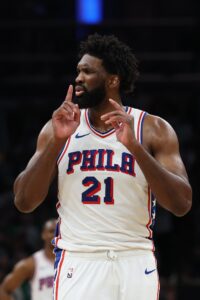 Two of Philadelphia's veteran stars, Joel Embiid and Paul George, combined to make 60 total appearances in 2024/25 and then underwent knee surgeries last April and July, respectively. With that duo projected to earn well over half of the Sixers' payroll in '25/26 ($107MM of roughly $195MM) and no guarantee they'd be 100% healthy - or available at all - for a significant chunk of the season, there was a predictable lack of enthusiasm for the Sixers, who were widely forecast to be no better than a .500 team.
With that context in mind, it's fair to call the 2025/26 season a success for Philadelphia. Although those two vets were frequently inactive again, Embiid doubled his games played total from 19 to 38 and was far more effective when he suited up than he was in '24/25. George, meanwhile, appeared in just 37 games, but his longest absence (25 games) was due to a suspension, not an injury. And upon returning from that suspension for violating the league's anti-drug policy, he looked as healthy and productive as he had at any time since arriving in Philadelphia.
Even more encouraging was the play of the Sixers' backcourt, led by Tyrese Maxey. Philadelphia's third star emerged as easily the most valuable player of the trio, setting new career highs in several statistical categories, including points per game (28.3), while leading the NBA in minutes per game (38.0). He earned his second All-Star berth and first All-NBA nod, establishing himself as the 76ers' clear franchise centerpiece going forward.
Joining Maxey as a long-term building block was his new backcourt partner VJ Edgecombe, the third overall pick in the 2025 draft. Philadelphia was fortunate to get the opportunity to draft Edgecombe at all, as the team entered last year's lottery with only a 64% chance of keeping its top-six protected pick. The Sixers ended up not just retaining their first-rounder, but moving up into the top three.
The club made the most of its good fortune by nailing that pick. Edgecombe was overlooked to some extent while former Duke teammates Cooper Flagg and Kon Knueppel battled for Rookie of the Year, but he would have had a strong case for the award in many other seasons after averaging 16.0 PPG, 5.6 RPG, and 4.2 APG over the course of 75 starts.
With Maxey and Edgecombe leading the way and Embiid and George providing stop-and-start contributions, the Sixers won 45 regular season games, claimed the No. 7 seed with a play-in win, and upset the No. 2 Celtics in the first round of the playoffs before running into a buzzsaw of a Knicks team in round two.
While it was a pretty positive outcome given the preseason expectations, it wasn't enough to save Daryl Morey's president of basketball operations job. The long-term contracts he gave Embiid and George during the 2024 offseason haven't aged well, and he seemingly made another misstep at this year's deadline by trading Jared McCain to Oklahoma City for this year's No. 22 pick and a handful of future second-rounders.
McCain had battled health issues during his first year-and-a-half in the league, and his path to a starting role in Philadelphia was blocked by Maxey and Edgecombe. Still, it wasn't a great look for the Sixers when the 2024 first-rounder immediately began to thrive for the defending champion Thunder. The trade on its own could still be justified, particularly if ownership wanted to get out of luxury tax territory, but Morey exacerbated the issue by speaking after the trade deadline about "selling high" on McCain. That's the kind of quote that could be thrown back in his face for the next 10 years, depending on how the guard's career plays out.
After scouring the market for Morey's replacement, the Sixers landed on veteran Cavaliers executive Mike Gansey, hiring him as their new president of basketball operations. Gansey is well-respected around the league and had long been viewed as a candidate to run his own front office. He'll get a helping hand from former Warriors general manager Bob Myers, who works for the Sixers' ownership group as its "president of sports" and is expected to be involved in major personnel decisions.
The 76ers have a pair of valuable foundational pieces and believe they have the right basketball operations team in place to build a winner around Maxey and Edgecombe. Still, it remains to be seen just how much the new decision-makers will be able to do with the roster in the short term.
The Sixers' Offseason Plans
Under the NBA's current tax apron system, it has become increasingly untenable for teams to carry three players on maximum-salary contracts, which is one reason why the aforementioned Nuggets and Suns broke up their "big threes" last offseason. The Sixers probably wouldn't mind following suit this summer, but Maxey certainly isn't going anywhere and Embiid and George didn't do enough in 2025/26 to fully restore their diminished appeal on the trade market.
2026 NBA Offseason Preview: Golden State Warriors
The Warriors entered 2025/26 optimistic about their changes of replicating the second-half success they found in '24/25 after trading for Jimmy Butler ahead of that season's deadline. Golden State was just 25-26, the 10th seed in the Western Conference, when Butler made his Warriors debut on February 8, 2025, but the club moved up to No. 7 by going 23-8 to end the '24/25 regular season.
After beating Memphis in the 7/8 play-in game to advance as the seventh seed, the Warriors faced Houston in the first round, eventually advancing to the semifinals after a tough seven-game series. Unfortunately for Golden State, Stephen Curry got hurt in Game 1 of the second-round matchup vs. Minnesota, which the Timberwolves won in five games.
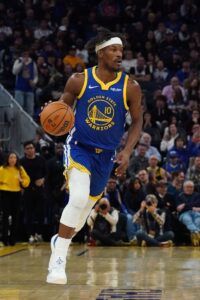 Rather than make major changes, the Warriors made some moves around the edges last offseason, essentially replacing longtime center Kevon Looney with Al Horford, bringing back De'Anthony Melton on a two-year, minimum-salary contract (he had been traded to Brooklyn after suffering a torn ACL during the 2024/25 season), and re-signing Jonathan Kuminga and Gary Payton II.
Kuminga's restricted free agency dragged into the start of training camp, delaying all of the aforementioned signings. The situation was resolved with Kuminga accepting a two-year, $46.8MM deal that was designed to make him movable at the trade deadline. The Warriors also signed Seth Curry in November once they had a little bit of breathing room beneath their first apron hard cap.
Kuminga, the seventh overall pick in the 2021 draft, opened '25/26 in the starting lineup, but it didn't last long -- he was pulled after the team was 6-6 after 12 games. The 23-year-old was dealing with a nagging knee injury near the end of that stretch, which caused him to miss seven straight contests after coming off the bench for one game.
After a sluggish 19-18 start to '25/26, the Warriors seemed to be turning things around in mid-January, winning six of seven games to boost their record to 25-19. The final victory in that span came at a major cost, however, as Butler tore his ACL on January 19 against Miami, his former team.
Butler's season-ending knee injury lowered Golden State's ceiling, and less than two weeks later Stephen Curry was diagnosed with patellofemoral pain syndrome, aka runner's knee. That often isn't considered a significant injury but it turned into a nagging problem for the two-time MVP, who didn't play again until April 5.
The relationship between the Warriors and Kuminga, which was already contentious after the offseason didn't go the way he hoped, continued to deteriorate over time. He eventually demanded a trade on the first day he was eligible to be moved in January.
It took a while, but Golden State found a deal it liked, sending Kuminga and Buddy Hield to Atlanta for Kristaps Porzingis. The Latvian big man had missed extended time due to mysterious circumstances in '24/25, later saying he had been diagnosed with Postural Orthostatic Tachycardia Syndrome (POTS), a chronic health condition with no known cure.
The Warriors were heavily linked to Giannis Antetokounmpo leading up to the February trade deadline, but the Bucks ended up keeping the superstar forward. Draymond Green, not Butler, was rumored to be the main salary-matching piece in those talks.
In addition to the knee injuries of Butler and Stephen Curry, Horford and Seth Curry both battled sciatica and other ailments, only playing 45 and 10 regular season games, respectively. Porzingis was in and out of the lineup, appearing in just 15 of Golden State's 31 contests down the stretch. Then another devastating injury occurred in late March, when Moses Moody tore his patellar tendon.
With their two best players -- and by far their highest earners -- sidelined, the Warriors tumbled down the standings, finishing with a 37-45 record and the 10th seed in the West. They beat the Clippers in the 9/10 play-in game, then lost to Phoenix with a chance to advance to the playoffs as the No. 8 seed.
In the wake of the difficult season, Steve Kerr initially wasn't sure whether he wanted to return as head coach, but he ultimately re-signed with the team on a new two-year contract. Now the big question is figuring out what the roster will look like next season with over $69MM in salary ($56.8MM for Butler and $12.5MM for Moody) tied up in two players who are still several months away from returning to action.
The Warriors' Offseason Plans
Golden State's spending power this offseason hinges in large part on what Green decides to do with his $27.7MM player option and how much money it will take to re-sign Porzingis, which general manager Mike Dunleavy Jr. and Kerr both said was a priority.
In the 2023 offseason, Green declined a $27.7MM player option to re-sign with the Warriors on a four-year, $100MM deal, but a payday that significant seems unlikely this time around. And Porzingis' market value is even trickier to gauge after a season in which he played just 32 games, the second-lowest total of his career.
2026 NBA Offseason Preview: Los Angeles Lakers
Even though they were quickly dispatched in the first round of the 2025 playoffs, the Lakers entered last summer on a positive note, still riding the high of their mid-season Luka Doncic acquisition. While Doncic spent the offseason getting into peak condition and committing to a multiyear extension with his new team, the front office began working to try to find the types of complementary pieces that would best suit Los Angeles' new franchise player.
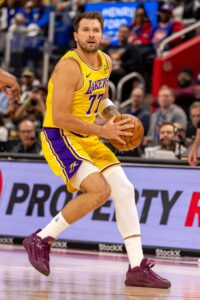 Armed with no cap room and a limited number of valuable trade chips ahead of the 2025/26 season, the Lakers' options to fortify their roster were limited. As a result, Deandre Ayton, Jake LaRavia, and Marcus Smart, each of whom signed a short-term contract that paid in the $5-10MM range, headlined the club's relatively modest list of newcomers.
In the process of making room to fit those players below a first-apron hard cap, L.A. let Dorian Finney-Smith walk in free agency and waived Jordan Goodwin, whose minimum-salary contract was mostly non-guaranteed.
The returns on those roster maneuvers during Doncic's first full season as a Laker were mostly positive. Ayton, a former No. 1 overall pick who likes to be a primary scoring option, wasn't a perfect fit for a Lakers team looking for a center willing to do more of the dirty work - including protecting the rim, rebounding, and setting screens - but he eventually bought into his role. Letting Finney-Smith get away to a conference rival earned the club some criticism at the time but ultimately paid off when his recovery from ankle surgery extended well past opening night, leading to a career-worst year in Houston.
LaRavia's three-point shooting dropped off in 2025/26, but he provided solid defense on the wing and was the only Laker to appear in all 82 regular season games. Los Angeles' biggest roster misstep was waiving Goodwin, who had a breakout year for the division-rival Suns. Still, that move was necessary to bring in Smart, whose own bounce-back season on a pretty team-friendly deal mitigated the effects of losing Goodwin.
Perhaps most importantly, the Lakers' "big three" of Doncic, Austin Reaves, and LeBron James ultimately thrived together, with James settling into a new role as a third option and letting the two younger guards function as the team's primary offensive weapons. Everything seemed to come together for the Lakers during a 16-2 stretch between the end of February and the end of March, with Doncic, Reaves, and James combining to average over 76 points and 20 assists per game while role players like Ayton, Smart, and Luke Kennard played some of their best basketball of the season.
Unfortunately for the Lakers, that stretch came to an abrupt end on April 2 when both Doncic and Reaves suffered significant muscle strains (a hamstring for Doncic and an oblique for Reaves) in a blowout loss to Oklahoma City. The Lakers still managed to pull out a first-round series win over Houston with Doncic sidelined and James reclaiming his role as the offensive alpha, but without their MVP available, the Lakers couldn't hang with the Thunder in the Western Conference semifinals and were on the wrong end of a second-round sweep.
Sixteen months removed from the shocking Doncic blockbuster, a Lakers team looking to reestablish itself as a title contender can no longer get by on the residual good vibes of that deal, but there are more reasons for optimism entering the 2026 offseason. That March run represented a proof of concept for this version of the Lakers, and the front office will be better equipped this summer to pursue upgrades and reshape the roster.
The Lakers' Offseason Plans
James is an all-time great whose jersey will eventually hang from the rafters in Crypto.com Arena, but at age 41, he's no longer the most important part of the Lakers' future. In fact, he's not even their most important free agent of the 2026 offseason from a long-term perspective, given that Reaves is also on track to reach free agency once he formally passes on his $14.9MM player option for 2026/27.
Still, the Lakers' next move with James could largely determine which direction their offseason takes.
Hoops Rumors Front Office Subscriber Chat Transcript: 6/4/2026
Hoops Rumors’ Arthur Hill held a live chat today exclusively for Trade Rumors Front Office subscribers. Topics included several Pistons decisions for this summer, the Giannis Antetokounmpo trade market, the Bulls' options with the fourth pick, the Knicks' future salary structure and more!