
Community Shootaround: The NBA’s Tanking Problem
Late-season tanking is a perennial issue for the NBA, but it has been particularly bad so far in 2025, with teams who have their eye on the draft lottery employing new strategies in an apparent effort to get around the league’s player participation policies.
As Tom Haberstroh of Yahoo Sports and John Hollinger of The Athletic write, one approach that multiple teams have used this month is to hold key players out of crunch-time situations. Haberstroh refers to it as “quiet quitting.”
For instance, while Raptors forward Scottie Barnes has only missed one game this month, he has played more than 30 minutes in just three of 11 outings after averaging 34.7 MPG in 46 pre-March contests. Barnes and other Raptors starters have been on the bench in the fourth quarter of multiple games.
Because players like Barnes and Jazz forward Lauri Markkanen qualify as “stars” under the NBA’s player participation policy, holding them out of games entirely without a valid reason could prompt a league investigation — Utah has already faced one $100K fine for its usage (or lack thereof) of Markkanen.
However, that policy only explicitly applies to players who have made an All-Star or All-NBA team over the past three seasons. That means that the Nets, for instance, were able to hold a “non-star” like Cameron Johnson out of last Thursday’s game for “rest” even though Johnson was healthy and Brooklyn didn’t play on either Wednesday or Friday, Haberstroh observes.
When the NBA flattened its lottery odds several years ago, the goal was to reduce the incentives for losing games. But those changes haven’t been as effective as hoped in part because the league hasn’t incentivized winning for lottery-bound teams, Hollinger argues.
As Hollinger explains, even if losses didn’t improve a team’s lottery odds and draft position, a club like Toronto or Utah may not be incentivized to compete hard for wins at this point of the season, since there’s little reason to push a franchise player like Barnes or Markkanen, who are on lucrative long-term contracts, too hard in games that essentially don’t matter. “Asking a team to put meaningful players at risk in meaningless games is inherently a contradiction,” Hollinger writes.
So what could be done to address the issue? Tim Bontemps and Kevin Pelton of ESPN spoke to sources around the NBA about that subject and came up with a few possible ideas, some more viable than others.
Flattening the lottery odds even further was one of the ideas mentioned. Another was determining the odds based on how the lottery teams fare against one another during the season. However, both suggestions are complicated by the fact that a borderline playoff team may decide that having a viable shot at the No. 1 pick is a better outcome than eking out a playoff spot and being on the receiving end of a first-round beatdown from a top seed.
There would also likely be resistance to any proposal that significantly reduced the odds of the league’s very worst teams having a shot at top draft picks, since the NBA still wants to encourage competitive balance and avoid miring a club in a rebuild that it can’t find its way out of.
Multiple sources suggested to ESPN that removing mid-lottery pick protections on traded draft picks could be one step in the right direction. For instance, one of the most egregious cases of tanking in recent years saw the 2023 Mavericks rest players at the end of the season in an effort to hang onto their top-10 protected pick, even though they still had a shot at the play-in tournament. Allowing a pick to be top-four protected or top-14 protected, without any options in between, could eliminate that kind of scenario.
Another idea posed by sources who spoke to Bontemps and Pelton would be to count team wins instead of losses after the All-Star break for the sake of determining the draft lottery order.
For example, if a team posted a 19-35 record before the All-Star break, then went 18-10 the rest of the way, its “lottery record” would be 29-53, with its pre-All-Star wins added to its post-All-Star losses. If a second team that was also 19-35 at the break went 10-18 after the All-Star game, its “lottery record” would be 37-45, resulting in less favorable odds than the club that performed better down the stretch.
We want to know what you think. Does the NBA need to take steps to address its tanking problem? If so, what approach makes the most sense?
Head to the comment section below to weigh in with your thoughts!
Community Shootaround: Most Improved Player
The Most Improved Player award has – at least according to the oddsmakers – become a two-man race.
On one side is Cade Cunningham, the face of the vastly-improved Pistons. On the other is Dyson Daniels, who has blossomed into a stat-sheet stuffing backcourt partner for Hawks star Trae Young.
Let’s examine their cases.
Cunningham came into Sunday’s action averaging 25.7 points, 9.2 assists and 6.1 rebounds in 35.2 minutes per game. Last season, when the Pistons won just 14 games, Cunningham averaged 22.7 points, 7.5 assists and 4.3 rebounds in 32.5 minutes per contest
The only negative would be an increase in turnovers per game this season (4.5) compared to 3.4 last season. That’s due in part to the season-ending leg injury to Jaden Ivey on New Year’s Day, which has put the ball in Cunningham’s hands more often. His usage rate is 34.4%, up from 31.7%.
Cunningham, a first-time All-Star, has benefited from an improved supporting cast. He’s got a better group of veterans around him this season, allowing him to be a more effective play-maker. He’s embraced his leadership role and delivered in the clutch, making game-winners such as his buzzer-beating three-pointer against Miami on Wednesday.
There was little doubt Cunningham could be this kind of player. After all, he was the top pick of the 2021 draft and got a max extension last season. Should those facts work against his candidacy? However, there’s no denying that Cunningham’s steady brilliance has silenced any doubters regarding the franchise’s faith in him after its worst season.
Daniels, a third-year wing, was mainly a second-unit player in his first two seasons with the Pelicans. Included in the blockbuster deal that sent Dejounte Murray to New Orleans, Daniels has seized the opportunity to become a full-time starter.
In 65 starts, Daniels is averaging 14.0 points, 5.7 rebounds, 4.3 assists, and 3.0 steals in 33.9 minutes per game. Last season, Daniels posted 5.8 PPG, 3.9 RPG, 2.7 APG, and 1.4 SPG in 22.3 MPG.
He’s the runaway leader in the league in steals per game, making him a dark-horse candidate for Defensive Player of the Year, an award typically dominated by centers and forwards.
Working against Daniels’ candidacy is that he doesn’t have the pressure of being the team’s star like Cunningham. The Hawks also have a losing record, though they still lead the weak Southeast Division. But the No. 8 pick of the 2022 draft has clearly made a name for himself after two nondescript seasons with the Pelicans.
Clippers veteran forward Norman Powell was a prime candidate for the award until an injury derailed his campaign and made him ineligible.
Christian Braun, Evan Mobley and Tyler Herro are some of the other players have been mentioned as candidates.
That brings us to today’s topic: Who’s your selection for the Most Improved Player award – the Pistons’ Cunningham or Hawks’ Daniels? Or is there another player more worthy of that honor?
Please take to the comments section to weigh in on this topic. We look forward to your input.
Hoops Rumors’ 2025 NBA 10-Day Contract Tracker
Since January 5, when NBA teams became eligible to sign players to standard 10-day deals, 41 of the contracts signed have been of the 10-day variety, and that number will only continue to grow as the season nears an end. Hoops Rumors has a database that allows you to keep on top of those deals, tracking every 10-day signing all season long.
Besides featuring all of this year’s 10-day deals, our 10-Day Contract Tracker includes information on all 10-day contracts signed since the 2006/07 season. The search filters in the database make it easy to sort by team, player, and/or year.
For instance, if you want to see all the 10-day contracts that the Sixers have signed since 2007, including Oshae Brissett‘s current deal, you can do so here. If you want to view Brissett’s history of 10-day deals, that list is here.
You can also see whether a player and team signed a second 10-day contract or if those short-term deals led to an agreement that covered the rest of the season. Additionally, our tracker notes which 10-day deals remain active, saving you the hassle of having to figure out whether a particular contract ends on Wednesday or Thursday.
A link to our 10-Day Contract Tracker can be found at any time in the right sidebar under “Hoops Rumors Features” on our desktop site. On our mobile site, you can find it on our “Features” page. We’ll be keeping it up to date for the rest of the season, so be sure to check back to keep tabs on the latest signings as they become official.
As our tracker shows, these are the 10-day deals currently active around the NBA:
- Indiana Pacers: Tony Bradley, C (runs through 3/22)
- Philadelphia 76ers: Oshae Brissett, F (runs through 3/23)
- Philadelphia 76ers: Chuma Okeke, F (runs through 3/25)
- Toronto Raptors: Colin Castleton, C (runs through 3/25)
- Sacramento Kings: Terry Taylor, F (runs through 3/27)
- New York Knicks: P.J. Tucker, F (runs through 3/29)
- New Orleans Pelicans: Elfrid Payton, G (runs through 3/30)
Lakers’ Two-Way Players Nearing Active Game Limits
The Mavericks aren’t the only team whose three players on two-way contracts are all nearing their active game limits for the 2024/25 season. The Lakers find themselves in a similar boat.
There are 14 games left on Los Angeles’ regular season schedule, but the team’s two-way players – all of whom have emerged as contributors – won’t be able to suit up for all of those games as long as they remain on their current contracts.
Here are the details on their limits: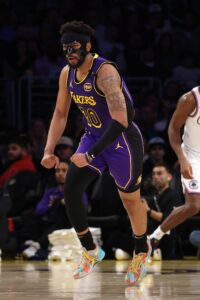
- Jordan Goodwin: Four active games remaining.
- Christian Koloko: Nine active games remaining.
- Trey Jemison: Nine active games remaining.
When a player signs a two-way contract before the start of the season, he’s eligible to be active for up to 50 regular season games. That amount becomes prorated if a player signs a two-way deal during the season.
[RELATED: Hoops Rumors Glossary: Two-Way Contract]
Koloko is the only one of the Lakers’ three two-way players who opened the year with the team, so he has a full 50 games available — he’s used 41 of them so far, with 34 appearances and seven additional DNPs. Jemison, who signed in January, has used 17 of his 26 available games (15 appearances, two DNPs), while Goodwin, signed in February, has used 15 of 19, appearing in all 15 of those games.
Unlike the injury-plagued Mavericks, the Lakers won’t find themselves at risk of not being able to deploy the minimum required eight active players if and when Goodwin, Koloko, and/or Jemison reach their limits. Los Angeles has more than enough healthy players to get by.
The Lakers also aren’t right up against their hard cap in the same way that the Mavericks are, so if they want to promote one or more of their two-way players to their standard 15-man roster, that’s an option. In that scenario, the player would no longer be subject to these restrictions and would also become playoff-eligible, putting him in position to play in any and every regular season and postseason game for L.A. this spring.
It seems likely the Lakers will go that route before season’s end. Goodwin, in particular, has become a regular rotation player, appearing in 15 of the team’s last 19 games and averaging 21.5 minutes per night during that stretch. His playing time has been trending upward as of late — he has started L.A.’s past four games and averaged 30.3 MPG in those contests.
Jemison and Koloko haven’t seen as much action as Goodwin, but one or the other has generally been serving as the Lakers’ backup center since the All-Star break. Jemison has been something of a good-luck charm — Los Angeles won the first 13 games in which he played.
The Lakers are currently operating about $894K below their hard cap. As of today, a rest-of-season, minimum-salary contract for any of their two-way players would count against the cap for approximately $300K. A multiyear deal for Jemison or Koloko would carry the same first-year cap hit, while a multiyear contract for Goodwin would have a slightly higher cap charge ($311K).
In other words, while the Lakers don’t quite have enough room to give standard contracts to Goodwin, Jemison, and Koloko today, they could easily max out those players’ two-way games and then promote them before the end of the regular season while staying below their hard cap.
Of course, the Lakers currently have a full 15-man standard roster, so they can’t promote any of their two-way players to a standard contract without waiving at least one of those 15.
Forward Cam Reddish, who has barely played since a trade agreement sending him to Charlotte fell through, and center Alex Len, a buyout market addition who hasn’t been very effective in a limited role, look like the top candidates to be waived if the Lakers need a roster spot.
Beyond those two, there aren’t a ton of great release candidates. Only three other players on the 15-man roster aren’t owed any guaranteed money beyond this season. Jaxson Hayes is the Lakers’ starting center and won’t be cut; Markieff Morris is valued for his veteran leadership; and Shake Milton has been pretty solid when given the opportunity to play.
In my opinion, the most likely scenario in Los Angeles is that Goodwin gets a promotion after reaching his active-game limit, replacing Reddish on the 15-man roster. The team could then decide during the last week or two of the regular season whether to promote Jemison or Koloko (or both) in place of a veteran like Len or Morris.
While a Jemison/Len swap would make some sense to me, it’s worth noting that Jemison is the only one of L.A.’s three two-way players whose contract runs through next season, so the club would be giving up that guaranteed extra year of two-way control by converting him this season. If the Lakers really want Jemison available in the postseason, that won’t stop them from promoting him, but if they’re deciding between him and Koloko, it’ll be a factor they take into account.
Roster Moves Required Soon For Kings, Warriors
NBA teams are generally required to carry at least 14 players on standard contracts. However, league rules allow clubs to dip below that minimum for up to two weeks at a time and for up to 28 total days in a season.
Currently, two teams are operating with fewer than 14 players on their 15-man rosters and will soon have to sign a free agent or promote a two-way player to a standard contract to avoid violating that rule. Those teams are as follows:
Sacramento Kings
The Kings first dropped below 14 players on February 3, when they completed their De’Aaron Fox trade. That deal saw them send out three players and acquire only two in return.
Sacramento got back to the 14-player minimum 10 days later, when Markelle Fultz signed with the team on February 13, before dipping back to 13 on February 18, following the expiration of Daishen Nix‘s 10-day contract.
The Kings remained below the 14-player minimum until 13 days later, when Skal Labissiere signed a 10-day contract on March 3, then once again went below the minimum on March 13 after Labissiere’s deal expired.
As a result of that series of roster moves, Sacramento is fast approaching its 28-day maximum for the season and will be required to re-add a 14th man by the middle of this week (by our count, the deadline is March 18). If the club exhausts its full 28 days below 14 players, it won’t be able to go below that minimum again this season.
Golden State Warriors
Like the Kings, the Warriors fell below 14 players on standard contracts for the first time this season as a result of a blockbuster deadline deal. In Golden State’s case, it was the February 6 move for Jimmy Butler, which required the club to send out four players.
The Warriors signed Kevin Knox and Yuri Collins to 10-day contracts on February 19, 13 days later, to reach the 14-player minimum. When those deals expired on March 1, Golden State re-signed Knox immediately, but let Collins go. As a result, the team was below 14 players for three days, until Pat Spencer was promoted to the standard roster on March 4.
After seven more days at the 14-player minimum, Golden State has been operating below that threshold since March 11, when Knox’s second 10-day contract expired. So the clock is once again ticking on the Warriors, who have another week to add a 14th man if they intend to exhaust their full 28-day allowance (by our count, their deadline is March 23).
Knox looks like the top candidate to return at that point on a rest-of-season contract, but that’s just my speculation — it hasn’t been reported. It’s worth noting that the Warriors will soon have the ability to fill both their 14th and 15th spots with rest-of-season signings while staying below their hard cap, so if Knox fills one of those two openings, the team will still be able to add a second player before the end of the regular season.
2025’s Most Valuable Traded Second-Round Picks
Fans of lottery-bound NBA teams will be keeping a close on the bottom of the league’s standings down the stretch because of the effect that “race” will have on the draft order and lottery odds for the 2025 first round.
However, it’s not just the first round of the draft that’s worth keeping an eye on. Those reverse standings will also dictate the order of the draft’s second round, and an early second-round pick can be nearly as valuable as a first-rounder.
[RELATED: Traded Second-Round Picks For 2025 NBA Draft]
Here are a few of the traded 2025 draft picks that will land near the top of the second round:
From: Washington Wizards
To: Boston Celtics
Current projection: No. 31
The Celtics are the defending champions and one of the biggest threats to win the NBA’s 2025 championship. They also have the league’s third-highest payroll. Teams in that position are generally running a draft-pick deficit, having gone all-in to fortify their roster, but that’s not the case in Boston, where the Celtics control their own first-rounder (currently projected to be No. 28) along with this Wizards second-rounder that could be the best day-two selection in this year’s draft.
The Wizards originally traded swap rights to their 2025 second-round pick during the 2021 offseason as part of the five-team blockbuster that netted them Spencer Dinwiddie, Kyle Kuzma, and Kentavious Caldwell-Pope, among others.
Those swap rights changed hands a few times and eventually got tied up with a handful of other swaps. The Celtics acquired them in the 2023 offseason from the Pistons as part of a deal that saw them down six spots in the draft from No. 25 to No. 31 (Detroit used the 25th pick on Marcus Sasser).
Boston will technically receive the most favorable of four second-round picks (Washington’s, Golden State’s, Dallas’, and Detroit’s), but there’s no chance that won’t be the Wizards’ selection.
From: Utah Jazz
To: Minnesota Timberwolves
Current projection: No. 32
While the Lakers made a run to the Western Conference Finals later that season, it’s hard to argue that the Timberwolves didn’t ultimately get the best of the three-team 2023 deadline deal with Los Angeles and Utah that saw them land Mike Conley and Nickeil Alexander-Walker, two players who continue to play major roles in Minnesota.
As part of that three-team trade, which allowed the Jazz to acquire the Lakers’ top-four protected 2027 first-round pick, Minnesota received multiple second-round picks from Utah, including this year’s selection.
Like the Celtics, the Timberwolves have one of the NBA’s highest payrolls, so this extra second-round pick should come in handy for an organization looking to keep its tax bill in check next season — drafting a player in the second round and signing him to a rookie-minimum contract (or something close to it) is the most effective way for a team to limit the cap/tax impact of a roster spot.
From: New Orleans Pelicans
To: Charlotte Hornets
Current projection: No. 34
It has been a long, winding road for this second-round pick, which was – sort of – first sent to Memphis in a three-team 2021 trade. That deal, which also included Charlotte, saw New Orleans acquire Jonas Valanciunas, Devonte’ Graham, and the draft rights to Trey Murphy.
The Pelicans actually included the Lakers’ top-10 protected 2022 first-round pick in that trade, but because it landed in its protected range in ’22 (eighth overall), New Orleans instead owed the Grizzlies a pair of second-rounders, one of which was this 2025 selection.
From there, the Grizzlies traded the Pelicans’ 2025 second-rounder to the Suns in 2023 as part of a package for pick swaps; Phoenix flipped it to the Spurs a few days later as part of a Cameron Payne salary dump; and San Antonio brought it full circle by sending it to Charlotte in a salary dump of Graham during the 2024 offseason.
At the time of that last trade between the Spurs and Hornets, Graham was in the final season of the four-year contract he received as part of the sign-and-trade agreement that sent him from Charlotte to New Orleans in the original 2021 deal. The Hornets traded away Graham and didn’t get the 2025 Pelicans pick in that initial transaction, but ultimately ended up with both last summer (they subsequently waived Graham).
Of course, when the Spurs attached this pick to Graham’s contract to get out of his modest $2.85MM partial guarantee, they couldn’t have known things would go so bad in New Orleans that this pick would land in the mid-30s. Their loss will be the Hornets’ gain. Charlotte also controls its own second-rounder and is currently on track to pick at both 33 and 34.
From: Toronto Raptors
To: Detroit Pistons
Current projection: No. 35/36
The Raptors are tied in the standings with Brooklyn and have the league’s easiest remaining schedule, so it’s possible this pick could move from the mid-30s into the late-30s. It’ll still be a valuable asset for the Pistons, who will almost certainly lose their own first-round pick, making this their highest selection in the 2025 draft.
This Raptors pick was one of three second-rounders Detroit acquired from Dallas in last summer’s Tim Hardaway Jr./Quentin Grimes swap. The Mavericks had previously acquired it from the Spurs as part of the three-team sign-and-trade deal for Grant Williams in 2023. San Antonio, in turn, acquired it from Toronto in the Jakob Poeltl trade between the two teams earlier that year.
Given their spot near the bottom of the NBA’s standings, the Raptors would certainly prefer to still have their own second-round pick, but they’ll have a pretty favorable alternative — they control Portland’s second-rounder, which currently projects to be No. 40.
Mavs’ Two-Way Players Approaching Active-Game Limits
Injuries have decimated the Mavericks‘ roster and have compromised their ability to compete in the second half of this season. The team had just nine healthy players active on Sunday and saw that number drop to eight in the second game of a back-to-back on Monday.
While at least a couple of Dallas’ inactive players – Kyrie Irving and Olivier-Maxence Prosper – have sustained season-ending injuries, there’s still hope that some of the others on the injured list will be able to return in the coming weeks. In the meantime, the club will have to get by with what it has.
The Mavs’ limitations are exacerbated by the fact that they imposed a hard cap on themselves at the first tax apron by completing certain roster moves (including using the non-taxpayer mid-level exception and acquiring a player via sign-and-trade) early in the 2024/25 league year, then spent nearly all the way up to that hard cap in player salaries.
Dallas is currently operating with a team salary of $178,080,852, which is a mere $51,148 below the first apron. Because a veteran-minimum free agent addition would count toward the cap at a rate of $11,997 per day, the Mavs can’t sign a 15th man until April 10, when there are just four days left in the season.
There’s another set of limitations the Mavericks will have to be aware of as they set their active roster for games this month. Players on two-way contracts can’t be active for more than 50 regular season games if they signed before the start of the regular season. That limit becomes a prorated portion of 50 games if a player signed at some point after the season began.
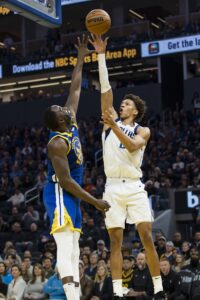 Here’s what that means for Dallas’ trio of two-way players:
- Kessler Edwards: Five active games remaining.
- Brandon Williams: Eight active games remaining.
- Kai Jones: 11 active games remaining.
Edwards’ restriction is the most concerning. The former Pepperdine standout has become Dallas’ de facto starting center due to the team’s litany of frontcourt injuries and has emerged as a crucial contributor. In Monday’s win over San Antonio, he registered his first double-double of the season, with 22 points and 11 rebounds in 35 minutes.
But if the Mavericks keep Edwards active going forward, he’ll reach his 50-game limit on March 21, with 11 games still left in the season. And he can’t be promoted to the 15-man roster at that point due to the Mavs’ aforementioned hard cap — if the team wants to promote him, it would have to wait until April 10 to do so.
The restrictions facing Williams and Jones aren’t quite as critical, especially since both players are currently among Dallas’ walking wounded. Williams missed Monday’s game with left hamstring tightness, while Jones has been out for three games due to a left quad strain.
Of course, while that means Williams and Jones may not eat up their remaining active games in the short term, having them among the many Mavericks on the injury list is a problem in its own right. Jones’ absence is especially unfortunate, given that he was just signed on March 3 so that the team could add some size and take advantage of the 12 games he’d be eligible to play in.
Jones had 21 points and eight rebounds in his Mavs debut, but hasn’t been able to suit up since then. And the club doesn’t have the ability to replace him (or Edwards or Williams) with a new two-way player, since the deadline for signing two-way deals passed on March 4.
When a team is hit particularly hard by injuries, the NBA has the ability to grant hardship exceptions, which allow the team to temporarily exceed its usual 15-man standard roster. But hardship deals still count against the cap and can’t be used to circumvent hard-cap rules, so they’re of little use to the Mavericks, who would have otherwise qualified for more than one of them in recent weeks.
The only way Dallas would have a chance to free up more flexibility below its hard cap would be to reach a buyout agreement with a player that reduces his salary or to cut a player and hope he gets claimed on waivers. The former option probably isn’t realistic; the latter might hurt more than it would help, since it would cost the Mavs a player good enough to warrant a waiver claim.
While it’ll be interesting to see if Dallas can hang onto the 10th spot in the Western Conference and qualify for the play-in, at this point it would be a victory for the team if it can just get through the season’s last few weeks without suffering any more injuries or wearing out any of its remaining healthy players.
Checking In On Traded 2025 First-Round Picks
With just five weeks left in the NBA’s regular season, we have a pretty good general sense of what the final standings will look like in 2024/25. While seeding in both the playoff race and the lottery standings remains up for grabs, there’s more clarity on which 2025 first-round picks traded with protections will actually change hands and which ones will fall within their protected range.
We’re checking in today on those picks, taking a closer look at which traded first-rounders will roll over to 2026, which ones will be conveyed, and which ones are still up in the air.
Let’s jump right in…
Traded 2025 first-round picks that will be protected:
- Wizards‘ pick traded to Knicks (top-10 protected).
- Jazz‘s pick traded to Thunder (top-10 protected).
- Hornets‘ pick traded to Kings (top-14 protected).
We’ll start with three of the most straightforward picks of the bunch. The Wizards (13-49), Jazz (15-48), and Hornets (15-48) currently own the three worst records in the NBA, which means there’s no chance of their traded first-round picks conveying this year.
If either the Wizards or the Jazz went on a hot streak in the season’s final weeks and finished as low as seventh in the lottery standings, there would be an ever-so-slight chance of that team’s pick falling outside of the top 10. But the odds of that happening are so minuscule that it’s not really worth discussing. There’s a very good chance that these three teams will all be picking in the top half of the lottery in June.
After they keep their first-rounders for 2025, the Wizards will instead owe their top-eight protected 2026 pick to the Knicks, the Jazz will owe their top-eight protected 2026 pick to the Thunder, and the Hornets will instead fulfill their obligation to the Kings by sending their 2026 and 2027 second-round picks.
Traded 2025 first-round picks unlikely to change hands:
- Trail Blazers‘ pick traded to Bulls (top-14 protected).
The Trail Blazers are four games behind No. 10 Dallas in the Western Conference standings, and with the injury-plagued Mavericks at risk of sinking like a stone, we can’t safely rule Portland out of the play-in race quite yet.
But the Blazers are a long shot for that spot, and likely wouldn’t win back-to-back play-in games on the road to make the playoffs even if they did come away with the No. 10 seed. So it seems pretty safe to assume Portland will hang onto its own first-round pick, even if we can’t guaranteed it quite yet.
Assuming the Blazers retain their first-rounder, they’ll instead owe their top-14 protected 2026 pick to the Bulls.
Traded 2025 first-round picks that will change hands:
- Suns‘ pick traded to Nets or Rockets (unprotected).
- Hawks‘ pick traded to Spurs (unprotected).
- Timberwolves‘ pick traded to Jazz (most/least favorable; unprotected).
- Bucks‘ pick traded to Nets (top-four protected) or Pelicans (5-30 protected).
- Knicks‘ pick traded to Nets (unprotected).
- Lakers‘ pick traded to Hawks (unprotected).
- Nuggets‘ pick traded to Magic (top-five protected).
- Cavaliers‘ pick traded to Suns (most/least favorable; unprotected).
Seven of these eight picks are unprotected and the eighth – the Nuggets’ first-rounder – has such light protection that there’s no chance it won’t change hands. Still, there are a few conditions worth noting.
The Suns’ first-rounder, for instance, will technically be sent to Brooklyn, but the Rockets will have the ability to swap their own first-round selection for that pick and will almost certainly do so, since they’re currently ahead of Phoenix in the standings by 9.5 games. In that scenario, Houston will end up with Phoenix’s pick (currently projected to be No. 12, per Tankathon) and the Nets would get the Rockets’ pick (No. 23 right now).
The Jazz will receive the more favorable of the Timberwolves’ and Cavaliers’ first-round picks, while the Suns receive the least favorable of the two. That means the Minnesota first-rounder (currently No. 19) will go to Utah and the Cleveland first-rounder (No. 30) will go to Phoenix, since the Cavs are currently 18 games ahead of the Wolves in the standings.
The Bucks’ pick, meanwhile, will go to Brooklyn if it lands between 5-30 or to New Orleans if it ends up in the top four. Milwaukee should comfortably earn a playoff spot in the East, so there’s essentially no scenario where the Pelicans end up with that pick, which projects to be No. 22 as of today. The Bucks will convey that pick to the Nets and their obligation to New Orleans will be extinguished.
The other picks are relatively straightforward. The Hawks’ pick headed to the Spurs figures to end up at No. 15 or 16 if Atlanta makes the playoffs or in the 10-12 range if they don’t. Of course, there’s always a chance it could move into the top four if the Hawks are in the lottery, which is a scenario San Antonio will be rooting for.
The Knicks’ pick going to Brooklyn, the Lakers’ pick going to Atlanta, and the Nuggets’ pick going to Orlando currently project to be 25th, 26th, and 27th overall, respectively.
Traded 2025 first-round picks likely to change hands:
- Kings‘ pick traded to Hawks (top-12 protected).
- Pistons‘ pick traded to Timberwolves (top-13 protected).
- Clippers‘ pick traded to Thunder via swap rights (unprotected).
- Warriors‘ pick traded to Heat (top-10 protected).
- Grizzlies‘ pick traded to Wizards (top-14 protected).
- Thunder‘s pick traded to Clippers via swap rights (unprotected).
The Kings aren’t a lock to make the playoffs, but they increasingly look like a pretty safe bet to at least qualify for the play-in tournament. In that scenario, they’d either clinch a playoff berth or end up at No. 13 or No. 14 in the lottery standings, meaning the only outcome that would prevent the Hawks from receiving their pick would be if the pick jumps into the top four on lottery day — the odds of that happening would be extremely slim.
The Pistons haven’t clinched a playoff berth yet, but they have a five-game lead on the No. 7 Hawks for a top-six seed, so it’s a pretty safe bet their first-round pick will be sent to the Timberwolves, finally freeing Detroit of that obligation — that first-rounder has landed in its protected range three years in a row.
The Thunder technically have the ability to swap their own first-round pick for either the Rockets’ or the Clippers’ first-rounder. Houston has a 4.5-game lead in the standings on L.A., so Oklahoma City is more likely to use that swap on the Clippers’ pick (as of today, that would mean moving up from No. 29 to No. 17), but it’s not set in stone yet.
If the Clippers pass the Rockets in the standings, it would actually be bad news for Brooklyn, since after the Thunder swap with Houston, the Rockets could use their swap rights (outlined in the section above) to send OKC’s pick to Brooklyn for the Suns’ first-rounder.
Finally, there’s still a non-zero possibility that the Warriors and/or Grizzlies drop into play-in territory and miss the playoffs, so we can’t say with certainty yet that the Heat and Wizards will receive those first-rounders. But both picks are likely to convey, and Miami is in especially good shape to get Golden State’s selection even if the Dubs end up in the lottery — the pick would have to jump into the top four in that scenario for the Warriors to keep it.
Traded 2025 first-round picks still very much up in the air:
- Sixers‘ pick traded to Thunder (top-six protected).
- Heat‘s pick traded to Thunder (top-14 protected).
These are the two picks whose odds of conveying remain closest to 50/50.
As of today, the Sixers have the NBA’s seventh-worst record, which would mean they’d have a 31.9% chance of hanging onto their pick. But they’re only a half-game ahead of Brooklyn in the standings and one game ahead of Toronto. If the 76ers finish with the sixth-worst record, their odds of keeping their pick would increase to 45.8%. With the fifth-worst record, that number would jump to 63.9%. So this one will come down to lottery night.
If Philadelphia’s pick lands in its protected range, the club would instead owe its top-four protected 2026 first-rounder to Oklahoma City.
As for the Heat, they remain firmly in the mix of an uninspiring play-in race in the East, with a 29-34 record that’s good for the No. 9 seed. If they’re able to earn a playoff spot via the play-in tournament, they’d send their pick to the Thunder. If not, they’ll keep it and would owe their unprotected 2026 first-rounder to OKC.
Disabled Player Exceptions For 2024/25 Expire On Monday
A series of disabled player exceptions granted to teams earlier in the 2024/25 season will expire on Monday if they go unused. The annual deadline to use a disabled player exception is March 10.
We go into more detail on who qualifies for disabled player exceptions and how exactly they work in our glossary entry on the subject. But essentially, if a team has a player suffer a season-ending injury prior to January 15, the exception gives that team the opportunity to add an injury replacement by either signing a player to a one-year contract, trading for a player in the final year of his contract, or placing a waiver claim on a player in the final year of his contract.
Here are the teams whose DPEs will expire if they aren’t used on by the end of the day on Monday, per Eric Pincus of Sports Business Classroom:
- Charlotte Hornets: $6,512,625 (Grant Williams) (story)
- Orlando Magic: $5,500,000 (Moritz Wagner)
- Utah Jazz: $2,924,340 (Taylor Hendricks) (story)
- Indiana Pacers: $2,217,691 (Isaiah Jackson) (story)
- Philadelphia 76ers: $2,010,180 (Jared McCain)
- Denver Nuggets: $1,532,820 (DaRon Holmes) (story)
The Pacers were granted a second disabled player exception worth $1,118,846 for James Wiseman‘s season-ending injury, but forfeited it when they dealt Wiseman to Toronto at the trade deadline.
Since the trade deadline has passed and no players are currently on waivers, there’s essentially just one way left for those teams with disabled player exceptions to use them: signing a free agent. However, that seems unlikely, given that there are no free agents on the buyout market who would warrant a contract worth more than the veteran’s minimum.
In other words, these exceptions will, in all likelihood, expire on Monday without being used. Assuming that happens, no team will have used a disabled player exception this season.
Disabled player exceptions have never been used with much frequency, but the fact that mid-level and bi-annual exceptions could be used for the first time this season to acquire players via trade or waiver claim has further reduced their importance.
Poll: Who Is The NBA’s 2024/25 MVP?
Nuggets superstar Nikola Jokic concluded Friday’s overtime game against the Suns with the league’s first-ever 30/20/20 game, having totaled 31 points, 21 rebounds and 22 assists.
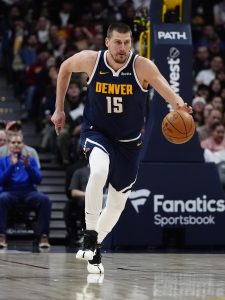 In some ways, the three-time MVP’s history-making stat line is almost unsurprising. Jokic continues to be on the forefront of award discussions while putting up video-game level stat lines every night.
The 30-year-old big man is averaging career highs of 28.9 points and 10.6 assists per game, while his 12.9 rebounds per game would be the second-best mark of his career. He’s doing this on an incredibly efficient .577/.439/.818 shooting split. His 43.9% three-point percentage and 4.4 attempts from deep per game are also both career highs.
And while Jokic’s stats might be unsurprising after three MVPs and six All-NBA appearances, it does not mean they should go overlooked. This kind of production is what fans read about in history books and resembles something of an old Wilt Chamberlain stat line.
Being an MVP isn’t all about individual statistics, however. Being the league’s most valuable player means leading a winning situation and making one’s teammates better. Jokic fulfills this criteria, having helped the Nuggets overcome a relatively shaky start to the season. Denver won nine straight from late January to late February and has emerged victorious in 14 of its last 17 games.
Christian Braun is having a season worthy of the Most Improved Player award and Russell Westbrook is proving to be a nice fit, along with other contributions up and down the lineup from the Nuggets’ starters and role players. Jokic has good players around him, but there’s no doubt he’s helping set them up for success.
Despite Jokic’s historic achievements, he’s still trailing Thunder superstar Shai Gilgeous-Alexander in NBA.com’s most recent MVP ladder. Entering Friday, Gilgeous-Alexander appeared to be the runaway favorite for the award.
Gilgeous-Alexander, by the way, is absolutely deserving of the praise. He’s averaging a league-leading and career-high 32.8 points along with 5.1 rebounds and 6.2 assists per game. His 1.8 steals per night are second to only Dyson Daniels and he has posted an impressive .526/.378/.898 shooting line.
As we wrote Thursday, Gilgeous-Alexander’s efficiency is off the charts. His true-shooting and usage percentages are career highs, and he ranks first in the league among guards in the former category.
The Canadian superstar finished second in MVP voting last year and may very well come away with the award this year. He has become the NBA’s surest bet to score 50 points on a given night, having done so four times in the last seven weeks after having previously never accomplished the feat in his career.
Like Jokic, Gilgeous-Alexander accomplishes the two-pronged test of winning games and helping his teammates. The Thunder own the league’s second-best record at 52-11, sitting atop the Western Conference. Oklahoma City has only dropped two games since the start of February, winning 15 of its previous 17.
What’s more, the Thunder are doing this in the face of multiple injuries to key players. Marquee free agent addition Isaiah Hartenstein missed over 20 games due to injury this season while star second-year center Chet Holmgren has been limited to just 18 appearances. Lockdown defender Alex Caruso, acquired via trade, has also missed over 20 games.
There’s no doubt multiple Thunder players like Jalen Williams, Cason Wallace and Aaron Wiggins, to name a few, deserve individual praise. But Gilgeous-Alexander’s presence and elite offensive production are certainly helping bring out the best in those players as well.
Beyond the two hottest names in Jokic and Gilgeous-Alexander, it’s easy to forget other players are worthy of being thrown into the conversation as well. Giannis Antetokounmpo‘s 30.8 points and 12.1 rebounds per game should not be overlooked. Jayson Tatum, Karl-Anthony Towns and Evan Mobley are also putting up tremendous numbers on contending teams. But all signs point to Jokic and Gilgeous-Alexander being the top two in voting.
As NBA.com’s Shaun Powell writes, the Nuggets and Thunder play each other for the final two times this regular season on Sunday afternoon and Monday evening in back-to-back games. The results of those two contests could help sway voters in one direction or another. Premier matchups between the league’s best tend to go the most-noticed among fans, so it will be interesting to see if Jokic continues to close the perceived gap in the race. For what it’s worth, Basketball Reference’s 2024/25 NBA MVP tracker gives Jokic a 65.1% chance to win the award.
Regardless of what happens, it will be interesting to see if the clash between Jokic and Gilgeous-Alexander ends up as close as Jokic’s first MVP win over Joel Embiid in ’21/22, the tightest race in recent memory. Both Jokic and Gilgeous-Alexander are worthy of the honor and are putting up generational-type seasons.
That leads us to today’s question: Who should win the ’24/25 MVP award? Head to the comments to share your pick between Jokic and Gilgeous-Alexander or to let us know if you believe another player should come away with the award.
Who Should Be The 2024/25 MVP?
-
Nikola Jokic 65% (1,122)
-
Shai Gilgeous-Alexander 28% (488)
-
Other (Leave a comment) 7% (114)
Total votes: 1,724