
Minimum-Salary Players Who Can’t Be Acquired Using Minimum Salary Exception
As we explain in our glossary entry, the NBA’s minimum salary exception doesn’t just allow over-the-cap teams to sign players to minimum salary contracts. It also allows clubs to trade for players earning the minimum without having to send out any matching salary.
As long as the player’s salary doesn’t push a team’s salary above its hard cap, any club is permitted to use the minimum salary exception to acquire a player via trade, regardless of its proximity to the tax aprons.
However, not every player earning the minimum can be acquired using the minimum salary exception. Essentially, any contract that couldn’t have been signed using the minimum salary exception also can’t be acquired using the exception.
For instance, since the exception only allows teams to sign players to one- or two-year contracts, similar rules apply in trades. A team can’t use the minimum salary exception to acquire a player on a three- or four-year contract, even if he’s earning the minimum. If a player signs a two-year contract that exceeds the minimum in year one and is worth the minimum in year two, he’s ineligible to be acquired using the minimum salary exception.
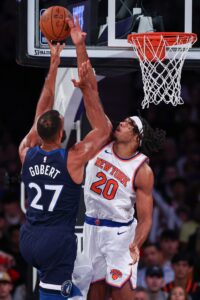 What does that mean in practical terms? Let’s use Knicks center Jericho Sims as an example, since his name has come up as a possible trade candidate.
Sims is earning $2,092,344 this season, which is his minimum salary based on the contract he signed in 2022. Since he’s currently in the third season of a three-year contract though, a team acquiring him can’t absorb his salary using the minimum salary exception.
That team, assuming it’s over the cap, would either have to send out a player to match Sims’ $2,092,344 salary or use an exception to take it on — it wouldn’t necessarily have to be a trade exception, since the non-taxpayer mid-level exception, bi-annual exception, or room exception could also work.
If Sims were on a one- or two-year minimum salary contract, he could be traded straight up for, say, a draft pick without his new team requiring a trade exception or an outgoing salary. That’s the case for a trade candidate like Pelicans wing Javonte Green, who is on a one-year minimum deal.
This rule shouldn’t be a major impediment for any transactions this season, since most teams have some form of exception available for a small trade, and those that don’t should have at least one expendable minimum-salary player to send out for matching purposes.
However, certain teams, including those operating above the second apron, will have far fewer pathways to acquire even this sort of low-cost player. So it’s worth keeping tabs on players like Sims who fit the bill, since it could affect how certain deals are constructed at this season’s deadline.
Here’s the list of players earning the minimum salary who can’t be acquired using the minimum salary exception in 2024/25:
Atlanta Hawks
Boston Celtics
Brooklyn Nets
Chicago Bulls
Cleveland Cavaliers
Dallas Mavericks
Denver Nuggets
Golden State Warriors
Indiana Pacers
Los Angeles Clippers
Los Angeles Lakers
Memphis Grizzlies

Miami Heat
Milwaukee Bucks
Minnesota Timberwolves
New Orleans Pelicans
New York Knicks
Oklahoma City Thunder
Orlando Magic
Philadelphia 76ers
Phoenix Suns
Portland Trail Blazers
Sacramento Kings
San Antonio Spurs
Community Shootaround: First-Time All-Stars
The 2024/25 NBA season has been full of surprising performances, from emerging young players and teams alike.
With 24 slots available, will any players make their All-Star debuts next month?
Both of the two best teams in the league, by record, sport young rising talents who could break through this year.
The loaded Cavaliers, currently an NBA-best 35-6 halfway through the year, boast three veteran All-Stars in Donovan Mitchell, Darius Garland, and Jarrett Allen. Mitchell and Garland seem all but assured to make the cut next month, but All-Defensive forward Evan Mobley, the No. 3 pick in 2021 out of USC, has taken a leap this season. If coaches want to reward Cleveland for its breakout campaign with a third All-Star, Mobley seems to have a better shot at the honor than Allen.
Third-year forward Jalen Williams is the second-best player on the 34-7 Thunder, behind perennial MVP candidate Shai Gilgeous-Alexander. An excellent defensive player who plays a lot bigger than his 6’5″ frame would suggest, Williams is still working to elevate his offense and become a true, championship-level secondary scoring option behind Gilgeous-Alexander. But he’s already done enough to prove his mettle as one of the league’s most exciting young players.
The 23-year-old is averaging a career-high 20.6 points, 5.7 rebounds, 5.2 assists, 1.8 steals and 0.7 blocks a night.
Another 2021 draftee, former No. 1 pick Cade Cunningham, has helped propel his revitalized Pistons to a 21-21 record and the East’s No. 8 seed. Cunningham individually has made a pretty solid case for All-Star consideration, and to this writer feels like the safest bet among this crop of potential newbies — well, the second-best, actually. We’ll get to the best in a minute.
This season, Cunningham is averaging 24.3 points, 9.4 assists, and 6.5 rebounds per game. Those eye-popping numbers, combined with Detroit’s remarkable turnaround from a horrific 2023/24 season, should firmly establish him as an All-Star this year. The 6’6″ Oklahoma State alum is also posting an efficient shooting line of .450/.368/.805.
Magic forward Franz Wagner was making a convincing case to make his All-Star debut this year, before he was felled by an abdominal injury. He has now missed too much time to realistically have a shot, but All-Defensive Team guard Jalen Suggs — who has stepped up as a scorer — could be Orlando’s lone representative this season.
The Magic have performed ably while dealing with long-term absences to Wagner and Paolo Banchero, and Suggs’ stabilizing presence has been a huge part of that. With Banchero back and Wagner hopefully returning soon, Orlando could start vaulting up the Eastern Conference standings again soon enough.
Another All-Defensive Team guard, Celtics champ Derrick White, looked to be on the cusp of making his first All-Star team this year, at age 30, thanks to some strong two-way play early this season. The 2024 Olympic gold medalist has fallen back down to earth a bit across the last month, but his reputation and team success might still help him get there.
In one of the happiest surprises for the season, the young Rockets have looked like one of the best teams in the league. Their 28-13 record makes them the No. 2 seed in the West, behind only Oklahoma City. If anyone is to be named an All-Star among Houston’s cadre of talented young players, center Alperen Sengun would be the best fit as the club’s best two-way player. The 6’11” big man has been averaging 19.4 points, 10.5 rebounds, and 5.1 assists across 41 healthy games so far.
One player, to this writer, stands tall — literally — above the rest.
Spurs superstar-in-waiting Victor Wembanyama seems all but assured to make his first of many, many All-Star teams this year.
The 7’3″ big man has taken the league by storm in just his second season, pushing his club to a solid 19-21 record in the West. Already the odds-on favorite to win Defensive Player of the Year according to BetMGM’s Shane Jackson, the 7’3″ center has rounded out his offense, too. The additions of solid vets Chris Paul and Harrison Barnes, plus impressive rookie guard Stephon Castle and the growth of some young incumbents, appear to have helped expedite the 21-year-old’s development.
The reigning Rookie of the Year is averaging 24.5 points, 10.8 rebounds, 4.1 blocks, 3.7 assists, and 1.1 steals per game for San Antonio. A talent who can score from anywhere, the Frenchman boasts a shooting line of .474/.353/.868.
Amid some major Jimmy Butler-related turmoil, Heat guard Tyler Herro has become Miami’s most reliable regular season scorer, especially in the clutch. Although there are still questions about his defense, the 2022 Sixth Man of the Year could be the Heat’s lone All-Star representative in February thanks to his stellar output on the other end.
Bulls guard Coby White was playing like a fringe All-Star last season as the top performer on a play-in Chicago team. This season, on the No. 10-seeded Bulls, White’s numbers are pretty comparable to his 2023/24 run, but his play has been overshadowed by Chicago’s two veteran All-Stars, Zach LaVine and Nikola Vucevic. Either of those two pros seems to have a better chance of being named to his third All-Star squad than White does of making his first.
We want to hear from you. Who, if anyone, do you think should make the All-Star team for the first time this year? Are there any other names worthy of discussion?
Let us know in the comments section below.
Eighteen More Players Become Trade-Eligible
Today is Wednesday, January 15, which means that a total of 18 players who signed free agent contracts meeting specific criteria this past offseason are now eligible to be traded.
Most offseason signees became trade-eligible on December 15, but players who met the following criteria were ineligible to be moved for an extra month:
- The player re-signed with his previous team.
- He got a raise of at least 20%.
- His salary is above the minimum.
- His team was over the cap and used Bird or Early Bird rights to sign him.
The following players met that criteria and are eligible to be traded as of Wednesday:
- Precious Achiuwa (Knicks)
- OG Anunoby (Knicks)
- Goga Bitadze (Magic)
- Miles Bridges (Hornets)
- Max Christie (Lakers)
- Nic Claxton (Nets)
- Haywood Highsmith (Heat)
- Isaiah Joe (Thunder)
- Johnny Juzang (Jazz)
- KJ Martin (Sixers)
- Tyrese Maxey (Sixers)
- Malik Monk (Kings)
- Josh Okogie (Suns)
- Scotty Pippen Jr. (Grizzlies)
- Note: Pippen doesn’t meet the criteria detailed above, but was converted from his two-way contract to a standard deal on October 15. He’s trade-eligible today because it has been three months since he signed that contract.
- Immanuel Quickley (Raptors)
- Obi Toppin (Pacers)
- Aaron Wiggins (Thunder)
- Patrick Williams (Bulls)
Most of the players on NBA rosters are now eligible to be moved, though a small handful still can’t be dealt.
That group includes Kings forward Doug McDermott, who becomes trade-eligible on Thursday, Celtics sharpshooter Sam Hauser (trade-eligible on January 23), Pacers guard Andrew Nembhard (Jan. 26), Grizzlies big man Jay Huff (Jan. 28), Cavaliers center Jarrett Allen (Feb. 2), and Knicks center Ariel Hukporti (Feb. 5).
Additionally, there are several players who won’t become trade-eligible at all prior to this season’s February 6 deadline, including stars like Joel Embiid, Lauri Markkanen, and Jamal Murray.
Players on 10-day contracts are also ineligible to be dealt.
Community Shootaround: Rookie Of The Year Race
Entering Tuesday’s NBA games, Wizards center Alex Sarr was listed by most sportsbooks as the odds-on favorite to win this season’s Rookie of the Year award, as Zach Harper of The Athletic observes.
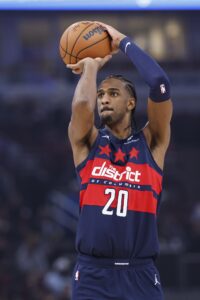 It’s no surprise that a No. 2 overall pick like Sarr is in contention for that honor, but his stat line through 34 professional contests isn’t exactly what you’d expect from the Rookie of the Year frontrunner: 11.7 points, 6.6 rebounds, 2.3 assists, and 1.6 blocks in 27.1 minutes per night, with a shooting line of .406/.325/.641.
The Wizards are 5-29 in games Sarr has played and have an abysmal -16.3 net rating during his 920 minutes on the court (they’re at -10.4 in the 909 minutes he hasn’t played).
Sarr has been playing better basketball over the past month-and-a-half, averaging 13.3 PPG and 7.1 RPG with a .409 3PT% in his last 20 appearances, so those betting odds take into account that he’s trending in the right direction. But is he really the best rookie of the 2024/25 class?
That honor initially belonged to Sixers guard Jared McCain, who averaged 15.3 points per game on .460/.383/.875 shooting in his first 23 games of the season. However, McCain will miss the rest of the ’24/25 campaign due to a knee injury.
The 65-game rule doesn’t apply to Rookie of the Year voting, so a player could win the award without reaching the 65-game threshold, but it’s probably safe to assume 23 solid outings won’t be enough for McCain.
Lakers wing Dalton Knecht has been solid, but has certainly come down to earth since a hot streak in November. For the season, he has averages of 9.6 PPG and 3.3 RPG on .461/.347/.800 shooting.
A pair of Grizzlies rookies have played good minutes for the No. 3 seed in the Western Conference — center Zach Edey has averaged 9.9 PPG and 7.5 RPG through 26 games (19 starts), while Jaylen Wells has been a solid three-and-D piece, putting up 11.7 PPG, 3.4 RPG, and 1.7 APG with a .438/.378/.813 shooting line and solid defense through 40 games (35 starts).
Wells might get my Rookie of the Year vote if the season ended today. But both he and Edey will face stiff competition for playing time if Memphis is fully healthy and battling for playoff seeding during the second half of the season. That could put that Grizzlies duo at a disadvantage down the stretch, since players on lottery-bound teams – like Sarr in Washington – will be getting big minutes and racking up gaudier numbers in games that don’t matter all that much.
As Harper notes, Pelicans center Yves Missi, Spurs guard Stephon Castle, Magic forward Tristan Da Silva, Hawks forward Zaccharie Risacher, and Wizards guard Carlton Carrington are some of the other first-year players who can be found in oddsmakers’ top 10 choices for Rookie of the Year.
We want to know what you think. Who is your Rookie of the First Half? If you were projecting a full-season Rookie of the Year winner today, who would you pick? Are there any dark-horse candidates you like to enter the mix with big second halves?
Head to the comment section below to weigh in with your thoughts!
Checking In On Open NBA Roster Spots
With the NBA’s league-wide salary guarantee date for 2024/25 behind us, it’s worth checking in once again on which teams have open spots on their 18-man rosters.
As our roster count tracker shows, these are the teams that don’t currently have full rosters consisting of 15 players on standard rest-of-season contracts and three on two-way deals:
Teams with standard roster openings:
- Boston Celtics
- Cleveland Cavaliers
- Detroit Pistons
- Golden State Warriors
- Houston Rockets
- Miami Heat
- Minnesota Timberwolves
- New Orleans Pelicans
- New York Knicks
- Oklahoma City Thunder *
- Philadelphia 76ers
- Phoenix Suns
- Sacramento Kings
- Toronto Raptors *
The Thunder and Raptors, marked with asterisks, technically have full 15-man standard rosters at the moment, but they’re each only carrying 14 players on full-season contracts, with one player on a 10-day deal. Those 10-day deals will expire later this month, at which time both Oklahoma City and Toronto will once again have an open roster spot.
Most teams in this group likely won’t sign a player to a rest-of-season or multiyear contract until sometime after the trade deadline, when they know they won’t need to use that 15th roster spot to accommodate a trade in which they acquire more players than they send out.
In between now and the trade deadline, some of these clubs could join OKC and Toronto in signing free agents to 10-day contracts. However, nine of these 14 teams project to be taxpayers, so those nine teams likely won’t be eager to bring in a 15th man unless he’s actually going to play.
Besides the Thunder and Raptors, the other clubs not projected to be taxpayers are the Pistons, Rockets, and Kings, though Detroit is operating with cap space and may try to avoid cutting into that room by signing a 15th man between now and the deadline.
Teams with two-way openings:
- Golden State Warriors
- Orlando Magic
- Philadelphia 76ers
The deadline to sign a player to a two-way contract won’t arrive until March 4, so there’s no urgency for these clubs to fill their openings right away.
Golden State’s and Orlando’s actions don’t suggest we should count on them to make two-way signings soon — the Warriors‘ third two-way slot has been open since they traded Reece Beekman to Brooklyn on December 15, while the Magic have left one of their two-way slots open all season.
Still, the prorated portion of a two-way salary is such a minor financial commitment for an NBA franchise that we may see one or more of these teams bring in a new two-way player sooner rather than later, even if they’re not certain he’ll hold that spot for the rest of the season.
Community Shootaround: First Half’s Pleasant Surprises, Disappointments
The fact that Bulls point guard Lonzo Ball has been able to play in 19 games so far this season is an achievement in itself, given that he missed the previous two-and-a-half years while dealing with ongoing knee problems. As Brian Windhorst and Tim Bontemps write for ESPN.com (Insider link), what’s even more impressive is how impactful Ball has been during his time on the court.
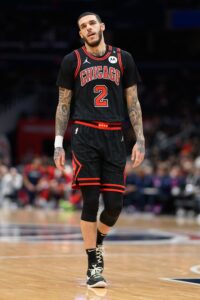 Although his numbers, including 5.8 points per game on .359/.318/.750, don’t look especially strong, Ball is once again making the sorts of winning plays that don’t show up in the box score. Chicago has a +6.9 net rating when he’s on the court, compared to a -5.0 mark when he’s not.
“Someone is going to get him next year and look smart,” one executive said to ESPN of Ball, who is on an expiring contract.
Ball is among several players identified by Windhorst and Bontemps as the pleasant surprises of the first half of the 2024/25 NBA season. Here are a few more of the names on that list:
- Karl-Anthony Towns, Knicks: “He’s been everything the Knicks were hoping for and more, and his absence has left a larger hole than the Wolves would’ve ever thought,” a scout told ESPN.
- Cade Cunningham, Pistons: “When the Pistons gave him the max, there were quite a few people who thought it was a risk, and he’s been very strong,” a general manager said.
- Victor Wembanyama, Spurs: “What he’s doing is just ridiculous,” an executive said. “Say whatever you want about him meeting expectations; if he gets that roster to the playoffs, he should get MVP votes. And he might.”
- Norman Powell, Clippers: “He’s gotten more minutes and shots, but no one would’ve believed he’d take this leap at this stage of his career,” an exec said to ESPN.
James Harden (Clippers), Dyson Daniels (Hawks), and Cameron Johnson (Nets) are among the others mentioned by ESPN’s duo.
On the opposite end of the spectrum, Jazz forward Lauri Markkanen, Heat teammates Terry Rozier and Jaime Jaquez, and Sixers center Joel Embiid are among the season’s biggest disappointments, as identified by Windhorst, Bontemps, and the sources they spoke to. Here are a few more of the players in that group:
- Paul George, Sixers: “Philly probably knew there was a chance they’d have a rough PG year on this contract but they probably thought it would be year four — not year one,” an executive said.
- Kyle Kuzma, Wizards: “I know he’s dealt with an injury,” one scout told ESPN, “but I think this has been the most disappointing season of his career.”
- Scoot Henderson, Trail Blazers: “I thought it was a guarantee he’d play much better this year than last and show some things,” an exec said. “I’ve been wrong. His numbers are down, and the eye (test) confirms it.”
We want to know what you think.
Which NBA players have you been most pleasantly surprised or disappointed by so far this season? Are there any names on ESPN’s lists – or scouts’ and executives’ comments – that you strongly agree or disagree with?
Head to the comment section below to weigh in with your thoughts!
Hoops Rumors’ 2025 NBA 10-Day Contract Tracker
On January 5, NBA teams became eligible to sign players to 10-day contracts, and many of the signings that take place between now and the end of the regular season in April will be of the 10-day variety. Hoops Rumors maintains a database that allows you to keep on top of those deals, tracking every 10-day signing all season long.
Besides featuring all of this year’s 10-day deals, our 10-Day Contract Tracker includes information on all 10-day contracts signed since the 2006/07 season. The search filters in the database make it easy to sort by team, player, and/or year.
For instance, if you want to see all the 10-day contracts that the Raptors have signed since 2007, including Eugene Omoruyi‘s current deal, you can do so here. If you want to view Omoruyi’s history of 10-day deals, that list is here.
You can also see whether a player and team signed a second 10-day contract or if those short-term deals led to an agreement that covered the rest of the season. Additionally, our tracker notes which 10-day deals remain active, saving you the hassle of having to figure out whether a particular contract ends on Wednesday or Thursday.
A link to our 10-Day Contract Tracker can be found at any time in the right sidebar under “Hoops Rumors Features” on our desktop site. On our mobile site, you can find it on our “Features” page. We’ll be keeping it up to date for the rest of the season, so be sure to check back to keep tabs on the latest signings as they become official.
Recap Of 2024/25 Salary Guarantee Decisions
Entering the day on January 7, there were 25 players who were signed to standard, full-season contracts but whose salaries for the 2024/25 campaign weren’t fully guaranteed.
The deadline for teams to waive those players and avoid having their full ’24/25 salaries become guaranteed was on Tuesday, January 7 at 4:00 p.m. CT.
Although their salaries won’t technically become guaranteed until January 10, those players would still receive their full-season guarantees if they’re cut today or tomorrow, since they wouldn’t clear waivers before Friday’s guarantee deadline.
Here’s a roundup of the decisions teams made with those 25 players:
Players on standard contracts who will have their salaries guaranteed:
Each player’s salary is noted here. His cap hit is identical to his salary unless otherwise indicated.
- Zion Williamson, Pelicans: $36,725,670
- Taj Gibson, Hornets: $3,303,771 *
- James Johnson, Pacers: $3,303,771 *
- Doug McDermott, Kings: $3,303,771 *
- Markieff Morris, Mavericks: $3,303,771 *
- Tristan Thompson, Cavaliers: $3,303,771 *
- Jae Crowder, Kings: $2,620,232 ^
- Talen Horton-Tucker, Bulls: $2,425,403 *
- James Wiseman, Pacers: $2,237,691
- Dalano Banton, Trail Blazers: $2,196,970
- Lindy Waters, Warriors: $2,196,970
- Sam Merrill, Cavaliers: $2,164,993
- Keon Johnson, Nets: $2,162,606
- Keon Ellis, Kings: $2,120,693
- Jaylin Williams, Thunder: $2,019,699
- Ricky Council, Sixers: $1,891,857
- Andre Jackson, Bucks: $1,891,857
- Craig Porter Jr., Cavaliers: $1,891,857
- Gui Santos, Warriors: $1,891,857
- Jalen Wilson, Nets: $1,891,857
- Landry Shamet, Knicks: $1,682,008 #
- Ariel Hukporti, Knicks: $1,064,049
(*) cap hit of $2,087,519
(^) cap hit of $1,655,619
(#) cap hit of $1,343,690
Besides Williamson, whose maximum salary was already mostly guaranteed prior to Tuesday, each of the players on a non-guaranteed contract who was retained through January 7 is earning his minimum salary for the season, so the financial impact of keeping those players is relatively minor for their respective teams.
Still, open roster spots are valuable at this time of year. A handful of these players were fortunate not to be let go by a club prioritizing flexibility ahead of the trade deadline; many others have played regular rotation minutes during the first half or hold long-term value and were never candidates to be cut.
Players on standard contracts who were waived before their salaries became guaranteed:
Each player’s cap hit is noted here. The team would no longer be on the hook for that cap charge if a player is claimed off waivers.
- Bruno Fernando, Raptors: $1,115,128
- Orlando Robinson, Kings: $959,779
- Branden Carlson, Thunder: $365,767
 All three of these players were on minimum-salary contracts. Carlson is a rookie who was signed well after the regular season began, which is why his cap hit is so modest compared to the others.
These players are all still on waivers, so they’re technically candidates to be claimed on Thursday. A team that places a claim on one of those players would have to commit to guaranteeing his salary for the rest of the season, so it’s unlikely.
There were several other players with partially or non-guaranteed salaries who were cut earlier in the season. That group consisted of the following players, listed in the order they were waived (with their accompanying cap hits):
- Alex Reese, Thunder: $79,804
- Malevy Leons, Thunder: $126,356
- Jaylen Nowell, Pelicans: $278,782
- Elfrid Payton, Pelicans: $274,809
- Moses Brown, Pacers: $306,660
- Paul Reed, Pistons: $2,485,563
- Note: After clearing waivers, Reed was re-signed to a guaranteed minimum-salary contract.
- Javante McCoy, Pistons: $32,596
- Matt Ryan, Knicks: $621,438
- PJ Dozier, Timberwolves: $1,051,255
These moves didn’t go down to the wire like the others listed above, having occurred well in advance of the salary guarantee deadline.
Players on two-way contracts who were waived before their salaries became guaranteed:
Under the current Collective Bargaining Agreement, the league-wide salary guarantee date of January 10 also applies this season to players on two-way contracts. Prior to 2024, the guarantee date had been Jan. 20 for two-way salaries.
Two-way salaries are only worth half of the rookie minimum and don’t count against the salary cap, so many teams likely weren’t feeling a ton of pressure to make rest-of-season decisions on their two-way players by Tuesday. Two-way contracts can be signed until March 4, so there will be many clubs that make changes between now and then.
Still, there were seven players on two-way contracts who were waived between the start of January and Tuesday’s waiver deadline. Those players, who subsequently won’t receive their full two-way salaries this season, are as follows:
- David Jones, Jazz
- Jaylen Martin, Nets
- Daishen Nix, Timberwolves
- Cole Swider, Pistons
- Alondes Williams, Pistons
- Pete Nance, Sixers
The seventh player in that group, Tristen Newton, was waived by the Pacers but was claimed two days later by the Timberwolves and retained through Tuesday’s deadline, so he’ll still earn his full two-way salary despite being cut within the last week.
There are currently three open two-way slots around the NBA, belonging to the Warriors, Magic, and Sixers.
The full list of players who are still on two-way contracts and earned full guarantees can be found right here.
Community Shootaround: Lakers’ Season
There’s still a month to go before the trade deadline arrives, but the Lakers have gotten the jump on the competition.
Late last month, they acquired forward Dorian Finney-Smith and guard Shake Milton from the Nets in exchange for D’Angelo Russell, Maxwell Lewis and three second-round picks.
Finney-Smith was the centerpiece of the deal for the Lakers. They were seeking a forward who could upgrade their defense and also space the floor.
Thus far, coach JJ Redick has used Finney-Smith off the bench in four games since the deal was completed. The Lakers have a 2-2 record during that stretch. Milton has also received second-unit minutes.
The Lakers’ hopes in the Western Conference still rely on the health and steady contributions of Anthony Davis and LeBron James, as well as the perimeter shooting of Austin Reaves.
Rui Hachimura, Max Christie, rookie Dalton Knecht, and Gabe Vincent are the other players who have received steady minutes. The Lakers have played well since moving Christie into the starting lineup. Knecht has cooled off after a strong start. They’re hopeful of getting a boost soon from forward Jarred Vanderbilt, who has yet to play this season due to foot and knee ailments.
Statistically, the Lakers rank among the top 10 in field goal percentage and fewest turnovers. However, they’re a middling three-point shooting team and they’re in bottom 10 in rebounding and defensive field goal percentage.
The deal with the Nets gave the Lakers some relief below the second tax apron and they still have some draft capital to offer in future deals — a pair of 2025 second-rounders, first-rounders in 2029 and 2031, and first-round pick swaps in 2026, 2028, and 2030.
They don’t have any players with expiring contracts who are making $4MM or more, so they’ll have to be more creative to make another deal.
That brings us to today’s topic: Did the Lakers improve their postseason prospects enough with the addition of Finney-Smith? If not, what other upgrades do they need to make to become true contenders again?
Please take to the comments section to weigh in on this topic. We look forward to your input.
Salaries For 10-Day Contracts In 2024/25
Sunday was the first day this season that an NBA team can sign a player to a standard 10-day contract. As we explain in a glossary entry, a 10-day deal allows a club to temporarily add a player to its 15-man roster without any commitments beyond those 10 days.
Under the league’s new Collective Bargaining Agreement, all 10-day contracts are worth a player’s minimum salary. The minimum salary in a given season differs from player to player, based on his years of NBA service entering the season. For instance, in 2024/25, a rookie on a full-season minimum deal will earn $1,157,153, whereas a 10-year veteran who is earning the minimum will make $3,303,771.
[RELATED: NBA Minimum Salaries For 2024/25]
The same is true for 10-day deals. A rookie will earn significantly less over the course of his 10 days with a team than a tenured NBA veteran will.
Because the 2024/25 regular season is 174 days long, a player’s full-season minimum salary can be divided by 174 to calculate his daily salary. From there, it’s just a matter of multiplying by 10 to determine his salary on a 10-day contract.
Using that formula, here’s the full breakdown of what salaries for 10-day deals look like in ’24/25:
| Years in NBA | Salary |
|---|---|
| 0 | $66,503 |
| 1 | $107,027 |
| 2 | $119,972 |
| 3 | $124,288 |
| 4 | $128,603 |
| 5 | $139,391 |
| 6 | $150,179 |
| 7 | $160,967 |
| 8 | $171,756 |
| 9 | $172,611 |
| 10+ | $189,872 |
Because the NBA doesn’t want teams to avoid signing veteran players in favor of cheaper, younger options, the league reimburses clubs who sign veterans with three or more years of service to 10-day, minimum-salary contracts.
In those instances, teams are on the hook for $119,972, the minimum salary for a player with two years of experience, while the NBA covers the difference. So a team would pay the same amount ($119,972) whether they sign a player with three years under his belt or a player with 12 years of NBA experience.