
Hoops Rumors Chat Transcript: 8/7/2025
Hoops Rumors hosted a live chat today at 2:00 pm Central time (3:00 pm Eastern).
Early NBA Maximum Salary Projections For 2026/27
Although a number of big-money free agent contracts were completed earlier this summer, many of the most lucrative deals signed by players so far in 2025/26 have been contract extensions. And several of those extensions have been maximum-salary deals.
 [RELATED: 2025/26 NBA Contract Extension Tracker]
Because those extensions won’t go into effect until at least the 2026/27 season and the NBA won’t finalize its ’26/27 salary cap until next summer, we can only ballpark what many of year’s maximum-salary contracts will look like based on the league’s latest cap estimates.
The NBA’s most recent projection for ’26/27 called for a cap of $166MM, which is the number we’ll use to project next season’s maximum salaries.
Listed below are the early maximum-salary projections for 2026/27. The first chart shows the maximum salaries for a player re-signing with his own team — a player’s previous club can offer five years instead of four, and 8% annual raises instead of 5% raises. The second chart shows the maximum salaries for a player signing with a new team.
A player’s maximum salary is generally determined by his years of NBA experience, so there’s a wide gap between potential earnings for younger and older players. Unless they qualify for a more lucrative extension by meeting certain performance criteria, players with no more than six years of NBA experience are limited to a starting salary worth up to 25% of the cap. For players with seven to nine years of experience, that number is 30%. For players with 10 or more years of experience, it’s 35%.
Here are the the early max-salary projections for 2026/27:
A player re-signing with his own team (8% annual raises, up to five years):
| Year | 6 years or less | 7-9 years | 10+ years |
|---|---|---|---|
| 2026/27 | $41,500,000 | $49,800,000 | $58,100,000 |
| 2027/28 | $44,820,000 | $53,784,000 | $62,748,000 |
| 2028/29 | $48,140,000 | $57,768,000 | $67,396,000 |
| 2029/30 | $51,460,000 | $61,752,000 | $72,044,000 |
| 2030/31 | $54,780,000 | $65,736,000 | $76,692,000 |
| Total | $240,700,000 | $288,840,000 | $336,980,000 |
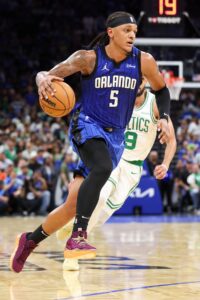
The “6 years or less” column here is what Chet Holmgren‘s extension with the Thunder will look like. Paolo Banchero and Holmgren’s teammate Jalen Williams have Rose Rule language in their contracts, so their deals would be the same as Holmgren’s if they don’t make an All-NBA team or win MVP or Defensive Player of the Year, but they could move up to the 30% max column (“7-9 years”) if certain performance criteria are met.
De’Aaron Fox‘s new extension with the Spurs falls under the “7-9 years” column here, though Fox’s deal is for four years, not five. Without that $65MM+ salary in 2030/31, Fox projects to earn about $223MM on his four-year contract.
The 30% max column will also apply to players who reach the free agent market next summer with between seven and nine years of NBA experience under their belts. That would be Trae Young‘s maximum contract with the Hawks if he becomes a free agent next summer, for instance.
The third column (35%) would apply to a player who reaches free agency next summer with 10+ years of NBA service, such as LeBron James or James Harden, though neither of them could sign a four- or five-year contract due to the Over-38 rule.
A player signing with a new team (5% annual raises, up to four years):
| Year | 6 years or less | 7-9 years | 10+ years |
|---|---|---|---|
| 2026/27 | $41,500,000 | $49,800,000 | $58,100,000 |
| 2027/28 | $43,575,000 | $52,290,000 | $61,005,000 |
| 2028/29 | $45,650,000 | $54,780,000 | $63,910,000 |
| 2029/30 | $47,725,000 | $57,270,000 | $66,815,000 |
| Total | $178,450,000 | $214,140,000 | $249,830,000 |
If a player changes teams as a free agent, he doesn’t have access to a fifth year or 8% raises. So if someone like Austin Reaves were to sign with a new team next summer, his maximum contract would be a four-year deal projected to be worth a little over $178MM.
If a veteran free agent with between seven and nine years of NBA experience – such as Young – wants to change teams in 2025, he would be able to sign a four-year contract worth up to a projected $214MM+.
A veteran with 10+ years of experience would be able to earn up to nearly $250MM across four years if he changes teams as a free agent in 2026. Although it happened with Paul George during the 2024 offseason, it’s relatively rare for a player with that many years of experience to sign a four-year, maximum-salary contract with a new team, especially since many of those older stars are subject to the Over-38 rule.
Celtics’ Sale Expected To Close Within Two Weeks
The sale of the Celtics to an ownership group headed up by William Chisholm is expected to close either late next week or early the following week, three sources familiar with the process tell Kurt Badenhausen and Scott Soshnick of Sportico.
The purchase requires the approval of the NBA’s Board of Governors, but that group doesn’t have to meet in person for a formal meeting, according to Badenhausen and Soshnick, who note that the vote can be conducted remotely.
Chisholm reached an agreement back in March to buy the Celtics from the Grousbeck family in two stages. Chisholm is purchasing a controlling interest in the franchise for a valuation of $6.1 billion and will take over from Wyc Grousbeck after the 2027/28 season when he and his group buy the rest of the club for a valuation of $7.3 billion.
While Chisholm is the lead investor in the Celtics, he’ll be joined by a number of minority shareholders, including ArcelorMittal CEO Aditya Mittal, who will be the second-largest stakeholder in the franchise and could become the team’s alternate governor. In addition to Chisholm and Mittal, the new Celtics ownership group will include current minority stakeholder Robert Hale, Bruce A. Beal Jr., and private equity firm Sixth Street.
After paying nearly $53MM in luxury tax penalties and operating over the second tax apron last season, the Celtics have made a concerted effort to cut costs this summer, with star forward Jayson Tatum expected to miss most or all of 2025/26 due to a torn Achilles.
Boston has moved Jrue Holiday, Kristaps Porzingis, and Georges Niang (who was initially acquired in the Porzingis deal) in financially motivated trades and has reduced what would’ve been a record-setting tax payroll (salary and tax penalties) from $540MM to a projected $239MM, per ESPN’s Bobby Marks (Twitter link).
Latest On Trae Young
Within the last week, a pair of star point guards have finalized maximum-salary extensions with their respective NBA teams: Luka Doncic signed a three-year deal with the Lakers, while De’Aaron Fox completed a four-year contract with the Spurs.
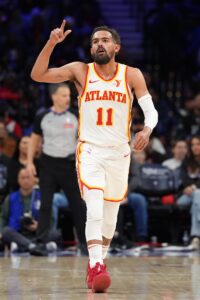 Hawks guard Trae Young has been eligible since the start of July for the same extensions that Doncic and Fox just signed (up to $222.4MM over four years), and while his NBA résumé doesn’t quite stack up to Doncic’s, it compares favorably to Fox’s.
Young has made four All-Star teams (Fox has one All-Star nod) and led Atlanta to the Eastern Conference Finals in 2021. He has a career scoring average of 25.3 points per game and led the NBA with a career-high 11.6 assists per game in 2024/25.
Still, there have been no indications that the Hawks and Young are engaged in serious discussions about a new deal or that an extension agreement is imminent, as an ESPN panel discussed during Tuesday’s episode of NBA Today (YouTube link; hat tip to RealGM).
“Trae has done a lot to show that he’s invested in the Hawks,” ESPN’s Marc J. Spears said. “Nickeil Alexander-Walker, (Luke) Kennard, he convince them to sign with the Hawks. Instead of going to the Jordan (Brand event in Greece) this summer, he came to Summer League and he got to meet with (new senior VP of basketball operations) Bryson Graham… (and) some other new front office guys. There’s a new front office in Atlanta that’s trying to make decisions.”
In addition to adding Alexander-Walker and Kennard in free agency, the Hawks made a trade for big man Kristaps Porzingis and will get forward Jalen Johnson back after a shoulder injury ended his 2024/25 season early. Atlanta has been lauded for its offseason work and is viewed as a strong playoff contender in the East after being eliminated in the play-in tournament this past spring.
While it remains possible that the Hawks and Young will work out a new multiyear deal at some point in the next couple months, Spears believes the season may begin without an extension in place for the star point guard.
“What I’m hearing now at this point – and you can tell by Trae’s tweet and I saw him during the Finals – I think he’s disappointed that it hasn’t come, it hasn’t been offered,” Spears said of a potential extension. “So don’t be surprised if he plays this out and sees what happens next summer.”
The tweet Spears was referring to was posted by Young last week in response to star NFL pass rusher Micah Parsons, who submitted a trade request to the Dallas Cowboys in the midst of a public contract standoff.
“This why you pay the man early,” Young wrote. “When someone will take less early to stay in a place he wanted to be forever, you do it… the price only goes up now! Get what you deserve bro!”
We don’t know for sure whether Young’s remarks about Parsons’ situation can be applied to his own contract negotiations with the Hawks or whether he’s willing to accept less than his max to finalize an agreement this summer. Still, the fact that Young chose to post that comment publicly raised some eyebrows.
As talented a scorer and passer as Young is, the Hawks also have to weigh the fact that his 41.1% field goal percentage in 2024/25 was a career low and he has never been an especially strong defender. The new-look front office, led by general manager Onsi Saleh, may also want to evaluate his fit with the team’s new players before making a massive long-term investment in the 26-year-old.
Young will earn about $46MM in 2025/26 and holds a player option worth just shy of $49MM for the ’26/27 season. He would remain extension-eligible during the coming season as long as he declines that player option as part of an extension agreement.
Checking In On Unsigned 2025 NBA Draft Picks
As our tracker shows, 51 of the 59 players selected in the 2025 draft in June have signed their first NBA contracts. That group includes all 30 first-round picks getting rookie scale contracts, 11 second-round picks signing standard contracts, and 10 more second-rounders receiving two-way deals.
On top of those 51 players, two more will reportedly remain overseas for the 2025/26 season, with Bucks second-rounder Bogoljub Markovic rejoining Mega Basket in Serbia and Cavaliers second-rounder Saliou Niang signing with Virtus Bologna in Italy.
That leaves just six players from the 2025 draft class whose ’25/26 plans remain up in the air. Those players are as follows:
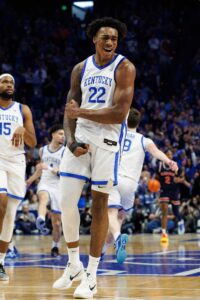 Boston Celtics: Amari Williams
- New York Knicks: Mohamed Diawara
- Golden State Warriors: Alex Toohey
- Utah Jazz: John Tonje
- Golden State Warriors: Will Richard
- Memphis Grizzlies: Jahmai Mashack
Let’s start with Williams, the only top-50 pick who doesn’t have a deal in place. Former ESPN draft expert Jonathan Givony reported on draft night that the No. 46 overall pick would be signing a two-way contract with the Celtics, and that still looks like a possibility.
Boston doesn’t have a two-way opening, but Miles Norris is a carry-over from last season and it’s unclear whether the team has legitimate interest in retaining RJ Luis after acquiring him from Utah on Wednesday or if he was simply a placeholder to make the deal work. Either player could be waived to open up a spot for Williams.
As Wednesday’s Georges Niang deal showed, however, the Celtics continue to explore their options on the trade market and may make a real effort to duck below the luxury tax line. In that scenario, signing Williams to a standard contract that pays him the rookie minimum might make some sense, since it would allow the C’s to keep their costs as low as possible for their 14th man.
The Knicks have somewhat similar cap considerations to evaluate with Diawara. They’re currently carrying 12 players on standard contracts and they don’t have enough room below a second-apron hard cap to add two more players on veteran minimum deals. That means their 14th man figures to be a player on a rookie-minimum contract.
Diawara is a candidate to be that 14th man, but he’s not the only one — 2023 second-rounder James Nnaji is another possibility. If Diawara isn’t signed to a standard contract, he’ll likely end up on a two-way deal, given that the Knicks have three open slots and his former team in France announced last month that he was leaving for the NBA.
The Warriors have a pair of two-way openings that Toohey and Richard could end up filling, but they’ll probably keep their options open until Jonathan Kuminga‘s restricted free agency is resolved. Depending on what happens with Kuminga, Golden State may want to add either Toohey or Richard to its 15-man roster on a rookie minimum contract in order to maximize its cap flexibility below a hard cap or to avoid crossing over into first or second tax apron territory.
Before trading Luis to Boston on Wednesday, the Jazz just had one open two-way slot, with Tonje and two-way restricted free agent Oscar Tshiebwe both candidates to fill it. With Luis out of the picture, Utah could sign both players to two-way contracts without having to waive anyone, and it wouldn’t surprise me if that’s the plan.
As for the Grizzlies and Mashack, he looks like the most obvious candidate to fill Memphis’ lone two-way opening. But it’s worth noting that there’s often at least one player per draft class who ends up being a domestic draft-and-stash, spending his rookie season in the G League without signing an NBA or two-way contract. We’ll see if the Grizzlies want to try to go that route with Mashack or if he simply ends up on a two-way deal.
Spurs Re-Sign Harrison Ingram To Two-Way Contract
The Spurs have officially re-signed forward Harrison Ingram to a two-way contract, the team announced today (via Twitter). The club also confirmed its previously reported two-way deal with Riley Minix.
Ingram, the 48th overall pick in the 2024 draft out of North Carolina, appeared in just five games for San Antonio as a rookie on a two-way contract last season. He spent most of the year with the Austin Spurs in the G League, making 48 total appearances in the Tip-Off Tournament and the NBAGL regular season.
Ingram averaged 12.3 points, 9.0 rebounds, 4.0 assists, and 1.4 steals in 32.6 minutes per game for Austin. Although his shooting line was an underwhelming .407/.289/.581, the Spurs liked what they saw enough to tender him a two-way qualifying offer in June, making him a restricted free agent like.
With Ingram and Minix back on two-way deals, San Antonio has filled all three of its two-way contract slots. Summer League standout David Jones-Garcia occupies the other spot.
The Spurs now have 17 players under contract in total, including 13 on fully guaranteed salaries and Lindy Waters on a partially guaranteed deal.
2026 NBA Trade Deadline Set For February 5
The NBA’s trade deadline for the 2025/26 season will be on Thursday, February 5 at 3:00 pm Eastern time, according to the league’s official list of key dates for the upcoming season.
That date for the 2026 trade deadline had been expected based on a previously confirmed regular season start date of October 21, but it hadn’t been officially listed on NBA.com until now.
That deadline is worth highlighting today due to how it will affect players who sign veteran contract extensions for the rest of the 2025/26 league year. When a player signs a veteran extension, he may become ineligible to be traded for six months if his new deal meets certain criteria. Six months from today would be February 6, one day after the trade deadline.
That means a player who signs a veteran extension between now and the Feb. 5 deadline will be ineligible to be traded this season if his new deal meets any of the following criteria:
- His current contract and new extension exceed four years in total.
- His starting salary on the extension is worth more than 120% of the final-year salary on his current deal (or 120% of the NBA’s estimated average salary, for a player earning below the average)
- He receives a raise greater than 5% between the first and second years of the extension (or in any subsequent seasons).
- His current contract is renegotiated as part of the extension.
Knicks forward Mikal Bridges is one example of a recently extended player who meets one or more of these criteria. He’s now under contract for five years in total, received a 2026/27 salary exceeding 120% of his ’25/26 cap hit, and will get 8% annual raises. That means Bridges is ineligible to be traded for six months, but because his deal was finalized on August 1, his trade restrictions will lift on February 1, a few days before this season’s deadline.
This rule doesn’t apply to players who sign rookie scale extensions. They can be traded immediately, though the poison pill provision might make it difficult to do so.
Players who sign veteran extensions that don’t meet any of the criteria above are also eligible to be traded immediately. Mavericks big man Daniel Gafford is an example of a player who falls into this category. The three-year extension he signed last month resulted in him being under contract for four years in total, and his new deal starts at 120% of his previous salary and features 5% annual raises. As a result, no trade restrictions currently apply to Gafford.
November 5 is another date worth keeping in mind now that the trade deadline for 2026 is officially set. A free agent who signs with an NBA team after Nov. 5 won’t become trade-eligible this season.
Atlantic Notes: Pritchard, Bridges, Knicks, Nets
The Celtics‘ biggest transactions this offseason – including trades that sent Jrue Holiday to Portland and Kristaps Porzingis to Atlanta – have been more about reducing the team’s payroll as opposed to upgrading the roster. Still, despite those summer moves and the fact that Jayson Tatum will be sidelined with a torn Achilles, reigning Sixth Man of the Year Payton Pritchard remains confident in the team’s ability to compete.
“We’re definitely trying to be a playoff team. We’re trying to win a championship,” Pritchard said on the Celtics Talk Podcast with Chris Forsberg (story via Logan Reardon of NBC Sports Boston). “It’s not even about playoffs, we have one standard in Boston and it’s to win a championship. Everybody in that locker room will have the goal of competing for a championship. And we will do everything in our power necessary to go for that. That’s what (the fans) should know.”
Pritchard went on to acknowledge that it “definitely sucks” to lose players like Holiday, Porzingis, and Luke Kornet, adding that he’ll especially miss Holiday, who was “like a big brother.” Still, the Celtics guard is optimistic that other players will step up and play well in increased roles — Pritchard himself, who averaged a career-high 28.4 minutes per game last season, is among the players who will likely take on more responsibilities in 2025/26.
“I feel like everybody should be excited,” Pritchard said. “There’s a lot of opportunities across the board. For me, personally, I’m excited every year. Because it’s an opportunity to prove myself again, to show that I can take another step. And that’s my goal every year. I’m definitely hungry and motivated this year, been working really hard. So I’m excited.”
Here’s more from around the Atlantic:
- Despite the fact that Mikal Bridges accepted a little less than he could have received on his four-year, $150MM contract extension, the Knicks project to be a second-apron team next season if they re-sign Mitchell Robinson, Yossi Gozlan writes for The Third Apron (Substack link). Within his look at the Knicks’ cap situation, Gozlan notes that Bridges’ unusual 5.69% trade kicker would put him in line to receive a bonus of about $6.17MM if he’s traded during the 2026 offseason — it would be almost the exact amount he gave up as part of his extension agreement (his max extension would have been worth roughly $156.17MM).
- In a mailbag for The Athletic, James L. Edwards III explores Robinson’s contract situation and the timing of Bridges’ extension, among other topics. Edwards also explains why he wouldn’t be a fan of even a minimum-salary investment in free agent guard Ben Simmons and confirms that the Knicks – along with many other teams around the league – have been monitoring Giannis Antetokounmpo‘s situation in Milwaukee throughout the offseason.
- After ending up at No. 8 in this year’s draft lottery, the Nets appear likely to tank again in 2025/26 in the hopes of landing a higher first-round pick. Brian Lewis of The New York Post (subscriber link) discusses the potential pitfalls of that approach, noting that teams who prioritize draft positioning for multiple years risk creating culture issues. “A lot of these teams that try to bottom out by tanking like Brooklyn is doing, they think there’s no consequences,” one agent told Lewis. “You risk eroding the environment you’re trying to create. That’s what happened in Philadelphia.”
Key Dates, Deadlines For Restricted Free Agents
While it’s not uncommon for restricted free agency to play out slowly for certain NBA players, it’s rare for so many high-level RFAs to remain unsigned a month after the July moratorium lifted. Jonathan Kuminga (Warriors), Josh Giddey (Bulls), Quentin Grimes (Sixers), and Cam Thomas (Nets) continue to negotiate with their respective teams after wrapping up their rookie scale contracts earlier this summer.
 While we wait for resolution on those top four RFAs, it’s worth taking a closer look at the important dates and deadlines that apply during the restricted free agency process, including both the ones that have already passed and the ones still to come.
Here’s the breakdown:
June 29: Last day to tender a qualifying offer to a player eligible for restricted free agency
A player is eligible for restricted free agency if he’s a former first-round pick who is wrapping up the fourth year of his rookie scale contract or if he’s a former second-round pick or undrafted free agent who has been in the NBA for no more than three years.
If a player meets that criteria, a team must issue a qualifying offer to make him a restricted free agent. The qualifying offer is a one-year contract offer whose exact value is determined by an existing formula. While the player has the option of signing that qualifying offer, it can also serve as a placeholder that gives the player’s team the right of first refusal in the event he signs an offer sheet with another club.
We go into far more detail on how qualifying offers and how they’re calculated in our glossary entry on the subject. The headline here is that June 29 is the last day they can be issued — a player who doesn’t receive a qualifying offer on or before that date will instead become an unrestricted free agent.
Teams typically don’t issue qualifying offers far in advance of this deadline even if their decisions are relatively straightforward ones. In 2025, for instance, 30 of the 37 players who received QOs got them on either June 28 or June 29, per RealGM.
July 13: Last day for a team to unilaterally withdraw a qualifying offer
While a player can accept his qualifying offer as soon as he receives it, most QOs remain unsigned at the start of free agency, opening the door for a team to rescind its qualifying offer without the player’s approval.
For instance, on July 1 of this year, the Bucks withdrew their qualifying offer to Ryan Rollins, who began the league year as a restricted free agent. Rescinding that QO made Rollins an unrestricted free agent and meant he no longer had the option of accepting the one-year, $2.6MM offer.
In that case, the Bucks’ decision was about maximizing their cap room — withdrawing Rollins’ qualifying offer slightly reduced his cap hit, creating a little extra spending flexibility for the team to sign Myles Turner. Milwaukee retained Rollins’ Early Bird rights when he became an unrestricted free agent and was able to eventually re-sign him to a starting salary ($4MM) that exceeded his QO. So that scenario was a win-win for the player and team, but that isn’t always the case when a qualifying offer is pulled.
After July 13, a team can no longer unilaterally withdraw a player’s qualifying offer, which means that any rescinded QO on July 14 is a result of a mutual decision between the team and player.
This situation played out with multiple two-way restricted free agents this summer — Enrique Freeman (Pacers) and Isaiah Crawford (Kings) agreed to have their QOs withdrawn after July 13, which made them unrestricted free agents and allowed them to sign two-way deals with new clubs (the Timberwolves and Rockets, respectively).
October 1: Deadline for a restricted free agent to accept his qualifying offer
Between July 13 and October 1, a restricted free agent has the security of having his qualifying offer as a fallback plan, knowing that his team can’t take it off the table without his approval.
That doesn’t necessarily mean an RFA who remains unsigned on July 14 won’t get a deal done until that Oct. 1 deadline gets close, but the lack of any other deadlines before October results in little immediate urgency during late July and August. That’s one reason why we’ve seen little movement on Kuminga, Giddey, Grimes, and Thomas in recent weeks.
If the October 1 deadline passes without a player signing his qualifying offer, he remains a restricted free agent but would no longer have the option of accepting his one-year QO, which would significantly reduce his leverage.
It’s important to note that the October 1 deadline isn’t necessarily a hard and fast one — it can be pushed back as long as the team and player agree, and that can be done multiple times. For example, the two sides may initially agree to delay the deadline back to Oct. 15, then two weeks later decide to push it back again to November 1. However, that date can’t be postponed indefinitely…
March 1: Very last day for a restricted free agent to accept his qualifying offer; deadline for an RFA to sign an offer sheet
A team and a restricted free agent aren’t permitted to push the deadline to accept a qualifying offer beyond March 1. If an RFA still doesn’t have resolution on his contract situation by that date, his QO would go away, meaning he wouldn’t be able to accept it on March 2.
A restricted free agent also isn’t eligible to sign an offer sheet with a rival team after March 1. That means that if he hopes to play in the NBA during that season, his options between March 2 and the end of the season would essentially be down to one: Work out a new agreement with his current team.
If a restricted free agent goes the entire season without signing any sort of contract, he doesn’t become unrestricted the following year. His current team has the ability to once again tender him a qualifying offer by June 29 with the same terms as the previous QO, and if the club issues that offer, the process would begin all over again for a second year.
Essentially, a restricted free agent’s options only get worse once October 1 (or the newly agreed-upon QO decision deadline) passes, which is why we should probably count on resolution for this year’s top RFAs well before the regular season gets underway.
Carlisle Expects Mathurin To Be Pacers’ Starting SG In 2025/26
Former lottery pick Bennedict Mathurin has been in and out of the Pacers‘ starting lineup in his first three NBA seasons, making 85 starts in 209 total outings. With Tyrese Haliburton out for 2025/26 due to a torn Achilles, the expectation heading into this fall is that Mathurin will be Indiana’s full-time starting shooting guard, head coach Rick Carlisle told Caitlin Cooper of Basketball, She Wrote (YouTube link).
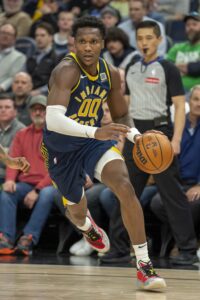 “I’ll break the news right here: I’m projecting him as our starter at two this year,” Carlisle said of Mathurin (Twitter video clip). “I’ve told him this. I was on the phone with him and his agent four days ago and I said, ‘You’re going to be with the starters on day one. It’s your job to lose.'”
After being drafted sixth overall out of Arizona in 2022, Mathurin showed off impressive scoring ability as a rookie, averaging 16.7 points per game and earning Rookie of the Year and Sixth Man of the Year votes in ’22/23. The 6’5″ wing missed part of his second year due to a shoulder injury before returning this past season to put up 16.1 PPG with a career-best 45.8% field goal percentage.
Speaking to Cooper, Carlisle raved about Mathurin’s knack for getting to the free throw line and his ability to put the ball in the basket. However, he noted that other aspects of the 23-year-old’s game – including his passing, his quick decision making, and his fit in the Pacers’ system – are still works in progress.
“Our job as coaches is to meld guys like him that aren’t necessarily seamless fits into a style that is effective for the rest of the guys, and bring both forces hopefully closer together as time goes on,” Carlisle said.
Carlisle spoke in March about the Pacers’ ongoing efforts to incorporate Mathurin’s more ball-dominant, one-on-one style within the movement-oriented flow of a Haliburton-led offense. With Haliburton ruled out for all of 2025/26, Mathurin will take on increased responsibilities offensively and may have more freedom to try to score however he can.
It will be interesting to see how Mathurin’s growing importance in Indiana this fall will influence contract talks between his camp and the Pacers. The Canadian swingman will be eligible for a rookie scale extension up until October 20 and it could be a challenge for the two sides to reach an agreement on a long-term deal, given the way Mathurin’s role has fluctuated in the past and the fact that he could be well positioned for a career year in 2025/26.
Mathurin will earn roughly $9.2MM in the final year of his rookie contract. If he and the Pacers don’t work out an extension before the season, he’d be eligible for a qualifying offer of nearly $12.3MM next summer, assuming he meets the starter criteria.