
NBA 2024 Offseason Check-In: Utah Jazz
Hoops Rumors is checking in on the 2024 offseason for all 30 NBA teams, recapping the summer’s free agent signings, trades, draft picks, departures, and more. We’ll take a look at each team’s offseason moves and consider what might still be coming before the regular season begins. Today, we’re focusing on the Utah Jazz.
This is the final installment of our Offseason Check-In series. All 30 articles can be found here.
Free agent signings
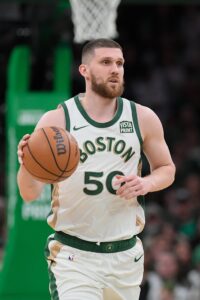 Svi Mykhailiuk: Four years, $15,050,000. Second and third years non-guaranteed. Fourth-year team option. Signed using cap room.
- Johnny Juzang: Four years, $11,425,252. Second, third, and fourth years non-guaranteed. Re-signed using Early Bird rights.
- Drew Eubanks: Two years, $9,750,000. Second year non-guaranteed. Signed using cap room.
- Patty Mills: One year, minimum salary. Signed using minimum salary exception.
- Max Abmas: One year, minimum salary. Non-guaranteed (Exhibit 10). Signed using minimum salary exception.
- Taevion Kinsey: One year, minimum salary. Non-guaranteed (Exhibit 10). Signed using minimum salary exception.
- Isaiah Wong: One year, minimum salary. Non-guaranteed (Exhibit 10). Signed using minimum salary exception.
- Keshawn Justice: One year, minimum salary. Non-guaranteed (Exhibit 10). Signed using minimum salary exception.
- Note: Justice was subsequently waived.
- Dane Goodwin: One year, minimum salary. Non-guaranteed (Exhibit 10). Signed using minimum salary exception.
- Note: Goodwin was subsequently waived.
- Babacar Sane: One year, minimum salary. Non-guaranteed (Exhibit 10). Signed using minimum salary exception.
- Note: Sane was subsequently waived.
Trades
- Acquired Russell Westbrook, the right to swap their own 2030 second-round pick for the Clippers’ 2030 second-round pick, the draft rights to Balsa Koprivica, and cash ($4.3MM) from the Clippers in exchange for Kris Dunn (sign-and-trade).
- Note: Westbrook was subsequently bought out.
Draft picks
- 1-10: Cody Williams
- Signed to rookie scale contract (four years, $24,897,090).
- 1-29: Isaiah Collier
- Signed to rookie scale contract (four years, $12,903,788).
- 2-32: Kyle Filipowski
- Signed to four-year, $12,000,000 contract. First two years guaranteed. Third year non-guaranteed. Fourth-year team option.
Two-way signings
- Taevion Kinsey
- Note: Kinsey was subsequently waived and re-signed to an Exhibit 10 contract.
- Micah Potter
- Oscar Tshiebwe
Departed/unsigned free agents
- Kris Dunn (Clippers)
- Talen Horton-Tucker (Bulls)
- Kira Lewis (Wizards)
- Luka Samanic (Fenerbahce)
Other moves
- Renegotiated and extended Lauri Markkanen‘s one-year, $18,044,544 contract. Increased 2024/25 salary by $24,131,856 to $42,176,400. Added four years, $195,868,144.
- Bought out Russell Westbrook.
- Waived Darius Bazley.
- Waived Kenneth Lofton.
- Waived Omer Yurtseven
Salary cap situation
- Went below the cap to use room.
- Now operating over the cap ($140.6MM) and below the luxury tax line ($170.8MM).
- Carrying approximately $144.8MM in salary.
- No hard cap.
- Full room exception ($8MM) available.
The offseason so far
Two days after the Jazz’s season ended in April, CEO Danny Ainge vowed that the team was prepared to go “big-game hunting” this offseason after finishing below .500 in back-to-back years.
It was an assertion that was met with some skepticism. After all, despite Utah’s consecutive seasons in the lottery, the team hadn’t drafted higher than ninth overall since its rebuild began, and while the front office was able to add some promising young prospects in the 2023 and 2024 drafts, none of them looks like the sort of franchise centerpiece the Jazz can build around for years to come.
It wasn’t a huge surprise then when reports indicated in July that the Jazz’s offseason efforts to acquire an impact player – such as Mikal Bridges – on the trade market had come up short. Giving up five first-round picks for Bridges was a logical next step for the Knicks, who were within a single win of an Eastern Conference Finals appearance in the spring and presumably considered themselves just a piece or two away from becoming true championship contenders.
Surrendering that sort of package for a player without an All-Star berth on his résumé would have made less sense for the Jazz, who would have been a playoff contender with Bridges on their roster but still wouldn’t have had enough talent to hang with the Western Conference’s very best teams.
It’s also hard to imagine Ainge – whose trades selling off the likes of Kevin Garnett, Paul Pierce, and Rudy Gobert are among the defining moves of his executive career – finding himself on the other end of that sort of deal, which would’ve put a major dent in the Jazz’s stash of future draft assets without making them an elite team.
The biggest decision of Utah’s offseason ultimately wasn’t whether or not to meet the substantial asking price for a trade target like Bridges — it was whether or not to turn star forward Lauri Markkanen into one of those trade chips himself.
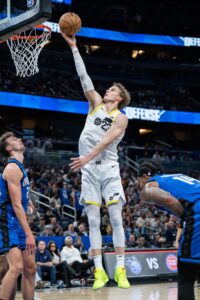 Markkanen’s situation this summer was an unusual and complex one. He was in the final year of a contract that was so far below his market value that any over-the-cap team acquiring him would’ve been unable to extend him prior to free agency, since they wouldn’t have been able to offer him more than a 40% raise on his expiring $18MM salary.
The only way to circumvent that restriction was to renegotiate (ie. increase) Markkanen’s 2024/25 salary, then to extend him off that new number. But cap room is required for a renegotiation, and the Jazz were one of the only teams with significant cap room available this summer. Renegotiating and extending Markkanen would have made him a more attractive trade chip for Utah, but it also would have made him ineligible to be dealt for six months.
Markkanen became renegotiation-eligible on August 6. He and the Jazz finalized a renegotiation and extension on August 7, ensuring that he won’t become eligible to be traded until February 7, one day after this season’s deadline.
Utah’s willingness to wait that extra day and still give Markkanen as much money as they possibly could on a long-term, maximum-salary contract signaled the team was comfortable with the idea of keeping the 2023 All-Star on its roster for at least the 2024/25 season. And the comments made publicly by both sides – at the time of the deal and since then – suggest they’re committed to continuing their relationship well beyond that, so we shouldn’t necessarily expect Markkanen to hit the trade block during the 2025 offseason.
The Jazz’s decision not to trade Markkanen is an understandable one. They’ve already been rebuilding for two years — moving Markkanen would’ve extended the process by at least a couple more seasons. And without the inability to extend him before trading him, they would’ve had to move him on an expiring contract, limiting their ability to maximize the return.
Still, a Markkanen trade would’ve clearly defined the Jazz’s direction, essentially guaranteeing that they’d retain the top-10 protected 2025 first-round pick they owe the Thunder and making them one of the leaders in the Cooper Flagg sweepstakes. With Markkanen on the roster, it’s possible the club will end up in the range of 30-40 wins for a third straight season, not quite good enough to earn a play-in spot and not quite bad enough to have a great shot at a franchise-changing player in the draft lottery.
The Markkanen extension was the most impactful move of a Jazz offseason that didn’t see them commit more than one guaranteed season to any other veteran signee. Svi Mykhailiuk, Johnny Juzang, Drew Eubanks, and Patty Mills all inked free agent contracts with the club, but none of them will earn more than $5MM in 2024/25 and all four could be off Utah’s books by ’25/26 if they don’t impress this season.
The most noteworthy offseason roster additions came in the draft, which saw the Jazz select three players in the top 32: Cody Williams at No. 10, Isaiah Collier at No. 29, and Kyle Filipowski at No. 32.
Williams holds real intrigue as a three-and-D wing if he can increase his shot volume without his percentage dropping off, while the Collier and Filipowski picks saw Utah roll the dice on a pair of prospects who dropped further than initially projected. At one point, both Collier and Filipowski were considered potential lottery selections.
Given that the Jazz’s front office will likely want to hang onto their top-10 protected first-round pick for 2025, I expect we’ll see this year’s crop of rookies and the 2023 first-rounders – Taylor Hendricks, Keyonte George, and Brice Sensabaugh – get plenty of run this season.
Up next
The Jazz are carrying 15 players on guaranteed contracts and none of them seem likely to be waived before the season begins, so the opening night roster decisions look pretty straightforward.
It’s always possible Utah will swap out one of its two-way players for someone new, but those three roster spots are occupied for now too.
Meanwhile, just two Jazz players are extension-eligible before the regular season begins: John Collins and Collin Sexton. I wouldn’t count on either veteran getting a new deal with two years left on his current contract, but Sexton is the better candidate of the two — I could envision a scenario in which he remains in Utah beyond his existing deal, whereas that’s harder to imagine for Collins.
Pelicans, Jose Alvarado Complete Two-Year Extension
SEPTEMBER 30: The Pelicans have issued a press release officially announcing Alvarado’s extension.
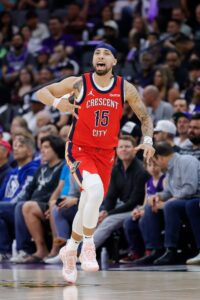 SEPTEMBER 28: The Pelicans and guard Jose Alvarado have agreed to a two-year contract extension worth $9MM, agent Ron Shade tells Shams Charania of The Athletic (Twitter link).
Alvarado is earning $1,988,598 in 2024/25 in the final year of his current minimum-salary contract. That salary, which had been non-guaranteed, will become fully guaranteed as part of the agreement, tweets ESPN’s Bobby Marks.
The new extension will begin next July and will include a player option for the ’26/27 season, according to Charania.
Alvarado, 26, has spent the past three seasons in New Orleans after going undrafted out of Georgia Tech in 2021. He emerged as a regular contributor for the Pelicans as a rookie free agent in 2021/22, earning a promotion from his two-way contract to the standard roster near the end of that season, and has maintained his place in the team’s rotation since then.
In 2023/24, Alvarado averaged 7.1 points, 2.3 rebounds, 2.1 assists, and 1.1 steals in 18.4 minutes per game across 56 appearances off the bench. Nicknamed “Grand Theft Alvarado” for his habit of making highlight-reel steals, the Pelicans guard posted a shooting line of .412/.377/.673 and finished sixth in Sixth Man of the Year voting last season.
The maximum extension that Alvarado could have signed would’ve been similar to the one Andrew Nembhard received from Indiana, worth over $18MM in 2025/26. While that would’ve been an overpay, the Pelicans did very well to lock up the reserve guard for an additional season at just $4.5MM, a bargain for any effective rotation player. If he continues to produce in New Orleans, Alvarado could opt out in 2026 and seek a more lucrative deal at that time.
The Pelicans now have seven players on guaranteed contracts for the 2025/26 season, with Jordan Hawkins likely to join that group in the next few weeks when the team exercises his rookie scale team option. Brandon Ingram (unrestricted) and Trey Murphy (restricted) will be among New Orleans’ 2025 free agents if they don’t sign extensions of their own.
Grizzlies Notes: Morant, Rose, Jackson, Bane, Spencer, Konchar
Grizzlies point guard Ja Morant is healthy and ready to go this fall after missing 85 of the team’s last 102 regular season games due to a pair of suspensions and a season-ending shoulder injury. While the last season-and-a-half have been pretty forgettable for fans in Memphis, Morant told reporters on Monday that he wants to remember “pretty much everything” he’s experienced during that time.
“Everything I’ve been through, I wanna remember that feeling I felt each time, no matter what situation it was,” he said, per Jason Munz of The Memphis Commerical Appeal. “I feel like it helped me a lot, it helped me grow more into a better Ja. Right now, you know, I’m probably the happiest I feel like I’ve been in a while. You know just having my family, my AAU team and the little things I was doing to keep me going and that makes me happy being able to do it this offseason – catching up with a lot of my family has been good.
“… I feel like a happy Ja is a scary Ja for a lot of people. So, long as I stay happy and healthy, it’ll be a great season.”
Morant wasn’t the only Grizzlies player to be affected by health problems last season. Nearly every one of the team’s rotation players missed time due to various injuries, but Morant and fellow cornerstones Jaren Jackson Jr. and Desmond Bane are healthy this fall and the star point guard is bullish about the potential of the 2024/25 squad.
“I honestly feel like this is one of the best rosters we’ve had, you know, on paper, depth-wise,” Morant said. “And now being able to see the guys go out and when we’re playing and stuff, it gives me even more confidence. I feel like we’re pretty much loaded at every position. It’s gonna be interesting to see how it all pans out.”
Here’s more on the Grizzlies:
- Derrick Rose‘s retirement wasn’t something the Grizzlies had expected this fall, but they were happy to accommodate him when he asked to be let out of his contract in order to call it a career, head of basketball operations Zach Kleiman said on Monday, according to Munz. “First, congrats to Derrick Rose on his retirement. Really glad that Derrick was with us for a season,” Kleiman said. “We got a call – it was classic Derrick fashion. Completely respect Derrick, the person he is and the decision he decided to make. But, got a call out of left field from his agent last weekend. ‘He’s ready to ride off into the sunset.'”
- Kleiman made it clear during his media session on Monday that Morant, Jackson, and Bane are the three players the Grizzlies are building around now and going forward, as Damichael Cole of The Memphis Commercial Appeal relays. “I think that’s one of, if not the best three-man cores in the NBA,” Kleiman said. “I firmly believe that. We’ve spent years trying to think about what are the type of players that fit best around them, and I think every year we have trended more and more in that direction.”
- Already without Vince Williams (leg) and GG Jackson (foot) for training camp, the Grizzlies are also missing two-way player Cam Spencer for now as he deals with an ankle sprain Kleiman described as “moderate,” according to Cole. “A little bit shorter-handed than we’d like to be,” Kleiman said. “… It’s next man up. Down to the two-ways. We feel strongly about each of the three two-ways on the roster. They’re guys who can potentially contribute.”
- The Grizzlies are carrying just 13 players on standard contracts for now and could wait as late as two weeks into the regular season to add a 14th man if they so choose. Kleiman didn’t offer any real hints on Monday about who might fill that spot, as Cole notes. “I think realistically, you’ll see someone in the 14th spot before we start the regular season,” Kleiman said. “Don’t hold me to that. Not promising it. Over the course of training camp and preseason, we’ll evaluate.”
- Reserve wing John Konchar said his goal in 2024/25 is to make at least 38% of his three-pointers, tweets Cole. Konchar was a 40.6% three-point shooter in his first three NBA seasons, but knocked down just 33.0% in the past two seasons.
Atlantic Notes: Embiid, Drummond, Bridges, Celtics
Sixers center Joel Embiid told reporters at Monday’s media day that he has dropped “25 to 30 pounds” during the offseason and that staying healthy in 2024/25 is his number one goal entering this fall, writes Tim Bontemps of ESPN.
“I still got a ways to go. I still want to lose more, but it’s a process,” Embiid said. “As soon as we lost last year, I just texted (Sixers president of basketball operations Daryl Morey) and I was like, ‘We got to do whatever it takes to make sure that in the postseason I’m healthy.’ So this year is all about (that).”
Embiid has made seven straight All-Star teams and five total All-NBA teams in addition to winning a pair of scoring titles and 2023’s Most Valuable Player award. While he has expressed pride in some of those accolades in the past, he made it clear on Monday that individual awards are far down his list of goals in 2024/25.
“There’s no agenda, there’s no All-Star, there’s no All-NBA, there’s none of that,” Embiid said. “It’s whatever it takes to make sure that I get to that point and I’m ready to go because … basically every single year in my career, I’ve been hurt in the playoffs. So that’s the goal, and it’s all about doing whatever it takes to get there.”
Adding a star like Paul George and so many other players to the roster will require an adjustment period this fall, so it’s not as if the Sixers can put Embiid in bubble wrap until the spring. Morey acknowledged on Monday that finding a balance between managing the star center’s minutes and making sure the new-look roster has plenty of opportunities to establish chemistry will be important.
“We’re going to be really smart about it,” Morey said. “Obviously, we’re very focused on April, May and June. That doesn’t mean that the time right now isn’t very important as well, but we’re going to be very smart about how we manage him through the season. There’s going to be a lot of information, as we learn about how everything’s working with the entire roster.
Here’s more from around the Atlantic:
- Appearing at the Sixers‘ media day on Monday, veteran center Andre Drummond reiterated his belief that he’s “the best rebounder to ever play the game,” as Sean Barnard of Fox Sports The Gambler in Philadelphia relays (via Twitter). As we noted last September when Drummond made a similar claim, his career rebounding percentage (25.1%) ranks first in NBA history.
- Speaking on the most recent episode of the Hoop Collective podcast (YouTube link), ESPN’s Bobby Marks says he doesn’t expect Knicks forward Mikal Bridges to sign a contract extension prior to the start of the season. “The indication I’ve gotten just from talking to people is that there is not going to be an extension, that he will wait until next year to look at what the extension,” Marks said (hat tip to RealGM). “… Because he’s limited as far as the six-month rule as far as what he can extend for. Next year, he can extend for four years. It just gives him more flexibility. That could certainly change by October 21st. Maybe this (Karl-Anthony Towns) trade does change that thinking. This was talking to people before this trade happened.” As Marks alludes to, the most lucrative extension Bridges can sign before this season is for two years and about $61MM. Next offseason, he could get up to $156MM over four years.
- The Celtics‘ sale process is expected to begin accelerating this week, a source tells Adam Himmelsbach of The Boston Globe. According to Himmelsbach, the banks facilitating the sale are set to contact a group of individuals that includes both potential buyers who have expressed interest in the team and “other qualified buyers who have been targeted by the sale facilitators.”
Bulls Notes: Giddey, Williams, Ball, LaVine
New Bulls guard Josh Giddey told reporters on Monday that the ankle injury he suffered at the end of Australia’s run in the Paris Olympics was more serious than initially believed and that he spent the rest of the offseason recovering from it, according to K.C. Johnson of The Chicago Sports Network (Twitter links).
According to Giddey, who said he was diagnosed with a ruptured ATFL (anterior talo-fibular ligament), he and the Bulls have been conservative with his rehab timeline, but he’s close to being ready to suit up. In fact, if there were a playoff game on the schedule tomorrow, Giddey could suit up, he said. The fourth-year guard expects to be “fine” for opening night.
Here’s more on the Bulls:
- Despite an ominous report last week about his recovery from February foot surgery, Bulls forward Patrick Williams has been playing 5-on-5 ball and is “ready to go” for training camp, Bulls head of basketball operations Arturas Karnisovas said today. According to Johnson (Twitter link), the soreness Williams experienced in the offseason that was reference in last week’s report wasn’t related to his foot surgery.
- Karnisovas said the goal for the Bulls this year won’t be to try to hang onto the top-10 first-round pick they owe the Spurs, but to define the identity and playing style of the new group, per Johnson (Twitter links). The veteran executive added that the current roster isn’t necessarily a “finished product” and that the front office is focused on building a team that’s “faster and more versatile.”
- Lonzo Ball remains optimistic about where he’s at in his recovery from multiple knee surgeries and still hopes to play on opening night, though he acknowledged on Monday that back-to-backs are off the table for him this season and he’ll be on a minutes restriction. “I pretty much have a brand new knee,” the point guard said (Twitter links via Johnson).
- Joe Cowley of The Chicago Sun-Times wrote this week that rebuilding Zach LaVine‘s trade value and finding him a new home remains the No. 1 goal for the Bulls’ front office. However, speaking on Monday to reporters, LaVine offered a lengthy opening statement about his commitment to the Bulls, suggesting that he and the club have moved past any negativity from the past, tweets Johnson. Darnell Mayberry of The Athletic passes along video of LaVine’s comments, via Twitter.
- While Cowley believes LaVine’s future is the most significant storyline worth following in Chicago this season, he identifies a few more “secondary” storylines to watch, in a separate article for the Sun-Times.
Alondes Williams Signs Camp Deal With Clippers
SEPTEMBER 30: Williams was included on the training camp roster officially announced today by the Clippers, signaling that his camp contract with the team is now official (Twitter link).
SEPTEMBER 17: Former Heat guard Alondes Williams is set to join the Clippers on a training camp contract, according to Ira Winderman of The South Florida Sun Sentinel (subscription required).
Williams, who played college ball for Triton College, Oklahoma, and Wake Forest, went undrafted in 2022 and spent his rookie season with the Nets and their G League affiliate in Long Island. Last August, he signed an Exhibit 10 contract with the Heat and opened the season with the Sioux Falls Skyforce, Miami’s G League affiliate, before signing a two-way contract with the Heat in February and finishing the season on their 18-man roster.
Although Williams has only played 21 total minutes across eight appearances for Brooklyn and Miami at the NBA level, he’s coming off a big year in the G League. In 43 Showcase Cup and regular season appearances for the Skyforce in 2023/24, he put up 20.3 points, 7.1 assists, and 5.3 rebounds in 37.4 minutes per game, with a shooting line of .499/.369/.742. The 25-year-old also helped the Heat win a Summer League title this summer, averaging 12.0 PPG and 4.8 APG with a .480 3PT% in five games in Las Vegas.
The Heat initially tendered Williams a two-way qualifying offer to make him a restricted free agent, but they withdrew that QO in July after filling their two-way slots, freeing him up to sign outright with any team.
Williams will likely sign an Exhibit 10 contract with the Clippers and could be a candidate to have it converted to a two-way deal, since Los Angeles has a two-way slot open alongside Jordan Miller and Trentyn Flowers.
Since Sioux Falls still controls Williams’ G League returning rights, he wouldn’t be eligible for a $77.5K Exhibit 10 bonus with L.A. unless the San Diego Clippers acquire his rights from the Skyforce.
NBA 2024 Offseason Check-In: Washington Wizards
Hoops Rumors is checking in on the 2024 offseason for all 30 NBA teams, recapping the summer’s free agent signings, trades, draft picks, departures, and more. We’ll take a look at each team’s offseason moves and consider what might still be coming before the regular season begins. Today, we’re focusing on the Washington Wizards.
Free agent signings
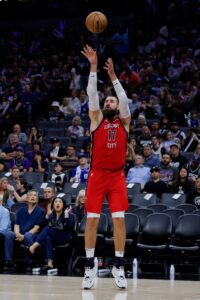 Jonas Valanciunas: Three years, $30,295,000. Third year non-guaranteed. Signed using Bird rights and acquired via sign-and-trade from Pelicans.
- Saddiq Bey: Three years, $19,000,000. Includes an additional $1MM in unlikely incentives. Signed using non-taxpayer mid-level exception.
- Anthony Gill: Two years, minimum salary ($4,784,366). Second year non-guaranteed. Re-signed using minimum salary exception.
- Leaky Black: One year, minimum salary. Non-guaranteed (Exhibit 10). Signed using minimum salary exception.
- Kira Lewis: One year, minimum salary. Non-guaranteed (Exhibit 10). Signed using minimum salary exception.
- Jaylen Nowell: One year, minimum salary. Non-guaranteed (Exhibit 10). Signed using minimum salary exception.
Trades
- Acquired the draft rights to Kyshawn George (No. 24 pick) from the Knicks in exchange for the draft rights to Dillon Jones (No. 26 pick) and the No. 51 pick in the 2024 draft.
- Acquired Malcolm Brogdon; the draft rights to Carlton Carrington (No. 14 pick); either the Trail Blazers’, Celtics’, or Bucks’ 2029 first-round pick (whichever is second-most favorable); the Warriors’ 2028 second-round pick; and the Trail Blazers’ 2030 second-round pick from the Trail Blazers in exchange for Deni Avdija.
- Acquired Jonas Valanciunas (sign-and-trade) from the Pelicans in exchange for the Bulls’ 2027 second-round pick (top-50 protected).
Draft picks
- 1-2: Alex Sarr
- Signed to rookie scale contract (four years, $51,036,398).
- 1-14: Carlton Carrington
- Signed to rookie scale contract (four years, $21,290,769).
- 1-24: Kyshawn George
- Signed to rookie scale contract (four years, $14,336,172).
Two-way signings
Departed/unsigned free agents
- Jules Bernard (Cavaliers)
- Tyus Jones (Suns)
Other moves
- Signed Richaun Holmes to a two-year, $25,929,058 veteran extension that begins in 2024/25. Second year partially guaranteed ($250K).
- Waived Landry Shamet.
- Waived Eugene Omoruyi.
Salary cap situation
- Operating over the cap ($140.6MM) and below the luxury tax line ($170.8MM).
- Carrying approximately $161.1MM in salary.
- Hard-capped at $178,132,000.
- Approximately $6.4MM of non-taxpayer mid-level exception available; full bi-annual exception ($4.7MM) available.
- Two traded player exceptions available (largest worth $12,402,000).
The offseason so far
When a new front office takes over an NBA team’s basketball operations department, that new group often has little attachment to the club’s incumbent players and looks to gradually fill the roster with its own guys. That’s especially true when the team is in rebuilding mode.
So while I didn’t necessarily expect the Wizards to move Deni Avdija this offseason, it wasn’t a huge surprise that top decision-makers Michael Winger and Will Dawkins decided to capitalize on Avdija’s career year in 2023/24 by cashing in on a player drafted by the previous regime whose value was at an all-time high.
We knew, based on reporting in the spring, that the Wizards, armed with the second and 26th overall selections in June’s draft, were looking to continue stockpiling picks — and specifically to add a third first-rounder for 2024. The Avdija deal helped them do just that. By sending the ascendant forward to Portland and taking on Malcolm Brogdon‘s $22.5MM expiring contract to help the Blazers get out of tax territory, Washington added two future second-round selections and a pair of first-rounders, including this year’s No. 14 overall pick.
It was a savvy trade by the Wizards, who may be able to flip Brogdon later this season for something of value. The veteran guard wasn’t a fit in a crowded Portland backcourt on a team with financial concerns, but he’s a career 39.1% three-point shooter who is just two years removed from winning a Sixth Man of the Year award. If he’s healthy, Brogdon should appeal to teams looking for backcourt help at this year’s trade deadline.
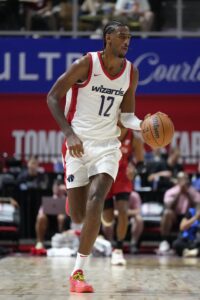 Using the No. 14 pick from that deal, the Wizards selected Pittsburgh guard Carlton Carrington, who flashed intriguing potential at the Las Vegas Summer League, averaging 15.8 points, 7.4 rebounds, and 5.2 assists in his five outings. Carrington joins No. 2 overall pick Alex Sarr and No. 24 selection Kyshawn George (the Wizards gave up their No. 51 pick to move up two spots from No. 26 for George) to make up Washington’s 2024/25 rookie class.
Sarr was considered by several experts to be the top prospect in this year’s draft, and while he didn’t exactly light it up in Vegas like Carrington did (Sarr made just 9-of-47 shots from the field, or 19.1%), the rangy 19-year-old center has the potential to be a long-term defensive anchor in D.C.
At age 20, George is actually the oldest of the Wizards’ three first-rounders, but like Carrington, he was a one-and-done college player who is still very early in his developmental process. The 6’7″ swingman showed off an effective outside shot (.408 3PT%) during his freshman year at Miami and could become a solid shooter and play-maker on the wing, though he’s unlikely to make a significant impact as a rookie.
Having added three youngsters as potential long-term building blocks, the Wizards spent the rest of their offseason focused on filling out their roster with veteran contributors who could make life a little easier for those prospects.
Most notably, the team worked out a sign-and-trade deal with New Orleans to add veteran center Jonas Valanciunas on a three-year contract worth about $10MM annually. Having a steady vet like Valanciunas at the five will allow Washington to take things slow with Sarr. I wouldn’t expect Valanciunas to be part of the Wizards’ next playoff team, but he’s a perfectly fine stopgap starter, and his contract is team-friendly enough to make him a potential trade chip — LeBron James and the Lakers were said to have interest in him this summer, so that could be something worth revisiting down the road.
The Wizards further fortified their frontcourt by bringing back Richaun Holmes on a two-year, $25.9MM extension. It may look like an odd move on the surface for a player who hasn’t logged significant minutes over the past two seasons, but Holmes’ new deal (which begins in 2024/25) replaces a $12.88MM player option and is almost entirely non-guaranteed in year two.
In other words, the Wizards are essentially paying Holmes the same total salary they would have if he’d simply picked up that option, but now he has a slightly lower year-one cap hit and what amounts to a team option for 2025/26. I wouldn’t expect that ’25/26 salary to become guaranteed, but if he recaptures his 2019-21 form, you never know. At the very least, it gives Washington more flexibility with the big man going forward.
The Wizards’ other unorthodox summer signing was to bring in former Pistons and Hawks forward Saddiq Bey on a three-year contract worth $19MM (plus another $1MM in incentives). Bey will likely miss most or all of the 2024/25 season while recovering from an ACL tear, which is perfectly fine with a Washington team not interested in pushing for a playoff spot right away.
Assuming Bey is back to 100% for the start of the ’25/26 campaign, he could be a bargain on the wing in the final two years of his contract — while he had a down year before the injury last season, the former first-rounder showed off a promising three-and-D skill set early in his career.
Up next
The Wizards are carrying 15 players on fully guaranteed contracts, but have some others on non-guaranteed deals who could make cases for roster spots in training camp and during the preseason. Jared Butler, who spent last season on the roster, is in that mix, as are Exhibit 10 camp invitees Kira Lewis, Jaylen Nowell, and Leaky Black.
While Exhibit 10 signees are often simply ticketed for the G League, Lewis and Nowell have several years of NBA experience under their belts and are no longer eligible for two-way deals, so I could see them getting consideration for a 15-man spot.
Patrick Baldwin, a former first-round pick who has played limited minutes across 69 total appearances in his two NBA seasons, could be the odd man out if one of the 15 players on guaranteed deals doesn’t make the team. Another 2022 first-rounder, Johnny Davis, also has an underwhelming NBA résumé so far, though he at least played well in Vegas in July, whereas Baldwin’s Summer League performance was inconsistent.
The Wizards do have a two-way slot available as well — Black is the only camp invitee who could be directly converted to fill it, but the team could look outside of the organization. Butler would also be eligible, though he’d have to be waived and re-signed.
Corey Kispert isn’t the only Wizard who is extension-eligible this fall, but he’s probably the only legitimate candidate for a new deal. He and the team have until October 21 to attempt to work out a rookie scale extension.
Kispert has steadily improved over the course of his three NBA seasons, having made 40.2% of his three-point attempts over the past two years. He’s the sort of player who would fit nicely on a lot of teams and who could generate real interest if he reaches free agency in 2025, so it would be in the Wizards’ best interest to lock him up now if they can get him at a reasonable price.
It’s worth noting that Kispert is another player who was drafted by the previous front office, which may reduce the odds of the two sides reaching a deal in the coming weeks. But like Avdija, who signed a rookie scale extension last fall, Kispert would be a valuable trade chip down the road if he’s on a favorable long-term contract and the Wizards ultimately decide he’s not in their plans.
NBA 2024 Offseason Check-In: San Antonio Spurs
Hoops Rumors is checking in on the 2024 offseason for all 30 NBA teams, recapping the summer’s free agent signings, trades, draft picks, departures, and more. We’ll take a look at each team’s offseason moves and consider what might still be coming before the regular season begins. Today, we’re focusing on the San Antonio Spurs.
Free agent signings
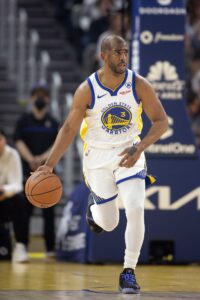 Chris Paul: One year, $10,460,000. Includes an additional $1,568,999 in unlikely incentives. Signed using cap room.
- Charles Bassey: One year, minimum salary. Re-signed using minimum salary exception. Waived right to veto trade.
- Sandro Mamukelashvili: One year, minimum salary. Re-signed using minimum salary exception. Waived right to veto trade.
- Brandon Boston Jr.: One year, minimum salary. Non-guaranteed (Exhibit 10). Signed using minimum salary exception.
- Malachi Flynn: One year, minimum salary. Non-guaranteed (Exhibit 10). Signed using minimum salary exception.
- Nathan Mensah: One year, minimum salary. Non-guaranteed (Exhibit 10). Signed using minimum salary exception.
- Riley Minix: One year, minimum salary. Non-guaranteed (Exhibit 10). Signed using minimum salary exception.
- Jameer Nelson Jr.: One year, minimum salary. Non-guaranteed (Exhibit 10). Signed using minimum salary exception.
- Note: Nelson was subsequently waived.
Trades
- Acquired the Timberwolves’ 2031 first-round pick and the right to swap 2030 first-round picks with the Timberwolves (top-one protected) in exchange for the draft rights to Rob Dillingham (No. 8 pick).
- Acquired the draft rights to Juan Nunez (No. 36 pick) and cash in exchange for the draft rights to Johnny Furphy (No. 35 pick).
- Acquired cash from the Hornets in exchange for Devonte’ Graham and the Pelicans’ 2025 second-round pick.
- Acquired Harrison Barnes and the right to swap 2031 first-round picks with the Kings in a three-team trade in exchange for RaiQuan Gray (two-way; to Bulls).
Draft picks
- 1-4: Stephon Castle
- Signed to rookie scale contract (four years, $41,351,699).
- 2-36: Juan Nunez
- Signed with Barcelona in Spain.
- 2-48: Harrison Ingram
- Signed to two-way contract.
Two-way signings
Departed/unsigned free agents
- Dominick Barlow (Hawks)
- Cedi Osman (Panathinaikos)
Other moves
- Waived Jamaree Bouyea (two-way).
Salary cap situation
- Went below the cap to use room.
- Now operating over the cap ($140.6MM) and below the luxury tax line ($170.8MM).
- Carrying approximately $145MM in salary.
- No hard cap.
- Full room exception ($8MM) available.
The offseason so far
After earning All-NBA votes and finishing as the runner-up for the Defensive Player of the Year award as a 20-year-old rookie, Victor Wembanyama is on a trajectory to become one of the league’s very best players sooner rather than later. However, the Spurs made it clear with their offseason moves that they won’t rush the process of building a contending team around him.
Rather than going all-in on win-now pieces or taking an extreme long-term view by surrounding Wembanyama with several more young prospects, San Antonio split the difference. The team entered June’s draft armed with a pair of picks in the top eight, but only kept the first of the two, using it to select guard Stephon Castle fourth overall and then sending the No. 8 pick to Minnesota in exchange for two far-off draft assets — an unprotected 2031 first-round pick and a top-one protected pick swap in 2030.
It’s a risky move, given the wide range of outcomes for those two assets. It’s entirely possible that the ’31 pick ends up in the 20s and the ’30 swap doesn’t get used at all.
But the logic behind the move makes sense. The 2024 draft class wasn’t particularly loaded, so that No. 8 pick was unlikely to produce a star; the Wolves – given their cap situation – are a team whose long-term sustainability is worth betting against; and the Spurs don’t necessarily need to bet on those picks to land in the top halves of the 2030 and 2031 drafts, since they could use them as trade chips well before that in order to add players who will complement Wembanyama as he enters his prime.
 Adding two rookies to a young roster also might not have the been the best approach for optimizing Wembanyama’s development, which was certainly a consideration for the Spurs this offseason. That’s a key reason why the team used essentially all of its available cap room to bring in a pair of veterans: Chris Paul and Harrison Barnes.
Paul, who was waived by the Warriors so they could avoid guaranteeing his $30MM salary for 2024/25, ended up signing with San Antonio for about a third of that amount. The future Hall of Famer could have chosen to join one of any number of teams closer to title contention, but the opportunity to play for head coach Gregg Popovich and alongside a young phenom like Wembanyama made the Spurs an appealing option.
Wembanyama spent much of his rookie year playing next to “point guards” like Jeremy Sochan and Malaki Branham before veteran Tre Jones was eventually reinserted into the starting lineup. Sochan and Branham are promising young players, but they’re not point guards, as last year’s experimentation confirmed. Wembanyama was most effective offensively with Jones on the court, and should benefit tremendously from having either Jones or Paul running the offense in his second year.
Barnes won’t necessarily have the same sort of direct impact on Wembanyama’s on-court production, but the forward is a solid defender who should help make the big man’s life a little easier on that end of the floor. Wembanyama should also reap the benefits of Barnes’ and Paul’s knowledge and experience — the two veterans have a combined 31 NBA seasons and three Olympic gold medals under their belts, and Barnes has won a championship.
Outside of bringing back reserve free agent centers Charles Bassey and Sandro Mamukelashvili, the Spurs didn’t make any other moves of note this summer, but they’re well stocked with future draft picks that will put them in position to continue adding talent to this core, either by drafting players or using those picks as trade pieces.
Up next
With 15 players on standard guaranteed contracts and no players eligible for contract extensions, the Spurs are unlikely to have a particularly active October.
They’re only carrying a pair of players on two-way deals right now, so they have a decision to make on who will fill the third slot. Brandon Boston, Nathan Mensah, and Riley Minix are on the roster on Exhibit 10 contracts and could be candidates to have those deals converted to two-ways. Boston is probably the best candidate of the bunch if San Antonio wants a player capable of competing for minutes — he has appeared in 105 regular season games over the past three seasons for the Clippers.
The Spurs could also look outside the organization to fill that slot, either with a current free agent or with a player on another team’s roster who gets waived before the season begins.
It’s also worth noting that the Spurs are one of the few teams with a ton of flexibility below the luxury tax line, so they’re a good candidate to help accommodate a trade between two cap-strapped clubs, like the Hornets are doing in the Karl-Anthony Towns blockbuster.
Kings Sign Brodric Thomas To Camp Deal
5:08pm: The signing is official, tweets James Ham of The Kings Beat.
4:00pm: The Kings are adding free agent shooting guard Brodric Thomas to their training camp roster, reports Jason Anderson of The Sacramento Bee (Twitter link).
While Anderson doesn’t specify what type of contract Thomas will sign, it will almost certainly be a non-guaranteed Exhibit 10 deal, which won’t count against Sacramento’s cap.
Thomas appeared in a total of 44 NBA regular season games for the Rockets, Cavaliers, and Celtics from 2020-22, but has mostly played in the G League since going undrafted out of Truman State in 2020. Last season, he appeared in 22 games for the Clippers’ G League affiliate, averaging 11.0 points, 3.6 rebounds, and 3.1 assists in 24.9 minutes per contest, with a shooting line of .387/.357/.750.
The 27-year-old also represented the G League United earlier this month in exhibition games against Serbian team KK Mega Basket.
Although Thomas has only made 18-of-68 (26.5%) three-point attempts at the NBA level, he’s known as a talented shooter and has made 38.9% of 373 career outside shots in the G League.
Assuming Thomas signs an Exhibit 10 contract, he could have it converted to a two-way deal before the regular season or he could be eligible for a bonus worth up to $77.5K if he’s waived by Sacramento and then spends at least 60 days with the Kings’ G League affiliate. However, the Stockton Kings would have to acquire his returning rights from the San Diego Clippers for that latter scenario to happen.
Once Thomas’ deal is official, Sacramento will have a full 21-man preseason roster.
Cavaliers Notes: Mitchell, Allen, Goals, Rotation
Speaking to Marc J. Spears of Andscape on Thursday, Cavaliers guard Donovan Mitchell discussed a variety of topics, including why he was comfortable signing an extension this offseason to remain in Cleveland, his thoughts on the team’s decision to replace head coach J.B. Bickerstaff with Kenny Atkinson, and his expectations for the Cavs in 2024/25.
The Cavs won a playoff series this past spring for the first time since 2018, but Mitchell believes the club’s ceiling is much higher than another second-round appearance.
“We’re championship contenders when we’re healthy,” Mitchell said. “I feel like last year we grew in a lot of ways. We played a lot of different ways. Now during that (22-4) stretch we went on (from December to February), obviously D.G. (Darius Garland) and Evan (Mobley) were hurt. But we found something that really can help bring us to the next level. So now the trick is how do we continue to implement that style of play over 82 (games) and then the final 16 (playoff) wins.
“But the development, that’s part of the reasons why I decided to sign was because I believe in our development,” he continued. “I believe in the hunger and the will that we have as a group. And so, for us, I believe we’re cherished contenders when healthy. But at the end of the day, I can tell you this, we got to go out there and continue to prove it on a daily basis. We haven’t done anything.”
Here’s more on the Cavs:
- Chris Fedor of Cleveland.com (subscriber link) passes along some of the most notable quotes from the pre-camp press conference that Atkinson and Cavaliers president of basketball operations Koby Altman held on Friday morning. Altman referred to the 2024 offseason – which included contract extensions for Mitchell, Mobley, and Jarrett Allen – as “a major success to extend the lifeline of this core” and agreed with Mitchell that a championship is a realistic goal with the current roster.
- Altman also offered high praise for Allen when discussing his starting center’s new contract: “Jarrett’s immensely important to us. I think we’re almost like a .500 team when he’s not playing, which is remarkable. He’s the oldest 26-year-old you’ll ever find. It’s incredible that he’s 26 years old somehow, and this is his second extension. The first one was a five-year, $100 million extension that everyone was like, ‘Whoa, that’s a lot.’ It became one of the best contracts in the league. Now to extend him and tack on another three years, it keeps that continuity. He’s the core of our defense, super consistent. … To have him locked up for another five years is incredible. It speaks to what we’re building here.”
- After winning a playoff series in 2024, the idea of “taking the next step” in 2025 was a key theme during Friday’s presser, according to Fedor (subscriber link). The team barely underwent any changes during the offseason, but the most notable newcomer – Atkinson – is confident that continuity and improvement from within will allow the Cavs to take another step forward. “I think continuity is a coach’s dream,” Atkinson said. “It’s a team that’s won 99 games in the last two years and I think the other important thing about that, it’s a young team so internal improvement is huge for us.”
- Atkinson is open to using a deeper rotation than the Cavs did in 2023/24, per Fedor, who says that approach will please many within the organization who wanted Bickerstaff to deploy more than eight or nine players on a regular basis last season. “This is important just from my point of view, really celebrating our depth,” Atkinson said. “I think right off the bat you’ll see I’m going to play 10 guys. I’d even say 11. That’s very possible. We have great depth. How many rotation players do we have? I think by developing your bench, that prepares you for the playoffs, right? You never know. There’s a Richard Jefferson story. Richard was like a 12th man. All of a sudden Game 3 he comes out and hits three 3s. I embrace that philosophy.”
- In a separate subscriber-only story for Cleveland.com, Fedor considers four important questions facing the Cavaliers this season, including how Atkinson will change the offense, whether Garland can recapture his All-Star form, and whether Mobley is ready to take a leap to stardom.