
Commenting Policy
We strongly encourage commenting at Hoops Rumors, but we do have basic rules of civility. Comments of this nature are not allowed at Hoops Rumors:
- Attacks or insults toward other commenters, the post author, journalists, teams, players, or agents.
- Inappropriate language, including swearing and related censor bypass attempts, lewdness, insults, and crude terms for body parts, bodily functions, and physical acts. In essence, we don’t want any language that parents would not want their kids to see.
- Juvenile comments or extensive use of text message-type spelling.
- Writing comments in all or mostly caps.
- Spam-type links or self-promotion.
- Comments about how you’re sick of this topic or it’s not newsworthy.
- Inappropriate avatars or images.
- Anything else we deem bad for business.
If you see comments that fit the above criteria, please flag them and/or contact us. Bans may be handed out liberally by our moderators, without second chances. Remaining civil is not that difficult, and most commenters have no problems doing so, nor with helping rein each other in. We are grateful for long-time commenters and readers, though this policy applies equally regardless of tenure.
All comments on Hoops Rumors or the Hoops Rumors Facebook page may be repurposed as a part of the Hoops Rumors Featured Feedback series. In these instances, comments may be edited and abridged.
This policy is always available at the bottom of the site, and will be re-posted monthly.
Poll: 2016 Community Mock Draft (Pick No. 3)
The 2016 NBA Draft lottery was held on Tuesday night and the Sixers finally landed the elusive No. 1 overall pick after missing out the past two seasons. Now that the exact draft order is locked in, teams can begin targeting specific players who are likely to still be on the board when it is their time to choose. Drafting players is far from an exact science, and many a GM has been second-guessed for his draft night decisions. I’m willing to bet that every team executive has at least one pick that he would like a mulligan for. We at Hoops Rumors thought it would be fun to give our readers the chance to predict the results of this June’s draft, which is what we intend to do with a series of polls.
Now that the first two picks are out of the way, things will start to really get interesting. We’ll continue with the Celtics, who are still seeking to land a star player to build around. While Boston is a prime candidate to make a trade involving the No. 3 pick, for our purposes today we’ll assume they keep it. Readers, you are now on the clock! Cast your vote for Boston’s pick and check back Saturday for the results, as well as to cast your vote for who the Suns will select with the No. 4 overall pick. But don’t limit yourself to a simple button click. Take to the comments section below and share your thoughts on the No. 3 overall pick and why you voted the way that you did.
Previous Selections
- Sixers — Ben Simmons (LSU)
- Lakers — Brandon Ingram (Duke)
With the No. 3 Pick, the Celtics Select...
-
Dragan Bender (Maccabi Tel Aviv) 41% (630)
-
Buddy Hield (Oklahoma) 25% (392)
-
Jamal Murray (Kentucky) 16% (243)
-
Kris Dunn (Providence) 8% (121)
-
Thon Maker (Australia) 3% (41)
-
Jaylen Brown (California) 3% (39)
-
Jakob Poeltl (Utah) 1% (15)
-
Marquese Chriss (Washington) 1% (12)
-
Henry Ellenson (Marquette) 1% (12)
-
Skal Labissiere (Kentucky) 1% (10)
-
Domantas Sabonis (Gonzaga) 1% (10)
-
Tyler Ulis (Kentucky) 1% (8)
-
Denzel Valentine (Michigan State) 0% (7)
-
Ante Zizic (Croatia) 0% (6)
-
Deyonta Davis (Michigan State) 0% (4)
Total votes: 1,550
Offseason Outlook: Brooklyn Nets
Hoops Rumors is looking ahead to offseason moves for all 30 teams. We’ll examine free agency, the draft, trades and other key storylines for each franchise as the summer approaches.
Front Office Shakeup
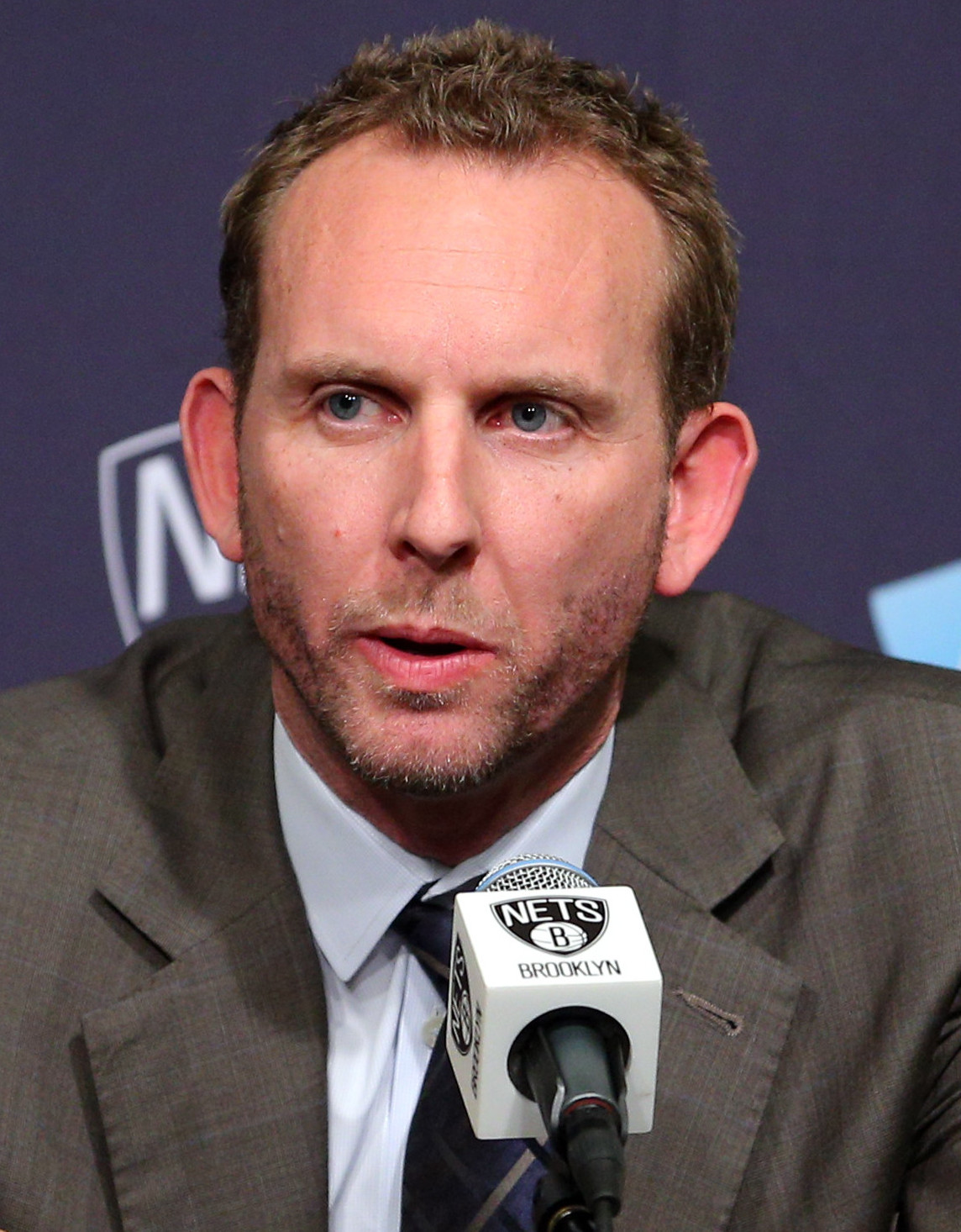
The Nets’ youth movement isn’t starting with the players. After reassigning GM Billy King in January, Brooklyn turned to 40-year-old Sean Marks, who had built a strong reputation as a coach and executive in the Spurs organization. Marks joined San Antonio in 2012 as director of basketball operations and GM for the D-League Austin Toros. He became an assistant coach a year later and was on the bench when the Spurs won the 2014 NBA title. He also won a ring with the organization as a player in 2005, so he brings a championship pedigree that the Nets need. Marks was serving as assistant GM when Brooklyn hired him away.
He takes over maybe the most daunting challenge in the league, trying to rebuild a team that won’t have its own first-round draft pick for the next three seasons. An ill-fated trade with the Celtics in 2013 sent an unprotected first-rounder to Boston this year and in 2018 and gave the Celtics the option to swap picks with the Nets next season. In the absence of high picks, Marks will have to be aggressive in free agency and crafty in trades to bring talent to Brooklyn.
Rookie Head Coach
The Nets are also going with a fresh face on their bench, hiring highly regarded Atlanta assistant Kenny Atkinson four days after the regular season ended. Before joining the Hawks, the 48-year-old Atkinson spent four years as an assistant with the Knicks. He has carved out a reputation as a hard-working, well-prepared coach who is willing to devote extra time to help players develop. Despite glowing reviews for Atkinson, he will need patience from the front office as he embarks on what is likely to be a long rebuilding process.
Spending Spree?
The good news in Brooklyn is that Marks will have plenty of cap room. The only significant salaries on the books for next season belong to center Brook Lopez, who will make nearly $21.2MM, and power forward Thaddeus Young, who is due a little more than $12.25MM. Bojan Bogdanovic ($3,573,020), Rondae Hollis-Jefferson ($1,395,600), Chris McCullough ($1,191,480) and Sean Kilpatrick ($980,431) are the only only other Nets with guaranteed deals for 2016/17.
The Nets are waiting for option decisions from Wayne Ellington ($1,567,500), Shane Larkin ($1,500,000) and Thomas Robinson ($1,050,961) that could cut their cap space by about $4.1MM if they all opt in. Jarrett Jack may be waived after tearing the ACL in his right knee, with the Nets absorbing his $500K partial guarantee. Add another $5.8MM from buyouts with Deron Williams and Andrea Bargnani, and Brooklyn can expect to have somewhere in the neighborhood of $40MM to spend once July 1 arrives.
Every big-name free agent is probably on the Nets’ wish list, but one name that has been mentioned prominently is Grizzlies point guard Mike Conley. Brooklyn needs someone to take over at that position with Jack’s possible departure, and Conley would represent a major upgrade.
Atkinson addressed the point guard need this week with a football analogy, saying a good one is like having Drew Brees or Aaron Rodgers. He said there are “exciting names” available, but surely the list starts with Conley.
Quiet Draft Night?
That 2013 trade with the Celtics took away the Nets’ first-rounder, and a deal with the Clippers gave L.A. pick No. 33, while Brooklyn dropped to 55th as its only selection on draft night.
However, the Nets had a large presence at last week’s draft combine in Chicago and interviewed several top prospects, including Isaiah Whitehead, DeAndre’ Bembry and Cheick Diallo. So it’s possible that Marks is looking at a trade to bring Brooklyn back into the first round.
Roster Decisions
The Nets are expected to make a $1,180,431 qualifying offer to promising young shooting guard Markel Brown. The second-year pro appeared in 62 games this season, averaging 5.9 points per night. Brown’s playing time was cut by coach Lionel Hollins early in the season, but his role increased under interim coach Tony Brown. They also have to decide whether to tender a $1,215,696 offer to rookie power forward Willie Reed. Point guard Donald Sloan and center Henry Sims will be unrestricted free agents, along with small forward Sergey Karasev, whom the Nets cannot offer more than $2,463,754 because they declined their option on his rookie-scale contract in November.
Pillars Of Rebuilding
Marks said this week that both Lopez and Young are in his long-term plans and he isn’t trying to trade either player. Lopez has two years and $43MM left on his contract, while Young is signed at $25MM over the next two seasons with a $13.8MM player option for 2018/19. Marks called them both “teriffic” and “competitive,” and they’re very affordable at those prices in what is expected to be a rapidly escalating NBA salary structure.
Hope For The Future?
The Nets have been plagued by instability ever since the move to Brooklyn. Atkinson is the team’s sixth coach in four years, and only Hollins lasted more than one season. Many observers believed the front office shakeup was long overdue, and now the Nets can plan for the future with a talented young GM and coach. With a shortage of draft picks, Brooklyn won’t be able to rebuild in the traditional way. The franchise will need Marks’ best efforts in talent acquisition and Atkinson’s skills in player development. Owner Mikhail Prokhorov isn’t known for his patience, but if he gives Marks and Atkinson time to succeed, the franchise could be on the right track. If not, the Nets could be back to square one in a couple of years.
Guaranteed Salary
- Brook Lopez ($21,165,675)
- Thaddeus Young ($12,278,652)
- (Deron Williams $5,474,787) — Salary remaining from buyout via stretch provision
- Bojan Bogdanovic ($3,573,020)
- Rondae Hollis-Jefferson ($1,395,600)
- Chris McCullough ($1,191,480)
- Sean Kilpatrick ($980,431)
- Jarrett Jack ($500,000) — Partial guarantee; non-guaranteed portion listed below
- (Andrea Bargnani $323,599) — Salary remaining from buyout
- Total: $46,883,244
Player Options
- Wayne Ellington ($1,567,500)
- Shane Larkin ($1,500,000)
- Thomas Robinson ($1,050,961)
- Total: $4,118,461
Team Options
- None
Non-Guaranteed Salary
- Jarrett Jack ($5,800,000) — Partial guarantee; guaranteed portion listed above
Restricted Free Agents (Qualifying Offers/Cap Holds)
- Shane Larkin ($1,875,000/$1,875,000) — Pending player option
- Willie Reed ($1,215,696/$1,215,696)
- Markel Brown ($1,180,431/$1,180,431)
- Totals: ($4,271,127/$4,271,127)
Unrestricted Free Agents (Cap Holds)
- Sergey Karasev ($2,463,754)1
- Wayne Ellington ($1,800,000) — Pending player option
- Thomas Robinson ($980,431) — Pending player option
- Donald Sloan ($980,431)
- Henry Sims ($980,431)
- Total: $7,205,047
Other Cap Holds
- Andray Blatche ($1,788,285)
- Jason Collins ($980,431)
- Jerry Stackhouse ($980,431)
- Total: $3,749,147
Projected Salary Cap: $92,000,000
Footnotes:
- The Nets can’t re-sign Karasev to a contract with a starting salary worth more than the amount listed here because they declined their team option on his rookie scale contract.
The Basketball Insiders salary pages were used in the creation of this post.
Community Shootaround: Frank Vogel
The Magic hired Frank Vogel to be their head coach earlier today. Vogel will receive roughly $22MM over the next four seasons and the team is hoping he can develop its young core. The coach will inherit a team that won 35 games and has some nice pieces in place, but the current roster likely won’t yield one All-Star over the next few seasons.
Vogel compiled a record of 250-181 as the head coach of the Pacers. He also made back-to-back conference finals appearances in 2013 and 2014. He was able to interview for the Knicks vacancy before they offered the job to Jeff Hornacek and had he waited until next season to coach, he certainly would have garner interest among teams looking for a new head coach.
So that leads us to tonight’s question: Are the Magic a good fit for Frank Vogel or should he have waited for a better head coaching gig? Take to the comments section below to share your thoughts and opinions on the topic. We look forward to what you have to say.
2015/16 D-League Usage Report: Heat
The NBA’s relationship with the D-League continues to grow, and this season a total of 19 NBA teams had one-to-one affiliations with D-League clubs. Those NBA organizations without their own affiliates were required to assign players to D-League clubs associated with other NBA franchises. D-League teams could volunteer to take on the assigned players, and if no volunteers emerged, the players were assigned at random.
This significant change from the 2014/15 season came about after the Pacers purchased the Fort Wayne Mad Ants and turned them into their one-to-one partner for the 2015/16 campaign. Other NBA teams have interest in following suit in the years ahead, and the NBA’s ultimate goal for the D-League is for all 30 NBA franchises to have their own D-League squads. You can view the complete list of D-League affiliates here.
We at Hoops Rumors are recapping the D-League-related activity for the 2015/16 campaign for each team and we’ll continue with the Miami Heat, whose D-League affiliate is the Sioux Falls Skyforce:
The Heat made 8 assignments for the 2015/16 season, sending two players to the D-League for a total of 55 days. Listed below are all the assignments and recalls made by Miami for the 2015/16 campaign:
- November 25th: Assigned Jarnell Stokes (1st) — Recalled November 29th
- December 3rd: Assigned Jarnell Stokes (2nd) — Recalled December 15th
- December 25th: Assigned Jarnell Stokes (3rd) — Recalled January 3rd
- December 30th: Assigned Josh Richardson (1st) — Recalled January 3rd
- January 5th: Assigned Jarnell Stokes (4th) — Recalled January 16th
- January 5th: Assigned Josh Richardson (2nd) — Recalled January 11th
- February 4th: Assigned Jarnell Stokes (5th) — Recalled February 7th
- February 10th: Assigned Jarnell Stokes (6th) — Recalled February 15th
Here’s how Miami’s players performed while on assignment to the D-League this season:
- Josh Richardson: In four appearances Richardson averaged 23.3 points, 4.5 rebounds and 3.8 assists in 38.2 minutes per contest. His shooting numbers were .473/.393/.706.
- Jarnell Stokes: In 28 appearances Stokes averaged 20.6 points, 9.3 rebounds and 1.1 assists in 30.7 minutes per outing. His shooting line was.665/.444/.667.
Poll: 2016 Community Mock Draft (Pick No. 2)
The 2016 NBA Draft lottery was held on Tuesday night and the Sixers finally landed the elusive No. 1 overall pick after missing out the past two seasons. Now that the exact draft order is locked in, teams can begin targeting specific players who are likely to still be on the board when it is their time to choose. Drafting players is far from an exact science, and many a GM has been second-guessed for his draft night decisions. I’m willing to bet that every team executive has at least one pick that he would like a mulligan for. We at Hoops Rumors thought it would be fun to give our readers the chance to predict the results of this June’s draft, which is what we intend to do with a series of polls.
We’ll continue with the Lakers, who have a number of roster needs, especially in the frontcourt. Readers, you are now on the clock! Cast your vote for Los Angeles’ pick and check back Friday for the results, as well as to cast your vote for who the Celtics will select with the No. 3 overall pick. But don’t limit yourself to a simple button click. Take to the comments section below and share your thoughts on the No. 2 overall pick and why you voted the way that you did.
Previous Selections
- Sixers — Ben Simmons (LSU)
With the No. 2 Pick, the Lakers Select...
-
Brandon Ingram (Duke) 89% (1,365)
-
Dragan Bender (Maccabi Tel Aviv) 3% (47)
-
Buddy Hield (Oklahoma) 3% (40)
-
Kris Dunn (Providence) 2% (24)
-
Jamal Murray (Kentucky) 1% (13)
-
Skal Labissiere (Kentucky) 1% (10)
-
Deyonta Davis (Michigan State) 1% (10)
-
Jakob Poeltl (Utah) 1% (9)
-
Jaylen Brown (California) 0% (6)
-
Marquese Chriss (Washington) 0% (3)
Total votes: 1,527
Community Shootaround: No. 3 Pick
If LSU’s Ben Simmons and Duke’s Brandon Ingram are clearly the best two prospects in this year’s draft, then the Sixers and Lakers were the big winners at Tuesday’s lottery. Mock drafts may be split over whether Simmons or Ingram will be the better pro, but they virtually all agree that those will be the top two picks — in one order or the other.
So where does that leave the Celtics?
Boston is beginning to reap the harvest of a nine-player trade with Brooklyn in 2013 that saw the Nets give away a parcel of draft picks for aging veterans Kevin Garnett, Paul Pierce and Jason Terry. It was a short-sighted deal by Brooklyn GM Billy King that eventually cost him his job as the franchise deteriorated. Boston will get unprotected first-round picks from the Nets this year and in 2018, along with the opportunity — which now seems like a certainty — to swap first-rounders next season. Brooklyn stumbled to a 21-61 record this year, the third-worst mark in the league, and the Celtics hung on to the third pick Tuesday after all the ping-pong balls dropped.
What should their next move be?
ESPN’s Chad Ford has Boston grabbing Kentucky combo guard Jamal Murray at No. 3 in his latest mock draft, calling it a tough choice between him, Kris Dunn of Providence and Buddy Hield of Oklahoma. Jonathan Givony of DraftExpress has Dragan Bender, a power forward out of Bosnia, rated third overall, but hasn’t updated his mock draft to include the lottery results or to consider team needs.
It’s generally agreed that apart from diminutive All-Star Isaiah Thomas, Boston has a roster filled with average to good players but very little star power. With Thomas, Marcus Smart and Avery Bradley on hand and the possible return of Evan Turner, any rookie guard will have to fight for playing time in the Celtics’ backcourt.
That brings us to tonight’s question: What should the Celtics do with their pick? Is Murray the best answer? Is Dunn, Hield or Bender? Or if you think a trade is a better option, who should they target and what would it take to get a deal done?
Take to the comments section below to share your thoughts and opinions on the topic. We look forward to what you have to say.
Submit Your Questions For Hoops Rumors Mailbag
In addition to our regular weekly chat, we have a second opportunity for you to hit us up with your questions in our weekly mailbag feature, which is posted every Sunday.
Have a question regarding player movement, free agent rumors, the salary cap, the NBA draft, or the top storylines of the week? You can e-mail them here: hoopsrumorsmailbag@gmail.com. Feel free to send emails throughout the week, but please be mindful that we may receive a sizable number of questions and might not get to all of them.
If you missed out on any past mailbags and would like to catch up, you can view the full archives here.
2015/16 D-League Usage Report: Grizzlies
The NBA’s relationship with the D-League continues to grow, and this season a total of 19 NBA teams had one-to-one affiliations with D-League clubs. Those NBA organizations without their own affiliates were required to assign players to D-League clubs associated with other NBA franchises. D-League teams could volunteer to take on the assigned players, and if no volunteers emerged, the players were assigned at random.
This significant change from the 2014/15 season came about after the Pacers purchased the Fort Wayne Mad Ants and turned them into their one-to-one partner for the 2015/16 campaign. Other NBA teams have interest in following suit in the years ahead, and the NBA’s ultimate goal for the D-League is for all 30 NBA franchises to have their own D-League squads. You can view the complete list of D-League affiliates here.
We at Hoops Rumors are recapping the D-League-related activity for the 2015/16 campaign for each team and we’ll continue with the Memphis Grizzlies, whose D-League affiliate is the Iowa Energy:
The Grizzlies made 16 assignments for the 2015/16 season, sending three players to the D-League for a total of 86 days. Listed below are all the assignments and recalls made by Memphis for the 2015/16 campaign:
- December 4th: Assigned James Ennis (1st) — Recalled December 6th
- December 8th: Assigned James Ennis (2nd) — Recalled December 9th
- December 11th: Assigned James Ennis (3rd) — Recalled December 13th
- December 17th: Assigned Jarell Martin (1st) — Recalled December 17th
- December 17th: Assigned Russ Smith (1st) — Recalled December 17th
- December 17th: Assigned James Ennis (4th) — Recalled December 17th
- December 22nd: Assigned James Ennis (5th) — Recalled December 24th
- December 22nd: Assigned Jarell Martin (2nd) — Recalled December 24th
- December 22nd: Assigned Russ Smith (2nd) — Recalled December 24th
- December 27th: Assigned James Ennis (6th) — Recalled January 3rd
- December 28th: Assigned Jarell Martin (3rd) — Recalled January 3rd
- January 15th: Assigned James Ennis (7th) — Recalled February 3rd
- January 25th: Assigned Jarell Martin (4th) — Recalled February 3rd
- February 3rd: Assigned James Ennis (8th) — Recalled February 18th
- February 3rd Assigned Jarell Martin (5th) — Recalled February 9th
- February 25th: Assigned Jarell Martin (6th) — Recalled February 29th
Here is how the Grizzlies’ players performed while on assignment to the D-League this season:
- James Ennis: In 24 appearances Ennis averaged 18.8 points, 6.0 rebounds and 2.6 assists in 33.3 minutes per outing. His shooting line was .454/.321/.697.
- Jarell Martin: In 10 appearances Martin averaged 15.0 points, 6.0 rebounds and 0.7 assists in 28.9 minutes per contest. His shooting numbers were .492/.286/.565.
- Russ Smith: In 22 combined appearances with Iowa and Delaware (the Sixers’ affiliate), Smith averaged 27.9 points, 5.0 rebounds and 7.8 assists in 37.0 minutes per outing. His shooting line was .460/.304/.778.
Poll: 2016 Community Mock Draft (Pick No. 1)
The 2016 NBA Draft lottery was held on Tuesday night and the Sixers finally landed the elusive No. 1 overall pick after missing out the past two seasons. Now that the exact draft order is locked in, teams can begin targeting specific players who are likely to still be on the board when it is their time to choose. Drafting players is far from an exact science, and many a GM has been second-guessed for his draft night decisions. I’m willing to bet that every team executive has at least one pick that he would like a mulligan for. We at Hoops Rumors thought it would be fun to give our readers the chance to predict the results of this June’s draft, which is what we intend to do with a series of polls.
We’ll begin with the Sixers, who are likely to choose between former LSU forward Ben Simmons and former Duke forward Brandon Ingram at the top slot, though GM Bryan Colangelo could look to address the team’s void at point guard by nabbing Kris Dunn or Jamal Murray instead. Readers, you are now on the clock! Cast your vote for Philadelphia’s pick and check back Thursday for the results, as well as to cast your vote for who the Lakers will select with the No. 2 overall pick. But don’t limit yourself to a simple button click. Take to the comments section below and share your thoughts on the No. 1 overall pick and why you voted the way that you did.
With the No. 1 Overall Pick, the Sixers Select...
-
Ben Simmons (LSU) 61% (1,060)
-
Brandon Ingram (Duke) 30% (526)
-
Kris Dunn (Providence) 3% (51)
-
Buddy Hield (Oklahoma) 1% (25)
-
Dragan Bender (Maccabi Tel Aviv) 1% (16)
-
Marquese Chriss (Washington) 1% (16)
-
Jamal Murray (Kentucky) 1% (11)
-
Skal Labissiere (Kentucky) 1% (11)
-
Jakob Poeltl (Utah) 0% (6)
-
Deyonta Davis (Michigan State) 0% (6)
-
Jaylen Brown (California) 0% (2)
Total votes: 1,730