
Latest On Potential NBA-Run European League
Speaking this week to reporters in Paris, commissioner Adam Silver confirmed that the NBA continues to explore the idea of launching a league in Europe. Reporting in December indicated that the NBA and FIBA were discussing the concept, and Silver addressed those talks earlier this month in an appearance on Shaquille O’Neal’s podcast.
As Brian Windhorst of ESPN writes, Silver’s comments this week were his most expansive on the subject, as well as his most intriguing. The NBA commissioner suggested that he believes the EuroLeague – Europe’s current top basketball league – is leaving money on the table, Windhorst notes.
“While Europe continues to develop some of the very best players in the world — many of our most recent MVPs, of course, are European — we think that the commercial opportunity has not kept pace with the growth of the game,” Silver said. “And what we do at the NBA is we run leagues.
“We, of course, run the WNBA, we have the [Basketball Africa League], we have the G League, we have a 2K video league. So we operate five different leagues and we think it’s an expertise we have. And so we are looking very closely to see if there’s an opportunity to professionalize the game to another level here to create a larger commercial opportunity.”
According to Mike Vorkunov of The Athletic, the NBA is considering various models for its league — it could include new teams, existing clubs, or a combination of the two. Vorkunov says sources in Europe have continuously mentioned Real Madrid as a club that might be interested in leaving the EuroLeague for the NBA’s new venture.
While other EuroLeague teams could also be candidates to defect, the NBA has also reached out to some major European soccer clubs to see if they would have interest in creating new basketball teams, sources tell Windhorst. Both Windhorst and Vorkunov mention Manchester and Berlin as markets the NBA is looking at, with Vorkunov also listing London, Paris, and Munich as a few more possibilities.
The league may schedule NBA regular season games in one or more of those markets within the next couple seasons, per Windhorst and Vorkunov.
“Everything is on the table,” Silver responded when asked by BasketNews whether the NBA’s European league could feature EuroLeague teams. “So, [the] potential to include existing clubs? Absolutely there should be interest. The opportunity to create sustainable competition? Yes. Would we want to have a broad base of countries represented? Absolutely.
“I mean, that’s the benefit we have now by coming in and looking at this from a blank canvas. Incidentally, I recognize there’s enormous history and tradition here in European basketball, and we want to respect those traditions.”
Here’s more on the NBA’s potential foray into Europe:
- In order to move forward with a European league, the NBA would need to get the support of its Board of Governors. Windhorst, citing ownership sources, says there are still plenty of questions about the league’s plans, especially since some of the other leagues the NBA operates haven’t been consistently profitable. According to Windhorst, Silver suggested this week that a decision on whether or not to continue moving forward on a European league could be made following a Board of Governors meeting in a couple months. “We have an NBA board meeting in late March,” Silver said. “We’ll be giving an update to our bosses, in essence.”
- Of course, March’s meeting won’t be the first time that the league shares its plans with NBA team owners. As Windhorst writes, FIBA secretary general Andreas Zagklis made a presentation to team owners in New York in the fall about a potential European league, while George Aivazoglou, the NBA’s managing director of Europe and the Middle East, met with a committee of owners in November and spoke about which cities the league would target.
- League officials from the NBA and EuroLeague met last year as the NBA looked to partner with the established league on its new venture, says Vorkunov. The EuroLeague rejected the NBA’s proposal, since it didn’t want to give up control of its operations. “They wanted the heart and the head,” a EuroLeague executive told The Athletic.
- Vorkunov describes “dissent” among prominent European basketball figures about the impact of the NBA’s entry into the market. “I think the NBA walks into the European business and revenues go up a whole bunch,” one EuroLeague club owner said. “I don’t know how they do that, but they’re experts at it.” Others aren’t so sure, Vorkunov explains, noting that another club owner doesn’t believe there’s room for both the EuroLeague and an NBA league to succeed in Europe.
Warriors Notes: Kuminga, Podziemski, Anderson, Trades, Post
Jonathan Kuminga has been out since January 4 due to a right ankle sprain and the Warriors forward remains weeks away from returning to action, tweets Anthony Slater of The Athletic. According to Slater, Kuminga still has his ankle wrapped and hasn’t been able to do any real on-court work yet.
While Kuminga is around the team and is in “positive spirits,” he may not suit up for Golden State until after the All-Star break, says Slater.
Still, as Slater notes in another tweet, the Warriors’ injury situation on the whole is improving. Brandin Podziemski made his return on Thursday following a 12-game absence due to an abdominal issue and was effective in his first game back, scoring 10 points on 4-of-6 shooting as the Warriors outscored Chicago by 22 points during his 21 minutes. Kyle Anderson has been cleared to return on Saturday vs. the Lakers after missing the past five games due to what the club described as left gluteal bursitis.
Although Kuminga and Draymond Green (left calf strain) remain on the shelf for now, Golden State may have everyone else available on Saturday. Podziemski, Andrew Wiggins (back soreness), and Gary Payton II (illness) are the only other names on the injury report and they’re each listed as probable to play.
Here’s more on the Warriors:
- While the Warriors would love to acquire an impact player via trade, they’re unlikely to make a significant splash at this season’s deadline, according to Tim Bontemps and Brian Windhorst of ESPN (Insider link). ESPN’s duo anticipates Golden State will wait until a “true difference-maker” hits the trade market and expects any move the Dubs make by February 6 to be on the smaller side, like last month’s Dennis Schröder acquisition.
- Mark Medina of RG.org is also skeptical that a major in-season move is on tap for the Warriors.
- Meanwhile, Marcus Thompson II of The Athletic considers whether it makes sense for Golden State to do something bold at the deadline, focusing specifically on Bulls guard Zach LaVine as a potential target, which seems like a long shot to me.
- The Warriors’ staff has “gained increasing belief in recent weeks” that rookie center Quinten Post might be able to address the club’s need for a floor-spacer in the frontcourt, Slater writes for The Athletic. After making three brief appearances in the first 41 games of the season, Post has averaged 11.3 points in 16.0 minutes per night over Golden State’s past three games, making 7-of-18 (38.9%) three-pointers during that stretch. “He picks and pops,” head coach Steve Kerr said. “That means the other team’s big guy has to go with him. That means that defender’s not in the paint. Steph (Curry) was the happiest guy in the building tonight with all that room to work with. The game got a lot easier for all of our guys.”
Hoops Rumors Glossary: Tax Aprons
If an NBA team’s salary continues to rise after it surpasses both the salary cap and the luxury tax line, it may reach or exceed one or both tax “aprons.” The level of the first tax apron is several million dollars above the threshold at which a team becomes a taxpayer, while the second tax apron is another $10MM+ beyond the first apron.
A team whose salary exceeds the first apron is prohibited from making certain moves during that league year, while a team whose salary goes beyond the second apron faces even more restrictions. The goal is to encourage competitive balance by limiting the ability of the teams with the NBA’s highest payrolls to further upgrade their rosters.
Although the tax apron isn’t a new addition to the NBA’s Collective Bargaining Agreement, the 2023 CBA represents the first time that the league’s cap system features multiple aprons. The 2023 CBA also introduced several new rules that apply to teams whose salaries are above one or both aprons.
Let’s dive in and break down the tax aprons in greater detail…
How are the tax aprons calculated?
The formula that determined the level of the first tax apron in 2024/25 was as follows:
- Formula: $172,345,814 x ($140,588,000 / $136,021,000)
- Result: $178,132,000
- Note: The result was rounded to the nearest thousand.
These may just look on the surface like a collection of random numbers, but there’s a method to the madness. $172,345,814 was the result of last season’s first apron calculation (it was rounded to the nearest thousand, $172,346,000, for functional purposes); $140,588,000 is this season’s salary cap; and $136,021,000 was last season’s cap.
In other words, the first apron is simply rising by the same rate as the salary cap. That will continue to be the case going forward.
Like the first apron, the second apron will increase at the same rate as the cap each season, meaning the formula for 2024/25 was as follows:
- Formula: $182,793,814 x ($140,588,000 / $136,021,000)
- Result: $188,931,000
- Note: The result was rounded to the nearest thousand.
In future seasons, the current-year salary cap amount will be substituted into these two formulas in place of $140,588,000 to determine that season’s first and second tax aprons.
What restrictions does a team face if its salary is above the first tax apron but below the second apron?
When implementing its new CBA in 2023, the NBA gradually phased in the restrictions facing teams operating above the tax aprons over the course of two seasons. That gave those teams an opportunity to adjust their rosters to account for the new apron-related rules.
As of the 2024/24 season, all of the new restrictions are in effect.
Here are the moves that a team whose salary is above the first tax apron – but below the second apron – is prohibited from making in 2024/25 and beyond:
- Acquiring a player via sign-and-trade.
- Using any portion of the bi-annual exception for any transaction.
- Using any portion of the non-taxpayer mid-level exception to acquire a player via trade or waiver claim.
- Using more than the taxpayer portion of the mid-level exception to sign a player.
- Signing a player who was waived during the current season if his pre-waiver salary for that season exceeded the amount of the non-taxpayer mid-level exception.
- Using one or more outgoing players in a trade for matching purposes to take back more than 100% of the outgoing salary.
- Using a traded player exception generated during the prior year (ie. between the end of the previous regular season and the end of the most recent regular season).
It’s worth clarifying a few points related to these restrictions.
A team operating above the first apron doesn’t have access to the bi-annual exception or non-taxpayer mid-level exception, both of which can be used to sign a player or to acquire a player via trade or waiver claim. First-apron teams can use the taxpayer mid-level exception, but it can only be used to sign a player, not to acquire one via trade or waiver claim.
A team restricted to the taxpayer form of the mid-level can’t exceed its limits in dollars or years. For instance, in 2024/25, the taxpayer mid-level exception can be used to sign a player to a deal with a starting salary of up to $5,168,000 for up to two years. That means a team using its mid-level exception to sign a player to a three-year contract worth $3MM annually would have to use the non-taxpayer MLE to do so, since the deal would only fit within the taxpayer MLE in terms of money, not years.
The fifth item in the list above is important to remember after the trade deadline when certain veterans negotiate contract buyouts. If the player’s salary exceeds the full value of the non-taxpayer mid-level exception ($12,822,000 in 2024/25), he would be ineligible to sign with a team operating above the first apron once he clears waivers and reaches free agency — even if he negotiates a buyout that reduces his salary to below that non-taxpayer MLE amount.
The sixth item in the list only applies in instances where salary-matching is necessary. For example, a team operating above the first tax apron could send out a player earning $10MM in exchange for a player earning $9.5MM and a second player on a one-year, minimum-salary contract — even though the club would technically be taking back more total salary than it’s sending out, the minimum-salary player can be acquired using the minimum salary exception, so the $10MM player is only being used to match the $9.5MM player’s incoming salary.
In regard to the seventh item, let’s say a team operating above the first apron currently has one traded player exception worth $5MM, then generates another one worth $8MM at the 2025 trade deadline. Both of those exceptions would become unavailable once the team’s 2025 offseason begins.
That club could subsequently make a draft-night deal that generates a new $7MM trade exception and use it at any point between its creation and the end of the 2025/26 regular season. But if that team continues operating above the first apron, that $7MM TPE would once again become unavailable once the 2026 offseason begins, prior to its typical one-year expiration date.
What restrictions does a team face if its salary is above the second tax apron?
A team whose salary is above the second tax apron is prohibited from making any of the moves unavailable to teams above the first apron, as described above. That includes acquiring a player via sign-and-trade, using any portion of the bi-annual exception, and so on.
Additional restrictions also apply to teams operating above the second apron. Here are the moves that teams above the second tax apron are prohibited from making in 2024/25 and beyond:
- Using any portion of the mid-level exception.
- Aggregating two or more player salaries in a trade.
- Sending out cash as part of a trade.
- Acquiring a player via trade by using a signed-and-traded player for salary-matching purposes.
- Acquiring a player via trade using a traded player exception if that TPE was generated by sending out a player via sign-and-trade.
Teams above the second tax apron will face one more draft-related restriction beginning in the 2025 offseason. If the team’s salary exceeds the second apron at the end of a season, its first-round pick in the draft seven years away will be “frozen” — in other words, that pick would not be tradable.
If the team’s salary exceeds the second apron in at least two of the following four seasons (three of five in total), the frozen pick would move to the end of the first round for that draft. Conversely, if the team stays below the second apron for at least three of the subsequent four seasons, its pick becomes “unfrozen” and is once again tradable.
Let’s use the Suns as an example, since they’re a lock to finish the 2024/25 league year above the second tax apron. That would result in their 2032 first-round pick becoming frozen, ineligible to be traded once the ’25/26 league year begins. If their team salary remains above the second apron for at least two more seasons between ’25/26 and ’28/29, their frozen pick would move to the end of the 2032 first round and would remain ineligible to be dealt.
If multiple teams have a frozen pick moved to the end of the first round in a particular draft, they would make their selections in reverse order of their place in the NBA standings in the season prior to that draft. For example, if both the Suns and Celtics have their 2032 first-rounders moved to the end of the round and Boston finishes ahead of Phoenix in 2031/32, the Suns would pick ahead of the Celtics in that draft.
Can a team that begins a league year above the first or second tax apron gain the ability to make additional moves by reducing its salary and dipping below the apron(s)?
Yes. If a club were to open the 2025/26 league year carrying $200MM in salary, then engaged in a series of salary-dump trades that reduce its team salary to $150MM, it would no longer be subject to the restrictions facing an apron team.
The apron restrictions that apply to a team are determined by its salary position upon the conclusion of a given transaction. That means that if a second-apron club agrees to a trade that will move its team salary below the second apron, it could aggregate salaries and/or send out cash as part of that deal.
However, as long as the team’s salary remains above the first or second apron – or if the team is completing a transaction would push its salary above one apron or the other – that team is subject to the rules that apply to that apron level.
Critically, it’s worth noting that once a club engages in a roster move that is prohibited for a team above the first or second apron, that club will be hard-capped for the rest of the season at that apron level.
In 2024/25, for instance, teams like the Kings and Hornets acquired players via sign-and-trade, the Warriors and Mavericks used the non-taxpayer mid-level exception, and the Thunder and Pelicans took back more than 100% of their outgoing salary in trades. As a result, those teams are a few of the many that are hard-capped at the first apron ($178,132,000) and aren’t permitted to surpass that salary level for the rest of ’24/25.
The Nuggets, Pacers, and Knicks are the three teams currently hard-capped at the second apron ($188,931,000) this season. Denver used the taxpayer mid-level exception, Indiana sent out cash in a trade, and New York aggregated salaries in a trade.
Finally, there’s one more important point related to apron level restrictions and hard caps: A team that engages in any of the trade-related transactions prohibited for first or second apron teams between the end of the regular season and the end of that league year on June 30 will not be permitted to exceed that apron level during the following season.
If, for example, a team sends out cash in a trade in June of 2025, that team won’t be allowed to exceed the second tax apron during the 2025/26 league year. The inverse is also true — a team whose 2025/26 salary projects to be over the second apron won’t be able to trade cash in June 2025.
This rule only applies to trade-related transactions because the ones related to free agency don’t come into effect between the end of the regular season and the start of the next league year.
Anything else I should know about the tax aprons?
It’s worth pointing out that a club with a number of incentive bonuses on its books may find itself operating above the first or second apron even if its base team salary doesn’t exceed those levels.
For the purposes of calculating a team’s salary, a player’s likely incentives are included in his cap hit, but his unlikely incentives aren’t (an incentive is considered likely to be earned if it was achieved last season and unlikely to be earned if it wasn’t). However, for the purposes of determining a team’s apron level, all those incentives are counted.
That means a team with a $175MM base salary and an additional $5MM in unlikely incentives in 2024/25 would be considered a first apron team and would be unable to make certain roster moves, since there’s a chance those incentives could be earned, pushing the club’s salary above $178,132,000.
Note: This is a Hoops Rumors Glossary entry. Our glossary posts will explain specific rules relating to trades, free agency, or other aspects of the NBA’s Collective Bargaining Agreement.
An earlier version of this post was published in 2023.
Central Notes: Atkinson, Pistons, Vucevic, Ball
When Boston lost to the Lakers on Thursday, it guaranteed that the Cavaliers will hold the best record in the Eastern Conference through February 2. That, in turn, ensured that Cavs head coach Kenny Atkinson will coach one of the four All-Star teams on February 16 in San Francisco, while an assistant on his staff will coach another of those four squads, the NBA announced (Twitter links).
In past seasons, the head coaches for the teams with the best records in the East and West prior to the All-Star break would coach their respective conference in the All-Star Game. It’s a little more complicated this season due to the new four-team format, which is why both Atkinson and Thunder head coach Mark Daigneault will be bringing an assistant to All-Star weekend next month.
Here are a few more items of interest from around the Central:
- The Pistons traded their 2021 first-round pick during the 2020 offseason as part of a sign-and-trade deal that sent Christian Wood to Houston. However, that pick included heavy protections and has yet to convey while being traded three more times since then, from Houston to Oklahoma City to New York to Minnesota. As Jared Ramsey of The Detroit Free Press observes, 2025 may be the year that pick finally changes hands — the Timberwolves will receive it if it lands outside of the top 13 and the Pistons are very much in the hunt for a playoff spot in the East at 23-21.
- Prior to Thursday’s matchup with Golden State, Bulls center Nikola Vucevic said he didn’t view the game – against a team rumored to have interest in him – as an audition, per Joe Cowley of The Chicago Sun-Times. “There’s been many rumors in the past where I then played that certain team I’ve been linked to or not, and it doesn’t really affect me because I don’t think that way,” Vucevic said. If it was a tryout, the veteran big man didn’t exactly ace it, matching his season-low with nine points in a blowout loss to the Warriors, notes Julia Poe of The Chicago Tribune.
- In a separate story for the Tribune, Poe wonders if guard Lonzo Ball might end up being the Bulls‘ best trade chip at the February 6 deadline. His injury history is obviously a significant red flag, but Ball is the only one of the team’s highly-paid trade candidates who is on an expiring deal and Chicago has a +7.4 net rating during his minutes this season. In fact, it doesn’t seem as if the Bulls are especially eager to move on from the former No. 2 overall pick, who “quietly commands the locker room,” Poe writes.
Trade Rumors: Beal, Cavs, Pacers, Market Activity
Speaking this week to Duane Rankin of The Arizona Republic, Bradley Beal‘s agent Mark Bartelstein said that reports about specific teams his client would waive his no-trade clause for are “created out of thin air.”
Rumors this month have indicated that the Suns guard would be open to destinations like Miami, Denver, Milwaukee, and Los Angeles, but Bartelstein didn’t confirm Beal’s interest in those spots. He also suggested that he and Beal wouldn’t dismiss any possibilities without giving them some real thought.
“I never operate in terms of absolutes, meaning that we would never say there would never be a trade that you would not consider,” Bartelstein said. “You always keep an open mind like everyone does in all aspects of their life, and so if something was to come around that you were truly excited about, you always have to consider those things.”
Beal is considered a trade candidate because the Suns reportedly have serious interest in Jimmy Butler and Beal’s inclusion in an outgoing package would be the only realistic way to make a deal work. However, several recent reports have stated that Phoenix hasn’t come to Beal to discuss any trade scenarios, and Bartelstein has repeatedly said his client’s focus is on getting his ankle healthy and helping Phoenix win games.
Here are a few more trade-related notes and rumors from around the NBA:
- The Cavaliers have conveyed that they’re fine with the idea of paying the luxury tax, given how well the team is performing, but rival NBA executives are skeptical and are keeping an eye on Cleveland as a candidate to make a small salary-dump deal before the deadline, says Michael Scotto of HoopsHype. The Cavs are currently operating just $1.7MM above the luxury tax line.
- Within his look at potential suitors for Brooklyn forward Cameron Johnson, Scotto says the Pacers are getting inquiries from teams around the NBA on several of their young players, including Bennedict Mathurin, Aaron Nesmith, Jarace Walker, and Ben Sheppard. After a 9-14 start, the Pacers have been hitting their stride over the past couple months, winning 15 of their past 21 games, so it’s unclear if they’ll have the appetite for a deadline deal that shakes up their roster.
- According to Keith Smith of Spotrac (Twitter links), teams around the NBA believe that the Butler standoff in Miami could be delaying some trade activity. “We have a deal basically done, but the other team could be in a four- or five-team trade involving Butler,” one assistant GM told Smith. “So, they need to hold for now. So, yeah, that’s going to be such a big trade that we all just have to wait it out.” The expectation is that the dam will break in the final days leading up to the deadline if there’s no traction on a Butler deal by that point, Smith adds.
- Smith published his 2025 trade deadline primer for Spotrac this week, while Sam Vecenie of The Athletic has updated his 2024/25 trade board, with Butler, Zach LaVine, and Johnson at the top.
Mavs Notes: Edwards, Prosper, Klay, Hardy, Exum, Kleber
With the Mavericks missing several important contributors due to injuries, head coach Jason Kidd told reporters on Wednesday that the team’s “young players are going to get a lot of reps,” as Mike Curtis of The Dallas Morning News writes.
Kidd made good on that promise on Thursday. On the second end of a back-to-back set, facing the top-seeded Thunder in Oklahoma City, two-way player Kessler Edwards started and played a season-high 23 minutes, while second-year forward Olivier-Maxence Prosper saw 21 minutes off the bench.
Dallas was outscored by eight points with Prosper on the court and by seven points during Edwards’ minutes, but the duo helped keep the banged-up club in the game, combining for 21 points on 6-of-9 shooting, along with seven rebounds and a pair of steals. With veterans Kyrie Irving (24 points), P.J. Washington (22 points), and Spencer Dinwiddie (28 points) doing the rest of the heavy lifting, the Mavs picked up an impressive 121-115 victory.
“I thought this was a character win, maybe the best win of the season,” Kidd said, per Eddie Sefko of Mavs.com. “Shorthanded, next-man-up mentality.”
While the Thunder have looked like the class of the Western Conference this season, the Mavs seem to have their number. After knocking Oklahoma City out of the playoffs last spring, Dallas has gone 3-1 against the conference leaders this season. OKC is 35-5 against everyone else.
“To go against this team four times and come out 3-1, that’s where I feel like we laid our hat on,” Irving said, according to Sefko. “So we know we can play with the best. Now we got to build on that consistency. The last few games, we have not been as consistent as we’d like. (It was a) gutsy win.”
Here’s more on the Mavs:
- Of Dallas’ many injured players, Klay Thompson (left ankle sprain) and Jaden Hardy (right ankle sprain) appear the closest to returning. They’ve been listed as questionable for Saturday’s game vs. Boston, tweets Grant Afseth of Dallas Hoops Journal. Naji Marshall (illness) and Dwight Powell (right hip strain) are still listed as out and will miss a third and fourth consecutive game, respectively, joining Luka Doncic, Dereck Lively, and Dante Exum on the injured list.
- Although Exum has been shooting and ramping up his activity, his return is still a long ways off, Kidd said on Thursday (Twitter link via Brad Townsend of The Dallas Morning News). The veteran guard has been recovering from wrist surgery since October and has yet to make his season debut.
- According to Kidd, the Mavericks’ training staff currently has big man Maxi Kleber on a restriction of 20 minutes per game. Kleber’s importance has increased with Lively on the shelf for the foreseeable future, but after dealing with an oblique issue near the start of the month, he hasn’t logged more than 20:14 in a game since January 7.
Lakers’ Anthony Davis: “I Think We Need Another Big”
After writing on Wednesday about LeBron James‘ and Anthony Davis‘ desire for the Lakers to be aggressive on the trade market and their belief that the team might just be a piece or two away from contending for a championship, Shams Charania of ESPN shared an in-depth interview with Davis on Thursday in which the star big man publicly expressed that belief (YouTube link).
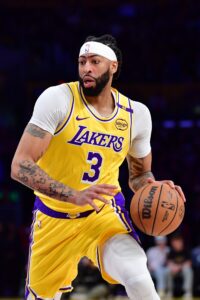 Asked by Charania whether he feels the Lakers are a couple pieces away from having a legitimate shot at a title, Davis emphatically replied, “We are. I really feel like we are.”
Davis pointed to what he believes is a specific area of need for the team, suggesting that he could use some more help in the frontcourt.
“I think we need another big,” he told Charania. “You see the teams that have been effective. Our biggest matchup the past couple years has been against Denver, trying to beat Denver. You watch Minnesota – obviously they’re a different team now – but you see how Minnesota beat Denver (in the 2024 playoffs) — two bigs.
“I feel like I’ve always been at my best when I’ve been the four and having a big out there. We know it worked when we won a championship with JaVale (McGee) and Dwight (Howard) at the five and I’m at the four.”
Jovan Buha of The Athletic recently identified the Lakers’ greatest needs as a two-way wing, another play-maker and ball-handler, and a center who can protect the rim and rebound. It’s possible the team will have enough bodies on the wing after acquiring Dorian Finney-Smith last month, especially if Jarred Vanderbilt is effective in his return from injuries that have sidelined him all season.
That would leave a ball-handler/play-maker and a big man as the two pieces the Lakers could most use. However, the club reportedly hasn’t been especially aggressive on the trade market and remains reluctant to trade its two movable first-round picks (2029 and 2031).
Los Angeles will also have to figure out which of its mid-sized contracts make sense to move. Vanderbilt, Gabe Vincent, Austin Reaves, and Rui Hachimura are all making between $10MM and $17MM, but Vanderbilt and Vincent are considered negative assets due in part to their recent injury history. Meanwhile, the Lakers haven’t been willing to discuss Reaves and seem reluctant to part with Hachimura, since losing him would leave a hole in the lineup at forward.
As Buha writes in a story for The Athletic, Davis’ and James’ desire to trade those 2029 and 2031 first-round picks and go all-in is butting up against the front office’s preference to take a more conservative approach with an eye toward both the present and future.
Davis, James, and the Lakers made a strong case on Thursday for additional investment in this roster when they dismantled the Celtics, registering a 21-point home victory over the defending champions to push their record to 24-18. That’s the best mark Los Angeles has had at this point in the season since 2020/21.
According to Buha, when asked by reporters after the win about his comments to Charania, Davis said he knows Rob Pelinka and the front office are working the phones in search of upgrades. He also stressed that he and James have a “championship mindset,” echoing comments he made to ESPN about wanting to win another title.
“One, we want to win it for the city. Two, we never got a parade. Three, it’s a lot of talk about an asterisk next to the (2020) championship, which I believe was probably the toughest championship to win,” Davis told Charania. “We just think it’s time. We feel like we’re right there as far as the team and everything like that. (LeBron) and I are very, very motivated to win another championship.”
Bruno Fernando Signs With Real Madrid
Veteran NBA center Bruno Fernando has signed with Real Madrid, the Spanish club announced today in a press release.
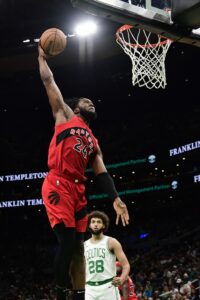 Fernando, who inked a non-guaranteed minimum-salary contract with the Raptors in August after previously suiting up for the Hawks, Celtics, and Rockets, was sparingly used during the first half of this season even though centers Kelly Olynyk and Jakob Poeltl both missed some time due to injuries.
Fernando appeared in 17 games for Toronto, making two starts and averaging 3.4 points, 3.0 rebounds, and 1.1 assists in 8.6 minutes per contest. The Raptors waived him earlier this month before his full-season salary could become guaranteed, making him a free agent.
While Fernando was believed to be prioritizing another opportunity stateside, the former Maryland standout will make the move overseas for the first time in his professional career. His new contract with Real Madrid runs through the 2025/26 season, according to the EuroLeague club.
Fernando is joining a Real Madrid squad that recently signed another notable NBA free agent, guard Dennis Smith Jr., and features a frontcourt heavy on former NBA players, including Serge Ibaka, Usman Garuba, Edy Tavares, and Gabriel Deck.
Mario Hezonja, Dzanan Musa, and Facundo Campazzo are among Fernando’s other new teammates who have NBA experience.
Timberwolves’ Donte DiVincenzo Won’t Need Surgery On Toe
Timberwolves starting point guard Donte DiVincenzo injured his toe during a January 15 matchup against the Warriors and has been on the shelf since then. He was ruled out indefinitely with what was termed a Grade 3 toe sprain.
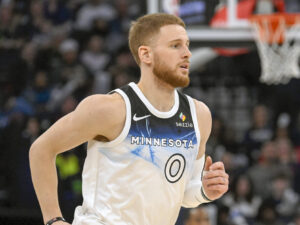
According to a press release from the team, imaging revealed that DiVincenzo is dealing with a turf toe injury and has partially torn his plantar ligament in the toe. However, after the Wolves guard received a second opinion on the injury, it was determined that it would not require surgery.
DiVincenzo is set to be reevalauted in three weeks.
While DiVincenzo still faces an extended absence, this is a huge break for the Timberwolves. Had he required surgery, he could have been looking at recovery timeline measured in months, rather than weeks.
Oklahoma City guard Ajay Mitchell, for instance, was recently ruled out for at least 10-to-12 weeks following a turf toe surgery.
DiVincenzo looked out of sorts in his new digs for the first few months of the season, but he had turned a corner lately. Across his last 11 healthy games, DiVincenzo had begun to look like his New York-era self at last, averaging 16.4 points per game while slashing .446/.436/.852 shooting splits. He also registered 4.3 assists and 4.9 rebounds per game in those 11 bouts.
Rookie guard Rob Dillingham and 37-year-old veteran Mike Conley could get more run with DiVincenzo sidelined. DiVincenzo had recently replaced Conley as a starter.
Lakers Eyeing Lonzo Ball?
Multiple teams have checked in on the Bulls‘ asking price for Lonzo Ball, sources tell Jake Fischer of The Stein Line (Substack link). While it’s unclear if the Lakers are one of those teams, Jovan Buha of The Athletic believes they could make a run at the 27-year-old, whom the Lakers drafted No. 2 overall back in 2017.
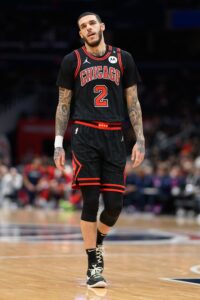
“I think Lonzo is someone that’s going to be on their radar, and I think depending on the price if you could get him for a second or two seconds, I think that’s an interesting swing, and also someone with that 6’6” frame that could potentially I think be similar to Bruce Brown, check a couple boxes,” Buha told Jason Timpf on the Hoops Tonight podcast (YouTube video link).
Ball is currently on a $21.4MM expiring deal. Across 24 healthy contests this season, the 6’6″ guard is averaging 6.5 points, 3.7 assists, and 3.3 rebounds a night in 20.5 minutes per.
” … He’s bulked up a little bit throughout his career, so he can guard twos and even some smaller threes and potentially be part of a one-through-three switching scheme,” Buha continued (hat tip to Paul Kasabian of Bleacher Report). “And then offensively I think especially coming off the bench as a secondary ball-handler, playmaker and also a spot-up shooter, I think he’s someone who’s an interesting gamble for them.”
Tim Bontemps and Brian Windhorst of ESPN took stock of the Lakers’ projected deadline plans. Even though the fifth-seeded Lakers are currently just three games ahead of the No. 11 Warriors in the Western Conference’s playoff race, sources tell Bontemps and Windhorst that the Lakers front office hasn’t shown any signs of aggression as of late.
L.A. has been reluctant in recent years to include any future first-round draft selections in a deal and it doesn’t appear that stance has changed, per ESPN’s duo. When the team moved D’Angelo Russell last month, it surrendered its lone big expiring contract, which will make it more difficult to complete additional trades.
Bontemps and Windhorst opine that if the Lakers make another move before this season’s February 6 deadline, it could be a relatively modest deal, in line with the team’s acquisition for Dorian Finney-Smith. That lines up with recent reporting from Buha.
Alex Kirschenbaum contributed to this report.