
As we explained when we identified the players who will become trade-eligible on unique dates this season, there’s a small group of players whose trade restrictions won’t lift until sometime after the February 5 trade deadline. These players meet one of the following criteria:
- They signed a free agent contract or were promoted from a two-way contract after November 5.
- A player who signs a free agent contract or is promoted from a two-way contract is ineligible to be traded for at least three months.
- They signed a veteran contract extension (meeting certain criteria) after August 5.
- A player who signs a veteran extension that keeps him under contract for more than four total years (including his current contract), includes a first-year raise greater than 20%, includes a subsequent raise exceeding 5%, or includes a renegotiation is ineligible to be traded for six months.
- They signed a super-max contract.
- A player who signs a super-max contract (also known as a designated veteran contract) is ineligible to be traded for one year.
We identified all the players who fell into these three categories in our previous story on unique trade dates, but they may have slipped through the cracks amid the larger list of players we discussed in that article.
With that in mind, we want to specifically single them out today to make sure it’s clear which players won’t become trade-eligible at all until sometime after the 2025/26 regular season.
Here are the players who fall into the three aforementioned groups and who can’t be traded this season:
Players who have signed standard contracts since November 5:
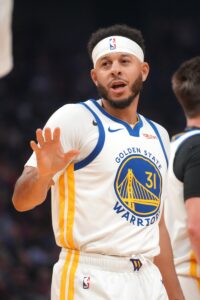
- Seth Curry (Warriors)
- Micah Potter (Pacers)
There hasn’t been a ton of action on the free agent market since the regular season began, with most players who have signed with NBA teams receiving two-way contracts rather than standard deals.
Still, there are a couple players who fit this bill. Curry didn’t sign with Golden State until December 1, meaning his trade restrictions won’t lift until March 1, well after this year’s deadline. The Pacers, meanwhile, have rotated several players in and out of their 15th roster spot, signing Monte Morris, Jeremiah Robinson-Earl, and Garrison Mathews to standard contracts before waiving them and making Potter their 15th man.
Both Curry and Potter are ineligible to be moved this season, and this list will continue to grow if more free agents sign standard contracts between now and February 5.
Players who have signed veteran contract extensions meeting certain criteria since August 5:
- Toumani Camara (Trail Blazers)
- A.J. Green (Bucks)
- Aaron Nesmith (Pacers)
- P.J. Washington (Mavericks)
Camara likely wouldn’t have been a trade candidate regardless of whether or not he signed an extension in recent months, since the Trail Blazers could have made him a restricted free agent in 2026. But given the way the Bucks, Pacers, and Mavericks have struggled so far this season, it’s entirely possible Green, Nesmith, and/or Washington would have become the subject of in-season trade speculation. Due to their recently signed contracts, all of them are ineligible to be dealt until the 2026 offseason.
It’s not uncommon for some players who are eligible for in-season veteran extensions to sign new deals well into the season, so it’s certainly possible more names will be added to this group before February’s trade deadline.
Players who have signed super-max contracts:
- Shai Gilgeous-Alexander (Thunder)
Gilgeous-Alexander signed his designated veteran extension on July 7, 2025, which means he won’t become trade-eligible until July 7, 2026.
No other players will join the reigning MVP on this list prior to February’s trade deadline, since super-max deals can’t be signed during the season.
Note: This article refers to players on standard contracts. Players on two-way contracts can’t be traded for 30 days after signing, meaning any player who signs a two-way deal after January 6 this season will be ineligible to be dealt by the deadline.
Washington is in so many rumors. I amazed at how ignorant writers are.
Zion can’t be traded either. 0 trade market for Jumbo
Warriors legend, Seth Curry!