
The Magic pushed their chips into the middle of the table when they surrendered four first-rounders and a pick swap in a trade for Desmond Bane during the 2025 offseason. The thinking was that Bane would provide exactly what was needed offensively for a Magic team that ranked near the bottom of the NBA in scoring - and dead last in three-point shooting - without compromising what made them so good defensively.
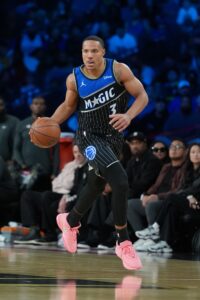 And after getting off to a bit of a slow start with his new team, Bane was everything what Orlando hoped he would be. The 27-year-old wing averaged just over 20 points per game with an excellent .484/.391/.908 shooting line and was the most durable player on the roster, appearing in all 91 regular season, play-in, and playoff games.
Unfortunately, the Magic learned the hard way that they weren't just one player away from becoming a legitimate title contender. Projected by oddsmakers to be the third-best team in the East behind Cleveland and New York, Orlando spent most of the season outside of the top six in the conference and ultimately needed to win a do-or-die play-in game to claim the No. 8 seed.
The Magic took a step forward on offense, but only a modest one, finishing with the NBA's 18th-best offensive rating. And that improvement was essentially cancelled out by regression on the other end of the court, where the team had the No. 13 defensive rating after placing in the top three in each of the previous two years.
This is already an expensive roster and it will only get pricier as Paolo Banchero's maximum-salary rookie scale extension takes effect this July. The Magic aren't the sort of free-spending organization that will be willing to go deep into tax and apron territory for a 45-win team, but that doesn't necessarily mean a roster overhaul is coming. Certainly, when he spoke to reporters after the season, president of basketball operations Jeff Weltman didn't sound like someone who is eager to make major changes, and there's reason to believe in that line of thinking.
First and foremost, Orlando's best all-around player, Franz Wagner, was limited to 34 regular season outings and four playoff appearances due to ankle and calf injuries. Of course, every team deals with injuries, and it's fair to argue that the Magic had the talent necessary to withstand Wagner's lengthy absences better than they did. Still, it was certainly easier to see Weltman's vision for the roster when Wagner was on the court.
The Magic's preferred starting lineup of Wagner, Banchero, Bane, Jalen Suggs, and Wendell Carter Jr. outscored opponents by 11.6 points per 100 possessions when it played together. And a fully healthy Orlando team took a 3-1 lead on the top-seeded Pistons in the first round of the playoffs before Wagner went down with a calf strain and the Magic lost control of the series, losing Games 5, 6, and 7.
There's still tantalizing upside here, but does it really make sense to keep running back this group when Wagner, Banchero, and Suggs have had so much trouble staying healthy at the same time? And even when the Magic are at full strength, does this roster have legitimate championship upside? Some difficult decisions will have to be made sooner rather than later in Orlando.
The Magic's Offseason Plans
The first order of business in Orlando this spring is finding a new head coach after Jamahl Mosley was let go following five years on the job. Can a new coach really help the Magic take the next step toward title contention, or is Mosley just a convenient fall guy for a front office that didn't optimize its roster construction and cap management?
