
The Rockets took major strides toward relevancy in the Western Conference playoff picture in both 2023/24 and 2024/25, increasing their win total from 22 to 41 to 52, and entering the '24/25 playoffs as the No. 2 seed.
However, the upstart Rockets were upset by the seasoned Warriors in the first round of last year's playoffs, with the lack of a go-to scoring option being a major factor in the team's seven-game loss. Houston averaged just 104 points per game in that series after averaging 114.3 PPG in the regular season.
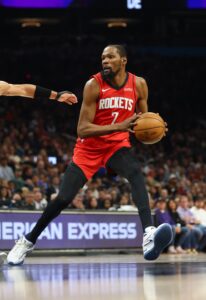 Recognizing they needed a top offensive talent to complement their young core of Alperen Sengun, Amen Thompson, Jabari Smith Jr., Tari Eason and Reed Sheppard, the Rockets traded Jalen Green, the 10th pick in last year's draft (Khaman Maluach) and Dillon Brooks to Phoenix for 12-time All-NBA forward Kevin Durant, a four-time scoring champion still playing at a high level late in his career.
Houston also re-signed Fred VanVleet to a more affordable contract ($50MM over two years instead of $45MM for one), extended Steven Adams, who played an important role anchoring the team's defense and bludgeoning opponents on the offensive boards, and signed three-and-D forward Dorian Finney-Smith using the non-taxpayer mid-level exception.
While the Durant trade mostly worked the way the Rockets hoped during the 2025/26 regular season, when he averaged 26.0 points, 5.5 rebounds, 4.8 assists and 0.9 blocks in 78 games (36.4 minutes per contest), the playoffs were another story: the 37-year-old managed to play in just one game during Houston's first-round loss to the Lakers due to knee and ankle injuries.
It was a disappointing outcome for the Rockets, who won 52 games again despite missing their on- and off-court leader in VanVleet, who tore his ACL last September and missed all of 2025/26. They also only had Adams for 32 games before he tore ligaments in his ankle in December, and Finney-Smith was a disappointing non-factor in 37 appearances after his '25/26 debut was delayed by offseason ankle surgery.
In some ways it's impressive that Houston managed to have the success that it did considering how little the team received in aggregate from those three players, who were earning a combined $51.8MM this season. The development of the Rockets' young players was an overall positive but was slightly choppy as well, with Smith and Sheppard taking strides forward while Sengun, Thompson and Eason were more up and down.
The Rockets have been a paper tiger for the past two seasons, ranking seventh and sixth in the NBA in net rating. They were in the top 10 in the NBA in both offensive (eighth) and defensive (sixth) rating in 2025/26, but struggled to replicate that success in the playoffs. Houston's core is still pretty young, but the team projects to be considerably more expensive in both 2026/27 and '27/28, leaving lingering questions about its long-term future.
The Rockets' Offseason Plans
General manager Rafael Stone didn't strike me as someone eager to make major changes when he discussed the Rockets at the end of the season. Instead, Stone projected confidence in the group he had assembled and lamented the injuries that never gave the roster a chance to reach its ceiling.
