
Magic, Jamahl Mosley Agree To Four-Year Extension
8:35am: The Magic have officially announced Mosley’s contract extension, confirming in a press release that it runs through 2027/28.
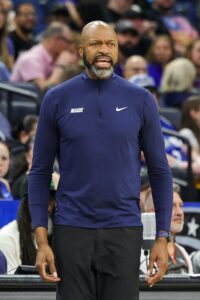 “Jamahl and his staff have done a tremendous job not only this season, but since we hired him back in 2021,” president of basketball operations Jeff Weltman said in a statement. “His preparation, work ethic, ability to connect with the players, and passion he brings to the job every day brings positive results, both on the court and off. We are very happy to have Jamahl lead the Magic for years to come.”
8:14am: The Magic have agreed to a new long-term contract with Jamahl Mosley, according to Adrian Wojnarowski of ESPN, who reports that Orlando’s head coach is set to sign a four-year extension that will take him through the 2027/28 season.
Mosley, who was hired by the Magic to replace Steve Clifford in 2021, got off to a slow start with a rebuilding Orlando club, leading the team to a 22-60 record in ’21/22. However, he has improved upon that mark in each of the two subsequent seasons.
The Magic went 34-48 last season and are 37-28 so far in ’23/24. Overall, Mosley has a modest 93-136 (.406) record, but he has Orlando on pace to post its highest winning percentage since 2010/11 and well positioned to earn its first playoff berth since 2020.
As Wojnarowski notes, the Magic’s defensive turnaround under Mosley has been impressive. After ranking 26th in defensive rating during Clifford’s final season, the team improved each year under Mosley and is currently fifth in the NBA with a 111.3 defensive rating this season.
Prior to being hired by the Magic, Mosley spent seven years as a Mavericks assistant under Rick Carlisle. He transitioned from playing to coaching in 2005 and began his coaching career with stints in Denver (2005-10) and Cleveland (2010-14).
Mosley’s initial contract with the Magic was reported at the time to be a four-year deal, but it’s possible that fourth year (2024/25) was a team option. Based on Wojnarowski’s reporting, it sounds like the new four-year extension will begin in ’24/25, perhaps replacing that option year.
Donovan Mitchell Now Ineligible For End-Of-Season Awards
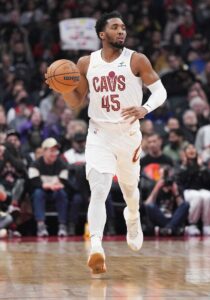
Cavaliers guard Donovan Mitchell missed his 18th game of the season on Monday, meaning he has joined a growing list of star players who are ineligible for end-of-season awards in 2023/24, tweets ESPN’s Bobby Marks.
 The NBA introduced a rule this season requiring players to appear in at least 65 games in order to be eligible to receive votes for a Most Valuable Player, Defensive Player of the Year, or Most Improved Player award, as well as for an All-NBA or All-Defensive spot.
Mitchell missed his seventh consecutive game on Monday due to a left knee bone bruise and has now appeared in just 47 of Cleveland’s 65 contests. Even if he were to return on Wednesday and play in every game for the rest of the regular season, he’d max out at 64 appearances.
As Marks notes (via Twitter), other notable players who are no longer eligible for end-of-season awards include Joel Embiid, Jimmy Butler, Julius Randle, Kyrie Irving, Draymond Green, Ja Morant, OG Anunoby, LaMelo Ball, Jamal Murray, Kristaps Porzingis, and Mitchell’s teammates Darius Garland and Evan Mobley.
Several of those players likely wouldn’t have made All-NBA or All-Defensive teams even if they had reached the 65-game threshold, but Mitchell was a strong All-NBA candidate, having averaged 28.0 points, 6.2 assists, and 5.4 rebounds in 35.7 minutes per game so far this season, with a shooting line of .472/.371/.861. Those numbers aren’t far off the ones he posted in 2022/23, when he finished sixth in MVP voting and made the All-NBA Second Team.
While Mitchell won’t earn an All-NBA spot this season, that won’t have any impact on his next contract, since he’s no longer eligible for a super-max deal after being traded from Utah to Cleveland in 2022. He will be extension-eligible as of this July, however.
The Cavaliers could offer Mitchell a new contract that is worth 30% of the 2025/26 cap and covers up to four seasons (through ’28/29), with 8% annual raises. As Marks observes, based on the latest cap projections, that four-year max extension would be worth an estimated $199MM.
Raptors Notes: Boucher, Olynyk, Poeltl, Quickley, Banton
Entering Thursday’s contest in Phoenix, Raptors big man Chris Boucher hadn’t played more than 12 minutes in a game since January. However, he scored 11 points in nearly 24 minutes of action vs. the Suns, and after Toronto quickly fell behind by double-digits in the opening minutes in Portland on Saturday, another opportunity emerged for Boucher, who helped lead a fourth-quarter comeback that sent the game to overtime
Although the Raptors ultimately lost the game, Boucher finished with 16 points, eight rebounds, and three blocked shots in a season-high 31 minutes. Speaking to reporters later in the night, Boucher said that head coach Darko Rajavkoic has been open with him as his minutes have fluctuated this season, adding that he understands why his role hasn’t been consistent.
“We talk. He knows me and knows what I can bring and all,” Boucher said, per Michael Grange of Sportsnet.ca. “Sometimes things don’t go the way you want. The team’s had a lot of changes and I got caught in the middle. I know they know what I’m able to do, and everyone knows that I can change the game and all. I don’t think anyone thinks I can’t play, it’s about more than me.”
Boucher is under contract with the Raptors for one more season beyond this one, with a $10.81MM guaranteed salary for 2024/25. However, it’s possible – especially following last month’s acquisition of Kelly Olynyk – that he’ll emerge as a trade candidate this summer.
Here’s more on the Raptors:
- From a team-building perspective, the Raptors might prefer that their top two centers – Jakob Poeltl and Olynyk – were a little younger, but having those two veterans under contract for at least the next two seasons gives the club some certainty and stability at the position, according to Eric Koreen of The Athletic, who notes that the team will be able to focus its efforts and resources on upgrading other positions.
- In a separate story for The Athletic, Koreen highlights Immanuel Quickley‘s recent strong play, writing that the guard is increasing his price tag ahead of restricted free agency. In nine games since the All-Star break, Quickley is averaging 21.8 points, 8.1 assists, and 6.1 rebounds per contest while making 43.0% of his three-point attempts.
- Former Raptor Dalano Banton helped lead the Blazers to a victory on Saturday, racking up 25 points in 42 minutes against his old team. As Josh Lewenberg of TSN.ca tweets, one of Masai Ujiri‘s gripes about the previous coaching staff was that it didn’t do enough to develop its young players, including Banton. With that in mind, it was a little surprising that Toronto didn’t do more last summer to retain Banton – who could have been a restricted free agent if the Raptors had given him a qualifying offer – in order to see how he might’ve developed under Rajakovic, Lewenberg observes.
Hoops Rumors Glossary: Early Bird Rights
Bird rights offer teams the chance to sign their own free agents without regard to the salary cap, but they don’t apply to every player. Other salary cap exceptions are available for teams to keep players who don’t qualify for Bird rights. One such exception is the Early Bird, which applies to players formally known as Early Qualifying Veteran Free Agents.
While the Bird exception is for players who have spent three seasons with one club without changing teams as a free agent, Early Bird rights are earned after just two such seasons. Virtually all of the same rules that apply to Bird rights apply to Early Bird rights, with the requirements condensed to two years rather than three.
Players still see their Bird clocks restart by changing teams via free agency, being claimed in an expansion draft, or having their rights renounced. A player who is traded can also have his Bird clock reset if he approves a move after having re-signed with his previous team on a one-year contract (or a one-year contract with a second-year option) earlier in the league year.
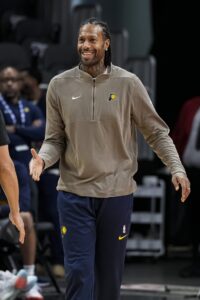 As is the case with Bird rights, a player’s clock stops when he’s released by a team and clears waivers, but it would pick up where it left off if he re-signs with that same team down the road without joining another club in the interim. For instance, James Johnson will have Early Bird rights this offseason because – even though he was waived in January – he’s on track to finish a second consecutive season with the Pacers and didn’t join another team between his stints in Indiana.
The crucial difference between Bird rights and Early Bird rights involves the limitations on contract offers. Bird players can receive maximum-salary deals for up to five years, while the most a team can offer an Early Bird free agent without using cap space is 175% of his previous salary (up to the max) or 105% of the league-average salary in the previous season, whichever is greater.
These offers are also capped at four years rather than five, and the new contracts must run for at least two years — the second season can be non-guaranteed, but can’t be a team or player option. Raises are maxed out at 8% per season.
Besides Johnson, some of the more notable free agents who will have Early Bird rights during the 2024 offseason include Malik Monk (Kings), Isaiah Hartenstein (Knicks), Kyle Anderson (Timberwolves), and Andre Drummond (Bulls).
In some instances, teams can benefit from having Early Bird rights instead of full Bird rights if they’re trying to preserve cap space. The cap hold for an Early Bird player is 130% of his previous salary, significantly less than most Bird players, whose cap holds range from 150-300% of their previous salaries.
However, having a player’s Early Bird rights instead of his full Bird rights puts a team at a disadvantage in other cases. For example, when Christian Wood reached free agency in 2020, his Early Bird rights only allowed the Pistons to offer a starting salary of up to about $10.05MM, a figure the Rockets topped in their three-year, $41MM offer.
In order to match or exceed that number, Detroit would have had to use cap room — having Wood’s full Bird rights would’ve allowed the Pistons to make a far more substantial offer without requiring cap space.
Meanwhile, some players with limited NBA experience are subject to a special wrinkle involving Early Bird rights, called the Gilbert Arenas Provision, which applies to players who have only been in the league for one or two years. We cover the Arenas Provision in a separate glossary entry, so you can read up on the details there.
Essentially, the Arenas Provision protects teams from a situation like the ones the Pistons found themselves in with Wood, allowing them to match offer sheets on their restricted free agents without necessarily using Bird rights or cap room to do so. Last offseason, Lakers guard Austin Reaves and Pelicans forward Herbert Jones were both Arenas free agents. The provision would apply this coming offseason to a player like Pistons wing Simone Fontecchio.
Finally, one more distinction between Bird rights and Early Bird rights applies to waivers. Players who are claimed off waivers retain their Early Bird rights, just as they would if they were traded. Those who had Bird rights instead see those reduced to Early Bird rights if they’re claimed off waivers.
This rule stems from a 2012 settlement between the league and the union in which J.J. Hickson was given a special exception and retained his full Bird rights for the summer of 2012 even though he had been claimed off waivers that March.
Note: This is a Hoops Rumors Glossary entry. Our glossary posts will explain specific rules relating to trades, free agency, or other aspects of the NBA’s Collective Bargaining Agreement. Larry Coon’s Salary Cap FAQ was used in the creation of this post.
Earlier versions of this post were published in previous years by Luke Adams and Chuck Myron.
Grizzlies Sign DeJon Jarreau To 10-Day Deal
MARCH 10: The Grizzlies have officially signed Jarreau to a 10-day contract, the team announced today in a press release (Twitter link).
The deal will run through March 19, covering Memphis’ next five games, and will be worth $103,550.
MARCH 9: The Grizzlies are promoting guard DeJon Jarreau from their G League affiliate and will sign him to a 10-day contract, reports Adrian Wojnarowski of ESPN (Twitter link).
Jarreau, who won the AAC Defensive Player of the Year award in his final college season at Houston in 2021, had brief stints with the Pacers and Rockets as a rookie, but has spent most of his professional career in the G League. He has played for four separate NBAGL clubs since 2021, including the Memphis Hustle in 2023/24.
In 36 total Showcase Cup and regular season games this season for the Hustle, Jarreau has averaged 14.6 points, 6.3 rebounds, and 6.2 assists in 25.0 minutes per contest, with a shooting line of .468/.313/.777. As Wojnarowski notes, he has played some of his best basketball as of late, putting up 21.6 PPG, 9.7 RPG, and 8.6 APG in his past 10 games.
The Grizzlies have a full 15-man roster, with Wenyen Gabriel also under contract via the hardship exception. A team qualifies for a hardship exception – granting an extra roster spot temporarily – if it has four players who have missed three or more consecutive games due to injury or illness and are expected to remain out for at least two more weeks.
Memphis appears to have six players who fit that bill: Ja Morant, Brandon Clarke, Desmond Bane, Marcus Smart, Derrick Rose, and Ziaire Williams. Unless the Grizzlies expect one of those players back within the next couple weeks, they could qualify for up to three hardship additions — Jarreau will be the club’s second hardship addition, Wojnarowski confirms, so no corresponding cut will be necessary to make room for him.
As our 10-day contract tracker shows, Jarreau will be the eighth player to sign a 10-day contract with the Grizzlies this season.
Disabled Player Exceptions For 2023/24 Expire On Monday
A series of disabled player exceptions granted to teams earlier in the 2023/24 season will expire on Monday if they go unused.
The deadline to use a disabled player exception is typically March 10, but when that deadline falls on a weekend, it gets pushed to the next business day, which means teams have until March 11 this season to take advantage of their DPEs.
We go into more detail on who qualifies for disabled player exceptions and how exactly they work in our glossary entry on the subject. But essentially, if a team has a player suffer a season-ending injury prior to January 15, the exception gives that team the opportunity to add an injury replacement by either signing a player to a one-year contract, trading for a player in the final year of his contract, or placing a waiver claim on a player in the final year of his contract.
Here are the teams whose DPEs will expire if they aren’t used on Sunday or Monday:
- Chicago Bulls: $10,232,559 (Lonzo Ball) (story)
- Portland Trail Blazers: $5,785,715 (Robert Williams) (story)
- San Antonio Spurs: $1,300,000 (Charles Bassey) (story)
- Note: The Denver Nuggets also applied for a DPE worth $1,117,180 for Vlatko Cancar‘s ACL tear; it’s unclear whether or not that request was granted.
The trade deadline has passed and no players are currently on waivers, so there’s essentially just one way left for those teams with disabled player exceptions to use them: signing a free agent. However, that appears unlikely, given that the Bulls, Trail Blazers, and Spurs (as well as the Nuggets) have full rosters and haven’t shown any signs that they intend to make changes within the next 36 hours or so.
In other words, those exceptions will – in all likelihood – expire without being used.
The Grizzlies are the only team to use a disabled player exception so far this season. In a trade with Houston last month, Memphis took Victor Oladipo‘s $9.45MM expiring contract into the $12,405,000 disabled player exception that was granted as a result of Ja Morant‘s season-ending shoulder injury.
The Grizzlies traded Steven Adams to the Rockets in that deal, forfeiting a second disabled player exception (worth $6.3MM) that they received as a result of Adams’ season-ending knee injury — a DPE can’t be used after the team trades away its injured player. However, using the Morant exception to absorb Oladipo’s salary rather than matching it using Adams’ outgoing salary allowed the club to generate a new traded player exception worth Adams’ cap charge ($12.6MM).
Hornets To Hire Ryan Gisriel Away From Nets
After hiring Nets assistant general manager Jeff Peterson as their new head of basketball operations, the Hornets are poised to add another executive from Brooklyn’s front office, reports Brian Lewis of The New York Post.
According to Lewis, Ryan Gisriel is expected to leave his position as the Nets’ executive director of basketball and business operations to take a job in the Hornets’ front office under Peterson. His title in Charlotte isn’t yet known.
Gisriel was hired by Brooklyn as an intern in 2013 and has steadily risen through the organization since then, having held roles such as special projects coordinator, assistant to the GM, and director of basketball administration before being promoted to his current position.
As NetsDaily notes, Gisriel’s most recent title with the Nets reflected his longtime role as a “middleman” between the basketball and business sides of the organization.
Gisriel is the second executive reported to be joining Peterson in Charlotte. The Hornets are also said to be hiring Hawks executive Dotun Akinwale Jr. as an assistant GM.
Injury Notes: Lonzo, LaVine, Scoot, Ayton, Middleton, Maxey
Bulls head coach Billy Donovan shared some good news on Lonzo Ball on Saturday, telling reporters – including K.C. Johnson of NBC Sports Chicago – that the veteran point guard has begun more advanced rehab activities, including sprinting, cutting, and jumping. It’s a positive development, given that Donovan said last month that Ball hadn’t yet been cleared to sprint.
“Some of the workouts have been really, really positive and he has progressed,” Donovan said today. “He has responded well. Some of the things that medical guys have shown me is he looks good moving. I’m just really happy for him personally for his progress. He has worked hard to put himself in this position. And hopefully, he can continue to progress.”
Ball, who last suited up for an NBA game in January 2022, has undergone three surgeries on his left knee since then, including a cartilage transplant approximately a year ago. The next step in his recovery would be getting cleared for contact, but there’s no set timeline for him advancing to that stage, according to Donovan.
The Bulls’ head coach also provided an update on Zach LaVine, who underwent surgery on a “non-union Jones fracture” in his right foot last month. As Johnson relays, LaVine is ahead of schedule in his rehab process and is aiming to be back to full strength in three months rather than the four-to-six months initially projected. Either way, we shouldn’t expect to see the guard back in action until the fall.
Here are a few more injury-related updates from around the NBA:
- A pair of injured Trail Blazers appear on track to return to action on Saturday, according to Sean Highkin of Rose Garden Report (Twitter links). Scoot Henderson, out since the All-Star break due to a left adductor strain, and Deandre Ayton, who has missed the past five games due to a sprained right hand, have both been listed as probable to play vs. Toronto.
- Bucks head coach Doc Rivers said on Friday night that Khris Middleton (left ankle sprain) could play on Sunday for the first time since February 6, tweets Mark Medina of Sportskeeda. As Jim Owczarski of The Milwaukee Journal Sentinel observes, Middleton has been sidelined long enough that he’ll fall short of playing in 62 games, which means he’ll miss out on earning a $1.5MM bonus in his contract.
- Sixers head coach Nick Nurse described Tyrese Maxey‘s concussion symptoms earlier this week as “very mild,” per Gina Mizell of The Philadelphia Inquirer, and told reporters on Friday that he was optimistic about the guard’s chances to play on Sunday in New York (Twitter link via Mizell). However, Philadelphia has officially listed Maxey as out for that game. Unless that designation changes by Sunday night, it will be the fourth consecutive game he has missed.
Pacers’ Mathurin To Undergo Season-Ending Shoulder Surgery
Pacers guard Bennedict Mathurin will undergo season-ending surgery to repair a torn labrum in his right shoulder, sources tell Adrian Wojnarowski of ESPN (Twitter link). According to Wojnarowski, Mathurin is expected to make a full recovery in advance of the 2024/25 season.
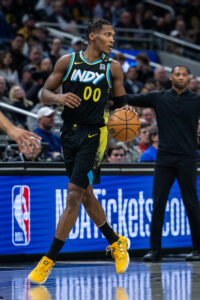 The Pacers have issued a press release officially confirming the news. The procedure will be performed next week in Los Angeles by Dr. Neal ElAttrache, per the team.
It had been a promising sophomore season for Mathurin, who finished fourth in Rookie of the Year voting in 2022/23 and had become a more efficient scorer in his second year in the NBA.
The MVP of this year’s Rising Stars event at All-Star weekend in Indianapolis, he averaged 14.5 points, 4.0 rebounds, and 2.0 assists in 26.1 minutes per game this season, with a .446/.374/.821 shooting line across 59 appearances (19 starts).
Mathurin’s injury is an unfortunate development for a Pacers team that sacrificed some wing depth earlier this season by trading away Bruce Brown and Buddy Hield in separate deals. As Wojnarowski and ESPN’s Bobby Marks note (via Twitter), the 21-year-old was a key contributor to the NBA’s No. 1 offense and one of the league’s best second units.
Mathurin ranked third on the roster in total minutes played this season, behind only Tyrese Haliburton and Myles Turner, but will now have to watch from the sidelines as the club continues its push for a playoff spot without him. The Pacers currently hold the No. 8 spot in the Eastern Conference with a 35-29 record. They have a 3.5-game cushion on the ninth-place Bulls and are only 2.5 games behind the No. 4 Knicks.
With Mathurin unavailable, Aaron Nesmith, Andrew Nembhard, Ben Sheppard, and Jarace Walker are among the Pacers role players who are candidates for increased roles. Trade deadline addition Doug McDermott also figures to take over some of Mathurin’s minutes once he’s healthy, but he has been sidelined since February 26 due to a calf injury.
As Michael Grange of Sportsnet.ca notes (via Twitter), it’s not clear if Mathurin would have been in the mix for a spot on the Canadian national team this summer, but playing in the 2024 Olympics is almost certainly out of the question for him now.
Hoops Rumors Glossary: Bird Rights
The Bird exception, named after Larry Bird, is a rule included in the NBA’s Collective Bargaining Agreement that allows teams to go over the salary cap to re-sign their own players. A player who qualifies for the Bird exception, formally referred to as a Qualifying Veteran Free Agent, is said to have “Bird rights.”
The most basic way for a player to earn Bird rights is to play for the same team for at least three seasons, either on a long-term deal or on separate one- or two-year contracts. Still, there are other criteria. A player retains his Bird rights in the following scenarios:
1. He changes teams via trade.
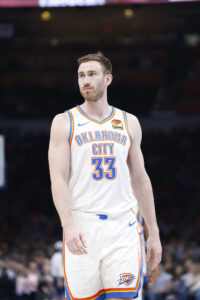 For instance, the Thunder will hold Gordon Hayward‘s Bird rights when he reaches free agency this offseason, despite just acquiring him in February. His Bird clock didn’t reset when he was traded from Charlotte to Oklahoma City.
2. He finishes a third season with a team after having only signed for a partial season with the club in the first year.
The Heat signed Haywood Highsmith during the second half of the 2021/22 season, adding him to their roster in March 2022. When his contract expires this offseason, Highsmith will have Bird rights despite not spending three full seasons with Miami, because that partial season in ’21/22 started his Bird clock.
3. He signed a full-season contract (ie. not a 10-day deal) in year one or two but the team waived him; he cleared waivers and didn’t sign with another team before re-signing with the club and ultimately remaining under contract through a third season.
This one’s a little confusing, but let’s use former Raptors big man Christian Koloko as an example. After spending the 2022/23 season with Toronto and opening the ’23/24 season on the roster, Koloko was waived by the team in January. If the Raptors were to re-sign him in July without him joining a new team in the interim, his Bird clock would pick up where it left off. He’d have full Bird rights in the summer of 2025, since he would’ve spent part or all of each of the previous three seasons with Toronto, without changing teams in between.
It’s worth noting that while the Raptors could restart Koloko’s Bird clock by re-signing him, they wouldn’t be able to use any form of Bird rights to add him to their roster this offseason — they would have to use cap room or another exception to do so. His Bird clock would only resume once he’s back under contract.
This rule also applies to players who are waived after they already have Bird rights. For example, let’s say the Warriors were to waive Chris Paul this offseason before his $30MM salary for 2024/25 becomes guaranteed.
Golden State, which doesn’t project to have cap room this summer, would have no means to re-sign Paul except via the minimum salary exception or perhaps the mid-level exception, since waiving him would mean losing his Bird rights. But if they did find a way to re-add him on a one-year contract after waiving him, the Warriors would regain Paul’s full Bird rights in 2025.
A player sees the clock on his Bird rights reset to zero in the following scenarios:
- He changes teams via free agency.
- He is waived and is not claimed on waivers (except as in scenario No. 3 above).
- His rights are renounced by his team. However, as in scenario No. 3 above, a player’s Bird clock picks up where it left off if he re-signs with that team renounced without having signed with another NBA team. For example, Boban Marjanovic had Bird rights last offseason, then had those rights renounced by the Rockets as they freed up extra cap room. Since Marjanovic eventually signed a new deal with Houston, he’ll retain his full Bird rights this summer — that wouldn’t have been the case if he had signed with a new team.
- He is selected in an expansion draft.
Players on two-way contracts accumulate Bird rights in the same way that players on standard contracts do. Magic forward Admiral Schofield has been under contract with Orlando on various two-way and standard deals in each of the past three seasons, so if he remains on his current two-way deal through the end of 2023/24, he’ll have full Bird rights this summer.
If a player who would have been in line for Bird rights at the end of the season is waived and claimed off waivers, he would retain only Early Bird rights.
It’s also worth noting that there’s one specific scenario in which a player with Bird rights can lose them in a trade. A player who re-signs with his previous team on a one-year contract (or a one-year deal with a second-year option) would have his Bird clock reset if he’s traded later that season. As such, he receives the ability to veto trades so he can avoid that scenario.
[RELATED: Players who had the ability to veto trades in 2023/24]
The Bird exception was designed to allow teams to keep their best players, even when those teams don’t have the cap room necessary to do so.
When a player earns Bird rights, he’s eligible to re-sign with his team for up to five years and for any price up to his maximum salary (with 8% annual raises) when he becomes a free agent, no matter how much cap space the team has — or doesn’t have.
The maximum salary varies from player to player depending on how long he has been in the league, but regardless of the precise amount, a team can exceed the salary cap to re-sign a player with Bird rights.
A team with a Bird free agent is assigned a “free agent amount” – also called a cap hold – worth either 190% of his previous salary (for a player with a below-average salary) or 150% of his previous salary (for an above-average salary), up to the maximum salary amount. For players coming off rookie scale contracts, the amounts of those cap holds are 300% and 250%, respectively.
The Sixers, for instance, will have a cap hold worth $13,031,760 for Tyrese Maxey on their books this offseason — 300% of his $4,343,920 salary for 2023/24. Philadelphia could renounce Maxey and generate an extra $13MM+ in cap flexibility, but doing so would cost the Sixers the ability to re-sign him using Bird rights, which would force them to use either cap room or a different cap exception to re-sign him. As such, we can count on Philadelphia keeping Maxey’s cap hold on the books until his free agency is resolved.
Note: This is a Hoops Rumors Glossary entry. Our glossary posts will explain specific rules relating to trades, free agency, or other aspects of the NBA’s Collective Bargaining Agreement. Larry Coon’s Salary Cap FAQ was used in the creation of this post.
Earlier versions of this post were published in previous years by Luke Adams and Chuck Myron.