
Heat Notes: Adebayo, Robinson, Cain, Love
Heat big man Bam Adebayo, who missed Saturday’s game due to a right hip contusion, should be back in action on Tuesday when the team visits Detroit. Adebayo has been upgraded to probable for tonight’s contest, tweets Ira Winderman of The South Florida Sun Sentinel.
Additionally, since the Sioux Falls Skyforce’s season came to an end on Sunday with a playoff loss to the Rio Grande Valley Vipers, the Heat’s two-way players – Orlando Robinson and Jamal Cain – are back from the G League and will be available on Tuesday vs. Detroit, per Winderman.
Robinson piled up 28 points, 16 rebounds, six assists, and three blocks in Sunday’s NBAGL Western Conference Finals loss, but Cain struggled, scoring just four points on 1-of-6 shooting.
Here’s more on the Heat:
- With Adebayo sidelined on Saturday, Kevin Love came off the bench for the first time since arriving in Miami and had his best game as a member of the Heat, scoring 18 points in 19 minutes. Now it’s up to head coach Erik Spoelstra to determine whether Love should be reinserted into the starting five or whether keeping him a reserve role makes more sense, writes Anthony Chiang of The Miami Herald. For his part, Love expressed no preference. “Whatever coach wants,” he said. “I told him that even before I got here. I said, ‘Listen, I’m not tripping about starting, coming off the bench. I just love to play my minutes extremely hard and try to make an impact.'”
- The Heat have a history of signing developmental prospects to multiyear contracts late in the season and still have their mid-level exception available if they want to do so this week, says Barry Jackson of The Miami Herald. However, Miami doesn’t have any openings on its 15-man roster to promote Robinson or Cain or to sign an outside free agent, and it’s unclear whether the club would be willing to cut any of its current players to accommodate such a signing.
- Nine of the 15 players on the Heat’s standard roster went undrafted, which has been a factor in the team’s tendency to play with a chip on its shoulder in recent years, Jackson notes in the same story. But guard Tyler Herro and Spoelstra feel as if this year’s group hasn’t consistently drawn on that source of motivation. “Having a monster-size chip on our shoulders has always been a big part of guys’ identities,” Spoelstra said. “That could be a chip on the shoulder or could just be savage competitiveness. At our core, that’s who we are. That’s not who we have been consistently the last 12 to 15 games. In pockets, we’ve done that.”
What To Watch For In NBA Season’s Final Week
The NBA’s 2022/23 regular season will wrap up on April 9, which means we now have just six days left in the season. Here are a few things worth keeping an eye on during those six days:
Play-in races and playoff positioning
Eastern Conference
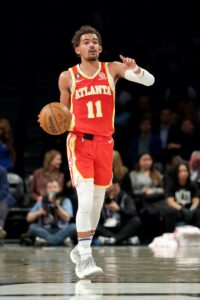 Frankly, the race for the playoffs in the East would have been more exciting under the NBA’s old system, where only the top eight seeds at the end of the regular season made the playoffs. Currently, the Hawks and Raptors are tied for the No. 8 spot at 39-39 (Atlanta has the tiebreaker advantage), while the Bulls are one game back at 38-40. It’s a safe bet that all three teams will make the play-in tournament, whereas in past years they would’ve been fighting for a single playoff spot.
Of course, there’s still some intrigue related to which team finishes in which slot. The No. 8 team at the end of the regular season gets two chances to win one play-in game to earn a playoff berth, whereas the Nos. 9 and 10 teams need to win two games to make the playoffs. The No. 10 club would have to win two play-in games on the road.
Further up the Eastern Conference standings, there’s currently a gap of at least two games between each of the top seven teams, so even though those seeds aren’t set in stone yet, they’re getting close to being locked in, barring some late surges or slumps.
Most notable remaining intra-conference games:
- 4/4: Celtics at Sixers, Hawks at Bulls
- 4/5: Raptors at Celtics, Bulls at Bucks
- 4/6: Heat at Sixers
- 4/7: Sixers at Hawks, Raptors at Celtics
- 4/9: Hawks at Celtics, Sixers at Nets, Bucks at Raptors
Western Conference
As has been the case for months, the Western standings are more tightly bunched than the East’s. The Nos. 5-8 seeds are only separated by a half-game, for instance, and 12 teams technically remain in the playoff picture or play-in hunt.
The Clippers and Warriors are both 41-38 and currently hold the fifth and sixth spots in the Western Conference standings, but if they want to avoid the play-in tournament, they’ll have to hold off the surging Lakers and Pelicans, who are both 40-38.
The No. 10 Thunder (38-41) are currently in the driver’s seat for the final play-in spot. They have a one-game lead over the 11th-place Mavericks (37-42) and a 1.5-game cushion on the 12th-place Jazz (36-42) and hold the tiebreaker over both teams. Oklahoma City’s remaining schedule is no cakewalk though, with road games in Golden State and Utah following by a home game vs. Memphis.
Most notable remaining intra-conference games:
- 4/4: Kings at Pelicans, Lakers at Jazz, Thunder at Warriors
- 4/5: Grizzlies at Pelicans, Kings at Mavericks, Lakers at Clippers
- 4/6: Thunder at Jazz, Nuggets at Suns
- 4/7: Warriors at Kings, Suns at Lakers
- 4/9: Pelicans at Timberwolves, Grizzlies at Thunder, Kings at Nuggets, Jazz at Lakers, Clippers at Suns
Lottery positioning and traded draft picks
There are important races happening at both ends of the standings as the season winds down. At the bottom, the Pistons (16-62) are on track for the No. 1 spot in the draft lottery standings, with the Rockets (19-60) and Spurs (20-58) vying for the No. 2 spot.
The Hornets (26-53) comfortably hold the No. 4 lottery spot, but the race for No. 5 is a tight one — the Trail Blazers (33-45), Pacers (34-45), Magic (34-44), and Wizards (34-44) are separated by a single game.
The lottery odds for each team in the top 14 can be found here.
Additionally, a handful of traded draft picks remain up for grabs as the season winds down. For instance, the Mavericks will trade their first-round pick to the Knicks if it’s not in the top 10, which appears increasingly likely but is far from certain. Dallas and Minnesota could both end up surrendering lottery picks, as the Timberwolves owe their unprotected first-rounder to the Jazz.
It appears the Wizards and Trail Blazers will hang onto their top-14 protected first-rounders rather than sending them to the Knicks and Bulls, respectively. But it’s still worth keeping an eye on Chicago’s own pick — it’s top-four protected, so the Bulls will have an outside shot at keeping it instead of sending it to the Magic if they lose in the play-in tournament.
Award races
Some of this year’s awards look like they’re all but sewn up, including Rookie of the Year (Paolo Banchero) and Coach of the Year (Mike Brown).
 But one of the most fascinating Most Valuable Player races in years remains very much up in the air, with Sixers center Joel Embiid and Bucks forward Giannis Antetokounmpo prepared to submit their closing arguments in the next few days. Could the ongoing injury absence of Nuggets center Nikola Jokic cost him his third consecutive MVP?
Defensive Player of the Year also isn’t a foregone conclusion, with Grizzlies big man Jaren Jackson and Bucks center Brook Lopez among the leading candidates.
Jazz forward Lauri Markkanen and Thunder guard Shai Gilgeous-Alexander are among the players who continue to make strong cases for the Most Improved Player award, while Knicks guard Immanuel Quickley and Celtics guard Malcolm Brogdon look like the top two candidates for Sixth Man of the Year.
Roster moves
With just six days left in the season, this year’s period of 10-day contract signings is essentially over. A team filling its final open roster spot will sign a player to a rest-of-season or multiyear deal at this point, rather than a 10-day pact.
The one exception is 10-day hardship deals, which can still be completed during the final week of a season by teams dealing with several injuries.
Why wouldn’t those hardship contracts just take the form of rest-of-season deals too? Well, this way, teams can’t gain certain offseason rights to more players than the standard roster limits allow. A rest-of-season contract would give the club a player’s Bird, Early Bird, or Non-Bird rights for the offseason, whereas a 10-day deal won’t.
As we outlined on Sunday, here are the teams that still have an open roster spot with six days left in the season:
- Boston Celtics *
- Brooklyn Nets **
- Charlotte Hornets **
- Houston Rockets
- Los Angeles Lakers
- New York Knicks
- Phoenix Suns ***
- Utah Jazz ****
* The Celtics are expected to fill their open roster spot by signing Justin Champagnie.
** The Nets and Hornets each have a player on a 10-day contract filling their 15th roster spot. Those deals will expire before the season ends.
*** The Suns have a full 15-man roster but have an open two-way spot.
**** The Jazz have one open 15-man roster spot and a player on a 10-day contract filling their 14th spot, so they’ll have two openings before the end of the week.
And-Ones: More CBA Notes, Sportsmanship Award, A. Johnson
One major reason the one-and-done rule for draft prospects wasn’t changed in the new Collective Bargaining Agreement was that neither the NBA nor the NBPA was particularly gung-ho about adjusting it and both sides wanted the other to give something up in exchange for scrapping it, ESPN’s Adrian Wojnarowski said on his Woj Pod. According to Wojnarowski, one idea the league proposed during the one-and-done discussions was to tack a year onto rookie scale contracts for first-round picks.
“I think the league wanted the rookie scale to go another year so it would be another year before players could get their rookie extension or restricted free agency,” Woj said (hat tip to RealGM). “That was something that obviously they didn’t get in talks, but I think was tied a little bit to one-and-done.”
Current rookie scale contracts cover four seasons and give players the ability to sign extensions after three years, so it sounds like the NBA proposed the idea of bumping those numbers to five and four years, respectively.
Later on his podcast, Wojnarowski said that he views the new rule requiring postseason award winners to have played at least 65 games as a “ceremonial” one designed to make it look as if the NBA is doing something to reduce load management.
“I don’t know that this is going to change much behavior,” he said (hat tip to RealGM). “… I’m rolling my eyes a little bit at that one… I just don’t see this impacting star players playing in any more or less games than they would have before.”
Wojnarowski’s ESPN colleagues Bobby Marks and Tim Bontemps also questioned the rule, with Marks pointing out that teams – not players – are generally the ones dictating load management plans, while Bontemps observed that most players who suit up for fewer than 65 games are doing so because of actual injuries, not load management.
Here are more odds and ends from around the basketball world:
- Tim Reynolds of The Associated Press (Twitter links) provides some more information on the investment opportunities that NBA players will have in the new CBA, clarifying that individual players won’t be able to directly invest in NBA teams — the NBPA will have the ability to passively invest in teams on behalf of all players. Individual players will have the ability to directly invest in WNBA teams, but there will be restrictions: They can’t invest in WNBA teams that an NBA owner controls a stake in, an individual player can’t own more than 4% of a franchise, and players can’t collectively control more than 8% of a franchise.
- The NBA has announced six finalists – one from each division – for its 2022/23 Sportsmanship Award (Twitter link). Those players are Heat big man Bam Adebayo, Knicks guard Jalen Brunson, Cavaliers guard Darius Garland, Kings forward Harrison Barnes, Timberwolves guard Mike Conley, and Rockets big man Boban Marjanovic.
- Big man Alize Johnson, who has been an NBA free agent since being waived by the Spurs in December, has new representation. He has signed with agent Bernie Lee of Thread Sports Management, according to HoopsHype (Twitter link). Johnson joined the Austin Spurs of the G League following his short stint with San Antonio, then was dealt to the Wisconsin Herd in January.
Pacific Notes: Jerome, Lakers, Westbrook, M. Brown
Although Ty Jerome was a candidate to be promoted from his two-way contract to the Warriors‘ standard roster, that honor ultimately went to fellow two-way player Anthony Lamb, who had his deal converted last month. As a result, Jerome has been inactive since March 11 as the team looked to preserve his final three games of eligibility, writes Dalton Johnson of NBC Sports Bay Area.
With just three games left in the Warriors’ regular season, Jerome is in position to be reactivated on Tuesday. However, unless the team waives someone else to make room for him on the 15-man roster, he won’t be eligible to play in the postseason. Speaking to Johnson, the 25-year-old guard said he understands the situation and has “zero hard feelings” toward Lamb or the organization about it.
“They were very open about it with both me and Anthony,” Jerome told NBC Sports Bay Area. “In the heat of it, we were both playing leading up to that decision. Steph (Curry) was out and a few other guys were out, and it really wasn’t on the forefront of my mind at the time. I was really locked in. I’m just trying to win games.
“We had a good stretch of like five in a row. We won some good games, and that was kind of more on the forefront of my mind, and then with Andre (Iguodala) being out for the year and (Andrew Wiggins) not being here, it just came down to positional depth.”
Assuming Jerome’s contract remains unchanged during the final few days of the regular season, he’ll be on track to become a restricted free agent this summer.
Here’s more from around the Pacific:
- Within a larger story about the Timberwolves‘ duo of Mike Conley and Rudy Gobert, Jake Fischer of Yahoo Sports looks back at how the trade deadline blockbuster involving the Wolves, Lakers, and Jazz came together, noting that Utah significantly dropped its asking price for taking back Russell Westbrook as the deadline neared. While those negotiations initially involved just the Jazz and Lakers, they expanded to include Minnesota in part because “some factions” of the Lakers’ front office preferred to acquire a point guard younger than Conley and zeroed in on D’Angelo Russell, Fischer writes.
- Westbrook, who joined the Clippers after being bought out by Utah, is fitting in much better with his new L.A. team than he did with his old one, as Andrew Greif of The Los Angeles Times outlines. Several people within the organization have expressed both privately and publicly that the union has gone better than expected, Greif writes, adding that the former MVP has been a “popular addition in the locker room.”
- Kings head coach Mike Brown earned Mark Daigneault‘s vote for the Coaches Association’s Coach of the Year award, the Thunder coach said on Monday (Twitter link via Joe Mussatto of The Oklahoman). “There was an external stigma that existed around that team,” Daigneault said of Sacramento. “I really admire the energy he brought to that job … He’s really brought a swagger and confidence.”
New CBA To Include Cap Exception For Second-Round Picks
The NBA’s new Collective Bargaining Agreement will introduce a new cap exception for second-round draft picks, reports Shams Charania of The Athletic (Twitter link).
Under the current system, teams sign their first-round picks to four-year contracts using the “rookie scale exception,” with the compensation amounts dependent on the player’s exact draft position. But if a team wants to sign its second-round pick for more than the rookie minimum or for more than two seasons, it must use cap room or an exception such as the mid-level.
While we don’t yet know exactly what the second-round pick exception will look like, Charania suggests that teams will no longer have to use their mid-level exceptions when they sign their second-rounders to their first NBA contracts, so the new exception should allow for deals up to three or four years.
Here are more updates on the NBA’s new CBA:
- Under the new CBA, there will no longer be any restrictions on how many players on Designated Rookie or Designated Veteran contracts a team can carry, per Adrian Wojnarowski and Bobby Marks of ESPN (Twitter link). In the 2017 CBA, teams were prohibited from having more than two players on each kind of contract on their rosters and couldn’t acquire more than one via trade.
- Restricted free agents will benefit a little from the new CBA, according to Wojnarowski and Marks, who report (via Twitter) that qualifying offers for RFAs will increase by 10% from their current scale amount, while the matching period for offer sheets will be reduced from 48 hours to 24 hours.
- The NBA and NBPA have agreed that prospects attending the annual draft combine will be required to undergo physical exams, per Charania and Mike Vorkunov of The Athletic (Twitter link). The results of those physicals then will be distributed to select teams based on where the player is projected to be drafted, Charania adds. Presumably, that means a team drafting at No. 25 wouldn’t have access to the physical exam for a player projected to be a top-10 pick.
- Charania has also provided more info on how players will be able to invest in NBA and WNBA franchises, explaining that they’ll do so via a private equity firm selected by the NBPA. Additionally, while players will be able to enter into endorsement deals with sports betting companies, there will be “complete separation” from the gambling component, according to Charania (Twitter link).
- Team and league licensing revenue will be added to the NBA’s Basketball Related Income for the first time, report Wojnarowski and Marks (Twitter link). That revenue is estimated to be worth $160MM for 2023/24 and will be added to the BRI total that the players and owners split approximately equally.
- In case you missed it, we’re tracking all the CBA updates in one place right here.
Alex Kirschenbaum contributed to this post.
Running List Of Changes In NBA’s New Collective Bargaining Agreement
The NBA and National Basketball Players Association reached a tentative deal on a new Collective Bargaining Agreement early on the morning of Saturday, April 1. As a result of that agreement, we can rest assured that we won’t be faced with an NBA work stoppage this summer.
However, it may still be a little while until we have a complete picture of what’s changing and what’s staying the same in the new CBA.
Some of the coming changes have already been reported and more details will likely continue to trickle out in the coming days and weeks, so while we wait for an official term sheet, we’re tracking all those changes in the space below.
We’ll continue to add or clarify items to this list as necessary, so keep checking back for updates. Here’s what we know so far about the new CBA based on unofficial information from NBA reporters:
Updated 6-27-23 (5:27pm CT)
In-season tournament
The NBA will introduce an in-season tournament, likely as part of the 2023/24 schedule. Here are some details:
- Teams will be divided into six intra-conference groups of five teams apiece and play each of the other teams in their group once. That first round of the tournament will consist of four games (two home and two road) that are part of the regular season schedule.
- The six group winners and the top two wild card teams will advance to the eight-team single-elimination portion of the tournament. Tiebreakers are still being determined.
- The “Final Four” will be played at a neutral location. Las Vegas is reportedly receiving consideration.
- The round robin, quarterfinal, and semifinal games will count toward teams’ regular season record, but the final won’t.
- NBA teams are expected to initially have 80 regular season games on their schedule. The leftover games for the teams that don’t make the single-elimination portion of the in-season tournament would be scheduled at a later date, while the two teams that make the final of the tournament would end up playing 83 games.
- Prize money for the in-season tournament will be $500K per player for the winning team; $200K per player for the runner-up; $100K per player for the semifinal losers; and $50K per player for the quarterfinal losers.
Second tax apron
The NBA’s current “tax apron” is set a few million dollars above the luxury tax line. For instance, in 2022/23, the tax line is $150,267,000 and the tax apron is $156,983,000. Teams above the tax apron aren’t permitted to acquire players via sign-and-trade, use more than the taxpayer portion of the mid-level exception, or use the bi-annual exception.
In the new CBA, the NBA will implement a second tax apron that will be $17.5MM above the tax line. Teams above that second apron will face a new set of restrictions, as follows:
- They won’t have access to the taxpayer mid-level exception.
- They won’t be able to trade away their first-round pick that’s seven years away, beginning in 2024/25. If the team remains above the second apron in two of the next four seasons, that draft pick that was frozen for trade purposes will fall to the end of the first round. If they stay under the second apron for three of the next four seasons, the pick would become unfrozen.
- They won’t be allowed to sign free agents on the buyout market.
- They won’t be permitted to send out cash in trades.
- They won’t be able to take back more salary in a trade than they send out.
- They won’t be able to aggregate salary for matching purposes in trades.
The second tax apron is expected to be phased in over the next two seasons.
All-NBA and postseason award voting
Two key changes will impact voting on postseason awards beginning in 2023/24:
- Players will need to appear in a minimum of 65 games to be eligible to earn postseason awards such as MVP, Rookie of the Year, All-NBA, etc.
- Players would reportedly have to log at least 20 minutes in at least 63 of those games for them to count toward the 65-game minimum. They would be permitted to play between 15-20 minutes in two games and still have them count toward the minimum of 65. A player who suffers a season-ending injury can qualify for postseason awards with 62 games played. There will also be exceptions related to “bad faith circumstances.”
- The three All-NBA teams will be positionless rather than featuring two guards, two forwards, and one center.
- The two All-Defensive teams will be positionless rather than featuring two guards, two forwards, and one center.
(Original stories can be found here)
Salary cap changes
The following changes will apply to the salary cap:
- The cap will increase by no more than 10% per league year in order to avoid a repeat of the 32% spike in 2016.
- The value of the mid-level exception will receive a 7.5% bump and the room exception will be increased by 30%. Those bumps will be in addition to the exceptions’ usual increase, which is tied to the salary cap. The taxpayer mid-level exception will be reduced to $5MM in 2023/24 and will increase at the same rate as the cap after that.
- The room exception will allow for contracts that cover up to three seasons, while the taxpayer mid-level exception will only allow for contracts that cover up to two seasons.
- The luxury tax brackets, previously at $5MM intervals above the tax line, will now increase at the same rate of the salary cap.
- A new cap exception will be introduced for second-round picks so that teams no longer need to use cap room or the mid-level exception to give those players salaries worth more than the rookie minimum or deals longer than two years. The exception will allow teams to offer contracts that cover up to four seasons, with a starting salary worth up to:
- The equivalent of the veteran’s minimum for a second-year player for any three-year contract.
- The equivalent of the veteran’s minimum for a third-year player for any four-year contract.
- Players signed using the second-round exception won’t count against the cap until July 31, allowing those players to participate in Summer League activities without compromising cap room.
- Teams below the minimum salary floor (90% of the cap) on the first day of the regular season will not receive an end-of-season tax distribution from the league’s taxpaying teams.
- Teams will become hard-capped at the first tax apron if they take back more than 110% of the salary they send out in a trade.
- Salary cap exceptions that used to begin prorating downward on January 10 will now begin proration on the day after the trade deadline.
(Original stories can be found here)
Free agency and contract-related changes
The following changes will apply to player contracts:
- A player signing a veteran contract extension will be allowed to receive 140% of his previous salary in the first year of a new extension instead of 120%. Our expectation is that players earning less than the NBA’s average salary will be able to make up to 140% (instead of 120%) of the average salary in the first year of a veteran extension, though that has yet to be confirmed.
- A player who declines a player option as part of a veteran extension will be able to have a first-year salary worth less than the player option in his new contract.
- Players will be permitted to sign rookie scale extensions of up to five years (instead of four) even if the extension is worth less than the maximum salary.
- The qualifying offer amount for restricted free agents who finish their rookie contracts will increase by 10% over its usual scale amount. This will apply for the first time to the 2023 rookie class.
- The qualifying offer amount for restricted free agents who weren’t first-round picks will increase to 135% of their prior salary or $200K above their minimum salary, whichever is greater.
- The time a team has to match an offer sheet for a restricted free agent will be reduced from two days to one day if the team receives it before noon Eastern time. The decision would be due by the following night at 11:59 pm ET. If the offer sheet is received after noon, the team would still have two days to decide whether to match.
- Teams will no longer face restrictions on how many players on Designated Rookie or Designated Veteran contracts they can carry.
- Teams will be permitted to begin negotiating with their own free agents one day after the NBA Finals conclude.
- Teams above either tax apron won’t be permitted to sign “buyout” players. A “buyout” player will be defined as anyone waived that season whose pre-waiver salary exceeded the non-taxpayer mid-level exception.
- Teams above either tax apron also won’t be able to take back more salary than they send out in any trade.
- The extend-and-trade rules will be modified to allow for an extra year (four total years instead of three) and a higher salary (120% instead of 105%) than was previously permitted.
- A team and player can agree to remove the player’s trade veto rights if he re-signs on a one-year contract that would give him Early Bird or Bird rights at the end of the contract.
(Original stories can be found right here and here)
Trade rules
- During the 2023/24 league year, teams above either tax apron will only be permitted to take back up to 110% of their outgoing salary in a trade, rather than 125%.
- Starting in the 2024 offseason, teams above either tax apron will only be permitted to take back up to 100% of their outgoing salary in a trade.
- There will be a limit on how many minimum-salary players can be aggregated for salary-matching purposes during offseason trades.
- Traded player exceptions will allow teams to take back salaries worth the amount of the exception plus $250K (instead of $100K).
- The salary matching rules for teams below both tax aprons will become more lenient, allowing those clubs to take back the following amounts in trades:
- 200% of the outgoing salary (plus $250K), for any amount up to $7,500,000.
- The outgoing salary plus $7.5MM, for any amount between $7,500,001 and $29,000,000.
- 125% of the outgoing salary (plus $250K), for any amount above $29,000,000.
- A player and team cannot renegotiate the player’s contract for six months after he has been traded. Conversely, a player who has his contract renegotiated cannot be traded for six months.
Two-way and Exhibit 10 contract changes
- Teams will be permitted to carry three players on two-way contracts instead of two. That means the in-season roster limit will increase to 18 players (instead of 17) and the offseason roster limit will be 21 players (instead of 20).
- Players on two-way contracts will have the ability to negotiate with teams to guarantee half of their salaries on the first day of the regular season.
- The signing deadline for two-way contracts will be pushed back to March 4.
- The maximum bonus for a player who signs an Exhibit 10 contract will be $75K instead of $50K. That amount will increase at the same rate as the salary cap.
Draft changes
Here are the details on how the new CBA will affect the NBA draft:
- A player who is invited to the draft combine and declines to attend without an excused absence will be ineligible to be drafted. He would become eligible the following year by attending the combine. There will be exceptions made for a player whose FIBA season is ongoing, who is injured, or who is dealing with a family matter (such as a tragedy or the birth of a child).
- Players who attend the draft combine will be required to undergo physical exams, share medical history, participate in strength, agility, and performance testing, take part in shooting drills, receive anthropometric measurements, and conduct interviews with teams and the media.
- Medical results from the combine will be distributed to select teams based on where the player is projected to be drafted. The NBA and NBPA intend to agree on a methodology to rank the top 10 prospects in a draft class. Only teams drafting in the top 10 would get access to medical info for the projected No. 1 pick; teams in the top 15 would receive medical info for players in the 2-6 range, while teams in the top 25 would get access to info for the players in the 7-10 range.
- Prospects who forgo college in favor of signing professional contracts with programs like the G League Ignite, Overtime Elite, or the NBL Next Stars will no longer automatically become draft-eligible during the calendar year when they turn 19. Those players now won’t become draft-eligible until they enter of their own accord or until the calendar year when they turn 22.
- The one-and-done rule prohibiting prospects from entering the NBA directly out of high school will not change, despite some speculation to the contrary.
Miscellaneous changes
Here are a few more details on the new CBA:
- The NBA G League will hold an annual draft for international players between the ages of 18 and 21 who opt to enter the draft pool.
- Players will no longer be tested for marijuana use.
- Players will be allowed to invest in NBA and WNBA franchises via a private equity firm selected by the NBPA. Individual players won’t be permitted to invest directly in NBA franchises; the NBPA can do so in behalf of all players. Individual players can invest directly in WNBA teams, though they’ll face some restrictions.
- Players will be allowed to promote or invest in companies involved with sports betting and cannabis. However, any involvement with sports betting companies will require “complete separation” from the gambling component.
- Team and league licensing revenue will be added to the NBA’s Basketball Related Income for the first time.
Warriors’ Steve Kerr Talks GPII, Kuminga, Myers, More
Two longtime members of the Warriors organization could become free agents this summer. President of basketball operations Bob Myers is on an expiring contract, while former Defensive Player of the Year Draymond Green holds a player option for 2023/24.
Despite some uncertainty about whether Myers and Green will still be in Golden State in the fall, head coach Steve Kerr isn’t viewing this season as a “Last Dance” for this version of the Warriors, as he told Tim Kawakami of The Athletic this week on The TK Show, referencing the 1997/98 Bulls team that he played for.
“That was made clear in Chicago (in 1997), that that was going to be it, Phil (Jackson) was done and everybody’s contracts were up. That was going to be it,” Kerr said. “That’s not the case here at all. I know that (Warriors owner) Joe (Lacob) would love to keep this thing going. He’s been incredible in his financial commitment to keep this team strong and relevant for a decade. He’s always committed to that. So I think there’s a really good possibility that we keep things going here.”
As Kawakami points out, the idea of bringing the entire gang back for 2023/24 would presumably look more appealing to Warriors ownership if the team makes another deep playoff run. Golden State’s up-and-down performance this season has created some doubts about the viability of such a run, but Kerr feels like the team has played some of its best basketball of the season as of late, crediting Gary Payton II‘s return and Jonathan Kuminga‘s emergence as a reliable rotation piece as key factors.
“We look more like a two-way basketball team more often now than we did even a few weeks ago,” Kerr told Kawakami. “We’re not there yet, obviously. I mean, we’re not consistent enough. But I think we know we’re capable of getting where we need to be.”
Here are a few more highlights from Kawakami’s conversation with Kerr, which is worth checking out in full if you subscribe to The Athletic:
On whether he’s concerned that Myers won’t be back with the Warriors next season:
“Yeah, for sure. The fact that he doesn’t have a contract, the possibility is there that he won’t be back. I think that’s obvious. I’m not breaking any news. I can tell you without a doubt everybody wants him back.
“Bob is amazing at his job. His job goes so much further than just drafting or signing players or trading for players. It’s the overall management of the organization. The way he helps me navigate the season through his communication with our players is so valuable for me. Bob is a masterful communicator in every direction and he’s a great friend. He and I have so much trust in one another. So I hope he’s back, and I think everybody feels that way, and we’ll see how it plays out.”
On why it has been challenging for young players (like James Wiseman) to crack the Warriors’ rotation on a consistent basis:
“The hard part for any fan or anybody to realize is just how much knowledge and wisdom you need in this league to really impact winning. I remember early in the season I had dinner with Steph (Curry) and Draymond on the road and I asked them each how long it took them early in their NBA careers to feel like they could directly impact winning. Draymond said three years, Steph said four. And Draymond played four years at Michigan State. Steph played three at Davidson.
“So for each of them, they were talking about seven seasons after they left high school was when they could impact winning in the NBA. You’re talking about Hall of Fame players. So when we get 19-year-old guys like Kuminga or (Moses) Moody or Wiseman, who are really gifted, it’s just not going to click right away. … There are exceptions. But the rule is generally young players have a long way to go to really figure out how to win and to absorb everything you need to know to play at this level.”
On whether the Warriors are capable of winning a title if Andrew Wiggins doesn’t return from his personal absence for the postseason:
“I think so; I really believe in this team. I think the fact that we traded for Gary and the way that JK has stepped up in Wigs’ absence. If you look at last year’s team, we had the two on-ball defenders in Wigs and Gary. And you plug JK into that Wigs spot now. It’s not as seamless as it was a year ago because we had a whole season together and we had all that rhythm and continuity, but I do feel good about our chances just with the talent that we have and the experience that we have.”
Final Check-In On Open NBA Roster Spots
With just one week left in the NBA’s regular season, there are still a number of teams around the league with open roster spots, and there’s little downside to filling those openings before the regular season ends.
For playoff teams, adding one more player would create a little extra depth in the event of postseason injuries or garbage-time minutes. For non-playoff teams, it makes sense to try to convince a young player to accept a multiyear deal that includes little or no guaranteed money beyond this season, since it gives those teams another option for next year’s roster.
Even clubs over the luxury tax line or right up against it shouldn’t have a problem paying one more player a prorated minimum salary for the last day or two of the season — the prorated minimum for a veteran on a rest-of-season deal is just $10,552 per day, which is a drop in the bucket for NBA franchises.
With all that in mind, it’s safe to assume that some – if not all – of the teams with open roster spots should fill them by next Sunday. Here are those teams:
- Boston Celtics
- Brooklyn Nets *
- Charlotte Hornets *
- Houston Rockets
- Los Angeles Lakers
- New York Knicks
- Phoenix Suns ^
- Utah Jazz #
The two teams marked with an asterisk (*) here technically have full 15-man rosters as of today, but one of their players is on a 10-day contract. That’s Moses Brown for the Nets and Xavier Sneed for the Hornets. Both of those contracts run through Thursday night before expiring, so Brooklyn and Charlotte will have the opportunity to sign a player to a rest-of-season or multiyear deal at that time.
The Suns (^) have a full 15-man standard roster but have an open two-way contract slot alongside Saben Lee. It’s possible Phoenix won’t bother signing someone to fill that opening, since two-way players aren’t eligible to play in the postseason and the Suns don’t have a G League affiliate (the NBAGL season is just about over anyway).
As for the Jazz (#), they currently have one open spot on their 15-man standard roster and will open up a second when Luka Samanic‘s 10-day contract expires on Thursday night. So Utah could technically bring in two new players before season’s end without waiving anyone.
The rest of the teams on this list – the Celtics, Rockets, Lakers, and Knicks – are carrying 14 players on standard contracts, leaving one spot available.
Boston and New York are postseason-bound and L.A. is in good position to join them, but that doesn’t necessarily mean each of those teams will sign a “win-now” veteran as a 15th man. They already have enough depth on their respective rosters that they may prefer to promote a player from the G League on a multiyear deal, assuming they decide to fill those openings at all. Boston and L.A. are taxpayers, so a signing would cost them a little more than just $10,552 per day.
Alabama’s Noah Clowney Among Draft’s Recent Early Entrants
Alabama power forward Noah Clowney will enter the 2023 NBA draft following his freshman season, having announced his intentions on Instagram. Clowney’s statement doesn’t include any mention of preserving his remaining NCAA eligibility, which likely means he plans to forgo that eligibility and go pro.
In his first and only college season, Clowney averaged 9.8 points and 7.9 rebounds in 25.4 minutes per game (36 games) as a full-time starter for the Crimson Tide. His strong showing earned him a spot on the SEC’s All-Freshman team.
The No. 20 overall prospect on ESPN’s big board, Clowney is one of two potential first-round picks out of Alabama this year, joining college teammate Brandon Miller.
In his most recent mock draft, Sam Vecenie of The Athletic had Clowney coming off the board at No. 25, noting that there are NBA evaluators who love the 18-year-old’s “mix of athleticism and length,” though he remains raw and doesn’t have a reliable jump shot.
The following prospects also recently declared for the draft as early entrants:
Expected to remain in the draft:
- Armaan Franklin, G, Virginia (senior) (Instagram link)
Testing the draft waters:
- Frankie Collins, G, Arizona State (sophomore) (Instagram link)
- Davonte Davis, G, Arkansas (junior) (Twitter link)
- Rayshon Harrison, G, Grand Canyon (junior) (Twitter link)
- Tramon Mark, G, Houston (sophomore) (Twitter link)
- Note: Mark is also entering the transfer portal.
Blazers Sign Jeenathan Williams, Waive Ryan Arcidiacono
3:42pm: The Trail Blazers have confirmed both moves in a press release.
12:00pm: The Trail Blazers are making a change to their standard roster, according to Shams Charania of The Athletic, who reports (via Twitter) that the team will waive veteran guard Ryan Arcidiacono and use the open roster spot to sign guard Jeenathan Williams to a two-year contract.
Williams, who went undrafted out of Buffalo in 2022, has spent his first professional season with the Salt Lake City Stars, Utah’s G League affiliate. In 32 regular season appearances for Salt Lake City, Williams averaged 14.4 points, 4.5 rebounds, and 2.2 assists in 29.8 minutes per game, posting an impressive .523/.417/.848 shooting line.
While the terms of Williams’ new deal aren’t yet known, it’s unlikely to include much, if any, guaranteed money beyond this season, essentially giving the Blazers a free look at the 24-year-old this summer before they decide whether they want to hang onto him for next season.
Arcidiacono began this season with the Knicks and was traded to Portland in the four-team trade deadline deal that sent Josh Hart to New York. The 29-year-old guard has actually played more in Portland than he did for the Knicks, averaging 2.6 PPG and 2.3 APG in nine games (16.2 MPG), though he’s currently sidelined due to lumbar soreness. He logged just 26 minutes in 11 contests for New York.
Arcidiacono won’t be playoff-eligible if he signs with a new team before the end of the regular season.
Due to a plethora of injuries, the Blazers have qualified for multiple hardship exceptions and signed Skylar Mays and Shaquille Harrison to fortify their standard roster. However, hardship signings can only be 10-day deals, so the team couldn’t give Williams a two-year contract without waiving someone on a rest-of-season deal.