
Hornets’ James Bouknight Arrested For DWI
Hornets guard James Bouknight, the No. 11 overall pick of last year’s draft, was arrested and charged early Sunday morning for driving while impaired, per Kallie Cox of The Charlotte Observer. The Hornets acknowledged Bouknight’s arrest (via Twitter), but didn’t have much to say on the matter.
“We are aware of the incident involving James Bouknight and are in the process of gathering additional information,” the team said in a statement. “We will have no further comment at this time.”
This is not the first vehicular incident Bouknight has been involved in, Cox writes. Last November, he was cited for speeding and reckless driving (107 mph in a 65 mph zone), and is slated to appear in court later this month.
Bouknight was also cited in February for reckless driving, and last Wednesday, he was once again ticketed for speeding and reckless driving (92 mph in a 50 mph zone). According to Cox, there was another case involving Bouknight, but the charges were dropped.
The 22-year-old was also arrested for fleeing a car accident three years ago while at UConn and reportedly smelled of alcohol at the time, per a report from The Associated Press (via ESPN).
As Cox notes, Bouknight is the latest Hornets player to be arrested in 2022, but unfortunately not the first.
Former Hornet Montrezl Harrell was arrested for a felony marijuana trafficking charge in May, but that was later reduced to a misdemeanor possession charge which will be removed from his record if he remains in good legal standing for the next 10 months. Harrell signed with the Sixers as a free agent less than a week after his charge was reduced.
In addition to Bouknight and Harrell, restricted free agent Miles Bridges is facing three felony domestic violence charges for an incident in Los Angeles at the end of June. He’s scheduled to appear in court today for a preliminary hearing, which has been postponed several times.
Extension Candidate: Grant Williams
This is the sixth installment in our series examining players who are prime candidates for contract extensions. This series will explore the player’s strengths and weaknesses, and will evaluate what a fair deal between the player and his team might look like. We’re continuing today with a look at a power forward who had a breakout third season as a two-way contributor.
Rundown:
The No. 22 overall pick of the 2019 draft after three seasons at Tennessee, Grant Williams had a minor role as a rookie for a Celtics team that nearly reached the NBA Finals, ultimately falling to Miami in the Eastern Conference Finals in six games. In 69 games (15.1 MPG), Williams averaged 3.4 PPG and 2.6 RPG on .412/.250/.722 shooting (.505 true shooting percentage).
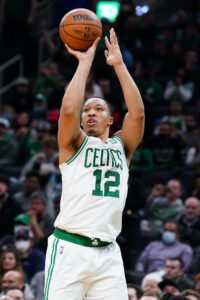 In 2020/21, Williams’ second season, he made progress as a shooter, a very important aspect of his role for Boston. His averages – 4.7 PPG and 2.8 RPG on .437/.372/.588 shooting (.546 true) in 63 games (18.1 MPG) – were still fairly modest, but the 12.2% increase in three-point percentage was encouraging.
In year three, Williams emerged as a solid member of Boston’s rotation, averaging 7.8 PPG and 3.6 RPG on a sparkling .475/.411/.905 shooting slash line (.635 true) in 77 games (21 starts, 24.4 MPG).
He had an even bigger playoff role during the Celtics’ run to the Finals, averaging 8.6 PPG and 3.8 RPG on .433/.393/.808 shooting (.599 true) in 24 games (27.3 MPG).
Strengths:
At 6’6” and a listed weight of 236 pounds, Williams has a low center of gravity and is physically very strong (Michael Scotto of HoopsHype was told that Williams was 280 pounds in the playoffs and had dropped to 265 as of October 6). Anyone who watched him (mostly) hold his ground while defending Giannis Antetokounmpo in the post during their second-round series last season can attest to Williams’ strength.
Williams is a solid defender at power forward and can switch at times onto bigger wings and smaller centers. Opponents shot 1.2% worse than their expected field goal percentage in the ‘21/22 regular season with Williams as the closest defender and 4.5% worse than expected in the playoffs, per NBA.com – both above-average marks.
The 23-year-old has improved tremendously as an outside shooter over his three professional seasons, both in terms of volume and efficiency. Nearly 60% of Williams’ shots last season came from behind the arc, up from 45% as a rookie and 51% in year two. He doesn’t exactly look “natural” when he’s shooting, but the fact that he’s become so efficient is a testament to his work ethic and willingness to improve – those are more important factors than natural talent in my opinion, especially for a role player.
Since the Celtics rely so much on stars Jayson Tatum and Jaylen Brown for offense, with ball movement the key to finding open looks when they’re inevitably faced with a help defender, the grand majority of Williams’ three-point looks came via catch-and-shoot last season. He converted 1.3 of those 3.1 attempts per game, good for 41.7%, per NBA.com. He also converted an impressive 46.8% of his corner threes in ‘21/22 – an important shot for floor spacing.
Williams isn’t known for his athleticism, but he has good timing for blocking shots — his 2.7% block percentage ranked in the 78th percentile last season, per DunksAndThrees.com. He can also do damage down low on the offensive end, though it was very low volume – he shot 68% at the rim in ‘21/22, which was 84th percentile.
Interestingly, Williams has shown a face-up game and the ability to attack defenders off the dribble a little bit via shot fakes during the preseason. We’ll see if that carries over to the regular season, but it’s an encouraging sign that he’s been working on his game and is self-aware enough to know that he needs to be a little more well-rounded offensively.
Improvement Areas:
While Williams generally does pretty well defending bigger players, he sometimes struggles to stay in front of shiftier guards due to his lack of length and quickness. He also can be susceptible to blow-bys when closing out on shooters due to his lack of foot speed.
Neither of those things are unusual for a power forward, but improving on them would help him stay on the court in more difficult matchups (the Warriors exploited both of those weaknesses rather mercilessly in the Finals, which is one reason why his minutes were reduced to 17.0 per game in that series after averaging 29.7 or more in the three previous rounds).
For a big man, Williams is a below-average rebounder, pulling down just 5.3 boards per 36 minutes last season. His relative lack of size and athleticism hurts in that aspect as well, even though he’s a willing contributor on the boards who chases after loose balls.
His three-point improvement definitely seems legitimate, but a lot of his value on offense is tied to converting his open looks to keep opposing defenses honest, and if he’s off that day he hasn’t provided much else on that end. And as good as his outside shooting was last season, his shot is pretty slow and deliberate, so he needs space to get it off. Adding a reliable pump fake and relocation dribble would help.
I was surprised to learn that Williams’ assist rate was an alarmingly low 6% last season, and his turnover rate was 12%, per DunksAndThrees. His overall assist-to-turnover ratio was only 1.25-to-1, which isn’t awful for a big man, but it’s certainly not good.
The reason those findings were surprising is because Williams has displayed soft touch as a passer and can make plays for others in the limited opportunities he’s given. His handle is a little loose sometimes, but I still expected both figures to be better than they were in ‘21/22.
Conclusion:
Three-and-D players always have value, especially when they can guard multiple positions. In Williams’ case, that’s the three frontcourt spots. As long as he can keep making 40% of his three-pointers, there’s no doubt that he’s going to get paid, it’s just a matter of how much.
It’s difficult to find players to compare Williams to because of his unique build and skill set. Perhaps the closest comps you can find for Williams currently are Jae Crowder and P.J. Tucker, a couple of short, stocky power forwards who provide versatile defense, energy, toughness, and some outside shooting. Both of those players received three-year deals at the non-taxpayer mid-level exception in recent years – for ‘22/23, that would max out at four years and $45,107,000.
Williams is worth more than that, even if he wasn’t a starter on a very good team like those two veterans were last season. For one, he won’t turn 24 years old until November 30, while Crowder is 32 and Tucker is 37. If they were Williams’ age, they would’ve landed bigger paydays.
Secondly, Williams has shown more potential as a finisher and a shooter than his elder counterparts. His .635 true shooting percentage in ‘21/22 was a higher mark than Crowder (.613 in ‘16/17) or Tucker (.593 last season) has ever posted.
Multiple reports have indicated Williams is seeking a deal in the $14-16MM range annually, and Boston has thus far been reluctant to go that high. It seems like the reason for that is more because the Celtics are a taxpaying team that already has multiple players signed to lucrative long-term contracts rather than not valuing Williams.
I can see both sides of the argument here. Paying a bench player who only averaged 7.8 points and 3.6 rebounds in ‘21/22 at least $14MM per season seems like a lot. On the other hand, the skill set he provides is coveted around the league, and replacing him would be very difficult due to financial constraints.
If the two sides are unable to reach an extension, Williams would become a restricted free agent next summer. Boston would have the leverage in that scenario because they can match any offer, and it’s rare for rival teams to sign role players to offer sheets since it ties up cap room for multiple days.
If a theoretical new deal still isn’t signed at that point, Williams could accept his qualifying offer and hit unrestricted free agency in 2024, but he’d potentially lose money in the short-term because the QO would almost certainly be less than the first year of an extension. That might be his best bet for landing a big payday from an opposing team.
Having said that, there’s no indication Williams wants to leave the Celtics, nor that they want to lose him. With Robert Williams injured to start the season, and Danilo Gallinari out for the year with a torn ACL, Grant Williams should have an opportunity for a larger role, and if he puts up big numbers on a title contender, he could substantially increase his value.
Ultimately, I think the low end of his rumored asking price (four years, $56MM) is pretty fair for an extension. It’s a little more than I’d prefer to pay him if I were running the Celtics, but it’s not unreasonable since the salary cap is expected to continually rise over the duration of the deal. If the two sides don’t reach a deal today, it will be interesting to monitor Williams’ performance during the ‘22/23 season to see if he can increase his value even further.
Nuggets Waive Chasson Randle, Grant Golden
The Nuggets have waived guard Chasson Randle and undrafted rookie forward Grant Golden, according to Mike Singer of The Denver Post, who adds that both players are expected to land with the Grand Rapids Gold, Denver’s G League affiliate (Twitter links).
Randle and Golden were signed to Exhibit 10 contracts, so they could each receive a bonus worth up to $50K if they spend at least 60 days with the Gold.
Randle, 29, has appeared in a total of 119 NBA regular season games for the Sixers, Knicks, Wizards, Warriors and Magic since making his debut in January 2017. He holds career averages of 5.7 points, 1.4 rebounds and 1.8 assists on .401/.361/.799 shooting in 16.1 minutes per contest.
Golden, 24, spent his entire college career at Richmond, averaging 13.7 PPG, 6.0 RPG, and 2.9 APG on .506/.280/.706 shooting in 37 games (27.6 MPG) as a “super senior” in 2021/22. After going undrafted, the 6’10” forward played for the Hawks’ Summer League team in Las Vegas, logging limited minutes in four appearances.
The Nuggets now have a full 15-man standard roster (all on guaranteed contracts) and both two-way slots filled, so it appears as though their regular season roster is set.
Cavs Exercise Options On E. Mobley, Okoro; Waive Five Players
The Cavaliers are exercising their 2023/24 rookie scale options on Evan Mobley and Isaac Okoro, sources tell Chris Fedor of Cleveland.com (Twitter link). The team has officially confirmed the moves (Twitter link).
The news was expected, as both 21-year-olds are key members of a young Cleveland squad. Mobley will earn $8,882,640 in his third season, while Okoro will make $8,920,795 in his fourth. Exercising Okoro’s fourth-year option also makes him eligible for a rookie scale extension next summer.
Mobley was the Rookie of the Year runner-up in ’21/22 after averaging 15 PPG, 8.3 RPG, 2.5 APG and 1.7 BPG in 69 games (33.8 MPG). The 7’0″ big man was the third overall pick in 2021.
Okoro was the fifth overall pick in 2020. The 6’5″ wing is an impressive athlete and strong defender, but needs to develop his offensive game. He’s averaged 9.2 PPG, 3.0 RPG, 1.9 APG and 0.9 SPG over his first two seasons (134 games, 31 MPG).
In unrelated news, the Cavs have waived Mamadi Diakite, Sharife Cooper, Nate Hinton, Jamorko Pickett and RJ Nembhard, tweets Kelsey Russo of The Athletic. The team officially confirmed the roster cuts (via Twitter). The Cavs now have 14 players on standard contracts and one two-way spot open after waiving Nembhard.
The Cavaliers plan to keep their 15th standard roster spot open to start the season, according to Fedor (Twitter link), who adds that Cooper, Hinton and Pickett are expected to join the Cleveland Charge, the Cavs’ G League affiliate. If they spend at least 60 days with the Charge, they could each receive a bonus worth up to $50K due to their Exhibit 10 contracts.
Diakite had a strong preseason showing for the Cavs, and Fedor wondered last night if they might keep him around. Obviously he won’t receive the final standard roster spot right now, but there’s a chance they could re-sign him to a two-way contract if he clears waivers. He was on an Exhibit 9 training camp deal, which cannot be converted into a two-way deal.
Clippers Convert Moses Brown To Two-Way Deal
The Clippers have converted Moses Brown‘s Exhibit 10 contract into a two-way deal, the team announced (via Twitter). L.A. had an open two-way slot, so no other roster move is required.
A center who just turned 23 years old on Thursday, Brown went undrafted out of UCLA in 2019. Brown has appeared in 92 regular season games (38 starts, 14.1 MPG) over the past three seasons with the Blazers, Thunder, Mavericks and Cavaliers, holding career averages of 6.0 PPG and 5.8 RPG while shooting 55.4% from the floor and 60.2% from the charity stripe.
Brown possesses great size at 7’2″, is a strong rebounder, and he plays hard, but his skill set is pretty limited. For example, he only has 12 career assists in 1298 minutes at the NBA level.
Still, the Clippers lack size in the frontcourt behind starting center Ivica Zubac, so Brown seemed like a good candidate to receive the second two-way spot. Second-rounder Moussa Diabate currently holds the other.
Pelicans Waive Cheatham, Martin, Plowden, Smart
The Pelicans announced that they have waived Zylan Cheatham, Kelan Martin, Daeqwon Plowden and Javonte Smart. All four players are likely headed to the team’s G League affiliate, the Birmingham Squadron.
Martin, a 6’5″ small forward, holds the most NBA experience of the group, having made 96 appearances with the Wolves, Pacers and Celtics over the past three seasons. He holds career averages of 5.5 PPG and 2.4 RPG in 13.2 MPG.
After going undrafted out of LSU last year, Smart, a 6’4″ guard, appeared in 17 NBA games on two-way deals with the Bucks and Heat in 2021/22. He holds modest averages of 3.0 PPG and 1.4 RPG in 11.8 MPG.
Cheatham holds five games of NBA experience with the Jazz and Pelicans after going undrafted in 2019. The 6’5″ forward averaged 14 PPG, 10.7 RPG and 2.5 APG in 21 regular season games (32 MPG) for the Squadron last season.
Plowden is a 6’6″ undrafted rookie wing out of Bowling Green State. He spent Summer League with the Pelicans, averaging 12.0 PPG on .647/.500/.909 shooting in three games (16.1 MPG).
Both Cheatham and Plowden received Exhibit 10 deals, and Martin and Smart likely did as well. Assuming that’s the case, all four players would be eligible for a bonus worth up to $50K if they spend at least 60 days with the Squadron.
The Pelicans now have a 15-man standard roster, with one two-way spot still open. Undrafted rookie guard Dereon Seabron currently holds the other two-way contract.
Pacers Waive Eli Brooks, Tevin Brown, Jermaine Samuels
The Pacers have waived three undrafted rookies who were all signed to Exhibit 10 contracts, the team announced in a press release.
The three players are guards Eli Brooks and Tevin Brown and forward Jermaine Samuels, and they could each earn a $50K bonus if they spend at least 60 days with the Fort Wayne Mad Ants, the Pacers’ G League affiliate.
Brooks, 6’1″, appeared in 34 games (36 MPG) as a fifth-year senior for Michigan last season, averaging 12.8 PPG, 3.7 RPG, 2.9 APG and 1.2 SPG on .444/.394/.877 shooting. He is the Wolverines’ all-time leader in wins and was team captain in his final two seasons.
Brown, 6’5″, was a three-time All-Ohio Valley Conference selection for Murray State. He averaged 16.8 PPG, 5.6 RPG, 3.1 APG and 1.4 SPG on .427/.384/.748 shooting for the Racers in 2021/22 as a redshirt senior last season.
Samuels, 6’7”, averaged 11.1 PPG and 6.5 RPG on .472/.276/.770 shooting as a fifth-year senior for Villanova in 2021/22. He played 153 games for the perennial Big East power, including a small role on the championship-winning club in 2018.
While there’s still time for the Pacers to make subsequent moves, Indiana now has a full 15-man standard roster, the regular season limit, and both two-way slots filled, so it appears as though 13-year veteran James Johnson might have made the team. The forward is on non-guaranteed deal.
Rockets Waive Willie Cauley-Stein, Pierria Henry
The Rockets have waived veteran center Willie Cauley-Stein and guard Pierria Henry, the team announced.
Both deals were non-guaranteed, so Cauley-Stein and Henry were long shots to make the opening night roster, because the Rockets are already at the regular season limit of 15 players on guaranteed standard contracts (not including Derrick Favors, who is expected to be waived before the season starts).
Cauley-Stein has appeared in 422 regular season games (256 starts, 22 MPG) since being drafted sixth overall by the Kings in 2015, holding career averages of 8.7 PPG and 5.9 RPG. However, he only appeared in 20 games (9.2 MPG) last season with the Mavericks and Sixers, having been cut by both teams.
Henry has played exclusively in Europe since going undrafted out of Charlotte in 2015, and he’s had a strong pro career, winning a Turkish League championship with Fenerbahçe in 2022 and a Spanish League title in 2020 with Baskonia. He holds career averages of 9.6 PPG, 3.3 RPG, 5.1 APG and 1.6 SPG on .451/.351/.782 shooting overseas.
The 29-year-old played for the Wizards’ Summer League team in July. It appears as though Henry hopes to make the NBA by playing for Houston’s G League affiliate, the Rio Grande Valley Vipers. If he signed an Exhibit 10 deal, he’d be eligible for a bonus worth up to $50K if he spends at least 60 days with the Vipers.
Noah Vonleh Makes Celtics’ Roster; Jake Layman Waived
Big man Noah Vonleh has made the Celtics‘ regular season roster, tweets ESPN’s Adrian Wojnarowski. As ESPN’s Bobby Marks notes (via Twitter), Vonleh’s contract will be non-guaranteed until January, so he’ll be paid on per-day basis until then.
Adam Himmelsbach of The Boston Globe reported on Thursday that Vonleh appeared to be a safe bet for the 14th spot on the standard roster after a strong showing during preseason.
The ninth overall pick of the 2014 draft, Vonleh is a well-traveled veteran, having previously played for seven NBA teams in seven seasons from 2014-2021. He spent last season in China.
The Celtics have waived veteran forward Jake Layman and guard Eric Demers, sources tell Keith Smith of CelticsBlog and Spotrac (Twitter links) Boston has also signed wing Marial Shayok, according to Smith, though he will almost certainly be waived soon.
It’s unclear if forward Justin Jackson has made Boston’s roster, but we should find out shortly. The veteran has been vying for the 15th roster spot along with Layman and possibly Mfiondu Kabengele, though Kabengele is already on a two-way contract.
A second-round pick in 2016, Layman has appeared in 243 regular season games across six NBA seasons in Portland and Minnesota. In total, the former Maryland forward – who is a Massachusetts native – has averaged 4.8 PPG and 1.7 RPG on .460/.300/.719 shooting in 12.8 minutes per contest over the course of his NBA career.
Layman was signed to an Exhibit 10 deal, so if he clears waivers, he could receive a bonus worth up to $50K if he spends at least 60 days with the Maine Celtics, Boston’s G League affiliate. Demers is another Massachusetts native who played for Maine least season and could be in line for the same bonus.
Shayok was the 54th overall pick of the 2019 draft by the Sixers, making four appearances with the club on a two-way deal. He spent most of his rookie season with the Delaware Blue Coats, Philadelphia’s G League affiliate. Shayok has played for Turkish clubs the past two seasons.
Mavericks Convert McKinley Wright To Two-Way Deal
The Mavericks have converted McKinley Wright‘s Exhibit 10 deal into a two-way contract, the team announced (via Twitter). In addition, Dallas has also signed guard Grant Riller.
Wright, who will turn 24 later this month, signed a two-way contract with the Timberwolves last August after going undrafted out of Colorado. He appeared in just five games for Minnesota, spending most of the season with the team’s G League affiliate in Iowa, where he averaged 19.1 points, 4.6 rebounds and 7.7 assists in 18 games.
Wright played for the Suns in this year’s Las Vegas Summer League in July and was on Team USA’s roster for the World Cup qualifiers in August before signing with the Mavs on an Exhibit 10 contract. He’ll join Tyler Dorsey as the team’s two-way players.
As for Riller, his deal with Dallas is likely aimed at getting his G League rights. He’ll probably be waived soon and join the Texas Legends, the Mavs’ NBAGL affiliate.