
Spurs Rumors: Green, Splitter, Popovich
The champs from last year are done after round one, though the Spurs were the most accomplished team this year among the last four teams standing in 2013/14. The Heat, Pacers and Thunder, the other 2014 conference finalists, all failed to make the playoffs. That’s of cold comfort to San Antonio for now, though, and here’s more as the Spurs pick up the pieces:
- Re-signing Danny Green is a priority for the Spurs, writes Jeff McDonald of the San Antonio Express-News, though Green, who’d like to return, understands his future depends on the vagaries of the free agent market. “San Antonio is home for me,” Green said. “I love the organization. I love the fans. I love the city. In this business, you never know what is going to happen.”
- Marc Stein of ESPN.com hears increasing suggestions that the Spurs would trade Tiago Splitter and the two years and $16.75MM left on his contract to clear cap space for their pursuit of LaMarcus Aldridge and others this summer. Still, it’s unclear from Stein’s report whether the Spurs are actively pursuing the idea or even giving it strong consideration.
- Gregg Popovich pondered retirement more seriously than had been reported, Stein hears, but he consented to come back as he reached agreement in July on an extension that pays some $11MM annually, sources tell Stein, who refers to it as a five-year deal.
Gregg Popovich On Future, Duncan, Spending
Gregg Popovich isn’t coaching in the second round of the playoffs for only the fourth time since 1997, but he doesn’t yearn for the unlimited downtime of retirement, since “you can only plant so many tomatoes,” he quipped, as Dan McCarney of the San Antonio Express-News relays. Popovich, who holds the dual title of coach and president of Spurs basketball, is already looking forward to next season, as he made clear in his season-ending chat with reporters today. Popovich called 39-year-old Tim Duncan the most consistent player in the Clippers series and lamented the lack of help around him, perhaps a signal that he envisions a push to upgrade the roster in the months ahead. The three-time Coach of the Year had more to say on the future of Duncan, who’s entering free agency, and the Spurs, as McCarney passes along. His entire transcription is worth a read, especially for San Antonio faithful, but we’ll pass along three particularly noteworthy remarks here:
On whether Duncan will retire:
“We haven’t talked yet about that. We’ve got a pretty good number of free agents so with [GM] R.C. [Buford] and the coaches and the group we’ve talked about what we want to do going forward with the makeup of the team, but the team will probably look considerably different than it looks this year because we have so many free agents and we want to re-tool a little bit. We want to try to start — not exactly over again — but these last four seasons have been a grind and we put the team together with that in mind, that this year we’d have all the free agents so we can decide what we want to do moving forward, as far as the makeup of the team. So we’ll spend a lot of time on that, but as far as if guys are retiring or not we haven’t touched that.”
On his reflections about Duncan, Tony Parker and Manu Ginobili:
“As time goes on, one certainly does [reflect upon them]. Over the past couple of years, I’ve thought about it a lot how much I’ll miss it when they’re all gone. It’s like your family. Sure. I reflect on it quite often, and think about when they’re not there. I just have this strange feeling when they’re not here, I probably won’t be either.”
On the allocation of payroll:
“R.C. and his group have always done a great job of doing things, both frugally and with class. If money needs to be spent, it’s spent. But it’s never done unwisely. We’ve never put the organization in a situation where they’re paying a ridiculous amount of money for no value. My complete faith and trust in R.C. is never going to change, because of the track record he has, thinking not just for the next year and the next two years, but the next three years, the next seven years, that type of thing.”
And-Ones: Labor, Wolves, Mudiay, Combine
Commissioner Adam Silver hinted vaguely on Sunday that the NBA would push for a hard cap, shorter contracts with smaller raises and maybe even the elimination of guaranteed deals if the union opts out of the labor deal in 2017, according to Bleacher Report’s Howard Beck. Silver didn’t mention the measures specifically, but they were concessions the league sought during the last round of collective bargaining in 2011. Roberts has said that it’s likely the union will opt out and that it’s preparing to do so.
“And if they do, we’ll deal with that,” Silver said on Bleacher Report Radio, as Beck relays. “There were a lot of things we left on the table [in 2011]. We went into collective bargaining seeking — I don’t want to get into it now — but a number of things that we didn’t accomplish. And we compromised. And they compromised as well. If there’s a feeling that we should reopen the collective bargaining agreement … hopefully, just as we have in the past, we’ll work through all those issues and there won’t be any disruptions in the season.”
The deadline for either the union or the league, which can also opt out of the collective bargaining agreement, to give notice that it will do so is December 15th, 2016, Beck notes, so while we hope for a peaceful resolution, here’s more from around the league:
- Timberwolves draft-and-stash prospect Nemanja Bjelica wants a “serious offer” of somewhere around $5MM to $7MM a year if he’s to jump to the NBA this coming offseason, according to David Pick of Basketball Insiders, who writes in a chat with readers. A report from March indicated that there was mutual interest between the 26-year-old power forward and the Wolves, but Pick isn’t so sure Bjelica signs with the team this summer. Darren Wolfson of 1500 ESPN Twin Cities speculated earlier this month that it would take an offer similar to the three-year deal for more than $16.6MM that Nikola Mirotic got from the Bulls this past offseason, and that would fall in line with Pick’s numbers.
- Emmanuel Mudiay isn’t planning on accepting his invitation to take part in the NBA’s draft combine next week in Chicago and will instead continue training on the West Coast, a source tells Shams Charania of RealGM (Twitter links). Still, Mudiay has yet to officially decline the invitation and it’s conceivable that he makes some sort of appearance there, Charania cautions.
- Mudiay is one of some 30 prospects who’ve been invited, while the NBA is eyeing about 55 others, according to Jonathan Givony of DraftExpress (All Twitter links). The NBA will likely bring most of those approximately 55 players in as long as they consent to playing in five-on-five scrimmages at the showcase, Givony adds. Former University of Washington center Robert Upshaw and ex-Kentucky guards Aaron and Andrew Harrison are among those planning to participate in the five-on-five combine scrimmages, Givony hears.
Southeast Notes: D-League, Payton, Wizards
D-League president Malcolm Turner foresees two new D-League teams for 2016/17, a signal that he expects the circuit to remain at 18 teams next season, observes Adam Johnson of D-League Digest, though that may be a conservative estimate. The Hawks are once more determined to strike up a one-to-one affiliation, according to Johnson, and the Raptors are in advanced talks about an affiliate of their own, too. The league appears ready to plant teams in the southeastern United States, where there are none now, Johnson writes, and at least one more Southeast Division team has its eyes on securing a one-to-one affiliate soon, as we pass along:
- The Hornets today formally announced their intention to own and operate a one-to-one affiliate by 2016/17, as Rick Bonnell of the Charlotte Observer first reported. Conversely, the Wizards haven’t made much progress toward a one-to-one affiliate, a source tells Jorge Castillo of The Washington Post (Twitter link). The Heat and Magic already have one-to-one affiliates in Sioux Falls, South Dakota and Erie, Pennsylvania, respectively.
- Rookie Elfrid Payton showed a surprising level of toughness as he exceeded expectations for the Magic this season, excelling as a passer and rebounder, as Josh Robbins of the Orlando Sentinel observes. He struggled with his shooting, though that was no shock, as Robbins details about the point guard whose rights the Magic traded for on draft night last June.
- Drew Gooden was out of the league at midseason last year, and at the same time Otto Porter languished outside the rotation for the Wizards. Now, they’re key parts of a Wizards team that’s 5-0 in the playoffs, as Jorge Castillo of The Washington Post examines.
Hoops Rumors Glossary: Mid-Level Exception
The mid-level exception is the most common way for NBA teams that are over the salary cap to sign free agents from other clubs. Teams can make use of the mid-level every season, and they can split it among multiple players. Different mid-level exceptions apply based on a team’s proximity to the cap.
The most valuable kind of mid-level exception is available to teams that are over the cap but less than $4MM above the tax threshold. Still, clubs deep into the tax, and even those under the cap, have access to less lucrative versions of the mid-level. Here’s a glance at how all three forms of the exception are structured:
For teams with cap room:
- Commonly called the room exception
- Contract can cover no more than two seasons
- First-year salary is worth $2,814,000 for 2015/16
For over-the-cap teams:
- Commonly called either the full mid-level exception or the non-taxpayer’s mid-level exception
- Contract can cover up to four seasons
- First-year salary is worth $5,464,000 for 2015/16
- Once used, the team cannot surpass the “tax apron” ($4MM above tax line) for the remainder of the season.
For teams above the cap and the tax apron:
- Commonly called the taxpayer’s mid-level exception
- Contract can cover up to three seasons
- First-year salary is worth $3,376,000 for 2015/16
Each form of the mid-level allows for annual raises of up to 4.5% of the value of the first season’s salary. So, here are the maximum amounts a free agent could receive this summer under each of the three forms of the mid-level exception:
Room Exception
- 2014/15: $2,814,000
- 2015/16: $2,940,630
- Total: $5,754,630
Non-Taxpayer’s MLE
- $5,464,000
- $5,709,880
- $5,955,760
- $6,201,640
- Total: $23,331,280
Taxpayer’s MLE:
- $3,376,000
- $3,527,920
- $3,679,840
- Total: $10,583,760
Few teams used the mid-level to give out contracts for as much as they could and for as many years as they could to any single player in 2014/15. Spencer Hawes (non-taxpayer’s), Bojan Bogdanovic (taxpayer’s), Kirk Hinrich (room), Mike Miller (room), Jameer Nelson (room) and Udonis Haslem (room) were the only players to sign for the full values of the various mid-level exceptions this past season.
Note: This is a Hoops Rumors Glossary entry. Our glossary posts will explain specific rules relating to trades, free agency, or other aspects of the NBA’s Collective Bargaining Agreement. Larry Coon’s Salary Cap FAQ and the Basketball Insiders salary pages were used in the creation of this post.
Earlier versions of this post appeared on April 24th, 2012, May 10th, 2013 and May 11, 2014.
Southwest Notes: Green, Barea, Ellis, Demps
Danny Green hopes to re-sign with the Spurs this summer, though he’s bitter about the lost opportunity to win another championship this year with 13 of the 15 players left over from last season’s title-winning squad, as he tells Mike Monroe of the San Antonio Express-News.
“It hasn’t sunk in yet, but this is a special group,” Green said. “That’s why it sucks so bad, especially for Timmy [Duncan] and Manu [Ginobili]. We had an opportunity to do something special for them. All I can do is hope and pray for another group like that in the future, but I have a feeling some of those guys will be back. [GM] R.C. [Buford] and [coach/president Gregg Popovich] do a great job of bringing in new guys.”
Here’s more from the two other Southwest Division teams that failed to make it out of the first round:
- J.J. Barea has said he’d like to re-sign with the Mavs and that it’ll be easier for the team to keep him than when he left for a four-year, $18MM deal in 2011, but he’s looking for about $3MM a year for the next two or three years, a source told Tim MacMahon of ESPNDallas.com. That would exceed the amount the Mavs can spend using his Non-Bird rights and force the team to dip into cap space or another exception to retain him.
Earlier updates:
- The Mavericks carried the second-fewest number players from 2013/14 into the start of 2014/15, and December’s Rajon Rondo trade meant even more turnover. Plenty of changes are likely on their way again this year, as I examined, but Devin Harris believes the upheaval from the past 12 months presented a challenge for this season’s Mavs, notes Earl K. Sneed of Mavs.com. “It was a trying year,” Harris said. “With all the new guys we had coming into the season and making an in-season trade while trying to get guys adjusted, it was just kind of an uphill battle all year long. We were trying to get everybody to play to their strengths, and it was tough.”
- Mavs coach Rick Carlisle credited Monta Ellis for “two terrific years” in Dallas and Dirk Nowitzki made it clear he’d like the shooting guard to return as Ellis ponders an $8.72MM player option that Sneed, writing in the same piece, suggests he’s likely to decline.
- Pelicans GM Dell Demps deserves a passing grade for his midseason moves this year, but he’s made his share of miscues in the past, including the decisions that leave New Orleans once more bereft of a first-round draft pick this year, opines Jimmy Smith of The Times-Picayune.
Offseason Outlook: Milwaukee Bucks
Guaranteed Contracts
- O.J. Mayo ($8,000,000)
- Ersan Ilyasova ($7,900,000)
- Zaza Pachulia ($5,200,000)
- Jabari Parker ($5,152,440)
- Jerryd Bayless ($3,000,000)
- John Henson ($2,943,221)
- Michael Carter-Williams ($2,399,040)
- Miles Plumlee ($2,109,294)
- Giannis Antetokounmpo ($1,953,960)
- (Larry Sanders $1,865,546)1
- Tyler Ennis ($1,662,360)
- Damien Inglis ($855,000)
- Johnny O’Bryant ($845,059)
Non-Guaranteed Contracts
- Jorge Gutierrez ($947,276)
Options
- Jared Dudley ($4,250,000 — Early Termination)2
Restricted Free Agents/Cap Holds
- Khris Middleton ($2,725,003) — $2,725,003 qualifying offer3
Other Cap Holds
- No. 17 pick ($1,444,200)
Draft Picks
- 1st Round (17th overall)
- 2nd Round (46th overall)
Cap Outlook
- Guaranteed Salary: $43,885,920
- Non-Guaranteed Salary: $947,276
- Options: $4,250,000
- Cap Holds: $4,169,203
- Total: $53,252,399
The league-worst 15-67 season of 2013/14 makes this year’s .500 mark look like a revelation, but the bounceback season the Bucks had this year isn’t quite as impressive in the context of the 38-44 record the team compiled just two years ago. The team is largely swimming in the same waters it has since 2008/09. That was the first of a six-season stretch in which Milwaukee has finished within 10 games above or below .500 every year except last season’s low point. Still, the partnership of Wesley Edens, Marc Lasry, Jamie Dinan atop Milwaukee’s ownership structure appears committed to breaking the franchise out of mediocrity, so there’s reason for optimism.
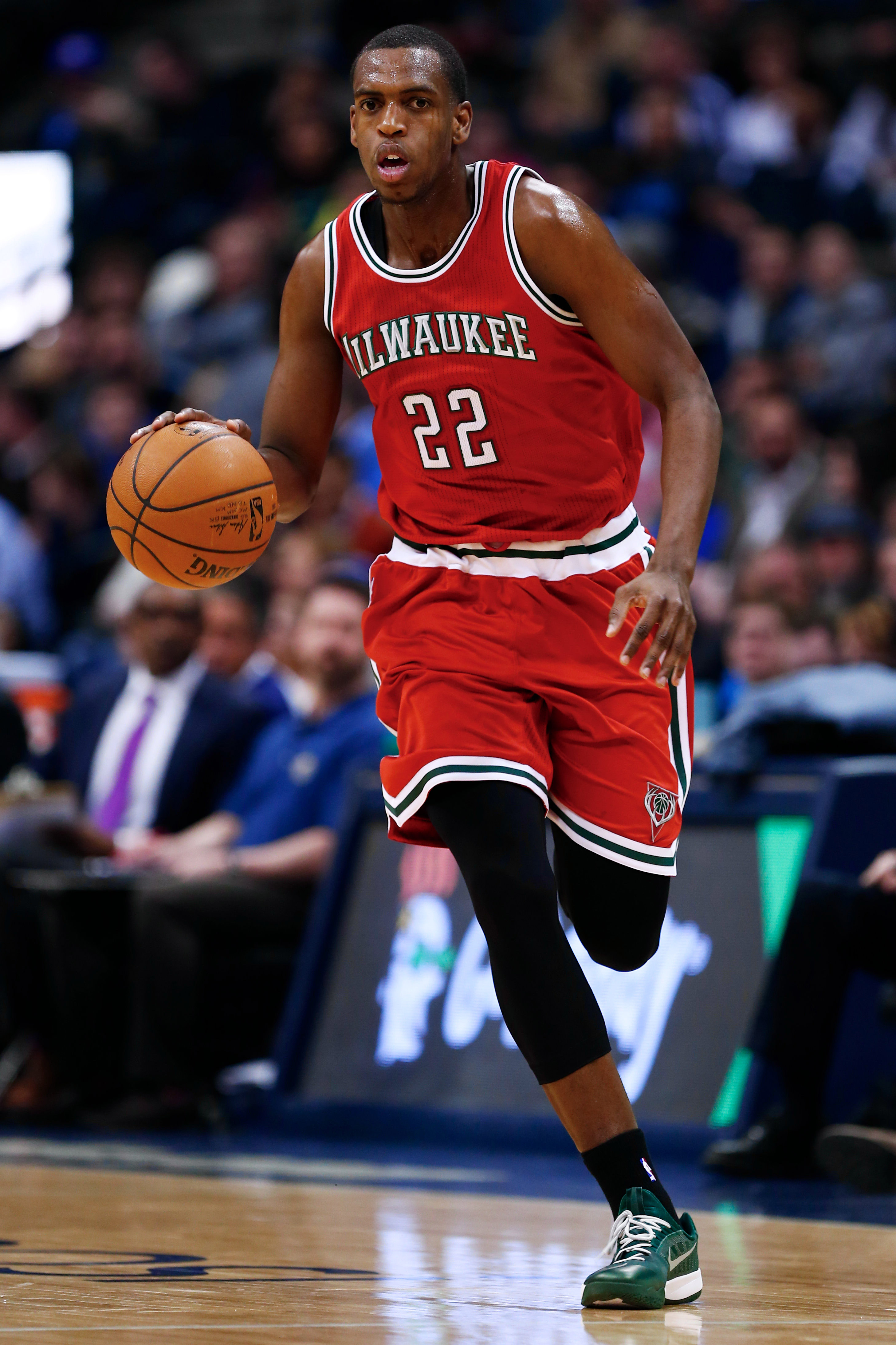 The team enters the offseason with only one player certain to hit free agency. The secret’s out about Khris Middleton, who led the Bucks in scoring during their six-game first-round loss to the Bulls. The Bucks reportedly insisted on Middleton’s inclusion in the 2013 Brandon Jennings/Brandon Knight swap, and he’s proven significantly more than a throw-in the past two seasons in Milwaukee. He’s canned 41.0% of his three-pointers over that span, and he averaged 13.4 points in 30.1 minutes per game this season. ESPN’s Defensive Real Plus/Minus metric rates him as the league’s top shooting guard in that category, but he primarily played power forward this season, as Basketball-Reference shows. Basketball-Reference lists him with a rather pedestrian 0.5 Defensive Box Plus/Minus but 22nd among all players who saw at least 1,000 minutes this season in defensive win shares.
The 23-year-old’s value, never mind his position, is hard to pinpoint, and the power the Bucks have to match all offers for him makes next year’s salary even more unpredictable. Michael Scotto of SheridanHoops and Gery Woelfel of The Journal Times have each heard from a group of multiple executives who came up with two different consensuses. Scotto cited estimates of around $10MM, while Woelfel heard expectations of $8MM salaries.
The Bucks are likely to match offers from opposing teams for the former 39th overall pick, but it seems there’s just enough dichotomy in the way front offices view him that it’s conceivable that a team comes in with an offer for more than what Milwaukee could stomach. The Mavs set the bar with their near-max offer sheet to Chandler Parsons last summer, one that included an opt-out after two years and a 15% trade kicker. Middleton wasn’t as productive this season as Parsons was last year, at least not offensively, but the Bucks have to gird themselves for the possibility of a bloated offer. It no doubt helps Milwaukee that Middleton’s agent, Mike Lindeman, works for Excel Sports Management, the company founded by Jeff Schwartz, who represents coach Jason Kidd. The coach has plenty of say in personnel decisions, and Middleton said recently that he’d like to re-sign in spite of some earlier doubts about the team’s decision to trade away Knight at the deadline this year. Either way, Middleton made clear his distaste for the drawn-out process that Eric Bledsoe and Greg Monroe went through last summer, so it seems we’ll know by the end of July where Middleton will play and what he’ll be making.
Milwaukee will know by a month before then whether Jared Dudley will opt in, though it seemed obvious that Dudley would opt in when the Bucks traded for him last summer, a deal in which Milwaukee received a first-round pick largely for taking on Dudley’s contract. The pact that proved troublesome for the Clippers, who were pressed against their hard cap, instead proved a rather fair arrangement for Milwaukee. His raw numbers didn’t change much, but back at full health this season, the 29-year-old Dudley rebounded from career lows in PER, win shares and Box Plus Minus, according to Basketball-Reference. Kidd, too, will apparently play a major part in his free agency this summer, as Dudley said he’s the primary reason he’s willing to take a discount on a long-term deal to stay in Milwaukee. He’d have to opt out for that to happen this year, and it’s unclear just how he and agent Mark Bartelstein define discount, but it appears a would-be burden will turn into a bargain.
Dudley wouldn’t be alone among Bucks on team-friendly deals. The Bucks have six players whose rookie scale contracts carry through next season, and they’re in line to draft a seventh in June. It’s part of the financial flexibility the Bucks garnered when they gave up Knight, a move for the long-term that stands apart from the sort of trade that former owner Herb Kohl might have green-lighted to give this year’s team a better chance at winning a playoff series or two. Knight will probably end up with a salary next season that’s at or near twice what Michael Carter-Williams, Miles Plumlee and Tyler Ennis, the three players the Bucks acquired in return, will make in 2015/16. None of them can produce like Knight, at least not yet, but the Bucks instead have a Rookie of the Year in Carter-Williams, the starting center from last year’s 48-win Suns team in Plumlee, and an attractive mid-first-round draft product in Ennis, all at a cheaper total cost.
The Bucks have a chance at serious cap room this summer as a result. Milwaukee will have about $52.3MM committed against a projected $67.1MM salary cap if Dudley opts in, they hold off on officially signing Middleton, and they keep their first-round pick. That means the worst-case scenario involves them having nearly enough cap flexibility to make a maximum-salary bid on a free agent eligible for the 25% max, and it wouldn’t be difficult for the Bucks to find a taker for that first-rounder or another contract if they want to get to the full 25% max. They could even get in the market for Knight, though that would make little sense unless they envision a long-term future with a pairing of Carter-Williams and Knight in the backcourt. Other options include Tristan Thompson and Enes Kanter, while attractive unrestricted alternatives who’d come at less than the 30% or 35% max, like Omer Asik, Robin Lopez, would probably be easier to land. Thompson, Kanter, Asik and Lopez would help the team fill the hole in the middle left from the Larry Sanders debacle, though the Bucks may feel that John Henson, who averaged 11.3 rebounds and 2.4 blocks per 36 minutes in the playoffs, deserves a long look as a starter in the final year of his rookie scale deal.
The team’s cap flexibility, extra first-rounder and tons of young talent also position it well to trade for a star. The Bucks could offer a team more NBA-ready talent than the Sixers, who chiefly have draft assets to spend, and the presence of two potential budding stars in Jabari Parker and Giannis Antetokounmpo could make Milwaukee a more attractive trade destination than the Celtics to a marquee trade candidate who has leverage. Still, true stars aren’t often available, so the Bucks would have to be patient with such an approach, and with Parker as the centerpiece, it’s quite possible that Milwaukee can build a contender from within.
Parker doesn’t have the star potential of Andrew Wiggins, the player taken just before him, or even Joel Embiid, the player whom the Sixers drafted immediately after. Parker is also coming off a torn ACL, and Antetokounmpo is still a work in progress. Yet with both on rookie scale contracts for at least two more seasons, the Bucks have an opportunity to chase more expensive talent either now or in the summer of 2016 as part of their quest to become the true title contenders they haven’t really been since the 1980s. The future of the Bucks in Milwaukee is somewhat uncertain as talks about public funding for a new arena proceed against the urgency of an NBA-imposed timetable that demands progress. But the future of the Bucks on the court is such that the team can continue to focus squarely on a promising tomorrow without the need for bold moves this summer.
Cap Footnotes
1 — The Bucks waived Sanders in February and used the stretch provision to spread his remaining guaranteed salary over the next seven seasons.
2 — The cap hold for Dudley would be $8,075,000 if he opts out.
3 — Middleton’s cap hold would be $947,276 if the Bucks decline to tender a qualifying offer.
The Basketball Insiders Salary Pages were used in the creation of this post. Photo courtesy of USA Today Sports Images.
Central Notes: Thompson, Marion, Miller, Bulls
The Cavs and Bulls square off starting tonight in what seemed like it would be an Eastern Conference Finals matchup when the season began. It’s instead a conference semifinal, but the stakes are nonetheless enormous for those involved. Here’s more on that and other Central Division business as we wait for tipoff tonight:
- The effectiveness with which Tristan Thompson plays in place of Kevin Love for the Cavs over the rest of their playoff run will probably determine the kind of money he sees on his next deal, argues Sam Amico of Fox Sports Ohio. The soon-to-be restricted free agent is skilled, and now’s the time for him to show it, Amico writes.
- Cavs coach David Blatt‘s plan to replace the injured Love and suspended J.R. Smith seems to involve Shawn Marion and Mike Miller, a pair of offseason signees who have experience stepping into roles midstream for title-winners, as Jason Lloyd of the Akron Beacon Journal examines.
- Doubt about whether Tom Thibodeau will be back, the soon-to-be unrestricted free agency of key role players Mike Dunleavy, Kirk Hinrich and Aaron Brooks and a Cavs team well-positioned for the future make winning the title this year an imperative for the Bulls, opines Alex Kennedy of Basketball Insiders. Indeed, the Bulls organization understands the scarcity of the opportunity in front of it, as Nick Friedell of ESPN.com explores.
- The Pistons will likely draft a forward if the lottery stays true to form, writes Keith Langlois of Pistons.com, given the team’s needs and the available talent. Detroit is intent on evaluating prospects and free agents by character and compatibility as well as talent this year, GM Jeff Bower insists, as Langlois explores.
Hoops Rumors Glossary: Non-Bird Rights
Players and teams have to meet certain criteria to earn Bird rights and Early Bird rights, but Non-Bird rights are something of a given. They apply to players who’ve spent a single season or less with their teams, as long as they end the season on an NBA roster. Teams can also claim Non-Bird rights on Early Bird free agents if they renounce them. The primary utility in doing so would be so that the team could sign the free agent to a one-year contract, a move that’s not permitted via Early Bird rights.
Teams are permitted to sign their own free agents using the Non-Bird exception for a salary starting at 120% of the player’s previous salary or 120% of the minimum salary, or the amount of a qualifying offer (if the player is a restricted free agent), whichever is greatest. Contracts can be for up to four years, with 4.5% annual raises. The cap hold for a Non-Bird player is 120% of his previous salary, unless the previous salary was the minimum. In that case, the cap hold is equivalent to the two-year veteran’s minimum salary, which in 2015/16 is $947,276.
The salary limitations that apply to Non-Bird rights are more severe than those pertaining to Bird rights or Early Bird rights, so in many cases, the Non-Bird exception isn’t enough to retain a well-regarded free agent. For instance, the Pacers have Non-Bird rights with Rodney Stuckey, who signed a one-year, minimum salary contract with the team in the summer of 2014 after having spent several years with the Pistons. Indiana can only use Non-Bird rights to sign him for 120% of the 2015/16 minimum salary without dipping into cap space or another exception. Stuckey was the third-leading per-game scorer for the Pacers this season, so it’s reasonable to suspect that he’s in line for a heftier raise than his Non-Bird rights can provide.
Non-Bird rights might not be of help to the Pacers and Stuckey, but there are cases in which the exception proves useful. Josh Smith signed a $2.077MM deal for the rest of the season to join the Rockets in December after the Pistons waived him. Houston can offer up to $2,492,400 for 2015/16, 120% of his 2014/15 salary, without using cap space or another exception. Smith will already be raking in more than $5MM from his stretched Pistons contract and he and the Rockets have mutual interest in a new deal. A Non-Bird signing would probably come in below market value for Smith, but the forward would still see a healthy NBA income and allow the Rockets to preserve other mechanisms for adding players in their quest for a title.
Note: This is a Hoops Rumors Glossary entry. Our glossary posts will explain specific rules relating to trades, free agency, or other aspects of the NBA’s Collective Bargaining Agreement. Larry Coon’s Salary Cap FAQ was used in the creation of this post.
Earlier versions of this post appeared on April 20th, 2012, April 26, 2013 and June 16th, 2014.
Offseason Outlook: Dallas Mavericks
Guaranteed Contracts
- Chandler Parsons ($15,361,500)
- Dirk Nowitzki ($8,333,334)
- Devin Harris ($4,053,446)
- Gal Mekel ($315,759)1
Non-Guaranteed Contracts
- Dwight Powell ($845,059)2
Options
- Monta Ellis ($8,720,000 — Player)3
- Raymond Felton ($3,950,313 — Player)4
- Al-Farouq Aminu ($1,100,602 — Player)5
Restricted Free Agents/Cap Holds
- Bernard James ($1,181,348) — $1,181,348 qualifying offer6
Unrestricted Free Agents/Cap Holds
- Tyson Chandler ($22,270,331)7
- Rajon Rondo ($16,441,500)
- No. 21 pick ($1,207,500)
- J.J. Barea ($947,276)
- Richard Jefferson ($947,276)
- Greg Smith ($947,276)
- Amar’e Stoudemire ($947,276)
- Charlie Villanueva ($947,276)
Draft Picks
- 1st Round (21st overall)
- 2nd Round (52nd overall)
Cap Outlook
- Guaranteed Salary: $28,064,039
- Non-Guaranteed Salary: $845,059
- Options: $13,770,915
- Cap Holds: $44,655,711
- Total: $87,335,724
Mavericks owner Mark Cuban undoubtedly didn’t start the season with the thought that it would end with a meek 4-1 series loss to archrival Houston in the first round of the playoffs. Such an ending had seemingly become much less likely when the Mavs traded for Rajon Rondo in December. Instead, Rondo didn’t play like the top-tier point guard he used to be, clashed with coach Rick Carlisle, and came to a mutual agreement with the team to part ways midway through that Rockets series. The most significant move Dallas made this past season could scarcely have turned out more poorly. It wasn’t the true worst-case scenario, since the Mavs made the playoffs and avoided having to forfeit their would-be lottery pick per the terms of the Rondo trade, but times have changed from when it appeared that Cuban would do whatever was necessary to keep the starting lineup together for next season.
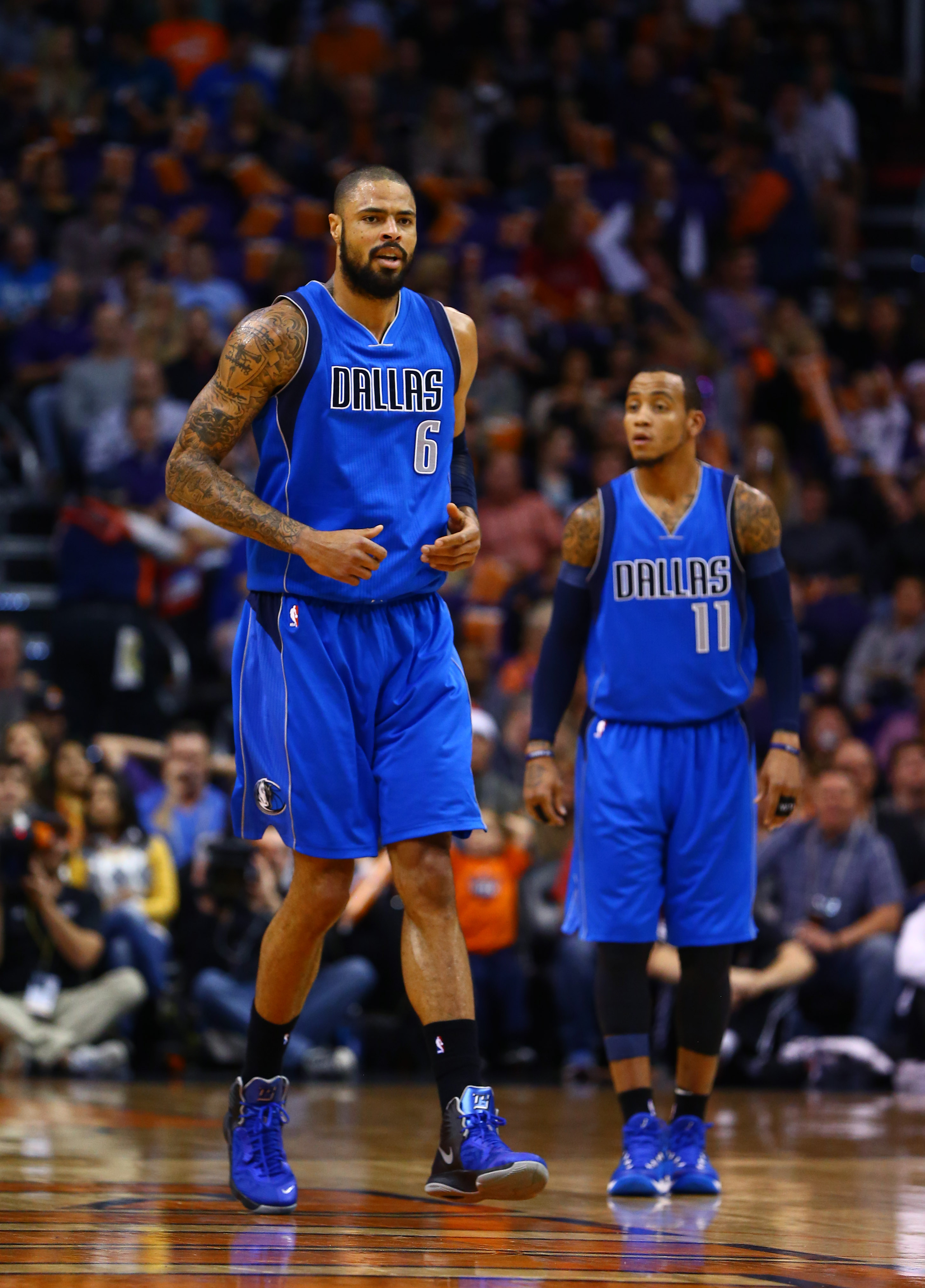
The failure of Rondo to play up to expectations leaves the Mavs at square one in their quest for the high-performing point guard that so many other NBA teams have nowadays. Backup Devin Harris was an All-Star in 2009 and is signed through 2017/18, but his time as an elite point guard was fleeting, and it would be surprising to see the Mavs settle on him as the starter. The free agent market is thin for point guards this summer, with Goran Dragic and Reggie Jackson strong bets to return to the Heat and Pistons, respectively. The Suns will surely be loath to let Brandon Knight go after giving up their protected first-rounder from the Lakers in the trade to acquire him, so it would take a bloated offer sheet for Phoenix to even consider not matching.
Dallas could travel the same route it took with Chandler Parsons last summer and give Knight a deal close to the maximum salary with a player option after year two, one that the Rockets found too player-friendly to match. Paying at or near max money to two players who aren’t truly worthy of those salaries comes with its consequences, though Knight, like Parsons last year, is only eligible for the 25% max, not the 30% or 35% the NBA reserves for longer-tenured veterans. The catapulting salary cap would render such a deal much less burdensome in years two and three, so it’s a strategy to consider. The Mavs also have a chance to evoke Parsons memories if they chase Patrick Beverley, which would entail a bid for a Rockets restricted free agent a second year in a row. There’s mutual interest between Houston and Beverley in a new deal, though again, the Mavs could shoehorn their way into consideration with an offer to overpay him.
Still, there are legitimate questions about whether Beverley or Knight can play the point at an elite level. The trade market might be more fruitful, with Ty Lawson the most obvious candidate. Deron Williams could probably be had, but finding the salaries to match wouldn’t be easy, and Nets coach Lionel Hollins put it bluntly this weekend when he said that Williams isn’t a franchise player anymore. Maybe the Bulls would entertain a Derrick Rose deal if they can’t get past a weakened Cavs team in the playoffs, but his salary and questions about his status as a franchise player are complicating factors, too.
The frontcourt is a different story, and there appears to be a level of mutual interest between the Mavs and both LaMarcus Aldridge and DeAndre Jordan. The most natural fit would be Jordan, who would give the Mavs a chance to upgrade from soon-to-be free agent Tyson Chandler with a younger, more athletic version of Chandler. Aldridge is generally the more well-regarded player, but he plays the same position as franchise icon Dirk Nowitzki, who’s still perhaps the team’s best player. It would be difficult for the Mavs to get by defensively with either Aldridge or Nowitzki at center or small forward, so it’s tough to envision them playing side-by-side for significant stretches. The Mavs, with only about $28MM in guaranteed salary against a projected $67.1MM cap, technically have the wherewithal to sign both, but Raymond Felton is almost certain to opt in for more than $3.95MM, and if Monta Ellis opts in to $8.72MM, the idea of signing two max-level free agents is essentially kaput barring salary-clearing trades. Regardless, signing both Aldridge and Jordan would be overloading the frontcourt at the expense of the guard positions, and it would more than likely require the team to renounce its rights to Ellis if he does opt out.
An Ellis opt-out would present the Mavs with another conundrum. He led the team in scoring but slumped in the second half and shot an atrocious 16.9% from three-point range in regular season games after the All-Star break. He canned 11 of 30 three-point attempts in the playoffs, but outside shooting has never been his calling card. That’s an inauspicious trait for a shooting guard who’ll turn 30 when next season begins, so a long-term deal at market value would be troublesome for the Mavs. Still, Ellis has probably played his way into making eight-figure salaries again after two years of pulling in an average of a little more than $8MM with the Mavs. Even a starting salary of $14.63MM, the most Dallas could give him through his Early Bird rights, wouldn’t impinge upon the Mavs, at least in a vacuum, as long as he agrees to a short-term arrangement. Still, if the team signs a scorer at another position, perhaps Dallas would look harder at lower-cost alternatives at shooting guard, like Arron Afflalo, Lou Williams and Wesley Matthews.
Cuban acknowledged that he erred when he let Chandler go after one season in 2011, but a repeat wouldn’t necessarily be a mistake this time around. The 32-year-old was healthy this year, playing in 75 games, and he delivered the third-best rebounding season of his career while finishing 10th in Basketball-Reference’s Defensive Box Plus Minus among centers who played at least 1,000 minutes. Still, Jordan was fifth in that metric and the league’s leading rebounder, so the chance to upgrade would be difficult for the Mavs to pass up. Chandler probably wouldn’t accept a backup role or the salary that would come with it if Jordan came to take his place. Jordan probably represents the Mavs’ best shot at landing a defensive anchor who’s clearly superior to Chandler, so if the Clippers re-sign their center, the wisdom of re-signing Chandler becomes a matter of his willingness to sign a short-term deal, just as with Ellis.
Felton, whom the Mavs took on in order to reacquire Chandler last summer, and Harris were the only two Mavs reserves who weren’t making the minimum salary at the end of the season. That’ll have to change if the Mavs want to retain the best of their bench, particularly Al-Farouq Aminu, who’s opting out. He and the Mavs have mutual interest in a new deal, but the Celtics intend to wedge their way into the discussion, and other opposing teams will probably follow for the versatile forward who proved an eminently valuable defender. The Mavs only have his Non-Bird rights, and if they open cap space, they’d either have to use a chunk of that or the $2.814MM room exception to re-sign Aminu, the latter of which would probably require the Raymond Brothers client to take a discount from market value.
The same could be said for Amar’e Stoudemire, who still averaged double-digit scoring even in just 16.5 minutes per game down the stretch for Dallas. J.J. Barea has hinted that it won’t be as difficult for the Mavs to re-sign him this time around as when he bolted for a four-year, $18MM deal in 2011, so perhaps Dallas could retain him using Non-Bird rights for a 20% raise on the minimum salary. Charlie Villanueva was a long shot to make this year’s team on a non-guaranteed minimum-salary deal, but he did so and averaged 6.3 PPG in 10.6 MPG, probably enough to warrant a guaranteed minimum salary arrangement this time around, and he’s spoken of a desire to keep working with Carlisle.
The Mavs still haven’t landed the marquee free agent they’ve hoped for ever since breaking up their 2011 championship team, the Parsons signing notwithstanding, and they still haven’t won a playoff series since walking off the floor with the NBA title. Dallas nonetheless has the makings of an attractive destination, with no state income tax, relatively mild winter weather and, most importantly, an existing roster that won 50 games this past season. The ultimate decisions rest with the elite free agents, and not the Mavs, so if they overlook Dallas again, there will be more pressure than ever on Cuban and GM Donnie Nelson to make creative moves to maintain a winning team around the aging Nowitzki.
Cap Footnotes
1 — The Mavs waived Mekel in October and used the stretch provision to spread his guaranteed salary for 2015/16 over a three-year period. The number represented above is the amount owed to Mekel in 2015/16 following the application of the provision.
2 — Powell’s salary becomes fully guaranteed if he remains under contract through opening night.
3 — The cap hold for Ellis would be $11,336,000 if he opts out.
4 — The cap hold for Felton would be $7,505,595 if he opts out.
5 — The cap hold for Aminu would be $947,276 if he opts out.
6 — The cap hold for James would be $947,276 if the Mavericks decline to make a qualifying offer.
7 — The cap hold for Chandler will be the lesser of $22,270,331 and the NBA’s maximum salary for a veteran of 10 or more seasons.
The Basketball Insiders salary pages were used in the creation of this post. Photo courtesy of USA Today Sports Images.