
Nets Officially Re-Sign Ziaire Williams
10:30 am: As we speculated below, the Nets did in fact increase Williams’ two-year deal to $12.5MM, confirms Michael Scotto of HoopsHype (Twitter link). The contract still features a second-year team option.
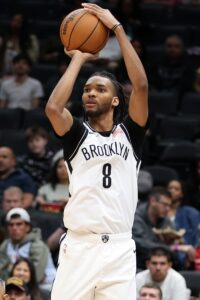 9:54 am: Over two months after their agreement was first reported, the Nets have officially finalized their deal with free agent swingman Ziaire Williams, the team confirmed today (Twitter link via Erik Slater of Clutch Points).
While the Nets didn’t provide any details on the contract besides referring to it as a “multiyear” arrangement, reporting on June 30 indicated that Williams would be signing a two-year, $12MM deal, with a second-year team option.
For what it’s worth, Nets big man Day’Ron Sharpe reportedly agreed to the same terms, and when he officially re-signed last week, the total value of his contract was bumped slightly from $12MM to $12.5MM. It’s possible Brooklyn will do the same for Williams.
A former No. 10 overall pick who was acquired from Memphis in a trade during the 2024 offseason, Williams averaged 10.0 points and 4.6 rebounds in 24.5 minutes per game across 63 outings (45 starts) for Brooklyn in 2024/25.
While his 34.1% three-point percentage wasn’t great for a wing, it was a noticeable step up from the 30.1% mark he posted in his first three NBA seasons, and he showed off impressive defensive versatility, even handling center duties in a pinch. The former Stanford standout came at No. 43 on our list of this summer’s top 50 free agents.
Assuming Williams’ first-year salary comes in around $6MM, Brooklyn will still have just over $16MM in cap space available after officially re-signing Williams, Sharpe, and Cam Thomas. The team, which will also have the $8.8MM room exception at its disposal once it uses up its room, could increase its cap space by waiving one or more players who have non-guaranteed salaries.
It’s also worth noting that a player who re-signs with his previous team on a one-year contract or a two-year deal that includes a second-year team option typically has the right to veto a trade during the following season. However, a player can agree to give up that right as part of the contract negotiation. I expect the Nets asked Williams to waive his trade veto rights, but we don’t have confirmation on that yet.
Players Currently Affected By Trade Restrictions
The NBA has no shortage of rules affecting which players can and can’t be traded at any given time, which complicates our understanding of which players are actually moveable. That’s especially true leading up to the regular season, when players who recently signed free agent contracts, extensions, and rookie contracts all face different sets of trade restrictions.
In an effort to clear things up, we’re looking today at which players around the NBA are currently affected by trade restrictions of one kind or another. Let’s dive in…
Recently signed free agents
In most cases, a free agent who signed a contract in the offseason is ineligible to be traded until December 15.
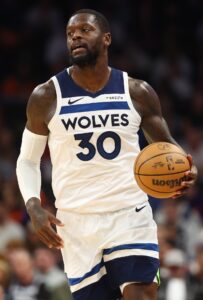 Currently, our list of players who will become trade-eligible on December 15 features 80 names, including several of the guys who signed the biggest free agent contracts of the summer, such as Kyrie Irving, Myles Turner, and Julius Randle.
But the list is technically even longer than that, since we haven’t included players who signed non-guaranteed Exhibit 9 and/or Exhibit 10 contracts. Most of those players will be waived by opening night, but if they earn spots on regular season rosters, the December 15 trade restriction would apply to them as well.
A free agent who signs after September 15 won’t become trade-eligible until three months after his signing date.
Any player who has his two-way contract converted to a standard deal during the offseason also doesn’t become trade-eligible until December 15 or until three months after the move, whichever comes later. However, no players were promoted from two-way contracts to standard deals this summer. All the players who finished last season on two-ways either became free agents on July 1, were waived, or are still on their previous contracts.
A select group of players who signed free agent contracts this offseason won’t become trade-eligible until January 15. These eight players all meet a specific set of criteria. Not only did they re-sign with their previous team this offseason, but they got a raise of at least 20%, their salary is worth more than the minimum, and their team was over the cap, using Bird or Early Bird rights to sign them.
That group includes Naz Reid, Santi Aldama, and Sam Merrill, among others, and may end up featuring a few more current free agents, such as Josh Giddey, Quentin Grimes, and Jonathan Kuminga.
The above rules apply to players who sign standard contracts, not two-way deals. A player who signs a two-way contract is ineligible to be traded for 30 days. There are currently five players to whom this restriction applies, including Olivier-Maxence Prosper, who signed with the Grizzlies on September 4 and won’t become trade-eligible until October 4.
Two-way players are rarely traded, but it happens every now and then, like when RJ Luis was sent from Utah to Boston in last month’s Georges Niang deal.
Recently signed draft picks
Like a player who signs a two-way contract, a draftee who signs his first NBA contract is ineligible to be traded for 30 days. Currently, this restriction only impacts two players: Celtics second-rounder Amari Williams, who signed on August 15, and Jazz second-rounder John Tonje, who signed on August 26. They’ll become trade-eligible on September 14 and September 25, respectively.
The rest of this year’s draftees can currently be traded.
That list of tradable 2025 draftees includes all the players besides Williams and Tonje who have signed, since more than 30 days have passed since their officially completed their deals.
It also includes the two players who remain unsigned – including Warriors second-rounders Alex Toohey and Will Richard – since their draft rights can be traded until they sign their contract. If Toohey and Richard officially sign NBA contracts for 2025/26, they’ll become trade-ineligible for 30 days.
Players with veto ability
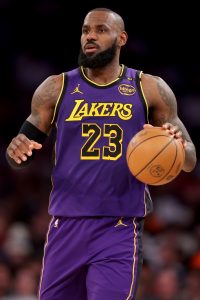 Lakers forward LeBron James and Trail Blazers guard Damian Lillard are the only NBA players who have genuine no-trade clauses in their contracts, but several other players have the ability to veto trades this season due to various quirks of the Collective Bargaining Agreement.
Clippers guard James Harden, Rockets guard Fred VanVleet, Nets guard Cam Thomas, and Magic big man Moritz Wagner are some of the notable players whose consent will be required to trade them during the 2025/26 season.
Under the current CBA, a player who would normally meet the no-trade criteria due to re-signing with his current team on a one-year contract (or a two-year deal with a second-year option) can opt to waive his right to veto a trade.
At least a dozen players have done so this season so far, including Bucks guard Kevin Porter Jr., Lakers center Jaxson Hayes, and Mavericks guard Dante Exum, so once they become trade-eligible (on either December 15 or January 15), they can be moved without any issue.
Players who have signed veteran extensions
A player who signs a rookie scale extension becomes more difficult to trade due to the “poison pill provision,” but he could theoretically be moved immediately.
That’s not necessarily the case for a player who signs a veteran contract extension. A player who signs a veteran extension becomes ineligible to be traded for the next six months if he meets any of the following criteria:
- His extension locks him up for more than four total years (including his current contract).
- The extension includes a first-year bump of more than 20% (or more than 20% above the NBA’s estimated average salary, if his previous salary is below that average).
- His extension includes an annual increase or decrease exceeding 5% anytime after the first year of the deal.
With the help of our extension trackers, here are the players currently affected by that rule, along with the dates they’ll become trade-eligible:
- December 14: Steven Adams (Rockets)
- December 29: Jaylin Williams (Thunder)
- January 7: Jakob Poeltl (Raptors)
- January 10: Devin Booker (Suns)
- January 13: Jaren Jackson Jr. (Grizzlies)
- January 14: Herbert Jones (Pelicans)
- February 1: Mikal Bridges (Knicks)
- February 2: Luka Doncic (Lakers)
- February 4: De’Aaron Fox (Spurs)
Since the trade deadline will land on February 5, a player who finalizes an extension between now and then (such as Mavericks forward P.J. Washington) wouldn’t become trade-eligible until the 2026 offseason.
Mavericks big man Daniel Gafford also signed an extension this offseason, but his deal didn’t exceed four total years, include a first-year bump exceeding 20%, or feature any subsequent annual raises greater than 5%, meaning he remains eligible to be traded.
Players who have signed Designated Veteran extensions
 A Designated Veteran contract is also known as a “super-max” deal — it’s a maximum-salary contract that starts at 35% of the cap instead of 30% because the player has met certain performance criteria before achieving 10 years of NBA service.
A player who signs a Designated Veteran contract or extension can’t be traded for one full year after his signing date.
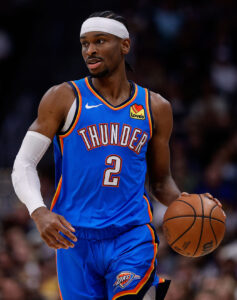
Only one player has signed a super-max contract this offeason: Thunder guard Shai Gilgeous-Alexander. He’ll become trade-eligible on July 7, 2026, the one-year anniversary of his signing.
Players affected by aggregation restrictions
When a team trades for a player via salary-matching or using an exception (ie. not by absorbing the player into cap room), that team can’t “aggregate” the player in another trade for two months. Aggregating a player means combining his salary with another player’s for matching purposes.
The majority of the trades made this offseason so far were completed in June or early July, at least two months ago, so this restriction only applies to a handful of players at the moment. Here are those players, along with the dates when they’ll become aggregation-eligible:
- September 9
- Kelly Olynyk (Spurs)
- Malaki Branham (Wizards)
- September 13
- Dario Saric (Kings)
- Jonas Valanciunas (Nuggets)
- October 6
- Georges Niang (Jazz)
Any player who is traded this season after December 16 (without being acquired via cap room) won’t be eligible to be flipped prior to the trade deadline in a second deal that aggregates his salary with another player’s.
This aggregation restriction also applies indefinitely to any player on a team who is operating over the second tax apron. Currently, only the Cavaliers fit that bill.
Traded Second-Round Picks For 2026 NBA Draft
We’re using the space below to keep tabs on each NBA team’s second round pick for 2026, continually updating it as necessary throughout the year. Our list of traded first-round picks for 2026 can be found right here.
We’ve listed all 30 teams here, so even if a team hasn’t traded its second round pick, that will be noted. We’ll also provide details on protections for each traded pick, including what happens to the pick in 2027 if it doesn’t change hands in 2026.
Here’s the full breakdown on the status of each 2026 second-round pick:
Atlantic
- Boston Celtics: Traded to Hawks or Grizzlies.
- Details outlined at bottom of article.
- Brooklyn Nets: Traded to Heat (top-55 protected).
- If this pick lands in its protected range, the Nets will keep it and their obligation to the Heat will be extinguished.
- New York Knicks: Possibly traded to Bulls or Wizards.
- Details outlined at bottom of article.
- Philadelphia 76ers: Traded to Thunder, Suns, or Wizards.
- The Thunder will receive the most favorable pick of the Sixers’, Mavericks’, and Thunder’s second-rounders; the Suns will receive the second-most favorable of the three; the Wizards will receive the least favorable.
- Toronto Raptors: Traded to Pacers (top-55 protected).
- If this pick lands in its protected range, the Raptors will keep it and their obligation to the Pacers will be extinguished.
Central
- Chicago Bulls: Traded to Rockets.
- Cleveland Cavaliers: Traded to Clippers.
- Detroit Pistons: Traded to Celtics, Magic, or Pelicans.
- The Celtics will receive the most favorable pick of the Pistons’, Bucks’, and Magic’s second-rounders; the Magic will receive the second-most favorable of the three; the Pelicans will receive the least favorable.
- Indiana Pacers: Traded to Hawks, Grizzlies, Spurs, Timberwolves, or Nets.
- Details outlined at bottom of article.
- Milwaukee Bucks: Traded to Celtics, Magic, or Pelicans.
- The Celtics will receive the most favorable pick of the Pistons’, Bucks’, and Magic’s second-rounders; the Magic will receive the second-most favorable of the three; the Pelicans will receive the least favorable.
Southeast
- Atlanta Hawks: Traded to Nets or Nuggets.
- Details outlined at bottom of article.
- Charlotte Hornets: Traded to Kings or Pistons.
- The Kings will receive this pick if it lands between 31-55; the Pistons will receive if it lands between 56-60. The Hornets’ obligation to whichever team doesn’t receive the pick will be extinguished.
- Miami Heat: Traded to Hawks, Grizzlies, Spurs, Timberwolves, or Nets.
- Details outlined at bottom of article.
- Orlando Magic: Possibly traded to Celtics or Pelicans.
- The Celtics will receive the most favorable pick of the Pistons’, Bucks’, and Magic’s second-rounders; the Magic will receive the second-most favorable of the three; the Pelicans will receive the least favorable.
- Washington Wizards: Own pick.
- If the Wizards’ first-round pick lands in the top eight, the Wizards would send the Knicks their second-rounder.
Northwest
- Denver Nuggets: Traded to Heat or Bulls.
- The Heat will receive the most favorable pick of the Nuggets’ and Warriors’ second-rounders; the Bulls will receive the least favorable of the two.
- Minnesota Timberwolves: Traded to Bulls, Knicks, or Wizards.
- Details outlined at bottom of article.
- Oklahoma City Thunder: Own pick.
- The Thunder have the ability to swap their own pick for the Sixers’ or Mavericks’ second-rounder. The Thunder will receive the most favorable pick of the Sixers’, Mavericks’, and Thunder’s second-rounders; the Suns will receive the second-most favorable of the three; the Wizards will receive the least favorable.
- Portland Trail Blazers: Traded to Bulls, Spurs, or Wizards.
- Details outlined at bottom of article.
- Utah Jazz: Traded to Spurs or Bucks.
- The Spurs will receive this pick if it lands between 31-55; the Bucks will receive if it lands between 56-60. The Jazz’s obligation to whichever team doesn’t receive the pick will be extinguished.
Pacific
- Golden State Warriors: Traded to Heat or Bulls.
- The Heat will receive the most favorable pick of the Nuggets’ and Warriors’ second-rounders; the Bulls will receive the least favorable of the two.
- Los Angeles Clippers: Traded to Nets, Nuggets or Grizzlies.
- Details outlined at bottom of article.
- Los Angeles Lakers: Traded to Warriors.
- Phoenix Suns: Traded to Mavericks.
- Sacramento Kings: Own pick.
Southwest
- Dallas Mavericks: Traded to Thunder, Suns, or Wizards.
- The Thunder will receive the most favorable pick of the Sixers’, Mavericks’, and Thunder’s second-rounders; the Suns will receive the second-most favorable of the three; the Wizards will receive the least favorable.
- Houston Rockets: Own pick.
- If the Rockets’ first-round pick lands in the top four, the Rockets would send the Thunder their second-rounder.
- Memphis Grizzlies: Traded to Clippers or Trail Blazers.
- The Clippers will receive this pick if it lands between 31-42; the Trail Blazers will receive if it lands between 43-60. The Grizzlies’ obligation to whichever team doesn’t receive the pick will be extinguished.
- New Orleans Pelicans: Traded to Bulls, Spurs, or Wizards.
- Details outlined at bottom of article.
- San Antonio Spurs: Possibly traded to Timberwolves.
- Details outlined at bottom of article.
Here are the details on how the Knicks‘, Timberwolves‘, Trail Blazers‘, and Pelicans‘ second-round picks will be distributed:
The Bulls will receive the most favorable of the following picks:
- The Knicks’ second-round pick.
- The Timberwolves’ second-round pick.
- The Trail Blazers’ second-round pick.
- The Pelicans’ second-round pick.
The Knicks will receive the least favorable of the following picks:
- The Knicks’ second-round pick.
- The Timberwolves’ second-round pick.
The Spurs will receive the least favorable of the following picks:
- The Trail Blazers’ second-round pick.
- The Pelicans’ second-round pick.
The Wizards will receive the least favorable of the following picks:
- The most favorable of the Knicks’ and Timberwolves’ second-round picks.
- The most favorable of the Trail Blazers’ and Pelicans’ second-round picks.
Here are the details on how the Celtics‘, Pacers‘, Hawks‘, Heat‘s, Clippers‘, and Spurs‘ second-round picks will be distributed:
The Grizzlies will receive the most favorable of the following picks:
- The Clippers’ second-round pick.
- The most favorable of the Celtics’, Pacers’, and Heat’s second-round picks.
The Nets will receive the most favorable of the following picks, while the Nuggets will receive the least favorable:
- Whichever pick listed above that the Grizzlies don’t receive.
- The Hawks’ second-round pick.
The Spurs will receive the most favorable of the following picks, while the Timberwolves will receive the least favorable:
- The Spurs’ second-round pick.
- The least favorable of the Pacers’ and Heat’s second-round picks.
The Hawks will receive the least favorable of the following picks:
- The Celtics’ second-round pick.
- The most favorable of the Pacers’ and Heat’s second-round picks.
Information from RealGM was used in the creation of this post.
Hoops Rumors’ 2025 Offseason Check-In Series
In advance of the NBA season, Hoops Rumors is checking in on the 2025 offseason for all 30 NBA teams, recapping the summer’s free agent signings, trades, draft picks, departures, and more. We’re taking a look at each team’s offseason moves and consider what might still be coming before the regular season begins.
All of our Offseason Check-In articles are linked below, sorted by conference and division.
Eastern Conference
Atlantic
Central
Southeast
Western Conference
Northwest
Pacific
Southwest
NBA 2025 Offseason Check-In: Los Angeles Lakers
Hoops Rumors is checking in on the 2025 offseason for all 30 NBA teams, recapping the summer’s free agent signings, trades, draft picks, departures, and more. We’ll take a look at each team’s offseason moves and consider what might still be coming before the regular season begins. Today, we’re focusing on the Los Angeles Lakers.
Free agent signings
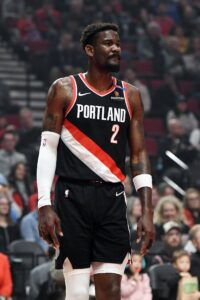 Deandre Ayton: Two years, $16,208,000. Second-year player option. Signed using non-taxpayer mid-level exception.
- Jake LaRavia: Two years, $12,000,000. Signed using non-taxpayer mid-level exception.
- Marcus Smart: Two years, $10,524,700. Second-year player option. Signed using non-taxpayer mid-level exception.
- Jaxson Hayes: One year, $3,449,323. Re-signed using Non-Bird rights. Waived right to veto trade.
- RJ Davis: One year, minimum salary. Non-guaranteed (Exhibit 10). Signed using minimum salary exception.
- Eric Dixon: One year, minimum salary. Non-guaranteed (Exhibit 10). Signed using minimum salary exception.
- Arthur Kaluma: One year, minimum salary. Non-guaranteed (Exhibit 10). Signed using minimum salary exception.
- Kylor Kelley: One year, minimum salary. Non-guaranteed (Exhibit 10). Signed using minimum salary exception.
- Augustas Marciulionis: One year, minimum salary. Non-guaranteed (Exhibit 10). Signed using minimum salary exception.
Trades
- Acquired the draft rights to Rocco Zikarsky (No. 45 pick) from the Bulls in exchange for the draft rights to Lachlan Olbrich (No. 55 pick) in the 2025 draft and cash ($2.5MM).
- Acquired the draft rights to Adou Thiero (No. 36 pick; from Nets) in a seven-team trade in exchange for the draft rights to Rocco Zikarsky (No. 45 pick; to Timberwolves) and cash ($3.25MM; to Timberwolves).
Draft picks
- 2-36: Adou Thiero
- Signed to three-year, $5,949,688 contract. First two years guaranteed. Third-year team option.
Two-way signings
- Christian Koloko
- One year, $85,300 partial guarantee (will increase to $318,218 at start of regular season).
- Chris Manon
- One year, $85,300 partial guarantee.
Departed/unsigned free agents
- Dorian Finney-Smith (Rockets)
- Alex Len (unsigned)
- Markieff Morris (unsigned)
Other roster moves
- Signed Luka Doncic to a three-year, maximum-salary veteran contract extension that begins in 2026/27. Projected value of $160,838,784. Includes third-year player option.
- Waived Jordan Goodwin (non-guaranteed contract).
- Waived Shake Milton (non-guaranteed contract).
- Waived Trey Jemison (two-way contract).
Salary cap situation
- Operating over the cap ($154.6MM) and above the luxury tax line ($187.9MM).
- Carrying approximately $194.8MM in salary.
- Hard-capped at $195,945,000.
- Three traded player exceptions available (largest worth $1,891,857).
The offseason so far
The Lakers’ offseason began in somewhat dramatic fashion when agent Rich Paul announced on June 29 that LeBron James was picking up his player option for 2025/26. James was one of 10 players who exercised a player option in June, but two factors made his case unique. First, the ’25/26 season will be the first time in his career that LeBron is on an expiring contract; and second, Paul was the only agent who put out a lengthy statement accompanying his client’s opt-in decision.
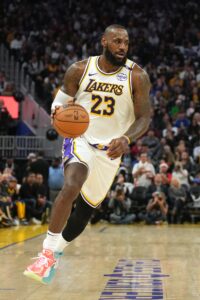 Within that statement, Paul said that LeBron “knows the Lakers are building for the future,” wants to contend for a title, and understands “the difficulty in winning now while preparing for the future.”
“We do want to evaluate what’s best for LeBron at this stage in his life and career,” Paul’s statement concluded. “He wants to make every season he has left count, and the Lakers understand that, are supportive and want what’s best for him.”
Even for a player like James, whose two-plus decades in the NBA have included countless cryptic – some might say passive-aggressive – interview responses, social media posts, and media leaks, this one was a pretty rich text. Was LeBron suggesting he wanted a trade? Expressing displeasure that he didn’t work out a multiyear deal with the Lakers? Putting pressure on the team to go all-in in 2025/26? Hinting that he plans to retire next year?
We haven’t gotten a definitive answer to those questions over the past two months, but Paul’s statement also didn’t lead to any sort of summer fireworks involving the Lakers and James. We know based on their stunning Luka Doncic deal in February that the Lakers are capable of keeping a blockbuster trade under wraps, but there has been no indication that we’re headed in that direction with James, at least not in 2025. All indications are that the 40-year-old will open the season in Los Angeles and look to win a title alongside Doncic.
Still, it’s clear that a passing of the torch is in process in Los Angeles. While the organization has revolved around James since 2018, the spotlight has shifted to Doncic, who was also at the center of some early offseason speculation. As of August 2, Doncic’s extend-and-trade restrictions would lift and he’d be eligible to sign a maximum-salary extension with the Lakers. Would he take advantage of that opportunity and commit to the team long-term?
As August 2 approached, it became clear that there would be no drama on that front either. Not only did Doncic sign a maximum-salary extension with the Lakers, but he did so on the first day he was eligible, forgoing potential 2026 free agency and signaling that he’s all-in on L.A.
With Doncic extended and things relatively quiet on the LeBron front following that June statement, the Lakers’ focus this offseason was primarily on upgrading the roster around their two stars. The front office, which backed out of a trade for center Mark Williams at February’s deadline due to concerns about his physical, didn’t return to the trade market to make those upgrades, instead using a series of cap exceptions in free agency to improve the team’s depth.
One of four teams to use its entire non-taxpayer mid-level exception this offseason, the Lakers split their MLE between forward Jake LaRavia and center Deandre Ayton.
Ayton, a former No. 1 overall pick, is the more familiar name of the two and fills a greater hole for the Lakers, whose lack of a reliable big man was an Achilles heel in their first-round playoff loss to Minnesota in the spring. But LaRavia, an underrated, defensive-minded forward who is still just 23 years old – and whose shooting percentages significantly improved in his third NBA season – shouldn’t be overlooked.
LaRavia could play an important role for L.A., especially since the team lost Dorian Finney-Smith in free agency to Houston. Finney-Smith’s exit was a little surprising, given that he thrived following his mid-season trade to the Lakers and only got two fully guaranteed years on his deal with the Rockets. The Lakers could’ve matched that offer even while prioritizing 2027 cap flexibility, but they’re betting on LaRavia and a healthy Jarred Vanderbilt providing the wing defense they sacrificed with Finney-Smith’s departure.
The Lakers also prioritized defense with their bi-annual exception, using it to add former Defensive Player of the Year Marcus Smart. The veteran guard has battled injuries over the past couple seasons, but if he’s back to full health, Smart would be a bargain on his $5.1MM cap hit this season — even if he’s not quite the player he was in his prime years.
Finally, in need of more depth at center beyond Ayton, the Lakers used Jaxson Hayes‘ Non-Bird rights to give him a raise to 20% above his minimum salary. Hayes was overextended as the club’s starting center in the second half of last season, but as a backup on a fairly team-friendly deal, he’s certainly capable of returning positive value.
Up next
Obviously, if anything is going to happen before next summer with James, it will be the most pressing item on the Lakers’ agenda. But if we assume that the four-time MVP at least plays out his record-setting 23rd NBA season in Los Angeles, there’s not much left on the club’s offseason to-do list.
 While the Lakers only have 14 players on standard guaranteed contracts, they don’t currently have a path to adding a 15th man, since they’re only operating $1.1MM away from their first-apron hard cap. If they don’t shed salary by making a trade or buying out a player, they’d have to wait until at least mid-January to sign a veteran free agent.
The Lakers do have a two-way contract slot open alongside Christian Koloko and Chris Manon. With five players signed to Exhibit 10 deals, there could be an open competition in training camp for that spot. Undrafted rookie forward Eric Dixon would presumably be the favorite if he’s healthy — he was reportedly expected to sign a two-way deal in June, but after a foot injury prevented him from suiting up for Summer League games, he got an Exhibit 10 contract instead.
The Lakers do still have a handful of extension-eligible players on the roster after agreeing to terms with Doncic. Rui Hachimura, Maxi Kleber, Gabe Vincent, and Austin Reaves could all sign new deals. But Kleber and Vincent haven’t been healthy enough since arriving in L.A. to prove themselves as reliable, regular rotation players, and Hachimura may be more valuable as a trade chip if his contract remains expiring.
As for Reaves, he was offered an extension, but because he can’t sign for more than $89MM over four years at this point, he’s expected to wait until at least next summer, when he’d be eligible for a more lucrative contract.
Doncic, Slovenia Advance In EuroBasket With Win Over Italy
Despite a mild injury scare during the first half of Sunday’s game, Lakers star Luka Doncic led the Slovenian national team to an 84-77 victory over Italy at EuroBasket 2025, securing the country’s spot in the quarterfinals.
After pouring in 22 points in the first quarter, Doncic left the court to get his quad muscle stretched out in the Slovenian locker room, a league source tells Dan Woike of The Athletic. However, he returned to the floor a few minutes later and finished the first half with 30 points, en route to a 42-point, 10-rebound performance.
It was the first time in the tournament that Doncic has scored at least 40 points in a game, but he got close a couple times during the group stage and is now averaging 34.0 points per contest, making him this year’s leading scorer at EuroBasket by a considerable margin. He’s just the third player in the past 30 years to have at least 40 points and 10 rebounds in a EuroBasket game, per Cesare Milanti of Eurohoops, joining Germany’s Dirk Nowitzki (2001) and Spain’s Pau Gasol (2015).
Shooting guard Klemen Prepelic (11 points on 3-of-10 shooting) was the only other Slovenian player to score in double-digits.
Heat forward Simone Fontecchio led the way for the Italians with 22 points, five rebounds, and three steals. Italy was a +11 when Fontecchio was on the court, but was outscored by 18 points during his time on the bench.
Sunday’s game may be longtime NBA forward Danilo Gallinari‘s last for Italy, as he has suggested he plans to retire from the national team after EuroBasket. He had 10 points and three rebounds in 12 minutes of action.
Italy’s head coach Gianmarco Pozzecco also confirmed after Sunday’s loss to Slovenia that he plans to step down from his role with the national team, as Edvinas Jablonskis of BasketNews.com relays.
“It’s my last game with Italy,” Pozzecco told reporters. “I want to thank my president, Giovanni Petrucci, for giving me this honor to become coach of the national team. From deep of my heart, it’s like… Maybe, for sure, the best moment of my life. It was a real honor to have this role in Italian basketball.”
Three of the EuroBasket quarterfinals have now been set. Turkey will face Poland on Tuesday, while Slovenia matches up with Germany and Finland plays Georgia on Wednesday. Lithuania, which will play on Tuesday, awaits the winner of today’s showdown between Giannis Antetokounmpo‘s Greek team and Deni Avdija‘s Israeli squad.
Finding Contract Compromises For Top Three Remaining RFAs
It's September 7 and three of the summer's top restricted free agents remain unsigned. By all accounts, there has been no real movement in weeks for Bulls guard Josh Giddey, Warriors forward Jonathan Kuminga, and Sixers wing Quentin Grimes, but we're still expecting resolution at some point this month, prior to the October 1 deadline for restricted free agents to accept their qualifying offers.
As those standoffs drag on, we're taking a closer look today at what "compromise" contracts might look like for Giddey, Kuminga, and Grimes.
These aren't necessarily the contracts we expect them to eventually sign. There's no guarantee that one side or the other will budge from its current position -- either the team or the player may have to cave sooner or later, rather than the two sides meeting somewhere in the middle. In the case of Nets guard Cam Thomas, for instance, signing his $6MM qualifying offer wasn't a "compromise," but it was how his free agency ultimately concluded.
In our view, the proposals below represent fair resolutions for both the player and team, leaving both sides feeling like they came out of the negotiations with a reasonable outcome.
Let's dive in...

Southwest Notes: FVV, Adams, Grizzlies, Pelicans, Mavs
The Rockets‘ trade for Kevin Durant was clearly the most impactful move of the team’s offseason, but extending Steven Adams and re-signing Fred VanVleet on a more team-friendly deal shouldn’t be overlooked, Danielle Lerner of The Houston Chronicle (subscription required) writes in a preview of the club’s season.
As Lerner points out, both VanVleet and Adams are respected locker-room leaders in addition to providing value on the court and were among Houston’s most effective players in the postseason series vs. Golden State.
After winning 52 games last season, the Rockets appear capable of increasing that number in 2025/26, perhaps to the 55-win range, Lerner writes. However, winning in the playoffs will be the ultimate barometer of success in Houston this season — the team hasn’t won a postseason series since 2020.
We have more from around the Southwest:
- In addition to previewing Houston’s 2025/26 campaign, Lerner spoke to beat writers for other Southwest teams within the past week to get a sense of their outlooks for the coming season. Michael Wallace of Grind City Media (Chronicle subscriber link) believes the Grizzlies are capable of competing for a top-six seed in the West after trading away Desmond Bane; Jim Eichenhofer of Pelicans.com (subscriber link) thinks the Pelicans will exceed expectations after having widely been projected as the No. 14 team in the conference; and Eddie Sefko of Mavs.com (subscriber link) forecasts a 48-34 regular season and a playoff berth for the Mavericks.
- While the Mavericks‘ new four-year, $89MM extension with P.J. Washington looks relatively team-friendly in a vacuum, it’s unclear how much sense it makes for Dallas, according to Yossi Gozlan of The Third Apron (Substack link), who points to a crowded frontcourt and the team’s increasingly pricey roster going forward as ways the deal could backfire.
- The Memphis Hustle, the Grizzlies‘ G League affiliate, acquired the returning player rights for guard Evan Gilyard from the Raptors 905 in exchange for a 2025 NBAGL first-round pick, according to an announcement from the team (Twitter link). Gilyard, who averaged 12.3 points and 5.4 assists per game during the 2024/25 G League regular season for Toronto’s affiliate, is now a candidate to sign an Exhibit 10 contract with Memphis if the team wants to pay him more than the standard NBAGL salary.
NBA Increases Salary Cap Projection For 2026/27
The NBA informed teams on Friday that its projection for the 2026/27 salary cap has increased from $165MM to $166MM, sources tell Jake Fischer of The Stein Line (Twitter link).
When the league set a $154,647,000 cap for 2025/26, it reportedly told teams it was projecting a 7% increase for ’26/27. That would work out to $165,472,000.
It’s unclear, based on Fischer’s reporting, if the NBA’s new cap projection is exactly $166MM or the league bumped up the percentage of the projected increase (perhaps to 7.5%). Either way, it’s a relatively small difference, but it would be good news for teams that will be operating under the cap or navigating in tax/apron territory next season.
Under the current Collective Bargaining Agreement, annual cap increases are capped at 10% to avoid another huge single-year jump like the 34.5% increase that occurred in 2016, which allowed the 73-win Warriors to sign Kevin Durant in free agency.
A 10% bump for ’26/27 would result in a $170,112,000 cap. However, unless the NBA’s early estimate is way off, it doesn’t appear that the cap will rise that high next summer.
NBA Teams With Fewest Players On Guaranteed Contracts
As of Friday, seven of the NBA’s 30 teams are carrying at least 15 players on fully guaranteed contracts and are unlikely to have many additional offseason acquisitions in store. Another nine teams are carrying 14 players on fully guaranteed deals, while 10 others have 12 or 13 guaranteed contracts on their books.
As our roster counts page shows, that leaves four clubs carrying 11 or fewer players on fully guaranteed deals. That doesn’t necessarily mean all four of those teams will sign free agents to guaranteed contracts before the regular season begins, but it’s worth checking in on them to take a closer look at their roster situations.
[RELATED: 2025/26 Non-Guaranteed Contracts By Team]
Atlanta Hawks
Although the Hawks are only carrying 11 players on guaranteed contracts, it’s possible no more additions are coming before the regular season, since they have four more players on partially guaranteed or non-guaranteed deals, and all four could be in the team’s plans.
One of those four players, Vit Krejci, should be a lock for the regular season roster. Krejci has been a regular rotation piece over the past two seasons and $1.5MM of his $2.35MM salary is also guaranteed. N’Faly Dante is the other Hawk with a partial guarantee — only $85,300 of his $2.05MM salary is locked in, but the Hawks probably wouldn’t have gone to the trouble of signing him away from Houston with an offer sheet if they planned to waive him before the season begins.
Former Magic forward Caleb Houstan and 2023 second-round pick Mouhamed Gueye have non-guaranteed minimum salaries for 2025/26. Houstan made 40% of his three-point attempts last season, and the Hawks may not be ready to give up on Gueye, who had his rookie year shortened significantly by a back injury.
Waiving any one of those four players would clear a path for Atlanta to either add a new 15th man or to carry an open roster spot into the regular season.
Cleveland Cavaliers
In addition to their 11 players on guaranteed salaries, the Cavaliers have Dean Wade, a reliable reserve whose contract features a significant partial guarantee, and Craig Porter Jr., a minimum-salary reserve who has been productive in limited minutes and who could play a greater role this fall if Darius Garland misses the start of the season due to toe surgery, as expected.
That’s still just 13 players on standard deals, so Cleveland will need to find a 14th man. Even though they could use some additional depth due to Garland’s toe injury and Max Strus‘ foot surgery, it’s probably safe to assume the Cavs won’t carry a full 15-man roster into the season since they already have the league’s highest payroll and won’t want to further increase their luxury tax bill if they don’t need to.
It wouldn’t be a surprise to see the Cavaliers sign a player to a partially guaranteed or non-guaranteed contract for their 14th spot. That would give the team some flexibility early in the season to make a change at that spot if they need to bring in extra depth at a specific position.
A player on a non-guaranteed deal without an early salary guarantee date won’t have his salary for 2025/26 locked in unless he remains under contract through January 7, so the Cavs could maintain some flexibility with the 14th spot until then. For now, a guard or wing to help fill in for Garland and Strus would make sense.
Golden State Warriors
The offseason practically hasn’t started for the Warriors, who belatedly finalized a pair of draft-night trade agreements on July 6 and haven’t made a single roster move since then. Jonathan Kuminga‘s restricted free agency standoff is the reason for the hold-up. Until they know the exact value of Kuminga’s cap hit – or the cap hits of the players they acquire in a sign-and-trade for Kuminga – the Warriors want to hold off on filling out the rest of their roster, since they may need to navigate a hard cap.
For now, Golden State is carrying just seven players on fully guaranteed contracts, four below the total for any other team. But Trayce Jackson-Davis and Gui Santos, who have non-guaranteed salaries, are probably sticking around, and Kuminga would get them to 10 players if he re-signs.
The Warriors are also believed to have deals lined up with several free agents, starting with Al Horford, who will likely receive most or all of the taxpayer mid-level exception. Horford and De’Anthony Melton (likely on a minimum-salary deal) have been the free agents long assumed to have handshake agreements with Golden State. Seth Curry, Gary Payton II, and Malcolm Brogdon are among the other rumored candidates to sign with the team (Curry seems to be the most likely), along with second-round picks Will Richard and possibly Alex Toohey.
It’s probably safe to assume that some combination of these players will fill out the Warriors’ roster once Kuminga’s free agency is finally resolved. Whether they carry 14 or 15 players could depend on how much Kuminga signs for — if the forward accepts his $8MM qualifying offer, Golden State would be in a way better position to carry a full roster than if he signs the team’s reported proposal that starts at $21.75MM.
New York Knicks
The Knicks have 11 players on guaranteed salaries, with Ariel Hukporti as their non-guaranteed 12th man. Technically, waiving Hukporti to replace him with another player is a possibility, but New York has so little cap flexibility below its second-apron hard cap that it’s not a practical route, since Hukporti’s $1,955,377 cap hit gives the club important extra breathing room that a $2,296,274 veteran’s minimum deal wouldn’t.
As their situation stands, the Knicks have enough room below the second apron to sign one veteran free agent to a minimum-salary contract and one draft-rights-held player to a rookie-minimum deal. A salary-shedding trade could change the equation for the club, but if that doesn’t happen, the Knicks have next to no maneuverability and won’t be able to add a 15th man until near the end of the season.
While swapping non-guaranteed players on and off the roster during the first part of the season is a viable option for a team like Atlanta, it’s not practical for New York, since those moves would burn much-needed room below the hard cap. That may be one reason why the Knicks are taking their time to decide who their 13th and 14th men will be. Once they sign those guys, they may end up committed to them for a while.