Outstanding 2021/22 Rookie Scale Option Decisions
The deadline for teams to exercise the third- and fourth-year team options for 2021/22 on players’ rookie scale contracts is Tuesday, December 29, meaning that clubs who have yet to finalize those decisions will have to do so today or tomorrow.
Most clubs with options to pick up have already done so, and in many cases those decisions were no-brainers. Luka Doncic (Mavericks), Ja Morant (Grizzlies), Trae Young (Hawks), and Shai Gilgeous-Alexander (Thunder) are among the players whose 2021/22 options have been exercised, and as long as they remain on their rookie contracts, they’ll be among the best bargains in the NBA.
With the help of our tracker, here are the option decisions that have not yet been announced or reported, with Tuesday’s deadline looming:
Boston Celtics
- Romeo Langford (third year, $3,804,360)
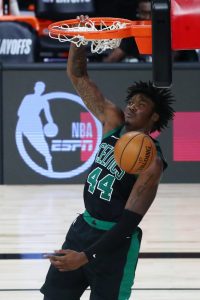
- Robert Williams (fourth year, $3,661,976)
- Grant Williams (third year, $2,617,800)
Golden State Warriors
- Jordan Poole (third year, $2,161,440)
Los Angeles Clippers
- Mfiondu Kabengele (third year, $2,174,880)
Minnesota Timberwolves
- Jarrett Culver (third year, $6,395,160)
- Josh Okogie (fourth year, $4,087,904)
New York Knicks
- Omari Spellman (fourth year, $3,588,845)
Philadelphia 76ers
- Matisse Thybulle (third year, $2,840,160)
Washington Wizards
- Jerome Robinson (fourth year, $5,340,916)
- Troy Brown (fourth year, $5,170,564)
- Rui Hachimura (third year, $4,916,160)
- Moritz Wagner (fourth year, $3,893,618)
The fact that these option decisions haven’t been formally finalized yet doesn’t mean they won’t be easy calls. For instance, there’s no chance that the Sixers are going to decline their third-year option on Thybulle — they just haven’t made it official yet.
However, not all of these options are locked to be picked up. The Knicks, for instance, previously exercised their options on RJ Barrett and Kevin Knox but didn’t do so for Spellman. Teams almost always announce all their option pick-ups at once, so the fact that Spellman wasn’t included in that press release is a strong sign that New York will make him an unrestricted free agent in 2021.
Meanwhile, Poole’s option is the least expensive on this list and is barely worth more than the minimum, but even at that price, the Warriors have a tough decision to make. Poole has been relatively ineffective so far (.334/.277/.805 shooting in 60 games) and Golden State’s roster is expensive. The team has to determine whether it makes sense to continue investing in Poole’s development next season, or whether a minimum-salary veteran should get his spot on the ’21/22 roster.
I think most of the other options listed here – with the possible exception of Wagner’s – are more likely to be exercised than declined, but it’s possible there will be a surprise or two. It’s worth noting that turning down an option doesn’t mean the team can’t re-sign the player in 2021 free agency — it just means they can’t offer a starting salary higher than the value of the declined option.
Photo courtesy of USA Today Sports Images.
Nick Young Signing With Team In China
Nick Young will resume his playing career overseas, according to Shams Charania of The Athletic, who reports (via Twitter) that the veteran guard is signing with the Zhejiang Lions of the Chinese Basketball Association.
Young, who entered the NBA as a first-round pick in 2007, played for six teams during 12 years in the league, starting his career with the Wizards and later enjoying a lengthy stint with the Lakers.
He won a championship in 2018 with the Warriors and last played for the Nuggets to open the ’18/19 season before being waived nearly two years ago. The 35-year-old averaged 11.4 PPG on .418/.376/.836 shooting in 720 total regular season games (22.8 MPG).
Young said in October 2019 that he expected to call it a career if he didn’t get an NBA opportunity last season, but it seems he’s not ready to announce his retirement quite yet. He’s one of a pair of longtime NBA guards apparently headed to China this week, with Jordan McRae said to be joining the Beijing Ducks.
Key In-Season NBA Dates, Deadlines For 2020/21
The list of important in-season dates and deadlines for 2020/21 may look a little off for hardcore NBA fans.
For instance, you’ve grown accustomed to the fact that teams are permitted to start signing players to 10-day contracts on January 5 during a typical league year, you’ll have to adjust your thinking to accommodate for the league’s revamped ’20/21 schedule. This year, February 23 is the first day that 10-day deals can be signed.
We’re here to help provide the rescheduled dates for those usual in-season deadlines. Here’s a breakdown of the dates, deadlines, and events that will influence player movement for the next several months across the NBA:
December 29
- Deadline for teams to exercise rookie scale options for 2021/22.
January 25
- Priority order for waiver claims is now based on 2020/21 record, rather than 2019/20 record (as of March 11). Teams with the worst records receive the highest waiver priority.
January 29
- NBA G League training camps begin (tentative date).
February 6
- Most offseason signees become eligible for inclusion in trades.
February 10
- NBA G League season begins.
February 23
- First day teams can sign players to 10-day contracts.
February 24
- Last day to waive non-guaranteed NBA contracts before they become guaranteed for the rest of the season. Salaries officially guarantee on February 27 if players haven’t cleared waivers before that date.
March 3
- Most other offseason signees become eligible for inclusion in trades.
- Last day to apply for a disabled player exception.
March 4
- First half of NBA regular season ends.
March 5-9
- NBA All-Star break.
March 6
- NBA G League regular season ends.
March 8-11
- NBA G League playoffs.
March 10
- Second half of NBA regular season begins.
March 15
- Former first-round picks who were stashed overseas may sign rookie scale NBA contracts for the 2021/22 season.
March 25
- Trade deadline (2:00pm CT).
April 9
- Last day for contract renegotiations.
- Last day a player can be waived by one team and remain eligible to appear in the postseason for another team.
- Last day for a restricted free agent to sign an offer sheet.
April 19
- Last day to use a disabled player exception.
May 16
- Last day of the NBA regular season.
- Last day players can sign contracts for 2020/21
- Last day two-way contracts can be converted to standard NBA contracts.
- Luxury tax penalties calculated based on payroll as of this day.
May 18-21
- Play-in tournament for seventh and eighth playoff seeds in each conference.
May 22
- NBA playoffs begin.
Larry Coon’s Salary Cap FAQ and NBA.com were used in the creation of this post.
Poll: Best Value Among Non-Max Rookie Scale Extensions
After four players signed maximum-salary rookie scale extensions relatively early in the NBA’s condensed offseason, six more players eligible for rookie extensions completed deals in the final 24 hours or so before Monday’s deadline.
[RELATED: 2020/21 NBA Contract Extension Tracker]
All six of those 11th-hour deals were worth well below the max, ranging from $40MM to as much as $80MM. Contracts in that range are generally trickier to negotiate than maximum-salary extensions — it’s fair to assume the Magic spent more time weighing how much to offer Jonathan Isaac, who is out for the season with a torn ACL, than the Celtics did thinking about what to offer Jayson Tatum.
With that in mind, we want to get your thoughts on the six non-max rookie scale extensions signed in 2020, all of which will take effect in 2021/22. They are as follows:
- OG Anunoby (Raptors): Four years, $72MM. Includes fourth-year player option.
- Derrick White (Spurs): Four years, $70MM. Includes $5MM in incentives.
- Jonathan Isaac (Magic): Four years, $69.6MM. Includes $10.4MM in incentives and Exhibit 3 injury protection.
- Luke Kennard (Clippers): Four years, $56MM. Includes $8MM in incentives and a fourth-year team option.
- Markelle Fultz (Magic): Three years, $50MM. Includes $3MM in incentives and partial guarantee in third year.
- Kyle Kuzma (Lakers): Three years, $40MM. Includes third-year player option.
While White’s and Isaac’s contracts were initially reported as being worth $75MM and $80MM, respectively, it’s actually Anunoby who received the highest overall guarantee. His fourth-year player option also probably makes his contract the most player-friendly overall, though you could make the case that he deserves it — unlike a number of other players on this list, he hasn’t dealt with ongoing injury issues since entering the NBA, and has a clear-cut role as a three-and-D weapon who still has room for improvement.
White will be able to match Anunoby’s $72MM total across four seasons if he’s able to play at least 70 games in each year of his deal. His other incentives will be harder to reach, but $18MM per year is still a a strong investment in a player who came off the bench for much of the 2019/20 campaign.
Isaac and Fultz both have injury histories, but the Magic protected themselves in each case. They included games-played incentives and injury language related to Isaac’s knee in the forward’s contract, and are only on the hook for a small partial guarantee ($2MM) in the third year of Fultz’s deal.
The Clippers took a similar approach with Kennard, who missed much of the 2019/20 season with knee issues — in addition to having to earn a series of annual incentives, he only has three guaranteed years on his extension, which features a fourth-year team option.
As for Kuzma, he joined Anunoby as the only other player in this group to get a player option on the final year of his extension, which works in his favor — he’ll be able to hit the open market in advance of his age-28 season if he outplays this contract. Of course, he also got the lowest per-year commitment of any of these six players, so even if he doesn’t live up to the deal, it shouldn’t be a major albatross.
What do you think? Which of these contract extensions do you think represents the best value from a team perspective?
Vote in our poll, then head to the comment section below to weigh in!
Whose extension represents the best value from a team perspective?
-
OG Anunoby (Raptors) 38% (449)
-
Kyle Kuzma (Lakers) 31% (362)
-
Markelle Fultz (Magic) 10% (114)
-
Jonathan Isaac (Magic) 8% (100)
-
Luke Kennard (Clippers) 8% (98)
-
Derrick White (Spurs) 5% (63)
Total votes: 1,186
Trade Rumors app users, click here to vote.
Rockets’ Wall, Gordon, Cousins, Jones Quarantining Until Wednesday
Four Rockets players – John Wall, Eric Gordon, DeMarcus Cousins, and Mason Jones – will be required by the NBA to quarantine for seven days for COVID-19 contact tracing purposes, according to Shams Charania of The Athletic (Twitter link). Their quarantine periods began on Wednesday.
Wall, Gordon, Cousins, and Jones will miss Houston’s games on Saturday (at Portland) and Monday (at Denver). As Jonathan Feigen of The Houston Chronicle tweets, all four players expected to receive clearance to practice with the team on Wednesday, barring any setbacks, and should be available to suit up on Thursday for the Rockets’ home opener vs. Sacramento.
The Rockets will also be without Ben McLemore and KJ Martin for the immediate future, since both players are self-isolating after returning positive coronavirus tests, as Feigen writes.
However, the expectation is that James Harden will be cleared to play today following a four-day quarantine for violating COVID-19 health and safety protocols, and the Rockets will have enough players available for their game vs. the Blazers.
In addition to the six players who are missing for COVID-19 reasons, the Rockets will also be without Chris Clemons, who is out for the season with a torn Achilles. That leaves nine players – Harden, P.J. Tucker, Danuel House, Christian Wood, Sterling Brown, David Nwaba, Bruno Caboclo, Jae’Sean Tate, and Brodric Thomas – presumed to be available for now. The NBA requires teams to have at least eight players active for games.
Reports earlier this week indicated that Tate was among the players who were sent home for contact tracing, but he’s not on Houston’s latest injury report and isn’t among the list of players said to be in the midst of their seven-day quarantines.
Pacific Notes: Kawhi, Schröder, Gasol, D. Jones
Clippers star Kawhi Leonard was forced to leave Friday night’s game early after an errant elbow from teammate Serge Ibaka connected with his face, sending him to the floor and causing him to bleed profusely from his mouth. While the injury looked bad initially, head coach Tyronn Lue said after the game that he thought Leonard would be “fine,” tweets Malika Andrews of ESPN.
The collision left Leonard requiring eight stitches to treat a mouth laceration, per Ohm Youngmisuk of ESPN. However, Nicolas Batum said he spoke to Kawhi after the game and agreed with Lue’s assessment that the two-time Finals MVP should ultimately be fine.
“You don’t want a player, any player, (to) go down like that with blood all over him and everywhere on the floor,” Batum said. “I think he’s good. I just saw him in the locker room; he was OK, and that was kind of scary in the moment.”
Here’s more from around the Pacific:
- Addressing rumors that he and the Lakers may attempt to work out an in-season extension, point guard Dennis Schröder said on Friday night that he’s “very comfortable” with his new team and is interested in negotiating a new deal in the coming months as long as it’s fair for both sides, tweets Jovan Buha of The Athletic.
- After going scoreless in his Lakers debut, newly-signed center Marc Gasol expressed confidence that he’ll bounce back and find his fit going forward, as Buha writes for The Athletic. While Gasol only scored two points on Friday and has yet to make a field goal, he was more effective in the Lakers’ blowout win over Dallas, grabbing nine rebounds and avoiding the foul trouble that plagued him in the opener.
- Damian Jones‘ 2020/21 salary was initially set to become fully guaranteed at the start of the regular season, but he and the Suns have agreed to push that deadline back to February 25, per ESPN’s Bobby Marks (Twitter link).
2020/21 NBA Disabled Player Exceptions
A disabled player exception can be granted when an NBA team has a player go down with an injury deemed to be season-ending. The exception gives the club some additional spending flexibility, functioning almost as a cross between a traded player exception and a mid-level exception.
We go into more detail on who qualifies for disabled player exceptions and how exactly they work in our glossary entry on the subject. But essentially, a DPE gives a team the opportunity to add an injury replacement by either signing a player to a one-year contract, trading for a player in the final year of his contract, or placing a waiver claim on a player in the final year of his contract.
Because the rules related to disable player exceptions are somewhat restrictive and the exceptions themselves often aren’t worth a lot, they often simply expire without being used. Still, it’s worth keeping an eye on which disabled player exceptions have been granted, just in case.
We’ll use this space to break down the teams with disabled player exceptions available for the 2020/21 league year, updating it as the season progresses if more teams are granted DPEs and/or to indicate which ones have been used.
Teams have until March 3 to apply for a disabled player exception and until April 19 to actually use them.
Here’s the list so far:
Teams that have been granted disabled player exceptions:
- Golden State Warriors:
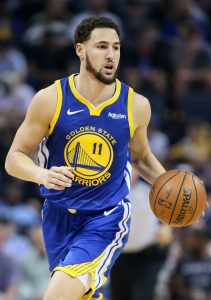
- $9,258,000 (Klay Thompson) (story)
The Warriors were granted a disabled player exception following Thompson’s season-ending Achilles tear. Because his salary exceeds $35MM+, Golden State’s exception is worth the amount of the mid-level exception. However, it remains to be seen how enthusiastic the team will be to use it. The Warriors, who are way over the luxury tax line, already project to have the NBA’s most expensive roster in 2020/21.
- Orlando Magic:
- $6,144,349 (Markelle Fultz) (story)
- $3,681,283 (Jonathan Isaac) (story)
Two of Orlando’s young building blocks suffered torn ACLs that will sideline them for the entire 2020/21 season, resulting in a pair of disabled player exceptions for the team. However, the Magic have a full 15-man roster and aren’t far from the tax line, which will limit their options as they consider whether or not to use it.
- Brooklyn Nets:
- $5,727,024 (Spencer Dinwiddie) (story)
Brooklyn received a disabled player exception after Dinwiddie underwent ACL reconstruction surgery. Like the Warriors, the Nets project to have a significant luxury tax bill at the end of the 2020/21 season, so they’ll be careful about using their disabled player exception. Since Brooklyn still has its full taxpayer mid-level exception, the DPE could be more useful on the trade market.
- Miami Heat:
$4,700,000 (Meyers Leonard) (story)
Leonard’s season-ending shoulder surgery paved the way for the Heat to apply for and receive a disabled player exception. However, they forfeited that exception when they agreed to send Leonard to Oklahoma City in a trade for Trevor Ariza.
- Washington Wizards:
- $4,166,666 (Thomas Bryant) (story)
The Wizards were granted a disabled player exception in response to Bryant’s ACL tear. The team doesn’t have the flexibility to use the full exception and remain out of luxury tax territory unless it sheds salary elsewhere.
Photo courtesy of USA Today Sports Images.
Players Who Can’t Be Traded Until March 3
As we detailed earlier, most players who signed new contracts as free agents during the 2020/21 league year can’t be traded until February 6. As a result, nearly every team is carrying at least one player – and generally a handful – who won’t become trade-eligible until early February.
There’s also a small subset of free agent signees whose trade ineligibility lasts for an extra four weeks. Typically, these players would become trade-eligible on January 15. Due to the changes to the NBA’s calendar for the 2020/21 league year, that date has been shifted to March 3.
These players all meet a specific set of criteria: Not only did they re-sign with their previous team this offseason, but they got a raise of at least 20%, their salary is worth more than the minimum, and their team was over the cap, using Bird or Early Bird rights to sign them.
Listed below are the players who meet this criteria and can’t be traded until at least March 3, 2021. Players who have the ability to veto trades in 2020/21 are marked with an asterisk (*).
Brooklyn Nets
Chicago Bulls
Los Angeles Lakers
Memphis Grizzlies
Milwaukee Bucks
Minnesota Timberwolves
New Orleans Pelicans
Orlando Magic
Phoenix Suns
Portland Trail Blazers
San Antonio Spurs
Toronto Raptors
Washington Wizards
Information from Basketball Insiders was used in the creation of this post.
Photo courtesy of USA Today Sports Images.
Former Celtics Player, Coach K.C. Jones Passes Away
Former Celtics player and coach K.C. Jones has died, according to Tim Bontemps of ESPN (Twitter link). The Hall-of-Famer was 88 years old.
A 6’1″ guard who was drafted in 1956, Jones spent his entire nine-year career as a player in Boston, winning eight NBA titles as a key member of the Celtics dynasty led by Bill Russell. He ranks behind only Russell (11) and teammate Sam Jones (10) for the most championships won by a player.
Prior to entering the NBA, Jones was also teammates with Russell at the University of San Francisco, where they won a pair of NCAA championships. Additionally, he won a gold medal for Team USA in the 1956 Olympics in Melbourne.
Following his retirement in 1967, Jones transitioned into coaching. He won a title as a Lakers assistant in 1972 and another as a Celtics assistant in 1981 before becoming Boston’s head coach and winning two more championships in 1984 and 1986.
Jones had a career regular season record of 552-252 (.674) as an NBA head coach for the Celtics, Bullets, and SuperSonics, with a 81-57 (.587) mark in the postseason. His teams appeared in five NBA Finals.
Jones is the second Celtics legend to pass away within the last two months, following Tommy Heinsohn on November 10.
Our condolences go out to Jones’ friends and family.
Players Who Can’t Be Traded Until February 6
As teams explore the trade market for potential deals in the coming weeks, there are a handful of trade restrictions those clubs must take into account. Most notably, newly-signed free agents can’t be dealt until at least February 6.
The NBA’s Collective Bargaining Agreement states that – in a typical league year – a free agent who signs with an NBA team can’t be traded for three months or until December 15, whichever is later. That rule has had to be tweaked for 2020/21 to account for the league’s revamped calendar, so the new trade eligibility date for most offseason signees is February 6.
There are also some recently-signed players who meet a few specific criteria and can’t be traded until March 3. The list of those players can be found right here.
The players who aren’t eligible to be traded until February 6 are listed below. Players who have the ability to veto trades in 2020/21 are marked with an asterisk (*).