
Celtics Re-Sign JD Davison To Two-Way Contract
JD Davison is back under contract in Boston, according to the Celtics, who announced (via Twitter) they’ve signed the free agent guard to another two-way deal.
Davison, who was the 53rd overall pick out of Alabama in 2022, has spent his first two professional seasons on two-way contracts with the Celtics, logging just 105 total minutes in 20 games at the NBA level across those two years.
While Davison hasn’t been able to crack the rotation on a veteran NBA roster, the 21-year-old has been a high-level performer for the Maine Celtics in the G League. He earned All-NBAGL Third Team honors this past season after averaging 21.5 points, 8.5 assists, and 5.1 rebounds in 34.3 minutes per game across 44 total Showcase Cup and regular season contests.
The Celtics didn’t issue Davison a qualifying offer at the end of June because he was ineligible for another two-way QO (his offer would’ve been a one-year, partially guaranteed standard contract). However, it appears bringing him back on a third two-way contract was always the plan. Davison will play for Boston’s Summer League team this month in Las Vegas.
The C’s now have one two-way slot available, with Drew Peterson filling the other.
Atlantic Notes: Martin, Sixers, Embiid, Vezenkov, Celtics
In order to maximize their cap room, the Sixers renounced the rights to nearly all of their free agents, including a handful of players who hadn’t actually been on the roster for years, per Keith Smith of Spotrac (Twitter links). However, there was one notable exception: KJ Martin‘s cap hold remains on the team’s books.
Martin’s cap hold is worth the veteran’s minimum of $2,087,519, but Philadelphia holds his full Bird rights, allowing the team to go over the cap to re-sign him to a contract worth any salary up to the maximum.
Of course, Martin won’t get the max, but it could be in the 76ers’ best interests to re-sign him to a deal worth more than the minimum. Besides potentially vying for rotation minutes, Martin might come in handy as a trade chip on a roster where so many players will be earning either maximum- or minimum-salary contracts.
Here’s more from around the Atlantic:
- A year after James Harden‘s trade demand hung over the Sixers‘ offseason like a dark cloud, there’s more optimism this summer in Philadelphia about the new-look roster, headed by Joel Embiid, Paul George, and Tyrese Maxey. Speaking to Tim Bontemps of ESPN, Embiid cautioned that the team still needs to make it work on the court, but admitted he’s excited about how the new big three looks. “On paper, and as far as the fit, it looks fantastic because you got both guys that can play off the ball, and they can play on ball and they’re great shooters and they can handle the ball, and then you also got me,” he said with a smile.“So, yeah, it looks great.”
- Addressing the Sasha Vezenkov situation on Monday, Raptors president Masai Ujiri said he has had discussions with Vezenkov, his representatives, GM Bobby Webster, and head coach Darko Rajakovic about the matter. As Keith Smith of Spotrac details in depth, Vezenkov has reportedly reached a deal with Olympiacos but remains under contract with Toronto on a guaranteed NBA contract, preventing him from returning to Greece without the Raptors’ cooperation. “I think that should develop in the next few days or we’ll see whether it’s a few months,” Ujiri said. “We acquired a player in a trade and we feel we have communicated well. We communicated well with the agent and the team before. And so we’ll see how that goes.”
- Taking a closer look at the Celtics‘ decision to put majority control of the franchise up for sale, Dan Shaughnessy of The Boston Globe says he believe H. Irving Grousbeck is ‘the one driving this sale” and that his son Wyc Grousbeck – the team’s governor and CEO – actually owns a “relatively small stake” in the team.
Wolves Sign Dillingham, Shannon To Rookie Contracts
The Timberwolves have officially signed first-round picks Rob Dillingham and Terrence Shannon to their rookie scale contracts, according to the NBA’s transaction log.
Minnesota acquired the No. 8 pick – which originally belonged to Toronto – from the Spurs on draft night in order to select Dillingham. The former Kentucky guard averaged 15.2 points, 3.9 assists, and 2.9 rebounds in just 23.3 minutes per game across 32 outings during his first and only college season, knocking down an impressive 44.4% of his three-point attempts.
While Dillingham may not play a significant role immediately on a veteran roster that is coming off a Western Conference Finals appearance, the Wolves lost some backcourt depth this offseason when Monte Morris and Jordan McLaughlin signed elsewhere. At the very least, the team’s lottery pick should get a chance to earn rotation minutes and provide some scoring punch off the bench.
The Wolves used their own No. 27 pick on Shannon, another high-scoring guard. The 6’6″ Illinois alum put up 23.0 PPG on .475/.362/.801 shooting in 33.9 MPG (32 games).
Assuming neither player accepted less than the maximum allowable 120% of the rookie scale, Dillingham will earn about $6.26MM as a rookie, with a four-year deal worth $28.49MM, while Shannon’s rookie salary will be $2.55MM and his four-year contract will be worth $13.08MM.
As our tracker shows, 27 of this year’s 30 first-round picks have now signed their rookie scale contracts.
How NBA Teams Become Hard-Capped
The NBA doesn’t technically have a “hard” salary cap in place that teams are prohibited from surpassing during a given league year. But under the league’s current Collective Bargaining Agreement, there are a ton of different ways that a team can impose a hard cap on itself.
We broke down these rules back in December when we updated our glossary entry on the hard cap, but the rules for last season were a little different than the ones that have taken effect this season. And it’s always helpful to have concrete examples to point to in order to illustrate how these rules work.
So we’re taking a deep dive today into how exactly a team can become hard-capped.
There are two levels at which a hard cap can apply: the first tax apron ($178,132,000 in 2024/25) and the second tax apron ($188,931,000). We’ll start with the first apron.
First apron
A team becomes hard-capped at the first tax apron ($178,132,000) by making any of the following moves:
1. Uses the bi-annual exception to sign a player to a contract or to acquire a player via trade or waiver claim.
This one’s not new, and it’s pretty straightforward. Use any portion of the bi-annual exception for any purpose between July 6 and the end of the subsequent regular season and you’re hard-capped at the first apron.
The Rockets (Aaron Holiday) are the only team to use the BAE so far in 2024/25. The Clippers are expected to become the second once they officially sign Nicolas Batum.
2. Uses more than the taxpayer portion of the mid-level exception to sign a player to a contract.
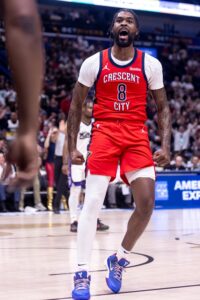 A team above the first tax apron is permitted to use up to $5,168,000 of the mid-level exception in 2024/25. Use a dollar more than that and the result is a hard cap at the first apron.
Crucially, this restriction applies not just to dollars but to years as well — a non-taxpayer mid-level signing can be for up to four years, but a taxpayer MLE signing can only cover one or two seasons. So signing a player to a three-year contract using the mid-level would hard-cap a team at the first apron, even if the player’s starting salary is only $3MM.
The Mavericks (Naji Marshall) are the only team to use more than the taxpayer portion of the MLE so far in 2024/25. The Clippers, Warriors, and Bulls figure to join that list once Derrick Jones‘, De’Anthony Melton‘s, and Jalen Smith‘s deals are official.
3. Uses any portion of the mid-level exception to acquire a player via trade or waiver claim.
Beginning in 2024/25, the non-taxpayer mid-level exception, the room exception, and the bi-annual exception can be used to acquire a player via trade or waiver claim. However, the taxpayer mid-level exception cannot.
That means if a team wants the flexibility to operate over the first apron, it can’t use its mid-level exception to trade for a player, even if that player is earning less than the taxpayer portion of the MLE ($5,168,000).
This is why, for instance, the Nuggets – who are operating in first apron territory – couldn’t realistically trade for Russell Westbrook ($4,027,525) using their taxpayer MLE (which would hard-cap them at the first apron), but they’re able to use it to sign a free agent (Dario Saric).
4. Acquires a player via sign-and-trade.
This is another pretty straightforward rule, and one that’s been around for a while. No team can operate above the first apron if they’ve received a player in a sign-and-trade deal.
The Mavericks (Klay Thompson), Warriors (Buddy Hield and Kyle Anderson), Nets (Shake Milton), Hawks (Cody Zeller), and Wizards (Jonas Valanciunas) all fit into this category so far, and the Kings will join them when their sign-and-trade for DeMar DeRozan becomes official.
5. Signs a player who was waived during the regular season and whose pre-waiver salary was higher than the non-taxpayer mid-level exception.
It’s important to note that this rule, designed to regulate the buyout market, only applies if the player is waived after the regular season begins. So after Chris Paul ($30MM salary) was cut on June 30, there were no teams prohibited from signing him. But if Paul had remained on that contract and then been waived during the regular season, only teams operating below the aprons would have been permitted to sign him.
The non-taxpayer mid-level exception this season is $12,822,000, so if a player earning even a single dollar more than that amount is waived during the season, this restriction will apply to whichever team signs him.
6. Uses an outgoing player (or multiple players) in a trade for matching purposes to take back more than 100% of the outgoing salary.
It would be simpler to say “take back more salary you send out in a trade and you’re hard-capped at the first apron,” but that’s not quite accurate.
For instance, when a team uses cap room to accommodate extra incoming salary in a trade, no hard cap is created. So the Pistons didn’t hard-cap themselves at the first apron when they traded Quentin Grimes ($4,296,682) and took back Tim Hardaway Jr. ($16,193,183) into their cap space. If the Pistons had been operating over the cap and took advantage of the NBA’s salary-matching rules to trade Grimes for a player earning $6MM, that would have hard-capped them at the first apron. But salary-matching wasn’t necessary to take on Hardaway.
Here’s another exception to the rule. Let’s say the Suns trade Nassir Little ($6,750,000) and in return receive one player earning $6.5MM and another player who is in the second year of a two-year, minimum-salary contract (with a cap hit of about $2.4MM). That’s permitted, even though the Suns are a second-apron team taking on more total money in the deal than they’re sending out. Little is earning more than the first player, and his salary isn’t required for matching purposes for the second player, who can be acquired “separately” using the minimum salary exception.
A team is always permitted to use the minimum salary exception to trade for a player whose contract fits into that exception, regardless of the team’s proximity to the aprons.
Essentially, this rule comes down to whether the team is using its outgoing player(s) for the purposes of matching the incoming salary. If so, the incoming salary can’t exceed the outgoing amount by even a single dollar.
The Wizards (Malcolm Brogdon), Thunder (Alex Caruso), Raptors (Sasha Vezenkov), Pelicans (Dejounte Murray), Mavericks (Thompson), and Warriors (Hield/Anderson) are among the teams who have become hard-capped at the first apron in 2024/25 as a result of this rule (if they weren’t already hard-capped for another reason).
This rule also applies to non-simultaneous trade exceptions. A non-apron team that holds a non-simultaneous trade exception is given a $250K allowance above that exception’s amount, but an apron team isn’t permitted to take advantage of that allowance. Doing so would create a hard cap at the first apron.
For example, when the Wizards acquired Valanciunas via sign-and-trade, they used a trade exception worth approximately $9.8MM to give him a starting salary of $9.9MM, taking advantage of that extra $250K in wiggle room. Exceeding the TPE amount hard-capped them at the first apron, though that hard cap would have existed anyway due to the fact that they were taking on Valanciunas via sign-and-trade.
7. Uses a traded player exception generated during the previous offseason or regular season.
A non-simultaneous trade exception can be used anytime for one year after it’s generated, but that time frame becomes significantly condensed for apron teams. Once a team’s season ends and its offseason begins, a team operating above the first apron is not permitted to use a TPE that was created during the preceding regular season or the previous offseason.
For example, the Heat are currently operating above the first tax apron, which means the two trade exceptions they created last July ($9.45MM for Victor Oladipo and $7.24MM for Max Strus) aren’t available to them, and neither is the $6.48MM exception they generated in January by trading Kyle Lowry. Those TPEs are essentially “frozen” and would become available again if Miami moves below the first apron before they expire.
However, an apron team can use a trade exception if it was created since the regular season ended. The Timberwolves, for instance, generated a TPE worth $2.54MM when they traded Wendell Moore to Detroit. That exception is available to them, but the $4MM TPE they created in February for trading Troy Brown isn’t.
As our tracker shows, the Hawks, Nets, Mavericks, Rockets, and Raptors have each used a trade exception this summer that was generated prior to the end of the regular season, so they’re hard-capped at the first apron for 2024/25 (all five teams also made other moves that resulted in that hard cap).
Second apron
A team becomes hard-capped at the second tax apron ($188,931,000) by making any of the following moves:
1. Uses any portion of the mid-level exception to sign a player to a contract.
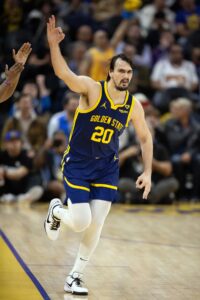 The mid-level exception is not available at all to teams operating above the second apron, so a team that uses any portion of it – even an amount well below the taxpayer limit – to sign a player becomes ineligible to surpass the second apron for the rest of the season.
While no team has officially made a taxpayer mid-level signing yet, the Nuggets are on track to do so with Saric (as noted above), which will hard-cap them at the second apron.
2. Aggregates two or more players in a trade for salary-matching purposes.
“Aggregating” players doesn’t mean simply including them in the same trade — it means combining their salaries for matching purposes in that trade. A team operating above the second apron could make a deal sending out multiple players for one, as long as only one of them is required for salary-matching (and the incoming player is earning less than that outgoing player).
For instance, the Suns could send out Little ($6.75MM) and David Roddy ($2.85MM) for one player earning $6.5MM, since Little’s salary matches for the incoming player, so he and Roddy don’t need to be aggregated together.
When the Kings traded Davion Mitchell ($5.06MM) and Vezenkov ($6.34MM) to Toronto in a deal for Jalen McDaniels ($4.52MM), it didn’t hard-cap Sacramento at the second apron because Mitchell and Vezenkov weren’t aggregated — Mitchell matched McDaniels’ lesser incoming salary on his own.
Let’s say Mitchell’s and McDaniels’ salary figures had been flipped, so McDaniels was the one earning a little more. In that scenario, Sacramento likely would’ve opted to aggregate Mitchell and Vezenkov, even though Mitchell’s salary on his own would have been legally enough to match McDaniels’ incoming figure — not aggregating them and using Mitchell as the sole matching piece would have meant the Kings were taking back more than 100% of his salary, hard-capping them at the first apron.
This is the issue the Knicks ran into in their Mikal Bridges trade with the Nets. Bojan Bogdanovic‘s $19MM+ salary was technically enough to legally match Bridges’ incoming $23.3MM figure, but taking back more than 100% of Bogdanovic’s outgoing money would’ve hard-capped New York at the first apron. The Knicks instead chose to aggregate Milton ($2,875,000) and Mamadi Diakite‘s partial guarantee ($1,392,150) with Bogdanovic’s salary to get to $23.3MM and hard-cap themselves at the second apron instead.
It’s important to note that the team’s position relative to the apron upon the conclusion of the trade (not before the trade) dictates this rule.
Let’s say a team is operating $2MM above the second tax apron and wants to aggregate a $15MM player with a $20MM player for a single player earning $30MM. That would be permitted, since the move would reduce the team’s salary by $5MM, bringing it $3MM below the second apron once the trade is completed. The club would then be prohibited from surpassing the second apron again for the rest of the league year.
The Knicks (for Bridges) and the Pelicans (for Murray) are the only teams so far this season who have aggregated salaries in a trade. But New Orleans is already hard-capped at the first apron, so New York is the lone club hard-capped at the second apron as the result of aggregation.
3. Sends out cash in a trade.
This rule is new, but it’s pretty simple. Send out any amount of cash in a trade and you’re hard-capped for the rest of that league year.
This rule goes into effect as soon as the regular season ends, so a team that sent out cash this June became hard-capped for the rest of 2024/25, even though the league year change didn’t technically occur until July 1. The Hawks, Mavericks, and Thunder each sent out cash in June, which would’ve hard-capped them at the second apron for ’24/25 (all three teams made other moves that ultimately hard-capped them at the first apron instead).
The Pacers and Hornets are the only two teams to this point who are hard-capped at the second apron as a result of sending out cash. Several other teams have traded cash but are hard-capped at the first apron for other reasons.
4. Sends out a player via sign-and-trade and uses that player’s outgoing salary to take back a contract.
Under the new CBA, there are restrictions facing not just a team that acquires a player via sign-and-trade but to a team that sends out a player via sign-and-trade. That team isn’t allowed to take back salary using the outgoing signed-and-traded player for matching purposes.
For example, the Timberwolves are currently operating over the second apron, so when they signed-and-traded Anderson to Golden State, they would’ve been prohibited from taking back a player in that transaction using Anderson’s $8.78MM salary as a matching piece.
If the Wolves were to acquire an incoming player in that deal using another legal exception (such as the minimum salary exception or the aforementioned Moore TPE), that would have been permitted. But Anderson’s outgoing salary couldn’t be used to match.
The Knicks (Milton) and the Pelicans (Zeller) are the two teams so far this season that used an outgoing signed-and-traded player for matching purposes in a deal. The Bulls will join them as a result of the DeRozan sign-and-trade.
5. Sends out a player via sign-and-trade and uses the resulting traded player exception to acquire a player via trade or waiver claim.
This is basically the other half of the previous rule. Not only could the Timberwolves not take back salary for Anderson in the same deal in which they signed-and-traded him, but they also can’t use the non-simultaneous trade exception generated by his outgoing $8.78MM salary, even though it was newly created this offseason. Using that exception would hard-cap Minnesota at the second apron for the rest of 2024/25.
Besides Minnesota, only the Pelicans (Valanciunas) have created a non-simultaneous trade exception for a signed-and-traded player this offseason. The Bulls will also have one once the DeRozan deal is official.
Heat Re-Sign Haywood Highsmith
5:25pm: The signing is official, the team tweets.
12:10pm: The Heat have agreed to re-sign free agent forward Haywood Highsmith, agent Jerry Dianis tell Adrian Wojnarowski of ESPN (Twitter link).
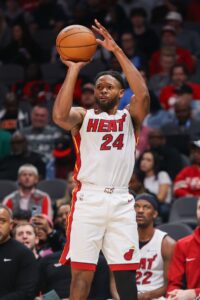 Highsmith will receive a two-year, $11MM deal to remain in Miami, per Wojnarowski. The full amount is guaranteed, with no team or player option on the second year, Woj adds (Twitter link).
“We’ve been consistent with Miami with how Haywood felt,” Dianis told Ira Winderman of The South Florida Sun Sentinel (Twitter link). “And we felt he wanted to be in Miami. This deal memorializes that.”
Highsmith, who is 6’7″ with a seven-foot wingspan, earned a rotation role in Miami over the last two seasons due primarily due to his defense. However, he has gradually developed into more of a threat on the offensive end, having set new career highs in points per game (6.1), field-goal percentage (46.5%), and three-point percentage (39.6%) while averaging 20.7 minutes per contest across 66 games (26 starts) in 2023/24.
The No. 36 free agent on our top-50 list, Highsmith reportedly drew interest from rival suitors during free agency. According to Barry Jackson of The Miami Herald (Twitter link), the Bucks and Suns – both of whom were limited to minimum-salary offers – were among the teams pursuing the 27-year-old, with Damian Lillard joining Milwaukee’s recruiting efforts.
However, Highsmith had spoken multiple times in the spring about his desire to remain in Miami. The Heat were limited in their ability to offer much more than the two-year, $11MM contract they put on the table due to their proximity to the second tax apron — and their desire to remain below that apron.
According to cap expert Yossi Gozlan (Twitter link), the club projects to have about $1.5MM in breathing room below the second apron, with 14 players on guaranteed contracts. That suggests, barring additional roster moves, that the 15th roster spot may remain open entering the season.
Raptors Re-Sign Immanuel Quickley To Five-Year Deal
JULY 8: The Raptors have announced the new contract with Quickley (Twitter link).
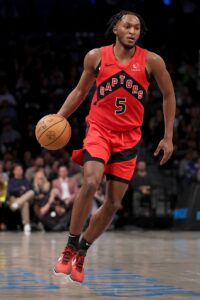 “Immanuel embodies so many things that are important to our team,” team president Masai Ujiri said. “… He wants to win and he will be a Raptor for years to come. We are very high on I.Q. – our point guard of the future.”
JUNE 28: Immanuel Quickley, a restricted free agent this offseason, intends to re-sign with the Raptors, according to Shams Charania of The Athletic, who reports (via Twitter) that the guard will receive a five-year contract worth $175MM.
Quickley, the Sixth Man of the Year runner-up in 2022/23, was the centerpiece of the Raptors’ return in the OG Anunoby trade with the Knicks in December, arriving in Toronto midway through the season along with RJ Barrett.
The fourth-year guard averaged 18.6 points, 6.8 assists, and 4.8 rebounds per game with a .395 3PT% in his first 38 games as a Raptor, establishing himself as part of the team’s long-term future.
As we wrote when we ranked Quickley seventh in our list of this summer’s top 50 free agents, Tyler Herro (four years, $120MM, plus incentives), Jordan Poole (four years, $123MM, plus incentives), and Devin Vassell (five years, $135MM, plus incentives) were expected to be a few points of comparison for the guard’s contract negotiations this summer.
While it remains to be seen if Quickley’s $175MM will be fully guaranteed, the 25-year-old appears poised to land a bigger payday than any of those players by securing an annual average value of $35MM per year.
It’s the second major financial commitment the Raptors will make to a cornerstone piece this summer. The team also reportedly intends to sign Scottie Barnes to a five-year rookie scale extension that will begin in 2025/26 and will be worth a projected $225MM.
Neither deal can become official until July, and Toronto may not rush to formally complete Quickley’s deal, since his cap hold is just $12.5MM. If they end up operating under the cap, the Raptors can use up all their room while keeping that hold on their books, then go over the cap using Quickley’s Bird rights to sign him to his new deal.
Quickley is the fifth free agent in the top 10 of our top-50 list to reach an agreement with his team during the new exclusive negotiating window between the end of the NBA Finals and the official start of free agency on June 30. He joins Anunoby, Pascal Siakam, Nic Claxton, and Malik Monk as players who have agreed to remain with their current teams. The other players in our top 10 are Paul George, Tyrese Maxey (who is considered a lock to remain in Philadelphia), LeBron James, DeMar DeRozan, and James Harden.
Contract Details: George, Martin, Wiseman, Isaac, Hield, More
Following the end of the July moratorium on Saturday, teams wasted no time in officially finalizing many of the contracts they’d agreed to up until that point.
Now that those contracts have been completed, we have the official details on many of them. Here, via several reporters – including Keith Smith of Spotrac, Michael Scotto of HoopsHype, and cap expert Yossi Gozlan – as well as our own sources, are some of those notable details:
Players with trade kickers:
Lakers forward LeBron James (15%), Knicks forward OG Anunoby (15%), Sixers forward Paul George (15%), Sixers forward Caleb Martin (15%), Mavericks sharpshooter Klay Thompson (15%), and Mavericks forward Naji Marshall (5%) received trade kickers on their new free agent deals, while Celtics guard Derrick White (15%) got one on his contract extension.
As an aside, James’ exact starting salary in 2024/25 is $48,728,845, which is $1,258,873 below the maximum he could have earned.
Players who waived their right to veto a trade:
A player who re-signs with his team on a one-year contract (or two-year contract with a second-year option) is typically awarded the right to veto a trade, but has the option to waive that option.
Heat center Thomas Bryant, Rockets guard Aaron Holiday, Raptors wing Garrett Temple, and Magic teammates Gary Harris and Moritz Wagner all surrendered their right to veto a trade in 2024/25 and could be moved freely.
Unlikely incentives:
Nets center Nic Claxton ($97MM base + $3MM incentives), Pacers forward Obi Toppin ($58MM +$2MM), Suns forward Royce O’Neale ($42MM +$2MM), and Sixers forward Martin ($35,040,704 + $5,256,106) are among the players whose contracts include unlikely bonuses that would boost the total guaranteed salary if those incentives are reached.
As cap expert Albert Nahmad observes, the structure of Martin’s contract helped the 76ers maximize their cap room, since his unlikely incentives don’t count toward the cap once he signs.
It wouldn’t surprise me if Martin’s “unlikely” incentives are easier to earn than a typical player’s incentives would be — I don’t expect them to be for making an All-Star team or anything like that. An incentive is considered unlikely for cap purposes if the player wouldn’t have met the criteria the year before. For example, as Nahmad suggests, a bonus related to Martin making 24 or more starts would be considered unlikely because he started 23 games last season. Martin’s bonuses – considered “unlikely” for cap purposes but perhaps “likely” to be earned in reality – could have served as a way to strengthen the Sixers’ offer without sacrificing that extra cap room.
It’s also worth noting that a player’s unlikely incentives can’t exceed 15% of his guaranteed base salary, and Martin’s $5,256,106 in incentives represent exactly 15% of his overall $35,040,704 salary.
Partial or non-guarantees and options:
James Wiseman‘s two-year, minimum-salary contract with the Pacers is guaranteed for $500K in year one, with a team option for 2025/26. That team option would be guaranteed for $569,041 if exercised (ie. the same percentage as his first-year salary).
Luka Garza got a similarly structured two-year, minimum-salary deal with the Timberwolves, except his first year is fully guaranteed prior to his second-year team option. That 2025/26 option would be guaranteed if picked up.
As previously reported, Isaiah Hartenstein‘s three-year, $87MM deal with the Thunder includes a team option for 2026/27. It’s worth $28.5MM, with $58.5MM in guaranteed money across the first two seasons.
Magic teammates Harris ($7.5MM) and Wagner ($11MM) each have second-year team options on their two-year deals.
The Rockets used their full bi-annual exception to give Holiday a two-year deal worth $9,569,400 that includes a second-year team option ($4,901,400).
Neemias Queta‘s three-year, minimum-salary contract with the Celtics is fully guaranteed in year one with a partial guarantee of exactly 50% ($1,174,789 of $2,349,578) in year two, plus a third-year team option for 2026/27. The third-year option ($2,667,944) would be guaranteed for 50% ($1,333,972) if exercised. Since his minimum deal covers more than two years, a team wouldn’t be able to acquire Queta via the minimum salary exception if he’s traded down the road.
Jonathan Isaac‘s new long-term deal with the Magic is partially guaranteed ($8MM of $14MM) in 2026/27, with non-guaranteed salaries of $14.5MM in 2027/28 and $15MM in 2028/29. However, each of those salaries would become fully guaranteed if Isaac plays at least 52 games in the prior season. For instance, if Isaac were to appear in 54 games in 2026/27, his $14.5MM salary for ’27/28 would be fully guaranteed.
Sign-and-trade contracts:
Interestingly, Kyle Anderson‘s and Buddy Hield‘s new contracts with the Warriors have the exact same salaries for the first three seasons: $8,780,488, $9,219,512, and $9,658,536. Anderson’s three-year deal is fully guaranteed for the first two years and non-guaranteed in year three.
As for Hield, his four-year contract is fully guaranteed for the first two years, with a partial guarantee of $3MM for year three. His fourth year is a $10,097,560 player option that would be partially guaranteed for $3,136,364 if exercised.
Klay Thompson’s three-year contract with the Mavericks comes in at exactly $50MM, as reported — it starts at $15,873,016 and features 5% annual raises.
Jonas Valanciunas‘ three-year contract with the Wizards is worth $30,295,000 in total, beginning at $9.9MM (which is the amount of the trade exception generated for the Pelicans). It’s fully guaranteed for the first two seasons and non-guaranteed in year three.
Cody Zeller got a three-year, $11,025,000 deal in the sign-and-trade that sent him from New Orleans to the Hawks. The first year is guaranteed for $3.5MM, with two non-guaranteed seasons after that.
Finally, as part of the Mikal Bridges trade, new Nets guard Shake Milton got a three-year, $9,162,405 contract that has a guaranteed first-year salary of $2,875,000, with two non-guaranteed years after that ($3MM in 2025/26 and $3,287,406 in ’26/27). His teammate Mamadi Diakite, who was also sent to Brooklyn in the trade, had his $2,273,252 salary partially guaranteed for $1,392,150.
Milton’s $2,875,000 salary, Diakite’s $1,392,150 partial guarantee, and Bojan Bogdanovic‘s $19,032,850 salary add up to $23.3MM, which is equivalent to Bridges’ salary — the exact amount of outgoing salary the Knicks needed to send to avoid being hard-capped at the first tax apron.
Sixers Sign Tyrese Maxey To Five-Year Max Contract
JULY 7: The signing is official, according to a team press release.
 “Tyrese subscribes to the philosophy that every day is a chance to get one percent better and he’s proven that and then some in his first four seasons in the NBA,” top exec Daryl Morey said. “He comes from an amazing family and is one of the hardest workers I’ve ever met. … This extension is a reflection of our belief in Tyrese and I can’t wait to watch his continued evolution as a leader and superstar.”
JULY 1: As expected, the Sixers and restricted free agent guard Tyrese Maxey have reached an agreement in principle on a five-year, maximum-salary contract, sources tell ESPN’s Adrian Wojnarowski (Twitter link).
As our breakdown of the maximum salaries for 2024/25 shows, Maxey’s new deal will start at $35,147,000 (25% of this year’s salary cap) and will be worth a total of $203,852,600. It’ll be fully guaranteed, with no option in year five, Wojnarowski adds (via Twitter).
Maxey initially became eligible for a rookie scale extension last July, but word broke just over a year ago that the Sixers wouldn’t be pursuing a new deal with the rising star at that time, since they wanted to maximize their cap room for 2024.
By letting Maxey reach free agency instead of extending him early, Philadelphia is carrying a cap hold worth just $13MM for the guard this summer instead of having him on the books for $35MM+, which helped clear the path for the team to land Paul George on a maximum-salary contract.
After Maxey agreed to put off his payday by a year, there was always an expectation that the 76ers would take care of him in restricted free agency, but he made that decision even easier by leveling up as the club’s lead guard in 2024/25 following the early-season trade of James Harden.
Maxey averaged 25.9 points, 6.2 assists, and 3.7 rebounds in 37.5 minutes per game across 70 outings (all starts) this past season, posting a shooting line of .450/.373/.868. The performance earned him the 2024 Most Improved Player award.
The No. 2 free agent on our top-50 list, Maxey is the third player in the 2024 FA class to agree to a maximum-salary contract this summer, joining his new teammate George and Pacers forward Pascal Siakam. Lakers star LeBron James could join that group in the coming days, though the terms of his next deal remain up in the air as L.A. considers its roster options.
If he had made an All-NBA team this season, Maxey would’ve qualified for a contract that started at up to 30% of this year’s cap instead of 25%, increasing his potential earnings to $244.6MM. While he did earn All-NBA votes, the 23-year-old finished a little outside of the top 15, missing out on meeting the Rose Rule criteria.
The 76ers will use up all their cap room before going over the cap to officially re-sign Maxey using his Bird rights.
Cavs Sign Donovan Mitchell To Three-Year Extension
JULY 7: The extension is official, according to a team press release.
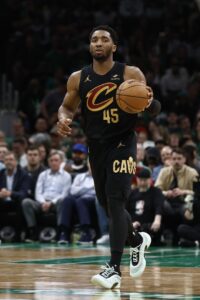 “Signing Donovan Mitchell to an extension serves as a pivotal moment for our franchise and reinforces our vision and goals for sustainable success,” Cavs president Koby Altman said. “Donovan is one of the most dynamic All-NBA players in the league and we couldn’t be more excited that he chose Cleveland and this community to continue his basketball journey. We want to align ourselves with the best teams in the NBA and ultimately compete for championships, and we feel securing Donovan long-term provides us that opportunity.”
JULY 2: The Cavaliers and star guard Donovan Mitchell have agreed to terms on a three-year, maximum-salary contract extension projected to be worth more than $150MM, reports Adrian Wojnarowski of ESPN. The deal will include a third-year player option, Wojnarowski adds.
Mitchell, who spent his first five NBA seasons in Utah, was traded to Cleveland in 2022 for a significant package of assets that included Lauri Markkanen and three future unprotected first-round picks. Since joining the Cavs, Mitchell has led the team to consecutive top-four seeds in the East and has averaged 27.5 points, 5.2 assists, and 4.6 rebounds in 35.6 minutes per night across 123 regular season games, with a shooting line of .475/.378/.866.
There was plenty of speculation over the past two years that playing outside of a major NBA market and not experiencing significant postseason success may prompt Mitchell to forgo an extension in Cleveland in order to seek a change of scenery. The Cavs were eliminated in the first round in 2023 and eked out a first-round win in Game 7 over the lower-seeded Magic in 2024 before being knocked out in round two.
However, Cleveland has long projected confidence that Mitchell would make a commitment to the franchise, with head of basketball operations Koby Altman publicly reiterating that message on Monday. The coaching change the Cavs made this offseason signaled that management was in alignment with Mitchell, who reportedly didn’t have full confidence in J.B. Bickerstaff and endorsed the hiring of Kenny Atkinson.
Within his full story on the extension agreement, Wojnarowski writes that Mitchell and agent Austin Brown feel good about the partnership with the Cavs and have confidence in the front office’s ability to continue building the roster into a championship contender
Mitchell’s new contract – which will begin in 2025/26, replacing the player option in his current agreement – could have been for up to four years. However, a three-year extension with a player option will put him on track to potentially sign a new deal beginning in 2027, when he has 10 years of NBA experience and will qualify for a maximum salary worth 35% of the cap (instead of 30%). Michael Scotto of HoopsHype first reported last month that Mitchell would likely take this route.
Based on the NBA’s most recent cap projection for 2025/26, Mitchell’s new deal would start at $46,394,100, with a guaranteed $50,105,628 salary for ’26/27 and a $53,817,156 player option for ’27/28. The total would be $150,316,884.
Now that they know they’ll have Mitchell under contract for at least the next three seasons, the Cavaliers can move forward with plans to address the rest of the roster around him.
There were rumors in the spring that the team may consider trades to address the overlapping skill sets in the backcourt (Mitchell and Darius Garland) and frontcourt (Evan Mobley and Jarrett Allen) and to better balance the roster. On top of that, one report indicated that a Mitchell extension might prompt Garland’s agent – Rich Paul – to talk to the team about the possibility of finding a new home for his client.
However, Altman indicated in May that he’s not inclined to trade any of the club’s core four players, and reports since then have confirmed that stance hasn’t changed. Additionally, as Chris Fedor of Cleveland.com recently pointed out (via Twitter), some of the teams that were considered likely suitors for Garland have already addressed their point guard spot in other ways (e.g. Dejounte Murray in New Orleans; Chris Paul in San Antonio).
Kings Sign Jordan McLaughlin To One-Year Deal
JULY 9: McLaughlin has officially signed with the Kings, according to the NBA’s transaction log. It’s a minimum-salary deal, Hoops Rumors has confirmed.
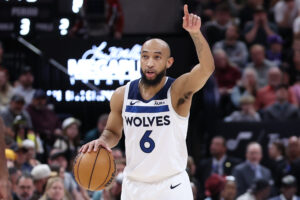 JULY 7: The Kings and free agent point guard Jordan McLaughlin have agreed to a one-year contract, agent Greg Lawrence tells Adrian Wojnarowski of ESPN (Twitter link). Sean Cunningham of FOX 40 Sacramento (Twitter link) was the first to report that the two sides were nearing a deal.
McLaughlin, 28, has spent all five of his NBA seasons to date with the Timberwolves, providing backcourt depth behind the team’s various starting point guards — he has come off the bench in 235 of 242 career regular season outings. In 2023/24, the former USC standout averaged 3.5 points and 2.0 assists in 11.2 minutes per game across 56 appearances.
While McLaughlin’s counting stats are modest, he does a good job taking care of the ball, having averaged just 0.3 turnovers per game last season, and is a solid shooter. His .472 3PT% in ’23/24 was an outlier, but he has made 36.9% of his career three-point attempts.
McLaughlin will give Sacramento another option behind De’Aaron Fox in a backcourt that will no longer feature former lottery pick Davion Mitchell, who was traded to Toronto in June.
While terms of the agreement have yet to be reported, the Kings project to have little breathing room below the luxury tax line once they complete their sign-and-trade deal for DeMar DeRozan, so I’d expect McLaughlin to sign for the veteran’s minimum. For a player with his five years of experience, that would work out to a salary of about $2.43MM for him, with Sacramento carrying a cap hit of approximately $2.09MM.