
2017 NBA Contract Extension Tracker
So far this offseason, we’ve been keeping close tabs on the way teams are acquiring new players, tracking free agent signings, draft pick signings, draft-and-stash deals, two-way contracts, and trades. However, there’s another form of transaction worth monitoring: contract extensions.
Extensions, of course, don’t involve adding a new player to the roster. By extending a contract, a team ensures that a current player will remain locked up for multiple years to come. While it may not change the club’s outlook on the court, it can have a major impact on that team’s salary cap situation — in terms of total value, the extensions signed this summer by James Harden and John Wall rank among the largest new contracts.
While rookie scale extensions are the most common form of contract extension, no fourth-year player has signed a rookie scale extension so far this offseason. Andrew Wiggins is expected to do so soon though, and there are many other players eligible for new deals up until the October 16 deadline. It’s common for about six to eight players entering the final year of their respective rookie contracts to sign extensions before the October deadline, and I wouldn’t expect this year to be any different.
[RELATED: Players eligible for rookie-scale extensions]
While they’re generally less common than rookie-scale extensions, veteran extensions are happening a little more frequently these days, with the league’s new Collective Bargaining Agreement expanding the rules for eligibility and creating some additional incentives for star players to sign new deals before they reach free agency. So far this offseason, each new contract extension signed has been a veteran extension.
Listed below are the players who have finalized contract extensions so far in the 2017/18 league year. This list, which can be found on the right-hand sidebar under “Hoops Rumors Features” on our desktop site (or on the “Features” page in our mobile menu) will be kept up to date throughout the offseason, and even into the ’17/18 season, if any veteran players ink an extension at that point.
Veteran extensions:
- Russell Westbrook (Thunder): Five years, 35% maximum salary (story). Starts in 2018/19.
- James Harden (Rockets): Four years, 35% maximum salary (story). Starts in 2019/20.
- John Wall (Wizards): Four years, 35% maximum salary (story). Starts in 2019/20.
- Robert Covington (Sixers): Four years, $60MM (story). Includes renegotiation for 2017/18. Extension starts in 2018/19.
- LaMarcus Aldridge (Spurs): Two years, $50MM (story). Starts in 2019/20.
- Norman Powell (Raptors): Four years, $41.965MM (story). Starts in 2018/19.
- Josh Richardson (Heat): Four years, $41.965MM (story). Starts in 2018/19.
Rookie scale extensions:
- Andrew Wiggins (Timberwolves): Five years, 25% maximum salary (story). Starts in 2018/19.
- Joel Embiid (Sixers): Five years, 25% maximum salary (story). Starts in 2018/19. Includes injury protections.
- Gary Harris (Nuggets): Four years, $74MM (story). Starts in 2018/19.
- T.J. Warren (Suns): Four years, $47MM (story). Starts in 2018/19.
- Check out our in-depth look at 2017’s rookie scale extensions for more details.
Community Shootaround: Remaining Free Agents
Tony Allen and Shabazz Muhammad agreed to new deals within the last week, while Dante Cunningham appears set to follow suit, further reducing the number of appealing players on the unrestricted free agent market. Meanwhile, on the restricted free agent front, we finally saw some movement this week, with Mason Plumlee and the Nuggets reaching an agreement on a multiyear contract.
As our list of 2017 free agents shows, there are still some intriguing players available, particularly on the restricted market, where Alex Len, JaMychal Green, and Nikola Mirotic remain unsigned. However, the Suns, Grizzlies, and Bulls all have plenty of flexibility to bring back their own RFAs, so those players are good bets to remain with their current teams, like Plumlee and Nerlens Noel did before them.
The unrestricted market features less upside — there are former first-round picks in their mid-20s out there, such as Trey Burke, Thomas Robinson, and Derrick Williams, but those guys appear to have settled into roles as back-end rotation players, barring a late and unexpected leap.
The most interesting names on the UFA market are veterans with a little more experience, including Deron Williams, Monta Ellis, and Aaron Brooks in the backcourt. Gerald Green, Matt Barnes, and Alan Anderson may also have some appeal for teams in need of a swingman. Up front, veteran centers like Andrew Bogut, Spencer Hawes, and Roy Hibbert are still looking for work [Update: Bogut has agreed to sign with the Lakers], while power forwards like David Lee and Kris Humphries also seek new homes.
We shouldn’t count on any of those players to be the difference between winning and losing a playoff series next spring, but some of them could still have a little value, particularly on low-risk, minimum salary contracts.
What do you think? Which of the remaining free agents would you invest in? Are there any teams that you think would be particularly good fits for any available FAs? Or do you think clubs would be better off passing on this group of players in favor of a G League call-up or an undrafted rookie?
Jump into the comment section below to share your thoughts on the remaining players from this year’s free agent class.
Hoops Rumors’ 2017 NBA Free Agent Tracker
With NBA training camps around the corner, teams are finalizing their preseason rosters, and Hoops Rumors is here to help you keep track of which players signed new contracts this offseason. To that end, we present our Free Agent Tracker, a feature we’ve had each year since our inception in 2012. Using our tracker, you can quickly look up deals, sorting by team, years, salary, and a handful of other variables.
A few notes on the tracker:
- Some of the information you’ll find in the tracker will reflect reported agreements, rather than finalized deals. As signings become official, we’ll continue to update and modify the data.
- Similarly, contract years and dollars will be based on what’s been reported to date, so in many cases those amounts will be approximations rather than official figures. Listed salaries aren’t necessarily fully guaranteed either — deals marked with a † symbol are primarily non-guaranteed.
- A restricted free agent who agrees to or signs an offer sheet will be included in the tracker, but the team won’t be specified until his original club matches or passes on the offer sheet, in order to avoid confusion.
- Two-way contracts and draft pick signings aren’t included in the tracker.
- Click on a player’s name for our full report on his deal.
- If you’re viewing the tracker on mobile, be sure to turn your phone sideways to see more details.
Our 2017 Free Agent Tracker can be found anytime on the right sidebar under “Hoops Rumors Features,” and it’s also under the “Tools” menu atop the desktop site. You can find it on the “Features” page in our mobile menu. It will be updated throughout the offseason, so be sure to check back for the latest info. If you have any corrections, please let us know right here.
Our lists of free agents by position/type and by team break down the players who have yet to reach contract agreements.
Five Key Lingering NBA Offseason Questions
NBA training camps are right around the corner, but several pieces of offseason business remain unsettled around the league. Here are some leftover offseason storylines to watch, with regular season openers just a month away:
1. Who will sign contract extensions before opening night?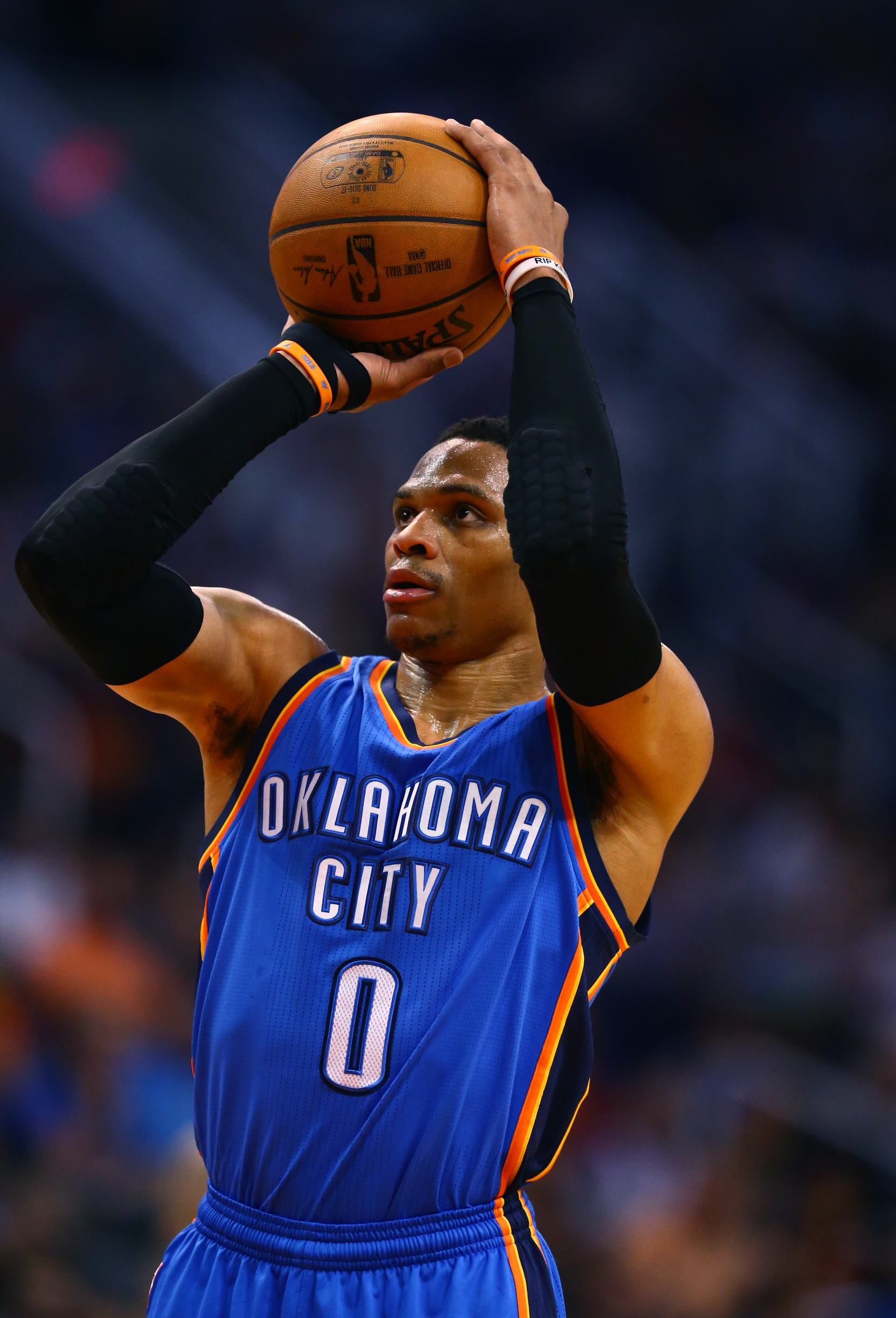
Two maximum salary extension offers are reportedly on the table at the moment — the Thunder are ready to sign Russell Westbrook to a Designated Veteran Extension, and the Timberwolves are prepared to lock up Andrew Wiggins to a five-year rookie scale extension. Since max contracts don’t require much negotiating, they often get finalized fairly early in the offseason, so it’s somewhat surprising that Westbrook and Wiggins have yet to put pen to paper, but they still have a few more weeks to do so.
Outside of those two players, it’ll be worth keeping an eye on several other candidates for rookie scale extensions in the coming weeks. Fourth-year players like Jabari Parker, Joel Embiid, Clint Capela, Gary Harris, Jusuf Nurkic, Marcus Smart, Zach LaVine, and Rodney Hood are eligible for new deals, and will be on track for restricted free agency in 2018 if they don’t re-up with their respective teams this year. Under the new CBA, the deadline for rookie scale extensions has been moved up to the day before opening night, so teams will have until October 16 to sign their extension-eligible players.
2. Who will be traded before opening night?
It appears increasingly likely that one of the summer’s primary subjects of trade speculation – Carmelo Anthony – will open training camp as a Knick. It should be fascinating to see if Anthony and the Knicks can bury the hatchet once camp begins, or if the two sides only become more motivated to get something done at that point.
Anthony is the most notable trade candidate out there, but other teams around the league figure to explore preseason deals after seeing their new-look rosters in action. Last year in September and October, for instance, the Bucks pulled off a pair of trades that had a major impact on their 2016/17 rotation, acquiring Michael Beasley from the Rockets and Tony Snell from the Bulls.
3. When – and where – will the remaining restricted free agents sign?
Four restricted free agents remain on the market, with Nikola Mirotic (Bulls), JaMychal Green (Grizzlies), Alex Len (Suns), and Mason Plumlee (Nuggets) all seeking out new deals. Given the lack of teams with cap room around the league, those players have limited leverage, and it’s possible that a couple of them will take the Nerlens Noel route and sign their one-year qualifying offers, hoping to cash in as unrestricted free agents in 2018.
October 1 looms as a key date for these restricted free agents — that’s the last day for an RFA to sign his qualifying offer, unless his team agrees to extend that deadline. If a player doesn’t sign his qualifying offer or work out a multiyear deal by October 1, he remains a restricted free agent, but no longer has that QO as a fallback option, further limiting his options.
[UPDATE: Plumlee has agreed to re-sign with the Nuggets.]
4. When – and where – will the remaining unsigned draft picks sign?
As our list of draft pick signings shows, there are two second-rounders whose 2017/18 outlook remains unclear. One is Grizzlies big man Ivan Rabb, the 35th overall pick, whose status may depend on what happens with restricted free agent JaMychal Green. If Green returns to Memphis, there may not be room on the roster this season for Rabb — the club already has 15 guaranteed salaries, and a Green signing would increase that total to 16. In that case, perhaps a deal overseas or a stint in the G League would be in Rabb’s future, though that outcome may not thrill his agent.
Meanwhile, the Rockets have yet to indicate a direction for 43rd overall pick Isaiah Hartenstein. International basketball reported David Pick suggested back in July (via Twitter) that Hartenstein is likely to start the year with the Rio Grande Valley Vipers, Houston’s G League affiliate, but there are a number of different ways that could happen. It remains to be seen whether the Rockets will sign Hartenstein to an NBA contract and assign him to the G League, ink him to a two-way contract (they have one open slot), or have him sign a straight G League contract.
5. Which players on rookie scale contracts will have third- or fourth-year team options declined?
This storyline figures to extend a couple weeks into the regular season, since NBA teams have until October 31 to decide whether to exercise or decline 2018/19 team options on rookie-scale players entering their second or third NBA seasons. We’ve listed those players here.
Of course, many of those will be no-brainers — D’Angelo Russell, Jamal Murray, and Karl-Anthony Towns aren’t about to have their options declined. But there are some trickier decisions worth keeping an eye on. For instance, will the Bulls pick up Cameron Payne‘s fourth-year option, guaranteeing his salary for the 2018/19 season? Considering they’re in rebuilding mode and gave up a considerable haul at the trade deadline to acquire Payne, the Bulls are probably a good bet to exercise that option. But it’s not a lock, given Payne’s injury history, not to mention how bad he looked down the stretch last season for the Bulls.
Photo courtesy of USA Today Sports Images.
Weekly Mailbag: 9/11/17 – 9/17/17
We have an opportunity for you to hit us up with your questions in this, our weekly mailbag feature. Have a question regarding player movement, the salary cap or the NBA draft? Drop us a line at HoopsRumorsMailbag@Gmail.com.
Are the Spurs keeping LaMarcus Aldridge? Any trade rumors? — ROBZ, via Twitter
The rumors of an Aldridge deal heated up around the draft, when San Antonio reportedly had discussions with at least three teams about taking on the veteran big man. The Spurs were hoping to acquire a top five pick and trim salary to make a run at Chris Paul or another elite free agent, so obviously those motivations no longer exist. There have been persistent rumors that Aldridge is unhappy in San Antonio and would prefer a larger role in the offense like he had in Portland, so don’t count on him finishing his career with the Spurs. However, he will make nearly $21.5MM this year and has a player option worth more than $22.3MM for 2018/19, so any deal would require a major financial commitment. San Antonio may see how the season plays out, then revisit trade scenarios closer to the February deadline.
Do you think Carmelo Anthony will stay put for the whole season as he has reached out to his Knicks teamates in preparation for start of the season? Besides, he controls his situation as he has a no-trade clause in his contract and Houston hasn’t budged for his trade request. — Greg Dizon
It has been a game of chicken all summer with the Rockets, Knicks and Anthony, and we’re coming up on an important date as training camps open next week. The parties are as entrenched as ever, with Anthony determined to go to Houston, the Knicks wanting more than Ryan Anderson in return and the Rockets sticking by their offer with no luck in finding another team to make the deal work. Knicks management seems willing to bring Anthony into camp and hold onto him until a favorable offer emerges. We’ll see how that plays out, but New York is rebuilding and doesn’t want to be stuck with Anthony’s nearly $28MM salary for 2018/19. Every day he spends with the Knicks carries a risk of injury that would make that unavoidable.
Will Nikola Mirotic be back in Chicago? — Ernesto, via Twitter
Mirotic is among the latest victims to be stuck in restricted free agent limbo, and it looks like it might carry into the season, just as it did for Donatas Motiejunas last year. Mirotic skipped EuroBasket this year to concentrate on working out, and recently tweeted a photo of himself with 22 pounds of extra muscle. Mirotic was inconsistent during his three years in Chicago and was briefly relegated to the bench last season, so it’s not clear if the rebuilding Bulls even want him back. This will probably drag out until somebody makes him an offer; then the Bulls will have to decide if it’s worth matching.
Community Shootaround: New Playoff Teams
Change is constant, especially in the NBA. It wasn’t long ago that the Bulls and Pacers seemed like perennial playoff contenders in the East and the Jazz were a rising power in the West.
Gordon Hayward single-handedly changed the fortunes in Utah when he left for greener pastures in Boston. Chicago reacted to a string of disappointing seasons by trading Jimmy Butler to Minnesota. And Indiana didn’t want to be left empty handed when Paul George reached free agency, so the All-Star forward was shipped to Oklahoma City.
But for every team on the decline, there are others on the rise. The bottom half of the Eastern playoff picture was already jumbled before the offseason started, and some young teams looked ready to challenge the traditional powers in the West.
With training camps about a week away, let’s examine some of last year’s non-playoff teams that might be ready for the postseason:
- Sixers: It’s rare that a team has two Rookie of the Year candidates, but Philadelphia enters this season with the top picks in the last two drafts in Ben Simmons and Markelle Fultz. Assuming good health, which has been an issue with the Sixers, both should have significant roles on a talented young team. Free agent additions J.J. Redick and Amir Johnson will bring some playoff experience, but Philly’s fortunes fall mainly on the health of Joel Embiid, who was limited to 31 games last season as team doctors were reluctant to take any chances with his surgically repaired right foot.
- Hornets: Charlotte acquired Dwight Howard at a bargain price, and the former All-Star will try to rebuild his reputation as he joins his third team in three years. The Hornets needed a defensive anchor on an otherwise fine team that actually scored more points than it gave up a year ago, despite winning just 36 games. ESPN’s real plus-minus rating projects 44.1 wins and a fifth-place finish in the East for Charlotte.
- Heat: Miami nearly rallied to make the playoffs after a horrible start to last season and was able to retain its key free agents. The Heat have a solid core with Goran Dragic, Dion Waiters, Hassan Whiteside, James Johnson and the return of Justise Winslow, and have an outside chance of signing Dwyane Wade once his buyout in Chicago is complete.
- Nuggets: Denver was probably the best team that missed the playoffs last season, finishing one game behind Portland for the final spot in the West. Everyone knows about the talent of Nikola Jokic, but a series of shrewd drafts has given the Nuggets plenty of young talent to surround him with. The offseason signing of power forward Paul Millsap may be the addition Denver needed to challenge the West’s top teams.
- Timberwolves: Few organizations had a better offseason than Minnesota, which now has veteran talent to team with Karl-Anthony Towns and Andrew Wiggins. Butler was the big addition, of course, as he upgrades the team on both offense and defense. Adding Jeff Teague, Taj Gibson and Jamal Crawford allowed the Wolves to take a huge step forward in rebuilding.
- Pelicans: Anthony Davis and DeMarcus Cousins never seemed to mesh after New Orleans acquired “Boogie” at the All-Star break, but with a full offseason and training camp to prepare, we’ll find out if that experiment can work. The Pelicans upgraded their depleted backcourt by signing Rajon Rondo and Ian Clark this summer, and recently added defensive force Tony Allen.
How many of these teams are playoff ready, and should some others be added to the list? Please share your thoughts in the space below.
Hoops Rumors Originals: 9/9/17 – 9/16/17
Every week, the Hoops Rumors writing team compiles original content to complement our news feed. Here are our segments and features from the past seven days:
- We’re hiring! Check out our job posting for details on what we’re looking for and how to apply.
- We published the first installment of our 2018 NBA free agent power rankings, with LeBron James and Kevin Durant leading the way.
- We compiled our early list of 2019 NBA free agents, which we’ll continue to keep updated until the summer of ’19 as players are released or sign new contracts.
- Many players without fully guaranteed contracts will have all or part of their salaries guaranteed before the January 10 deadline. We put together a full breakdown of those guarantee dates.
- Austin Kent examined a pair of candidates for rookie scale contract extensions this week, taking a closer look at Rockets big man Clint Capela and Trail Blazers center Jusuf Nurkic.
- Austin also recapped his Hoops Rumors Retro series, which will have more installments coming soon.
- In his weekly mailbag, Arthur Hill discussed the Rockets, the Celtics, and Jabari Parker. If you have a question you want answered in this Sunday’s mailbag, be sure to submit your question to HoopsRumorsMailbag@Gmail.com.
- There are 15 NBA teams with a two-way contract slot available. We identified those clubs in this story.
- With training camps fast approaching, we shone a light on the five NBA teams only carrying 12 players with fully guaranteed contracts.
- We polled Hoops Rumors readers on whether the Raptors, Wizards, Bucks, and Nuggets would go over or fall under their projected 2017/18 win totals. Voting on the Nuggets will close very shortly, so make your pick now!
- Our Community Shootaround discussions this week focused on NBA coverage trends and the league’s new “statement” jerseys.
- If you don’t have it already, be sure to download the Trade Rumors app for iOS/Android and give it a try.
Hoops Rumors Seeking Part-Time Writers
We’re looking to add part-time contributors to the Hoops Rumors writing team. The position pays on an hourly basis. Applicants must meet the following criteria:
- Exceptional knowledge of all 30 NBA teams, with no discernible bias. We want you to be as comfortable writing about Fred VanVleet and Nicolas Brussino as you would be writing about LeBron James and Kevin Durant.
- Knowledge of the salary cap, the collective bargaining agreement, and transaction-related concepts.
- At least some college education.
- Extensive writing experience, with professional experience and a background in journalism both preferred.
- Keen understanding of journalistic principles, ethics, and procedures. Completion of basic college-level journalism classes is preferred.
- Attention to detail — absolutely no spelling errors, especially for player and journalist names.
- Ability to follow the site’s style and tone.
- Ability to analyze articles and craft intelligent, well-written posts summing up the news in a few paragraphs. We need someone who can balance quick writing with thoughtful analysis. You must be able to add value to breaking news with your own insight, numbers, or links to other relevant articles.
- Ability to use an RSS feed reader. Ability to use Twitter. Both of these are crucial.
- Availability. You must have strong weeknight and weekend availability, along with the ability to work at least one or two regular shifts per week.
- Flexibility. You must be available to work on short notice.
If you’re interested, email hoopsrumorsparttimers@gmail.com by Friday, September 22 (4:00pm central time) and take a couple paragraphs to explain why you qualify and stand out. Many will likely apply, so unfortunately we cannot respond to every applicant.
2018 NBA Free Agent Power Rankings
The list of 2017 free agents continues to dry up, which means it’s time to shift our focus to the group of players on track to reach the free agent market in 2018. We’ve got a full list of those 2018 free-agents-to-be, divided by position and FA type, and a separate list that sorts them by team.
Since we’re still more than nine months away from the 2018 free agent period opening, those lists look a little more star-studded now than they’ll end up being. A handful of top-tier restricted free agents figure to sign extensions with their current teams before opening night in October, and it’s possible that a couple veterans will do so as well — Russell Westbrook, for instance, could ink a Designated Veteran Extension with the Thunder within the next month.
Still, even though not all of the top potential 2018 free agents will reach the open market – and not all of them will change teams if they do – the list includes enough big names that it should still look pretty impressive when next July rolls around.
Below, we’ve taken our first crack at ranking some of the top potential free agents for 2018. While this is our first extended look at 2018’s top free agents, it certainly won’t be our last. Extensions, injuries, breakout years, trades, and poor performances figure to affect these rankings over the course of the 2017/18 season, so we’ll be revisiting the list every month or two to make updates and changes.
Our list reflects each player’s current expected value on the 2018 free agent market, rather than how we think they’ll perform on the court for the 2017/18 season. For instance, older players like J.J. Redick and Dwyane Wade have solid short-term value, but didn’t make our top 20 because they’re unlikely to sign huge, long-term deals next summer. In other words, age and long-term value is important.
Here’s the first installment of our 2018 free agent power rankings:
 LeBron James, F, Cavaliers (player option): James will be 33 years old when he reaches free agency next summer, which normally would be enough to drop him a couple spots on this list. However, virtually any team in the league would still jump at the chance to give him as many years and dollars as possible next summer, since he has yet to show any real signs of slowing down.
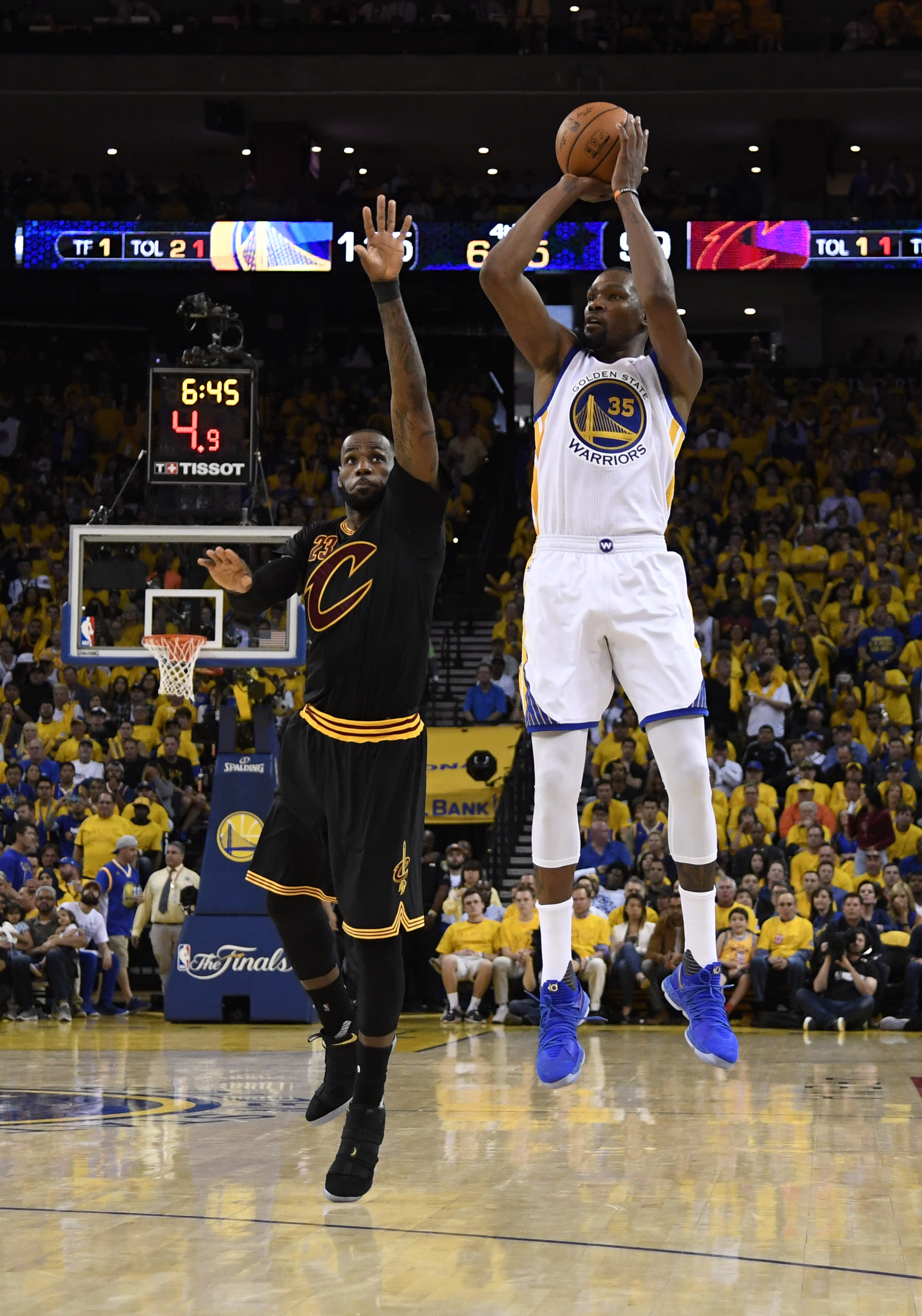
- Kevin Durant, F, Warriors (player option): Of all the players on this list, Durant is probably the least likely to change teams in 2018. He’s simply going year by year with the Warriors because it makes more sense than locking himself into a long-term deal — that decision allowed him to get a raise this offseason while forgoing his maximum salary to help Golden State re-sign other key players. Nonetheless, he remains on track to technically become a free agent in 2018, so he deserves this spot, if not the one LeBron is currently holding.
- Russell Westbrook, G, Thunder (player option): Four players this offseason were eligible for the NBA’s new Designated Veteran super-max contracts — Stephen Curry, James Harden, and John Wall all signed theirs, but Westbrook has yet to put pen to paper. If he does so before opening night, he’ll come off this list and the Thunder will breathe a little easier. If not, let the rumor-mill fun begin.
- Paul George, F, Thunder (player option): While the Thunder remain optimistic about locking up Westbrook, they have no misconceptions about extending George before next July. The former Pacers forward has been long rumored to be eyeing a move to the Lakers, but what happens this season in Oklahoma City – not to mention in Los Angeles – could go a long way toward determining if that’s really his best move nine months from now.
- Chris Paul, G, Rockets: Paul was a fixture in the top five of our 2017 free agent power rankings, but when an opportunity to be traded to the Rockets arose in June, he unexpectedly opted into the final year of his contract and put off free agency for another year. It sounds like both the Rockets and Paul expect to continue their relationship beyond the 2017/18 season, but we’ve yet to see the veteran point guard play a single game with his new club, so shouldn’t necessarily pencil CP3 into Houston’s lineup for years to come quite yet.
- DeMarcus Cousins, C, Pelicans: While the Kings never came out and said it, it appeared the team wasn’t fully comfortable committing to a max (and possibly a super-max) salary for Cousins’ next contract, opting to trade him before having to make that decision. Cousins’ performance this season in New Orleans may have a significant effect on how many other teams will be ready to make such a commitment. Few NBA big men can score like Cousins, who is even developing a reliable outside shot, but he has yet to play for a winner, and if he can’t break through with another superstar teammate (Anthony Davis), that may dampen some potential suitors’ enthusiasm.
- Andrew Wiggins, G/F, Timberwolves (RFA): It’s been a somewhat unusual summer for Wiggins, who was involved in several Kyrie Irving-related trade rumors and then fired his agent after receiving a five-year, maximum salary extension offer from the Wolves. Even if he’s at all put off by owner Glen Taylor requesting a face-to-face meeting before making that commitment, Wiggins seems pretty unlikely to turn down an offer of that magnitude, so I expect him to accept it and come off this list at some point soon.
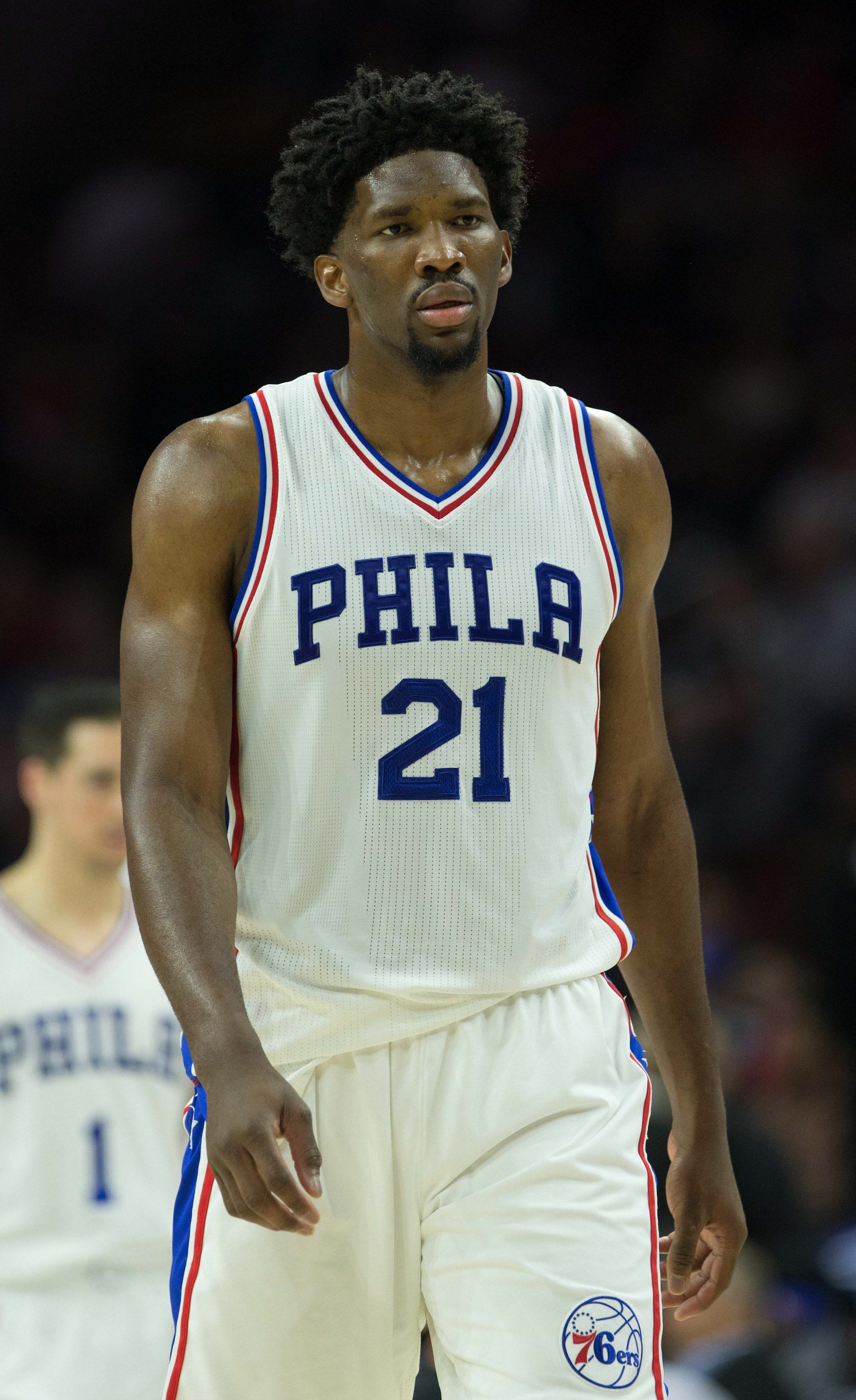
- Joel Embiid, C, Sixers (RFA): No potential 2018 free agent is trickier to evaluate than Embiid, who has famously only appeared in 31 NBA games during his first three years in the league. Of course, Embiid’s health will be a huge factor in determining whether he slips out of the top 10 during the 2017/18 season, or whether he climbs even higher. When he’s on the court, Embiid looks like the type of player who should have his pick of long-term, maximum salary offers at 12:01am on July 1. If he battles injuries once more though, those offers may be for a shorter term or packed with games-played incentives — and if his health issues get even worse, those offers may not be on the table at all.
- Avery Bradley, G, Pistons: Bradley isn’t at the same level as guys like Kyrie Irving or Gordon Hayward, so it makes sense that the Celtics were willing to part with him in order to secure more All-Star caliber talent. But Bradley is a dynamic two-way threat who shot 39.0% from three-point range and plays strong defense. That type of player is extremely valuable in today’s NBA, making him highly coveted on the open market in 2018.
- Gary Harris, G, Nuggets (RFA): Harris’ numbers don’t pop off the stat sheet, but neither did Otto Porter‘s, and Harris had a more effective third NBA season than the Wizards forward, who signed a maximum salary offer sheet earlier this year. Having just turned 23, Harris has plenty of room to improve on last year’s 14.9 PPG and .420 3PT%, and could be one of the hottest commodities on the RFA market next summer if the Nuggets don’t extend him this year.
Here’s the rest of our top 20:
- Jusuf Nurkic, C, Trail Blazers (RFA)
- Jabari Parker, F, Bucks (RFA)
- Clint Capela, C, Rockets (RFA)
- Isaiah Thomas, G, Cavaliers
- DeAndre Jordan, C, Clippers (player option)
- Zach LaVine, G, Bulls
- LaMarcus Aldridge, F/C, Spurs (player option)
- Brook Lopez, C, Lakers
- Carmelo Anthony, F, Knicks (player option)
- Rodney Hood, G, Jazz (RFA)
Disagree strongly with any of our rankings? Feel like we omitted any players that should be in the top 20 (or the top 10)? Weigh in below in the comments section to let us know!
Photos courtesy of USA Today Sports Images.
Extension Candidate: Jusuf Nurkic
After slowly establishing himself as one of the most efficient, low-usage big men in the NBA, Jusuf Nurkic got his first consistent opportunity to shine when the Nuggets shipped him off to the Trail Blazers partway through the 2016/17 campaign.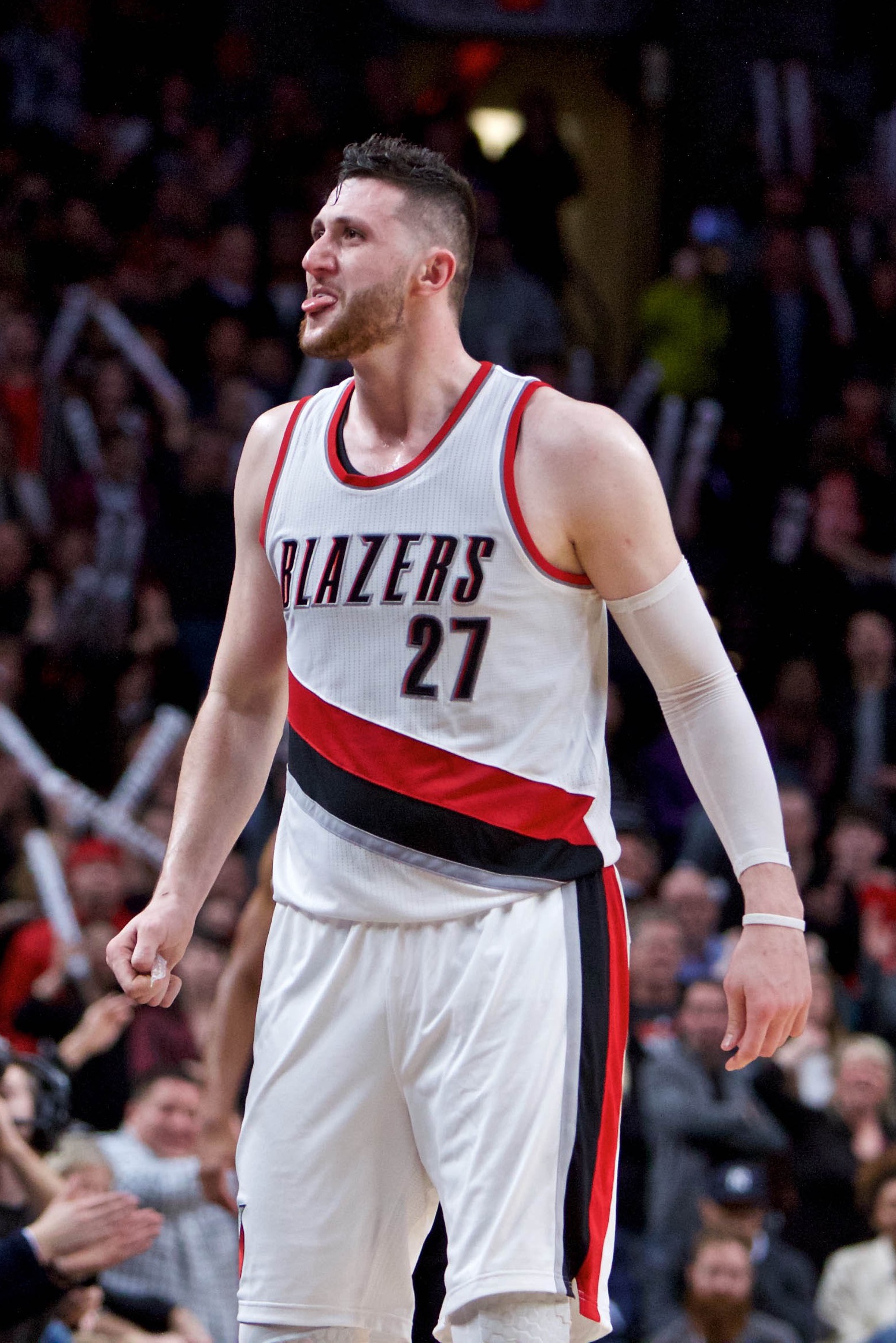
And shine he did.
It’s not Nurkic’s fault that Nikola Jokic caught up to him and surpassed him on Denver’s depth chart last season but, regardless, it was Nurkic’s value that seemed to dissipate over night. Fast forward to the end of the campaign and there’s more confusion than ever as to what the bruising low post threat really is worth in today’s NBA.
One can’t exactly blame the Nuggets for getting impatient and trading Nurkic for pennies on the dollar — there were clearly elements of addition by subtraction at play considering Nurkic’s reported attitude regarding his demotion in Denver. Still, they gave away a possible star to a division rival in exchange for Mason Plumlee, a 26-year-old with a considerably more modest ceiling.
Nurkic, just 23 years old, is entering the fourth year of his career this season and is thus eligible for a rookie extension prior to the October 16 deadline. There’s no consensus, however, about whether the Trail Blazers should rush out to sign him to one.
With few reported updates, other than Blazers general manager Neil Olshey saying that he doesn’t typically talk about ongoing contract negotiations, there’s no clear sense as to whether locking Nurkic in long-term is even a priority of the organization.
On one hand, Nurkic hit the ground running in Portland, averaging 15.2 points and 10.4 rebounds per game over the course of his 20-game stint with the Blazers post-trade.
The inflated numbers aren’t just the byproduct of a particularly motivated young player either, Nurkic’s 18.7 points and 12.8 rebounds per 36 were only slightly higher than the 15.3 points and 12.0 rates he posted through two and a half years with Denver.
So, yes, Nurkic knows how to fill a stat sheet and, even better, his production contributed to tangible success with his new club. In his taste of action with Portland, the Blazers went 14-6. As Joe Freeman of the Oregonian wrote at the time, the club soared with Nurkic in the lineup, his presence solidifying the squad’s offerings on both ends of the court.
Alas, the sudden arrival of the dominant young big man was, in at least one sense, too good to be true. In late March, Nurkic fractured his right leg and missed the remainder of the 2016/17 season, including the club’s four-game sweep at the hands of the eventual NBA champion Warriors.
Whether the non-displaced fibular fracture was the result of a seven-footer in supposedly sub-optimal condition being suddenly thrust into the heaviest workload of his career or an omen of things to come, the fact that he missed the last chunk of the season is a concern.
While Nurkic’s injury isn’t as catastrophic as the words “out for the remainder of the season” may seem – a similar issue set Steve Nash back a total of 24 games… at age 38 – this isn’t Nurkic’s first significant injury and that’s something that could impact whether the Blazers do or do not offer him a sizable contract earlier than they need to.
If Nurkic can return to the court healthy and put forth 70-plus games at the same standard as last season, it’s hard to imagine him having any trouble finding suitors as a restricted free agent next summer. In that regard, locking him in now could potentially save the organization money in the long run.
The risk, however, may not be worth it.
A more pragmatic approach would be to wait for Nurkic’s borderline cult-like following to normalize over the course of a full season. Then with a larger sample size on which to base expectations, Olshey and company could decide whether or not that’s a direction they want to take the franchise.
Worst case scenario, Nurkic struggles to stay on the court next season and Portland walks away unscathed. Best case scenario, Nurkic Fever continues to sweep the Pacific Northwest and the Blazers are socially obligated to max out a 24-year-old franchise talent that already thrives with the teams existing star backcourt just as they hit their respective primes.
There are worse fevers to succumb to.
Photo courtesy of USA Today Sports Images.