
NBA Roster, Contract Deadlines To Watch In October
After a couple quiet months around the NBA, October is full of important deadlines for roster and contract decisions. Here’s our round-up of the dates to keep an eye on this month:
Regular season roster decisions
The 2024/25 regular season tips off on Tuesday, October 22, which means teams must set their rosters for the season by 4:00 pm Central time on Monday, October 21. To be in accordance with regular season roster limits, a team must be carrying no more than 15 players on standard contracts and three on two-way deals.
While teams have until Oct. 23 to set their their regular season rosters, many clubs will make their final cuts on or before Saturday, October 19. That’s the final day that a team can waive a player on a non-guaranteed contract and avoid paying any of his salary.
[RELATED: 2024/25 Non-Guaranteed Contracts By Team]
Because a player gets paid for the time he spends on waivers, a player who is cut on Monday, Oct. 21 wouldn’t clear waivers until Wednesday, Oct. 23, the second day of the regular season. That means that even if his contract is non-guaranteed, he’d earn two days’ worth of his salary.
Teams who intend to waive players with partially or fully guaranteed salaries are in better position to wait until the Monday before the regular season begins. For instance, if the Pacers decide to cut James Johnson, who has a $750K partial guarantee, it wouldn’t matter if they do so on October 19 or 21 — he’d receive his $750K either way.
However, if the Pacers want to waive Cole Swider, whose salary is entirely non-guaranteed, they’d likely do so on the Saturday. Waiting until the Monday would mean paying him $23,994 (2/174ths of his $2,087,519 salary).
Two-way contract conversions
A player on an Exhibit 10 contract can have his deal converted into a two-way contract, but only up until Monday, October 21, the day before the regular season begins.
If a player on an Exhibit 10 contract remains on his team’s roster through that Monday without being converted to a two-way, his Exhibit 10 deal would become a standard non-guaranteed contract.
Since most players on Exhibit 10 contracts will be waived on or before October 19, it’s worth keeping tabs on which of them hang onto their roster spots through that Saturday — those players will be good bets to have their deals converted into two-ways or perhaps even to claim a 15-man roster spot.
Contract extensions
The deadline for a player to sign a rookie scale extension is Monday, October 21 at 5:00 pm Central time.
As of today, four of the 24 players who were eligible for a rookie scale extension entering the offseason have signed one, leaving 20 players who still may be seeking new deals that would keep them off the 2024 free agent market.
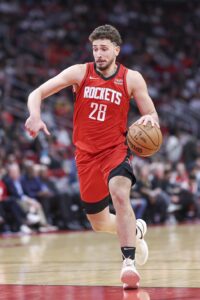 Rockets center Alperen Sengun, Pelicans wing Trey Murphy, Hawks forward Jalen Johnson, and Warriors forward Jonathan Kuminga are a few of the notable rookie scale extension candidates to keep an eye on in the coming weeks.
It’s a safe bet that several players eligible for rookie scale extensions will sign them — in each of the past four offseasons (2020 through 2023), at least 10 players have done so, with a record-setting 14 rookie scale extensions signed a year ago.
As for veteran extension candidates, a player who is extension-eligible and who is in the final year of his current contract can sign an extension at any time before or after the regular season begins, all the way up until June 30, 2025.
However, a player who is eligible for a veteran extension but who is not in a contract year will only be eligible to sign a new deal up until Monday, October 21.
For instance, Pelicans forward Brandon Ingram will remain eligible to sign a veteran extension even after the regular season begins, since he’s in the last year of his current contract. But Suns forward Kevin Durant, who has two guaranteed years left, can only sign an extension up until Oct. 21. After that, he’ll become ineligible to sign a new deal until next summer.
An extension-eligible veteran who holds an option for 2025/26 will remain extension-eligible after the season begins as long as his option is declined as part of any extension agreement, with his new contract beginning in ’25/26. A player like Nuggets forward Aaron Gordon would fit this bill.
Salary guarantee dates
The league-wide salary guarantee date to watch is January 7, 2025. A player on a non-guaranteed contract who isn’t waived by that date and doesn’t clear waivers before January 10 will have his 2024/25 salary become fully guaranteed.
However, certain players have contracts that call for them to receive partial or full guarantees at the start of the regular season. Our list of early salary guarantee dates shows which players fall into that boat on Tuesday, October 22, including Raptors center Bruno Fernando and Trail Blazers guard Dalano Banton, among others.
Rookie scale team option decisions
A team that wants to exercise its 2025/26 third- or fourth-year option on a player on a rookie contract must do so on or before Tuesday, October 31.
As our tracker shows, the Bulls and Heat have already made their option decisions, while the Celtics, Cavaliers, Timberwolves, Knicks, Sixers, and Suns don’t have any to make. But the NBA’s other 22 teams will have to pick up or turn down those rookie scale team options for ’25/26 in the coming weeks.
A team that retains a player without exercising his 2025/26 option would put that player on track for unrestricted free agency next offseason. At that point, his team wouldn’t be able to offer him a salary higher than what his option would have been worth, though rival suitors could offer him more than that.
NBA 2024 Offseason Check-In: Utah Jazz
Hoops Rumors is checking in on the 2024 offseason for all 30 NBA teams, recapping the summer’s free agent signings, trades, draft picks, departures, and more. We’ll take a look at each team’s offseason moves and consider what might still be coming before the regular season begins. Today, we’re focusing on the Utah Jazz.
This is the final installment of our Offseason Check-In series. All 30 articles can be found here.
Free agent signings
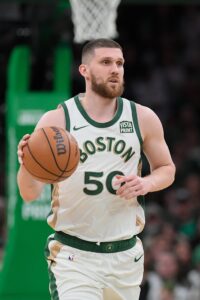 Svi Mykhailiuk: Four years, $15,050,000. Second and third years non-guaranteed. Fourth-year team option. Signed using cap room.
- Johnny Juzang: Four years, $11,425,252. Second, third, and fourth years non-guaranteed. Re-signed using Early Bird rights.
- Drew Eubanks: Two years, $9,750,000. Second year non-guaranteed. Signed using cap room.
- Patty Mills: One year, minimum salary. Signed using minimum salary exception.
- Max Abmas: One year, minimum salary. Non-guaranteed (Exhibit 10). Signed using minimum salary exception.
- Taevion Kinsey: One year, minimum salary. Non-guaranteed (Exhibit 10). Signed using minimum salary exception.
- Isaiah Wong: One year, minimum salary. Non-guaranteed (Exhibit 10). Signed using minimum salary exception.
- Keshawn Justice: One year, minimum salary. Non-guaranteed (Exhibit 10). Signed using minimum salary exception.
- Note: Justice was subsequently waived.
- Dane Goodwin: One year, minimum salary. Non-guaranteed (Exhibit 10). Signed using minimum salary exception.
- Note: Goodwin was subsequently waived.
- Babacar Sane: One year, minimum salary. Non-guaranteed (Exhibit 10). Signed using minimum salary exception.
- Note: Sane was subsequently waived.
Trades
- Acquired Russell Westbrook, the right to swap their own 2030 second-round pick for the Clippers’ 2030 second-round pick, the draft rights to Balsa Koprivica, and cash ($4.3MM) from the Clippers in exchange for Kris Dunn (sign-and-trade).
- Note: Westbrook was subsequently bought out.
Draft picks
- 1-10: Cody Williams
- Signed to rookie scale contract (four years, $24,897,090).
- 1-29: Isaiah Collier
- Signed to rookie scale contract (four years, $12,903,788).
- 2-32: Kyle Filipowski
- Signed to four-year, $12,000,000 contract. First two years guaranteed. Third year non-guaranteed. Fourth-year team option.
Two-way signings
- Taevion Kinsey
- Note: Kinsey was subsequently waived and re-signed to an Exhibit 10 contract.
- Micah Potter
- Oscar Tshiebwe
Departed/unsigned free agents
- Kris Dunn (Clippers)
- Talen Horton-Tucker (Bulls)
- Kira Lewis (Wizards)
- Luka Samanic (Fenerbahce)
Other moves
- Renegotiated and extended Lauri Markkanen‘s one-year, $18,044,544 contract. Increased 2024/25 salary by $24,131,856 to $42,176,400. Added four years, $195,868,144.
- Bought out Russell Westbrook.
- Waived Darius Bazley.
- Waived Kenneth Lofton.
- Waived Omer Yurtseven
Salary cap situation
- Went below the cap to use room.
- Now operating over the cap ($140.6MM) and below the luxury tax line ($170.8MM).
- Carrying approximately $144.8MM in salary.
- No hard cap.
- Full room exception ($8MM) available.
The offseason so far
Two days after the Jazz’s season ended in April, CEO Danny Ainge vowed that the team was prepared to go “big-game hunting” this offseason after finishing below .500 in back-to-back years.
It was an assertion that was met with some skepticism. After all, despite Utah’s consecutive seasons in the lottery, the team hadn’t drafted higher than ninth overall since its rebuild began, and while the front office was able to add some promising young prospects in the 2023 and 2024 drafts, none of them looks like the sort of franchise centerpiece the Jazz can build around for years to come.
It wasn’t a huge surprise then when reports indicated in July that the Jazz’s offseason efforts to acquire an impact player – such as Mikal Bridges – on the trade market had come up short. Giving up five first-round picks for Bridges was a logical next step for the Knicks, who were within a single win of an Eastern Conference Finals appearance in the spring and presumably considered themselves just a piece or two away from becoming true championship contenders.
Surrendering that sort of package for a player without an All-Star berth on his résumé would have made less sense for the Jazz, who would have been a playoff contender with Bridges on their roster but still wouldn’t have had enough talent to hang with the Western Conference’s very best teams.
It’s also hard to imagine Ainge – whose trades selling off the likes of Kevin Garnett, Paul Pierce, and Rudy Gobert are among the defining moves of his executive career – finding himself on the other end of that sort of deal, which would’ve put a major dent in the Jazz’s stash of future draft assets without making them an elite team.
The biggest decision of Utah’s offseason ultimately wasn’t whether or not to meet the substantial asking price for a trade target like Bridges — it was whether or not to turn star forward Lauri Markkanen into one of those trade chips himself.
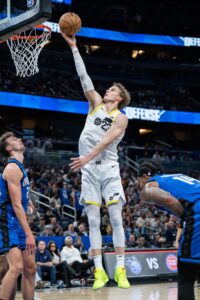 Markkanen’s situation this summer was an unusual and complex one. He was in the final year of a contract that was so far below his market value that any over-the-cap team acquiring him would’ve been unable to extend him prior to free agency, since they wouldn’t have been able to offer him more than a 40% raise on his expiring $18MM salary.
The only way to circumvent that restriction was to renegotiate (ie. increase) Markkanen’s 2024/25 salary, then to extend him off that new number. But cap room is required for a renegotiation, and the Jazz were one of the only teams with significant cap room available this summer. Renegotiating and extending Markkanen would have made him a more attractive trade chip for Utah, but it also would have made him ineligible to be dealt for six months.
Markkanen became renegotiation-eligible on August 6. He and the Jazz finalized a renegotiation and extension on August 7, ensuring that he won’t become eligible to be traded until February 7, one day after this season’s deadline.
Utah’s willingness to wait that extra day and still give Markkanen as much money as they possibly could on a long-term, maximum-salary contract signaled the team was comfortable with the idea of keeping the 2023 All-Star on its roster for at least the 2024/25 season. And the comments made publicly by both sides – at the time of the deal and since then – suggest they’re committed to continuing their relationship well beyond that, so we shouldn’t necessarily expect Markkanen to hit the trade block during the 2025 offseason.
The Jazz’s decision not to trade Markkanen is an understandable one. They’ve already been rebuilding for two years — moving Markkanen would’ve extended the process by at least a couple more seasons. And without the inability to extend him before trading him, they would’ve had to move him on an expiring contract, limiting their ability to maximize the return.
Still, a Markkanen trade would’ve clearly defined the Jazz’s direction, essentially guaranteeing that they’d retain the top-10 protected 2025 first-round pick they owe the Thunder and making them one of the leaders in the Cooper Flagg sweepstakes. With Markkanen on the roster, it’s possible the club will end up in the range of 30-40 wins for a third straight season, not quite good enough to earn a play-in spot and not quite bad enough to have a great shot at a franchise-changing player in the draft lottery.
The Markkanen extension was the most impactful move of a Jazz offseason that didn’t see them commit more than one guaranteed season to any other veteran signee. Svi Mykhailiuk, Johnny Juzang, Drew Eubanks, and Patty Mills all inked free agent contracts with the club, but none of them will earn more than $5MM in 2024/25 and all four could be off Utah’s books by ’25/26 if they don’t impress this season.
The most noteworthy offseason roster additions came in the draft, which saw the Jazz select three players in the top 32: Cody Williams at No. 10, Isaiah Collier at No. 29, and Kyle Filipowski at No. 32.
Williams holds real intrigue as a three-and-D wing if he can increase his shot volume without his percentage dropping off, while the Collier and Filipowski picks saw Utah roll the dice on a pair of prospects who dropped further than initially projected. At one point, both Collier and Filipowski were considered potential lottery selections.
Given that the Jazz’s front office will likely want to hang onto their top-10 protected first-round pick for 2025, I expect we’ll see this year’s crop of rookies and the 2023 first-rounders – Taylor Hendricks, Keyonte George, and Brice Sensabaugh – get plenty of run this season.
Up next
The Jazz are carrying 15 players on guaranteed contracts and none of them seem likely to be waived before the season begins, so the opening night roster decisions look pretty straightforward.
It’s always possible Utah will swap out one of its two-way players for someone new, but those three roster spots are occupied for now too.
Meanwhile, just two Jazz players are extension-eligible before the regular season begins: John Collins and Collin Sexton. I wouldn’t count on either veteran getting a new deal with two years left on his current contract, but Sexton is the better candidate of the two — I could envision a scenario in which he remains in Utah beyond his existing deal, whereas that’s harder to imagine for Collins.
NBA 2024 Offseason Check-In: Washington Wizards
Hoops Rumors is checking in on the 2024 offseason for all 30 NBA teams, recapping the summer’s free agent signings, trades, draft picks, departures, and more. We’ll take a look at each team’s offseason moves and consider what might still be coming before the regular season begins. Today, we’re focusing on the Washington Wizards.
Free agent signings
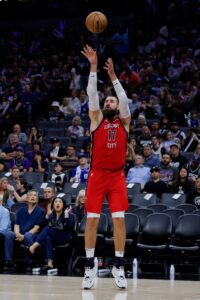 Jonas Valanciunas: Three years, $30,295,000. Third year non-guaranteed. Signed using Bird rights and acquired via sign-and-trade from Pelicans.
- Saddiq Bey: Three years, $19,000,000. Includes an additional $1MM in unlikely incentives. Signed using non-taxpayer mid-level exception.
- Anthony Gill: Two years, minimum salary ($4,784,366). Second year non-guaranteed. Re-signed using minimum salary exception.
- Leaky Black: One year, minimum salary. Non-guaranteed (Exhibit 10). Signed using minimum salary exception.
- Kira Lewis: One year, minimum salary. Non-guaranteed (Exhibit 10). Signed using minimum salary exception.
- Jaylen Nowell: One year, minimum salary. Non-guaranteed (Exhibit 10). Signed using minimum salary exception.
Trades
- Acquired the draft rights to Kyshawn George (No. 24 pick) from the Knicks in exchange for the draft rights to Dillon Jones (No. 26 pick) and the No. 51 pick in the 2024 draft.
- Acquired Malcolm Brogdon; the draft rights to Carlton Carrington (No. 14 pick); either the Trail Blazers’, Celtics’, or Bucks’ 2029 first-round pick (whichever is second-most favorable); the Warriors’ 2028 second-round pick; and the Trail Blazers’ 2030 second-round pick from the Trail Blazers in exchange for Deni Avdija.
- Acquired Jonas Valanciunas (sign-and-trade) from the Pelicans in exchange for the Bulls’ 2027 second-round pick (top-50 protected).
Draft picks
- 1-2: Alex Sarr
- Signed to rookie scale contract (four years, $51,036,398).
- 1-14: Carlton Carrington
- Signed to rookie scale contract (four years, $21,290,769).
- 1-24: Kyshawn George
- Signed to rookie scale contract (four years, $14,336,172).
Two-way signings
Departed/unsigned free agents
- Jules Bernard (Cavaliers)
- Tyus Jones (Suns)
Other moves
- Signed Richaun Holmes to a two-year, $25,929,058 veteran extension that begins in 2024/25. Second year partially guaranteed ($250K).
- Waived Landry Shamet.
- Waived Eugene Omoruyi.
Salary cap situation
- Operating over the cap ($140.6MM) and below the luxury tax line ($170.8MM).
- Carrying approximately $161.1MM in salary.
- Hard-capped at $178,132,000.
- Approximately $6.4MM of non-taxpayer mid-level exception available; full bi-annual exception ($4.7MM) available.
- Two traded player exceptions available (largest worth $12,402,000).
The offseason so far
When a new front office takes over an NBA team’s basketball operations department, that new group often has little attachment to the club’s incumbent players and looks to gradually fill the roster with its own guys. That’s especially true when the team is in rebuilding mode.
So while I didn’t necessarily expect the Wizards to move Deni Avdija this offseason, it wasn’t a huge surprise that top decision-makers Michael Winger and Will Dawkins decided to capitalize on Avdija’s career year in 2023/24 by cashing in on a player drafted by the previous regime whose value was at an all-time high.
We knew, based on reporting in the spring, that the Wizards, armed with the second and 26th overall selections in June’s draft, were looking to continue stockpiling picks — and specifically to add a third first-rounder for 2024. The Avdija deal helped them do just that. By sending the ascendant forward to Portland and taking on Malcolm Brogdon‘s $22.5MM expiring contract to help the Blazers get out of tax territory, Washington added two future second-round selections and a pair of first-rounders, including this year’s No. 14 overall pick.
It was a savvy trade by the Wizards, who may be able to flip Brogdon later this season for something of value. The veteran guard wasn’t a fit in a crowded Portland backcourt on a team with financial concerns, but he’s a career 39.1% three-point shooter who is just two years removed from winning a Sixth Man of the Year award. If he’s healthy, Brogdon should appeal to teams looking for backcourt help at this year’s trade deadline.
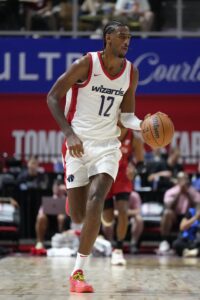 Using the No. 14 pick from that deal, the Wizards selected Pittsburgh guard Carlton Carrington, who flashed intriguing potential at the Las Vegas Summer League, averaging 15.8 points, 7.4 rebounds, and 5.2 assists in his five outings. Carrington joins No. 2 overall pick Alex Sarr and No. 24 selection Kyshawn George (the Wizards gave up their No. 51 pick to move up two spots from No. 26 for George) to make up Washington’s 2024/25 rookie class.
Sarr was considered by several experts to be the top prospect in this year’s draft, and while he didn’t exactly light it up in Vegas like Carrington did (Sarr made just 9-of-47 shots from the field, or 19.1%), the rangy 19-year-old center has the potential to be a long-term defensive anchor in D.C.
At age 20, George is actually the oldest of the Wizards’ three first-rounders, but like Carrington, he was a one-and-done college player who is still very early in his developmental process. The 6’7″ swingman showed off an effective outside shot (.408 3PT%) during his freshman year at Miami and could become a solid shooter and play-maker on the wing, though he’s unlikely to make a significant impact as a rookie.
Having added three youngsters as potential long-term building blocks, the Wizards spent the rest of their offseason focused on filling out their roster with veteran contributors who could make life a little easier for those prospects.
Most notably, the team worked out a sign-and-trade deal with New Orleans to add veteran center Jonas Valanciunas on a three-year contract worth about $10MM annually. Having a steady vet like Valanciunas at the five will allow Washington to take things slow with Sarr. I wouldn’t expect Valanciunas to be part of the Wizards’ next playoff team, but he’s a perfectly fine stopgap starter, and his contract is team-friendly enough to make him a potential trade chip — LeBron James and the Lakers were said to have interest in him this summer, so that could be something worth revisiting down the road.
The Wizards further fortified their frontcourt by bringing back Richaun Holmes on a two-year, $25.9MM extension. It may look like an odd move on the surface for a player who hasn’t logged significant minutes over the past two seasons, but Holmes’ new deal (which begins in 2024/25) replaces a $12.88MM player option and is almost entirely non-guaranteed in year two.
In other words, the Wizards are essentially paying Holmes the same total salary they would have if he’d simply picked up that option, but now he has a slightly lower year-one cap hit and what amounts to a team option for 2025/26. I wouldn’t expect that ’25/26 salary to become guaranteed, but if he recaptures his 2019-21 form, you never know. At the very least, it gives Washington more flexibility with the big man going forward.
The Wizards’ other unorthodox summer signing was to bring in former Pistons and Hawks forward Saddiq Bey on a three-year contract worth $19MM (plus another $1MM in incentives). Bey will likely miss most or all of the 2024/25 season while recovering from an ACL tear, which is perfectly fine with a Washington team not interested in pushing for a playoff spot right away.
Assuming Bey is back to 100% for the start of the ’25/26 campaign, he could be a bargain on the wing in the final two years of his contract — while he had a down year before the injury last season, the former first-rounder showed off a promising three-and-D skill set early in his career.
Up next
The Wizards are carrying 15 players on fully guaranteed contracts, but have some others on non-guaranteed deals who could make cases for roster spots in training camp and during the preseason. Jared Butler, who spent last season on the roster, is in that mix, as are Exhibit 10 camp invitees Kira Lewis, Jaylen Nowell, and Leaky Black.
While Exhibit 10 signees are often simply ticketed for the G League, Lewis and Nowell have several years of NBA experience under their belts and are no longer eligible for two-way deals, so I could see them getting consideration for a 15-man spot.
Patrick Baldwin, a former first-round pick who has played limited minutes across 69 total appearances in his two NBA seasons, could be the odd man out if one of the 15 players on guaranteed deals doesn’t make the team. Another 2022 first-rounder, Johnny Davis, also has an underwhelming NBA résumé so far, though he at least played well in Vegas in July, whereas Baldwin’s Summer League performance was inconsistent.
The Wizards do have a two-way slot available as well — Black is the only camp invitee who could be directly converted to fill it, but the team could look outside of the organization. Butler would also be eligible, though he’d have to be waived and re-signed.
Corey Kispert isn’t the only Wizard who is extension-eligible this fall, but he’s probably the only legitimate candidate for a new deal. He and the team have until October 21 to attempt to work out a rookie scale extension.
Kispert has steadily improved over the course of his three NBA seasons, having made 40.2% of his three-point attempts over the past two years. He’s the sort of player who would fit nicely on a lot of teams and who could generate real interest if he reaches free agency in 2025, so it would be in the Wizards’ best interest to lock him up now if they can get him at a reasonable price.
It’s worth noting that Kispert is another player who was drafted by the previous front office, which may reduce the odds of the two sides reaching a deal in the coming weeks. But like Avdija, who signed a rookie scale extension last fall, Kispert would be a valuable trade chip down the road if he’s on a favorable long-term contract and the Wizards ultimately decide he’s not in their plans.
NBA 2024 Offseason Check-In: San Antonio Spurs
Hoops Rumors is checking in on the 2024 offseason for all 30 NBA teams, recapping the summer’s free agent signings, trades, draft picks, departures, and more. We’ll take a look at each team’s offseason moves and consider what might still be coming before the regular season begins. Today, we’re focusing on the San Antonio Spurs.
Free agent signings
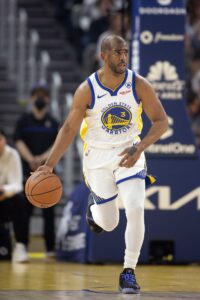 Chris Paul: One year, $10,460,000. Includes an additional $1,568,999 in unlikely incentives. Signed using cap room.
- Charles Bassey: One year, minimum salary. Re-signed using minimum salary exception. Waived right to veto trade.
- Sandro Mamukelashvili: One year, minimum salary. Re-signed using minimum salary exception. Waived right to veto trade.
- Brandon Boston Jr.: One year, minimum salary. Non-guaranteed (Exhibit 10). Signed using minimum salary exception.
- Malachi Flynn: One year, minimum salary. Non-guaranteed (Exhibit 10). Signed using minimum salary exception.
- Nathan Mensah: One year, minimum salary. Non-guaranteed (Exhibit 10). Signed using minimum salary exception.
- Riley Minix: One year, minimum salary. Non-guaranteed (Exhibit 10). Signed using minimum salary exception.
- Jameer Nelson Jr.: One year, minimum salary. Non-guaranteed (Exhibit 10). Signed using minimum salary exception.
- Note: Nelson was subsequently waived.
Trades
- Acquired the Timberwolves’ 2031 first-round pick and the right to swap 2030 first-round picks with the Timberwolves (top-one protected) in exchange for the draft rights to Rob Dillingham (No. 8 pick).
- Acquired the draft rights to Juan Nunez (No. 36 pick) and cash in exchange for the draft rights to Johnny Furphy (No. 35 pick).
- Acquired cash from the Hornets in exchange for Devonte’ Graham and the Pelicans’ 2025 second-round pick.
- Acquired Harrison Barnes and the right to swap 2031 first-round picks with the Kings in a three-team trade in exchange for RaiQuan Gray (two-way; to Bulls).
Draft picks
- 1-4: Stephon Castle
- Signed to rookie scale contract (four years, $41,351,699).
- 2-36: Juan Nunez
- Signed with Barcelona in Spain.
- 2-48: Harrison Ingram
- Signed to two-way contract.
Two-way signings
Departed/unsigned free agents
- Dominick Barlow (Hawks)
- Cedi Osman (Panathinaikos)
Other moves
- Waived Jamaree Bouyea (two-way).
Salary cap situation
- Went below the cap to use room.
- Now operating over the cap ($140.6MM) and below the luxury tax line ($170.8MM).
- Carrying approximately $145MM in salary.
- No hard cap.
- Full room exception ($8MM) available.
The offseason so far
After earning All-NBA votes and finishing as the runner-up for the Defensive Player of the Year award as a 20-year-old rookie, Victor Wembanyama is on a trajectory to become one of the league’s very best players sooner rather than later. However, the Spurs made it clear with their offseason moves that they won’t rush the process of building a contending team around him.
Rather than going all-in on win-now pieces or taking an extreme long-term view by surrounding Wembanyama with several more young prospects, San Antonio split the difference. The team entered June’s draft armed with a pair of picks in the top eight, but only kept the first of the two, using it to select guard Stephon Castle fourth overall and then sending the No. 8 pick to Minnesota in exchange for two far-off draft assets — an unprotected 2031 first-round pick and a top-one protected pick swap in 2030.
It’s a risky move, given the wide range of outcomes for those two assets. It’s entirely possible that the ’31 pick ends up in the 20s and the ’30 swap doesn’t get used at all.
But the logic behind the move makes sense. The 2024 draft class wasn’t particularly loaded, so that No. 8 pick was unlikely to produce a star; the Wolves – given their cap situation – are a team whose long-term sustainability is worth betting against; and the Spurs don’t necessarily need to bet on those picks to land in the top halves of the 2030 and 2031 drafts, since they could use them as trade chips well before that in order to add players who will complement Wembanyama as he enters his prime.
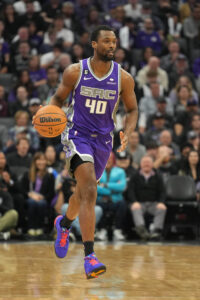 Adding two rookies to a young roster also might not have the been the best approach for optimizing Wembanyama’s development, which was certainly a consideration for the Spurs this offseason. That’s a key reason why the team used essentially all of its available cap room to bring in a pair of veterans: Chris Paul and Harrison Barnes.
Paul, who was waived by the Warriors so they could avoid guaranteeing his $30MM salary for 2024/25, ended up signing with San Antonio for about a third of that amount. The future Hall of Famer could have chosen to join one of any number of teams closer to title contention, but the opportunity to play for head coach Gregg Popovich and alongside a young phenom like Wembanyama made the Spurs an appealing option.
Wembanyama spent much of his rookie year playing next to “point guards” like Jeremy Sochan and Malaki Branham before veteran Tre Jones was eventually reinserted into the starting lineup. Sochan and Branham are promising young players, but they’re not point guards, as last year’s experimentation confirmed. Wembanyama was most effective offensively with Jones on the court, and should benefit tremendously from having either Jones or Paul running the offense in his second year.
Barnes won’t necessarily have the same sort of direct impact on Wembanyama’s on-court production, but the forward is a solid defender who should help make the big man’s life a little easier on that end of the floor. Wembanyama should also reap the benefits of Barnes’ and Paul’s knowledge and experience — the two veterans have a combined 31 NBA seasons and three Olympic gold medals under their belts, and Barnes has won a championship.
Outside of bringing back reserve free agent centers Charles Bassey and Sandro Mamukelashvili, the Spurs didn’t make any other moves of note this summer, but they’re well stocked with future draft picks that will put them in position to continue adding talent to this core, either by drafting players or using those picks as trade pieces.
Up next
With 15 players on standard guaranteed contracts and no players eligible for contract extensions, the Spurs are unlikely to have a particularly active October.
They’re only carrying a pair of players on two-way deals right now, so they have a decision to make on who will fill the third slot. Brandon Boston, Nathan Mensah, and Riley Minix are on the roster on Exhibit 10 contracts and could be candidates to have those deals converted to two-ways. Boston is probably the best candidate of the bunch if San Antonio wants a player capable of competing for minutes — he has appeared in 105 regular season games over the past three seasons for the Clippers.
The Spurs could also look outside the organization to fill that slot, either with a current free agent or with a player on another team’s roster who gets waived before the season begins.
It’s also worth noting that the Spurs are one of the few teams with a ton of flexibility below the luxury tax line, so they’re a good candidate to help accommodate a trade between two cap-strapped clubs, like the Hornets are doing in the Karl-Anthony Towns blockbuster.
Towns Trade Will Limit Knicks’ Flexibility Under Hard Cap
Exactly one year after the Bucks, Trail Blazers, and Suns completed a blockbuster trade involving Damian Lillard, Jrue Holiday, and Deandre Ayton, the Knicks and Timberwolves – with the help of the Hornets – were on the verge of finalizing a blockbuster of their own on Friday.
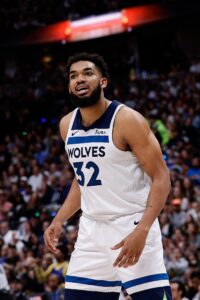 According to reports, Karl-Anthony Towns is headed to New York in exchange for a package that includes Julius Randle, Donte DiVincenzo, Keita Bates-Diop, and a protected first-round pick.
Our full story includes more details and analysis on the pending trade, but I want to focus here on what the deal will mean for the Knicks from a cap perspective in 2024/25.
Remember, the Knicks are already operating above the first tax apron and hard-capped themselves at the second apron in July by aggregating salaries in order to acquire Mikal Bridges from Brooklyn. A team that aggregates salaries in a trade isn’t permitted to surpass the second apron line of $188,931,000 for the rest of the 2024/25 league year.
Meanwhile, a club operating over the first apron can’t take back more salary than it sends out in a trade, which means the Knicks need to get to at least $49,205,800 in outgoing salary — that’s Towns’ cap hit for ’24/25.
So far, we know New York is sending Randle ($28,939,680), DiVincenzo ($11,445,000), and Bates-Diop ($2,654,644) to Minnesota. That works out to $43,039,324, meaning the Knicks need to add another $6,166,476 to the deal.
They’ll get about halfway there by signing-and-trading DaQuan Jeffries to Charlotte. His new contract will reportedly start in the neighborhood of $3MM, leaving the Knicks with another $3MM-ish to send out for matching purposes.
Bobby Marks of ESPN reported on Friday night (via Twitter) that Miles McBride isn’t being included in the Knicks’ package. The club also can’t add any more minimum-salary players to its package due to a rule that prevents teams from aggregating multiple minimum-salary contracts in bigger deals during the offseason. And it seems relatively safe to assume that key rotation players like Josh Hart and Mitchell Robinson aren’t being included or else that would have been reported already.
That leaves two options for the Knicks. They can get to the necessary salary-matching threshold by also sending out rookies Tyler Kolek ($2.09MM) and Pacome Dadiet ($1.81MM). But the preferred solution would be to sign-and-trade another player to the Hornets or another team, giving that player a salary in the $3MM range.
The Knicks still have cap holds on their books for Charlie Brown and Duane Washington, who both finished last season on two-way contracts with the team. Washington is playing for KK Partizan in Serbia, so Brown is the more logical sign-and-trade candidate.
Using his Non-Bird rights, the Knicks could give Brown a starting salary worth up to $2,685,229, which means Jeffries’ starting salary would need to be $3,481,247 in order for the club to reach the required outgoing salary total. In theory, that’s doable, since New York holds Jeffries’ Early Bird rights. However, base year compensation rules would apply to Jeffries in that scenario, meaning his full salary wouldn’t count for matching purposes.
In order to reach the matching threshold using Jeffries and Brown, the Knicks would have to bump Jeffries’ first-year salary all the way up to $6,962,494 — under BYC rules, his outgoing salary would count for 50% of that amount ($3,481,247).
But since Jeffries’ first-year salary was reported to be in the $3MM range, the plan may be to sign-and-trade him at that lower figure ($2,910,484 would work without triggering BYC rules) and add one more player to the package. Maybe it’ll be Kolek or Dadiet, or maybe the Knicks will figure out a way to extract Washington from his contract with Partizan in order to sign-and-trade him too. We’ll see.
The Hornets, meanwhile, are in position to take on Jeffries – and maybe Brown as well – without sending back any salary using their $8MM room exception. They would be the first team to take advantage of the new rules allowing teams to use certain exceptions (the non-taxpayer mid-level, the room, and the bi-annual) to acquire salary in a trade.
If we assume the trade is completed using Randle, DiVincenzo, Bates-Diop, and signed-and-traded players, the Knicks would be left with $185,351,521 in total salary for just 12 players. Their hard cap for the season is $188,931,000. That leaves just $3,579,479 in wiggle room, which is a bit of an issue.
The cap hit for any veteran free agent signing, including camp invitees like Marcus Morris, Landry Shamet, and Chuma Okeke, is $2,087,519. Rookies or players with just one year of experience can have smaller minimum-salary cap hits, but they still count for tax and apron purposes as $2,087,519 players. That “tax variance” rule is meant to prevent teams from passing over veteran free agents in favor of younger ones solely for financial reasons.
Carrying two minimum-salary free agents into the regular season would cost over $4MM for apron purposes, pushing the Knicks above their hard cap. So that won’t be possible unless the team makes another salary-shedding trade that would cost them a rotation player. There’s no indication that’s the plan.
The Knicks could start the season with just 13 players on standard contracts, but they’d only be allowed to do that for up to two weeks before being required to add a 14th man.
So what are their options for that 14th roster spot? Again, assuming they don’t make another cost-cutting trade, the only real possibility for the Knicks would be to sign or convert a former second-round pick to a standard contract. Since the tax variance rule only applies to free agents, a Knicks second-round pick who signs a minimum-salary deal would count as $1,157,153 for cap, tax, and apron purposes.
New York holds the draft rights to a ton of non-NBA players, but the most viable NBA options on that list, including Mathias Lessort and Rokas Jokubaitis, are already under contract with teams in other professional leagues.
That means the more likely path for the Knicks, as Bobby Marks of ESPN tweets, is to convert one of their current two-way players to a standard contract. Kevin McCullar and Ariel Hukporti both signed their two-way deals after being drafted by New York, so either player would be a candidate for a promotion. Jacob Toppin wouldn’t be, since he signed his two-way contract as a free agent, meaning the tax variance rule would apply to him.
Let’s say the Knicks complete the Towns trade as we outlined above, retain either Morris, Shamet, or Okeke to start the season, then promote McCullar or Hukporti to a standard contract 14 days into the season. In that scenario, the team’s salary would be right around $188.5MM for 14 players, giving them approximately $428K in wiggle room below their hard cap for the rest of the season.
The Knicks’ ability to make in-season moves, including adding a 15th man, would be severely limited in that scenario. But their roster would be legal, which is the primary concern at this point.
New York could generate slightly more breathing room below the second apron hard cap by including either Kolek or Dadiet in their package for Towns, then promoting both McCullar and Hukporti to the standard roster on minimum deals.
As was the case with the Bridges trade earlier this summer, early reporting has let us know the most significant pieces in this deal, but there are still some intriguing loose ends to be tied off in order to make it work.
Pre-Camp Roster Snapshot: Southwest Division
Hoops Rumors is in the process of taking a closer look at each NBA team’s current roster situation, evaluating which clubs still have some moves to make and which ones seem most prepared for training camp to begin.
This series is meant to provide a snapshot of each team’s roster at this time, so these articles won’t be updated in the coming weeks as more signings, trades, and/or cuts are made. You can follow our roster counts page to keep tabs on teams’ open spots as opening night nears.
We’re wrapping up our pre-camp Roster Snapshot series today with the Southwest Division. Let’s dive in…
Dallas Mavericks
- Players on guaranteed standard contracts: 14
- Players on non-guaranteed standard contracts: 2
- Players on Exhibit 10 contracts: 3
- Players on two-way contracts: 2
Although Morris’ salary isn’t guaranteed, I’d expect him to fill the 15th spot on the Mavericks‘ opening night roster. His non-guaranteed contract should give them some additional flexibility during the season — for instance, they could waive him ahead of the January 7 league-wide guarantee date, re-sign him to a couple 10-day contracts, then bring him back on a rest-of-season deal after February 6 once they know they won’t need that 15th roster spot for a trade acquisition.
With one two-way slot still available, the Mavs could hold a camp competition for that opening. In addition to their three Exhibit 10 players, Lawson would also be two-way-eligible, though he’d have to be waived and re-signed rather than directly converted.
Houston Rockets
- Players on guaranteed standard contracts: 14
- Players on Exhibit 10 contracts: 2
- Players on two-way contracts: 3
After buying out AJ Griffin, the Rockets have an open spot on their projected 15-man standard regular season roster. They’re well below the luxury tax line, so they’d have no issue carrying a 15th man on a minimum-salary contract (or even something more lucrative than that, if they so choose). Still, with so many players on the roster who have a case for rotation minutes, Houston may not be in a rush to fill that spot by adding someone who won’t play.
Even though the Rockets’ three two-way slots are currently occupied, I’d expect Hinton and/or Samuels to receive consideration for a two-way deal if they impress in camp. Houston also has room on their roster to bring two more players to camp.
Memphis Grizzlies
- Players on guaranteed standard contracts: 13
- Players on Exhibit 10 contracts: 4
- Players on two-way contracts: 2
The Grizzlies opened up a pair of standard roster spots within the last month by waiving Mamadi Diakite and Derrick Rose. Because they stretched Diakite’s partial guarantee and got Rose to agree to give up his full salary, they’re nearly $6MM below the luxury tax line, giving them more than enough breathing room to carry a full 15-man roster into the season if they want to.
I’d expect Memphis to peruse the free agent market for a 14th man, but it’s worth noting that Pippen – who played a rotation role for much of last season – is a strong candidate to be promoted from his two-way contract to the standard roster sooner or later. If that happens before the season, there would be an opening for one of the Grizzlies’ Exhibit 10 signees to have his contract converted to a two-way deal.
Like Houston, Memphis has enough room on its 21-man preseason roster to bring two more players to camp.
New Orleans Pelicans
- Players on guaranteed standard contracts: 13
- Players on non-guaranteed standard contracts: 1
- Players on Exhibit 10 contracts: 3
- Players on two-way contracts: 3
- Players who have reportedly reached contract agreements: 1
- Elfrid Payton (Exhibit 10?)
Alvarado is a lock to make the roster, and the Pelicans – who never pay the tax – are already hovering a little above the luxury tax line, so I’d bet on them leaving their 15th roster spot open to start the season in order to save some money.
The only wild card there could be if the team makes a preseason trade. I wouldn’t necessarily count on that, but New Orleans remains on the lookout for a starting-caliber center and Brandon Ingram‘s future with the team is still in question.
After signing and waiving Galen Robinson Jr. on Tuesday, the Pelicans have an open spot on their 21-man roster to finalize Payton’s deal, though they may rotate other players in and out of that spot before camp begins next week for G League/Exhibit 10 bonus purposes.
San Antonio Spurs
- Players on guaranteed standard contracts: 15
- Players on Exhibit 10 contracts: 4
- Players on two-way contracts: 2
- Players who have reportedly reached contract agreements: 2
- Nathan Mensah (Exhibit 10)
Barring a preseason trade, the Spurs‘ projected standard roster looks set with their current 15 players on guaranteed contracts.
It’s unclear whether there will be an open competition for the final two-way contract or if San Antonio has someone specific in mind for it. Boston would be a good candidate — he has over 100 games of NBA regular season experience on his résumé and has one more year of two-way eligibility left. Flynn, on the other hand, is ineligible for a two-way deal.
I’d expect the Spurs to cut Minix or Nelson at some point in the coming days to make room for Mensah, though it’s possible his Exhibit 10 deal won’t be completed until later in October.
Previously:
NBA 2024 Offseason Check-In: Philadelphia 76ers
Hoops Rumors is checking in on the 2024 offseason for all 30 NBA teams, recapping the summer’s free agent signings, trades, draft picks, departures, and more. We’ll take a look at each team’s offseason moves and consider what might still be coming before the regular season begins. Today, we’re focusing on the Philadelphia 76ers.
Free agent signings
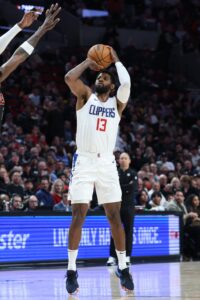 Paul George: Four years, maximum salary ($211,584,940). Includes fourth-year player option and 15% trade kicker. Signed using cap room.
- Tyrese Maxey: Five years, maximum salary ($203,852,600). Re-signed using Bird rights.
- Caleb Martin: Four years, $35,040,704. Includes fourth-year player option, 15% trade kicker, and $5,256,106 in additional unlikely incentives. Signed using cap room.
- Kelly Oubre: Two years, $16,365,150. Includes second-year player option. Re-signed using room exception. Waived right to veto trade.
- KJ Martin: Two years, $16,000,000. Second year non-guaranteed. Re-signed using Bird rights.
- Andre Drummond: Two years, $10,000,000. Includes second-year player option. Signed using cap room.
- Eric Gordon: Two years, minimum salary ($6,772,731). Includes second-year player option. Signed using minimum salary exception.
- Reggie Jackson: One year, minimum salary. Signed using minimum salary exception.
- Kyle Lowry: One year, minimum salary. Re-signed using minimum salary exception.
- Guerschon Yabusele: One year, minimum salary. Signed using minimum salary exception.
- Jared Brownridge: One year, minimum salary. Non-guaranteed (Exhibit 10). Signed using minimum salary exception.
- Note: Brownridge was subsequently waived.
- Max Fiedler: One year, minimum salary. Non-guaranteed (Exhibit 10). Signed using minimum salary exception.
- Judah Mintz: One year, minimum salary. Non-guaranteed (Exhibit 10). Signed using minimum salary exception.
Trades
- Acquired the Mavericks’ 2031 second-round pick from the Mavericks in a six-team trade in exchange for Buddy Hield (sign-and-trade; to Warriors).
Draft picks
- 1-16: Jared McCain
- Signed to rookie scale contract (four years, $19,448,588).
- 2-41: Adem Bona
- Signed to four-year, minimum salary contract ($7,895,796). First year guaranteed. Second year partially guaranteed ($977,689). Third year non-guaranteed. Fourth-year team option.
Two-way signings
Departed/unsigned free agents
- Mohamed Bamba (Clippers)
- Nicolas Batum (Clippers)
- Robert Covington (unsigned)
- Tobias Harris (Pistons)
- Buddy Hield (Warriors)
- De’Anthony Melton (Warriors)
- Cameron Payne (Knicks)
- Terquavion Smith (unsigned)
Other moves
- Signed Joel Embiid to a three-year, maximum-salary veteran extension that begins in 2026/27. Projected value of $192,907,008. Includes third-year player option.
- Waived Paul Reed.
Salary cap situation
- Went below the cap to use room.
- Now operating over the cap ($140.6MM), over the luxury tax line ($170.8MM), and between the first tax apron ($178.1MM) and second tax apron ($188.9MM).
- Carrying approximately $181.5MM in salary.
- No hard cap.
- No form of mid-level or bi-annual exception available.
- No traded player exceptions available.
The offseason so far
It used to be relatively common for NBA teams to hoard cap room in the hopes of landing an All-NBA caliber player as a free agent. That’s famously how the Heat landed LeBron James and Chris Bosh in 2010. It’s how the Warriors were able to lure Kevin Durant to Golden State in 2016. And it’s how stars like Durant (Nets), Kyrie Irving (Nets), and Kawhi Leonard (Clippers) joined new teams in 2019.
Since 2019, however, with tweaks to the Collective Bargaining Agreement allowing veteran contract extensions to become more common than ever, it had become increasingly rare for star players to change teams as free agents. In recent years, players like Fred VanVleet (to the Rockets in 2023), pre-All-Star Jalen Brunson (Knicks in 2022), and post-prime Gordon Hayward (Hornets in 2020) were among the most prominent free agents to change teams via cap room.
All that is to say, when the Sixers decided during the 2023 offseason not to sign Tyrese Maxey to a rookie scale extension, telegraphing their intent to maximize their 2024 cap room in the hopes of landing a star, it was a risky play.
While the 76ers could offer a top free agent the opportunity to team up with Maxey and star center Joel Embiid in Philadelphia, they wouldn’t have the ability to outbid that star’s incumbent team for the right to sign him. It’s entirely possible that each of this year’s top six or seven free agents could have re-signed with their previous clubs, putting the Sixers in a position where they’d have to decide whether to splurge on a couple second-tier free agents like Kentavious Caldwell-Pope and Miles Bridges or perhaps target a high-priced trade candidate like Brandon Ingram or Zach LaVine.
Fortunately for the Sixers and their fans, it didn’t play out that way. While four of the top five free agents on our top-50 list (including Maxey) remained with their current teams, Philadelphia was able to secure a commitment from the fifth one – Paul George – after the forward’s negotiations with the Clippers soured.
Like Embiid, George hasn’t been a paragon of health during his prime seasons, having missed time in both the regular season and playoffs due to various injuries over the years, so it’s not as if the four-year, maximum-salary deal the Clippers gave him is risk-free.
 But few players in the NBA would have been better fits alongside Maxey and Embiid than George, who is essentially the ideal version of the three-and-D archetype that has become so popular in the league in the last decade. He can handle the toughest wing assignments on defense while also sharing ball-handling and scoring responsibilities on offense with the 76ers’ two other stars.
Maxey’s willingness to wait on his new contract shouldn’t be overlooked or undersold. Keeping his modest $13MM cap hold on the books at the start of free agency instead of having him on the cap for $35MM+ put the Sixers in position to open up maximum-salary cap room for George. It all worked out for Maxey in the end, as he parlayed a Most Improved Player award in 2023/24 into a five-year, maximum-salary deal.
Would he have gotten that same contract if he had torn his ACL on opening night last fall and missed the entire season? Maybe, but it’s worth remembering that it wasn’t just the Sixers who took a risk by going the cap-space route — Maxey could have insisted on long-term security last summer, but by betting on himself and the team, he eventually got his max deal and a new All-Star running mate.
After signing George and Maxey to $200MM+ free agent contracts, the Sixers later extended Embiid on a maximum-salary deal that could pay him nearly $300MM over the next five seasons. Despite his injury history, it was presumably an easy decision for the front office, considering Embiid is a perennial MVP finalist if he’s healthy.
Having made such a huge investment in their three stars, the 76ers didn’t have a ton of flexibility to add complementary pieces around them, but they cleverly used every dollar of their leftover cap room to sign Caleb Martin and Andre Drummond, both of whom should play significant roles. Martin was a valuable two-way contributor in Miami in recent years, while Drummond has been one of the league’s best backup centers and is capable of stepping into the starting lineup if and when Embiid misses time.
Most of the rest of the Sixers signings – including Eric Gordon, Reggie Jackson, Kyle Lowry, Guerschon Yabusele, and second-round pick Adem Bona – were for the minimum. It’s unlikely that all of those players will become productive regular contributors, but the team did pretty well given its salary limitations.
Philadelphia also used its No. 16 overall pick to add rookie guard Jared McCain, its room exception to re-sign starting forward Kelly Oubre, and KJ Martin‘s Bird rights to re-sign him to a two-year, $16MM deal that’s only guaranteed for one season.
That price tag for Martin looks high on the surface, but it’s more about his value as a trade chip than what he’ll provide on the court. Outside of their three stars, no Sixers players are earning more than $8.15MM (Caleb Martin) in 2024/25, so having KJ Martin on a $7.98MM deal could make him a useful salary-matching piece in an in-season deal.
Up next
The Sixers are carrying 14 players on standard contracts, so they could add one more minimum-salary free agent to their roster before opening night if they don’t mind paying the accompanying tax penalty.
They’re approximately $4.6MM away from the second tax apron, but since they can’t take back more salary than they send out in a trade, they should be able to easily avoid surpassing that threshold during the season, even if they carry a 15th man.
It should be a fairly straightforward preseason in Philadelphia though, now that Embiid has signed his extension. Of the 14 players on standard deals, 13 have signed new contracts since July and the 14th (Ricky Council) is in the second year of his deal, so no one else is extension-eligible.
Pre-Camp Roster Snapshot: Southeast Division
Hoops Rumors is in the process of taking a closer look at each NBA team’s current roster situation, evaluating which clubs still have some moves to make and which ones seem most prepared for training camp to begin.
This series is meant to provide a snapshot of each team’s roster at this time, so these articles won’t be updated in the coming weeks as more signings, trades, and/or cuts are made. You can follow our roster counts page to keep tabs on teams’ open spots as opening night nears.
We’re continuing our pre-camp Roster Snapshot series today with the Southeast Division. Let’s dive in…
Atlanta Hawks
- Players on guaranteed standard contracts: 15
- Players on Exhibit 10 contracts: 1
- Players on two-way contracts: 3
- Unsigned draft picks: 1
There are some non-essential pieces on the Hawks‘ 15-man roster — Zeller was acquired via sign-and-trade as a necessary salary-matching piece in the Dejounte Murray deal, while Atlanta traded for Roddy because Phoenix wanted to get off his salary. Still, waiving either of them (or anyone else) in order to sign a new minimum-salary player doesn’t make sense for the Hawks, since doing so would push their team salary into tax territory.
More Exhibit 10 signees are likely coming in order to help fill out the College Park Skyhawks’ roster, but the biggest question here is what happens with Djurisic, the second-round pick who is coming off a foot surgery that will sideline him well into the fall.
Djurisic had been playing in Serbia, so there has been speculation that he’ll remain overseas as a draft-and-stash prospect. However, Nebojsa Covic – the president of Crvena Zvezda, one team linked to Djurisic – denied that his club has any plans to add him, noting that the 20-year-old is “in America.”
My best guess is that the Hawks plan to have Djurisic start the season with their G League affiliate and will consider promoting him to the 18-man roster (either on a standard or two-way contract) later in the season, once he’s fully recovered.
Charlotte Hornets
- Players on guaranteed standard contracts: 13
- Players on non-guaranteed standard contracts: 1
- Taj Gibson (partial guarantee)
- Players on Exhibit 10 contracts: 4
- Players on two-way contracts: 2
- Players who have reportedly reached contract agreements: 2
- Raequan Battle (Exhibit 10), Harry Giles (Exhibit 10?)
It seems safe to assume Gibson will make the Hornets‘ opening night roster, but that still leaves an open spot on the projected 15-man standard roster. Charlotte doesn’t need to fill that spot, but the club’s salary is so far below the luxury tax line that it would make sense to add a 15th man on a non-guaranteed deal.
There are plenty of free agents still available who would be fits in Charlotte. Some of the team’s camp invitees could be in the mix for that spot too, though they may also be battling for the final two-way slot alongside Diabate and Simpson.
Of the current Exhibit 10 players on the roster and those who have been reported, only Giles has too many years of NBA service to qualify for a two-way deal, so he’s a possible candidate for the standard roster.
Miami Heat
- Players on guaranteed standard contracts: 14
- Players on Exhibit 10 contracts: 2
- Players on two-way contracts: 3
- Players who have reportedly reached contract agreements: 1
Reports throughout the offseason have indicated that the Heat aren’t interested in carrying a full 15-man roster into the regular season since doing so would push their team salary above the second tax apron. So it came as a bit of a surprise on Monday when word broke that the team had agreed to a deal with Little.
Moving slightly above the second apron isn’t that big a deal though — based on reports out of Miami, it sounds like Little’s contract will be either non-guaranteed or partially guaranteed, allowing them to waive him in a month or two (or even earlier) and duck back below the second apron if they so choose.
Plus, while teams above the second apron aren’t permitted to aggregate salaries in a trade, the Heat would still be able to do so if they’re below the second apron upon completion of the deal. So if they were operating above the second apron by $1MM and made a trade in which they aggregated three contracts in order to take back two while shedding $3MM in salary, that’d be permitted.
While the 15th spot is the bigger story to watch here, it’s also worth keeping an eye on the two-way slots. The Heat already made one change to those spots this offseason when they waived Pullin in order to sign Christopher. Stevens and Pullin (who is back on an Exhibit 10 contract) could make cases to be converted to two-way deals with strong performances in camp and the preseason.
Orlando Magic
- Players on guaranteed standard contracts: 15
- Players on Exhibit 10 contracts: 5
- Players on two-way contracts: 1
- Players who have reportedly reached contract agreements: 1
- Robert Baker (Exhibit 10)
The Magic‘s 15 players on standard contracts look set, but with only one two-way slot filled so far, they could put the other two spots up for grabs in a camp competition.
McClung is reportedly viewed as a good candidate to claim one of those two-way deals. Of the current camp invitees, only Culver – who has four years of NBA service – is ineligible to be converted to a two-way contract.
Washington Wizards
- Players on guaranteed standard contracts: 15
- Players on non-guaranteed standard contracts: 1
- Players on two-way contracts: 2
- Players who have reportedly reached contract agreements: 3
- Leaky Black (Exhibit 10), Kira Lewis (Exhibit 10), Jaylen Nowell (Exhibit 10)
Butler appeared in 40 games for the Wizards last season, but the only way he’ll be part of this year’s opening night roster is if the team trades or waives a player on a guaranteed contract. That’s not out of the question — Baldwin is probably the player whose roster spot would be most in jeopardy, since the former first-round pick has yet to establish himself as a reliable rotation player and didn’t look great in Summer League.
Interestingly, Lewis and Nowell agreed to Exhibit 10 deals with Washington despite being ineligible for two-way deals, so they’ve either resigned themselves to joining the Capital City Go-Go or were promised a shot to compete for a standard roster spot.
Black could be in the mix for the open two-way slot here. Butler would also be two-way eligible, but he’d have to be waived and re-signed. The Wizards could also look outside the organization to fill that spot, perhaps targeting a player from another roster who’s cut during or after the preseason.
Previously:
Pre-Camp Roster Snapshot: Pacific Division
Hoops Rumors is in the process of taking a closer look at each NBA team’s current roster situation, evaluating which clubs still have some moves to make and which ones seem most prepared for training camp to begin.
This series is meant to provide a snapshot of each team’s roster at this time, so these articles won’t be updated in the coming weeks as more signings, trades, and/or cuts are made. You can follow our roster counts page to keep tabs on teams’ open spots as opening night nears.
We’re continuing our pre-camp Roster Snapshot series today with the Pacific Division. Let’s dive in…
Golden State Warriors
- Players on guaranteed standard contracts: 12
- Players on non-guaranteed standard contracts: 2
- Players on Exhibit 10 contracts: 1
- Players on two-way contracts: 3
- Players who have reportedly reached contract agreements: 1
- Blake Hinson (Exhibit 10)
- Unsigned draft picks: 1
The Warriors are hard-capped at the first tax apron and are currently less than $1MM away from that threshold, so carrying a full 15-man standard roster won’t be an option to start the season. That doesn’t mean roster changes aren’t possible, since either Santos or Waters could be replaced with a minimum-salary player. However, recent reporting suggested that Golden State will probably stick with those two for opening night, despite recently working out several veteran free agents.
The Warriors have been in the process of shuffling Exhibit 10 players on and off the roster, having waived Donta Scott, Yuri Collins, and Javan Johnson within the last few days. That process figures to continue.
One key outstanding question in Golden State is which two-way player will be cut to make room for Post — the No. 52 overall pick is expected to receive a two-way contract of his own, but either Beekman, Plowden, or Spencer will have to be waived to open up a spot.
Two-way players who are holdovers from the prior season are generally more in danger of losing their roster spots than newly signed players, which is why I’d long viewed Spencer as the Warriors’ most likely release candidate. However, the fact that the College Park Skyhawks recently surrendered a G League draft pick in a trade for Plowden’s returning rights is a signal that he could be the odd man out. Complicating matters further? Beekman was easily the trio’s least effective performer in Summer League play. I wouldn’t necessarily assume that any one of these three players is entirely safe.
Los Angeles Clippers
- Players on guaranteed standard contracts: 15
- Players on Exhibit 10 contracts: 4
- Players on two-way contracts: 2
- Players who have reportedly reached contract agreements: 1
- Alondes Williams (Exhibit 10?)
With 15 players on standard guaranteed contracts, the Clippers‘ standard roster looks pretty set for opening night. They’d probably like to find a taker for Tucker’s expiring contract, but I wouldn’t count on that happening before the season begins.
There’s still work to be done with the Clippers’ two-way contracts though. Even if Flowers and Miller keep their spots, the club will almost certainly add a third player to that group prior to the start of the regular season. Of the camp invitees on Exhibit 10 contracts, Jones – the 19th overall pick in 2021 – looks like the most intriguing option for that final two-way slot.
Meanwhile, the reporting on Williams’ alleged agreement with the Clippers was somewhat vague and has yet to be corroborated, so it’s unclear if and when that signing will be finalized and what kind of contract he’ll get. It’s possible Williams could be among the players in the mix for the final two-way spot.
Los Angeles Lakers
- Players on guaranteed standard contracts: 15
- Players on Exhibit 10 contracts: 3
- Players on two-way contracts: 3
- Players who have reportedly reached contract agreements: 1
- Sean East (Exhibit 10)
Like the Clippers, the Lakers have one or more potential salary-dump candidates among their 15 guaranteed players on guaranteed contracts, but those trade opportunities are more likely to materialize during the regular season than during the preseason. I’d expect the 15 players on standard contracts listed above to be the ones on the Lakers’ opening night roster.
The Lakers have shown already this offseason that they don’t mind shaking up their two-way spots — they signed Blake Hinson to a two-year, two-way contract in July, only to waive him a couple months later in favor of Koloko. It’s possible the team will make another change to that group (Goodwin, notably, is eligible to converted). Otherwise, we should just expect minor Exhibit 10 signings and cuts in the coming weeks.
Phoenix Suns
- Players on guaranteed standard contracts: 14
- Players on Exhibit 10 contracts: 1
- Players on two-way contracts: 3
- Players who have reportedly reached contract agreements: 3
- Boo Buie (Exhibit 10), Mamadi Diakite (Exhibit 10), Tyrese Samuel (Exhibit 10)
This is the first time in a few years that the Suns have had a G League team of their own, so we’ll see just how many affiliate and returning-rights players they sign to Exhibit 10 contracts prior to the season. If they complete their reported deals with Buie, Diakite, and Samuel, they’ll be at the 21-man roster limit, but more transactions are certainly a possibility.
The Suns, who had been carrying 16 players on guaranteed contracts, opened up a spot on their projected 15-man regular season roster by waiving both Nassir Little and E.J. Liddell last month. Given that they stretched both players’ salaries in an effort to reduce their projected tax bill, I imagine they aren’t all that eager to fill that 15th spot with a new addition right away — that may not happen until later in the season.
Sacramento Kings
- Players on guaranteed standard contracts: 12
- Players on non-guaranteed standard contracts: 2
- Keon Ellis, Orlando Robinson (partial guarantee)
- Players on Exhibit 10 contracts: 1
- Players on two-way contracts: 3
- Players who have reportedly reached contract agreements: 2
- Skal Labissiere (Exhibit 10), Terry Taylor (Exhibit 10?)
The Kings are in a similar spot to the Warriors. With just 12 players on fully guaranteed contracts, plus two more without full guarantees, Sacramento theoretically has some room to make changes at the back of its roster. But adding a 15th man would push the team’s salary into luxury tax territory. Plus, Keon Ellis should have a rotation role and Robinson has a $500K partial guarantee, so neither looks like a great candidate to be cut before opening night.
While Sacramento could carry a 15th man into the season and worry down the road about ducking out of the tax, I don’t expect that to be the plan unless the club is hit hard by injuries in the preseason. For what it’s worth, the Kings are already dealing with one injury — Carter is expected to be sidelined until at least January as he recovers from shoulder surgery.
Even if they were to finalize the Labissiere and Taylor signings today, the Kings would still have an open spot on their 21-man preseason roster, so more Exhibit 10 signings (and cuts) are likely coming. We’ll see if any of those players, including Boogie Ellis, get a shot to unseat Crawford or the Joneses for a two-way spot or whether Sacramento is content to carry its current two-way players into the season.
Previously:
Community Shootaround: Rule Changes
Some rule changes in major sports transform the game in a good way. The pitch clock has done precisely what Major League Baseball hoped. It dramatically improved the pace of play and shaved nearly half an hour off the length of games.
Others, like the new NFL kickoff rule, have flopped. The league was hoping the new format would increase the amount of kick returns. Instead, teams would rather let the opponent start at its own 30-yard-line than risk a long return.
The NBA rules haven’t really changed much in recent years, save for a few tweaks here and there. However, the game itself has been impacted dramatically by analytics. Mid-range shots and post-ups have been deemphasized in favor of three-point attempts and driving to the basket for layups and dunks, or least setting up high-percentage shots.
The proliferation of three-point tries has been arguably the biggest change in the game in recent decades. Last season, for example, the champion Celtics attempted a whopping 42.5 3s per game. In contrast, their 2008 championship club averaged 19.1 three-point tries per game.
Coaches around the league rarely say their teams are shooting too many threes; usually they’re hoping to find ways to increase three-point attempts.
Is it time for the league to make the three-pointer less important? The NBA isn’t going to erase the three-point line but it could limit the amount a team takes. Or it could make all baskets two-pointers until a certain time structure, say the last three minutes of each quarter.
That would lead to more strategic moves by the league’s coaches. If there were a limit on threes, coaches might instruct their players to “save” some of the allotment for later in the game.
If three-pointers only counted for a certain time period, coaches would be certain to make sure their best perimeter shooters were on the floor when beyond-the-arc shots count for three points. Mid-range shooting and post-ups would have more of a place in game strategy when all baskets count for two points.
That brings up to today’s topic: Would you like to see the NBA take steps to limit three-point shooting or do you prefer the status quo? If there were limitations, what type of rule or rules would you like to see the league adopt?
Please take to the comments section to weigh on this topic. We look forward to your input.