
On the heels of 25- and 30-win seasons, the Raptors entered 2025/26 operating over the luxury tax line despite the fact that they weren't considered a good bet to even make the playoffs. There were far more skeptics than believers in the group that general manager Bobby Webster and former president Masai Ujiri, whose tenure with the team ended last June, had put together.
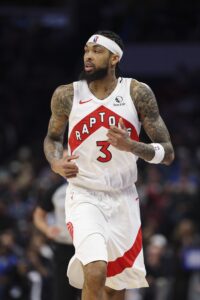 Point guard Immanuel Quickley, coming off an injury-plagued season, was on a long-term deal worth $32.5MM annually. Center Jakob Poeltl, another good but not great starter, had just signed a lucrative long-term extension of his own. And none of Toronto's highly paid forwards - Scottie Barnes, Brandon Ingram, and RJ Barrett - were consistent, high-volume three-point shooters who thrived off the ball, leading to questions about how exactly they'd fit together.
While there wasn't a ton of enthusiasm for the way the Raptors looked on paper, things started to make a little more sense on the court once the season got underway.
Ingram gave the team the sort of half-court shot creator it had been missing, leading Toronto in scoring and making the All-Star game. Barnes, who excelled as a play-maker and defender, was also named an All-Star. Quickley had a much healthier season and fit well alongside the Raptors' ball-dominant forwards, leading the club in three-pointers by a significant margin. And while back issues limited Poeltl's availability and effectiveness, two unexpected frontcourt standouts - minimum-salary veteran Sandro Mamukelashvili and rookie Collin Murray-Boyles - helped make up for his down year.
Throw in the fact that the Raptors got breakout seasons from young role players Ja'Kobe Walter and Jamal Shead and it's easy to see why the team exceeded outside expectations. Toronto racked up 46 regular season victories, earned the No. 5 seed in the East, and pushed the heavily favored Cavaliers to seven games in the first round despite missing Ingram for Games 6 and 7 and Quickley for the entire series.
Toronto's cap situation still isn't great, and the roster construction is far from perfect. It was also concerning that Ingram struggled mightily in the playoffs and that the team was better when he was off the court than when he was on it during the first round, a trend that carried over from the regular season. But it was still an encouraging year for the organization, with Barnes taking another step toward stardom, Murray-Boyles flashing tantalizing upside, and guys like Walter and Shead showing they can be trusted to play roles on a playoff team.
The Raptors' Offseason Plans
The salary cap for the 2026/27 season is projected to come in at $165MM, and Toronto's top five highest-paid players - Barnes, Ingram, Quickley, Barrett, and Poeltl - are earning a combined $163.4MM, essentially eating up all that space on their own.
Bringing all five of those players back isn't out of the question and might even be the front office's best path. After all, that group had a net rating of +7.6 in 354 minutes on the court together this past season. But outside of Barnes, who is clearly a long-term keeper, the Raptors shouldn't just automatically pencil any of them into the lineup for '26/27 without seriously evaluating their place in the team's long-term plans.
