
Pre-Camp Roster Snapshot: Central Division
Hoops Rumors is in the process of taking a closer look at each NBA team’s current roster situation, evaluating which clubs still have some moves to make and which ones seem most prepared for training camp to begin.
This series is meant to provide a snapshot of each team’s roster at this time, so these articles won’t be updated in the coming weeks as more signings, trades, and/or cuts are made. You can follow our roster counts page to keep tabs on teams’ open spots as opening night nears.
We’re continuing our pre-camp Roster Snapshot series today with the Central Division. Let’s dive in…
Chicago Bulls
- Players on guaranteed standard contracts: 14
- Players on non-guaranteed standard contracts: 1
- Players on Exhibit 10 contracts: 3
- Players on two-way contracts: 2
- Players who have reportedly reached contract agreements: 1
- E.J. Liddell (Exhibit 10?)
The Bulls could set their 21-man training camp roster by officially signing Liddell, who is believed to have agreed to an Exhibit 10 deal. However, there are still questions about what their 18-man regular season roster will look like, even if Chicago doesn’t make any preseason trades.
The Bulls have just 14 players on guaranteed standard contracts, leaving the 15th spot open for a roster hopeful like Bitim, Horton-Tucker, or Lofton. The club also has a two-way slot available.
While Horton-Tucker isn’t eligible for a two-way contract, Domask, Lofton, and Liddell are. Bitim would be too, but he can’t be converted directly to a two-way deal since he’s not on an Exhibit 10 contract — he’d need to be cut and then re-signed after clearing waivers.
Cleveland Cavaliers
- Players on guaranteed standard contracts: 11
- Players on non-guaranteed standard contracts: 3
- Sam Merrill, Craig Porter (partial guarantee), Tristan Thompson
- Players on two-way contracts: 3
- Players who have reportedly reached contract agreements: 1
- Darius Brown II (Exhibit 10)
The Cavaliers‘ 11 players on fully guaranteed salaries represents the lowest total of any NBA team. But Merrill and Porter are locks to be on the regular season roster, so at least 13 standard spots are accounted for, and the team reportedly doesn’t intend to carry a 15th man into opening night for financial reasons.
Presumably, Thompson will open the season as the 14th man, but that’s not set in stone, since he’s not owed any guaranteed money. The Cavs could still bring in another veteran to challenge for that job.
Even after signing Brown, Cleveland will have three open spots on its 21-man roster, so more Exhibit 10 signings are likely around the corner too.
Detroit Pistons
- Players on guaranteed standard contracts: 13
- Players on non-guaranteed standard contracts: 1
- Players on Exhibit 10 contracts: 2
- Players on two-way contracts: 2
- Players who have reportedly reached contract agreements: 2
- Aaron Estrada (Exhibit 10), Dereon Seabron (Exhibit 10)
With over $10MM in cap room still available and only 13 players on guaranteed contracts, the Pistons are one of the NBA’s top candidates to make a move impacting their regular season roster in the next month.
That’s not a lock though. If they hang onto Reed, as expected, the Pistons will have the required 14 players for opening night. And if they want to maximize their remaining cap room in order to accommodate as many potential in-season trade opportunities as possible, they may be reluctant to add even a minimum-salary player as a 15th man.
While it’s an open question whether or not Detroit will fill out its standard 15-man roster, it’s safe to assume the team will carry a third two-way player into the season. We’ll see whether McCoy, Smith, Estrada, and/or Seabron get a chance to compete for that spot or whether the Pistons have any other specific targets in mind. For what it’s worth, the club could add one more player to its 21-man preseason roster even after officially signing Estrada and Seabron.
Indiana Pacers
- Players on guaranteed standard contracts: 12
- Players on non-guaranteed standard contracts: 4
- Kendall Brown, James Johnson (partial guarantee), Cole Swider, James Wiseman (partial guarantee)
- Players on two-way contracts: 3
- Players who have reportedly reached contract agreements: 3
- Josiah-Jordan James (Exhibit 10), Tyler Polley (Exhibit 10), Keisei Tominaga (Exhibit 10)
The partial guarantees held by Johnson and Wiseman will give them the upper hand to join the Pacers‘ dozen players on fully guaranteed contracts as part of the standard opening night roster. That would leave Brown and Swider vying for the 15th spot, with no guarantee that Indiana – within spitting distance of the luxury tax line – would retain either one.
The Pacers, who are already carrying 19 total players, wouldn’t be able to finalize all three of their reported Exhibit 10 deals without waiving someone. That math suggests that at least one of those Exhibit 10 recipients – and maybe more than one – will be cut shortly after he signs, with Indiana rotating players in and out of those back-end roster spots.
Milwaukee Bucks
- Players on guaranteed standard contracts: 14
- Players on non-guaranteed standard contracts: 1
- Andre Jackson (partial guarantee)
- Players on Exhibit 10 contracts: 3
- Players on two-way contracts: 3
The Bucks have a hefty projected tax bill to consider, but it still doesn’t make sense to waive Jackson, given that half of his $1.89MM salary is guaranteed. He’ll make that money whether or not he opens the season on the roster, so it looks like Milwaukee will carry a full 15-man squad into opening night.
With all 21 preseason roster spots filled, including all three of their two-way slots, the Bucks don’t need to make any changes before camp begins. Unless one of the camp invitees has a huge fall and pushes one of the current two-way players out, I’d expect Milwaukee’s only preseason roster moves to consist of signing and waiving Exhibit 10 players.
Previously:
NBA 2024 Offseason Check-In: Sacramento Kings
Hoops Rumors is checking in on the 2024 offseason for all 30 NBA teams, recapping the summer’s free agent signings, trades, draft picks, departures, and more. We’ll take a look at each team’s offseason moves and consider what might still be coming before the regular season begins. Today, we’re focusing on the Sacramento Kings.
Free agent signings
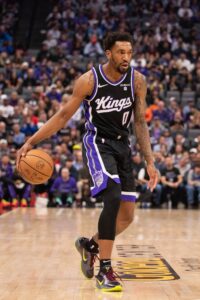 Malik Monk: Four years, $77,975,308. Fourth-year player option. Re-signed using Early Bird rights.
- DeMar DeRozan: Three years, $73,710,000. Includes an additional $3MM in unlikely incentives. Third year partially guaranteed ($10MM). Signed using Bird rights and acquired via sign-and-trade from Bulls.
- Alex Len: One year, minimum salary. Re-signed using minimum salary exception. Waived right to veto trade.
- Jordan McLaughlin: One year, minimum salary. Signed using minimum salary exception.
- Orlando Robinson: One year, minimum salary. Partially guaranteed ($500K). Signed using minimum salary exception.
- Boogie Ellis: One year, minimum salary. Non-guaranteed (Exhibit 10). Signed using minimum salary exception.
Trades
- Acquired Jalen McDaniels from the Raptors in exchange for Davion Mitchell, Sasha Vezenkov, the draft rights to Jamal Shead (No. 45 pick), and the Trail Blazers’ 2025 second-round pick.
- Acquired DeMar DeRozan (sign-and-trade) from the Bulls in a three team-trade in exchange for Harrison Barnes (to Spurs), Chris Duarte (to Bulls), the Kings’ 2025 second-round pick (to Bulls), the Kings’ 2028 second-round pick (to Bulls), the right to swap 2031 first-round picks (to Spurs), and cash (to Bulls).
Draft picks
- 1-13: Devin Carter
- Signed to rookie scale contract (four years, $22,141,696).
Two-way signings
Departed/unsigned free agents
- Kessler Edwards (Mavericks)
- Jordan Ford (Aquila Basket Trento)
- JaVale McGee (unsigned)
- Jalen Slawson (Magic)
Salary cap situation
- Operating over the cap ($140.6MM) and below the luxury tax line ($170.8MM).
- Carrying approximately $169.7MM in salary.
- Hard-capped at $178,132,000.
- Full mid-level, bi-annual exceptions available.
- Three traded player exceptions available (largest worth $6,341,464).
The offseason so far
Entering the offseason, there were two notable NBA free agents whose Early Bird rights were considered potentially insufficient to retain them. One of those was Isaiah Hartenstein, who signed a three-year, $87MM contract with the Thunder that the Knicks were unable to match using the Early Bird exception. However, the second of those two free agents, Malik Monk, reached an early deal with the Kings, agreeing to accept Sacramento’s best possible offer well ahead of the start of July.
To be clear, it’s not as if Monk magnanimously accepted a deal way below his market value. His new four-year, $78MM contract is easily the most lucrative of his career, and the $19.5MM annual salary represents an entirely reasonable rate for an effective, offense-first sixth man.
Still, there was a belief that he might’ve been able to secure an even bigger payday on the open market, so the Kings benefited from new NBA rules that permitted them to begin contract talks with Monk immediately after the Finals ended, rather than having to wait until the end of June to open those negotiations.
Having agreed to terms early with Monk, the Kings were able to approach the rest of the summer with the knowledge that their top free agent would be back, and their subsequent roster moves accounted for that. With Monk returning, for instance, Sacramento needed to shed some salary in order to stay out of luxury tax territory, so the club sent Sasha Vezenkov and Davion Mitchell to Toronto, along with two second-round picks, in exchange for Jalen McDaniels.
Vezenkov ended up agreeing to give up his entire $6.66MM salary for the 2024/25 season in order to get out of his contract. If the Kings had known he’d be willing to do that, trading him wouldn’t have been necessary, but it’s possible he only finalized that decision when faced with the prospect of moving to a new country for the second time in two years.
It’s also unfortunate that Sacramento had to give up on Mitchell, a 2021 lottery pick, but his offensive game never really developed and he found himself surpassed on the depth chart last season by undrafted free agent Keon Ellis. While that No. 9 overall pick was a miss for the Kings, they can take some solace in the fact that the teams right behind them in the 2021 draft didn’t do any better — Ziaire Williams, James Bouknight, Joshua Primo, and Chris Duarte were the four players selected right after Mitchell (though Corey Kispert, Alperen Sengun, Trey Murphy, and Jalen Johnson all went later in the top 20).
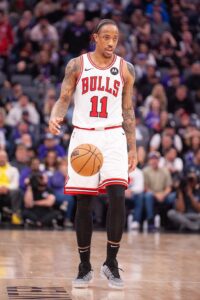 Speaking of Duarte, he was a throw-in salary-matching piece in the Kings’ biggest move of July, a sign-and-trade deal for six-time All-Star DeMar DeRozan. Duarte was packaged with Harrison Barnes (sent to San Antonio), a pair of second-round picks, a 2031 first-round pick swap, and cash in order to bring DeRozan aboard on a three-year contract without adding any salary to the team’s books for 2024/25.
A two-way forward probably would’ve been a better all-around fit for the Kings’ lineup, and it’s not as if Sacramento hadn’t been trying to acquire that sort of player — the team reportedly pursued both OG Anunoby and Pascal Siakam last season before the Raptors traded them elsewhere. But DeRozan was the only impact player available this summer at the price Sacramento was willing to pay, both in terms of the trade package and the contract.
While the Kings will have no shortage of offensive firepower in 2024/25, head coach Mike Brown – who has preached defense since arriving in Sacramento – may not have the personnel for an above-average defense after swapping out Barnes for DeRozan. Domantas Sabonis and De’Aaron Fox aren’t bad on that end of the court, but neither is a top-tier defender; DeRozan and Monk certainly aren’t either. The pressure will be on 2022 lottery pick Keegan Murray to continue making defensive strides and to try to slow down opponents’ top wings while the Kings’ top scorers are simply asked to play solid team D within Brown’s scheme.
The Kings’ other veteran offseason additions were minimum-salary free agent signings — Alex Len will return for a fourth season, with Orlando Robinson joining him in the frontcourt and Jordan McLaughlin signed for backcourt depth. Robinson’s salary isn’t fully guaranteed, so Sacramento could swap him out for a new addition at some point if he doesn’t impress.
In addition to signing McLaughlin, the Kings used their lottery pick to select Devin Carter, a former Providence guard who looked like he might be able to step into an immediate role in the backcourt after a huge year for the Friars in 2023/24. Unfortunately, Carter underwent a shoulder surgery in early July that is expected to sideline him for six months.
It’s possible we’ll see Carter on the court in Sacramento during the season’s second half, but it’s probably unfair for the club to expect anything from him as a rookie, since he wasn’t able to take part in Summer League and won’t be a full participant in training camp or the preseason.
Up next
The Kings are currently carrying just 14 players on standard contracts, with neither Ellis nor Robinson on a fully guaranteed deal, so they have the ability to make some changes at the back of their projected regular season roster, including bringing in a 15th man.
Still, it wouldn’t be a surprise if this is the group that the team sticks with for opening night. Ellis isn’t going anywhere, Robinson has a partial guarantee, and adding a 15th man would push Sacramento’s team salary into luxury tax territory. As long as the roster stays relatively healthy, there’s probably no need to take on another player who won’t see rotation minutes, especially when the club is so close to the tax line.
The Kings’ prime preseason extension candidate is Fox, who is eligible for a new deal worth up to the maximum that would tack on three years to the two left on his current contract. However, reporting in June indicated that the star guard had decided not to sign an extension this offseason, preferring to put off those talks until 2025.
If Sacramento has a disappointing season in 2024/25, Fox’s contract situation might become a cause for concern, but the team shouldn’t be worried about it at this point. The 26-year-old could qualify for a super-max extension if he makes an All-NBA team next spring, which is reason enough for him to wait a year. Even if he misses out on the super-max, Fox would be eligible to sign a slightly longer-term deal beginning next July.
Kevin Huerter is the only other King who is currently extension-eligible. I wouldn’t expect Huerter to get a new deal at this point after he saw his minutes cut back to a career-low 24.4 per game last season.
Pre-Camp Roster Snapshot: Northwest Division
Hoops Rumors is in the process of taking a closer look at each NBA team’s current roster situation, evaluating which clubs still have some moves to make and which ones seem most prepared for training camp to begin.
This series is meant to provide a snapshot of each team’s roster at this time, so these articles won’t be updated in the coming weeks as more signings, trades, and/or cuts are made. You can follow our roster counts page to keep tabs on teams’ open spots as opening night nears.
We’re continuing our pre-camp Roster Snapshot series today with the Northwest Division. Let’s dive in…
Denver Nuggets
- Players on guaranteed standard contracts: 15
- Players on Exhibit 10 contracts: 3
- Players on two-way contracts: 3
Under general manager Calvin Booth, the Nuggets have typically set their training camp roster early in the offseason and not made any changes to the back end until the preseason is underway. Last year, for instance, Denver maxed out its 21-man roster on August 3 and didn’t make another roster move until October 13.
It looks like the team will probably stick to that pattern this year, taking the current group to camp and then rotating some Exhibit 10 signees on and off the roster during the preseason. With 15 players on guaranteed contracts and three on two-way deals, Denver’s projected regular season roster also looks set.
Minnesota Timberwolves
- Players on guaranteed standard contracts: 13
- Players on non-guaranteed standard contracts: 1
- PJ Dozier (partial guarantee)
- Players on Exhibit 10 contracts: 3
- Players on two-way contracts: 3
- Players who have reportedly reached contract agreements: 1
- Chasson Randle (Exhibit 10)
Although the Timberwolves have some back-end roster flexibility, they also have significant projected luxury tax penalties, and with the battle for control of the franchise headed to arbitration this fall, it’s still unclear who exactly will be on the hook for that tax bill.
With that in mind, I’d be surprised to see the Wolves carry a full 15-man standard roster into the regular season. And it’s probably safe to assume Dozier will start the season as the 14th man, since he has a $1MM partial guarantee that the team would have to eat if he’s waived and replaced with a newcomer. Minnesota could potentially make a change at that 14th spot before the league-wide guarantee date on January 7 if Dozier doesn’t prove in the first half that he deserves it, but his place on the opening night roster looks relatively safe.
While I expect some more Exhibit 10 shuffling in the coming days and weeks, the Wolves could set their camp roster by simply completing Randle’s deal, which would get them to the 21-man limit.
Oklahoma City Thunder
- Players on guaranteed standard contracts: 13
- Players on non-guaranteed standard contracts: 1
- Players on two-way contracts: 3
- Players who have reportedly reached contract agreements: 2
- Buddy Boeheim (Exhibit 10), Malevy Leons (Exhibit 10)
Even if they finalize their reported Exhibit 10 deals with Boeheim and Leons before October 1 and have both players with them in training camp, the Thunder would only have 19 players under contract, so they likely have more moves up their sleeve in the coming week or two.
The Thunder are one of the few NBA teams well positioned to bring in another veteran free agent who could make the 15-man standard roster. While Jaylin Williams will make the team, that still leaves the 15th spot open, and Oklahoma City is more than $11MM away from the luxury tax line, so another minimum-salary signing wouldn’t be a problem financially. With Topic out for the season and Kenrich Williams seemingly unlikely to be ready for opening night, the club could also use another depth piece.
It’s unclear whether the Thunder are perusing the free agent market with an eye toward adding a 15th man, but one more wing would make sense to me, with Oshae Brissett, Nassir Little, Justin Holiday, and Reggie Bullock among the available players who could fit.
Portland Trail Blazers
- Players on guaranteed standard contracts: 14
- Players on non-guaranteed standard contracts: 2
- Dalano Banton (partial guarantee), Devonte’ Graham
- Players on Exhibit 10 contracts: 1
- Players on two-way contracts: 3
Banton’s big numbers (16.7 PPG, 3.6 APG) down the stretch for the Trail Blazers were the result of significant usage (27.2%) rather than a jump in scoring efficiency (he shot .408/.311/.780). Still, I’d give him the edge over Graham for the 15th roster spot in Portland since he’s younger and has a small partial guarantee. That spot’s not set in stone though.
The Trail Blazers still have one opening on their 21-man preseason roster. Unless the Blazers intend to bring in another player to compete with Banton and Graham to be the 15th man, that roster spot could be used to churn through Exhibit 10 signees for the Rip City Remix, Portland’s G League affiliate.
Utah Jazz
- Players on guaranteed standard contracts: 15
- Players on Exhibit 10 contracts: 3
- Players on two-way contracts: 3
The Jazz‘s roster looks pretty close to ready for the regular season, with 15 players on guaranteed standard contracts and all three two-way spots occupied. Utah’s roster moves this fall may just consist of rotating Exhibit 10 players in and out before making final cuts at the end of the preseason.
A two-way shake-up is always a possibility, but Potter, Preston, and Tshiebwe all played well in the G League last season, so one of the non-guaranteed camp invitees would have to make a strong impression in October for the team to make a change there.
Previously:
Pre-Camp Roster Snapshot: Atlantic Division
Over the next week, Hoops Rumors will be taking a closer look at each NBA team’s current roster situation, evaluating which clubs still have some moves to make and which ones seem most prepared for training camp to begin.
This series is meant to provide a snapshot of each team’s roster at this time, so these articles won’t be updated in the coming weeks as more signings, trades, and/or cuts are made. You can follow our roster counts page to keep tabs on teams’ open spots as opening night nears.
We’re beginning our pre-camp Roster Snapshot series today with the Atlantic Division. Let’s dive in…
Boston Celtics
- Players on guaranteed standard contracts: 14
- Players on Exhibit 10 contracts: 4
- Players on two-way contracts: 3
The Celtics are at their 21-man limit, so this could be the roster they take into training camp during the first week of October. It also wouldn’t be a surprise if the 14 players on guaranteed contracts and three on two-way deals are the ones who are on Boston’s opening night roster.
Outside of the usual shuffling in and out of Exhibit 10 players, there are two minor storylines to keep an eye on here. One, will Walker – who has 322 NBA regular season games under his belt – make the team as a 15th man? And two, what are the Celtics’ plans for Jay Scrubb?
Scrubb was set to start the 2023/24 season on a two-way contract with the Celtics before he tore his ACL, resulting in his release just ahead of opening night. A report this offseason indicated the team plans to bring him back on an Exhibit 10 contract once he’s fully recovered from his ACL surgery. If he shows he’s back to 100% health, could he be in the mix for a two-way spot?
Brooklyn Nets
- Players on guaranteed standard contracts: 13
- Players on non-guaranteed standard contracts: 2
- Keon Johnson (partial guarantee), Jalen Wilson (partial guarantee)
- Players on two-way contracts: 1
- Players who have reportedly reached contract agreements: 4
- Mark Armstrong (Exhibit 10), Amari Bailey (Exhibit 10), Killian Hayes (Exhibit 10), KJ Jones (Exhibit 10)
The Nets have several Exhibit 10 agreements to finalize and a pair of two-way slots to fill. It’s possible the club will leave those two-way spots open during the preseason and allow their camp invitees to compete for them (of the presumed Exhibit 10 signees, only Hayes is ineligible for a two-way). They may also keep their eye out for intriguing targets cut by other teams ahead of opening night.
Johnson ($250K) and Wilson ($75K) each have modest partial guarantees for now, but those guarantees will increase to $700K and $325K, respectively, if they make the opening night roster. While Wilson is the safer bet of the two to survive the preseason cuts, it’s possible both players will open the season with the club.
New York Knicks
- Players on guaranteed standard contracts: 14
- Players on non-guaranteed standard contracts: 2
- Players on Exhibit 10 contracts: 1
- Players on two-way contracts: 3
- Players who have reportedly reached contract agreements: 1
- Alex O’Connell (Exhibit 10)
The Knicks are well above the luxury tax line and may not feel compelled to carry a full 15-man standard roster into the regular season, but Morris and Shamet are quality NBA veterans who deserve a look. I’d be a little surprised if both are waived at the end of the preseason.
While more minor moves could happen before camp tips off, the Knicks would be at their 21-man preseason roster limit if they simply finalize their reported deal with O’Connell.
Philadelphia 76ers
- Players on guaranteed standard contracts: 13
- Players on non-guaranteed standard contracts: 1
- Players on Exhibit 10 contracts: 2
- Players on two-way contracts: 3
There shouldn’t be any surprises in Philadelphia ahead of training camp, though the team still has some breathing room below the second tax apron to add a 15th man to its projected standard roster, if it so chooses.
If the Sixers intend to carry a 14-man roster into the season, filling out the preseason roster will likely just be a matter of signing two more camp invitees to Exhibit 10 contracts to get to 21 players.
Toronto Raptors
- Players on guaranteed standard contracts: 14
- Players on non-guaranteed standard contracts: 1
- Players on Exhibit 10 contracts: 2
- Players on two-way contracts: 3
- Players who have reportedly reached contract agreements: 1
- Quincy Guerrier (Exhibit 10)
As is the case with the Knicks and O’Connell, the Raptors could finalize their training camp roster by simply signing Guerrier to his reported Exhibit 10 contract, though that doesn’t necessarily have to happen before camp begins. If the goal is simply to secure Guerrier’s G League rights, he could be signed-and-waived at any time before opening night.
Shuttling Exhibit 10 players on and off the roster could allow the Raptors to bring in another veteran free agent to compete with Fernando for the final spot on the standard 15-man roster, though there have been no reports so far suggesting that’s the plan.
2024/25 NBA Over/Unders: Recap
Over the past couple weeks, we’ve been examining projections for all 30 NBA teams for the 2024/25 season, publishing polls asking how many games each club will win. With the help of lines from professional oddsmakers, we’ve had you vote on whether each team will go over or under a given win total, from the Celtics (58.5) all the way through to the Nets (19.5).
Here are the full results of those votes:
Eastern Conference
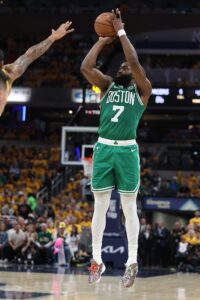 Boston Celtics (58.5 wins): Over (69.7%)
- New York Knicks (53.5 wins): Over (58.8%)
- Philadelphia 76ers (52.5 wins): Under (51.7%)
- Toronto Raptors (30.5 wins): Under (58.7%)
- Brooklyn Nets (19.5 wins): Over (54.3%)
- Milwaukee Bucks (50.5 wins): Over (63.2%)
- Cleveland Cavaliers (48.5 wins): Under (51.6%)
- Indiana Pacers (47.5 wins): Over (57.2%)
- Chicago Bulls (28.5 wins): Under (61.9%)
- Detroit Pistons (24.5 wins): Over (60.2%)
- Orlando Magic (47.5 wins): Over (57.1%)
- Miami Heat (44.5 wins): Under (63.1%)
- Atlanta Hawks (35.5 wins): Under (66.4%)
- Charlotte Hornets (29.5 wins): Under (63.1%)
- Washington Wizards (20.5 wins): Under (56.6%)
Western Conference
- Oklahoma City Thunder (56.5 wins): Over (68.1%)
- Minnesota Timberwolves (52.5 wins): Over (65.2%)
- Denver Nuggets (51.5 wins): Over (54.3%)
- Utah Jazz (29.5 wins): Under (60.1%)
- Portland Trail Blazers (22.5 wins): Under (54.7%)
- Phoenix Suns (50.5 wins): Over (57.6%)
- Sacramento Kings (47.5 wins): Over (62.5%)
- Golden State Warriors (44.5 wins): Under (54.4%)
- Los Angeles Lakers (43.5 wins): Under (51.9%)
- Los Angeles Clippers (39.5 wins): Under (50.8%)
- Dallas Mavericks (49.5 wins): Over (78.0%)
- Memphis Grizzlies (47.5 wins): Under (65.6%)
- New Orleans Pelicans (46.5 wins): Under (60.6%)
- Houston Rockets (43.5 wins): Under (51.4%)
- San Antonio Spurs (36.5 wins): Under (52.9%)
In total, our poll respondents favored 13 overs and 17 unders, which is an interesting divide. In past years, there have been more “over” votes than “under” votes, but it appears our readers are less willing to buy into preseason optimism for certain clubs this time around. The Southeast and Southwest fared particularly poorly in this regard, with eight of the 10 votes in those divisions favoring the under.
These were the five “over” bets that received the largest vote shares:
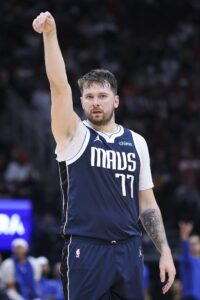 Dallas Mavericks (49.5 wins): 78.0%
- Boston Celtics (58.5 wins): 69.7%
- Oklahoma City Thunder (56.5 wins): 68.1%
- Minnesota Timberwolves (52.5 wins): 65.2%
- Milwaukee Bucks (50.5 wins): 63.2%
The top four teams here all have something in common: Dallas (50 wins in 2023/24), Boston (64), Oklahoma City (57), and Minnesota (56) would all go “over” if they simply replicate their records from last season. And in most cases, that looks like a realistic goal — the Mavericks and Thunder arguably improved as a result of their offseason moves, while Boston’s roster looks pretty similar and Minnesota’s losses (including Kyle Anderson and Monte Morris) may not be enough to warrant a four-game drop.
Still, winning 57 games in the competitive West will be no easy feat for Oklahoma City, and winning 59 is a grind even for the best team in a weak conference — the ’23/24 Celtics were the first Eastern Conference club to win 59+ since Milwaukee racked up 60 victories in ’18/19.
Speaking of the Bucks, our voters appear confident in their ability to bounce back after a disappointing season that saw them experience some growing pains following last September’s Damian Lillard blockbuster and make an in-season coaching change. A full offseason and training camp with Lillard and head coach Doc Rivers is a reason for optimism in Milwaukee.
Here are the five “under” bets that received the largest vote shares:
- Atlanta Hawks (35.5 wins): 66.4%
- Memphis Grizzlies (47.5 wins): 65.6%
- Charlotte Hornets (29.5 wins): 63.1%
- Miami Heat (44.5 wins): 63.1%
- Chicago Bulls (28.5 wins): 61.9%
The Hawks only won 36 games last season, so it’s perhaps no surprise that our voters aren’t enthusiastic about their odds of matching that total again in 2024/25 after trading away Dejounte Murray. I do think the offense could fit together better without Trae Young having to share ball-handling duties with Murray, but for the Hawks to match or exceed last year’s win total, they’ll likely need young players like Jalen Johnson and Dyson Daniels to take significant steps forward.
The Grizzlies are a fascinating case. They went just 27-55 last season, but were the NBA’s most injury-plagued team and will have several key players – led by Ja Morant – back this fall. This year’s roster isn’t quite the same as the one that won 56 games in 2021/22 and 51 in ’22/23, but it’s close enough that I was a little surprised not to see more votes for the “over.”
The Hornets are a poor man’s version of Memphis, with oddsmakers projecting a nice bump on last year’s 21-61 record with starters like LaMelo Ball and Mark Williams once again healthy. Our voters aren’t so sure.
The Heat went 46-36 last year, but lost Caleb Martin and didn’t add any major pieces. Jimmy Butler‘s contract situation is also a question mark — it’s not out of the question that he could be a trade candidate at February’s deadline if the first half doesn’t go well in Miami.
The Bulls won 39 games last season but lost DeMar DeRozan and Alex Caruso over the offseason and are expected to seek takers for Zach LaVine and Nikola Vucevic too. If they turn into second-half tankers, their under looks like a pretty safe bet.
Here are the five picks that were closest to 50/50:
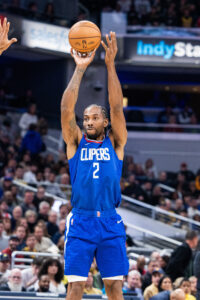 Los Angeles Clippers (39.5 wins): Under (50.8%)
- Houston Rockets (43.5 wins): Under (51.4%)
- Cleveland Cavaliers (48.5 wins): Under (51.6%)
- Philadelphia 76ers (52.5 wins): Under (51.7%)
- Los Angeles Lakers (43.5 wins): Under (51.9%)
The fact that all five of the closest votes favored the “under” helps explain why we ended up with 17 unders overall.
The Clippers and Sixers are the most interesting cases here, since subtracting Paul George in Los Angeles and adding him in Philadelphia will make both teams look a whole lot different. It’s hard to get a feel of what both clubs might look like until we see them in action.
The Rockets, Cavaliers, and Lakers, on the other hand, are all pretty similar to last year’s versions. Oddsmakers are projecting a small step forward for the young Rockets (who went 41-41 last year), a step back for the veteran Lakers (who went 47-35), and essentially the same season for Cleveland (48-34).
What do you think of our picks in general? Are there any results above that you strongly disagree with? Did you make any over or under votes within the last couple weeks that you’re second-guessing now? Jump into our comment section below and weigh in with your thoughts!
Poll: Will Markelle Fultz Open 2024/25 On An NBA Team?
A year ago, things were looking up for Markelle Fultz. In 2022/23, the former No. 1 overall pick posted career highs in several categories with the Magic, including points (14.0), rebounds (3.9), assists (5.7), steals (1.5) and minutes per game (29.6) while shooting a career-best 51.4% from the field in 60 regular season contests, all starts.
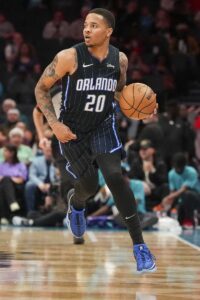 Sure, there were still holes in his game. He rarely attempted long-range shots, converting just 31.0% of his 1.5 three-point attempts per game — and that represented the most accurate mark of his career. While he had a good deal of success on mid-range looks, having a guard who can’t space the floor isn’t ideal for a team’s offense.
2023/24 was a big season for Fultz, as he was set to hit unrestricted free agency this offseason. But instead of building on his success, he was once again plagued by injuries and inconsistent play.
Fultz only appeared in 43 games last season, making 18 starts (21.2 MPG). He averaged 7.8 PPG, 3.2 RPG, 2.8 APG and 1.0 SPG, shooting 47.2% from the field but only attempting 18 threes all season (he made four, or 22.2%). He played pretty well in Orlando’s first-round playoff loss to Cleveland, but his minutes were cut back even further (15.0 MPG).
With training camps set to open in the next couple weeks, Fultz is the best player available on the open market, according to our list of 2024’s top 50 free agents. He came in at No. 43 when the list was published in June and is the only player in the top 50 still looking for a new team.
When healthy, Fultz brings plus size and athleticism for a lead guard, and he’s a crafty ball-handler, play-maker and finisher, on top of being a solid defender. He’s also only 26 years old.
Fultz has made 87MM+ over the course of his seven NBA seasons, but at this point in the offseason, he’ll probably only get non-guaranteed minimum-salary contract offers, similar to those signed by veterans like Landry Shamet, Marcus Morris, Lonnie Walker, Tristan Thompson and Talen Horton-Tucker. The fact that Fultz has only played 234 regular season games in seven seasons doesn’t help his cause.
The Magic renounced their free agent rights to Fultz when they used cap room to sign Kentavious Caldwell-Pope this summer. Orlando could technically still re-sign Fultz, but with Caldwell-Pope, Jalen Suggs, Cole Anthony, Anthony Black, Gary Harris and Cory Joseph already on the roster, the team’s backcourt looks pretty full. And the Magic already have 15 players on guaranteed standard contracts, making a reunion unlikely.
I’d be surprised if Fultz doesn’t play in the NBA at all in ’24/25. But there aren’t many roster openings around the league, and the season begins in just over a month. If he receives — and accepts — a training camp invite, will he make a team’s regular season roster?
That leads us to today’s poll: Will Fultz open the 2024/25 season on an NBA team? If you believe he’ll be on a roster, head to the comments section and let us know which team it will be.
Will Markelle Fultz open the season on an NBA team?
-
No 61% (737)
-
Yes 39% (474)
Total votes: 1,211
NBA 2024 Offseason Check-In: Toronto Raptors
Hoops Rumors is checking in on the 2024 offseason for all 30 NBA teams, recapping the summer’s free agent signings, trades, draft picks, departures, and more. We’ll take a look at each team’s offseason moves and consider what might still be coming before the regular season begins. Today, we’re focusing on the Toronto Raptors.
Free agent signings
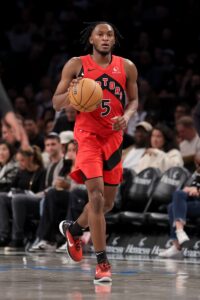 Immanuel Quickley: Five years, $162,500,000. Includes an additional $12.5MM in unlikely incentives. Re-signed using Bird rights.
- Garrett Temple: One year, minimum salary. Re-signed using minimum salary exception. Waived right to veto trade.
- Bruno Fernando: One year, minimum salary. Non-guaranteed. Signed using minimum salary exception.
- Jamison Battle: One year, minimum salary. Non-guaranteed (Exhibit 10). Signed using minimum salary exception.
- Jared Rhoden: One year, minimum salary. Non-guaranteed (Exhibit 10). Signed using minimum salary exception.
Trades
- Acquired Davion Mitchell, Sasha Vezenkov, the draft rights to Jamal Shead (No. 45 pick), and the Trail Blazers’ 2025 second-round pick from the Kings in exchange for Jalen McDaniels.
- Note: Vezenkov was subsequently bought out.
- Acquired the draft rights to Ulrich Chomche (No. 57 pick) from the Grizzlies in a four-team trade in exchange for cash ($1MM; to Timberwolves).
Draft picks
- 1-19: Ja’Kobe Walter
- Signed to rookie scale contract (four years, $16,785,132).
- 2-31: Jonathan Mogbo
- Signed to three-year, $6,113,913 contract ($7,895,796). First two years guaranteed. Third-year team option.
- 2-45: Jamal Shead
- Signed to three-year, $6,113,913 contract ($7,895,796). First two years guaranteed. Third-year team option.
- 2-57: Ulrich Chomche
- Signed to two-year, two-year contract.
Two-way signings
Departed/unsigned free agents
- Jordan Nwora (Anadolu Efes)
- Gary Trent Jr. (Bucks)
- Malik Williams (Heat)
Other moves
- Signed Scottie Barnes to a five-year, maximum-salary rookie scale extension that begins in 2025/26. Projected value of $224,238,150 (starting at 25% of the cap). Projected value can increase to $269,085,780 (30% of the cap) if Barnes meets Rose Rule performance criteria. Includes 15% trade kicker.
- Exercised Bruce Brown‘s 2024/25 team option ($23,000,000).
- Bought out Sasha Vezenkov.
- Waived Javon Freeman-Liberty.
- Waived Mouhamadou Gueye (two-way).
Salary cap situation
- Operating over the cap ($140.6MM) and below the luxury tax line ($170.8MM).
- Carrying approximately $161.5MM in salary.
- Hard-capped at $178,132,000.
- Full mid-level exception ($12.8MM) available.
- Three traded player exceptions available (largest worth $5,107,652).
The offseason so far
Having lost Fred VanVleet in free agency last summer, the Raptors traded OG Anunoby and Pascal Siakam during the 2023/24 season, signaling that they’d decided to build around Scottie Barnes going forward and envisioned newly acquired point guard Immanuel Quickley as his running mate. It was appropriate then that the team’s two biggest moves of the 2024 offseason were locking up those cornerstone pieces to long-term contracts.
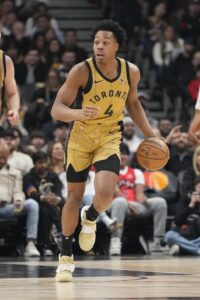 Barnes’ five-year, maximum-salary rookie scale extension is essentially the same deal that his fellow 2021 lottery picks Cade Cunningham, Evan Mobley, and Franz Wagner all signed this summer. And while there’s no guarantee that Barnes will be the best player in that group across the next five or six years, you can make a strong case that, of the four, he was the most deserving of a big-money investment. After all, Barnes beat out the other three for Rookie of the Year honors in 2022 and is the only player from the ’21 draft class who has made an All-Star team so far.
Barnes, 23, will need to keep making strides as a scorer and shooter in order to provide a positive return on that $224MM+ deal, but the Raptors couldn’t reasonably have expected to lock him up for anything less.
It’s not as easy to make the same claim about Quickley, whose new five-year contract includes $162.5MM in guaranteed money and an additional $12.5MM in incentives. That’s a huge price to pay for a player who had never averaged more than 15 points per game and hadn’t emerged as a full-time starter before arriving in Toronto midway through the 2023/24 season.
Quickley finished the year strong, averaging 18.6 points, 6.8 assists, and 4.8 rebounds in 33.3 minutes per game across 38 games (all starts) for Toronto. Still, his career résumé to date isn’t any stronger than that of players like Jordan Poole or Tyler Herro, who each signed long-term contracts in 2022 that were one year shorter and slightly less lucrative than Quickley’s new deal — and those contracts don’t exactly look especially team-friendly two years later.
As with Barnes’ deal, the Raptors’ investment in Quickley is more about what he can become than what he is right now. If he doesn’t improve upon his .421 career FG% or further increase his scoring and assist totals, that $32.5MM annual salary will feel like an overpay. On the plus side, it features a flat structure, meaning it’ll be worth a smaller percentage of the cap in each subsequent season.
Besides splurging on Barnes and Quickley, the Raptors didn’t make a ton of major roster moves this offseason. Garrett Temple was the only other free agent to receive guaranteed money, and he re-signed for the veteran’s minimum. Bruno Fernando also got a minimum-salary deal, and while his contract isn’t guaranteed, he has a shot to make the roster as the 15th man. Toronto opted not to bring back Gary Trent Jr., whose asking price reportedly exceeded what the club was comfortable paying.
The Raptors took on some salary in a trade with Sacramento, acquiring Sasha Vezenkov, Davion Mitchell, and a pair of second-round picks in exchange for Jalen McDaniels. It was a savvy move for a team with some breathing room below the luxury tax line and looked even better when Vezenkov agreed to give up his entire $6.66MM guaranteed salary in a buyout agreement.
As a result, the Raptors essentially took on an extra $1.7MM in salary to swap out a dud of a 2023 free agent signing (McDaniels) for a former lottery pick with some defensive upside (Mitchell) while adding a pair of second-round picks in the process. One of those second-rounders was No. 45 selection Jamal Shead, who became one of three rookies to join Toronto’s 15-man roster, along with No. 19 pick Ja’Kobe Walter and No. 31 pick Jonathan Mogbo.
Once a highly regarded program capable of turning late first-rounders (Siakam) and undrafted free agents (VanVleet) into All-Stars, the Raptors’ player development staff hasn’t had as many wins in recent years. Between this year’s rookie class and last year’s No. 13 overall pick Gradey Dick, they’ll have no shortage of developmental opportunities in 2024/25, even after having traded away their own 2024 lottery selection.
Up next
With 14 players on guaranteed standard contracts and three on two-way deals, the Raptors’ roster is essentially set for the regular season. Barring a preseason trade or a two-way change, the only real decision will be whether or not to carry a 15th man.
Fernando is the favorite for that opening, but his salary would become fully guaranteed if he remains under contract through opening night. It will be interesting to see whether or not the Raptors attempt to push back that guarantee date, allowing him to remain on the roster and essentially be paid by that day for the first few weeks of the regular season. Before he was waived by the Hawks in July, Fernando agreed to push back his guarantee date multiple times, so he’s no stranger to that type of arrangement.
After picking up Bruce Brown‘s $23MM option in June, Toronto was expected to try to find a taker for the veteran swingman and his expiring contract, but no deal materialized. Brown, who played a key role off the bench for the 2023 champion Nuggets, is the sort of jack-of-all-trades contributor who would fit in on just about any playoff team, so he’ll remain a prime trade candidate as long as he’s on the roster. While the Raptors could revisit the market this fall, an in-season move is probably more likely.
The Raptors have two players eligible for extensions, but I don’t think either Mitchell (rookie scale) or Chris Boucher (veteran) is a great candidate to sign a new contract before opening night. Mitchell has yet to play a game with Toronto and Boucher had an inconsistent role last season, averaging just 14.1 minutes per game.
I expect the Raptors to take their chances with Mitchell in restricted free agency next summer, if he’s even still on the roster by then. As for Boucher, he’ll remain extension-eligible for the entire league year, so if he enjoys a nice bounce-back season, the front office could open negotiations at any time.
2024/25 NBA Over/Unders: Pacific Division
With the 2024/25 NBA regular season set to tip off next month, we’re getting serious about predictions for the upcoming campaign and continuing an annual Hoops Rumors tradition.
With the help of the lines from a series of sports betting sites – including Bovada and BetOnline – we’re running through the predicted win totals for each of the NBA’s 30 teams, by division. In a series of team-by-team polls, you’ll get the chance to weigh in on whether you think those forecasts are too optimistic or too pessimistic.
In 2023/24, our voters went 16-14 on their over/under picks. Can you top that in ’24/25?
We’ll wrap up our series today with the Pacific Division…
Phoenix Suns
- 2023/24 record: 49-33
- Over/under for 2024/25: 48.5 wins
- Major offseason moves:
How many games will the Suns win in 2024/25?
-
Over 48.5 58% (215)
-
Under 48.5 42% (158)
Total votes: 373
Sacramento Kings
- 2023/24 record: 46-36
- Over/under for 2024/25: 47.5 wins
- Major offseason moves:
How many games will the Kings win in 2024/25?
-
Over 47.5 63% (227)
-
Under 47.5 37% (136)
Total votes: 363
Golden State Warriors
- 2023/24 record: 46-36
- Over/under for 2024/25: 44.5 wins
- Major offseason moves:
How many games will the Warriors win in 2024/25?
-
Under 44.5 54% (211)
-
Over 44.5 46% (177)
Total votes: 388
Los Angeles Lakers
- 2023/24 record: 47-35
- Over/under for 2024/25: 43.5 wins
- Major offseason moves:
- Added: Dalton Knecht, Bronny James
- Lost: Taurean Prince, Spencer Dinwiddie
How many games will the Lakers win in 2024/25?
-
Under 43.5 52% (205)
-
Over 43.5 48% (190)
Total votes: 395
Los Angeles Clippers
- 2023/24 record: 51-31
- Over/under for 2024/25: 39.5 wins
- Major offseason moves:
How many games will the Clippers win in 2024/25?
-
Under 39.5 51% (186)
-
Over 39.5 49% (180)
Total votes: 366
Previous voting results:
- Boston Celtics (58.5 wins): Over (69.7%)
- New York Knicks (53.5 wins): Over (58.8%)
- Philadelphia 76ers (52.5 wins): Under (51.7%)
- Toronto Raptors (30.5 wins): Under (58.7%)
- Brooklyn Nets (19.5 wins): Over (54.3%)
- Dallas Mavericks (49.5 wins): Over (78.0%)
- Memphis Grizzlies (47.5 wins): Under (65.6%)
- New Orleans Pelicans (46.5 wins): Under (60.6%)
- Houston Rockets (43.5 wins): Under (51.4%)
- San Antonio Spurs (36.5 wins): Under (52.9%)
- Orlando Magic (47.5 wins): Over (57.1%)
- Miami Heat (44.5 wins): Under (63.1%)
- Atlanta Hawks (35.5 wins): Under (66.4%)
- Charlotte Hornets (29.5 wins): Under (63.1%)
- Washington Wizards (20.5 wins): Under (56.6%)
- Oklahoma City Thunder (56.5 wins): Over (68.1%)
- Minnesota Timberwolves (52.5 wins): Over (65.2%)
- Denver Nuggets (51.5 wins): Over (54.3%)
- Utah Jazz (29.5 wins): Under (60.1%)
- Portland Trail Blazers (22.5 wins): Under (54.7%)
- Milwaukee Bucks (50.5 wins): Over (63.2%)
- Cleveland Cavaliers (48.5 wins): Under (51.6%)
- Indiana Pacers (47.5 wins): Over (57.2%)
- Chicago Bulls (28.5 wins): Under (61.9%)
- Detroit Pistons (24.5 wins): Over (60.2%)
NBA 2024 Offseason Check-In: Portland Trail Blazers
Hoops Rumors is checking in on the 2024 offseason for all 30 NBA teams, recapping the summer’s free agent signings, trades, draft picks, departures, and more. We’ll take a look at each team’s offseason moves and consider what might still be coming before the regular season begins. Today, we’re focusing on the Portland Trail Blazers.
Free agent signings
- Devonte’ Graham: One year, minimum salary. Non-guaranteed. Signed using minimum salary exception.
- Henri Drell: One year, minimum salary. Non-guaranteed (Exhibit 10). Signed using minimum salary exception.
Trades
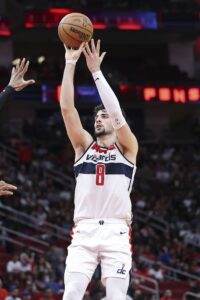 Acquired the Timberwolves’ 2027 second-round pick; either the Pacers’ or Wizards’ 2029 second-round pick (whichever is least favorable); and the Knicks’ 2030 second-round pick from the Knicks in exchange for the draft rights to Tyler Kolek (No. 34 pick).
- Acquired the draft rights to Quinten Post (No. 52 pick) and cash from the Thunder in exchange for the draft rights to Oso Ighodaro (No. 40 pick).
- Acquired cash from the Warriors in exchange for the draft rights to Quinten Post (No. 52 pick).
- Acquired Deni Avdija in exchange for Malcolm Brogdon; the draft rights to Carlton Carrington (No. 14 pick); either the Trail Blazers’, Celtics’, or Bucks’ 2029 first-round pick (whichever is second-most favorable); the Warriors’ 2028 second-round pick; and the Trail Blazers’ 2030 second-round pick.
Draft picks
- 1-7: Donovan Clingan
- Signed to rookie scale contract (four years, $31,085,018).
Two-way signings
Departed/unsigned free agents
- Ibou Badji (Bucks)
- Moses Brown (unsigned)
- Ashton Hagans (unsigned)
Other moves
- Exercised Dalano Banton‘s 2024/25 team option ($2,196,970).
Salary cap situation
- Operating over the cap ($140.6MM) and below the luxury tax line ($170.8MM).
- Carrying approximately $167.1MM in salary.
- No hard cap.
- Full mid-level, bi-annual exceptions available.
- Three traded player exceptions available (largest worth $8,778,377).
- Note: The $8,778,377 exception expires on 9/27. The second-largest TPE is worth $6,875,000.
The offseason so far
After finishing the 2023/24 season with a 21-61 record, worst in the Western Conference, the Trail Blazers entered the offseason projecting to be a taxpayer in ’24/25, which wasn’t exactly ideal for a team still far away from contention.
As a result, Portland had two primary goals this summer: First, continue adding young talent to its core. And second, shed enough salary to get under the tax line and avoid paying a premium for a roster almost certain to finish in lottery territory again.
Armed with the Nos. 7, 14, 34, and 40 picks in the 2024 draft, the Trail Blazers were well positioned to add more prospects to their roster, but opted against keeping all of those draft assets, recognizing they could use one of those lottery picks to help address both of their offseason goals. Rather than hanging onto the No. 14 pick, Portland packaged it with Malcolm Brogdon, a future first-rounder, and a pair of second-round picks to acquire Deni Avdija from the Wizards.
While it may look like a significant price to pay for Avdija, Brogdon didn’t have a long-term place in a crowded Portland backcourt, this year’s draft class was considered weak, and the future first-round pick the Blazers surrendered is just a second-most favorable pick in 2029, meaning they’ll still hold a more favorable first-rounder in the spring of ’29.
Plus, even though Avdija is a four-year veteran, he just turned 23 years old this year and is on a team-friendly contract that he signed last fall prior to an impressive breakout season in 2023/24. The four-year, $55MM deal starts at about $15.6MM and descends from there, making it a relative bargain for a player who posted career highs in PPG (14.7), RPG (7.2), APG (3.8), FG% (.506), and 3PT% (.374) last season. The former Wizard immediately becomes a long-term building block in Portland.
The trade also ensured the Blazers will stay out of tax territory in 2024/25. Brogdon’s $22.5MM expiring contract exceeds Avdija’s ’24/25 cap charge by nearly $7MM, and the No. 14 pick would’ve received a salary just shy of $4.5MM, so Portland essentially trimmed eight figures worth of salary in the transaction.
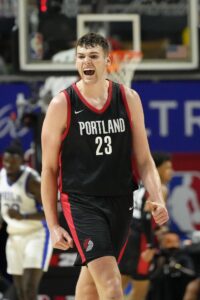 Besides acquiring Avdija, the only other major addition the Blazers made this offseason was drafting center Donovan Clingan with the No. 7 overall pick in June.
It was a somewhat curious choice, given that Portland has no shortage of centers already under contract (Deandre Ayton, Robert Williams, Duop Reath). But the Blazers are still early enough in their rebuild to favor a “best player available” approach to the lottery, and Clingan – who was widely considered a possible top-three pick leading up to draft night – presumably fit that bill for them.
It’s not as if the Blazers already have a star at the position either. Ayton is a former No. 1 overall pick, but he has been inconsistent, isn’t an elite rim protector, and didn’t cement his place as the long-term answer in the middle during his first year in Portland. Williams, meanwhile, missed most of last season due to knee surgery, and Reath projects as more of a second or third option on the depth chart.
Interestingly, after trading away the 14th overall pick in the draft, the Blazers also opted not to use either No. 34, which they traded to New York for three future second-rounders, or No. 40, which they sold for cash.
I was a little surprised that a rebuilding and cost-conscious Portland team didn’t hang onto at least one of those selections, which would’ve allowed them to add another rookie on the cheap. But the front office must feel as if there are already enough projects on the roster for the coaching staff to develop — six Blazers players, including lottery picks Scoot Henderson and Shaedon Sharpe, were selected in either the 2022 or 2023 draft.
Up next
The Blazers’ logjam at center makes them a logical candidate for a preseason or in-season trade. Ayton would be difficult to move due to his maximum-salary contract, but Williams is earning around the mid-level and could be an intriguing target if he’s able to show he’s back to 100% health.
The situation in the backcourt may not be best described as a “logjam,” but the Blazers are clearly hoping that Henderson and Sharpe will be their starting guards of the future. In the present, Anfernee Simons has the stronger résumé and probably wouldn’t be thrilled if he finds himself out of the starting five. That’s not to say that finding a taker for Simons is a top priority in the short term (there should be plenty of playing time to go around for all three guards), but it wouldn’t be surprising if his name pops up in trade rumors prior to February’s deadline.
Simons, Ayton, and Williams are all eligible for veteran extensions up until October 21, but are unlikely candidates to sign new contracts by that point — they each have two years left on their current deals, so if the Blazers do decide one or more of them are keepers, they could try to work out longer-term contracts during the 2025 offseason.
Jabari Walker is the least heralded but perhaps most viable extension candidate of the bunch. He’s entering the final year of his minimum-salary contract after averaging 8.9 points and 7.1 rebounds per game in a part-time role (23.6 MPG) last season.
As for the Blazers’ projected regular season roster, they’re currently carrying 14 players on guaranteed standard contracts and three on two-way deals, so barring trades, only the 15th standard spot looks up for grabs. Dalano Banton is probably the favorite for that last opening, with camp invitee Devonte’ Graham also in the mix.
Community Shootaround: Heat’s 2024 Offseason
Just one year removed from another Finals appearance, the Heat had a major postseason letdown in 2023/24.
With All-NBA swingman Jimmy Butler and recently acquired starting point guard Terry Rozier both out for the entirety of their first-round series against the No. 1-seeded Celtics, Miami fell in five quick games.
But even before that, the Heat had a somewhat disappointing regular season run. Despite making their second NBA Finals — and third Eastern Conference Finals — in four seasons behind the play of All-Stars Butler and Bam Adebayo, the club followed that 2023 run up by once again finishing with the conference’s No. 8 seed with a roster hit hard by injuries and featuring several one-way players
Heading into the 2024 offseason, it seemed clear that the club needed to shore up its perimeter and frontcourt defense, and perhaps take a flier on some talented young free agents in need of more playing time in a competitive atmosphere.
Beyond cost-effective free agent signings for the capped-out Heat, a trade seemed like another possibility well worth exploring this offseason. The club has plenty of intriguing players like former Sixth Man of the Year Tyler Herro and sharpshooter Duncan Robinson who, along with future draft picks, could conceivably be packaged together for premium veteran talent.
Instead, Miami – affected by a lack of cap flexibility – seems set to bank on internal improvement this year. Over the summer, the Heat mostly re-signed veteran incumbents, including power forward Kevin Love, center Thomas Bryant and combo forward Haywood Highsmith. The team did add some bench scoring help in the form of longtime NBA shooting guard Alec Burks on a veteran’s minimum deal. Miami also locked in Adebayo to a three-year, $165.3MM maximum contract extension.
In this year’s draft, Miami made a move to address its frontcourt athleticism, selecting former All-Big Ten Second Team Indiana 7-footer Kel’el Ware with the No. 15 overall pick. As part of a three-team trade, the Heat also acquired the draft rights to former All-Pac-12 Arizona shooting guard Pelle Larsson.
Most troublingly, however, Miami saw versatile 3-and-D small forward Caleb Martin depart in free agency for what he considered to be a better contending opportunity with the refurbished Sixers.
The Heat will hope that younger players like All-Rookie First Team swingman Jaime Jaquez Jr., Adebayo, Herro and Robinson can continue to improve, older players like Butler, Rozier and Love and stay healthy, and that Ware can help spell Adebayo sooner rather than later.
Butler has a $52.4MM player option for 2025/26, and could enter free agency if he believes he could earn more long-term security or a better title opportunity elsewhere. As such, his situation is being closely watched by rival squads, including the Warriors, who could look to pounce on Butler in the trade market if Miami’s season heads south.
For years, the Heat have been able to save their best stuff for the playoffs. With Butler a frequent injury question mark at age 35 and questionable depth surrounding the team’s two stars, it doesn’t seem particularly feasible that Miami’s current personnel will be enough to overcome even the Knicks or Sixers this year, let alone Boston.
We want to hear from you! Will the Heat be able to rise up the ranks of the East this season? Can the team as is have more playoff success in 2025 than it did in 2024? Should the squad look to make a win-now trade during the season?
Weigh in below via our comments section.