
Southwest Notes: Holiday, Motley, Gasol
The addition of Rajon Rondo to the Pelicans‘ lineup has helped bring out the best in Jrue Holiday. William Guillory of The Times-Picayune writes that the converted shooting guard is playing some of the best basketball of his New Orleans tenure.
Holiday has established himself as a desperately needed perimeter scoring option, especially now that the presence of Rondo allows him to focus on scoring. The extra offensive output comes at an ideal time for the Pelicans, as they’ve been without Anthony Davis for the past three games..
“I think Jrue is one of the best. He’s easily one of the top three 1-on-1 players in our game today,” Rondo, who signed with the Pelicans in the offseason, said. Since Rondo has slid into the lineup, Holiday has averaged 20 points and 4.4 assists per game with a .483 field-goal percentage.
“His aggression and just taking advantage of being a bigger guard. He’s one of the best two-way players in this league when he’s aggressive. That’s the guy we need for our team to go to the next level,” Pelicans big man DeMarcus Cousins added. “He’s been playing great, he’s taken our team to another level and we’re a tough team to beat when he’s playing that way.”
There’s more out of the Southwest Division:
- The Mavericks have added Johnathan Motley to their active lineup for the first time this season after the two-way contract signee averaged 22.7 points and 9.8 rebounds per game in the G League, Eddie Sefko of the Dallas Morning News writes. “[When you’re in the G League] you can’t just try to be a guy and get everybody else involved,” teammate J.J. Barea, an alum of the NBA’s minor league, said. “You got to kill it. That’s how you get noticed.“
- The NBA has fined Marc Gasol $15K for dropping an F-Bomb on live television, the league announced. It’s been a rocky season for the Grizzlies.
- The Rockets have looked impressive with Chris Paul back in the lineup, not only on offense but on defense. Sam Amick of USA Today writes that Paul’s defensive presence – in addition to P.J. Tucker‘s and Luc Mbah a Moute‘s – has helped Houston make a name for itself with the fifth-best defensive rating in the league.
Cody Zeller Out Indefinitely With Torn Meniscus
The Hornets will be without Cody Zeller indefinitely as the 25-year-old explores treatment options for a torn meniscus, the team announced in a press release. Zeller injured his left knee in Charlotte’s Wednesday night loss to the Warriors.
Zeller has seen his role reduced in 2017/18 thanks to the team’s acquisition of Dwight Howard, but he has been a pivotal part of the Hornets’ second unit. In 19.9 minutes per game so far this season, Zeller is averaged 7.2 points and 5.5 rebounds.
It’s not clear at this point whether Zeller will elect to go under the knife, but that surgery decision could impact his recovery time. Torn meniscus surgeries ended the 2016/17 campaigns of both Joel Embiid and Derrick Rose last spring.
In the meantime, Charlotte will rely more heavily on Howard with Zeller’s fellow reserve Frank Kaminsky hobbled by an injury of his own.
Alexis Ajinca Likely Out For Season
The Pelicans have been without reserve center Alexis Ajinca all season and that isn’t likely to change for the rest of the year. As Christian Boutwell of the New Orleans Advocate writes, the 29-year-old underwent knee surgery on his right patellar tendon and is expected to miss four to six months.
While the news may not come as a surprise to the franchise, it’s an added blow to a team that has struggled to keep its big men healthy. Ajinca averaged 5.3 points and 4.5 rebounds per game last season, but that’s of little help when he can’t stay on the floor.
Ajinca has failed to play 70 games in each of his seven NBA seasons and that doesn’t include this lost campaign or the two years he bounced around Europe from 2011-2013. He has appeared in over 60 games just once.
The Pels will pay Ajinca $5MM this season – the third year of a four-year, $20MM deal he signed with the team back in 2015 – and will give him a slight raise up to $5.3MM in 2018/19.
Nets Acquire Jahlil Okafor From Sixers
5:22pm: The reported trade is now official, both teams have announced in press releases.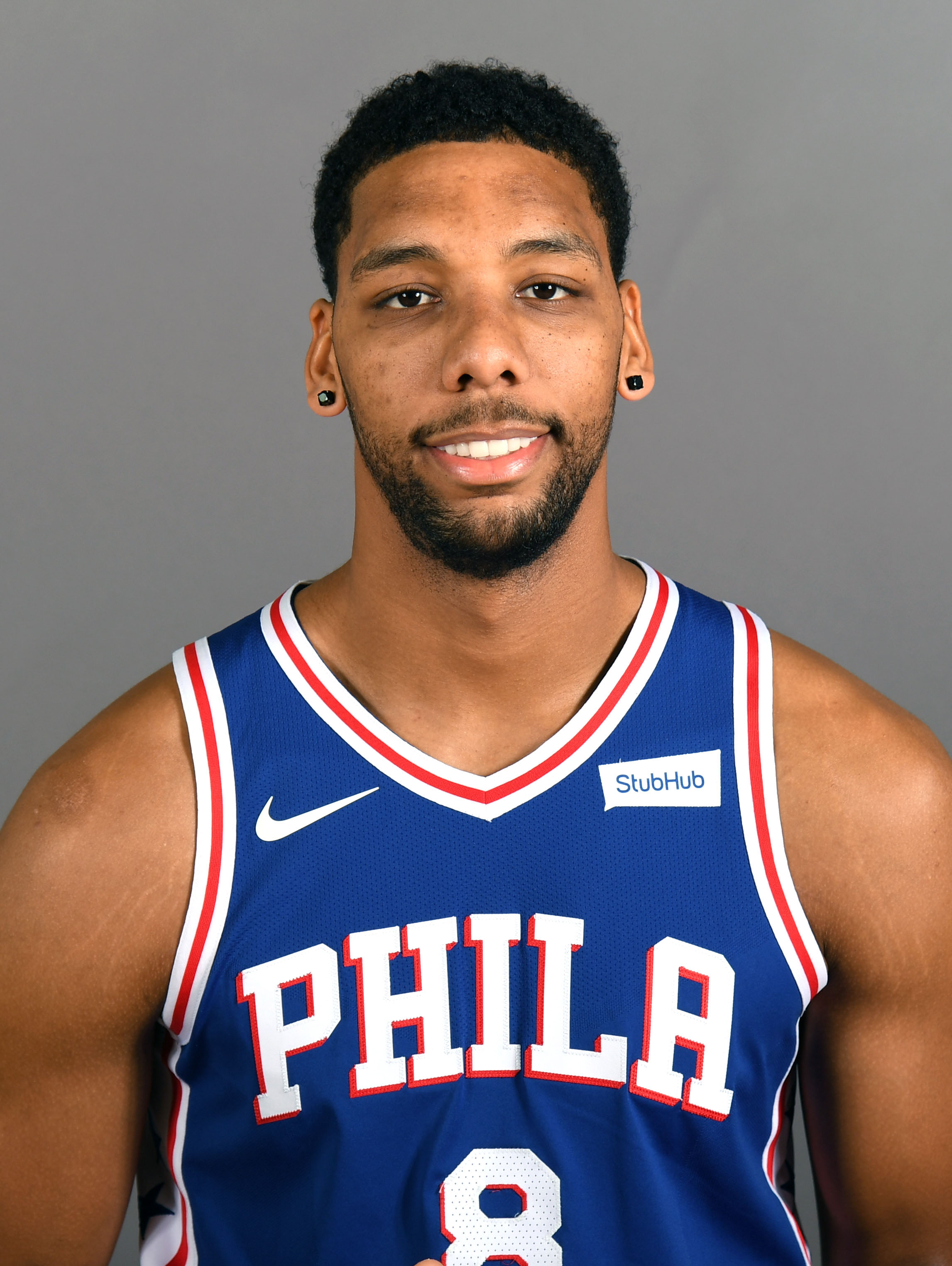
3:16pm: The Nets and Sixers are nearing a deal that will send Jahlil Okafor to Brooklyn, Zach Lowe of ESPN tweets. In the trade, Lowe adds, Philly will also send Nik Stauskas and a second-round pick to the Nets in exchange for Trevor Booker.
The second-round pick heading from the Sixers to the Nets will actually be the Knicks’ second-rounder in 2019, Shams Charania of The Vertical tweets. Charania also clarifies that the Nets will promptly release guard Sean Kilpatrick in order to create space for the two incoming players.
The move to Brooklyn serves as an excellent opportunity for 2015’s third overall pick. Having seen action in just two contests for the Sixers this season, Okafor was in desperate need of a change of scenery. His camp had been working directly with the franchise to find a suitable new destination since at least October.
Okafor will slot into the Nets’ depth chart as a potential starter. Given that Okafor averaged 17.5 points and 7.0 rebounds per game as a rookie back in 2015/16, it’s not unreasonable to expect him to eat into Timofey Mozgov‘s role at the five. Okafor, after all, showed up to training camp this fall in the best shape of his career.
Worth keeping an eye on is the fact that Okafor will be an unrestricted free agent at the end of this season thanks to Philadelphia’s decision to decline his 2018/19 fourth-year option. If the Nets want to re-sign him, they won’t be able to offer him a starting salary worth more than the value of that declined option (approximately $6.3MM).
The acquisition of Stauskas may not move the needle much for Brooklyn fans, but the former Michigan Wolverine will reunite with Caris LeVert and add depth on the perimeter. He’ll be eligible for restricted free agency in 2018.
Finally, the Sixers will benefit from Booker’s veteran presence and his expiring $9.1MM contract isn’t going to impact the team’s financial future. Booker has averaged 10.1 points and 6.6 rebounds in just 21.9 minutes per game so far this season and will provide extra depth for a young team that is looking to turn the corner and seriously compete in the East.
Photo courtesy of USA Today Sports Images.
Nets Release Sean Kilpatrick
5:21pm: The Nets have formally released Kilpatrick, the team announced in a press release (h/t Adam Zagoria of the New York Times).
3:30pm: In order to make roster space for the acquisitions of Jahlil Okafor and Nik Stauskas, the Nets will waive guard Sean Kilpatrick, Shams Charania of The Vertical tweets.
Since signing a 10-day contract with the Nets back in 2015/16, the 27-year-old has played in 109 games for the franchise, starting 24 of them. Kilpatrick averaged 13.1 points and 4.0 rebounds in just over 25 minutes per game during the 2016/17 season.
This year Kilpatrick saw his role decrease and has only played 11.4 minutes per game despite Brooklyn’s backcourt injury woes.
NBA Plans To Establish G League Team In Mexico City
The NBA intends to “move quickly” toward establishing an NBA G League franchise in Mexico City, league sources tell Marc Stein of The New York Times (Twitter links). According to Stein, the NBA wants to get a team up and running as soon as it’s feasible, which could happen as early as next season.
This isn’t the first we’ve heard of the NBA’s interest in an expansion G League franchise in Mexico City. Last month, when Jonathan Givony of ESPN reported that the league was set to announce the opening of a basketball academy in Mexico, he noted that Mexico City was a candidate to emerge as the location for a G League franchise.
Although not all of the NBA’s 30 teams have G League affiliates of their own yet, a G League franchise in Mexico City is unlikely to be affiliated with any specific NBA team, per Stein’s full report on the plan. Stein indicates the club would be owned and operated locally, while Givony’s report last month suggested that top prospects from the NBA’s training academies could graduate to that G League team in Mexico.
For now, 26 NBA teams either own and operate their own G League teams or have a direct affiliation with a G League squad. The Wizards and Pelicans are good bets to join that group next season, with the Trail Blazers and Nuggets looming as the potential final two holdouts.
If the NBA installs a G League franchise in Mexico City and it thrives, it could be the first step toward eventually establishing an NBA franchise in the largest market in Latin America. As Stein notes, the league isn’t currently looking to expand or to relocate any of its teams, but commissioner Adam Silver views Mexico City as a logical candidate for a franchise in the event of relocation or expansion. A G League team could help generate more interest in basketball in Mexico, helping to pave the way for an eventual NBA franchise.
Hoops Rumors Glossary: Mid-Level Exception
The mid-level exception is the most common way for over-the-cap NBA teams to sign free agents from other clubs for more than the minimum salary. It ensures that each club heads into the offseason with a little spending flexibility, even if that team is deep into luxury tax territory.
Each team is eligible to use a specific type of mid-level exception depending on its proximity to the salary cap. The most lucrative kind of mid-level is available to teams that are over the cap but less than $6MM above the tax threshold. Still, clubs deep into the tax, and even those under the cap, have access to lesser versions of the MLE. Here’s a glance at how all three forms of the exception are structured:
For over-the-cap teams:
- Commonly called either the full mid-level exception, the non-taxpayer’s mid-level exception or simply the mid-level exception.
- Contract can cover up to four seasons.
- First-year salary is worth $8,406,000 in 2017/18.
- Once used, the team cannot surpass the “tax apron” ($6MM above tax line) for the remainder of the season.
For teams above the cap and the tax apron:
- Commonly called the taxpayer’s mid-level exception.
- Contract can cover up to three seasons.
- First-year salary is worth $5,192,000 in 2017/18.
For teams with cap room:
- Commonly called the room exception.
- Contract can cover no more than two seasons.
- First-year salary is worth $4,328,000 in 2017/18.
Each form of the mid-level allows for annual raises of up to 5% of the value of the first season’s salary. Back in June, we broke down the maximum total salaries that players signed using the mid-level exception could earn. Those numbers can be found right here.
While teams can use their entire mid-level exception to sign one player, as the Spurs did this year with Rudy Gay, clubs are also allowed to split the mid-level among multiple players, and that’s a common course of action. For instance, the Grizzlies have used their MLE to complete four separate signings, devoting parts of it to Ben McLemore, Ivan Rabb, Rade Zagorac, and Dillon Brooks.
Players drafted near the top of the second round often sign contracts for part of the mid-level because it allows teams to give them contracts for more years and more money than the minimum salary exception provides. For example, the Grizzlies used their mid-level to sign Ivan Rabb to a three-year contract that starts at $950,000. Without the MLE, Memphis would have been limited to a two-year deal starting at $815,615, and would have only had Early Bird rights on Rabb when his contract ended, rather than full Bird rights.
Some front offices prefer to leave all or part of their mid-level exception unused in the offseason so it’s still available near the end of the regular season — at that point, a contender could use its MLE to try to sign an impact veteran on the buyout market, while a rebuilding club could use it to lock up an intriguing developmental player to a long-term contract.
Unlike the bi-annual exception, the mid-level exception can be used every season. So whether or not a team uses its mid-level in 2017/18, each club will have the opportunity to use some form of the MLE when the new league year begins on July 1, 2018.
Under the old Collective Bargaining Agreement, the mid-level exception increased annually at a modest, fixed rate, which limited its value as the salary cap spiked. However, under the new CBA, the mid-level will increase at the same rate as the salary cap, ensuring that its value relative to cap room remains about the same from year to year. Based on the NBA’s current $101MM salary cap projection, the 2018/19 non-taxpayer MLE would start at $8,567,770.
Note: This is a Hoops Rumors Glossary entry. Our glossary posts will explain specific rules relating to trades, free agency, or other aspects of the NBA’s Collective Bargaining Agreement. Larry Coon’s Salary Cap FAQ and the Basketball Insiders salary pages were used in the creation of this post.
Earlier versions of this post were published in 2012, 2013, 2014, 2015, and 2016 by Luke Adams and Chuck Myron.
Mark Cuban Talks Rebuilding, NBA Vs. NFL, Celtics
It has been a tough season for Mark Cuban‘s Mavericks so far, as the team currently ranks last in the Western Conference with a 7-18 record. Still, that doesn’t mean Cuban’s plan for Dirk Nowitzki has changed it all — he still envisions Nowitzki spending as many more seasons as he wants with the Mavs, finishing his career in Dallas.
“I still wouldn’t trade Dirk even if they offered me three No. 1’s,” Cuban said with a smile to Steve Bulpett of The Boston Herald this week. “Four, yes. But three, no.”
In addition to cracking jokes about his longtime star, Cuban also weighed in on a few more noteworthy topics. The Mavs owner talked about the rebuilding process for his club, which he hopes doesn’t last long, and pointed to the Celtics as a franchise worth emulating during that rebuild. He also revisited a topic he has discussed in the past, exploring why the NBA has been on the upswing in recent years, while other sports (most notably the NFL) haven’t had as much success gaining new fans and viewers.
Here are a few highlights from Cuban’s comments to Bulpett, whose piece is worth checking out in full:
On why the NBA is seeing increased popularity and TV ratings:
“There’s a confluence of a couple of things. No. 1, our demographic keeps on getting younger. The NFL and baseball, they keep on getting older. And I think what we’re doing with (the video game) NBA 2K is brilliant. And in the bigger scheme of things, in terms of building fans for the future, what do you want your kids to play? Of all the sports out there, do you want to go to a baseball game, or do want to watch your kid play basketball? Do you want to worry about him [playing] a whole football game, or do you want to watch your kid play basketball? Do you want him to get healthy from running the court, or do you want to watch him play football and worry about collisions?”
On the aspects of the Celtics’ rebuild that he admires and wants to emulate:
“I think the hallmark of what they did is how they get their teams to play hard. That’s really what we look to emulate more than anything else. I mean, they’ve done a great job in the draft, but there’s as much luck as anything else there, and things have got to fall in your lap one way or the other. So the way it’s worked out, the biggest takeaway that we’ve seen in looking at the Celts — and we’ve done a lot of deals with them, so we’re close to them — really, more than anything, it’s just how hard Brad gets his teams to play.”
On the Mavericks’ own rebuild:
“We just started last year. We weren’t going into last year thinking we were rebuilding, but [Andrew] Bogut got hurt and Deron Williams was hurt. We started off 3-17 or something ridiculous, and until we went into tank mode once we got eliminated from the playoffs, we were just outside the playoffs. So we have just started the rebuild, and hopefully it won’t be long.”
Suns Convert Mike James’ Two-Way Contract Into NBA Deal
DECEMBER 7, 11:35am: The Suns have officially converted James’ two-way deal to a standard NBA contract, the team announced today in a press release. The release also confirmed that the team has waived Jones, as we detailed in a separate story.
James is now on track to reach restricted free agency in 2018, while the Suns have an open two-way contract slot that could be filled at any time.
DECEMBER 6, 11:02pm: The Suns are converting Mike James‘ two-way contract into a traditional NBA contract, Adrian Wojnarowski of ESPN.com reports. On Thursday, James will have spent 45 days with the NBA club, which is the maximum allowed under a two-way deal.
James will be the first player in NBA history to have his two-way deal converted. Phoenix plans on opening a roster spot on Thursday morning and Derrick Jones is a good bet to be the casualty of the transaction, barring a trade.
The point guard made approximately $213K on his two-way deal and he could earn slightly over $580K if he remains with the team for the remainder of the 2017/18 season. James took on a larger role once the Suns dealt away Eric Bledsoe, starting 10 games before finding his niche leading the second unit.
Suns Waive Derrick Jones
11:32am: The Suns have officially waived Jones, the club confirmed today in a press release.
10:08am: The Suns will waive Derrick Jones to create an open spot on their 15-man roster, reports Shams Charania of The Vertical (Twitter link). The move was necessary in order to clear room for Mike James, whose two-way contract is being converted into a standard NBA deal.
Jones, 20, initially signed with the Suns as an undrafted free agent in September 2016. He has played sparingly for the team since then, appearing in 38 total games and averaging 4.7 PPG and 2.2 RPG in 15.2 minutes per contest. The UNLV product is perhaps best known for his participation in last season’s Slam Dunk Contest — he was the runner-up to champion Glenn Robinson.
Jones had been set to earn $1,312,611 this season, but his contract was non-guaranteed, so the Suns will only be on the hook for a portion of that amount — by my math, the cap charge will work out to about $400K. Of course, if Jones is claimed on waivers, Phoenix will no longer have to carry any part of his contract on its cap for 2017/18. The young forward is under team control through 2020, with a non-guaranteed minimum salary for 2018/19 and a minimum-salary team option for 2019/20.
As Charania tweets, Jones may draw real interest in the waiver process due to his youth and his contract structure. However, any team wanting to place a claim would need to have cap room or an exception big enough to absorb his salary. The waiver order is based on this year’s reverse standings, meaning the Bulls would have first dibs.
As for James, he and the Suns discussed multiple contract structures, but ultimately settled on a rest-of-season deal, per Charania. James will be on track to reach restricted free agency in the summer of 2018.