
Silver Remains “Optimistic” That Season Can Be Saved
During an interview tonight with ESPN’s Rachel Nichols, NBA Commissioner Adam Silver expressed hope that the current season can be completed in some form, writes Tim Bontemps of ESPN. While he admitted it’s way too early to guess when that may happen or what it might look like, Silver isn’t ready to talk about a cancellation.
“I’m optimistic by nature,” he said. “I want to believe we can salvage some form of the season.”
The commissioner said he discusses the situation every day with medical experts and Michele Roberts, executive director of the players union. He has also conducted conference calls with the owners to brainstorm possible solutions. Scenarios that have been discussed include resuming the season under normal conditions, playing the games with no fans in the arenas, or a one-time charity event involving players who have tested negative for the coronavirus.
“A third option that we are looking at now … the impact on the national psyche of having no sports programming on television,” he said. “And one of the things we’ve been talking about are, are there conditions in which a group of players could compete — maybe it’s for a giant fundraiser or just the collective good of the people — where you take a subset of players and, is there a protocol where they can be tested and quarantined and isolated in some way, and they could compete against one another? Because people are stuck at home and I think they need a diversion. They need to be entertained.”
ESPN recently reported that mid- to late June is the earliest realistic date that games can begin, and Silver said the league will be ready “when public health officials give us the OK.” He also indicated it’s possible that the current hiatus could lead the NBA to make changes to its future schedule.
Silver admitted that the country’s view of the coronavirus has evolved quickly since the decision was made to suspend operations seven days ago after Rudy Gobert tested positive. The league has ordered testing for eight teams since then, and six other players have registered positive tests.
“It was a larger decision than just the NBA,” Silver said of the shutdown. “… I think it got a lot of people’s attention.”
He identified Gobert’s test as a turning point for the league, saying it was a “split second” decision to call off last Wednesday’s game between the Jazz and Thunder. A game later that night involving the Pelicans and Kings was also postponed because one of the officials had worked a Utah game earlier in the week.
New York Notes: Coronavirus, Knicks’ Future, Chandler, Nets
The Knicks aren’t among the eight teams that have been ordered by the NBA to undergo coronavirus testing, tweets Steve Popper of Newsday. Madison Square Garden released a statement today explaining the status of the team and the NHL’s Rangers.
“We have been following the recommendations of local and national health officials and continue to monitor our players closely,” the statement reads. “As of now, with our players remaining asymptomatic, none of them have been tested for COVID-19. We will remain in close contact with health officials and the NBA and NHL.” (Twitter link).
It was revealed yesterday that four members of the cross-town Nets tested positive for the coronavirus, with Kevin Durant the only one who has been identified. As of this morning, 1,339 people in New York City have tested positive for COVID-19, according to Malika Andrews of ESPN.
There’s more from New York City:
- Mike Vorkunov of The Athletic expects a lot of turnover on the Knicks‘ roster during the next three seasons, with RJ Barrett and Mitchell Robinson the only players likely to remain in New York the entire time. Vorkunov expects Dennis Smith Jr. to be traded during the offseason, possibly for a second-round pick, just to get rid of his contract. The draft lottery will be filled with point guards, so a prospect may be the long-term answer, rather than Frank Ntilikina. An extensive roster turnover could come by the summer of 2021 as the Knicks have four first-round picks over the next two drafts.
- In the wake of the Nets’ positive tests, Wilson Chandler tweeted that the manager of the building where he lives has asked him to keep away from common areas. “Building manager called me saying ‘Oh, I seen Nets players had the virus. We would like to know your status. And if you could possibly stay out of the lobby etc. We can’t afford to lose our staff,’” Chandler wrote. He adds that she didn’t ask specifically if he had been tested.
- In case you missed it earlier, the Nets are defending their decision to have the entire team tested for coronavirus, saying some players were showing symptoms and all the testing was done through a private facility.
Coronavirus Update: Thunder, Sixers, Nets, Testing
The Thunder announced that their players and staff have tested negative for the coronavirus, writes Maddie Lee of The Oklahoman. Oklahoma City was set to host Utah last Wednesday, but the game was postponed after Rudy Gobert‘s positive test.
OKC officials said they followed recommendations of infectious disease experts that all players and staff members should get tested. Jazz players were tested on the night of the game, with Donovan Mitchell also revealed to have contracted the virus, but the Thunder’s tests didn’t come until later.
“Recognizing the stress on the state of Oklahoma’s medical system, the Thunder did not use state resources and chose an alternative path for testing of its personnel,” the team explained today in a press release.
There’s more COVID-19 news from around the league:
- Sixers players underwent coronavirus tests Monday, multiple sources tell Keith Pompey of The Philadelphia Inquirer. A week ago, Philadelphia hosted the Pistons with Christian Wood, who became the third player to test positive for the virus over the weekend. Sixers players and staff have been in self-quarantine since Thursday while waiting for the tests, according to Pompey, who adds that some staff members still haven’t been tested.
- The Nets, who had four players test positive, issued a statement today stating that they had players and staff showing symptoms of the virus and obtained the tests from a private company, tweets Malika Andrews of ESPN. “As we learned NBA players on other teams had tested positive for COVID-19, we noticed that several of our players and staff had symptoms,” the statement reads. “Based on this information, and the judgment that all of our players are subject to high exposure due to the close physical nature of basketball, the communal nature of teams and the possibility of an accelerated spread from team to team, our medical experts advised that our players get tested. We sourced the tests through a private company and paid for them ourselves because we did not want to impact access to CDC’s public resources.”
- The NBA has come under criticism with so many of its players receiving tests that aren’t easily available to the public, so league spokesman Mike Bass offered an explanation to Ramona Shelburne of ESPN (Twitter link). “Public health authorities and team doctors have been concerned that, given NBA players’ direct contact with each other and close interactions with the general public, in addition to their frequent travel, they could accelerate the spread of the virus,” Bass said. “… Hopefully, by these players choosing to make their test results public, they have drawn attention to critical need for young people to follow CDC recommendations in order to protect others, particularly those with underlying health conditions and the elderly.”
- The Mavericks (Twitter link) and Hawks (Twitter link) both closed their practice facilities to players this week. Players are being told to stay home and engage in social distancing.
Pacific Notes: Lakers, Kings, Mulder, Suns
With the news coming out about four Nets players testing positive for the coronavirus on Tuesday, the Lakers decided to get tested on Wednesday morning, writes Broderick Turner of the Los Angeles Times.
According to the L.A. Times, the tests were not mandatory for the players and none of the Lakers’ coaches were tested. The players who were tested are hoping to get results by Friday.
The Lakers played the Nets last Tuesday at the Staples Center, which was the last game for both teams. Laker players reportedly just started a two-week quarantine.
Here’s more news out of the Pacific:
- Michael Grange of Sportsnet details the journey that Canadian player and Warriors guard Mychal Mulder has taken from Windsor, Ontario, to the NBA. If not for the NBA’s postponement, the Warriors were scheduled to play in Toronto and nearby Detroit this week. Earlier this month, the Warriors signed Mulder to a multi-year deal.
- The Kings announced on Tuesday that all basketball activities at the team’s practice facility have been suspended. In a statement released by the team, they also said that no players have experienced symptoms of the coronavirus.
- Gina Mizell of The Athletic looks at five questions regarding the Suns that may or may not get answered, depending on whether the NBA returns to play. Phoenix has 26 wins under head coach Monty Williams and appeared to be finding its identity out west.
International Notes: China, Russia, Poland, Japan
Earlier this week, a report indicated that Chinese Basketball Association teams collectively decided that foreign players who are under contract in the CBA and refuse to return to China will be banned from the league for three years.
With that being said, it seems as if several foreign players are heeding this warning and heading back, per Emiliano Carchia of Sportando.
Some of the notable returning players are Jared Cunningham, Donatas Motiejunas, MarShon Brooks, Ty Lawson, and Jeremy Lin. Those players and others will quarantine for 14 days and get tested for COVID-19 upon returning to China.
The CBA’s season is set to resume play on April 15 with games reportedly taking place in Qingdao and Dongguan.
Here’s more on the international circuit:
- The VTB League in Russia announced on Tuesday that its season will be suspended until April 10 to prevent the spread of COVID-19. In a statement, the league adds that if the restrictions are lifted after April 10, it will be ready to play the rest of its regular-season schedule and playoffs.
- The Polish League (PLK) announced on Wednesday that the rest of its season will be canceled due to the coronavirus outbreak. Despite the cancellation, the PLK went ahead and crowned first-place Stelmet Enea BC Zielona Gora as league champions.
- Czech Kooperativa NBL decided to cancel its season on Wednesday. However, unlike the PLK, it has not named a champion or decided the teams that will be relegated or promoted.
- After resuming following a coronavirus-related hiatus, Japan’s B League has been suspended again through at least April 4 due to concerns from players and coaches, as Emiliano Carchia of Sportando details.
- The British Basketball League (BBL) announced on Tuesday that it will join other basketball leagues and postpone its season to combat COVID-19.
Clippers’ Mann Undergoes Hand Surgery
Rookie guard Terance Mann underwent right hand surgery to repair a torn ligament on Wednesday, according to a press release from the Clippers. Mann’s timetable to return to basketball activities is unclear.
The 6’5″ guard was drafted by the Clippers with the No. 48 overall pick in the second round of the 2019 NBA Draft. In 35 games this season with Los Angeles, Mann is averaging 1.6 points and 1.1 assists per game.
The former Florida State standout has also spent a considerable amount of time in the NBA G League with the Agua Caliente Clippers. In 20 games with L.A.’s NBAGL affiliate, Mann is averaging 15.5 PPG, 8.7 RPG, and 6.4 APG in 35 MPG. He is also shooting 53.2% from the field and 32.1% from three-point range.
Mann is scheduled to make $1.5MM next season and will be under contract for a non-guaranteed $1.7MM in 2021/22. He has a team option in 2022/2023, which is worth $1.9MM.
Hiatus Notes: NBA Draft Lottery, Combine, Silver
As the NBA waits to see if resuming regular-season play will be possible, the league is also considering the possible impact of the coronavirus pandemic on the next two events on its schedule: The NBA draft lottery and combine.
Marc Berman of the New York Post reported on Tuesday that the lottery and combine could be next on the proverbial “chopping block.” The draft lottery is tentatively scheduled for May 19 in Chicago, while the combine is scheduled for May 21-24.
However, if the league doesn’t return to play for another two or three months, then both events would have to be canceled or pushed back. That being said, Berman writes that the NBA has not made any final decisions about the draft lottery or the combine.
On Tuesday, we looked at the potential lottery odds for the 14 teams in contention for the first overall draft pick.
Here’s more on what’s happening with the NBA:
- Marc Stein of the New York Times explains why the NBA wants to resume the season instead of moving onto next season. As Stein writes, the desire to crown a champion and avoid more substantial revenue losses are among the league’s concerns.
- At least three teams (the Kings, Bucks, and Warriors) wanted the NBA to take a hiatus before last Wednesday’s games were played, writes Jeff Zillgitt of USA TODAY. In his story, Zillgitt also details NBA commissioner Adam Silver’s thought process behind shutting down the league.
- ESPN’s Adrian Wojnarowski reported on Tuesday that the NBA is planning to raise its credit line to $1.2 billion to help with the extended shutdown due to the coronavirus. Wojnarowski adds that the league’s credit line was previously $650MM.
Hoops Rumors Glossary: Minimum Salary Exception
The minimum salary exception is something of a last resort for capped-out teams looking to add players, as well as for players seeking NBA contracts, but it’s one of the most commonly used cap exceptions. It allows an over-the-cap team to sign a player to a one- or two-year minimum-salary deal, as its name suggests.
Teams can use the exception multiple times in a league year, giving clubs that have used all of their cap room and other exceptions an avenue to fill out their rosters. The exception also accommodates teams’ acquisitions of minimum-salary players via trade, as players signed via the minimum salary exception don’t count as incoming salary for salary-matching purposes.
Players are entitled to varying minimum salaries based on how long they’ve been in the NBA. In 2019/20, a player with no prior NBA experience was eligible for a $898,310 minimum salary, while a player with 10 or more years of experience was eligible for $2,564,753.
[RELATED: NBA Minimum Salaries For 2019/20]
Over the course of the current Collective Bargaining Agreement, the minimum salary will be adjusted each season to reflect the year-to-year salary cap change. For instance, if the cap increases by 5%, so will minimum salaries.
There’s a wide disparity between the minimum salary for rookies and for long-tenured players, with a minimum-salary veteran of 10+ seasons earning nearly three times as much as a rookie making the minimum next season. The NBA doesn’t want those pricier deals to discourage clubs from signing veterans, however, so the league reimburses teams for a portion of a minimum-salary player’s cost if he has three or more years of experience, as long as the contract is a one-year deal.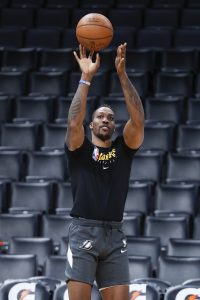
For example, when the Lakers signed 15-year veteran Dwight Howard to a one-year pact for 2019/20 using the minimum salary exception, the contract called for a salary of $2,564,753, but the team’s cap hit was just $1,620,564. The league would reimburse the Lakers for the remaining $944,189 at season’s end.
Most salary cap exceptions can only be used once each season. For example, when a team uses its full mid-level exception to sign one or more players, the club can no longer use that exception until the following season. Unlike the mid-level and other cap exceptions though, the minimum salary exception can be used any number of times in a single season. The Lakers, for instance, used the minimum salary exception to sign Jared Dudley and Troy Daniels in addition to Howard.
While many exceptions begin to prorate on January 10, the minimum salary exception prorates from the first day of the regular season. The season is typically 177 days long, so if a player signs after 28 days have passed, he would only be paid for 149 days.
That’s what happened this season with Carmelo Anthony, who joined the Trail Blazers via the minimum salary exception on November 19, the 29th day of the regular season, making his salary and cap hit 149/177ths of their usual amounts. Instead of a $1,620,564 cap charge for Portland, Anthony’s cap charge is $1,364,204. His salary is $2,159,029 instead of $2,564,753.
Here are a few more notes on the minimum salary exception:
- Players signed using the minimum salary exception are eligible for trade bonuses, but not incentive bonuses. A minimum-salary player with a trade bonus cannot be acquired in a trade using the minimum salary exception unless he waives that bonus.
- A minimum-salary player also can’t be acquired in a trade using the minimum salary exception if his contract is for more than two years or if his salary exceeded the minimum in any previous year of the contract.
- When a minimum-salary player is traded during the season, any reimbursement from the NBA is split between his two teams. It’s prorated based on the number of days he spends with each club.
- If a minimum-salary player with a non-guaranteed salary is waived before he exceeds the minimum for a two-year veteran, his team won’t be reimbursed for any portion of his salary.
- Virtually every 10-day contract is for the minimum salary — often the minimum salary exception is the only way for clubs to accommodate any 10-day deals. The NBA also reimburses teams for a portion of the 10-day minimum salary for veterans with three or more years of experience. We have more details here.
Note: This is a Hoops Rumors Glossary entry. Our glossary posts will explain specific rules relating to trades, free agency, or other aspects of the NBA’s Collective Bargaining Agreement. Larry Coon’s Salary Cap FAQ and the Basketball Insiders salary pages were used in the creation of this post.
Earlier versions of this post were published in previous years by Luke Adams and Chuck Myron. Photo courtesy of USA Today Sports Images.
Warriors Notes: Coronavirus, Thompson, TPE
Unlike a handful of other NBA teams, the Warriors haven’t had any of their players tested for the coronavirus, as Mark Medina of USA Today writes. The franchise hasn’t had any players show symptoms of COVID-19 and is wary of the fact that tests aren’t widely available to the general public at this time.
“We’ve been told that testing’s in short supply,” Warriors president of basketball operations Bob Myers said on Tuesday. “We’re treating ourselves like people, which is what we are. We’re not better than anybody. We’re not worse. We’re just a basketball team, like any company. Right now, we’re not interacting with anybody. I’ve been told by our doctors that we shouldn’t be testing asymptomatic people in California.”
With the city of San Francisco advising people to stay at home except for essential needs, the Warriors’ facility is closed for workout purposes, but the team has remained in daily communication with its players, and is prepared to take action if players start showing symptoms. For now though, that hasn’t been the case.
“Every team’s responsibility is to check in with their players each day and staff members or anybody for that matter, even me, to report symptoms,” Myers said, per Medina. “So we’re doing that. But outside of that, we’re not mandating, nor do I think we should be at this time until testing becomes more available that everybody gets tested.”
Here’s more on the Warriors:
- The club has allowed three unnamed players to travel out of the Bay Area this week, Myers said on Tuesday (per Medina). The NBA is allowing players to leave their team’s market as long as they get approval to do so and remain in contact with the franchise.
- With the Warriors completely “shut down,” Myers acknowledged that an injured player like Klay Thompson doesn’t have access to the team’s facilities for rehab purposes. “Yes, that’s the thing,” Myers said, according to Anthony Slater of The Athletic (Twitter link). “It’s hard. Privately by himself. Maybe with one of the trainers at his house.”
- Myers said the Warriors aren’t concerned about losing their $17MM+ traded player exception from last summer’s Andre Iguodala deal, which is currently scheduled to expire after July 7. “I imagine that they’ll figure that out,” Myers said, suggesting the expiry date would likely be adjusted (Twitter link Nick Friedell of ESPN). ESPN’s Bobby Marks wrote earlier today that those TPE expiry dates seem likely to be pushed back along with the start of the 2020/21 league year.
Ripple Effect Of Hiatus On Contracts, Cap, Offseason Dates
Given the typically rigid nature of the NBA’s annual calendar, the current hiatus threatens to complicate a number of dates and deadlines that will arrive in the coming months. In his latest Insider-only article for ESPN.com, Bobby Marks takes a closer look at how those dates – linked to contracts and the salary cap – may be impacted, noting that the NBA and NBPA are expected to collectively bargain a set of transition rules once the league establishes a return timeline.
For instance, there are 29 player options and 12 team options that are currently scheduled to be exercised or declined before the end of June. Those dates will almost certainly have to be adjusted. The same goes for certain salary guarantee dates and the expiry dates on traded player exceptions, as Marks explains. Of course, the start of the 2020/21 league year will have to be pushed back too, so players with expiring contracts don’t become free agents on July 1.
Contract incentives will also be an issue worth keeping an eye on. Marks observes that during the lockout-shortened 2011/12 season, players’ incentives were prorated based on the fact that the league played 66 games instead of 82 games. The NBA could take similar measures this season. For instance, if a player needs to play 1,000 minutes to earn a bonus and his team ends up playing just 70 of 82 games, his incentive requirement would be adjusted so he only needs to play 70/82nds of 1,000 minutes (854 minutes).
Marks’ article is jam-packed with interesting info and is worth checking out in full if you have an Insider subscription. Here are a few more highlights:
- Although the NBA’s basketball related income for 2019/20 is projected to take a huge hit as a result of this hiatus and the controversy with China in the fall, it’s too early to say what that will mean for the 2020/21 salary cap, according to Marks. In situations like this, the NBA and NBPA generally negotiate in good faith a cap adjustment that satisfies both sides, so we’re unlikely to see a big drop-off next year.
- Still, with the cap for the next year or two no longer expected to increase by nearly as much as the NBA initially projected, the ripple effect could be significant. Maximum-salary contract extensions scheduled to go into effect next season or in 2021/22 for players like Jamal Murray, Ben Simmons, Pascal Siakam, and Damian Lillard won’t be as lucrative as previously estimated, and teams will no longer have as much cap or tax flexibility as expected. As Marks points out, that could influence players with option decisions — they may be more inclined to opt in for ’20/21, with less leaguewide spending power available in the offseason.
- Resuming the regular season – rather than just jumping straight to the playoffs – may not be a top priority for many fans, but there are reasons why the NBA won’t want to skip that step, Marks writes. Teams that wanted to make roster moves prior to the postseason wouldn’t get a chance to do so if the NBA moves straight from its current moratorium to the playoffs. For example, in that scenario, the Thunder wouldn’t get the opportunity to convert two-way player Luguentz Dort to their 15-man roster. As such, the NBA may want to play a few regular season games or at least give teams a few days to make necessary roster moves.