
Heat Trade Haywood Highsmith To Nets
The Heat and Nets have agreed to a trade that sends wing Haywood Highsmith to Brooklyn along with a 2032 second-round pick in exchange for a protected 2026 second-rounder, reports Shams Charania of ESPN (Twitter links).
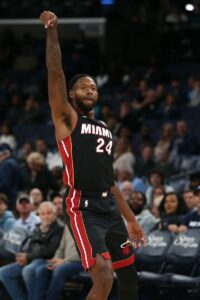 The Nets have officially confirmed the deal, announcing that they’ve acquired Miami’s unprotected 2032 second-round selection and Highsmith in exchange for their own top-55 protected 2026 second-rounder.
It’s a financially motivated deal for the Heat, who will move under the luxury tax line as a result of the move. Miami entered the day operating about $1.6MM above the tax threshold with 14 players under contract.
Sending Highsmith’s expiring $5.6MM contract to Brooklyn will give the Heat nearly $4MM in breathing room below the tax, with at least one standard roster spot to fill before the season begins — the club will likely keep its 15th roster spot open to start the season to avoid going back above the tax line.
The Heat were always considered likely to duck the tax this season in order to reset their repeater clock.
When I identified Miami earlier this month as a good bet to make a cost-cutting move, I mentioned Highsmith as a potential trade candidate and speculated that he should have a little value based on his play as a three-and-D wing last season. The 28-year-old made 74 appearances (42 starts) for the Heat, averaging 6.5 points and 3.4 rebounds in 24.6 minutes per game and posting a .458/.382/.721 shooting line.
However, word broke last Friday that Highsmith had sustained a torn meniscus during an offseason workout and underwent surgery to address the injury. The recovery process is expected to sidelined him for at least eight-to-10 weeks, jeopardizing his availability for the start of the season and reducing his value as a trade chip, which is why the Heat had to give up a second-round pick to move him.
Miami will create a trade exception worth Highsmith’s outgoing salary ($5,616,000), which the club will have one year to use.
As for the Nets, they continue to use their cap room to stockpile draft assets, having acquired a pair of first-round picks in separate deals for Michael Porter Jr. and Terance Mann earlier this summer. It’s unclear whether or not Highsmith will be part of their plans for the 2025/26 season, given that there may be a roster crunch in Brooklyn, but taking on his contract puts only a small dent into their remaining cap space.
As Bobby Marks of ESPN tweets, Brooklyn still has $22MM in room after accounting for Cam Thomas‘ $12.1MM cap hold, though that figure doesn’t include reported two-year, $12MM deals with Day’Ron Sharpe or Ziaire Williams, which aren’t yet official. One of those signings could be completed using the room exception, but at least one will have to use the Nets’ cap space.
Isaac Nogues Agrees To Two-Year Deal With Valencia
Free agent guard Isaac Nogues has reached an agreement on a two-year deal with Valencia Basket in his home country of Spain, the club announced in a press release.
Nogues, 21, spent the 2024/25 season in the NBA G League with the Rip City Remix, Portland’s affiliate. He made a total of 40 appearances for the Trail Blazers’ NBAGL team, averaging 5.2 rebounds, 3.9 assists and 2.1 steals in 21.1 minutes per game, before going undrafted in June.
While his offensive contributions were limited, the 6’5″ guard (who has a 6’10” wingspan) was named to the NBAGL’s All-Defensive team and finished third in Defensive Player of the Year voting.
We typically wouldn’t dedicate a full story to an undrafted player without any NBA experience signing with a EuroLeague team, but Nogues’ agreement is notable because reporting in June indicated that he had agreed to sign an Exhibit 10 contract with the NBA’s Kings and would be competing for a two-way deal in Sacramento this fall.
That signing never became official, and it seems it won’t happen now that Nogues has found a more appealing offer overseas. He’ll have a clearer path to playing time with Valencia and will be located just a few hours down the coast from Badalona, where he was born and where he began his professional basketball career.
Celtics Sign Amari Williams To Two-Way Contract
The Celtics have signed second-round pick Amari Williams to a two-way contract, according to the NBA’s official transaction log (hat tip to Michael Scotto of HoopsHype).
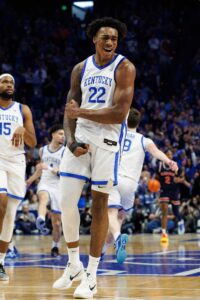 Williams, who spent his first four college seasons at Drexel, transferred to Kentucky in 2024 for his super-senior year. In 36 games (all starts) last season, the 6’11” forward/center filled up the box score with averages of 10.9 points, 8.5 rebounds, 3.2 assists, and 1.2 blocks in just 22.8 minutes per game.
The Celtics traded down from No. 32 on draft night in June and used their newly acquired 46th overall pick to select Williams. At the time, then-ESPN draft expert Jonathan Givony reported that the big man would be signing a two-way contract with Boston, but it took a while for the deal to actually come to fruition.
The Celtics carried over Miles Norris from last season on his two-year, two-way contract, signed 57th overall pick Max Shulga to a two-way deal in July, and acquired two-way player RJ Luis in a trade with Utah earlier this month. The club subsequently waived Norris in order to open up a two-way slot for Williams.
Williams will earn a salary of $636,435 if he spends the full season on his two-way contract and will be eligible to appear in up to 50 NBA regular season games. He’ll likely be transferred back and forth between the NBA and the G League many times over the course of his rookie year.
With Williams now under contract, the Celtics are carrying 18 players on their offseason roster, including their three two-ways. Twelve of the other 15 players have guaranteed standard contracts, while Jordan Walsh and Neemias Queta are on partially guaranteed deals and Hayden Gray has an Exhibit 10 contract.
The top 50 players from this year’s draft have now signed NBA contracts for 2025/26 or are committed to playing in a non-NBA league, as our tracker shows.
Cash Sent, Received In NBA Trades For 2025/26
During each NBA league year, teams face limits on the amount of cash they can send out and receive in trades. Once they reach those limits, they’re no longer permitted to include cash in a deal until the following league year.
For the 2025/26 NBA season, the limit is $7,964,000.
The limits on sending and receiving cash are separate and aren’t dependent on one another, so if a team sends out $7,964,000 in one trade, then receives $7,964,000 in another, they aren’t back to square one — they’ve reached both limits for the season and can’t make another deal that includes cash.
Adding cash to a deal can serve multiple purposes. It can be a sweetener to encourage a team to make a deal in the first place – like when a club acquires a second-round pick in exchange for cash, or sends out an unwanted contract along with cash – or it can be a necessity to meet CBA requirements.
Teams operating above the second tax apron are prohibited from sending out cash in a trade. For the time being, that restriction applies to one teams: Cleveland. The Cavaliers could only send out cash if they dip below the second apron.
We’ll use the space below to track each team’s cash sent and received in trades for the 2025/26 season, updating the info as necessary leading up to the 2026 trade deadline and for the first part of the 2026 offseason next June. These totals will reset once the ’26/27 league year begins on July 1.
Atlanta Hawks
- Cash available to send: $3,464,000
- Sent $1,500,000 to Timberwolves.
- Sent $3,000,000 to Jazz.
- Cash available to receive: $7,768,700
Boston Celtics
- Cash available to send: $4,464,000
- Cash available to receive: $6,754,000
Brooklyn Nets
- Cash available to send: $6,644,000
- Cash available to receive: $4,464,000
- Received $3,500,000 from Clippers.
Charlotte Hornets
- Cash available to send: $7,854,000
- Sent $110,000 to Magic.
- Cash available to receive: $4,464,000
- Received $3,500,000 from Celtics.
Chicago Bulls
- Cash available to send: $7,964,000
- Cash available to receive: $7,464,000
- Received $500,000 from Knicks.
Cleveland Cavaliers
- Cash available to send:
$7,964,000 - Cash available to receive: $7,854,000
- Received $110,000 from Jazz.
Note: The Cavaliers are ineligible to send out cash as long as they’re operating over the second apron.
Dallas Mavericks
- Cash available to send: $7,964,000
- Cash available to receive: $7,964,000
Denver Nuggets
- Cash available to send: $7,964,000
- Cash available to receive: $7,964,000
Detroit Pistons
- Cash available to send: $6,864,000
- Sent $1,100,000 to Timberwolves.
- Cash available to receive: $7,964,000
Golden State Warriors
- Cash available to send: $7,964,000
- Cash available to receive: $7,964,000
Houston Rockets
- Cash available to send: $7,878,700
- Sent $85,300 to Hawks.
- Cash available to receive: $7,964,000
Indiana Pacers
- Cash available to send: $5,464,000
- Sent $2,500,000 to Spurs.
- Cash available to receive: $7,964,000
Los Angeles Clippers
- Cash available to send: $1,964,000
- Cash available to receive: $7,964,000
Los Angeles Lakers
- Cash available to send: $4,714,000
- Sent $3,250,000 to Timberwolves.
- Cash available to receive: $7,964,000
Memphis Grizzlies
- Cash available to send: $7,964,000
- Cash available to receive: $7,964,000
Miami Heat
- Cash available to send: $7,964,000
- Cash available to receive: $7,964,000
Milwaukee Bucks
- Cash available to send: $7,964,000
- Cash available to receive: $3,464,000
- Received $4,500,000 from Suns.
Minnesota Timberwolves
- Cash available to send: $7,964,000
- Cash available to receive: $2,114,000
New Orleans Pelicans
- Cash available to send: $7,964,000
- Cash available to receive: $7,575,000
- Received $389,000 from Knicks.
New York Knicks
- Cash available to send: $7,075,000
- Cash available to receive: $7,964,000
Oklahoma City Thunder
- Cash available to send: $7,214,000
- Sent $750,000 to Jazz.
- Cash available to receive: $7,964,000
Orlando Magic
- Cash available to send: $7,964,000
- Cash available to receive: $7,854,000
- Received $110,000 from Magic.
Philadelphia 76ers
- Cash available to send: $7,964,000
- Cash available to receive: $7,964,000
Phoenix Suns
- Cash available to send: $3,464,000
- Sent $4,500,000 to Bucks.
- Cash available to receive: $7,964,000
Portland Trail Blazers
- Cash available to send: $7,964,000
- Cash available to receive: $7,964,000
Sacramento Kings
- Cash available to send: $7,964,000
- Cash available to receive: $7,964,000
San Antonio Spurs
- Cash available to send: $7,964,000
- Cash available to receive: $5,464,000
- Received $2,500,000 from Pacers.
Toronto Raptors
- Cash available to send: $7,964,000
- Cash available to receive: $7,964,000
Utah Jazz
- Cash available to send: $7,854,000
- Sent $110,000 to Cavaliers.
- Cash available to receive: $843,000
Washington Wizards
- Cash available to send: $7,964,000
- Cash available to receive: $7,964,000
Data from Eric Pincus of Sports Business Classroom was used in the creation of this post.
NBA Teams Average 14.4 Back-To-Backs In 2025/26
Five NBA teams will play a league-high 16 back-to-back sets during the 2025/26 regular season, while six clubs will have just 13 instances of back-to-back games on their schedules. The remaining 19 teams will play either 14 or 15 back-to-backs.
[RELATED: 2025/26 NBA Schedules By Team]
Those totals – along with an overall average of 14.4 back-to-backs per team – are about what we’ve come to expect in recent years.
Prior to the COVID-shortened seasons of 2019/20 and ’20/21, the NBA’s regular season consisted of 177 days, and the league had made a concerted effort to reduce instances of back-to-backs. When the league announced its initial schedule in ’19/20, its press release boasted that teams were averaging a record-low 12.4 back-to-backs that season, marking the fifth straight year in which that number had reached an all-time low.
However, since 2021/22, NBA regular seasons have spanned just 174 days, making it a little more difficult for schedule-makers to avoid back-to-back sets. The average number of back-to-backs per team is still well below where it once was (teams averaged 19.3 in 2024/25), but it’s no longer at a record low.
Here are the back-to-backs by team in 2025/26:
- Charlotte Hornets: 16
Denver Nuggets: 16
Philadelphia 76ers: 16
Phoenix Suns: 16
Washington Wizards: 16 - Golden State Warriors: 15
Los Angeles Clippers: 15
Miami Heat: 15
New Orleans Pelicans: 15
Portland Trail Blazers: 15
Toronto Raptors: 15
Utah Jazz: 15 - Brooklyn Nets: 14
Cleveland Cavaliers: 14
Dallas Mavericks: 14
Detroit Pistons: 14
Houston Rockets: 14
Los Angeles Lakers: 14
Memphis Grizzlies: 14
Milwaukee Bucks: 14
New York Knicks: 14
Orlando Magic: 14
Sacramento Kings: 14
San Antonio Spurs: 14 - Atlanta Hawks: 13
Boston Celtics: 13
Chicago Bulls: 13
Indiana Pacers: 13
Minnesota Timberwolves: 13
Oklahoma City Thunder: 13
Warriors, Lakers, Knicks, Thunder Get Most Nationally Televised Games For 2025/26
Having gone from two national broadcasting partners (ABC/ESPN and TNT) to three (ABC/ESPN, NBC, and Amazon Prime) ahead of the 2025/26 season, the NBA’s schedule will feature a significant increase in nationally televised games.
When the league unveiled its full regular season schedule on Thursday, it announced 237 nationally televised regular season matchups, along with the seven knockout round NBA Cup games whose participants aren’t yet known, for a total of 244 contests.
As Colin Salao of Front Office Sports writes in a subscriber story, the total number of nationally televised games is up by more than 40% from last season, when the league’s partners nationally broadcasted a total of 172 games.
Salao also points out that beginning in the middle of the season, when the NFL schedule starts winding down, the NBA will have national games every day of the week: Peacock on Monday; NBC/Peacock on Tuesday; ESPN on Wednesday; Amazon on Thursday; Amazon and ESPN on Friday; Amazon and ABC on Saturday; and ABC, NBC, and Peacock on Sunday.
Every team will be featured at least twice on the national TV broadcast schedule, with the Warriors, Lakers, Knicks, and defending champion Thunder leading the way with 34 appearances apiece.
Here’s the full breakdown of nationally televised games by team:
- Golden State Warriors: 34
- Los Angeles Lakers: 34
- New York Knicks: 34
- Oklahoma City Thunder: 34
- Houston Rockets: 28
- Minnesota Timberwolves: 28
- Denver Nuggets: 26
- Boston Celtics: 25
- Cleveland Cavaliers: 24
- Dallas Mavericks: 23
- San Antonio Spurs: 22
- Los Angeles Clippers: 21
- Milwaukee Bucks: 18
- Detroit Pistons: 16
- Orlando Magic: 14
- Philadelphia 76ers: 14
- Atlanta Hawks: 13
- Memphis Grizzlies: 10
- Indiana Pacers: 9
- Phoenix Suns: 9
- Sacramento Kings: 9
- Portland Trail Blazers: 8
- Miami Heat: 5
- Charlotte Hornets: 3
- Chicago Bulls: 3
- Brooklyn Nets: 2
- New Orleans Pelicans: 2
- Toronto Raptors: 2
- Utah Jazz: 2
- Washington Wizards: 2
Since nationally televised matchups are subject to change, there’s no guarantee that every team will ultimately end up being featured multiple times on the national stage.
As Salao points out, all 30 clubs showed up at least once on the national broadcast schedule initially announced for 2024/25, but the Wizards didn’t get any nationally televised games after having their lone contest replaced by a showdown between Cleveland and Oklahoma City.
Additionally, not every team this season will have a game aired on a traditional, non-streaming network — the only games featuring the Raptors or Wizards will air on either Peacock or Amazon Prime.
Pistons Sign Javonte Green To One-Year Deal
August 14: Green has signed his one-year contract with the Pistons, according to the official transactions log at NBA.com.
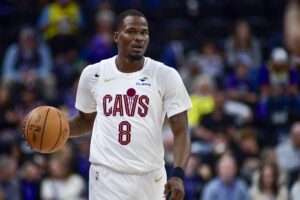 August 11: The Pistons are set to sign free agent swingman Javonte Green, according to Shams Charania of ESPN, who reports (via Twitter) that the two sides are finalizing an agreement on a one-year deal.
Green, 32, began his professional career overseas after going undrafted out of Radford in 2015, but eventually earned a look in the NBA and has since established himself as a rotation player for a handful of teams. Since 2019, he has made 263 regular season appearances for the Celtics, Bulls, Pelicans, and Cavaliers, averaging 5.3 points and 3.1 rebounds in 16.8 minutes per game.
Known primarily for his defensive ability and versatility, Green played in New Orleans and Cleveland in 2024/25. He made 18 starts and 50 total appearances for the injury-plagued Pelicans before being bought out in order to sign with the East-leading Cavs. In total, he averaged 5.1 PPG and 3.2 RPG in 18.5 MPG across 68 outings for the two teams, with a shooting line of .429/.326/.724.
Charania’s report doesn’t include any additional details on Green’s deal with Detroit beyond the fact that it will be a one-year contract, so it’s unclear whether or not it will be guaranteed. It’s a safe bet it will be worth the minimum salary.
The Pistons are currently only carrying 13 players on standard contracts, so even if Green’s deal isn’t fully guaranteed from day one, he should have a clear path to earning a spot on the 15-man regular season roster this fall.
Hoops Rumors Chat Transcript: 8/14/2025
Hoops Rumors hosted a live chat today at 1:00 pm Central time (2:00 pm Eastern).
Details On Qualifying Offers For Remaining RFAs
When we’ve talked about restricted free agency in recent weeks, we’ve focused primarily on the four 2021 first-round picks who remain unsigned: Josh Giddey, Jonathan Kuminga, Quentin Grimes, and Cam Thomas.
However, there are technically several more restricted free agents on the market. Those players are coming off two-way contracts though, so their free agencies typically play out without much fanfare. Two-way restricted free agents essentially never sign offer sheets or change teams, and many of them just end up accepting their qualifying offers and playing on another two-way deal.
Restricted free agents have until October 1 to decide whether or not to accept their qualifying offers, assuming their teams don’t agree to push back that deadline. Here are the qualifying offers on the table for this year’s RFAs:
- Josh Giddey (Bulls): $11,142,058
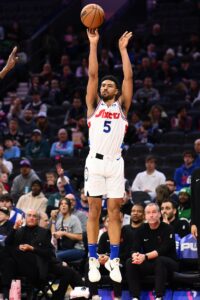
- Quentin Grimes (Sixers): $8,741,210
- Jonathan Kuminga (Warriors): $7,976,830
- Cam Thomas (Nets): $5,993,172
- Dru Smith (Heat): $2,378,870 *
- Taran Armstrong (Warriors): Two-way ^
- N’Faly Dante (Rockets): Two-way ^
- Kevin McCullar Jr. (Knicks): Two-way ^
- Oscar Tshiebwe (Jazz): Two-way ^
Note: Qualifying offers marked with an asterisk (*) are partially guaranteed for $102,300; QOs marked with a caret (^) are partially guaranteed for $85,300.
For former first-round picks, qualifying offer amounts are generally based on their draft position, but they can fluctuate depending on whether or not a player met the starter criteria. That’s why Grimes, 2021’s No. 25 overall pick, has a higher qualifying offer than No. 7 pick Kuminga. All four of those players have fully guaranteed qualifying offers and would reach unrestricted free agency in 2026 if they were to accept their QOs.
Smith, meanwhile, is coming off a two-way contract, but is no longer eligible to sign another two-way deal with the Heat because he has spent parts of three separate seasons on two-way contracts with the team. So his qualifying offer is worth his minimum salary, with a small partial guarantee.
While it’s very common for two-way players to accept their qualifying offers, it happens far less frequently with former first-round picks.
As Bobby Marks of ESPN observed earlier this offseason (via Twitter), just five former first-round picks have signed their qualifying offers as restricted free agents since 2017. Here are how those five players fared in unrestricted free agency a year after signing their QOs:
- Alex Len: Accepted $4.19MM qualifying offer in 2017; signed two-year, $8.51MM contract in 2018.
- Nerlens Noel: Accepted $4.19MM qualifying offer in 2017; signed two-year, minimum-salary contract in 2018.
- Rodney Hood: Accepted $3.47MM qualifying offer in 2018; signed two-year, $11.72MM contract in 2019.
- Denzel Valentine: Accepted $4.64MM qualifying offer in 2020; signed two-year, minimum-salary contract in 2021 (partial guarantee in year one, non-guaranteed in year two).
- Miles Bridges: Accepted $7.92MM qualifying offer in 2023 (after sitting out all of 2022/23); signed three-year, $75MM contract in 2024.
Bridges was a unique case, since he faced charges of domestic violence just as he was about to hit restricted free agency for the first time in 2022. If not for his off-court legal issues, he almost certainly wouldn’t have had to settle for his qualifying offer — his eventual three-year, $75MM deal was a more accurate reflection of his on-court value.
As for the other players on this list, Len, Noel, Hood, and Valentine weren’t exactly marquee free agents when they finished up their rookie contracts, so it’s not a huge surprise that they weren’t able to secure the sort of lucrative multiyear deals they hoped for, nor is it a shock that they didn’t end up getting big paydays in unrestricted free agency a year later.
Giddey, Kuminga, Grimes, and Thomas have shown enough in their first four seasons to warrant multiyear investments worth at least the full mid-level exception (or well above that, in at least one or two cases), and players of that caliber generally don’t accept qualifying offers. So I think we’re still headed toward these four guys eventually working out new deals.
But if one or more of them does accept a qualifying offer, it will be a fascinating storyline to track going forward. Recent history shows a handful of underwhelming follow-up deals for former first-rounders who signed their qualifying offers, so an RFA who accepts his QO this season would be looking to buck that trend.
Killian Hayes Focused On Remaining In NBA
Former lottery pick Killian Hayes has drawn interest from teams in Europe this offseason, but is focused on earning another NBA opportunity, according to a report from Gabriel Pantel-Jouve of BeBasket (hat tip to Eurohoops).
ASVEL Basket in France made Hayes a strong offer, per Pantel-Jouve, who says Real Madrid in Spain and Anadolu Efes in Turkey also registered some interest in the free agent point guard. All three clubs compete in the EuroLeague.
However, Hayes is hoping to stick in the NBA after appearing in 216 regular season games across the past five seasons. The seventh overall pick in the 2020 draft, he struggled to adjust to the NBA game in Detroit, where he made just 38.2% of his field goal attempts and 27.7% of his outside shots across four seasons from 2020-24.
Still, Hayes is just 24 years old and played well in a very small sample with Brooklyn last season, averaging 9.0 points, 5.2 assists, and 3.0 rebounds in 27.0 minutes per game and making 38.1% of his three-point tries in six appearances (five starts). The 6’5″ Frenchman spent most of 2024/25 playing for the Long Island Nets in the G League, where he put up 17.3 PPG, 7.4 APG, and 5.4 RPG on .463/.371/.689 shooting in 33 outings (32.9 MPG).
Hayes is no longer eligible for a two-way contract, so if he hopes to make an NBA roster this fall, he’d have to do it by earning a standard 15-man spot.