
Pacers Sign Kyle Mangas, Cameron McGriff To Exhibit 10 Deals
The Pacers have signed free agent guard Kyle Mangas and forward Cameron McGriff to Exhibit 10 contracts, the team announced today in a press release.
Mangas, a native of Indiana who played his college ball at Indiana Wesleyan, went undrafted in 2021 and spent two seasons overseas with teams in the Czech Republic and Lithuania before catching on with the Indiana Mad Ants, the Pacers’ G League affiliate, for the 2023/24 campaign.
In 51 total Showcase Cup and regular season games last season for the Mad Ants, the 6’4″ guard averaged 16.9 points, 3.5 assists, and 3.1 rebounds in 31.4 minutes per game, posting a shooting line of .478/.389/.860.
McGriff, who went undrafted out of Oklahoma State in 2020, bounced around several leagues in his first few professional seasons, playing in Belgium, Puerto Rico, Greece, and France in addition to multiple stints in the G League and a brief cameo in the NBA for the Trail Blazers during the 2021/22 season.
Like Mangas, McGriff finished last season as a member of the Indiana Mad Ants. After playing in 32 games for the Memphis Hustle, the 6’7″ forward was traded to the Mad Ants in March and made eight appearances for the Pacers’ affiliate down the stretch. In his 40 total outings for the two teams, he recorded averages of 11.3 PPG and 4.2 RPG on .434/.331/.887 shooting.
While Exhibit 10 contracts can be converted into two-way deals before the regular season begins, it doesn’t sound like that’s the plan for Mangas or McGriff. The Pacers’ announcement mentions specifically that the plan for the duo is to rejoin the Mad Ants, who hold their G League returning rights.
Signings these Exhibit 10 deals will allow Mangas and McGriff to receive bonuses worth up to $77.5K on top of their standard NBAGL salaries as long as they spend at least 60 days with the Mad Ants after being waived by the Pacers.
Indiana now has a full 21-man offseason roster.
NBA 2024 Offseason Check-In: Detroit Pistons
Hoops Rumors is checking in on the 2024 offseason for all 30 NBA teams, recapping the summer’s free agent signings, trades, draft picks, departures, and more. We’ll take a look at each team’s offseason moves and consider what might still be coming before the regular season begins. Today, we’re focusing on the Detroit Pistons.
Free agent signings
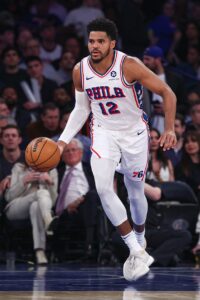 Tobias Harris: Two years, $52,000,000. Signed using cap room.
- Simone Fontecchio: Two years, $16,000,000. Re-signed using Early Bird rights.
- Malik Beasley: One year, $6,000,000. Signed using cap room.
Trades
- Acquired Tim Hardaway Jr., the Raptors’ 2025 second-round pick, the Heat’s 2028 second-round pick, and either the Clippers’ or Hornets’ 2028 second-round pick (whichever is least favorable) from the Mavericks in exchange for Quentin Grimes.
- Acquired Wendell Moore and the draft rights to Bobi Klintman (No. 37 pick) from the Timberwolves in a four-team trade in exchange for the draft rights to Cam Spencer (No. 53 pick; sent to Grizzlies).
Draft picks
- 1-5: Ron Holland
- Signed to rookie scale contract (four years, $37,463,383).
- 2-37: Bobi Klintman
- Signed to four-year, $7,995,796 contract. First two years guaranteed. Third year non-guaranteed. Fourth-year non-guaranteed team option.
Two-way signings
Departed/unsigned free agents
- Malachi Flynn (Spurs)
- Evan Fournier (unsigned)
- Taj Gibson (Hornets)
- Chimezie Metu (Barcelona)
- Jared Rhoden (Raptors)
- Stanley Umude (Bucks)
- James Wiseman (Pacers)
Other moves
- Signed Cade Cunningham to a five-year, maximum-salary rookie scale extension that begins in 2025/26. Projected value of $224,238,150 (starting at 25% of the cap). Projected value can increase to $269,085,780 (30% of the cap) if Cunningham meets Rose Rule performance criteria.
- Claimed Paul Reed off waivers.
- Waived Troy Brown.
- Waived Buddy Boeheim (two-way).
Salary cap situation
- Operating under the cap ($140.6MM) and above the minimum salary floor ($126.5MM).
- Carrying approximately $130.3MM in salary.
- No hard cap.
- Full room exception ($8MM) available.
The offseason so far
After winning no more than 23 games for four straight seasons, the Pistons entered 2023/24 hoping to take a step forward under new head coach Monty Williams. Instead, the team endured one of the ugliest seasons in NBA history, compiling a franchise-worst 14-68 record and matching a league record by losing 28 consecutive games.
The Pistons responded by replacing general manager Troy Weaver with new head of basketball operations Trajan Langdon, a former player and a veteran executive who previously worked in New Orleans and Brooklyn. Langdon certainly wants to see better on-court results than Detroit had last season, but he also isn’t yet feeling any win-now pressure in his first year on the job, so his approach to the offseason blended moves that could help in the short term with future-minded transactions.
In free agency, the Pistons looked to add veteran leadership while upgrading their outside shooting after ranking among the NBA’s bottom five last season in three-pointers made and three-point percentage. There was some sticker shock when word broke that Tobias Harris had agreed to a two-year, $52MM contract with Detroit, but Harris is the sort of scorer and shooter the team needed in its frontcourt, and his deal isn’t lengthy enough to become a real burden on the club’s cap.
The Pistons also re-signed Simone Fontecchio (two years, $16MM) and brought in Malik Beasley (one year, $6MM), giving the team two more reliable marksmen on short-term deals.
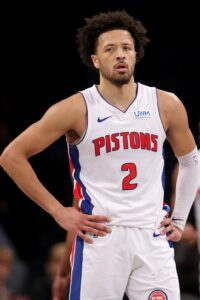 Harris, Fontecchio, and Beasley aren’t going to turn Detroit into a playoff team, but they’ll help open up the floor for franchise player Cade Cunningham to operate. After a lost 2022/23 season, Cunningham returned from a left leg injury and enjoyed a breakout year, with career highs in PPG (22.7), APG (7.5), FG% (.449), and 3PT% (.355).
The former No. 1 overall pick is entering his age-23 season and will be playing on a roster a little better suited to his skill set, so it’s not unreasonable to expect him to reach a new level in 2024/25. The Pistons are certainly hoping for continued growth after giving him a five-year, maximum-salary rookie scale extension in July. That deal, which will go into effect in ’25/26, projects to be worth about $224MM, or up to $269MM if Cunningham takes a huge step forward and earns All-NBA honors next spring.
While additions like Harris and Beasley should help make the Pistons a more competitive team in the short term, some of Langdon’s other moves this summer were made with the long term in mind. Detroit acquired three future second-round picks and moved up 16 spots in this year’s second round by sending out Quentin Grimes and taking back Tim Hardaway Jr. (from Dallas) and Wendell Moore (from Minnesota) in salary-dump deals.
It’s possible none of those four second-round picks (including this year’s No. 37 selection Bobi Klintman) will yield a better NBA player than Grimes, but Langdon and his new front office clearly weren’t committed enough to the former Knick to pay up for his next contract (Grimes is rookie scale extension-eligible this offseason). And while Hardaway was a salary dump from the Mavericks’ perspective, he figures to play a rotation role in Detroit in 2024/25 after making 37.5% of his three-point tries over the past five seasons.
The Pistons’ lottery selection, No. 5 overall pick Ron Holland, is another long-term investment for the organization — he turned 19 just last month and has a few areas of his game he’ll need to improve in order to earn regular rotation minutes as a rookie. Several mock drafts leading up to June’s event had Holland going outside the top 10, but Langdon was willing to bet on the young forward’s upside following an up-and-down year with the G League Ignite.
While the Pistons’ selection of Holland was unexpected, it may not have been the most surprising move made in Detroit this summer. A year after signing what was – at the time – a record-setting contract for an NBA head coach, Williams was dismissed with five years and well over $60MM still left on that six-year deal.
It’s rare for NBA teams to eat that much money and give up on a head coach so soon, but it’s a credit to club owner Tom Gores that he was willing to write that check and let Langdon make his own hire. The Pistons brought in former Cavs head coach J.B. Bickerstaff, who showed in Cleveland that he’s capable of turning a young team into a perennial playoff club.
Up next
The Pistons are the only NBA team with any cap room remaining — they have just over $10MM still available.
Theoretically, with one spot still open on the team’s projected 15-man roster, that money could be used to pursue a free agent. But Cavs restricted free agent Isaac Okoro is the only unsigned player likely to earn significantly more than the veteran’s minimum, and there has been no indication Detroit is pursuing him.
There’s no urgency for the Pistons to use their cap room immediately, so the front office will likely remain patient and stay on the lookout for ways it could come in handy. That could mean accommodating another salary dump to acquire more draft assets, like they did with Hardway and Moore. It could also mean claiming a player off waivers, like they did last month with big man Paul Reed. If no favorable opportunities arise this fall, Detroit could carry that cap room into the season and use it to make a midseason deal.
In addition to their open 15-man roster spot, the Pistons have one two-way slot available.
As for extension candidates, Hardaway is the only player eligible for a new deal now that Cunningham has been locked up. I don’t expect extending the veteran wing will be a preseason priority for Detroit — if he performs well during the season, the team could always explore a possible extension for Hardaway anytime up until June 30.
The Rockets’ Path To Max-Salary Cap Room In 2025
It hasn't been all that common in recent years for would-be contenders to carry significant cap room into free agency, but the Sixers and - to a lesser extent - the Thunder showed this year that it can still pay off in a big way.
Philadelphia plotted for over a year to maximize its cap room for the 2024 offseason, putting off a contract extension for Tyrese Maxey in order to generate extra spending power by keeping his modest cap hold on the books and then going over the cap to re-sign him. That approach put the 76ers in position to sign Paul George, arguably the top unrestricted free agent on the market, to a four-year, maximum-salary contract and then to use their remaining cap room to sign complementary players like Caleb Martin and Andre Drummond.
Oklahoma City, meanwhile, didn't have maximum-salary room available and didn't go big-game hunting at the very top of this year's free agent class, but the Thunder used their space to give Isaiah Hartenstein a front-loaded contract starting at $30MM, outbidding the Knicks to land either the best or second-best center available (depending on how you feel about Nic Claxton).
At this point, there are hardly any teams that project to operate under the cap in 2025, and many of the clubs that could have cap room - such as the Nets and Wizards - are still very much in the retooling stage.
There's one potential exception though. The Rockets finished last season with a 41-41 record and appear poised to take another step forward this season as their young core (which now includes No. 3 overall pick Reed Sheppard) continues to grow. Houston also has the ability to create maximum-salary cap space next offseason.
However, the Rockets' path to maximum-salary room isn't quite as clean as the Sixers' was, and may require shedding one or two starter-caliber players. Let's take a closer look at the team's potential path to max space.
Houston currently has just two players with guaranteed salaries for the 2025/26 season, but that total could increase to seven once the team picks up several rookie scale options for '25/26 by the October 31 deadline. Here are the details:

Hoops Rumors Glossary: Stretch Provision
For NBA teams looking to open up cap room, simply waiving a player isn’t as effective as it is in the NFL, where salaries are often non-guaranteed and most or all of a player’s cap charge can frequently be wiped from a team’s books. Still, the NBA’s Collective Bargaining Agreement does feature a rule that allows teams to spread a player’s cap hit over multiple seasons. This is called the stretch provision.
The stretch provision ensures that any player waived with more than $500K in guaranteed salary remaining on his contract will have the payment schedule of that money spread across multiple years. That schedule is determined as follows:
- If a player clears waivers between the start of the league year and August 31, his remaining salary is paid over twice the number of years remaining on his contract, plus one.
- Note: A player must be waived by August 29 at 4:00 pm Central time in order to clear waivers on August 31.
- If a player clears waivers between September 1 and the end of his league year, his current-year salary is paid on its normal schedule, with any subsequent years spread over twice the number of remaining years, plus one.
- If a player in the final year of his contract clears waivers after September 1, the stretch provision does not apply.
While the new payment schedule for a waived player is non-negotiable, teams get to decide whether or not to apply the stretch provision to that player’s cap charges as well. A team can stick to the original schedule for cap hit purposes, if it so chooses.
Word broke on Wednesday that the Suns are waiving and stretching Nassir Little, providing a useful real-life example for how the stretch provision functions. Little’s cap hits prior to his release are $6.75MM in 2024/25, $7.25MM in ’25/26, and $7.75MM in ’26/27.
Here’s what that contract would look like if it were waived without applying the stretch provision to the cap hits; if it were stretched before August 31; or if it were stretched after August 31:
| Year | Waived without stretching |
Stretched by 8/31/24 |
Stretched after 8/31/24 |
|---|---|---|---|
| 2024/25 | $6,750,000 | $3,107,143 | $6,750,000 |
| 2025/26 | $7,250,000 | $3,107,143 | $3,000,000 |
| 2026/27 | $7,750,000 | $3,107,143 | $3,000,000 |
| 2027/28 | – | $3,107,143 | $3,000,000 |
| 2028/29 | – | $3,107,143 | $3,000,000 |
| 2029/30 | – | $3,107,143 | $3,000,000 |
| 2030/31 | – | $3,107,143 | – |
As this chart shows, it typically makes sense to waive and stretch a player’s contract in July or August if the team is looking to generate immediate cap flexibility for the current season and isn’t as concerned about the impact in future seasons.
 By waiving and stretching Little now, the Suns will trim over $3.6MM from their 2024/25 cap, generating significant short-term savings in projected luxury tax penalties, since they’re operating so far into tax territory. However, Little will remain on their books through 2031 instead of 2027.
Phoenix is utilizing the stretch provision in order to create salary and tax savings. In other cases, stretching one or more players can allow a team to duck below the luxury tax line or to create additional cap room.
Back in the summer of 2022, for example, the Trail Blazers waived and stretched Eric Bledsoe and Didi Louzada, which allowed them to sneak below the tax line. The Pacers, meanwhile, waived and stretched Nik Stauskas, Juwan Morgan, and Malik Fitts in order to carve out a little extra cap room in order to sign Deandre Ayton to a maximum-salary offer sheet.
If a club waiving a guaranteed contract in July or August isn’t seeking immediate cap relief, it generally makes more sense to apply the player’s full current salary to the current salary-cap year, rather than stretching it.
The Hornets took that route when they waived Davis Bertans in July, applying his remaining $5.25MM in guaranteed money entirely to the 2024/25 cap. If they’d stretched it, they could’ve carried $1.75MM for each of the next three seasons, creating an extra $3.5MM in cap room this summer, but they had no immediate use for that cap room and decided it’d be better to clear Bertans from their books in one year, rather than in three years.
There are a few more key rules related to the stretch provision worth noting.
Buyouts:
While the stretch provision regulates when money is paid out, it doesn’t prevent teams and players from negotiating a reduced salary as part of a buyout agreement.
For instance, let’s say a player who has an $18MM expiring contract for 2024/25 agrees in August to give up $3MM in a buyout. As a result of that buyout agreement, his team could stretch his remaining salary and end up with cap hits of $5MM for three seasons (through ’26/27) rather than $6MM.
Non-guaranteed money/years:
Non-guaranteed money isn’t subject to the stretch provision, since a team isn’t obligated to pay the non-guaranteed portion of a contract once it waives a player. However, non-guaranteed years (not counting team options) are taking into account when determining how many years the contract is spread across.
This rule can come in handy when a club decides to waive a player who has one or two non-guaranteed years tacked onto the end of his contract. When the Blazers waived Louzada in August of 2022, he had three years left on his deal, but only his 2022/23 salary of $1,876,222 was guaranteed — the $4,023,212 owed to him for the two seasons beyond that one was fully non-guaranteed.
That means that when they waived Louzada, the Blazers only owed him just $1,876,222 but were able to stretch that figure across seven seasons (twice the three years remaining on his contract, plus one). As a result, Portland is carrying tiny $268,032 cap charges for Louzada on its books through the 2028/29 season.
The stretch limit:
A team isn’t permitted to stretch a player’s salary if the portion of the team’s salary made up of waived players projects to exceed 15% of the current salary cap in any future seasons.
For instance, with a $154,647,000 salary cap projected for 2025/26, a team carrying $24MM in dead money for that season wouldn’t have been permitted to use the stretch provision while waiving a player on an expiring contract prior to August 31, 2024. This rule doesn’t come into play often, since it’s extremely rare for a team to carry that much dead money on its books for a future season.
The delayed stretch:
Under the current Collective Bargaining Agreement, if a team waives a player with multiple years of guaranteed money left on his contract and doesn’t utilize the stretch provision at the time of his initial release, the team could still choose to deploy the stretch provision on the contract in a future season.
For instance, when the Cavaliers bought out Ricky Rubio in January 2024, they initially took on cap hits of $3,722,327 for 2023/24 and $1,274,015 for ’24/25, opting not to use the stretch provision. However, prior to the August 31, 2024 deadline, the Cavs decided to stretch the final-year salary owed to Rubio, turning that $1,274,015 into three annual cap hits of $424,672, running through the ’26/27 season.
Rubio’s contract just had two years left on it at the time of his release, but if it had covered, say, four seasons, the Cavaliers could have made the decision to stretch his leftover salary at any time until August 31, 2026.
A contract can only be stretched once, so after stretching JaVale McGee‘s remaining salary across five seasons in 2023, the Mavericks wouldn’t be permitted to “re-stretch” it in a future season.
This delayed stretch rule only applies to contracts that have been terminated since the start of the 2023/24 league year.
Re-signing a stretched player:
Finally, it’s important to clarify that when a team applies the stretch provision to a player’s cap hits, that team becomes ineligible to re-sign the player for the original remaining term of his contract.
For example, after they stretch Little’s contract, the Suns won’t be able to re-sign him until July 2027, which is when his contract originally would’ve expired. That restriction doesn’t apply when a team waives a player and doesn’t stretch his remaining guaranteed salary.
If a team waives a player without stretching his remaining salary, then re-signs or reacquires him before his original contract would have expired, that team isn’t permitted to use the stretch provision on his new deal.
Note: This is a Hoops Rumors Glossary entry. Our glossary posts will explain specific rules relating to trades, free agency, or other aspects of the NBA’s Collective Bargaining Agreement. Larry Coon’s Salary Cap FAQ was used in the creation of this post.
Earlier version of this post were published in 2013, 2017, and 2023.
Southwest Notes: Ingram, Spurs, Mavericks
The Brandon Ingram situation will be a fascinating one to watch this season if he and the Pelicans don’t work out an extension before the regular season begins, writes Christian Clark of NOLA.com.
Clark believes New Orleans would have liked to move Ingram in a trade for a starting center this offseason, but couldn’t find a deal that made sense, with targets like Jarrett Allen and Nic Claxton signing long-term deals with their respective teams and Orlando deciding to hang onto Wendell Carter.
While Ingram is a virtual lock to start for the Pelicans as long as he’s on the roster, there will be several starting-caliber players vying for minutes in late-game situations, Clark notes. Dejounte Murray, Zion Williamson, CJ McCollum, Herbert Jones, and Trey Murphy will all be in that mix, and if New Orleans wants to use a traditional center in certain matchups, Daniel Theis figures to join them.
As Clark points out, Ingram was frustrated when he was benched during the fourth quarter this past spring in the Pelicans’ play-in loss to the Lakers, so it could be awkward if that situation repeats itself in the coming season, with the team asking the former All-Star to sacrifice while he’s playing for his next contract. Ingram could become a more indispensable part of the team’s closing lineups if he’s willing to be a floor spacer and shoot more three-pointers, Clark adds.
Here’s more from around the Southwest:
- Given the strength of the Western Conference and the fact that they only won 22 games last season, the Spurs may not be quite ready to enter the play-in mix in 2024/25, opines Kelly Iko of The Athletic. While Victor Wembanyama figures to take another step forward and the veteran additions of Chris Paul and Harrison Barnes will help, Iko stresses that San Antonio is committed to a patient roster-building approach and could still be the worst team in a strong Southwest Division next season.
- Iko ranks the Pelicans ahead of the Mavericks in his early projection of the division’s standings, but he believes Dallas had the slightly better offseason overall and lauds the team for improving its outside shooting by adding Klay Thompson and Quentin Grimes, among others. Iko’s mailbag also explores the Rockets‘ projected win total, Zach Edey‘s potential impact on the Grizzlies, and a few more topics from around the Southwest.
- Grant Afseth of NBAAnalysis.net takes an in-depth look at the Mavericks‘ offseason moves, exploring how Thompson will be deployed, who will replace Derrick Jones as the team’s go-to on-ball defender, and whether Spencer Dinwiddie is in position to replicate his past success in Dallas. Afseth also discusses the ongoing evolution of the Kyrie Irving/Luka Doncic backcourt duo and Dereck Lively‘s continued development.
NBA 2024 Offseason Check-In: Los Angeles Lakers
Hoops Rumors is checking in on the 2024 offseason for all 30 NBA teams, recapping the summer’s free agent signings, trades, draft picks, departures, and more. We’ll take a look at each team’s offseason moves and consider what might still be coming before the regular season begins. Today, we’re focusing on the Los Angeles Lakers.
Free agent signings
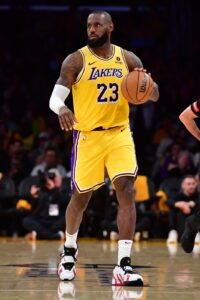 LeBron James: Two years, $101,355,998. Second-year player option. Includes no-trade clause and 15% trade kicker. Re-signed using Bird rights.
- Max Christie: Four years, $32,000,000. Fourth-year player option. Re-signed using Early Bird rights.
- Kylor Kelley: One year, minimum salary. Non-guaranteed (Exhibit 10). Signed using minimum salary exception.
- Quincy Olivari: One year, minimum salary. Non-guaranteed (Exhibit 10). Signed using minimum salary exception.
Trades
- None
Draft picks
- 1-17: Dalton Knecht
- Signed to rookie scale contract (four years, $18,483,219).
- 2-55: Bronny James
- Signed to four-year, minimum-salary contract ($7,895,796). First two years guaranteed. Third year partially guaranteed ($1,258,873). Fourth-year team option.
Two-way signings
- Colin Castleton
- Blake Hinson
- Note: Hinson’s deal is for two years.
- Armel Traore
Departed/unsigned free agents
- Spencer Dinwiddie (Mavericks)
- Harry Giles (unsigned)
- Skylar Mays (unsigned)
- Taurean Prince (Bucks)
Salary cap situation
- Operating over the cap ($140.6MM), over the luxury tax line ($170.8MM), and between the first tax apron ($178.1MM) and second tax apron ($188.9MM).
- Carrying approximately $188.2MM in salary.
- No hard cap.
- Taxpayer mid-level exception ($5.2MM) available, but can’t be used due to proximity to second apron.
The offseason so far
Lakers forwards LeBron James and Anthony Davis have repeatedly shown, most recently at the 2024 Olympics in Paris, that they remain capable of performing at a superstar level and anchoring a contending team. But the Lakers’ front office wasn’t able to do much this summer to further fortify the supporting cast around James and Davis.
The Lakers’ cap limitations were a factor in the team’s relative inactivity. After re-signing James to a new two-year deal a little below the max and locking up restricted free agent Max Christie to a four-year, $32MM contract, the team’s salary is hovering just below the second tax apron. That means Los Angeles can’t offer more than the veteran’s minimum to any outside free agents.
The Lakers explored potential upgrades on the trade market, but they don’t really have the assets necessary to make any significant upgrades via that route either.
The team has reportedly been unwilling to seriously consider moving Austin Reaves, the best trade chip on the roster outside of James and Davis. Most of the other vets – Rui Hachimura, D’Angelo Russell, Gabe Vincent, Jarred Vanderbilt, and a series of minimum-salary players (Christian Wood, Jaxson Hayes, and Cam Reddish) – have neutral trade value at best, and L.A. can’t take back more salary than it sends out.
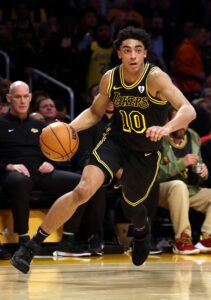 Ultimately, the Lakers appear likely to enter the 2024/25 season with a relatively similar roster to the one that finished the ’23/24 campaign. They’ll bet on internal improvement and will hope to get some contributions from their newly drafted rookies.
Christie’s new $32MM deal may have surprised some, but it could turn out to be a bargain if the 2022 second-round pick continues to develop into a reliable rotation piece. He’s a 37.8% career three-point shooter (in a limited sample) and has the tools to be a good defender. Jalen Hood-Schifino is another candidate to take a step forward following an underwhelming rookie year, though he doesn’t look quite as ready for an increased role as Christie.
As for the rookies, Bronny James got way more press this summer than first-round pick Dalton Knecht, and that trend figures to continue into the fall as Bronny and LeBron become the first father-son duo to suit up alongside one another in an NBA game. But it’s Knecht who is more likely to make an immediate impact for the Lakers.
The former Tennessee standout is a talented three-point shooter whose ability to spread the floor should be of immediate use to a team that ranked 24th last season in made three-pointers. Knecht’s strong Las Vegas Summer League showing (21.3 PPG, .391 3PT%) generated optimism that his adjustment to the NBA could be a relatively quick one — especially since, at age 23, he’s two years older than Christie and Hood-Schifino.
The most notable new addition the Lakers made this summer may actually have been on the sidelines rather than on the roster. The team parted ways with head coach Darvin Ham and replaced him with first-timer J.J. Redick, following a lengthy search that included a very public flirtation with UConn’s Dan Hurley.
While Redick’s ability to think creatively about the game shone through in his work as an analyst and podcaster, he doesn’t have any coaching experience at the NBA level, so hiring him to lead one of the league’s marquee franchises in one of the country’s largest markets is certainly a big swing. The Lakers reportedly envision Redick as a coach with elite upside who has the potential to stick in the job long-term, but he’ll find himself under the microscope early and often if L.A. doesn’t get off to a strong start this fall.
Up next
With 15 players on guaranteed contracts and three on two-way deals, the Lakers’ roster looks ready for the regular season. I imagine they’ll continue to keep an eye out for possible trades, but those are more likely to materialize during the season than before it.
Literally every player on the Lakers’ roster has signed a new contract since July 2023, so no one will be eligible for an extension ahead of opening night this fall. That means, barring some action on the trade market, the Lakers’ fall could end up being just as quiet from a transaction perspective as their summer has been.
Decisions On 2025/26 Rookie Scale Team Options
While decisions on player and team options for veteran NBA contracts are typically due in June, the deadline to exercise third- and fourth-year team options for players on rookie scale contracts arrives each fall. This year’s deadline for teams to pick up rookie scale options is October 31, 2024.
All the players whose options will be exercised or declined by Oct. 31 are already under contract for the 2024/25 season. Their teams will have to make a decision on whether they want to lock in those players’ contracts beyond the coming season, picking up or turning down team options for the 2025/26 campaign.
For players who signed their rookie scale contracts in 2022 and have already been in the NBA for two years, teams must decide on fourth-year options for 2025/26. For players who just signed their rookie deals last year and only have one season of NBA experience under their belts, teams will already be faced with a decision on third-year options for ’25/26.
In many cases, these decisions aren’t difficult ones. Rookie scale salaries are affordable enough that it usually makes sense to exercise most of these team options, even if a player isn’t a key cog on the roster. And for those players who do have a significant role on a team’s roster, the decision is even easier — it’s not as if the Hornets will consider turning down their option on Brandon Miller, for instance.
Still, we’ll wait for a trusted reporter, the NBA, a player (or his agent), or a team itself to confirm that an option is indeed being exercised or declined, and we’ll track that news in this space.
Listed below are all the rookie scale decisions for 2025/26 team options that clubs must make by Oct. 31. This list will be updated through the deadline as teams’ decisions are reported and announced. The salary figures listed here reflect the cap hits for each team.
Here are the NBA’s rookie scale team option decisions for 2025/26 salaries:
Atlanta Hawks
- Dyson Daniels (fourth year, $7,707,709): Exercised
- David Roddy (fourth year, $4,831,766): Declined
- Kobe Bufkin (third year, $4,503,720): Exercised
Boston Celtics
- None
Brooklyn Nets
- Noah Clowney (third year, $3,398,640): Exercised
- Dariq Whitehead (third year, $3,262,560): Exercised
Charlotte Hornets
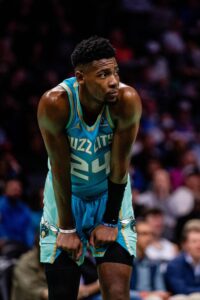 Brandon Miller (third year, $11,968,800): Exercised
- Mark Williams (fourth year, $6,276,531): Exercised
- Nick Smith Jr. (third year, $2,710,680): Exercised
Chicago Bulls
- Dalen Terry (fourth year, $5,399,118): Exercised
Cleveland Cavaliers
- None
Dallas Mavericks
- Dereck Lively (third year, $5,253,360): Exercised
- Olivier-Maxence Prosper (third year, $3,007,080): Exercised
Denver Nuggets
- Christian Braun (fourth year, $4,921,797): Exercised
- Peyton Watson (fourth year, $4,356,476): Exercised
- Julian Strawther (third year, $2,674,200): Exercised
Detroit Pistons
- Jaden Ivey (fourth year, $10,107,163): Exercised
- Ausar Thompson (third year, $8,775,000): Exercised
- Jalen Duren (fourth year, $6,483,144): Exercised
- Wendell Moore (fourth year, $4,574,283): Declined
- Marcus Sasser (third year, $2,886,720): Exercised
Golden State Warriors
- Brandin Podziemski (third year, $3,687,960): Exercised
Houston Rockets
- Jabari Smith (fourth year, $12,350,392): Exercised
- Amen Thompson (third year, $9,690,600): Exercised
- AJ Griffin (fourth year, $5,967,137): Waived
- Tari Eason (fourth year, $5,675,766): Exercised
- Cam Whitmore (third year, $3,539,760): Exercised
Indiana Pacers
- Bennedict Mathurin (fourth year, $9,187,573): Exercised
- Jarace Walker (third year, $6,665,520): Exercised
- Ben Sheppard (third year, $2,790,720): Exercised
Los Angeles Clippers
- Kobe Brown (third year, $2,654,880): Exercised
Los Angeles Lakers
- Jalen Hood-Schifino (third year, $4,064,640): Declined
Memphis Grizzlies
- Jake LaRavia (fourth year, $5,163,127): Declined
Miami Heat
- Nikola Jovic (fourth year, $4,445,417): Exercised
- Jaime Jaquez (third year, $3,861,600): Exercised
Milwaukee Bucks
- MarJon Beauchamp (fourth year, $4,781,276): Declined
Minnesota Timberwolves
- None
New Orleans Pelicans
- Jordan Hawkins (third year, $4,741,320): Exercised
New York Knicks
- None
Oklahoma City Thunder
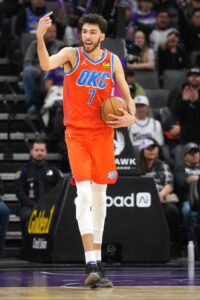 Chet Holmgren (fourth year, $13,731,368): Exercised
- Ousmane Dieng (fourth year, $6,670,882): Exercised
- Jalen Williams (fourth year, $6,580,997): Exercised
- Cason Wallace (third year, $5,820,240): Exercised
Orlando Magic
- Paolo Banchero (fourth year, $15,334,769): Exercised
- Anthony Black (third year, $7,970,280): Exercised
- Jett Howard (third year, $5,529,720): Exercised
Philadelphia 76ers
- None
Phoenix Suns
- None
Portland Trail Blazers
- Scoot Henderson (third year, $10,748,040): Exercised
- Shaedon Sharpe (fourth year, $8,399,983): Exercised
- Kris Murray (third year, $3,132,000): Exercised
Sacramento Kings
- Keegan Murray (fourth year, $11,144,093): Exercised
San Antonio Spurs
- Victor Wembanyama (third year, $13,376,880): Exercised
- Jeremy Sochan (fourth year, $7,096,231): Exercised
- Malaki Branham (fourth year, $4,962,033): Exercised
- Blake Wesley (fourth year, $4,726,328): Exercised
Toronto Raptors
- Ochai Agbaji (fourth year, $6,383,525): Exercised
- Gradey Dick (third year, $4,990,560): Exercised
Utah Jazz
- Taylor Hendricks (third year, $6,127,080): Exercised
- Walker Kessler (fourth year, $4,878,938): Exercised
- Keyonte George (third year, $4,278,960): Exercised
- Brice Sensabaugh (third year, $2,693,760): Exercised
Washington Wizards
- Bilal Coulibaly (third year, $7,275,600): Exercised
- Johnny Davis (fourth year, $6,746,229): Declined
- Patrick Baldwin (fourth year, $4,420,156): Declined
Eastern Notes: Council, Celtics, Lillard, ’24/25 Standings
As he prepares for his second NBA season, Sixers swingman Ricky Council has been participating this summer in the private runs held in Los Angeles by Sixers assistant Rico Hines, writes Keith Pompey of The Philadelphia Inquirer. Council is working on fine-tuning his game in the hope of earning rotation minutes in Philadelphia in 2024/25.
“This summer has been a whole lot of work, maybe even more than last year,” Council said. “Keeping my shooting touch up, working on different finishing moves, just learning the game, playing against good competition every day. All that’s going to help me in the long run.”
Having spent most of his rookie season in 2023/24 on a two-way contract, Council didn’t see a ton of action at the NBA level, but he impressed in his limited minutes, averaging 5.4 points in 32 outings (9.0 MPG), with a shooting line of .482/.375/.746. He knows that in order to get more playing time in ’24/25, he’ll have to show he can excel in a complementary role.
“We have Paul George. We have Tyrese Maxey and we have Joel Embiid,” Council said. “I don’t expect they’ll need much off the dribble in that nature. So I just need to be able to hit open shots and guard people.”
Here’s more from around the Eastern Conference:
- There’s “zero truth” to rumors that billionaire Amazon founder Jeff Bezos is interested in bidding on the Celtics, a source close to Bezos tells Nick Wingfield of The Information. As Kurt Helin of NBC Sports notes, there has been speculation in league circles that Bezos may have interest in being involved in an expansion franchise in Seattle, but it doesn’t sound like he’s looking to gain control of the defending champions, whose majority ownership group put its stake up for sale earlier this summer.
- Appearing on the Club 520 Podcast (YouTube link), Bucks guard Damian Lillard admitted that his first year in Milwaukee last season was a “harder transition” than he expected. In addition to going through a tumultuous period in his personal life at the time, he also found it challenging to adjust to playing alongside Giannis Antetokounmpo and Khris Middleton after being traded from Portland to Milwaukee just days before training camp. “I’m having to get used to playing with two (great) players and I don’t want to stop them from doing what they do,” Lillard said (hat tip to HoopsHype). “But I got to find how to be the best version of me within this too, so it was just a lot of moving parts. It was more difficult than I thought it would would be.”
- The Celtics sit atop ESPN’s predictions for the 2024/25 Eastern Conference standings, followed by the Knicks, Sixers, Cavaliers, and Bucks, in that order. The Magic round out ESPN’s projected group of top-six playoff teams, followed by the Pacers, Heat, Hawks, and Bulls in the play-in group. For what it’s worth, ESPN’s panel sees a big disparity between the the top two and bottom two play-in teams, projecting 46 wins for Indiana and 45 for Miami, compared to 31 for Atlanta and 30 for Chicago.
Hall Of Famer Al Attles Dies At Age 87
Former Warriors player and coach Al Attles passed away on Tuesday at the age of 87, the team has announced in a press release.
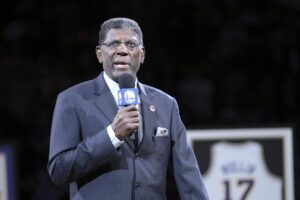 Drafted by the then-Philadelphia Warriors out of North Carolina A&T in 1960, Attles spent his 11-year career as an NBA player with the Warriors, who relocated to San Francisco in 1962.
The 6’0″ point guard appeared in a total of 711 games, averaging 8.9 points, 3.5 rebounds, and 3.5 assists in 25.1 minutes per contest.
Attles, who was named an assistant coach in 1968, spent the final two years of his playing career as the Warriors’ head coach, a position he maintained well after his retirement as a player. He posted a 557-518 (.518) regular season record in that role, which he held until 1983, along with a 31-30 (.508) mark in the postseason.
Attles led the Warriors to an NBA championship in 1975, which was Golden State’s most recent title until the team began its dynastic run last decade by winning a championship in 2015. Attles still has the most regular season wins by a coach in franchise history, though Steve Kerr (519 career wins) could pass his total of 557 as soon as next season.
Following his stint as the Warriors’ head coach, Attles served as the team’s general manager for three seasons. He was an ambassador for the organization for many years after that, briefly returning in an official capacity as an assistant coach during the 1994/95 season.
Attles was inducted into the Bay Area Sports Hall of Fame in 1993 and was enshrined in the Naismith Basketball Hall of Fame in 2019, having been selected by the Hall’s Contributor Committee.
“Alvin Attles did not just epitomize what it meant to be a Warrior—he was Mr. Warrior,” the team said in a statement on Wednesday. “His tenacious playing style earned him the affectionate nickname of ‘The Destroyer’ on the court, but it was his gentle soul, grace and humility off the court that served as a guiding light for the organization for more than six decades.
“As a player, coach, general manager, ambassador, and most of all, as a person, Alvin set the standards of professionalism and class by which we all strive to achieve. He leaves behind a profound legacy within the game of basketball and the Bay Area community, but especially as a family man and humanitarian. We mourn his loss alongside his wife, Wilhelmina, son Alvin, and all who knew and loved him.”
We at Hoops Rumors send our condolences to Attles’ family and friends.
Wizards Waive Eugene Omoruyi
12:00pm: The Wizards have officially waived Omoruyi, the team announced today (via Twitter).
10:48am: The Wizards are expected to place forward Eugene Omoruyi on waivers on Wednesday, reports Josh Robbins of The Athletic (Twitter link).
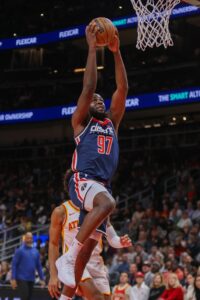 Omoruyi is currently on an expiring $2,196,970 contract. However, his salary is fully non-guaranteed, so Washington wouldn’t be on the hook for any of that money once he’s been officially released.
Omoruyi signed a two-way contract with the Wizards last July after being waived by the Pistons. The former Oregon standout, who previously spent time with Dallas, Oklahoma City, and Detroit from 2021-23, appeared in a career-high 43 games last season for Washington, averaging 4.8 points, 2.0 rebounds, and 0.8 assists in 9.1 minutes per night.
The Wizards converted Omoruyi’s two-way deal to a standard two-year contract in March.
If he’s claimed off waivers, Omoruyi’s new team would be responsible for his $2.2MM salary for 2024/25, which becomes partially guaranteed for $1MM if he remains under contract through the start of the regular season. Should the 27-year-old go unclaimed, he’d become an unrestricted free agent and would be able to sign with any club.
Waiving Omoruyi is the first step for the Wizards to address their roster crunch ahead of the regular season. Entering the day, the team was carrying 17 players on standard contracts, including 15 players with guaranteed salaries.
Besides Omoruyi, Jared Butler is the other player without a fully guaranteed deal, so Washington could set its 15-man regular season roster by cutting Butler — or by waiving or trading a player on a guaranteed contract.