
Hoops Rumors’ 2024 NBA 10-Day Contract Tracker
Since January 5, when NBA teams became eligible to sign players to standard 10-day deals, 21 of the contracts signed have been of the 10-day variety, and that number will only grow as the season nears an end. Hoops Rumors has created a database that allows you to keep on top of those deals, tracking every 10-day signing all season long.
Besides featuring all of this year’s 10-day contracts, our 10-Day Contract Tracker includes information on all 10-day contracts signed since the 2006/07 season. The search filters in the database make it easy to sort by team, player, and/or year. For instance, if you want to see all the 10-day contracts that the Kings have signed in the last 15-plus years, you can do so here. If you want to view Shaquille Harrison’s history of 10-day deals, that list is here.
You can also see whether a player and team signed a second 10-day contract, or if those short-term deals led to an agreement that covered the rest of the season. Additionally, our tracker notes which 10-day deals remain active, saving you from having to figure out whether a particular contract ends on Wednesday or Thursday.
A link to our 10-Day Contract Tracker can be found at any time in the right sidebar under “Hoops Rumors Features” on our desktop site. On our mobile site, you can find it on our “Features” page. We’ll be keeping it up to date for the rest of the season, so be sure to check back to keep tabs on the latest signings as they become official.
As our tracker shows, these are the 10-day deals currently active around the NBA:
- Cleveland Cavaliers: Zhaire Smith, G/F (runs through 2/22)
- Detroit Pistons: Tosan Evbuomwan, F (runs through 2/22)
- Memphis Grizzlies: Jordan Goodwin, G (runs through 2/23)
- Philadelphia 76ers: Darius Bazley, F/C (runs through 2/29)
- Charlotte Hornets: Marques Bolden, C (runs through 2/29)
Note: Reported 10-day deals for Justin Champagnie (Wizards) and D.J. Carton (Raptors) aren’t yet official, but will be added to our tracker once they are.
Mavs Notes: Nelson Lawsuit, Gafford, Washington, Exum, Luka
The wrongful termination lawsuit that former Mavericks general manager Donnie Nelson filed against the franchise in 2022 is scheduled to go to trial this December, according to Xuan Thai of ESPN.
Nelson’s lawsuit alleged that he was fired in retaliation for reporting that his nephew was sexually harassed and assaulted by Mark Cuban‘s chief of staff, Jason Lutin, during a job interview on February 16, 2020. Nelson claims that he didn’t find out about the incident until five months after it occurred, by which point the nephew had reached a settlement agreement with the team.
According to Nelson’s lawsuit, he was in discussions with the Mavericks about a contract extension at the time, but those talks came to an abrupt end after he reported the incident to Cuban. He was fired the following year.
The Mavericks vehemently denied the allegations in a series of statements back in 2022 when Nelson initially filed the suit. According to Thai, in their formal response, the Mavs denied that the veteran executive was wrongfully terminated, stating that his dismissal was the result of multiple other factors, including “poor job performance.”
Here’s more from out of Dallas:
- The Mavericks are 3-0 and have the NBA’s best defensive rating since trade deadline acquisitions Daniel Gafford and P.J. Washington made their debuts. But while Gafford has been playing some of his best basketball since arriving in Dallas, the team is still looking to get Washington going, head coach Jason Kidd said on Tuesday, according to Brad Townsend of The Dallas Morning News (subscription required). “I’ve always talked about getting their feet settled. And I think Gafford, you can see, his feet are settled,” Kidd said. “Now it’s (about) getting P.J.’s feet settled. I think P.J. having family and friends here will help with that. And then being aggressive. We need P.J. to be aggressive and not just wait for (Kyrie Irving) or Luka (Doncic). We need him to play his game too.” Washington has averaged 8.7 points on 40.7% shooting in his first three games as a Mav.
- Mavericks guard Dante Exum, who has played just twice since January 1 due to injuries and has been sidelined since January 27 as a result of right knee bursitis, appears to be getting close to returning to action. “No setback,” Kidd said of Exum, per Townsend (Twitter link). “He’s been working out. He’ll do practice (on Wednesday), non-contact. I think the plan is for somewhere on this road trip to get him back.” Dallas’ upcoming four-game road trip begins on Sunday in Indiana and runs through next Friday (March 1).
- Does two-time MVP Nikola Jokic believe there’s a scenario in which he and Doncic join forces on an NBA team? Asked that question at All-Star weekend, Jokic said he has no desire to leave Denver but suggested with a laugh that if Luka gets fed up in Dallas, he’s welcome to join him on the Nuggets (Twitter video link via DNVR Sports).
Suns Sign Thaddeus Young
FEBRUARY 20: The Suns have officially signed Young, announcing the deal in a press release. That means he’ll be available for Phoenix when the club’s post-All-Star schedule gets underway on Thursday, as Duane Rankin of The Arizona Republic writes.
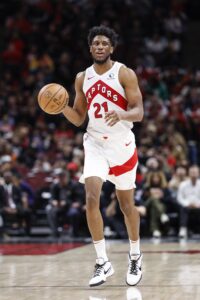 “Thad is a highly respected veteran player who makes us a better team in our pursuit of winning an NBA Championship,” general manager James Jones said in a statement. “Thad is extremely intelligent and plays with a competitive intensity. His size and defensive abilities add versatility to our roster.”
FEBRUARY 13: The Suns are finalizing a deal to sign free agent forward Thaddeus Young, according to Adrian Wojnarowski of ESPN (Twitter link).
Young had been with the Raptors for the past two years, but was traded to Brooklyn at last week’s deadline along with Dennis Schröder in exchange for Spencer Dinwiddie. The Nets opted to waive Young, who was on an expiring $8MM contract, in order to open up a roster spot to complete the deal that sent Royce O’Neale to Phoenix in exchange for draft picks and two incoming players.
A veteran in his 17th NBA season, Young hasn’t been a regular starter since 2018/19 and played a limited role in Toronto this season. He averaged 5.0 points, 3.3 rebounds, and 2.2 assists in 15.2 minutes per game across 23 appearances (six starts), shooting a career-high 62.1% from the floor.
Young is unlikely to play major minutes in Phoenix either, but will provide some additional frontcourt depth and veteran leadership on a team with title aspirations. In addition to playing at forward, the 35-year-old can also function as a small-ball five.
The Suns have two open spots on their 15-man roster after trading away four players at the deadline for O’Neale and David Roddy, so no corresponding move will be necessary to create room for Young.
Due to a new rule related to the buyout market, Phoenix is ineligible to sign a player cut during the season if his pre-waiver salary exceeded the amount of the non-taxpayer mid-level exception ($12.4MM), but that restriction doesn’t apply to Young, who was earning less than that.
Stein’s Latest: Thompson, Magic, Warriors, Caruso, Hawks, More
While he believes that Klay Thompson will ultimately remain in Golden State and eventually retire as a member of the Warriors, Marc Stein writes at Substack that the Magic have been “increasingly mentioned” as a potential suitor for the veteran sharpshooter, who is eligible to reach unrestricted free agency this summer.
Thompson is eligible to sign an extension with the Warriors at any time between now and June 30, but if the two sides don’t reach an agreement by then, he’ll become a free agent and would be able to sign with any team.
While it’s hard to imagine Thompson ending up with the Magic, they’re well positioned to put some pressure on the Warriors — with Markelle Fultz and Gary Harris on expiring contracts and Joe Ingles, Moritz Wagner, and Jonathan Isaac not on guaranteed contracts for 2024/25, Orlando could generate a significant amount of cap room in the offseason.
Here’s more from Stein:
- Despite a belief that Alex Caruso was essentially off-limits at this month’s trade deadline, the Bulls gave “real consideration” to the possibility of moving him before trade talks with the Warriors collapsed, Stein writes.
- Stein also confirms that Chicago and Sixers had serious discussions about an Andre Drummond deal, but hears from one league source that the Bulls were only willing to move Drummond if they were able to line up another center to replace him. When no such opportunity materialized, they decided to hang onto Drummond.
- There’s a sense that the Hawks will make a trade involving one of their starting guards – Trae Young and Dejounte Murray – sooner rather than later. “They know they have to trade one or the other,” one source told Stein.
- While Mike Budenholzer‘s name has been mentioned in league circles as a possibility for the Nets‘ permanent head coaching job, Stein suggests that Budenholzer could very well be a top candidate for multiple jobs this spring, so he has reason to be patient to see how the head coaching market plays out.
Hoops Rumors Glossary: Bi-Annual Exception
The mid-level exception is the most common tool used by over-the-cap teams to sign free agents from other teams to contracts worth more than the veteran’s minimum. But that’s not the only exception those clubs have to squeeze an extra player onto the payroll. The bi-annual exception is a way for a team to sign a player who may command more than the minimum salary, but less than the mid-level.
As its name suggests, the bi-annual exception can only be used every other season. Even if a team uses only a portion of the exception, it’s off-limits during the following league year.
During the 2023/24 league year, two teams – the Heat and Sixers – were ineligible to use the bi-annual exception at all, since they used it in 2022/23.
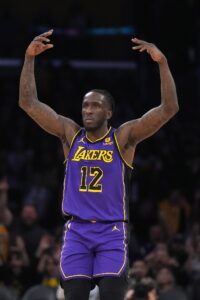 Three teams have used the BAE in ’23/24, with the Lakers signing Taurean Prince, the Cavaliers signing Ty Jerome, and the Raptors signing Jalen McDaniels. Those three clubs won’t have the exception at their disposal during the 2024/25 league year.
The bi-annual exception is available only to a limited number of clubs, even among those that didn’t use the exception during the previous season. Teams that create and use cap space forfeit their bi-annual exception. Additionally, teams lose access to the bi-annual exception when they operate over the first “tax apron,” a figure approximately $7MM above the tax line this season. So, only teams over the cap and under the first apron can use the BAE.
If a team uses all or part of the bi-annual exception, the first tax apron becomes the club’s hard cap for that season. Teams that sign a player using the BAE can later go under the cap, but can’t go over the first apron at any time during the season once the contract is signed.
[RELATED: NBA Teams With Hard Caps In 2023/24]
Although a team with a salary exceeding the first tax apron isn’t permitted to use the bi-annual exception, that team could gain access to the BAE by shedding salary. As long as the team’s salary would be below the first tax apron after completing the bi-annual signing – and remains below that threshold for the rest of the season – that club is permitted to use the BAE, no matter how high its salary might have been earlier in the league year.
Under the NBA’s current Collective Bargaining Agreement, the value of the bi-annual exception in future league years is tied to the value of the salary cap. The BAE comes in at 3.32% of that season’s cap and is rounded to the nearest thousand.
For instance, this season’s cap is $136,021,000; 3.32% of that amount is $4,515,897.20. Rounding to the nearest thousand gets us to $4,516,000, which is the maximum starting salary for a bi-annual signing in 2023/24. The starting salary for the BAE in 2024/25 currently projects to be worth $4,681,000, based on a $141MM cap projection.
A player who signs a contract using the bi-annual exception is eligible for a one- or two-year deal, with a 5% raise for the second season. For a player signed using the BAE in 2023/24, the maximum value of a two-year contract is $9,257,800.
Teams also have the option of splitting the bi-annual exception among multiple players, though that happens much less frequently than it does with the mid-level exception, since a split bi-annual deal may not even be worth more than a veteran’s minimum salary.
Beginning in 2024/25, teams will be permitted to use the bi-annual exception to acquire a player via trade or waiver claim, as long as his contracts fits into the exception in terms of both years and dollars. In other words, a player on a three-year contract or someone who is earning $5MM could not be acquired using the BAE. Only the player’s current-year salary must fit into the BAE.
The bi-annual exception begins to prorate downward on January 10 each year, decreasing in value by 1/174th each day until the end of the regular season. However, a team that uses its BAE between Jan. 10 and the trade deadline wouldn’t be subject to that proration and could use the full amount it has left on the exception.
Note: This is a Hoops Rumors Glossary entry. Our glossary posts will explain specific rules relating to trades, free agency, or other aspects of the NBA’s Collective Bargaining Agreement. Larry Coon’s Salary Cap FAQ was used in the creation of this post.
Earlier versions of this post were published in previous years by Luke Adams and Chuck Myron.
Draft Notes: Buzelis, Ignite, Risacher, Sarr, Mocks
Matas Buzelis, who was the No. 1 prospect in the very first 2024 mock draft that ESPN’s Jonathan Givony published a year ago, had slipped to 10th in ESPN’s prospect rankings last month, but has rebounded nicely as of late, Givony writes in an Insider-only story.
After missing the first part of the G League season due to ankle problems, Buzelis has shown off an improved three-point shot in recent weeks (38.5% in his past 10 games) and has been better on the defensive end of the court, according to Givony, who notes that the Ignite guard/forward made an impact at All-Star weekend, hitting a game-winning shot in the Rising Stars semifinal on Friday.
While Buzelis hasn’t reclaimed that No. 1 spot on ESPN’s big board, he’s back up to No. 6. And, as Givony observes, in a class with no obvious top prospect, a strong finish to the G League season could put the 19-year-old back in the conversation for that first overall pick.
Here are a few more notes on the 2024 NBA draft:
- Givony and Jeremy Woo of ESPN.com (Insider link) examine where things stand for the G League Ignite, noting that Adam Silver‘s comments at All-Star weekend suggest that the program’s days may be numbered. The Ignite are just 2-19 this season and player development has been inconsistent due to the lack of quality guard play, Woo writes. Still, it seems safe to assume the Ignite will be back for the 2024/25 season, since prospects like Dink Pate and Thierry Darlan are under contract for another year and the program continues to actively recruit high-profile prospects.
- International prospects Zaccharie Risacher and Alexandre Sarr top the latest mock draft from Givony and Woo, with Kentucky’s Rob Dillingham at No. 3, Buzelis at No. 4, and Colorado’s Cody Williams at No. 5.
- Risacher and Sarr are also the two players first off the board in the newest mock draft from Sam Vecenie of The Athletic. However, there are significant deviations from ESPN’s mock draft beyond that, starting with Serbian point guard Nikola Topic (No. 3) and Connecticut wing Stephon Castle (No. 5) cracking Vecenie’s top five. Topic is at No. 6 in ESPN’s mock, while Castle is all the way down at No. 15.
- Krysten Peek of Yahoo Sports has also published a new mock draft for 2024, with Sarr claiming the top spot.
Hornets Sign Marques Bolden To 10-Day Deal
11:05am: The Hornets have made it official, announcing in a press release that Bolden has signed his 10-day contract. It will run through February 29.
7:36am: The Hornets are set to sign big man Marques Bolden to a 10-day contract, agent Michael Johnson Jr. tells Shams Charania of The Athletic (Twitter link).
Bolden, 25, has past NBA experience with the Cavaliers and was on a two-way contract with Milwaukee earlier this season. However, he only appeared briefly in two games with the Bucks before being waived on January 7 before his full-season salary could become guaranteed.
Bolden has spent most of the season in the G League playing for the Wisconsin Herd, Milwaukee’s affiliate. In 31 Showcase Cup and regular season contests, he has averaged 13.3 points, 7.7 rebounds, and 1.6 blocks in 25.0 minutes per game, with a shooting line of .554/.404/.743.
As Charania observes, the center has played some of his best basketball of the season as of late, averaging 17.0 points and 13.8 rebounds during the Herd’s current six-game winning streak, with double-doubles in all six of those victories.
Bolden will provide some depth in a frontcourt that has been impacted by Mark Williams‘ lengthy absence due to a back injury. Nick Richards has been starting in Williams’ place, but the Hornets don’t have a ton of options at the five beyond that, especially with P.J. Washington no longer around to occasionally act as a small-ball center. That means there could be a path for Bolden to earn playing time.
No roster move will be necessary for the Hornets, who have been carrying 14 players since buying out Kyle Lowry last week.
Several Two-Way Players Nearing Active Game Limit
A player who signs a two-way contract with an NBA team is permitted to be active for up to 50 regular season games. That limit is prorated if the player signed his two-way deal after the regular season got underway — for instance, a player who finalized a two-way contract halfway through the season would be permitted to be active for up to 25 contests at the NBA level.
[RELATED: Hoops Rumors Glossary: Two-Way Contract]
Several two-way players have been promoted to standard contracts recently, eliminating those games-played limits. GG Jackson (Grizzlies), Keon Ellis (Kings), Lindy Waters III (Thunder), Craig Porter Jr. (Cavaliers), Duop Reath (Trail Blazers), and Jeremiah Robinson-Earl (Pelicans) have all signed new deals since the trade deadline.
However, there are still a number of players on two-way contracts around the league who are at or near their active-game limit for the season. Keith Smith of Spotrac (Twitter link) identifies Celtics big man Neemias Queta, Mavericks guard Brandon Williams, Grizzlies guard Jacob Gilyard, and Hornets teammates Leaky Black and Nathan Mensah as two-way players who have 10 or fewer active games left, while Hawks guard Trent Forrest has already reached his 50-game limit.
In some cases, promotions to the standard roster may be forthcoming. Queta, for instance, has been a semi-regular contributor off the bench for the Celtics, who have an open spot on their 15-man roster, so if Boston wants to make him playoff-eligible and ensure he’s able to be active for the rest of the regular season, a contract conversion would be pretty straightforward.
Other cases could be trickier. While the Hawks would presumably like to have Forrest available for the rest of the season, they have a full 15-man roster, so they’d have to waive someone to make room to promote him.
Atlanta at least has some viable release candidates on its roster — for instance, veterans Patty Mills and Wesley Matthews haven’t played much and aren’t owed guaranteed money beyond this season. But that’s not the case in Memphis, where Gilyard has made a strong case for a promotion from his two-way deal by averaging 4.7 points and 3.5 assists in 37 games (17.7 MPG), with a .425 3PT%.
The Grizzlies have already promoted Jackson and Vince Williams from two-way contracts and may not have any expendable players left on their 15-man roster who could be cut to make room for Gilyard. Luke Kennard ($14.8MM team option for 2024/25) and Lamar Stevens (unrestricted free agent this summer) are the only Grizzlies not owed any guaranteed money after this season, and both are playing rotation roles for the banged-up club.
“We’ll see what happens when the time comes,” Gilyard said of his uncertain situation, according to Damichael Cole of The Memphis Commercial Appeal. “As a basketball player, it’s definitely on your mind. I try not to let it affect me. I think that’s probably the worst part about being a point guard is you start to understand things and start to grasp things like that.”
“It’s kind of a juggling act,” Grizzlies head coach Taylor Jenkins said of working within those active-game limits for his two-way players, including Gilyard and Scotty Pippen Jr. “It’s hard to make those decisions, trying to preserve those dates. (Pippen’s) understood it. I was very upfront with him when he came in, (general manager) Zach (Kleiman) and myself. I think when he came in, we were maybe on the 40-game mark, but he didn’t have 40 games available, so it’s very unfortunate.
“Maybe it’s something that we look into as a league because I think he’s earned the opportunity to play every single night. We just have to balance the games he actually has available to him.”
Besides those players who are approaching their games-played limits, there are a few others on two-way contracts around the league who look like candidates to be promoted to standard rosters before the end of the regular season. Nets forward Jalen Wilson and Warriors guard Lester Quinones are among those who were playing regularly for their respective clubs leading up to the All-Star break.
Promoting a player to a standard contract would open up a two-way slot for his team, allowing that club to reset its active-game counter for that slot — at least to some extent. Due to the prorated nature of those game limits, a player who signs a two-way contract today could only be active for up to 16 games the rest of the way, but that’s 16 more games than, say, Forrest is eligible to play for the Hawks as long as he remains on his current two-way deal.
Teams have until March 4 to sign players to two-way contracts, so I expect to see a good deal of roster activity related to two-way slots within the next couple weeks.
And-Ones: Barton, All-Star Game, Buyout Market, More
Will Barton, who reportedly reached an agreement with CSKA Moscow last month, will return stateside without having played for the Russian club, per an announcement from CSKA (Twitter link). Barton’s contract was terminated via an early exit clause.
An 11-year NBA veteran who appeared in 56 games last season for Washington and Toronto, Barton could be a candidate to return to the league down the stretch. However, Alessando Maggi of Sportando hears from sources that the wing’s departure from CSKA Moscow was related to failed medical tests. If that’s accurate, any NBA teams with interest in Barton will be sure to do its due diligence on his health situation.
CSKA Moscow indicated in its announcement that it remains on the lookout for a player who can help out at shooting guard and small forward.
Here are a few more odds and ends from around the basketball world:
- Ten basketball writers for The Athletic shared their thoughts on how the NBA could improve its All-Star Game. Some of their ideas? Combining All-Star weekend and the in-season tournament final four into one event; turning the All-Star game into a two-on-two or three-on-three tournament; or simply naming All-Stars and not playing the game.
- In an Insider-only article for ESPN, Bobby Marks and Kevin Pelton take a closer look at what sort of impact the NBA’s rule tweaks have had on the buyout market and consider which player will be the most impactful buyout-market addition this season. Of the veterans who have already found new homes, Pelton views Lakers guard Spencer Dinwiddie as the player capable of making the greatest impact.
- Joe Vardon, Sam Amick, and David Aldridge of The Athletic polled several players at All-Star weekend on a variety of topics, including the best player and team in the NBA, whether the league has become too offense-heavy, and what rule changes they’d implement if they had Adam Silver‘s job for a day. The Celtics earned the most votes (five) for the NBA’s best team, with the Clippers (four) coming in second.
10-Day Contracts Expire For Knicks, Raptors
Taj Gibson‘s second 10-day contract with the Knicks expired overnight, making him an unrestricted free agent once again. The 10-day deals signed by Raptors forwards Justise Winslow and Mouhamadou Gueye on February 10 also expired overnight.
Both the Knicks and Raptors are now below the NBA-mandated minimum of 14 players on standard contracts and will have to re-add players to their roster in the near future.
[RELATED: 2023/24 NBA Roster Counts]
Teams are permitted to dip below 14 players for up to two weeks at a time, but because Gibson was only the Knicks’ 13th man and New York has actually been carrying fewer than 14 players since February 8, the club will have to make two roster additions by this Thursday (Feb. 22).
One of those additions could be Gibson, but since he has already signed two 10-day contracts with the Knicks, the team would have to give him a rest-of-season deal to bring him back.
The Raptors, meanwhile, are now at 13 players and will have until March 5 to fill at least one of the two openings on their 15-man roster. Given that Toronto has a good amount of flexibility below the luxury tax line and will likely want take a longer look at some young players, I wouldn’t expect the team to take the full two weeks to fill one or both of those open roster spots. For what it’s worth, both Winslow and Gueye are eligible to sign one more 10-day deal with the team.
Three other 10-day contracts around the NBA remain active — Zhaire Smith‘s deal with the Cavaliers runs through this Thursday, as does Tosan Evbuomwan‘s agreement with the Pistons. Jordan Goodwin‘s contract with the Grizzlies will cover one extra day, running through Friday.
All three of those contracts will actually remain active for more than 10 days, since 10-day contracts must cover at least three games. Smith, Evbuomwan, and Goodwin each only got two games before the All-Star break, so their “10-day” deals will actually cover 11 or 12 days. That wasn’t the case for Gibson, Winslow, or Gueye, as the Knicks and Raptors each played three contests between Feb. 10 and the start of the All-Star break.