
Suns Notes: Lee, Durant, Eubanks, Watanabe, Tournament
Suns wing Damion Lee, who underwent right knee surgery last month, is still using crutches, but will be “off of them very soon,” head coach Frank Vogel said on Thursday (Twitter video link via Duane Rankin of The Arizona Republic).
At the time of Lee’s procedure, the Suns didn’t offer any sort of timetable for his recovery process, simply stating that more updates would be provided “as appropriate.” Asked on Thursday if he had a sense of whether the 31-year-old might be able to return in December or January, Vogel still wasn’t able to share any specifics.
“This year hopefully though,” Vogel said, referring to the 2023/24 season (Twitter link via Rankin).
Here’s more on the Suns:
- Star forward Kevin Durant has been listed as questionable for Friday’s game in Memphis due to right foot soreness, Rankin writes for The Arizona Republic. It sounds like a decision will be made on his availability closer to game time.
[UPDATE: Durant has been ruled out, per Rankin.] - Suns big man Drew Eubanks, who left Wednesday’s game due to a left ankle injury, has been ruled out for Friday, with the team designating the ailment as a sprain, tweets Gerald Bourguet of PHNX Sports. In addition to Lee and Bradley Beal (back), who are sidelined with longer-term injuries, the Suns will also still be without Yuta Watanabe, who will miss a fourth consecutive contest due to a quad contusion.
- Phoenix is playing its final in-season tournament game on Friday vs. Memphis and remains in the hunt for the Western Conference’s wild card spot despite losing Group A to the Lakers, Rankin writes. A victory would result in a 3-1 record in group play, but it may need to be a blowout win to advance to the tournament quarterfinals, since they’d almost certainly need to win a point differential tiebreaker (Twitter link).
Kobi Simmons Signs G League Contract, Joins Raptors 905
Veteran NBA guard Kobi Simmons has signed a G League contract and is joining the Raptors 905, who acquired his returning rights earlier this week, according to Blake Murphy of Sportsnet.ca (Twitter link).
Simmons, 26, appeared in 32 games for the Grizzlies as a rookie back in 2017/18 after going undrafted out of Arizona. He hasn’t played much in the NBA since then, having spent most of his career either in the G League or overseas (he played in Poland in 2021/22).
However, in addition to a single appearance with the Cavaliers in 2018/19, Simmons suited up for the Hornets in five games near the end of last season. He signed a two-way contract with Charlotte in March, then was elevated to the standard roster in April during the final week of the regular season. Simmons’ contract with the Hornets covered ’23/24 too, but his salary was non-guaranteed and he was waived prior to training camp.
Simmons averaged 19.2 points, 4.3 rebounds, and 4.5 assists in 33.7 minutes per game (46 games) and had a shooting line of .489/.381/.810 with the Greensboro Swarm, Charlotte’s G League affiliate, last season. The Swarm traded his rights to Toronto’s affiliate on Wednesday in exchange for the rights to Sterling Brown and Gabe Brown.
While the Raptors now control Simmons’ G League rights, he remains an NBA free agent and could sign with any team if he gets an offer.
Timberwolves Notes: Conley, Future, Milton
Mike Conley and his family were prepared for the possibility of a trade out of Utah last season, but they began to become convinced as the trade deadline neared that they would stay put, writes Jon Krawczynski of The Athletic. After moving Rudy Gobert, Donovan Mitchell, and Bojan Bogdanovic prior to the season, the Jazz remained in the postseason hunt for much of 2022/23, with Conley playing a key role for the club.
However, just before the deadline arrived, Utah agreed to a three-team deal with the Lakers and Timberwolves that sent Conley to Minnesota. It came as a shock to the Conley family, as Krawczynski details — Mike and his wife Mary weren’t together when the news broke and had to deal with the impact the move would have on their three children, who were seven, five, and three years old. Conley knows that trades are part of the business for highly compensated NBA players, but admitted it was a difficult time.
“You can make a lot of money, but if you get punched in the face, you’re still like, ‘Oh my God, that hurt,'” he said. “Yeah, I’ll be fine. But at this moment, it’s hurting me. So let me feel this for a second here and then move on.”
Nearly a year later, Conley and his family are enjoying life in Minnesota, according to Krawczynski, who notes that the kids have made new friends, while the veteran guard has taken to the area’s “lake life” off the court and embraced the opportunity he has with the Timberwolves on the court.
“It’s probably the best situation for me at this stage of my career,” Conley said. “Not only do we have a team that can be competitive to a contending team in no time, but I also get to be a part of that, like I’m not being thrown to the side where they say, ‘Hey, you know, you’re done playing. You’re not going to play much. It’s a leadership role.'”
Here’s more on Conley and the Wolves:
- Conley is on an expiring contract and it may be a challenge for the Timberwolves to bring him back on a market-value deal, given their other financial commitments. However, Minnesota has no in-house point guard to replace him and Conley sounds open to the idea of trying to find a way to make it work with the Wolves beyond this season. “Why not chase it here and hope that my family adjusts and gets settled here right now and not have to run around for three or four more times before I retire,” he said, per Krawczynski. “And just because I’m chasing something I want, you’re not guaranteed to get it anywhere else you go anyway. So why not do it with people that love, respect you and treat you the way you want to be treated? This organization is all about heading in that direction.”
- If the Timberwolves had fallen flat this season, it would’ve helped simplify some major roster decisions in 2024 and beyond, writes Michael Rand of The Star Tribune. However, as long as this group continues to prove it’s capable of playing at a high level, the franchise’s future will become much more “nuanced,” according to Rand, who points out that Karl-Anthony Towns, Anthony Edwards, Gobert, and Jaden McDaniels will earn approximately $155MM combined next season. Keeping that core together will result in a very expensive roster.
- Facing his former team for the first time on Wednesday, Timberwolves guard Shake Milton expressed appreciation to the Sixers for the years he spent there, as Gina Mizell of The Philadelphia Inquirer writes. Milton added that he has been loving his time with the Wolves so far. “I just felt like this would be a good opportunity, and so far, it has been,” he said. “I love it out here, being in Minnesota, the people, the staff members. Just coming to work every day is really enjoyable. And we’re winning, too. You’ve got to love all three of those things.”
Heat Not Pursuing Zach LaVine
The Heat aren’t actively pursuing a trade for Bulls guard Zach LaVine, according to Barry Jackson of The Miami Herald, who says he’d be surprised if that stance changes. Miami was previously cited as a destination LaVine would have interest in.
As Jackson explains, the Heat’s proximity to the tax aprons going forward is an important factor in their decision not to go after LaVine. Moving Tyler Herro as the centerpiece in a LaVine trade would significantly increase the team’s salary in future seasons, since Herro is owed $120MM over the next four years, while LaVine will make $178MM.
Herro is also five years younger than LaVine and is still improving as a scorer, so the Heat don’t particularly want to give him up in a deal for the Bulls guard, Jackson notes. Using Kyle Lowry‘s expiring contract and other pieces in an offer for LaVine would be another option, but that would create even higher tax penalties and more financial restrictions and in future seasons, and LaVine and Herro have overlapping skill sets.
Essentially, as Jackson writes, it sounds like the Heat don’t view LaVine as the sort of player who is worth surrendering key trade assets and sacrificing future flexibility for. The Bulls, on the other hand, have reportedly set a high asking price for the two-time All-Star, so the two teams are unlikely to agree on his value.
The Heat might have interest in guard Alex Caruso if Chicago makes him available, Jackson says, but he’s not sure the team would even part with a first-round pick for the defensive stalwart. If that’s the case, Miami almost certainly wouldn’t be the highest bidder for Caruso, who is expected to generate widespread interest.
Hoops Rumors Glossary: Derrick Rose Rule
Derrick Rose‘s name doesn’t technically show up at all in the NBA’s Collective Bargaining Agreement. However, like Gilbert Arenas, the veteran NBA guard has become an informal namesake of one of the CBA’s rules.
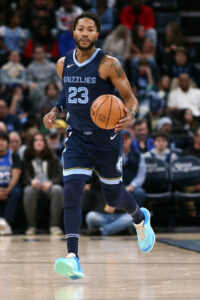 The Rose rule allows a player who is finishing his rookie scale contract to sign a maximum-salary contract that exceeds the typical limit for a player with fewer than seven years of NBA experience. The rule, which was created after Rose won a Most Valuable Player award while playing on his rookie contract, allows young stars to qualify for a maximum salary worth 30% of the salary cap instead of 25%.
Although we colloquially refer to this rule as the Rose rule, it’s technically known in the CBA as the “higher max criteria” for “fifth year eligible” players, since a player has to meet certain performance benchmarks to qualify for the higher maximum salary in his fifth NBA season. A player becomes eligible for the 30% max entering his fifth season when at least one of the following is true:
- The player was named to an All-NBA team in the most recent season, or in two of the past three seasons.
- The player was named Defensive Player of the Year in the most recent season, or in two of the past three seasons.
- The player was named Most Valuable Player in any of the past three seasons.
A player signing a rookie scale extension can receive the higher Rose rule max as long as his extension covers at least four new years. A player signing a free agent contract can also be eligible for the Rose rule max if he’s coming off his four-year rookie contract — or if he’s a former second-round pick or undrafted free agent with four years of experience, and he’s re-signing with his current team.
This latter scenario almost never arises, since it’s extremely rare for a player who wasn’t drafted in the first round to develop into an All-NBA player within four years. There are rare scenarios in which it might happen — Nikola Jokic, for instance, was a second-round pick who made the All-NBA team in his fourth season. But he had already signed a second contract by that point, having re-upped with the Nuggets as a restricted free agent following his third season.
Of course, just because a player is eligible for a Rose rule extension, that doesn’t mean a team has to offer a starting salary worth the full 30% max. That’s still a matter of negotiation between the player and team, and a starting salary between 25-30% is possible.
Teams and players who agree to a rookie scale extension can also negotiate conditional maximum starting salaries that hinge on the player’s performance in his fourth season, before his extension begins.
For example, a team and player could agree to the following terms:
- The player’s starting salary will be worth 25% of the cap if he doesn’t make an All-NBA Team in his fourth season.
- The player’s starting salary will be worth 27% of the cap if he’s named to the All-NBA Third Team.
- The player’s starting salary will be worth 28% of the cap if he’s named to the All-NBA Second Team.
- The player’s starting salary will be worth 30% of the cap if he’s named to the All-NBA First Team.
Several players have agreed to this form of Rose rule extension since the rule was implemented in 2017. Devin Booker, Ben Simmons, and Pascal Siakam were among the players whose starting salaries on their rookie scale contracts could have ranged from between 27-30% depending on which All-NBA team they made.
Siakam was voted to the All-NBA Second Team the spring before his rookie scale extension went into effect, securing a starting salary worth 28% of the cap, based on the terms of his Rose rule deal. Simmons’ contract also began at 28% of the cap after he made an All-NBA Third Team that same year. Booker missed out on All-NBA honors ahead of his fourth season, however, so he received a standard 25% max deal.
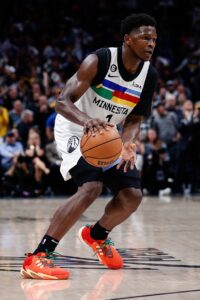 In recent years, the significant majority of rookie scale extensions that include Rose rule language have been more of a yes or no proposition — a player qualifies for the 30% max with an All-NBA spot, regardless of which team he makes.
That’s reportedly the case for Anthony Edwards, Tyrese Haliburton, and LaMelo Ball, who signed maximum-salary rookie scale extensions this past offseason and would receive a bump to the 30% max by making an All-NBA team in 2024.
While a player can, in some cases, meet the Rose rule performance criteria after he signs his contract, he must meet the criteria before the contract begins. So if Edwards were to miss out on an All-NBA spot in 2024, then earned one in 2025, it would be too late for him to qualify for a Rose rule deal — his maximum-salary contract would start at 25% of the cap in 2024/25 and increase by 8% annually from there.
It’s worth noting that NBA’s previous Collective Bargaining Agreement also included the “designated rookie” rule, which was separate from the Rose rule but often applied to Rose rule deals. The designated rookie rule allowed teams to sign players to rookie scale extensions that spanned five new years instead of four. Teams weren’t permitted to carry more than two designated rookies at a time, including no more than one who was acquired via trade.
However, the latest CBA eliminated the designated rookie rule, allowing all rookie scale extensions to cover up to five new years and placing no restrictions on how many of those players those teams are permitted to carry or acquire. The Rose rule is now the only one governing deviations from the norm for rookie scale extensions.
Finally, a player with between seven and nine years of experience can qualify for a maximum salary worth 35% of the cap instead of 30% by meeting similar criteria, but that’s related to the designated veteran rule rather than the Rose rule. We cover that subject in a separate glossary entry.
Note: This is a Hoops Rumors Glossary entry. Our glossary posts will explain specific rules relating to trades, free agency, or other aspects of the NBA’s Collective Bargaining Agreement. Larry Coon’s Salary Cap FAQ was used in the creation of this post.
Earlier variations of this post were published in 2013 and 2018 by Chuck Myron and Luke Adams.
Chris Paul After Ejection: “It’s Personal” With Ref Scott Foster
Chris Paul‘s return to Phoenix was cut short on Wednesday night, as the Warriors guard was assessed with a pair of technical fouls and ejected from the game during the final minute of the second quarter. The referee who handed out those technicals was Paul’s longtime nemesis Scott Foster, as Kendra Andrews of ESPN.com writes.
“It’s personal,” Paul said. “We had a situation some years ago and it’s personal. The league knows. Everybody knows. There’s been a meeting and all of that. … I’m OK with a ref saying whatever they’re saying, but don’t use a tech to get your point across.”
While Paul’s teammates and head coach Steve Kerr generally agreed that the veteran guard earned his first technical by complaining about a foul call, they took issue with Foster’s decision to hit him with a second technical just seconds later. Foster said after the game that both technicals were for “unsportsmanlike conduct” (Twitter link via Kellan Olson of Arizona Sports).
“I didn’t think Chris deserved to be ejected,” Kerr said. “The first tech, absolutely. But I thought the second one was unnecessary. Everybody gets frustrated out there.”
“When both player and ref engage in conversation, that has to stay there,” Stephen Curry said. “I told Scott that after he ejected him. There are certain situations where players overstep. There are times when you know you have to back off. But when both are engaging, I don’t like that.”
As Andrews details, Paul’s former teams lost 13 games in a row in which Foster was the crew chief, and he has a 3-17 playoff record in games that Foster has officiated. CP3’s teams were favored in 15 of those 20 contests, according to Tom Habertstroh (Substack link).
According to Andrews, the animosity between Paul and Foster may have originated during the guard’s stint with the Clippers. In his media session following Wednesday’s loss, Paul mentioned an incident involving his son and Foster from that time, adding that it led to a meeting that included him, his father, Foster, and former Clippers head coach Doc Rivers, among others (Twitter video link via NBC Sports Bay Area).
Paul declined to go into further detail about that incident, suggesting that he’ll simply need to avoid putting himself in position to be T’d up in future games that Foster officiates.
“I’ve got to do a better job at staying there for my teammates, but it is what it is,” he said, per Andrews. “I’ll probably see [Foster] in a Game 7 sometime soon.”
Ibou Badji Signs Two-Way Contract With Blazers
8:17pm: Badji’s signing is official, the Blazers announced in a press release.
2:40pm: After waiving guard Jamaree Bouyea, the Trail Blazers are signing big man Ibou Badji to a two-way contract, sources tell Adrian Wojnarowski of ESPN (Twitter link).
A 7’1″ Senegalese center with a 7’9″ wingspan, Badji spent much of last season on a two-way contract with Portland, though he didn’t appear in an NBA regular season game. He played in Spain from 2019-22 and joined the Wisconsin Herd (the Bucks’ G League affiliate) to begin the 2022/23 campaign after going undrafted in 2022.
Badji, 21, signed with the Blazers last November and inked a second two-way deal with the team this July, but was waived at the start of the regular season last month to create a two-way opening for fellow center Duop Reath.
Badji rejoined the Herd at the start of this G League season and has appeared in six games for the team, averaging 3.5 points, 2.5 rebounds, and 2.3 blocks in 15.3 minutes per night. Given his relatively raw skill set, the big man seems likely to continue playing primarily in the NBAGL. As long as he remains under contract with Portland, Badji will now suit up for the Rip City Remix, the Blazers’ affiliate.
Once Badji officially signs his deal, the Blazers will once again have the maximum 18 players under contract — 15 on standard deals and three on two-ways.
Injury Notes: Embiid, Nets, Lyles, Fultz, LeVert
Sixers center Joel Embiid will be sidelined for Wednesday’s game in Minnesota due to left hip soreness, according to Shams Charania of The Athletic (Twitter link).
While Embiid has been frequently impacted by injuries over the course of his career, there’s no indication at this point that his hip issue is a cause for any real concern. Wednesday’s contest is the second night of a back-to-back set and it will be the first game that the reigning MVP has missed this season. He played 41 minutes in Tuesday’s overtime loss to Cleveland.
Here are a few more injury-related notes from around the NBA:
- Nets guard Ben Simmons (back nerve impingement) is making progress in his recovery and has begun “light individual court work,” but he’ll be sidelined for at least seven-to-10 more days, the team announced today in a press release. Brooklyn offered a more positive update on Cam Thomas, who has made “significant improvement” in his recovery from a left ankle sprain and has been cleared for increased on-court work. He’s expected to be integrated into team activities next week, according to the club. Guard Dennis Smith Jr., meanwhile, is day to day with a lower back sprain.
- Kings forward Trey Lyles, who has yet to play this season due to a left calf strain, appears to be on the verge of his season debut. According to Chris Biderman of The Sacramento Bee, Lyles is expected to be active on Wednesday vs. New Orleans, while Keegan Murray (lower back soreness) will likely be ruled out. Both players were listed as questionable in the NBA’s most recent injury report.
- Magic guard Markelle Fultz is unavailable for a seventh straight game on Wednesday vs. Denver due to left knee tendinitis, tweets Jason Beede of The Orlando Sentinel.
- In addition to missing Donovan Mitchell for the past three games, the Cavaliers have also been without Caris LeVert, who is dealing with knee soreness, for their past two contests, tweets Chris Fedor of Cleveland.com. The Cavs haven’t missed a beat without the two guards, however, and are currently riding a four-game winning streak.
Trail Blazers Waive Jamaree Bouyea
2:36pm: The move is official, the Blazers announced in a press release.
1:41pm: The Trail Blazers intend to waive Jamaree Bouyea from his two-way contract today, a league source tells Sean Highkin of Rose Garden Report (Twitter link).
Bouyea, 24, signed with Portland earlier this month after the team promoted Skylar Mays to its standard 15-man roster, opening up a two-way slot. He had a busy 10 days as a Trail Blazer, appearing in six games with the NBA club and a pair of contests with the Rip City Remix, Portland’s G League affiliate.
Bouyea struggled in his limited role with the Blazers, scoring just 10 points on 5-of-21 shooting (0-of-8 three-pointers) in 57 minutes of action. He also had as many turnovers (eight) as assists. While Bouyea was more effective with the Remix, averaging 15.5 PPG, he made just 1-of-8 threes in his two NBAGL contests and was a minus-19 in 64 total minutes.
The Trail Blazers got veteran guard Malcolm Brogdon back from a five-game injury absence on Tuesday and No. 3 overall pick Scoot Henderson is on track to return soon as well, lessening the need for extra bodies in the backcourt. After waiving Bouyea, Portland may use its open two-way slot to bring in a player at another position.
Southwest Notes: Vassell, Spurs, Udoka, Gilyard
Spurs wing Devin Vassell, who has battled a left adductor injury in the season’s first month after signing a lucrative long-term contract extension in the offseason, told reporters that he’ll return for Wednesday’s game vs. the Clippers (Twitter video link via Tom Orsborn of The San Antonio Express-News).
The groin injury has sidelined Vassell for five of the Spurs’ first 14 games, including the past three. He has been effective when he has played, averaging 17.3 points in just 28.9 minutes per night through nine appearances, with career highs in field goal percentage (49.6%) and three-point percentage (43.1%).
Here are a few more notes from around the Southwest:
- Although the Spurs have a talented young core headed by No. 1 overall pick Victor Wembanyama, they’re the NBA’s youngest team and are still in search of leadership, writes Jeff McDonald of The San Antonio Express-News (subscription required). “When a team is that young, each is hesitant to play that role,” head coach Gregg Popovich said. “Usually your leaders are your best players, and they’re usually All-Stars. We don’t have that right now.”
- Rockets head coach Ime Udoka spoke to Kelly Iko of The Athletic about the defensive system he brought to Houston, Popovich’s influence on his coaching style, and whether the expectations with his new team are different than they were in Boston. “For me, the expectation is the same, the standards are the same,” Udoka explained. “You want to play at a certain level, and it doesn’t matter if it’s a championship-level team or a young team. You want to build those habits and fundamentals from day one.”
- Damichael Cole of The Memphis Commercial Appeal takes a look at Jacob Gilyard‘s journey from undrafted free agent to G League standout to two-way player to Grizzlies‘ starting point guard. While injuries and Ja Morant‘s suspension have forced Gilyard into the rotation, his teammates have been impressed with how he has handled the opportunity. “I knew he was a hooper from the minute I watched him,” Jaren Jackson Jr. said. “I felt comfortable playing with him, like I have been playing with him for years.”