
NBA: David Stern Remains In “Serious Condition”
The NBA has issued an update on former commissioner David Stern, who underwent emergency surgery last week after suffering a brain hemorrhage. According to the league, Stern remains in “serious condition.”
“He is receiving great care and surrounded by his loved ones,” the NBA’s statement reads. “The Sterm family and everyone at the NBA appreciate the incredible outpouring of support. Our thoughts and prayers remain with David and his family.”
Stern, 77, collapsed at a restaurant in Manhattan last Thursday afternoon and was rushed to a New York City hospital, where he underwent emergency brain surgery. The former NBA commissioner held the position for 30 years before being succeeded by Adam Silver in 2014.
We at Hoops Rumors send our best wishes to Stern and his family.
Blazers Granted Disabled Player Exception For Rodney Hood
The NBA has approved the Trail Blazers‘ application for a disabled player exception, according to ESPN’s Adrian Wojnarowski (via Twitter). Portland submitted the request earlier this month after losing Rodney Hood to a season-ending Achilles injury.
As we explained in a previous story, the Blazers’ DPE for Hood will be worth $2,859,000, half of his 2019/20 salary ($5,718,000). The exception allows the club to sign a replacement player to a one-year contract, or to acquire a player on an expiring contract via trade or waivers, assuming his salary fits into the exception. It doesn’t provide an extra roster spot, though Portland already has an opening on its 15-man squad anyway.
Although the disabled player exception will give the franchise some added flexibility, the Blazers have the highest payroll of any NBA team for the ’19/20 season and would be on the hook for added tax penalties if they continue to increase team salary. As such, it would be a bit surprising if the club uses the DPE to sign a player for more than the veteran’s minimum.
The Blazers will have until March 10 to make use their disabled player exception. It will expire at that point if it hasn’t been utilized.
Our breakdown of which teams hold disabled player exceptions and which clubs have applied for them can be found right here.
Trade Rumors: Nuggets, Thunder, Turner, More
Within his early breakdown of the 2019/20 trade market, Jeff Zillgitt of USA Today notes that the Nuggets may make young role players like Malik Beasley and Juan Hernangomez available, especially if they can include them in a package that nets them an impact player.
Zillgitt also wonders if Thunder point guard Chris Paul would consider waiving his 2021/22 player option, since eliminating that final year from his contract would make him a far more appealing trade chip to teams looking to retain long-term flexibility. Of course, waiving that option would cost Paul a guaranteed $44MM salary for ’21/22, and there’s no guarantee he’d recoup more than a fraction of that amount on a new deal. So that scenario looks like a bit of a long shot for now.
Here are a few more stories focusing on the NBA’s in-season trade market:
- Eric Pincus of Bleacher Report spoke to a handful of current and former NBA executives to evaluate teams’ needs and players’ value in advance of the February trade deadline. One former general manager thinks it may take more time for teams to become sellers, since sub-.500 teams hold playoff spots in each conference. “I don’t think any of these teams [outside of the top eight] are scared,” the former GM said. “It’s going to take longer for teams to lose confidence that they have a chance to fight for eighth. … We’ll see more separation [in the standings] closer to February.”
- According to Pincus, several executives believe the Pacers will eventually seriously consider trading Myles Turner, since he’s not considered a great long-term fit alongside Domantas Sabonis. Turner was viewed as the more valuable asset last season, but Sabonis has been better so far this year.
- Sean Deveney of Heavy.com identifies several newly trade-eligible players who are worth keeping an eye on as February’s deadline nears, including Warriors guard D’Angelo Russell, Bulls forward Thaddeus Young, and several Knicks veterans. We singled out many of the same trade candidates on Monday in our own look at players whose trade restrictions lifted on December 15.
- John Hollinger of The Athletic explores five questions that could shape this season’s trade deadline, such as just how serious the Nuggets and Mavericks are about their short-term chances to contend.
Deandre Ayton Eligible To Return From Suspension
Suns center Deandre Ayton served the final game of his 25-game suspension on Monday night and is now eligible to return to the team’s lineup. Ayton’s return to action figures to happen on Tuesday in Los Angeles, where the Suns will take on the Clippers.
Following the season opener, Ayton was hit with a 25-game ban for violating the league’s anti-drug policy, having tested positive for a diuretic. The Suns initially played well in Ayton’s absence, opening the year with a 7-4 record, but they’ve slumped since then and are now 11-15, one game behind the eighth-seeded Thunder.
While Aron Baynes has played well as Phoenix’s starting center, getting the No. 1 pick back in their lineup will give the Suns a deeper, more versatile frontcourt. Ayton’s teammates are looking forward to seeing him back in action, as Duane Rankin of The Arizona Republic details.
“I think he’s antsy,” Devin Booker said on Sunday. “The whole team is ready. It’s an exciting time.”
While there may be some ups and downs as the Suns work Ayton back into the rotation, the 21-year-old center provides head coach Monty Williams with a unique skill set and an athleticism that the team’s other big men don’t possess.
“He is a rim protector, he can rebound, he can score and we certainly need that pressure on the rim on offense,” Williams said, per David Brandt of The Associated Press. “All of that stuff along with moving the ball, I am hopeful that it translates into us playing even better than we have.”
Ayton’s suspension cost him approximately $2.17MM of his $9.56MM salary for 2019/20. Because Phoenix didn’t add a 16th man while Ayton was on the suspended list, no roster move is required to activate him.
NBA Players Who Still Can’t Be Traded
Most of 2019’s offseason signees became eligible to be traded over the weekend. However, while most players on NBA contracts can now be dealt, there are still a handful of players who remain ineligible to be traded — at least for now.
Here’s a breakdown of the players still facing trade restrictions:
Players who met the January 15 criteria:
Not every player who signed a free agent contract in the offseason had their trade restrictions lifted on December 15. For a select handful of players, that date will be January 15 instead.
These players all meet a specific set of criteria: Not only did they re-sign with their previous team this offseason, but they got a raise of at least 20%, their salary is worth more than the minimum, and their team was over the cap, using Bird or Early Bird rights to sign them.
The following players meet this criteria and will become trade-eligible on January 15:
- Ryan Arcidiacono (Bulls)
- Patrick Beverley (Clippers)
- Khem Birch (Magic)
- Thomas Bryant (Wizards)
- Alex Caruso (Lakers)
- Dorian Finney-Smith (Mavericks)
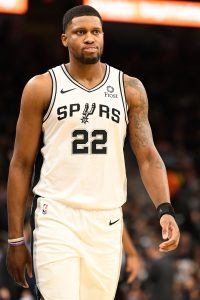
- Rudy Gay (Spurs)
- Tobias Harris (Sixers)
- Maxi Kleber (Mavericks)
- Kevon Looney (Warriors)
- Rodney McGruder (Clippers)
- Khris Middleton (Bucks)
- Darius Miller (Pelicans)
- Nene (Rockets)
- Kelly Oubre (Suns)
- Kristaps Porzingis (Mavericks)
- Daniel Theis (Celtics)
- Klay Thompson (Warriors)
- Nikola Vucevic (Magic)
- Ivica Zubac (Clippers)
Players who signed as free agents after September 15:
Technically, the NBA’s Collective Bargaining Agreement states that a player who signs a free agent contract can’t be traded for three months or until December 15, whichever comes later. Most big-name free agents sign new contracts in July, so we default to December 15 in those cases. That’s not the case for everyone though, as the three-month rule applies to any player who signs after September 15.
Here are the players who signed after September 15 and remain on NBA rosters, along with the dates they’ll become trade-eligible:
- Vince Carter (Hawks): December 20
- Thabo Sefolosha (Rockets): December 23
- Marquese Chriss (Warriors): December 30
- Caleb Martin (Hornets): January 19
- Jalen McDaniels (Hornets): January 20
- Wenyen Gabriel (Kings): January 21
- Amile Jefferson (Magic): February 1
Of course, since this season’s trade deadline falls on February 6, players who signed their contracts after November 6 won’t be trade-eligible at all until after the season. The following players fit that bill as of today:
- Carmelo Anthony (Trail Blazers)
- Juwan Morgan (Jazz)
Players who recently signed veteran contract extensions:
When a player signs a veteran contract extension that exceeds the NBA’s extend-and-trade rules – which are fairly restrictive – he can’t be traded for six months.
As our extension tracker shows, nine veteran extensions have been signed so far in 2019/20. Of those nine, only one – Kyle Lowry‘s – didn’t exceed the league’s extend-and-trade rules. Of the other eight, three were signed prior to August 6, meaning those players will become trade-eligible by February 6.
Here are the trade-eligible dates for those players:
- Dwight Powell (Mavericks): January 6
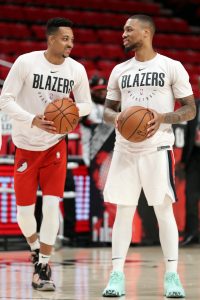
- CJ McCollum (Trail Blazers): January 30
- Draymond Green (Warriors): February 3
The following players who signed extensions can’t be dealt at all this season, either because they signed their extensions after August 6 or because they signed a super-max extension.
- Eric Gordon (Rockets)
- Bradley Beal (Wizards)
- Joe Ingles (Jazz)
- Cedi Osman (Cavaliers)
- Damian Lillard (Trail Blazers)
- Note: Lillard is ineligible to be traded for one year because he signed a super-max extension.
Players who can be dealt — with caveats:
The players in this group can technically be traded, so we won’t list them all. However, a variety of potential roadblocks may impact whether or not it’s actually realistic to move them this season. Here’s the breakdown:
- Players whose contracts meet certain criteria have the ability to block trades that involve them. Here’s the full list of 16 players who have that veto ability in 2019/20, including Lakers veterans Kentavious Caldwell-Pope, JaVale McGee, and Rajon Rondo.
- Players who have trade kickers in their contracts will receive bonuses if they’re traded, which can complicate some potential deals financially. The 23 players with trade kickers in their contracts, including Steven Adams and LaMarcus Aldridge, are listed here.
- A player can’t be aggregated with another player for salary-matching purposes if he has been traded to an over-the-cap team within the last two months. That restriction doesn’t apply to anyone right now, but any player traded between now and February 6 won’t be eligible to be aggregated in a second deal before the deadline.
- The “poison pill provision” applies to players who signed rookie scale extensions that will begin the following season. The poison pill provision, which we outline in greater detail in a glossary entry, can make salary-matching very difficult in trades. It currently affects nine players, including Ben Simmons and Jamal Murray.
- If a team traded a player to another team during the 2019 offseason, it can’t re-acquire that player from that team again during the season. For instance, after acquiring him from Golden State in July, the Grizzlies couldn’t trade Andre Iguodala back to the Warriors this season. This rule applies to any trade consummated since the end of the NBA Finals.
Photos courtesy of USA Today Sports Images.
12 Notable Players Who Are Now Trade-Eligible
Most of the players who signed new contracts as free agents this past summer became eligible on Sunday to be traded. That list includes a number of stars — Celtics point guard Kemba Walker, Clippers forward Kawhi Leonard, and the Nets duo of Kevin Durant and Kyrie Irving are among the players who can now be dealt.
Of course, that group of players won’t be traded this season or anytime soon. While many noteworthy players became trade-eligible on December 15, it’s merely a technicality for those ones who are untouchable.
Today then, we’re focusing on a dozen newly trade-eligible players who are noteworthy not because of their star power but because they’re viable candidates to be moved in advance of this season’s February 6 trade deadline.
Approximately 120 players became trade-eligible on Sunday, so the list below only makes up about one-tenth of that group. You can check out the full list here.
Here are 12 notable players who are now eligible to be traded:
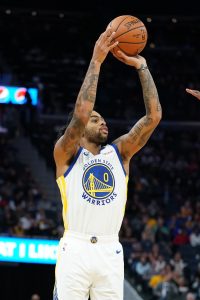 D’Angelo Russell, G (Warriors): Viewed as a trade candidate since the moment he agreed to join the Warriors due to his questionable long-term fit in Golden State, Russell may not be dealt this season. But it seems like it’ll just a matter of time before the Dubs seriously consider the possibility.
- Alec Burks, G (Warriors): A minimum-salary player like Burks or big man Willie Cauley-Stein is a more realistic short-term trade candidate for the Warriors. Moving a minimum-salary veteran without taking a player back would give the team a little added breathing room below its restrictive hard cap.
- Marcus Morris, F (Knicks): Morris has insisted he wants to stick with the Knicks rather than being traded, but his one-year contract and impressive on-court production will make him an intriguing trade chip. He may represent New York’s best – or only – chance to net a first-round pick in a deal.
- Taj Gibson, F/C (Knicks): While Morris is the Knicks’ best trade candidate, he’s hardly the only one. Gibson’s contract, which only has a small partial guarantee for next season, is fairly trade-friendly, and he’d be a fit with just about any contender.
- Wayne Ellington, G (Knicks): OK, you get it — a lot of Knicks could be on the trade block this winter. Besides the three we’ve already listed, Bobby Portis, Julius Randle, Elfrid Payton, and Reggie Bullock became trade-eligible on Sunday too, and none should be considered untouchable.
- Thaddeus Young, F (Bulls): Things haven’t gone well for the Bulls or for Young this season. There’s time to turn it around, but if that doesn’t happen, Young’s camp could encourage the Bulls to trade the veteran forward to a team willing to give him a larger role.
- J.J. Redick, G (Pelicans): Redick is the sort of rotation player who can be plugged into any roster and be effective, so the Pelicans should expect to receive inquiries. The veteran sharpshooter still believes New Orleans can bounce back from its rough start, but if the club gets the right offer, a Redick deal isn’t out of the question.
- Jabari Parker, F (Hawks): I made a case last month for why I think Parker might be a logical trade candidate. At the very least, he’d be way easier for the Hawks to move than the three big expiring contracts belonging to Chandler Parsons, Allen Crabbe, and Evan Turner.
- DeMarcus Cousins, C (Lakers): Cousins likely won’t play this season, but that doesn’t mean the Lakers can’t use him as a salary-matching piece in a trade. Three Lakers players have de facto no-trade clauses, and most of the rest of the roster earns less than Cousins, making him one of the club’s most obvious trade chips by default.
- Mike Muscala, F/C (Thunder): Like the Warriors, the Thunder could benefit financially from trading a minimum-salary veteran, then replacing him with a new player on a smaller, prorated minimum deal. Making that move with the struggling Muscala would allow Oklahoma City to sneak below the tax.
- Stanley Johnson, F (Raptors): If the Raptors pursue a smaller-scale trade, Johnson looks like one of the team’s most expendable pieces. He’s earning $3.6MM, but has barely played at all in his first season in Toronto.
- Dewayne Dedmon, C (Kings): Dedmon is another free agent signing that hasn’t exactly worked out as his new team planned, as Richaun Holmes has usurped him as Sacramento’s starting center. The Kings will likely be patient with Dedmon, their second-highest-paid player, but if a favorable change-of-scenery opportunity arises, they’ll surely consider it.
Photo courtesy of USA Today Sports Images.
NBA G League Players Discuss Unionizing
Players in the NBA G League are having serious discussions with the National Basketball Players Association about the possibility of unionizing, according to reports from Shams Charania of The Athletic and Adrian Wojnarowski of ESPN.
Charania and Wojnarowski note that those conversations are expected to continue at this season’s G League Winter Showcase, which will take place from December 19-22 in Las Vegas. The goal would be to work toward collectively bargaining items like salaries, benefits, and travel, sources tell Woj. More freedom of player movement might also be a priority, says Charania. Currently, G League players not on assignment from an NBA team make $35K per season.
Assuming this week’s talks go well, a G League players union will likely be ratified following the Winter Showcase, when a formal vote takes place. For their part, the NBA and the G League have been made aware of the discussions and say they plan to work with the newly-formed union if and when it’s ratified, per Wojnarowski.
“We support the players’ right to unionize,” NBAGL president Shareef Abdur-Rahim said in a statement. “We view this as a positive thing and are looking to continue to grow our league for the players to develop and accomplish their dreams.”
The unionization of G League players has been viewed as “inevitable,” with team and league officials preparing for the possibility for the last several years, writes Charania. Still, it’s not clear how significant an impact a players’ union might have on the NBAGL’s current structure.
“Travel, housing, a little more money — it’ll be about small gains,” one G League general manager told Charania. “The G League probably doesn’t generate enough revenue for wholesale changes unless we tap into the NBA’s BRI (basketball related income), but unionizing can be a start.”
Wizards’ GM: We “Intend To Keep” Davis Bertans
Wizards power forward Davis Bertans checks all the boxes as a potential trade candidate. He’s on an affordable expiring contract, plays for a lottery-bound team, and is enjoying a career year, 15.4 PPG on .466/.456/.889 shooting through 24 games.
However, as we reported last week, the Wizards don’t intend to actively shop Bertans, since they’ll retain his Bird rights after this season and are in position to re-sign him. General manager Tommy Sheppard confirmed this week in an appearance on the team’s “Off the Bench” podcast that trading Bertans isn’t currently in the team’s plans.
“We have every intention of retaining him. He’s the exact type of player we want to have in our organization. I think he wants to be here. Business will take care of itself,” Sheppard said, per Chase Hughes of NBC Sports Washington. “There’s so much chit-chat in this league that gets out there. Most of it is contrived by the teams that would love to have Davis. Well, guess what? One of the teams that would have to have him, has him. We intend to keep him. We’re excited about his growth.”
The Wizards are currently 7-17 and seem unlikely to turn things around this season, so Bertans won’t help much in the short term. Still, there are a number of reasons why Washington would want to keep him beyond this season. He just turned 27 years old last month, and with John Wall expected to return from his Achilles tear in 2020/21, the Wizards are hopeful that their rebuilding process can move quickly. The club figures to be seeking win-now pieces like Bertans as early as next summer.
Still, just because the Wizards are talking about keeping Bertans now doesn’t mean they can’t reconsider their stance over the next couple months. As Fred Katz of The Athletic observes, team owner Ted Leonsis spoke last season about not trading Otto Porter, but Washington went ahead and did just that at the deadline.
Additionally, with so much money already invested in their backcourt, the Wizards may have second thoughts about how significantly they want to invest in Bertans’ next contract. One former front office person estimated last week that the sharpshooter would command $15-20MM on the open market. Even the least optimistic projection for Bertans would probably still mean a deal in the neighborhood of $10MM per year, per Katz.
For those reasons, contending teams figure to at least call the Wizards about Bertans this winter. For now though, Sheppard’s group is insisting the Latvian big man isn’t going anywhere.
De’Aaron Fox Expected To Return On Tuesday
As the Kings continue to battle for a playoff spot, they’ll get a boost on Tuesday, according to James Ham of NBC Sports California, who writes that point guard De’Aaron Fox is expected to return to Sacramento’s lineup.
Kings head coach Luke Walton confirmed to Ham that the plan is for Fox to suit up and play against the Hornets in Charlotte on Tuesday, barring a setback. It will be his first game since November 11.
Fox, who has missed Sacramento’s last 17 games with a left ankle injury, has made positive strides this month. The Kings announced on December 2 that the former No. 5 overall pick would be re-evaluated in about two or three weeks — two weeks later, he appears ready to roll.
When Marvin Bagley III recently returned from a hand injury for the Kings, he transitioned to a bench role, but that almost certainly won’t be the case for Fox. He figures to supplant Cory Joseph in the starting five, with Joseph returning to a backup role and Yogi Ferrell possibly falling out of the rotation. For his part, Joseph tells Ham that he’s excited to get Fox back in the lineup.
“He’s a huge part of our organization, everybody knows that, so we’re happy to get him back,” Joseph said. “He looks good. He’s running good. So we’re excited. He’s huge to what we do here.”
Sacramento currently owns a modest 12-14 record, but that’s good enough for the seventh seed in the Western Conference. The Kings and their newly-healthy point guard will look to hold off the Thunder (11-14), Suns (11-14), Spurs (10-15), Timberwolves (10-15), and Trail Blazers (10-16) in the postseason race going forward.
Celtics’ Robert Williams Out At Least Three Weeks
Celtics big man Robert Williams has been diagnosed with a bone edema in his left hip, the team announced today (via Twitter). Williams will have to limit his basketball activities while the injury heals and will be re-evaluated in three weeks, according to the C’s.
Williams, who appeared in just 32 games last season as a rookie, had been a more consistent part of Boston’s rotation so far in 2019/20. He has appeared in 19 games, averaging 3.9 PPG and 4.6 RPG with a .673 FG% in 14.2 minutes per contest.
With Williams sidelined into the new year, the Celtics will lean more heavily on centers Enes Kanter and Daniel Theis. Semi Ojeleye has also seen a bump in minutes as of late and will likely continue to have a significant role with Williams on the shelf.