
Heat Notes: Robinson, Adebayo, Herro, Oladipo, Haslem
Less than a year after signing a five-year, $90MM contract with the Heat, Duncan Robinson was replaced in the starting lineup by minimum-salary wing Max Strus and then fell out of the rotation completely in the second round of the postseason. As Anthony Chiang of The Miami Herald relays, Robinson admitted this week that it wasn’t easy to take that role reduction in stride.
“It does not matter if you’re playing JV basketball, if you’re playing middle school basketball, if you’re playing college basketball, if you’re playing in the NBA at the highest level. Not playing, it sucks in a lot of ways,” Robinson said in the latest episode of his podcast. “Especially when you feel that you’re capable and you feel that you can help win. It’s a really, really challenging feeling to combat, especially when you’re on the cusp and in the midst of a run where your team is playing really well.”
Robinson is the Heat’s most prolific three-point shooter, making 232 threes and converting them at a 37.2% rate during the 2021/22 season. However, he’s not an especially strong defender, so if his shot isn’t falling, he sometimes struggles to have an impact on the game. Heat president of basketball operations Pat Riley believes there’s room for Robinson to raise his level on the defensive end of the court.
“Defensively as a young player, even though he’s not as young as some of the other guys, he’s got to get better,” Riley said on Monday, per Chiang. “Look, we hang our hat on that. … To me, yes Duncan can improve. That message has been delivered to him many times.”
Here’s more on the Heat:
- While the Heat will make an effort to upgrade their roster in free agency and on the trade market this summer, they’ll also be counting on internal improvement from players like Bam Adebayo and Tyler Herro, Chiang writes in another story for The Miami Herald. Riley suggested this week that he feels both Adebayo and Herro, who are just 24 and 22 respectively, still have room to grow.
- After missing much of the 2021/22 season while recovering from quad surgery and then being incorporated slowly into the rotation, Victor Oladipo was starting to look a little more like his old self by the end of the Heat’s season. With Oladipo’s contract set to expire, Ira Winderman of The South Florida Sun Sentinel wonders what sort of role – and how much money – Miami will feel comfortable offering the two-time All-Star in free agency.
- In another Sun Sentinel article, Winderman looks at the decision facing Udonis Haslem, who has no interest in becoming a coach and is weighing whether or not to play a 20th NBA season.
And-Ones: CBA, Top FAs, Trade Value Ranks, Rookies
The NBA and the National Basketball Players Association are meeting in Boston on Wednesday to discuss the Collective Bargaining Agreement, sources tell Adrian Wojnarowski of ESPN (Twitter link).
As Wojnarowski explains, the league and union both have the ability to opt out of the current CBA this December, so the two sides are having a preliminary meeting as they prepare to engage in more serious talks about a new CBA in the coming months.
Here are more odds and ends from around the basketball world:
- John Hollinger of The Athletic lays out the top 25 free agents of 2022 based on his BORD$ formula. Hollinger’s valuation formula deviates from the consensus for several players, including Raptors big man Chris Boucher ($19.8MM), Nets guard Bruce Brown ($19MM), and Cavaliers guard Collin Sexton ($10.8MM).
- A team of HoopsHype writers ranked the top 100 players in the NBA by trade value, from Bucks star Giannis Antetokounmpo at No. 1 to Wizards big man Kristaps Porzingis at No. 100.
- Rookies typically don’t see a whole lot of action during the NBA playoffs, but the 2021 draft class has had a greater postseason impact than usual, according to Louis Zatzman of FiveThirtyEight.com, who takes a deep dive into the data.
- Aris Barkas of Eurohoops.net takes a look at some of the top EuroLeague players who are candidates to make a move to the NBA this offseason, including several who already have some NBA experience under their belts.
Jazz Notes: Quinn, Griffin, Young, Gobert, Can, More
The Jazz have requested permission to interview three more assistant coaches from around the NBA as they seek a replacement for Quin Snyder, reports Adrian Wojnarowski of ESPN (Twitter links). According to Wojnarowski, the team is also planning to meet with Heat assistant Chris Quinn, Raptors assistant Adrian Griffin, and Suns assistant Kevin Young.
Griffin and Young were previously identified by The Athletic as head coaching candidates on Utah’s preliminary list, but this is the first time we’ve heard Quinn linked to the club. Quinn, Griffin, and Young will join eight other candidates who are reportedly expected to interview with the Jazz, bringing the total count to 11 — and that number could continue to grow.
The full list of Utah’s reported candidates can be found at our head coaching search tracker.
Here’s more on the Jazz:
- Based on his conversations with people around the NBA, Ian Begley of SNY.tv (video link) gets the sense that Snyder’s exit from Utah will impact Rudy Gobert‘s future with the Jazz more than Donovan Mitchell‘s, making it more likely that Gobert is moved. Multiple recent reports have suggested that the Jazz are open to discussing Gobert, but have shut down trade inquiries on Mitchell.
- In a story for SNY.tv, Begley stresses that the support for Knicks assistant Johnnie Bryant within the Jazz organization goes beyond Mitchell. Bryant, a candidate for Utah’s head coaching job, is known to be close with Mitchell, but built plenty of other strong relationships during his time as a Jazz assistant from 2014-20.
- Jazz assistant Erdem Can has reached an agreement to join Turkish club Türk Telekom, according to a report from Ugur Ozan Sulak of Socrates (Twitter link). Can was an assistant with Fenerbahçe from 2012-21 before joining Snyder’s staff for the ’21/22 season. He reportedly received a two-year deal from Türk Telekom, with an NBA out after year one.
- Koby McEwen (Weber State), Noah Kirkwood (Harvard), Au’Diese Toney (Arkansas), and Amadou Sow (UC-Santa Barbara) are among the prospects who participated in a pre-draft workout with the Jazz on Tuesday, tweets Andy Larsen of The Salt Lake Tribune. As previously reported, Illinois’ Kofi Cockburn and BYU’s Alex Barcello also took part in that session.
Hoops Rumors Glossary: Base Year Compensation
As Larry Coon explains in his invaluable CBA FAQ, the term “base year compensation” technically no longer shows up in the NBA’s Collective Bargaining Agreement, and hasn’t since 2011. A relic of past agreements, the base year compensation rule was intended to prevent teams from signing free agents to new contracts that were specifically intended to facilitate salary-matching in trades.
While the base year compensation rules have mostly been adjusted and/or removed from the CBA in recent years, there’s still one situation where they apply. Teams have to take them into account when completing sign-and-trade deals.
The BYC rules apply to a player who meets all of the following criteria in a sign-and-trade:
- He is a Bird or Early Bird free agent.
- His new salary is worth more than the minimum.
- He receives a raise greater than 20%.
- His team is at or above the cap immediately after the signing.
If the player meets those criteria and is included in a sign-and-trade deal, his outgoing salary for matching purposes is considered to be his previous salary or 50% of his new salary, whichever is greater. For the team he is being signed-and-traded to, his incoming figure for matching purposes is his full new salary.
 Here are a couple specific examples to help make things a little clearer:
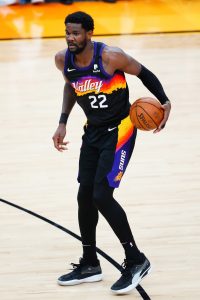
Let’s say the Suns want to sign-and-trade Deandre Ayton this offseason. He’s a Bird free agent, his new salary will be well above the minimum, and the Suns project to be an over-the-cap team. Having made $12,632,950 in 2018/19, Ayton figures to receive a raise significantly higher than 20% — if he signs a maximum salary contract, it’s projected to start at $30,500,000. So he meets the BYC criteria.
In a scenario where he signs a max deal as part of a sign-and-trade, Ayton’s salary for matching purposes from the Suns’ perspective would be $15,250,000, which is 50% of his new salary (that amount is greater than his previous salary). From his new team’s perspective, Ayton’s incoming figure would be his actual salary, $30,500,000.
Zach LaVine is another top free agent who would meet the BYC criteria if he’s signed-and-traded by the Bulls this offseason. If he gets a maximum salary contract – projected to be worth $36,600,000 for a player with his NBA experience – his outgoing salary for matching purposes would be $19,500,000, the amount he made in 2021/22 — that figure would be a little higher than 50% of his new salary ($18,300,000).
Often, a team acquiring a player via sign-and-trade doesn’t have the cap room to sign the player outright, or else there would be little need to negotiate a sign-and-trade. That means salary-matching is required, and is complicated by base year compensation rules.
In these examples, the Suns wouldn’t be able to take back more than $20,250,000 in salary in exchange for Ayton due to the league’s matching rules, while the Bulls wouldn’t be able to take back more than $24,500,000 for LaVine.
However, in order to take on $30,500,000 in incoming salary, Phoenix’s hypothetical trade partner would have to send out at least $24,320,000 in order to account for those salary-matching rules themselves. An over-the-cap team acquiring LaVine would have to send out at least $29,200,000 in order to match his incoming $36,600,000 salary.
The gap between the salary-matching figures from the two teams’ perspectives complicates sign-and-trade talks, requiring both clubs to include additional pieces to make the deal work. A third team could even be necessary to make the numbers line up.
The base year compensation concept doesn’t surface all that often, due to the specific criteria that must be met. However, it looms large over many sign-and-trade attempts, reducing the likelihood of teams finding a deal that can be legally completed. And it could affect a number of potential sign-and-trade candidates during the 2022 offseason.
Rival teams hoping to land players like Ayton, LaVine, Jalen Brunson, Mitchell Robinson, Miles Bridges, or Collin Sexton via sign-and-trade this summer would almost certainly have to navigate base year compensation complications to make it happen.
Note: This is a Hoops Rumors Glossary entry. Our glossary posts will explain specific rules relating to trades, free agency, or other aspects of the NBA’s Collective Bargaining Agreement. Larry Coon’s Salary Cap FAQ and salary information from Basketball Insiders was used in the creation of this post.
A previous version of this post was published in 2019.
Southeast Notes: Hornets, Workouts, Wizards, Russell, Magic
The Hornets hold three picks in the 2022 NBA draft (Nos. 13, 15, and 45) and are keeping busy in the weeks leading up to June 23, bringing in a handful of prospects on a daily basis for a closer look.
On Tuesday, the Hornets worked out Tyson Etienne (Wichita State), Jordan Goldwire (Oklahoma), John Meeks (College of Charleston), Orlando Robinson (Fresno State), D’Shawn Schwartz (George Mason), and Bryson Williams (Texas Tech), according to the team (Twitter link). All six of those players rank outside of the top 75 on ESPN’s big board, so they figure to receive consideration as possible second-round or UDFA targets.
On Wednesday, Hugo Besson (New Zealand Breakers), Khalifa Diop (Gran Canaria), Hyunjung Lee (Davidson), Javante McCoy (Boston University), Andrew Nembhard (Gonzaga), and Yannick Nzosa (Unicaja) make up the Hornets’ workout group (Twitter link). Several of those prospects are more highly regarded by draft experts — ESPN ranks Nembhard, Besson, and Diop 35th, 38th, and 39th respectively.
Here’s more from around the Southeast:
- The Wizards will be in the market for a starting point guard this offseason, but don’t expect them to pursue D’Angelo Russell. Darren Wolfson of 5 Eyewitness News said on his podcast (The Scoop w/ Doogie) that he has heard Washington has no interest in the Timberwolves guard (hat tip to HoopsHype).
- The Wizards‘ pre-draft workout on Wednesday will feature Kenny Baptiste (France), Garrison Brooks (Mississippi State), Kyle Foster (Howard), Justin Kier (Arizona), Aminu Mohammed (Georgetown), and Gabe Osabuohien (West Virginia), as Chase Hughes of NBC Sports Washington relays (via Twitter).
- Murray State guard Tevin Brown was in Orlando on Tuesday, presumably to work out for the Magic, tweets Khobi Price of The Orlando Sentinel. The Murray State guard is the No. 74 on ESPN’s big board, so the Magic could consider him in the second round or as an undrafted free agent.
Jazz To Interview Frank Vogel, Lamar Skeeter
Two more coaches have joined the list of candidates the Jazz intend to interview for their open head coaching position, according to ESPN’s Adrian Wojnarowski (Twitter link), who reports that Frank Vogel and Lamar Skeeter are expected to sit down with the team.
Vogel coached the Lakers for the last three seasons, leading the team to a 127-98 (.564) regular season record and a 2020 championship before being dismissed in April. He reportedly interviewed with the Hornets following his exit from Los Angeles, but isn’t believed to be a finalist for Charlotte’s job.
Unlike Vogel, who has coached over 800 regular season games in Indiana, Orlando, and L.A., Skeeter doesn’t have any NBA head coaching experience, though he did coach the Jazz’s Summer League team in 2019. He has been a member of Utah’s staff for the last eight years, initially in a player development/video role and more recently as an assistant on Quin Snyder‘s staff.
Vogel and Skeeter are the seventh and eighth candidates reported to be getting interviews with the Jazz. Terry Stotts, Alex Jensen, Will Hardy, Johnnie Bryant, Charles Lee, and Joe Mazzulla are also said to be meeting with the team, while veteran assistants Adrian Griffin and Kevin Young have been mentioned as possible candidates too.
We’re keeping tabs on Utah’s head coaching search – and Charlotte’s – in our 2022 head coach search tracker.
Draft Notes: Hardy, Braun, Roddy, Pistons, Ivey
Speaking to reporters after working out for Washington on Tuesday, G League Ignite guard Jaden Hardy said he has already worked out for the Warriors, Bucks, Timberwolves, and Thunder, and has auditions on tap with the Hawks, Hornets, Mavericks, and Pelicans (Twitter link via Josh Robbins of The Athletic). Viewed as a good bet to be a first-round pick, Hardy currently ranks 22nd overall on ESPN’s big board.
Here are a few more draft-related notes:
- Kansas shooting guard Christian Braun, the No. 30 prospect on ESPN’s board, has worked out for the Bucks, Clippers, and Magic, and had a visit scheduled with the Grizzlies this week, tweets Andrew Lind. Those four teams each have at least one pick between No. 22 and No. 43 in this year’s draft.
- Colorado State forward David Roddy, ESPN’s No. 46 prospect, had a meet and greet with Nuggets staffers a month ago and was brought back for a workout with the team on Tuesday, tweets Harrison Wind of DNVR Sports. Asked if he senses interest from the Nuggets, Roddy replied, “I would say so. Everybody’s a fan of my game here. They’ve told me that.” Roddy has also worked out for several other teams, including the Warriors and Raptors, per Darren Wolfson of 5 Eyewitness News (Twitter link).
- David Aldridge of The Athletic spoke to a handful of coaches and executives at the college and NBA levels to get their thoughts on several of the top guards in the 2022 draft class, including Jaden Ivey, Shaedon Sharpe, Dyson Daniels, Johnny Davis, and several others. One Eastern Conference executive told Aldridge that he knows the Pistons – who hold the No. 5 overall pick – “love” Ivey.
2022 NBA Offseason Preview: Denver Nuggets
After winning his first Most Valuable Player award in 2020/21, Nuggets star Nikola Jokic was even better in ’21/22. And he had to be — with guard Jamal Murray sidelined while recovering from an ACL tear and forward Michael Porter Jr. on the shelf due to back surgery, Denver was missing two of its top three scorers for nearly the entire season.
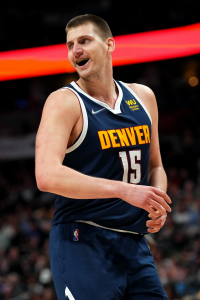 Given the absences of those two key players, it should have been a lost season for the Nuggets, but Jokic was so good that you got the sense the team still had a chance to make some noise in the playoffs if Murray and Porter could make it back.
Unfortunately, time eventually ran out on the Nuggets’ season before Murray and Porter were ready to return, and despite Jokic’s heroics – and his second consecutive MVP trophy – the club just didn’t have the pieces to keep up with the eventual Western-champion Warriors in the first round of the playoffs.
The Nuggets’ Offseason Plan:
Having a healthy Murray and Porter back in their lineup will go a long way toward turning the Nuggets back into a legitimate contender. But that doesn’t mean the team should be content to sit back and view those returning stars as its offseason “additions.”
Murray and Porter will make the Nuggets’ offense more dangerous, but neither player is an above-average defender, so Denver is in need of one or two more wings who can defend (and ideally who can shoot too).
Newly-promoted head of basketball operations Calvin Booth will be tasked with finding those players, though he’ll have limited resources to do so on the trade market. The Nuggets have given up two future first-round picks and four second-rounders without acquiring any extra picks of their own, reducing the team’s ability to sweeten its offers with draft assets.
That means the Nuggets may have to dangle players like Will Barton, Monte Morris, and possibly Zeke Nnaji as they pursue defensive upgrades. All three are solid contributors on reasonable contracts, but Bones Hyland‘s emergence and Murray’s return should help make at least one of Barton or Morris more expendable.
The Nuggets technically also have the ability to trade the No. 21 overall pick, though they’d have to wait until after the draft to officially move it, due to the rule preventing teams from leaving themselves without a first-rounder in two consecutive future drafts.
It won’t bring back an impact player on its own, but attaching the No. 21 selection to some combination of Barton, Morris, and/or Nnaji would be enough to open up some intriguing possibilities for Denver. On the other hand, the Nuggets’ roster is getting expensive and adding a low-cost rookie could help keep their tax bill in check, so perhaps they’ll hang onto this year’s first-rounder or attempt to move back into the second round rather than trading out of the draft entirely.
Booth and his basketball operations team will have several decisions to make on free agents, including DeMarcus Cousins, Austin Rivers, and Davon Reed. Cousins played well as a backup center behind Jokic and helped bring some toughness to the second unit — I’d expect Denver to try to re-sign him, as long as no other clubs offer him a sizeable raise. The Nuggets only have his Non-Bird rights.
Rivers’ and Reed’s futures could be tied to the Nuggets’ other roster moves. They’ve shown they’re capable of playing rotation minutes, but they’ll be pretty low on the depth chart if Murray, Hyland, Morris, and Barton are all still in the mix and may seek other opportunities in that scenario.
The Greens – JaMychal Green and Jeff Green – could both reach free agency if they turn down their respective player options. I’d consider Jeff far more likely to test the market than JaMychal, given that JaMychal’s option ($8.2MM) is the more expensive of the two and he’s coming off a down year.
Assuming JaMychal opts in, the Nuggets could use his expiring contract to help salary-match in a trade, potentially opening up a larger role for Nnaji. Jeff’s ability to knock down jump shots and guard multiple positions on defense makes him a valuable depth piece, but he’s entering his age-36 season, so the team won’t want to pay him too much more than his option amount ($4.5MM).
Jokic, Murray, and Morris are extension-eligible this offseason, but only Jokic is a sure thing to get a new deal — he and the team are expected to finalize a five-year, super-max agreement that will lock him up through the 2027/28 season. The timing probably isn’t right for an extension for Murray, who hasn’t played in over a year, or Morris, who would be ineligible to be traded for six months if he signs for more money or more years than extend-and-trade rules allow.
Salary Cap Situation
Note: Our salary cap figures are based on the league’s latest projection ($122MM) for 2022/23.
Guaranteed Salary
- Nikola Jokic ($33,047,803)
 Jamal Murray ($31,650,600)
- Michael Porter Jr. ($30,500,000) 1
- Aaron Gordon ($19,690,909)
- Will Barton ($14,375,000)
- Monte Morris ($9,125,000)
- Zeke Nnaji ($2,617,800)
- Bones Hyland ($2,201,520)
- Total: $143,208,632
Player Options
- JaMychal Green ($8,200,000): Early Bird rights
- Jeff Green ($4,500,000): Non-Bird rights
- Total: $12,700,000
Team Options
- None
Non-Guaranteed Salary
- None
Restricted Free Agents
- Facundo Campazzo ($4,000,000 qualifying offer / $4,160,000 cap hold): Early Bird rights
- Vlatko Cancar ($2,228,276 qualifying offer / $2,228,276 cap hold): Bird rights
- Total (cap holds): $6,388,276
Two-Way Free Agents
- Markus Howard ($1,811,516 qualifying offer / $1,811,516 cap hold): Early Bird rights
- Davon Reed ($1,616,044 cap hold): Non-Bird rights
- Total: $3,427,560
Draft Picks
- No. 21 overall pick ($2,770,920)
- Total: $2,770,920
Extension-Eligible Players
Note: These are players who are either already eligible for an extension or will become eligible before the 2022/23 season begins.
- Nikola Jokic (veteran)
- Monte Morris (veteran)
- Jamal Murray (veteran)
Unrestricted Free Agents / Other Cap Holds
- Bryn Forbes ($5,400,000 cap hold): Non-Bird rights
- DeMarcus Cousins ($1,811,516 cap hold): Non-Bird rights
- Troy Daniels ($1,811,516 cap hold): Non-Bird rights 2
- Richard Jefferson ($1,811,516 cap hold): Non-Bird rights 2
- Austin Rivers ($1,811,516 cap hold): Early Bird rights
- Total: $12,646,064
Offseason Cap Outlook
With $143MM+ in guaranteed money committed to just eight players, the Nuggets are on track to go well beyond the projected luxury tax line of $149MM, so they’ll be limited to the $6.4MM taxpayer mid-level exception unless they shed a contract or two.
Cap Exceptions Available
- Taxpayer mid-level exception: $6,392,000 3
Footnotes
- Porter’s salary will be worth 25% of the salary cap. If the cap ends up above or below $122MM, this figure will be adjusted upward or downward.
- The cap holds for Daniels and Jefferson remain on the Nuggets’ books from prior seasons because they haven’t been renounced. They can’t be used in a sign-and-trade deal.
- This is a projected value. The Nuggets could instead have access to the full mid-level exception ($10,349,000) and bi-annual exception ($4,050,000) if they remain below the tax apron.
Salary and cap information from Basketball Insiders and RealGM was used in the creation of this post.
Lakers Notes: Davis, Wallace, Ham, Draft, Westbrook
Speaking to the media on Monday for the first time since being named the Lakers‘ head coach, Darvin Ham didn’t undersell Anthony Davis‘ importance to the franchise moving forward, as Jovan Buha of The Athletic relays.
“I think he’s the key,” Ham said of Davis. “We’ve all seen what can happen when he’s healthy and playing at a high level and in rhythm. We saw it in the bubble. His skill set, his size, his versatility, his defensive acumen, his relentlessness, his ability to give multiple efforts defensively is key. It’s going to be the foundation of the type of standard we set in the ‘Darvin Ham era.’ It’s going to be built on that defense and he’s going to be the main piece, the centerpiece of it.
“LeBron (James) is always going to be great; LeBron is going to be LeBron. Russ (Westbrook) is going to be Russ. But we need consistency out of Anthony Davis. We need him to be healthy, we need him to be in a good mental space. And we need him to be as consistent as possible, like we’re playing that championship-type level of basketball. And we’re going to do everything in our power to support him.”
Davis has been limited to just 76 games across the last two seasons due to injuries, but has played at his usual All-Star level when healthy, averaging 22.5 PPG, 8.9 RPG, 3.1 APG, and 2.0 BPG in those 76 appearances.
Here’s more on the Lakers:
- Addressing the rumor that his former Pistons teammate Rasheed Wallace will join the Lakers’ staff as an assistant, Ham referred to is a “fluid” situation, according to Buha. “He’s definitely a candidate that we’ll take a look at, but we’re working through that,” Ham said, confirming that no formal agreement is in place yet.
- In a column for The Los Angeles Times, Dylan Hernandez argues that the Lakers’ leaders – including Ham and VP of basketball operations Rob Pelinka – are lowering expectations for the offseason moves they can make and shifting the responsibility for next season’s success from the front office to the players.
- Pelinka has interest in buying a second-round pick in this month’s draft, he told Mike Bresnahan during a Spectrum SportsNet interview (Twitter link via Marc Stein). The Lakers still have about $4.44MM available to send out in trades before the 2022/23 league year begins, as our cash tracker shows.
- Although Ham said all the right things about Russell Westbrook during his introductory press conference on Monday, it remains to be seen whether he’ll have more luck than Frank Vogel did getting the former MVP to fully buy in to his message, Bill Oram writes for The Athletic.
- In case you missed it, at least three Lakers assistant coaches – including David Fizdale – won’t be retained for 2022/23, but Phil Handy will be back. Here’s our full story.
Hoops Rumors Chat Transcript: 6/7/2022
Hoops Rumors hosted a live chat today. Click here to read the transcript.
Dana Gauruder will be hosting our next chat on Thursday, June 9 at 11:00 am Central time.