
Bulls Waive Wooga Poplar
The Bulls have waived shooting guard Wooga Poplar, who was with the team on a non-guaranteed Exhibit 10 contract, according to the NBA’s official transaction log.
Poplar, who spent three years at Miami (FL) before transferring to Villanova for the 2024/25 campaign, signed with the Bulls early in the summer after a strong senior season in which he averaged 15.3 points, 7.0 rebounds, and 1.3 steals in 31.9 minutes per game while shooting .460/.387/.856 in 36 appearances for the Wildcats. He went undrafted in June.
Poplar, 22, suited up for Chicago’s Summer League team in Las Vegas in July, averaging 6.5 PPG, 1.2 RPG, and 1.0 APG in 15.9 MPG across four outings. The expectation is that he’ll join the Windy City Bulls — if he spends at least 60 days with the Bulls’ G League affiliate, he’ll earn a bonus worth $85,300 on top of his standard NBAGL salary.
The move opens up a spot on the Bulls’ 21-man roster ahead of training camp next week. Chicago will likely fill that opening before camp begins.
Bulls Re-Sign Josh Giddey To Four-Year Deal
September 25: Giddey’s four-year contract is now official, according to NBA.com’s transactions log.
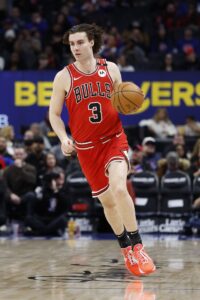 September 9: The Bulls and restricted free agent guard Josh Giddey are in agreement on a four-year, $100MM contract, agent Daniel Moldovan tells Shams Charania of ESPN. It’s a fully guaranteed contract with no player or team option, Charania adds.
Giddey, who was one of four top restricted free agents still unsigned when September began, will get the most lucrative contract any RFA has signed so far this summer and will become one of just five free agents to receive at least $100MM this offseason, joining Naz Reid, Kyrie Irving, Myles Turner, and Julius Randle.
The sixth overall pick in the 2021 draft, Giddey spent his first three NBA seasons in Oklahoma City, but wasn’t an ideal fit on a Thunder roster that featured star point guard Shai Gilgeous-Alexander. The 6’8″ Australian guard was traded to the Bulls during the 2024 offseason straight up for defensive ace Alex Caruso.
Chicago faced plenty of criticism for its decision to send out one of its most valuable trade chips for a player who had just been benched by the Thunder in the postseason, without getting any sort of draft compensation in the deal. But the Bulls were confident in Giddey’s ability to thrive in more of a primary ball-handling role, and he responded with the best year of his career, setting new personal highs in rebounds (8.1) and assists (7.2) per game, as well as three-point percentage (37.8%).
While Giddey had an up-and-down first half in Chicago, he thrived in the second half, particularly after the team traded away Zach LaVine. Between the All-Star break and the end of the season, the 22-year-old nearly averaged a triple-double, with 21.2 points, 10.7 rebounds, 9.3 assists, and 1.5 steals per game and a .500/.457/.809 shooting line. His usage rate, which had been 20.2% prior to the All-Star break, was 24.9% the rest of the way, and the Bulls won 12 of those 19 games.
The year-to-year details of Giddey’s new deal aren’t yet known, but the Bulls will have a significant amount of cap flexibility going forward – including a big chunk of cap room in 2026 and/or 2027 – no matter how it’s structured. Prior to Giddey’s agreement, Patrick Williams had been the only player on the roster owed guaranteed money beyond the 2026/27 season.
The Bulls put out a press release announcing Giddey’s new deal shortly after Charania reported it, but have since removed that announcement from their website and their Twitter account. That’s likely a case of the team’s PR staff jumping the gun on the official announcement, not a sign that the agreement has fallen through.
With Giddey re-signing and Nets guard Cam Thomas having accepted his qualifying offer, just two notable restricted free agents still don’t have deals in place: Jonathan Kuminga of the Warriors and Quentin Grimes of the Sixers. They have until October 1 to accept their respective qualifying offers.
Cavs Sign Thomas Bryant To One-Year Deal
September 25, 3:05 pm: Bryant is officially a Cavalier, according to a team press release.
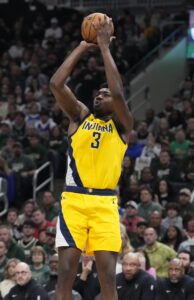 September 23, 5:00 pm: The contract is non-guaranteed, according to Michael Scotto of HoopsHype (Twitter link).
September 23, 1:03 pm: The Cavaliers and free agent center Thomas Bryant have agreed to terms on a one-year deal, agents Mark Bartelstein and Zach Kurtin tell Shams Charania of ESPN (Twitter link).
A former second-round pick who entered the NBA in 2017, Bryant has appeared in a total of 333 regular season games for the Lakers, Wizards, Nuggets, Heat, and Pacers. He began last season in Miami, then was traded to Indiana on December 15, the first day he became eligible to be dealt.
Providing depth in a Pacers frontcourt that had lost James Wiseman and Isaiah Jackson to season-ending Achilles tears, Bryant appeared in 56 games for Indiana, averaging 6.9 points and 3.9 rebounds in 15.1 minutes per night.
The 28-year-old didn’t play a major role during the team’s run to the NBA Finals, but made brief appearances in most games, averaging 2.6 PPG and 1.4 RPG in 8.4 MPG across 20 playoff outings.
The terms of Bryant’s agreement aren’t yet known, so it’s unclear whether the Cavaliers envision him being part of the their regular season roster. Cleveland only currently has 13 players on standard contracts, but likely won’t carry a 15th man into opening night due to luxury-tax concerns — it’s possible the team will bring in more veterans besides Bryant to compete for the 14th roster spot.
If Bryant does make the team, he would add depth behind Evan Mobley, Jarrett Allen, and fellow newcomer Larry Nance Jr.
NBA 2025 Offseason Check-In: Charlotte Hornets
Hoops Rumors is checking in on the 2025 offseason for all 30 NBA teams, recapping the summer’s free agent signings, trades, draft picks, departures, and more. We’ll take a look at each team’s offseason moves and consider what might still be coming before the regular season begins. Today, we’re focusing on the Charlotte Hornets.
Free agent signings
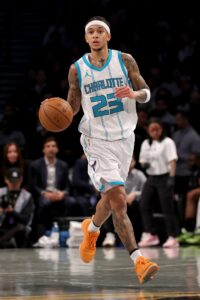 Tre Mann: Three years, $24,000,000. Third-year team option. Includes back-related injury protection. Re-signed using Bird rights.
- Spencer Dinwiddie: One year, minimum salary. Signed using minimum salary exception.
- Mason Plumlee: One year, minimum salary. Signed using minimum salary exception.
- Terrell Brown: One year, minimum salary. Non-guaranteed (Exhibit 10). Signed using minimum salary exception.
- Marcus Garrett: One year, minimum salary. Non-guaranteed (Exhibit 10). Signed using minimum salary exception.
- Keyontae Johnson: One year, minimum salary. Non-guaranteed (Exhibit 10). Signed using minimum salary exception.
- Isaih Moore: One year, minimum salary. Non-guaranteed (Exhibit 10). Signed using minimum salary exception.
- DJ Rodman: One year, minimum salary. Non-guaranteed (Exhibit 10). Signed using minimum salary exception.
- Brandon Slater: One year, minimum salary. Non-guaranteed (Exhibit 10). Signed using minimum salary exception.
Trades
- Acquired Collin Sexton and either the Jazz’s or Clippers’ 2030 second-round pick (whichever is most favorable) from the Jazz in exchange for Jusuf Nurkic.
- Acquired Vasilije Micic, the draft rights to Liam McNeeley (No. 29 pick), and either the Timberwolves’ (top-five protected), Cavaliers’, or Jazz’s 2029 first-round pick (whichever is least favorable) from the Suns in exchange for Mark Williams and the Suns’ 2029 second-round pick.
- Acquired Pat Connaughton, the Bucks’ 2031 second-round pick, and the Bucks’ 2032 second-round pick from the Bucks in exchange for Vasilije Micic.
Draft picks
- 1-4: Kon Knueppel
- Signed to rookie scale contract (four years, $45,487,013).
- 1-29: Liam McNeeley
- Signed to rookie scale contract (four years, $14,194,138).
- 2-33: Sion James
- Signed to four-year, $9,968,963 contract. First two years guaranteed. Third year non-guaranteed. Fourth-year team option.
- 2-34: Ryan Kalkbrenner
- Signed to four-year, $9,968,963 contract. First two years guaranteed. Third year non-guaranteed. Fourth-year team option.
Two-way signings
- Drew Peterson
- One year, $85,300 partial guarantee.
- Antonio Reeves
- One year, $85,300 partial guarantee.
Note: The Hornets carried over KJ Simpson on a two-way contract from 2024/25.
Departed/unsigned free agents
- Seth Curry (unsigned)
- Taj Gibson (unsigned)
- Wendell Moore Jr. (unsigned)
Other roster moves
- Waived DaQuan Jeffries (non-guaranteed contract).
- Waived Josh Okogie (non-guaranteed contract).
- Waived Damion Baugh (two-way contract).
Salary cap situation
- Operating over the cap ($154.6MM) and below the luxury tax line ($187.9MM).
- Carrying approximately $171.5MM in salary.
- Hard-capped at $195,945,000.
The offseason so far
Since taking over as the Hornets’ president of basketball operations in March of 2024, Jeff Peterson has shown little urgency to accelerate the team’s rebuilding process. Charlotte, which last appeared in the playoffs in 2016, has the NBA’s longest active postseason drought and hasn’t won a playoff series since returning to the league as an expansion team in 2004, but Peterson and his front office are showing patience as they attempt to build the roster into one capable of sustained success.
That philosophy was evident again this summer. The Hornets entered the offseason with a pretty favorable cap situation and could have used their full mid-level exception on a free agent addition while remaining comfortably below the luxury tax line. However, the front office instead focused on building through the draft and accumulating draft assets on the trade market, while the club’s only forays into free agency involved re-signing its own players or bringing in minimum-salary veterans.
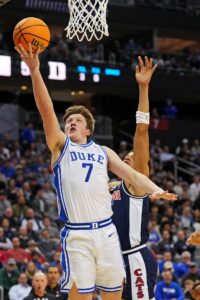 Let’s start with the draft, where the Hornets made four picks in the top 34 and subsequently signed all four players to standard contracts. With the No. 4 overall selection, Charlotte took the relatively safe route by adding Duke sharpshooter Kon Knueppel. The one-and-done wing should have a high floor as a pro, but his ceiling is probably quite a bit lower than that of Ace Bailey, who fell to Utah at No. 5.
There’s a case to be made that the Hornets should have rolled the dice on Bailey, the player with greater star potential, but they didn’t get a chance to visit with or work out the former Rutgers standout, who was believed to be trying to steer his way to Washington at No. 6. With incumbent cornerstones LaMelo Ball and Brandon Miller coming off injury-shortened seasons, the Hornets decided to prioritize stability over a higher-risk, higher-reward option. And while Knueppel may not become a superstar, he absolutely has the chance to become one of the NBA’s very best shooters while holding his own on defense.
With the 29th, 33rd, and 34th overall picks, Charlotte drafted UConn’s Liam McNeeley, Knueppel’s former Duke teammate Sion James, and Creighton big man Ryan Kalkbrenner, respectively. Once again, the Hornets took a more conservative approach with these picks — McNeeley had been projected by draft experts to come off the board much earlier in the first round, so he was a solid value at No. 29, while James and Kalkbrenner were five-year college players who have had plenty of time to hone their games and could be ready to contribute at the NBA level right away.
Kalkbrenner, in particular, could have an immediate path to rotation minutes in a fairly thin Charlotte frontcourt. James will likely have to rely on his defense to earn him playing time, while McNeeley will have to get back on track after a poor shooting performance in his only college season. Playing alongside Ball and/or Tre Mann should benefit McNeeley in a major way after he spent his freshman year on a Huskies team that operated without a true point guard.
The Hornets acquired the pick they used on McNeeley as part of a trade sending Mark Williams to Phoenix. It was actually the second time the front office had agreed to trade Williams — a deal with the Lakers at last season’s trade deadline fell through due to concerns about his physical. Whether the Hornets share those concerns about the big man’ long-term health or whether they just weren’t especially bullish about his long-term upside, it was clear he was no longer part of their future plans.
Taking into account a subsequent trade involving Vasilije Micic, who was sent from Phoenix to Charlotte in the Williams deal and then flipped to Milwaukee, the Hornets’ total haul for Williams consisted of McNeeley, Pat Connaughton, a 2029 first-round pick, and a future second-round pick (they gave up a second-rounder in the Suns trade but got two back in their deal with the Bucks).
Given that the first-rounder includes “least favorable” language and seems likely to land in the 20s, the return might not be as strong as the package Charlotte nearly acquired from the Lakers at the trade deadline (Dalton Knecht, a future unprotected first-rounder, and a first-round swap). But if McNeeley can develop into a reliable rotation player, it should end up looking fine for the Hornets, who would have had to pay Williams on his second contract beginning in 2026 if they’d hung onto him.
The Hornets’ other offseason trade wasn’t as significant as the one involving Williams, but it was curious for a couple reasons. For one, I’m not sure how Charlotte managed to extract a second-round pick from Utah while swapping Jusuf Nurkic for Collin Sexton, given that both players are on nearly identical expiring contracts and Nurkic – who is older than Sexton by five years – saw his playing time and production fall off last season. That was good work by the front office.
On the other hand, the Hornets’ backcourt is far more crowded than its center spot, so the trade wasn’t an obvious fit from a depth chart perspective. But with Ball and Mann both coming off injuries, acquiring another guard who can handle the ball made some amount of sense for Charlotte.
Speaking of Mann, even though he was limited to just 13 games last season due to a back injury, he was rewarded in free agency with a three-year, $24MM contract. The deal includes a third-year team option and some injury protection for the Hornets in the event that same back issue resurfaces, but it’s still a nice payday for Mann, who was productive (12.6 PPG, 4.5 APG, .446/.377/.797 shooting) in 41 games for Charlotte across parts of two seasons before being sidelined.
The Hornets brought in some additional depth at the point and in the middle by signing free agents Spencer Dinwiddie and Mason Plumlee to minimum-salary contracts. Neither Dinwiddie nor Plumlee is likely to play a starring role in Charlotte, but they’re reliable veterans who can give the team 15-20 minutes per night if needed.
Up next
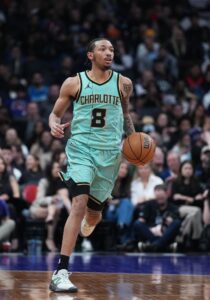 Even after waiving DaQuan Jeffries earlier this month, the Hornets have a bit of a roster crunch to deal with before the regular season begins, with 16 players on guaranteed contracts and Moussa Diabate (on a non-guaranteed contract) looking likely to make the roster.
If Charlotte chooses to simply waive two players in order to set its 15-man regular season roster, Connaughton and former first-round pick Nick Smith Jr. look like the odd men out to me.
Diabate’s non-guaranteed contract would normally make him an obvious release candidate, but he gave the team good minutes last season and could even have a path to a starting role this fall, with just Kalkbrenner and Plumlee as his primary competition at center. Dinwiddie and Plumlee are on small expiring contracts, but probably wouldn’t have been given guaranteed salaries two months ago if the plan was to waive either of them.
If the Hornets want to hang onto Connaughton’s expiring contract for midseason trade purposes or if they liked what they saw from Smith down the stretch last season, maybe they try to make a trade to open up a spot to keep one of them. But most teams won’t be looking to shake up their rosters during the preseason, and there are only so many legitimate trade candidates on the Hornets’ roster. Josh Green and Grant Williams could be a couple to watch.
Green and Williams are two of the Hornets’ players eligible for contract extensions, along with Sexton and Connaughton, but I’d be surprised if the team completes any extensions before the season tips off. The front office likely wants to keep its cap sheet relatively clean going forward, and none of those four players are obvious long-term keepers for the organization.
Kings, Warriors Resume Kuminga Sign-And-Trade Talks
After going more than a month without engaging in discussions regarding a potential Jonathan Kuminga sign-and-trade, the Kings and Warriors resumed their conversations earlier this week, team sources tell Sam Amick of The Athletic.
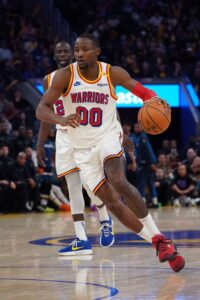 According to Amick, the two Pacific Division rivals didn’t make significant progress in those talks, but the fact that they happened at all indicates that Sacramento hasn’t closed the door on making a move for the restricted free agent forward.
The Kings were considered the top rival suitor earlier in the offseason for Kuminga, offering him a three-year, $63MM contract and offering Golden State a package of Malik Monk and a lottery-protected 2030 first-round pick.
As Amick writes, there are a number of reasons why the Warriors turned down that offer. For one, they don’t appear all that enthusiastic about acquiring Monk — there are questions about his fit on the roster, plus his $21.6MM player option for 2027/28 doesn’t appeal to Golden State from a cap perspective. According to Amick, the Warriors would likely want to flip Monk to another team, but it’s unclear if such an opportunity would be available at this point.
Another potential sticking point for the Warriors is the fact that swapping Kuminga straight up for Monk would hard-cap the team at the first tax apron due to base year compensation rules. That would complicate Golden State’s ability to fill out the rest of its roster, including signing Al Horford using the taxpayer mid-level exception.
The Warriors would likely have to trade either Buddy Hield or Moses Moody to a third team to avoid that first-apron hard cap. Prior reporting stated that Golden State didn’t have much interest in taking that route, and Amick suggests that stance has only gotten stronger as of late.
Finally, while Sacramento is unlikely to entirely remove the protections from the 2030 first-round pick they’re including in their offer, the Warriors would likely want those protections lightened in order to seriously consider making a deal with the Kings, Amick continues. In Sacramento’s current offer, the Warriors would receive the least favorable of the Kings’ and Spurs’ 2031 first-rounders if the 2030 pick lands in the lottery.
Recent reporting indicated that Golden State has made new offers to Kuminga, including one three-year, $75MM proposal that includes a third-year team option. However, the 22-year-old’s agent, Aaron Turner, continues to suggest that accepting the $8MM qualifying offer – which comes with a no-trade clause and a clear path to 2026 unrestricted free agency – is a viable option for his client.
Turner told ESPN’s Shams Charania on Wednesday that the Warriors’ insistence on a team option in the final year of their two- and three-year offers has been a sticking point for Kuminga and his reps.
Kuminga has until October 1 to sign his qualifying offer, so resolution should come – one way or another – within the next week.
NBA 2025 Offseason Check-In: Boston Celtics
Hoops Rumors is checking in on the 2025 offseason for all 30 NBA teams, recapping the summer’s free agent signings, trades, draft picks, departures, and more. We’ll take a look at each team’s offseason moves and consider what might still be coming before the regular season begins. Today, we’re focusing on the Boston Celtics.
Free agent signings
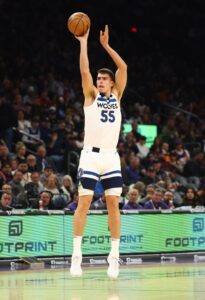 Luka Garza: Two years, minimum salary. Signed using minimum salary exception.
- Josh Minott: Two years, minimum salary. Second-year team option. Signed using minimum salary exception.
- Chris Boucher: One year, minimum salary. Signed using minimum salary exception.
- Jalen Bridges: One year, minimum salary. Non-guaranteed (Exhibit 10). Signed using minimum salary exception.
- Kendall Brown: One year, minimum salary. Non-guaranteed (Exhibit 10). Signed using minimum salary exception.
- Ron Harper Jr.: One year, minimum salary. Non-guaranteed (Exhibit 10). Signed using minimum salary exception.
- Hayden Gray: One year, minimum salary. Non-guaranteed (Exhibit 10). Signed using minimum salary exception.
- Note: Gray has since been waived.
Trades
- Acquired the draft rights to Amari Williams (No. 46 pick), the draft rights to Max Shulga (No. 57 pick), either the Pistons’, Bucks’, or Magic’s 2026 second-round pick (whichever is most favorable), and either the Celtics’ or Magic’s 2027 second-round pick (whichever is most favorable) from the Magic in exchange for the draft rights to Noah Penda (No. 32 pick).
- Note: The Celtics had traded their 2027 second-round pick to the Magic in a previous deal.
- Acquired Georges Niang (from Hawks), the Cavaliers’ 2031 second-round pick (from Hawks), and cash ($1.1MM; from Nets) in a three-team trade in exchange for Kristaps Porzingis (to Hawks) and a least favorable 2026 second-round pick (to Hawks).
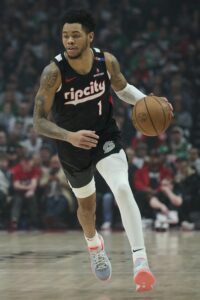
- Acquired Anfernee Simons from the Trail Blazers in exchange for Jrue Holiday.
- Acquired RJ Luis (two-way) from the Jazz in exchange for Georges Niang, either the Celtics’ or Magic’s 2027 second-round pick (whichever is most favorable) and either the Celtics’ or Cavaliers’ 2031 second-round pick (whichever is most favorable).
Draft picks
- 1-28: Hugo Gonzalez
- Signed to rookie scale contract (four years, $14,298,145).
- 2-46: Amari Williams
- Signed to two-way contract.
- 2-57: Max Shulga
- Signed to two-way contract.
Two-way signings
- Max Shulga
- One year, $85,300 partial guarantee.
- Amari Williams
- One year, $85,300 partial guarantee (will increase to $318,218 at start of regular season).
Departed/unsigned free agents
- Torrey Craig (unsigned)
- Al Horford (unsigned)
- Luke Kornet (Spurs)
- Drew Peterson (Hornets)
Other roster moves
- Waived JD Davison (non-guaranteed contract).
- Waived Miles Norris (two-way contract).
Salary cap situation
- Operating over the cap ($154.6MM) and above the luxury tax line ($187.9MM).
- Carrying approximately $200MM in salary.
- No hard cap.
- Full taxpayer mid-level exception ($5,685,000) available.
- Three traded player exceptions available (largest worth $22,531,707).
- One traded player exception frozen ($4,018,363).
The offseason so far
After submitting one of the best seasons in NBA history in 2023/24 (64-18 in the regular season; 16-3 in the playoffs), the Celtics appeared on their way to authoring a worthy follow-up in ’24/25 as they racked up 61 more regular season wins and cruised past the Magic in the first round of the postseason.
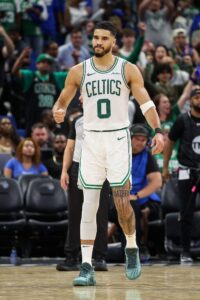 But the Celtics’ path to a second straight championship hit a serious snag in the Eastern Conference semifinals when they blew back-to-back 20-point leads at home to the Knicks, then lost star forward Jayson Tatum to a torn Achilles in Game 4. Boston managed to force the series to six games before bowing out two wins shy of the Eastern Conference finals.
A certain level of belt tightening had been anticipated this summer in Boston even before the season ended the way it did. The Celtics had been operating in second-apron territory for consecutive seasons, and even if the incoming ownership group were willing to spend the sizable luxury tax penalties that accompany a team salary of that size, the front office was finding it increasingly more difficult to add reinforcements to an aging roster due to apron-related restrictions.
After Tatum tore his Achilles and the club failed to make it out of the second round, the question went from “Will the Celtics shed salary?” to “Just how much salary will they shed?”
That question may not be fully answered until later in the season, as Boston’s cost-cutting efforts appear to be ongoing. But after entering the offseason with a projected team salary of $230MM+, the Celtics have reduced that number to about $200MM. They’re still in apron territory, but they sit comfortably below the second apron and may be able to dip below the first apron – or even the luxury tax line – at some point before season’s end.
A pair of transactions played a significant role in the Celtics’ salary reduction. First the team agreed to send Kristaps Porzingis to the Hawks in a three-team trade that also involved the Nets. Then president of basketball operations Brad Stevens and his front office flipped Georges Niang – the player acquired from the Hawks for Porzingis – to the Jazz without taking back any players on standard contracts.
Porzingis is set to earn $30.7MM on an expiring deal in 2025/26, so removing him from the books generated massive savings for the Celtics, who had initially been projected to pay a record-setting tax bill of approximately $280MM — that number has since dropped to roughly $40MM.
As talented as Porzingis is, his contract isn’t especially team-friendly and his health was a question mark entering the summer after he was plagued during last season’s final few months by a mysterious illness later described as post-viral syndrome. As a result, moving him represented a pure salary dump for the Celtics, who gave up more second-round picks (three) than they got back (one) in their trades with Atlanta/Brooklyn and Utah.
Boston’s other major cost-cutting trade of the summer saw the team send Jrue Holiday to Portland straight up for Anfernee Simons. The gap between Holiday’s $32.4MM salary and Simons’ $27.7MM cap hit isn’t massive, but the deal created significant multiyear flexibility for the Celtics. Holiday’s contract spans three seasons and is worth $104.4MM in total, whereas Simons is on an expiring contract and will come off the books next summer.
While Holiday looks like the more valuable player than Simons right now, he’s also 35 years old and his medicals were concerning enough that after initially agreeing to attach a pair of second-round picks to Simons as part of the deal, Portland was able to convince Boston to complete the trade without those picks included. The Celtics will miss the hard-nosed guard in the short term, but it’s possible they’ll be relieved in a couple years to no longer have that contract on their cap.
Simons isn’t nearly the defender Holiday is, but he’s a more dangerous scorer, having averaged roughly 20 points per game and making over 38% of his three-point attempts during his final four seasons in Portland. If the Celtics do want to keep chipping away at their team salary, Simons is the most obvious candidate to be flipped in the same way that Niang was. But for the time being, it looks like he’ll open the season as one of the club’s go-to options on offense alongside star wing Jaylen Brown.
Outside of Simons and first-round pick Hugo Gonzalez – who, at age 19, may not be ready to contribute immediately – the Celtics were limited to minimum-salary free agent signings this offseason. With Tatum likely to miss most or all of 2025/26, Porzingis traded, and Luke Kornet and Al Horford departing in free agency, the Celtics entered the market looking to add a wing and a couple frontcourt players.
One of those frontcourt additions was Chris Boucher, a longtime Raptor who is capable of blocking a shot on one end of the court and knocking down a three-pointer on the other. Consistency has been a challenge for Boucher, but he provides energy off the bench and his willingness to let it fly from beyond the arc certainly fits the Celtics’ game plan.
Boston’s other two notable free agent signings were a little less conventional, as the team swooped in during the first 24 hours of free agency on two little-used Timberwolves who had their team options declined by Minnesota in June, signing Luka Garza and Josh Minott to guaranteed minimum-salary contracts.
Neither player has shown much at the NBA level, but Garza has put up monster numbers in the G League and Minott received rave reviews from Wolves staffers last fall. The goal in Boston will be to replicate the success the team had with a player like Kornet, who became a productive rotation player in recent years after several seasons as a journeyman.
Up next
 Jordan Walsh and Neemias Queta don’t have fully guaranteed salaries for 2025/26, but both players look like safe bets to make the opening night roster alongside the Celtics’ 12 players on guaranteed deals. The team will likely open the season without a 15th man in order to maximize its roster and financial flexibility.
As noted above, we can’t entirely rule out the possibility of a preseason trade – involving Simons or another player – that further reduces Boston’s payroll, but there hasn’t been much chatter on that front as of late. The front office will have until the trade deadline to explore additional cost-cutting moves.
All three of the Celtics’ two-way slots are currently occupied, with the club’s two 2025 second-round picks – Amari Williams and Max Shulga – joined by RJ Luis, who was acquired from the Jazz in the Niang trade. Luis reportedly received a two-way offer from Boston at the start of the offeason before signing with Utah, so he shouldn’t simply be viewed as a trade throw-in. But if the Celtics do decide to make a change to one of their two-way slots before the season begins, he’d probably be more at risk to be waived than one of the team’s recent draftees.
Finally, while the Celtics have a couple players eligible for veteran contract extension, neither Simons nor Walsh looks like a legitimate candidate for a new deal at this point. Simons is more likely to be traded than extended, while Walsh still needs to establish himself as an NBA rotation player after playing fewer than 500 total minutes in his first two years in the league.
Rockets Notes: VanVleet, Sheppard, Thompson, Bostic
While the Rockets could turn to the trade market as they explore ways to replace Fred VanVleet following his ACL tear, half of their roster is currently ineligible to be dealt, and several other players are unlikely to be moved. Free agency also isn’t an option for Houston at the moment — although the Rockets have an open 15th roster spot, they don’t have enough room below their first-apron hard cap to sign a free agent to a minimum-salary contract.
Given that context, Houston will likely have to stay in house to replace VanVleet, at least for now. Danielle Lerner of The Houston Chronicle (subscription required) considers the team’s options, suggesting that Reed Sheppard, Amen Thompson, and Aaron Holiday could all take on increased ball-handling responsibilities.
In Lerner’s view, Sheppard has the skill set that’s the closest to VanVleet’s in terms of three-point shooting and play-making. While Thompson is capable of handling the ball, Lerner believes the Rockets want to be able to take advantage of his off-ball movement rather than making him their primary distributor.
Exploring what the Rockets are losing as a result of VanVleet’s injury, Lerner points out that the veteran point guard is an underrated defender and screener who led the team in deflections per game (3.1) last season and had more screen assists per game than any non-center on the roster.
Here’s more on the Rockets:
- According to Dan Woike of The Athletic (Twitter link), people he has spoken to were already expecting Thompson to have a larger on-ball role even before the VanVleet injury. Chris Mannix of SI.com echoes that sentiment, suggesting that Thompson could get a chance to become Houston’s lead play-maker. As Mannix notes, Thompson recently told SI.com that improving his play-making was a priority this offseason.
- John Hollinger of The Athletic believes the Rockets could be in trouble without VanVleet and questions some of the roster moves the front office made this offseason, such as acquiring Clint Capela. According to Hollinger, the team loaded up on its frontcourt while leaving itself with little cap flexibility or reliable backcourt depth. Still, if there’s a silver lining, it’s the fact that Thompson and Sheppard will get a chance to sink or swim in increased roles, Hollinger writes. If they thrive with those added responsibilities, it would give the Rockets more reasons for optimism going forward.
- Josh Bostic, who has been a player development coach in Houston for the past two seasons, is being promoted to an assistant coach role, reports Kelly Iko of Yahoo Sports (Twitter link). A longtime professional basketball player in non-NBA leagues, Bostic will presumably be taking the spot formerly occupied by Mike Moser, who accepted a job on David Adelman‘s staff in Denver.
Jayson Tatum: ‘I Haven’t Said I’m Not Playing This Season’
Appearing on ESPN’s First Take on Tuesday (YouTube link), Celtics forward Jayson Tatum made it clear that he’s not closing the door on the possibility of returning from his Achilles tear at some point before the end of the 2025/26 season.
“I haven’t said I’m not playing this season,” Tatum said in response to a question from Stephen A. Smith about how the new-look Celtics might fare without him. “The most important thing is a full recovery, being 100%, not rushing it at all. But also, I don’t go to rehab six days a week for nothing.”
Tatum is one of several notable NBA players in the process of rehabbing a torn Achilles, which typically requires a recovery period of a full year — or close to it. The Celtics star underwent surgery to repair his Achilles tear on May 13.
While the Pacers have already ruled out Tyrese Haliburton – who tore his Achilles on June 22 – for the entire 2025/26 season, the Celtics haven’t done the same for Tatum, and there have been a number of positive updates on the early stages of his recovery process. Tatum’s orthopedic surgeon, Dr. Martin O’Malley, was the latest to offer an encouraging assessment of the forward’s progress.
“I don’t think I’ve seen a person’s calf look as strong as his,” O’Malley told Eileen Finan of People Magazine. “At six or eight weeks he was doing double heel rises. He worked his calf so hard that the side effect of loss of strength, I don’t think he’s going to have any.”
The Celtics’ medical staff will presumably have the final say on Tatum’s availability this season. That decision could hinge in part on how Boston performs without its leading scorer — if the team is scuffling around or below .500 after the All-Star break and doesn’t look capable of making a deep playoff run, there likely won’t be any urgency for Tatum to return.
Still, Tatum is holding out hope that he won’t have to wait until the start of the 2026/27 season to suit up again for the Celtics. In the meantime, he’s going to try to stay as connected to the team as he can.
“I’m going to be at practices and go to games and travel,” Tatum told Finan. “As frustrating as it’ll be to not be able to play, feeling like I’m a part of the team will help me out.”
Grizzlies Sign Braxton Key
The Grizzlies have signed free agent forward Braxton Key, the team announced today in a press release (Twitter link). Memphis had an open spot on its 21-man offseason roster, so no corresponding move was necessary to make room for Key.
A 6’8″ forward who has played for the Sixers, Pistons, Nuggets, and Warriors, Key spent most of the 2024/25 season in the G League. He made a total of 49 appearances for the San Diego Clippers and Santa Cruz Warriors, averaging 16.5 points, 8.9 rebounds, 4.2 assists, 2.7 steals, and 1.1 blocks in 31.7 minutes per game.
Key’s strong play in the G League earned him a late-season call-up to the Warriors’ roster. He signed a two-way contract in March and was promoted to a standard deal on the final day of the season, though he only logged 11 total minutes in three garbage-time appearances for Golden State.
While the Grizzlies didn’t specify what kind of contract Key signed, it’s likely a non-guaranteed Exhibit 10 deal. If so, it could be converted to a two-way contract prior to the regular season or it could make Key eligible to earn a bonus worth up to $85,300 if he’s waived and then spends at least 60 days with the Memphis Hustle. The Grizzlies’ G League affiliate would need to acquire his returning rights from the Clippers’ affiliate for that to happen.
Assuming Key is in fact on an Exhibit 10 deal, he’s one of three Exhibit 10 signees on Memphis’ roster, along with Lawson Lovering and Tyler Burton. The team is also carrying 15 players on guaranteed deals and three on two-way contracts.
Hornets Sign Terrell Brown Jr.
The Hornets continue to swap players in and out of the final spot on their 21-man offseason roster, announcing today (via Twitter) that they’ve signed guard Terrell Brown Jr.
Since waiving veteran wing DaQuan Jeffries last Thursday, the Hornets have rotated players on Exhibit 10 contracts through that 21st roster spot in order to ensure those players receive bonus money if and when they report to Charlotte’s G League affiliate, the Greensboro Swarm.
Prior to signing Brown, the Hornets also briefly carried DJ Rodman, Marcus Garrett, Brandon Slater, and Keyontae Johnson. Rodman was waived to make room for Brown.
Brown, who went undrafted out of Washington in 2022, has spent most of his first three professional seasons in the G League, including the past two years with the Greensboro Swarm. He appeared in 48 NBAGL games in 2024/25, averaging 7.6 points, 4.3 assists, 3.3 rebounds, and 1.2 steals in 22.0 minutes per contest, with a shooting line of .405/.229/.859.
In all likelihood, Brown will soon be waived and will have the opportunity to earn an Exhibit 10 bonus worth up to $85,300 if he spends at least 60 days with the Swarm this season.