
Restart Notes: Assistant Coaches, McCollum, Health Risks
Assistant coaches around the NBA aren’t sure if they will all be headed to Orlando when the season resumes, writes Sean Deveney of Forbes. On the advice of medical professionals, the league is trying to limit the number of people being brought into the bubble environment, and some teams carry huge coaching staffs.
“Honestly, I don’t know if they’re gonna consider me essential,” said an unidentified assistant. “We’ve got teams who are seven, eight coaches deep, 10 if you count the scouts. They haven’t told us if they’re taking us all. I don’t know how many of us they think they need. I am not sure I want to be there.”
Deveney points out that head coaches are always in the spotlight, but assistants handle the majority of studying film and breaking down match-ups. Head coaches also make significantly higher salaries, which means assistants will be asked to face the same coronavirus hazards for smaller paychecks.
“Look, the head coaches, they’ve got plenty of reason to go back and coach and win,” the assistant said. “There are only 30 head jobs. I want our team to win, too. Coaches at all levels invest a lot personally. But you start talking about the health risks and then the health risks to families? It changes the conversation. We are not getting the same level of pay as everyone else on the floor but we’re taking as much risk.”
There’s more regarding the NBA’s restart:
- Trail Blazers guard CJ McCollum wants contact to resume in workouts before players travel to Orlando, according to Jason Quick of The Athletic. Only individual workouts are permitted at the moment, with contact and group activities banned under the rules regarding the reopening of team facilities. “We have players that need to get contact in for the last steps of clearance,” McCollum said. “I don’t want anyone to get injured because of having over 100 days of no games.”
- Although there’s strong support among players for finishing the season, some are concerned about the health risks they will face, notes Tania Ganguli of The Los Angeles Times. Ganguli talked to Lakers center JaVale McGee, who is at greater risk because he has asthma and suffered from pneumonia last year, and Maurice Harkless, who discussed his concerns before learning that the Knicks wouldn’t be part of the resumption. Harkless didn’t visit family members after the hiatus began because he had just played against the Pistons and Jazz — both teams had players who had tested positive.
- Joe Vardon of The Athletic examines whether the NBA can recover from what is shaping up to be its worst season ever.
NBA Developing Replacement System For Injured Or Sick Players
The NBA is developing a system that will allow teams to replace players who suffer serious injuries or test positive for COVID-19 once play resumes, according to ESPN’s Adrian Wojnarowski and Bobby Marks.
The league isn’t expected to place a limit on the number of replacement players a team can sign during training camp or the eight additional regular-season games, the authors state. However, sources tell them that the only players eligible to be added must have either played in the NBA or G League this season or have been signed to a training camp contract. Teams won’t be permitted to sign international players or veterans who haven’t been in the league all season, such as Jamal Crawford.
Roster flexibility will end once the postseason begins, with teams only permitted to call up their two-way players.
The league office is considering a requirement that any player who is replaced because of injury or the coronavirus would become ineligible to play for the rest of the season, including the playoffs. Sources say players who test positive will likely be quarantined for at least seven days and possibly as long as two weeks.
Wojnarowski and Marks cover a few more important issues as negotiations continue on the bubble environment:
- The league continues to oppose the idea of bringing two-way players to Orlando, but teams are hoping that stance will be reconsidered. Owners view those players as insurance policies who would provide easy replacements in the event of injury or illness. Medical experts recommend keeping the number of players in the bubble as low as possible, and the league is opposing the idea of expanding rosters to 17 to include the two-way players.
- Players will undergo coronavirus testing every night, with results to be available the following morning. Sources say all 22 teams involved in the restart will be housed in three Disney complex hotels.
- The NBA plans to provide a brief window, likely from June 22 to July 1, for teams to convert two-way players to standard contracts and place them on the 15-man roster. The authors note that Thunder guard Luguentz Dort, who started 21 straight games before the hiatus, is among the players likely to be affected.
- After training in their home markets, teams are expected to arrive in Orlando on a staggered schedule during the first week of July. Training camps in the bubble environment are expected to begin about July 9-11.
Restart Notes: Financial Concerns, Bubble, Tie-Breakers, WNBA
The trust between commissioner Adam Silver and players’ union president Chris Paul and their mutual friendship with Disney executive chairman Robert Iger were vital to reaching a plan to resume the NBA season, but the deal was driven primarily by monetary concerns, according to Marc Stein and Brooks Barnes of The New York Times.
Several team officials contacted by Stein and Barnes admitted the league has a strong financial incentive to finish the season. They spoke anonymously because the league doesn’t like public comments on its economic state, but the authors observe that getting games on TV again and making sure players get paid seemed more important to the process than the idea of crowning a champion. Many around the league considered it “financially unfeasible” to scrap the rest of the season.
Front offices and players understand the financial pressures the league is facing, Stein and Barnes write. Silver admitted in February that “hundreds of millions of dollars” were lost from the dispute with China, and the coronavirus has eliminated fan attendance at games, which accounts for roughly 40% of annual revenues.
Here’s more on the NBA restart:
- The league is continuing negotiations with the National Basketball Players Association over restrictions that will be implemented to help keep the bubble atmosphere safe, Stein and Barnes add in the same story. A formal announcement isn’t expected until next week at the earliest, but we learned yesterday that the NBA’s list of health and safety protocols is expected to be more than 100 pages long.
- The NBA clarified its tie-breaking procedure today, tweets Tim Bontemps of ESPN. Overall winning percentage will determine where each team finishes in the standings, which is important because teams will finish the season with an unequal number of games played. Traditional procedures will be used to break any ties that occur.
- ESPN analyst Jeff Van Gundy tells Stefan Bondy of The New York Daily News that the league is underestimating the amount of havoc that could be caused by a single positive COVID-19 test. “For the players on the guy’s team, for the players who have played against that team or will play against that team or that will play against that team,” Van Gundy said. “I’m not sure we know — because I know I don’t know, if that fear is going to be more than I expect, less than I expect.”
- The WNBA is hoping to begin play next month with an abbreviated season, according to David Waldstein of The New York Times. The league is looking at a single location, possibly IMG Academy in Bradenton, Florida, or MGM Resorts in Las Vegas. It hopes to start playing by late July and end the postseason in October.
Restart Notes: Scheduling, NBPA, Testing, TV Deals
Although the National Basketball Players Association is expected to approve the NBA’s return-to-play plan, a long list of financial, competitive, and scheduling details need to be negotiated for the 2020/21 season, according to ESPN’s Adrian Wojnarowski (via Twitter). As Wojnarowski details, most of the new dates shared and/or confirmed today – such as August 25 for the draft lottery and October 15 for the draft – are still considered tentative for the time being.
Meanwhile, Wojnarowski passed along several more “preliminary expectations” on how the schedule will work this summer in Orlando. According to Woj (via Twitter), there will be a 16-day regular season, with five or six games played each day. Each team is expected to play one back-to-back set within its eight regular season games, while the NBA Finals will feature games every other day.
Here’s more on the NBA’s restart:
- NBPA executive director Michele Roberts admitted she was caught off guard by the NBA’s aggressive turnaround plan between this season and next, writes Wojnarowski. The league is tentative targeting November 10 for opening training camps for next season, with December 1 tentatively penciled in to be opening night. The NBA Finals may not end until October 12, meaning a couple teams could get less than a month off. “I was surprised to see it,” Roberts told ESPN. As Woj notes, the NBPA will have to sign off on changes to the league’s calendar, so those dates aren’t set in stone yet.
- Tim Bontemps and Brian Windhorst of ESPN have published a helpful primer on the NBA’s return, sharing details on where games will actually be played at Disney (The Arena, HP Field House, and Visa Athletic Center) and how often the league plans to test individuals inside the bubble for COVID-19 (daily, per ESPN’s Ramona Shelburne).
- In a wide-ranging look at the NBA’s restart, Sam Amick of The Athletic cites sources who say that the eight games teams will play before the postseason this summer will all count toward those clubs’ regional sports network TV deals. That’s significant from a financial perspective — Amick notes that the Lakers make approximately $1.5MM per game from their deal with Spectrum SportsNet, while even the lower-end deals net about $200K per game.
Adam Silver Addresses NBA Return
NBA commissioner Adam Silver appeared on TNT’s Inside The NBA this evening to discuss the league’s officially confirmed 22-team return this summer. Silver touched on a potpourri of topics.
Though more radical season structuring options were discussed, Silver hailed Hornets owner and former five-time NBA MVP Michael Jordan as being an important voice in helping pass the current resumption plan. Silver mentioned that Jordan did not want the league’s return to feel “gimmicky” with excessive playoff format tweaks, per Rick Bonnell of the Charlotte Observer (Twitter link).
Hall of Fame player-turned-broadcaster Charles Barkley asked Silver about the NBA’s protocol for dealing with a player testing positive for COVID-19, as cited by Tania Ganguli of the LA Times (Twitter link). Silver mentioned that this had been discussed with health officials. The league would not need to pause play, but instead would isolate the player and use contact tracing and daily testing to contain the spread.
Silver delicately handled questions about how the league would deal with older coaches on team benches, mentioning that “certain coaches” might not be able to be present on the sidelines, per an exchange captured by Jonathan Feigen of the Houston Chronicle (Twitter link).
Rockets coach Mike D’Antoni, Pelicans coach Alvin Gentry, and Spurs coach Gregg Popovich are the three head coaches who, at 65 and older, would be at elevated risk of serious COVID-19 complications were they to contract the virus. Assistants like Jeff Bzdelik (Pelicans) and Lionel Hollins (Clippers) also fall within that age bracket.
Gentry voiced his displeasure with the notion of being separated from his team, per Ramon Shelburne of ESPN (Twitter link). “That doesn’t make sense,” Gentry said. “How can I coach that way?”
D’Antoni also questioned the idea of singling out older coaches with more protective measures, according to Adrian Wojnarowski of ESPN (Twitter link). “I am sure they want to keep everyone safe,” D’Antoni said. “But to start singling people out with more risk, well, I would hope they wouldn’t want to get into that.”
Mavericks head coach Rick Carlisle tells Woj (Twitter links) that he talked to Silver and the commissioner “admitted that he jumped the gun” with his comments on older coaches.
“It’s entirely possible that an NBA coach in his 60s or 70s could be healthier than someone in their 30s or 40s,” Carlisle said. “The conversation should never be solely about a person’s age. Adam assured me that we would work through this together to help determine what is both safe and fair for all of our coaches.”
NCAA Sets New Early Entrant Withdrawal Deadline
After indefinitely postponing its June 3 withdrawal deadline for early entrants, the NCAA announced today that it has established a new deadline. Early entrants will have until either August 3 or 10 days after the NBA draft combine (whichever comes first) to withdraw their names while maintaining their college eligibility.
“This provides the utmost flexibility to student-athletes testing the waters to make the most informed decision about their future during this uncertain time,” NCAA senior VP for basketball Dan Gavitt said in a statement. “And by deciding before classes start for the fall semester, it also encourages student-athletes who choose to return to school to be fully engaged in their academic pursuits and the tremendous experience and opportunity to play college basketball.”
[RELATED: 2020 NBA Draft Early Entrants List]
The NBA announced today that it has rescheduled its 2020 draft lottery for August 25. Typically, the combine takes place shortly after the lottery, but it’s not clear if or when it will happen this year. The coronavirus pandemic has made it virtually impossible for the league to hold a traditional combine, which would feature workouts, scrimmages, interviews, and medical tests.
Since it’s extremely unlikely that a combine will be held next month, it seems safe to assume that August 3 will end up being the NCAA’s withdrawal deadline. Most players are unlikely to wait that long to make their decisions, however, as college programs work toward setting their rosters for the 2020/21 season.
As Jonathan Givony of ESPN observes (via Twitter), the NCAA’s decision isn’t great news for players that want the opportunity to potentially participate in an August or September combine. Many players could end up keeping their names in the draft despite being unlikely to be selected, Givony notes.
While the NCAA’s withdrawal deadline for early entrants will be August 3 at the latest, I’d expect the NBA’s to land on October 5. Traditionally, it falls 10 days before the draft, and the 2020 draft has been rescheduled to October 15.
The NBA’s withdrawal deadline typically applies to international players who don’t have to worry about losing NCAA eligibility. However, again, I wouldn’t expect many of those international players to wait until the fall to make their decisions, since most European leagues remain on track to start their 2020/21 seasons at that time.
Buffalo guard Jayvon Graves and Croatian forward Darko Bajo are among the latest early entrants to pull out of this year’s draft, according to tweets from Jeff Goodman of Stadium and agent Misko Raznatovic, respectively.
Restart Notes: Blazers, Camps, 2020/21 Schedule
The Trail Blazers prevented Adam Silver‘s proposal to the NBA’s Board of Governors today from receiving unanimous approval, registering the lone dissenting vote on the 22-team plan.
[RELATED: NBA’s Board of Governors approves 22-team return-to-play plan by 29-1 margin]
As Adrian Wojnarowski of ESPN explains (via Twitter), the Trail Blazers are “eager” to resume the season, but voted against the plan because they felt their were more “competitive and innovative” ideas on the table. The team’s “no” vote also reflected some feedback ownership received from players, Woj adds (via Twitter).
As Woj notes, it sounds like one of the Blazers’ concerns was related to the league’s decision on how lottery odds will be calculated. Chris Haynes of Yahoo Sports tweets that the franchise also preferred a 20-team format instead of the 22-team one the league chose.
While Portland still has a chance to make the postseason in the approved format, it will be challenging. Even if the Blazers move ahead of the Kings and Pelicans – and stay ahead of the Spurs and Suns – they’ll need to keep pace with the Grizzlies and then likely beat Memphis twice in a row to earn the West’s No. 8 seed.
Here are a few more odds and ends related to the NBA’s restart plans:
- Within his report on the NBA’s return, ESPN’s Adrian Wojnarowski cites sources who say that teams are expected to begin training in Orlando between July 9-11. Shams Charania of The Athletic reported earlier today that teams are expected to travel to Orlando on July 7, so if both dates are accurate, it sounds like there will be no quarantine period upon arriving. The league reportedly plans to have teams start regular coronavirus testing on June 22.
- Even as the NBA moves forward with its plans for resuming the season, Jeff Zillgitt of USA Today (Twitter link) hears that the league is prepared for the possibility that its plans could be impacted by changes in the COVID-19 situation.
- Along those lines, one coach who was on a recent call with the NBA tells Josh Lewenberg of TSN.ca (Twitter link) that Adam Silver has said he’s not afraid to pull the plug on the league’s return altogether if it’s deemed unsafe.
- According to Frank Isola of SiriusXM NBA Radio (Twitter link), the NBA is believed to be targeting a mid-July Finals for 2021. That timeline would potentially compress next season’s NBA calendar to some extent but would free players up to participate in the Olympics, which were postponed to July 23 – August 8, 2021.
NBA’s Board Of Governors Approves 22-Team Return-To-Play Plan
The NBA’s Board of Governors has formally approved the league’s 22-team plan to resume the 2019/20 season, sources tell Shams Charania of The Athletic (Twitter link).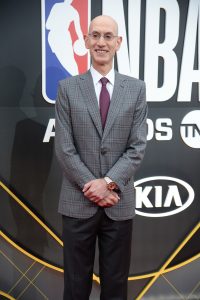
Team owners voted 29-to-1 in favor of commissioner Adam Silver‘s proposal, per ESPN’s Adrian Wojnarowski (Twitter link). The Trail Blazers were the lone dissenting vote, tweets Charania.
The plan will reportedly see 22 teams return to action beginning on July 31 with an eight-game regular season schedule to finish the season. From there, the No. 8 seed in each conference may be decided via play-in tournaments and the postseason would follow, ending no later than October 12. All games are expected to be played at Walt Disney World in Florida near Orlando, at the ESPN Wide World of Sports complex.
The Hornets, Bulls, Knicks, Pistons, Hawks, Cavaliers, Timberwolves, and Warriors won’t be part of the NBA’s restart — their seasons are over.
We covered the NBA’s plan – based on what we know so far – in greater detail right here, so be sure to check out that breakdown for much more info.
While approval from the NBA’s Board of Governors is a major step, there are still details to sort out between the league and the National Basketball Players Association. The NBPA has a virtual meeting scheduled for Friday to discuss the plan, as we relayed earlier today.
Based on reports in recent weeks, it sounds as if Silver and the NBA have been in constant contact with NBPA president Chris Paul and the players’ union and have kept their concerns in mind as they developed their plan. As such, there’s an expectation that negotiations between the two sides on specific details related to player salaries, coronavirus testing, and other important issues shouldn’t get too contentious.
Photo courtesy of USA Today Sports Images.
NBA Restart Notes: BoG Vote, Player Salaries, More
The NBA’s Board of Governors are expected to approve Adam Silver‘s return-to-play plan today, despite the fact that some of the teams left out of the 22-team return disagree with the league’s solution, tweets ESPN’s Adrian Wojnarowski. Those teams still intend to vote in favor of the plan, Wojnarowski notes.
While it’s not clear whether team owners will unanimously approve the 22-team proposal, only three-quarters support is required (ie. 23 out of 30 votes), and it’s “expected to clear that hurdle with ease,” Wojnarowski writes.
Here’s more on the NBA’s restart:
- John Hollinger of The Athletic poses a few questions related to the NBA’s 22-team plan, noting that we still haven’t heard many specifics on how the league plans to test for and handle COVID-19. As Hollinger points out, the issue of whether every team – including the bottom eight – will be permitted to make roster moves before the offseason is also an important one, since some clubs may want to sign players to multiyear deals.
- With only 22 of 30 teams set to resume play, there will be a significant gap in how many regular season games teams like the Timberwolves (64) and Mavericks (75) end up playing. Dan Feldman of NBC Sports wonders how the NBA and NBPA will determine what portion of their 2019/20 salaries players on those teams have to forfeit — on one hand, players from the bottom eight teams didn’t ask not to play this summer, but they won’t be assuming any of the risk the players going to Orlando will.
- To further complicate matters, Jeff Zillgitt of USA Today tweets that he has heard the eight pre-playoff games this summer will be referred to as “seeding games” rather than regular season games.
Pistons Reopening Practice Facility
The Pistons are reopening their practice facility, the Henry Ford Detroit Pistons Performance Center, for voluntary individual workouts starting on Thursday, the team announced today in a press release. The club describes it as “phase one” of a full reopening process.
The decision comes in the wake of Michigan Governor Gretchen Whitmer lifting the state’s stay-at-home order and allowing certain athletic practices to be conducted.
A report earlier this week indicated that the Pistons still didn’t plan on reopening their facility before June 12, but it seems the team reconsidered that plan, despite the fact that it won’t get a chance to resume its season this summer.
With the Pistons set to open their doors on Thursday, 29 of 30 NBA teams will have reopened their respective practice facilities for individual workouts. Only the Spurs have yet to announce plans for when they’ll allow workouts at their building.