
Poll: Best Value Among Non-Max Rookie Scale Extensions
After four players signed maximum-salary rookie scale extensions relatively early in the NBA’s condensed offseason, six more players eligible for rookie extensions completed deals in the final 24 hours or so before Monday’s deadline.
[RELATED: 2020/21 NBA Contract Extension Tracker]
All six of those 11th-hour deals were worth well below the max, ranging from $40MM to as much as $80MM. Contracts in that range are generally trickier to negotiate than maximum-salary extensions — it’s fair to assume the Magic spent more time weighing how much to offer Jonathan Isaac, who is out for the season with a torn ACL, than the Celtics did thinking about what to offer Jayson Tatum.
With that in mind, we want to get your thoughts on the six non-max rookie scale extensions signed in 2020, all of which will take effect in 2021/22. They are as follows:
- OG Anunoby (Raptors): Four years, $72MM. Includes fourth-year player option.
- Derrick White (Spurs): Four years, $70MM. Includes $5MM in incentives.
- Jonathan Isaac (Magic): Four years, $69.6MM. Includes $10.4MM in incentives and Exhibit 3 injury protection.
- Luke Kennard (Clippers): Four years, $56MM. Includes $8MM in incentives and a fourth-year team option.
- Markelle Fultz (Magic): Three years, $50MM. Includes $3MM in incentives and partial guarantee in third year.
- Kyle Kuzma (Lakers): Three years, $40MM. Includes third-year player option.
While White’s and Isaac’s contracts were initially reported as being worth $75MM and $80MM, respectively, it’s actually Anunoby who received the highest overall guarantee. His fourth-year player option also probably makes his contract the most player-friendly overall, though you could make the case that he deserves it — unlike a number of other players on this list, he hasn’t dealt with ongoing injury issues since entering the NBA, and has a clear-cut role as a three-and-D weapon who still has room for improvement.
White will be able to match Anunoby’s $72MM total across four seasons if he’s able to play at least 70 games in each year of his deal. His other incentives will be harder to reach, but $18MM per year is still a a strong investment in a player who came off the bench for much of the 2019/20 campaign.
Isaac and Fultz both have injury histories, but the Magic protected themselves in each case. They included games-played incentives and injury language related to Isaac’s knee in the forward’s contract, and are only on the hook for a small partial guarantee ($2MM) in the third year of Fultz’s deal.
The Clippers took a similar approach with Kennard, who missed much of the 2019/20 season with knee issues — in addition to having to earn a series of annual incentives, he only has three guaranteed years on his extension, which features a fourth-year team option.
As for Kuzma, he joined Anunoby as the only other player in this group to get a player option on the final year of his extension, which works in his favor — he’ll be able to hit the open market in advance of his age-28 season if he outplays this contract. Of course, he also got the lowest per-year commitment of any of these six players, so even if he doesn’t live up to the deal, it shouldn’t be a major albatross.
What do you think? Which of these contract extensions do you think represents the best value from a team perspective?
Vote in our poll, then head to the comment section below to weigh in!
Whose extension represents the best value from a team perspective?
-
OG Anunoby (Raptors) 38% (449)
-
Kyle Kuzma (Lakers) 31% (362)
-
Markelle Fultz (Magic) 10% (114)
-
Jonathan Isaac (Magic) 8% (100)
-
Luke Kennard (Clippers) 8% (98)
-
Derrick White (Spurs) 5% (63)
Total votes: 1,186
Trade Rumors app users, click here to vote.
2020/21 NBA Disabled Player Exceptions
A disabled player exception can be granted when an NBA team has a player go down with an injury deemed to be season-ending. The exception gives the club some additional spending flexibility, functioning almost as a cross between a traded player exception and a mid-level exception.
We go into more detail on who qualifies for disabled player exceptions and how exactly they work in our glossary entry on the subject. But essentially, a DPE gives a team the opportunity to add an injury replacement by either signing a player to a one-year contract, trading for a player in the final year of his contract, or placing a waiver claim on a player in the final year of his contract.
Because the rules related to disable player exceptions are somewhat restrictive and the exceptions themselves often aren’t worth a lot, they often simply expire without being used. Still, it’s worth keeping an eye on which disabled player exceptions have been granted, just in case.
We’ll use this space to break down the teams with disabled player exceptions available for the 2020/21 league year, updating it as the season progresses if more teams are granted DPEs and/or to indicate which ones have been used.
Teams have until March 3 to apply for a disabled player exception and until April 19 to actually use them.
Here’s the list so far:
Teams that have been granted disabled player exceptions:
- Golden State Warriors:
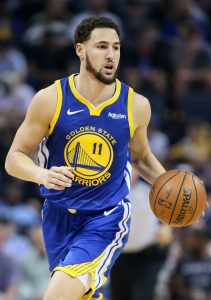
- $9,258,000 (Klay Thompson) (story)
The Warriors were granted a disabled player exception following Thompson’s season-ending Achilles tear. Because his salary exceeds $35MM+, Golden State’s exception is worth the amount of the mid-level exception. However, it remains to be seen how enthusiastic the team will be to use it. The Warriors, who are way over the luxury tax line, already project to have the NBA’s most expensive roster in 2020/21.
- Orlando Magic:
- $6,144,349 (Markelle Fultz) (story)
- $3,681,283 (Jonathan Isaac) (story)
Two of Orlando’s young building blocks suffered torn ACLs that will sideline them for the entire 2020/21 season, resulting in a pair of disabled player exceptions for the team. However, the Magic have a full 15-man roster and aren’t far from the tax line, which will limit their options as they consider whether or not to use it.
- Brooklyn Nets:
- $5,727,024 (Spencer Dinwiddie) (story)
Brooklyn received a disabled player exception after Dinwiddie underwent ACL reconstruction surgery. Like the Warriors, the Nets project to have a significant luxury tax bill at the end of the 2020/21 season, so they’ll be careful about using their disabled player exception. Since Brooklyn still has its full taxpayer mid-level exception, the DPE could be more useful on the trade market.
- Miami Heat:
$4,700,000 (Meyers Leonard) (story)
Leonard’s season-ending shoulder surgery paved the way for the Heat to apply for and receive a disabled player exception. However, they forfeited that exception when they agreed to send Leonard to Oklahoma City in a trade for Trevor Ariza.
- Washington Wizards:
- $4,166,666 (Thomas Bryant) (story)
The Wizards were granted a disabled player exception in response to Bryant’s ACL tear. The team doesn’t have the flexibility to use the full exception and remain out of luxury tax territory unless it sheds salary elsewhere.
Photo courtesy of USA Today Sports Images.
Players Who Can’t Be Traded Until March 3
As we detailed earlier, most players who signed new contracts as free agents during the 2020/21 league year can’t be traded until February 6. As a result, nearly every team is carrying at least one player – and generally a handful – who won’t become trade-eligible until early February.
There’s also a small subset of free agent signees whose trade ineligibility lasts for an extra four weeks. Typically, these players would become trade-eligible on January 15. Due to the changes to the NBA’s calendar for the 2020/21 league year, that date has been shifted to March 3.
These players all meet a specific set of criteria: Not only did they re-sign with their previous team this offseason, but they got a raise of at least 20%, their salary is worth more than the minimum, and their team was over the cap, using Bird or Early Bird rights to sign them.
Listed below are the players who meet this criteria and can’t be traded until at least March 3, 2021. Players who have the ability to veto trades in 2020/21 are marked with an asterisk (*).
Brooklyn Nets
Chicago Bulls
Los Angeles Lakers
Memphis Grizzlies
Milwaukee Bucks
Minnesota Timberwolves
New Orleans Pelicans
Orlando Magic
Phoenix Suns
Portland Trail Blazers
San Antonio Spurs
Toronto Raptors
Washington Wizards
Information from Basketball Insiders was used in the creation of this post.
Photo courtesy of USA Today Sports Images.
Players Who Can’t Be Traded Until February 6
As teams explore the trade market for potential deals in the coming weeks, there are a handful of trade restrictions those clubs must take into account. Most notably, newly-signed free agents can’t be dealt until at least February 6.
The NBA’s Collective Bargaining Agreement states that – in a typical league year – a free agent who signs with an NBA team can’t be traded for three months or until December 15, whichever is later. That rule has had to be tweaked for 2020/21 to account for the league’s revamped calendar, so the new trade eligibility date for most offseason signees is February 6.
There are also some recently-signed players who meet a few specific criteria and can’t be traded until March 3. The list of those players can be found right here.
The players who aren’t eligible to be traded until February 6 are listed below. Players who have the ability to veto trades in 2020/21 are marked with an asterisk (*).
Atlanta Hawks
Boston Celtics
Brooklyn Nets
Charlotte Hornets
Chicago Bulls
Cleveland Cavaliers
Dallas Mavericks

2020/21 NBA Waiver Claims
Waiver claims are something of a rarity in the NBA. In order to claim a player off waivers, a team generally must be able to fit the player’s entire salary into cap room, a traded player exception, or a disabled player exception. While there are a few teams with sizable trade exceptions available, only the Warriors and Magic have disabled player exceptions on hand, and the Knicks and Hornets are the only teams with any cap room left.
Given those limitations, the players most frequently claimed on waivers are those on minimum salary deals, since any club is eligible to place a claim on those players using the minimum salary exception. Even then though, there are exceptions — the minimum salary exception can only be used to sign players for up to two years, so the same rules apply to waiver claims. If a player signed a three-year, minimum salary contract, he can’t be claimed using the minimum salary exception.
Taking into account all the rules that reduce the odds of a waiver claim – not to mention the limited roster spots available for NBA teams – it makes sense that nearly all of the players who get released ultimately clear waivers. The 2019/20 league year featured a total of 12 waiver claims, which was the highest mark in several years.
Despite how infrequent they are, we still want to track all the waiver claims that take place during the 2020/21 league year, since you never know which claim may end up being crucial (such as the Pistons‘ July 2019 claim of Christian Wood). We’ll track this year’s waiver claims in the space below, updating the list throughout the season to include the latest moves.
Here’s the list:
- Rockets claim Kenny Wooten from Knicks (November 21) (story)
- Wooten signed a two-year, two-way contract with the Knicks last January, but never played an NBA game with the team and was cut in November with a new regime in charge. It looked like the Rockets may end up poaching Wooten for one of their two-way contract slots, but they decided to waive him during the preseason, using that slot on Brodric Thomas instead.
- Nets claim Paul Eboua from Heat (December 18) (story)
- Eboua was a training camp invitee in Miami who was beaten out by Max Strus for the club’s second two-way slot. The Nets claimed his non-guaranted minimum salary contract off waivers, then promptly re-released him. Brooklyn likely plans to have Eboua play for the Long Island Nets in the G League this season.
- Suns claim Frank Kaminsky from Kings (December 21) (story)
- Of the first three waiver claims of 2020/21, Kaminsky is the only one who began the regular season on his new team’s roster. The Suns, who had Kaminsky on their roster in 2019/20, declined his $5MM team option at the start of the offseason, but were happy to get him back on a non-guaranteed minimum salary deal via waivers, taking him into their open 15th roster spot.
- Rockets claim DaQuan Jeffries from Kings (April 5) (story)
- After re-signing Jeffries to a two-year, minimum-salary deal during the 2020 offseason, the Kings decided late in the first year that he wasn’t in their plans. The rebuilding Rockets opted to take a flier on Jeffries to see if he might be worth retaining in 2021/22 on his second-year team option.
- Spurs claim DaQuan Jeffries from Rockets (May 15) (story)
- Being released twice in a single season isn’t ideal, but the silver lining for Jeffries is that he was the only player to be claimed off waivers twice during the 2020/21 season. Houston had to make room on its roster to sign Khyri Thomas to a multiyear deal, making Jeffries the odd man out. The Spurs decided to use their open roster spot to claim his rights and will have to make a decision later this year on his 2021/22 team option.
Community Shootaround: Christmas Day Games
When the 2019/20 NBA season ended in October, it didn’t seem likely that we’d see another NBA game played until some time in the new year, perhaps even as late as February or March. But the league accelerated its plans for the 2020/21 regular season in the fall, ensuring that an annual tradition was preserved: the five-game Christmas Day slate.
Today’s schedule is as follows:
- New Orleans Pelicans at Miami Heat (11:00am central time)
- Golden State Warriors at Milwaukee Bucks (1:30pm CT)
- Brooklyn Nets at Boston Celtics (4:00pm CT)
- Dallas Mavericks at Los Angeles Lakers (7:00pm CT)
- Los Angeles Clippers at Denver Nuggets (9:30pm CT)
A couple of these matchups look even more tantalizing today than they did a week ago. The Pelicans, for instance, looked awfully impressive in their opening-night game against Toronto on Wednesday and will be going up against the defending Eastern champion Heat, who are hungry for their first win of the season.
A Stephen Curry/Giannis Antetokounmpo showdown between the Warriors and Bucks will be followed by a matchup of two potential Eastern Conference contenders who looked great on opening night, the Nets and Celtics.
Luka Doncic and the Mavericks and LeBron James, Anthony Davis and the Lakers will all be looking for their first win of the season in the evening.
And the night is capped off with a rematch of last year’s Western Conference Semifinals, with Kawhi Leonard, Paul George, and the Clippers visiting Nikola Jokic, Jamal Murray, and the Nuggets.
Which game are you most looking forward to watch today? Which five teams are you picking to win the Christmas Day games? Use the comment section below to weigh in with your thoughts and make your predictions!
NBA Teams With Open Roster Spots To Start Season
Now that the regular season is underway, no NBA team is carrying more than 17 players in total — 15 on standard contracts and two on two-way deals. However, not every team is making use of all 17 roster spots available to them.
Currently, 12 of the league’s 30 teams have at least one open roster spot, either on their regular roster or in their two-way slots.
Those dozen teams have different reasons for not carrying a 15th man on their standard roster. For some clubs, the decision is likely financially motivated, since an open roster spot means not having to pay an extra player.
Some teams may want to maintain the roster flexibility that an open roster provides — it can allow a club to act quickly and decisively in the event of an injury or a two-for-one trade opportunity.
A handful of teams actually can’t add a 15th man at this point, since they’re too close to their hard cap and won’t be able to fit another minimum-salary contract below that hard cap until later in the season.
With the G League season not yet underway, a healthy team may simply decide there’s no point in filling the 15th spot with a developmental player who won’t see any game action. That may also be the reason why some teams haven’t yet filled both their two-way contract slots.
Listed below, with the help of our roster counts breakdown, are the teams that aren’t carrying full rosters.
Teams with an open 15-man roster spot:
- Charlotte Hornets
- Houston Rockets *
- Los Angeles Clippers *
- Los Angeles Lakers *
- Milwaukee Bucks *
- Minnesota Timberwolves
- New Orleans Pelicans
- Portland Trail Blazers
- San Antonio Spurs
- Utah Jazz
Note: An asterisk (*) denotes that the team can’t currently sign a 15th man due to the hard cap.
Teams with an open two-way slot:
- Detroit Pistons
- Phoenix Suns
- Portland Trail Blazers
Troy Daniels Navigates Through Unprecedented Year In Search Of Next Opportunity
Free agent guard Troy Daniels, a seven-year veteran, has spent every season of his career on an NBA roster since going undrafted in 2013. After signing a summer league deal with Charlotte as a rookie to jump-start his career, he’s since made stops with seven teams — the Rockets, Timberwolves, Hornets (again), Grizzlies, Suns, Lakers, and – most recently – the Nuggets.
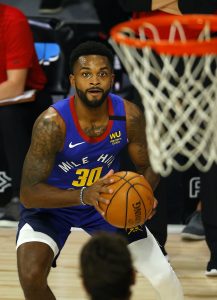 Even for Daniels, who’s grown accustomed to adjusting to new circumstances, 2020 has been an unusual year. In addition to stints with both the Lakers and Nuggets, Daniels – like others around the world – has had to navigate the coronavirus pandemic, adapting to the habits of wearing a mask and social distancing while staying ready for his next professional opportunity.
“It’s been a roller coaster ride, to say the least,” Daniels told Hoops Rumors in a phone interview. “A lot of ups and downs throughout the whole year, not just the pandemic. Literally everything. Me leaving the Lakers, heading to Denver; roller coaster ride for sure.
“Sometimes you just have to roll with the punches. My career has been built on that — being traded twice in one year, people not believing in me coming out of college — I’ve always risen to the top. I think my career’s been built on that, and I think even this year’s a testament to how I could overcome anything.”
Daniels remains an unrestricted free agent, waiting for a call to start his eighth NBA season. He’s known for being an elite shooter, averaging 6.6 points per game on 39.5% shooting from three-point range over the course of 339 career games. Perhaps his best season came in 2017/18, when he averaged 8.9 points and 20.5 minutes in 79 contests with the Suns.
Last season, Daniels signed with the Nuggets in March (a week before the league went on hiatus), playing five games with the club in the Orlando restart and another six in the playoffs.
Before joining Denver, Daniels spent half the season with the eventual champion Lakers, appearing in 41 games for the club. He earned the respect of LeBron James and Anthony Davis during his stay in Los Angeles, consulting both superstars on his decision to eventually leave the team and join the playoff-bound Nuggets.
Both the Lakers and Nuggets — who competed against each other in the Western Conference Finals — had deep backcourts. As a result, Daniels didn’t receive significant playing time from either club, but the opportunity to compete for a title was too good to pass up for the former VCU standout.
With the 2020/21 regular season around the corner, Daniels is one of several veteran players still available on the open market. The 29-year-old told Hoops Rumors he feels he can help a team seeking a “great locker room guy” who can provide stability and floor-spacing in the backcourt.
“I shoot the ball at very high level, at the highest level in the sport,” Daniels said. “And also [I’m] just a guy that’s not getting into too much trouble or anything like that. I’m not going to challenge the front office decisions or anything of that nature. I’m just a guy that comes in, gets his work in, helps the young guys out and I’m out of there. Really your ultimate vet, a pro’s pro. I’ve been doing that my whole career and even in college. I feel like I’ve built my career on being a pro’s pro.”
Daniels’ on- and off-court contributions have made an impression on his peers around the league. This past weekend, Jamal Crawford — one of the NBA’s most highly-regarded veterans — posted a message in response to a video of Daniels working out: “One of the best shooters in the NBA period. Great attitude, worker, team guy. True vet!”
Daniels also spent a significant amount of time improving his body this offseason, working to eat healthier, tracking his calories and maintaining a disciplined training routine.
“My focus [this year] has been on being in a lot better shape than usual,” he said. “In previous training camps, I’m usually in shape, but I’m not in true game-shape. It’s especially hard to get in that game-shape. You can’t be in game-shape unless you’re actually playing the games, but I wanted to be over and above for this year.”
While getting into world-class physical shape has been a priority, Daniels has made an effort not to take the mental side of things – both on the court and off – for granted, and is focused on keeping a positive mindset as he prepares for his next opportunity.
“You could go to a gym and do all of that work, but if your mind’s not right or your head’s not in the right space, then [your production] will never be to the extent that you want it to be,” Daniels explained. “And, you know, meditating, taking at least an hour to have a quiet room, making sure you’re in the right space, being positive about things even if you don’t want to be — that gets me through the day. That gets me through the year across the board for everything.
“My mindset is what helps me shoot at a high level. I have to go into every game knowing that I might not play this game. But if my number gets called, I’m gonna make sure I’m ready and my mind is right, or I’m cheering my teammates on. Those types of things get you in the space needed to perform at a high level.”
Through each of the highs and lows in his career, plus any uncertainty that’s come with it, one thing has never changed in Daniels’ approach to success: staying prepared.
“It’s very, very important to stay ready,” he said. “Even if you’re in the league right now, that should be your job. There are only a handful of superstars in the NBA. The rest are guys that are role players. So you have to always be ready to go when your number’s called, even if you’re playing 15 minutes, 20 minutes or whatever the coach asks you to do. That’s something that I’ve personally built my career on: always being ready. I’ve never had the luxury to know where I want to play, but I’ve always had that luxury in my mind to say, ‘Hey, when I do get out there, I’m gonna be ready’. That’s just how I train.”
You’d be hard-pressed to find someone who questions Daniels’ passion, focus or commitment. Despite his immediate future being unclear, one thing is for certain: when the call does eventually come his way, it’s safe to say he’ll be ready.
Photo courtesy of USA Today Sports Images.
2020/21 NBA Over/Unders: Recap
Over the last week, we’ve been examining projections for all 30 NBA teams for the 2020/21 season, publishing polls asking how many games each club will win. With the help of lines from professional oddsmakers, we’ve had you vote on whether each team will go over or under a given win total, from the Bucks (51.5) all the way through to the Knicks, Pistons, and Thunder (22.5 apiece).
Here are the full results of those votes:
Eastern Conference
- Boston Celtics (45.5 wins): Over (66.3%)
- Brooklyn Nets (45.5 wins): Over (58.6%)
- Philadelphia 76ers (44.5 wins): Over (57.4%)
- Toronto Raptors (42.5 wins): Over (54.7%)
- New York Knicks (22.5 wins): Under (59.5%)
- Milwaukee Bucks (51.5 wins): Over (73.7%)
- Indiana Pacers (39.5 wins): Over (57.9%)
- Chicago Bulls (29.5 wins): Under (61.6%)
- Cleveland Cavaliers (23.5 wins): Under (68.5%)
- Detroit Pistons (22.5 wins): Over (53.9%)
- Miami Heat (44.5 wins): Over (67.6%)
- Atlanta Hawks (36.5 wins): Over (58.0%)
- Washington Wizards (34.5 wins): Under (50.7%)
- Orlando Magic (31.5 wins): Under (73.5%)
- Charlotte Hornets (26.5 wins): Over (56.3%)
Western Conference
- Denver Nuggets (44.5 wins): Over (69.7%)
- Utah Jazz (42.5 wins): Over (59.9%)
- Portland Trail Blazers (41.5 wins): Over (70.1%)
- Minnesota Timberwolves (29.5 wins): Under (50.3%)
- Oklahoma City Thunder (22.5 wins): Under (64.4%)
- Los Angeles Lakers (48.5 wins): Over (79.1%)
- Los Angeles Clippers (47.5 wins): Under (50.4%)
- Phoenix Suns (40.5 wins): Over (51.0%)
- Golden State Warriors (38.5 wins): Over (60.3%)
- Sacramento Kings (29.5 wins): Under (60.7%)
- Dallas Mavericks (43.5 wins): Over (73.6%)
- New Orleans Pelicans (36.5 wins): Over (58.0%)
- Houston Rockets (35.5 wins): Under (50.4%)
- Memphis Grizzlies (32.5 wins): Over (53.8%)
- San Antonio Spurs (30.5 wins): Under (62.3%)
The main takeaway from these results: Our voters very much expect good teams to be good and the bad teams to be bad in 2020/21.
Of the 17 teams with projected win totals of 36.5 or higher, only one – the Clippers – was voted “under.” Meanwhile, of the 10 teams with a projected win total of 31.5 or less, only two – the Pistons and Hornets – were voted “over.”
Here were the five “over” bets that received the largest vote shares:
- Los Angeles Lakers, 48.5 wins: 79.1%
- Milwaukee Bucks, 51.5 wins: 73.7%
- Dallas Mavericks, 43.5 wins: 73.6%
- Portland Trail Blazers, 41.5 wins: 70.1%
- Denver Nuggets, 44.5 wins: 69.7%
Here are the five “under” bets that received the largest vote shares:
- Orlando Magic, 31.5 wins: 73.5%
- Cleveland Cavaliers, 23.5 wins: 68.5%
- Oklahoma City Thunder, 22.5 wins: 64.4%
- San Antonio Spurs, 30.5 wins: 62.3%
- Chicago Bulls, 29.5 wins: 61.6%
Betting on some of the NBA’s worst teams to go under their projections makes sense, as long as you’re correct in forecasting which teams will be at the bottom of the standings.
No team this season has an over/under mark below 22.5 wins, and a team that finishes 23-49 would have a .319 winning percentage. A year ago, the league’s bottom six clubs all had percentages lower than that.
What do you think of our picks in general? Are there any results above that you strongly disagree with? Did you make any over or under votes within the last week or two that you’re second-guessing now? Jump into our comment section below and weigh in with your thoughts!
Photos courtesy of USA Today Sports Images.
Community Shootaround: 2020/21 NBA Predictions
It may feel as if the 2019/20 NBA season just ended, but we’re just suddenly hours away from the ’20/21 regular season tipping off.
With the coronavirus pandemic ongoing, this season won’t quite look like a typical NBA campaign. Teams are only scheduled to play 72 games instead of 82, and that’s assuming that they can get through the season without cancellations.
On Monday, commissioner Adam Silver told reporters – including Tim Reynolds of The Associated Press – that he expects some “bumps in the road” for the NBA as the 2020/21 season progresses, acknowledging that there will likely be some positive COVID-19 tests among players and other on-court personnel. However, Silver also said the league is “prepared for all contingencies” and is confident that it will be able to get through the full season.
Time will tell if Silver is right. But for now, let’s assume – or at least hope – that he is. We want to get your predictions on which teams and players will rule the 2020/21 NBA season — assuming the league can get through it.
Playoffs and NBA Finals
Betting site BetOnline.ag currently lists the following 12 teams as the best bets to claim the top six spots in each conference:
Eastern Conference:
- Milwaukee Bucks
- Brooklyn Nets
- Boston Celtics
- Miami Heat
- Toronto Raptors
- Philadelphia 76ers
Western Conference:
- Los Angeles Lakers
- Los Angeles Clippers
- Denver Nuggets
- Dallas Mavericks
- Utah Jazz
- Portland Trail Blazers
Only the top six finishers in each conference are assured of playoff berths this season, as the Nos. 7-10 teams will participate in a play-in tournament at the end of the year for the final two spots. The seventh and eighth seeds will only have to win once in two games to claim their spots, while the ninth and 10th seeds would require two wins.
Based on BetOnline’s odds, the Pacers, Hawks, Wizards, and Magic are the best bets for the 7-10 spots in the East, with the Bulls, Hornets, and Cavaliers among the teams lurking as threats.
In the West, the Suns, Warriors, Rockets, and Pelicans are considered the best bets for that 7-10 range, with the Grizzlies, Spurs, Kings, and Timberwolves looking to push them out.
Meanwhile, the Bucks and the Nets are the frontrunners to make the NBA Finals in the East, per BetOnline, while the Lakers and Clippers are the overwhelming betting favorites to represent the West.
What do you think? Do those projected standings look about right to you, or do you think certain teams are noticeably overvalued or undervalued? Do you expect some combination of the Bucks, Nets, Lakers, and Clippers to play in the Finals, or will another team (or two) crash the party?
NBA End-of-Season Awards
Some end-of-season awards are a little easier to forecast than others. We have a general idea of which players should be in the mix for the Most Valuable Player award or Defensive Player of the Year honors. But there could be dozens of candidates for Most Improved Player, while an award like Sixth Man of the Year often hinges on whether injuries force certain top bench players to become starters.
Still, BetOnline has provided betting favorites for all of major awards. Here are bettors’ top five picks for each one:
Most Valuable Player:
- Luka Doncic (Mavericks)
- Giannis Antetokounmpo (Bucks)
- Kevin Durant (Nets)
- Stephen Curry (Warriors)
- Anthony Davis (Lakers) / LeBron James (Lakers) (tie)
Defensive Player of the Year:
- Anthony Davis (Lakers)
- Giannis Antetokounmpo (Bucks)
- Rudy Gobert (Jazz)
- Bam Adebayo (Heat)
- Joel Embiid (Sixers)
Rookie of the Year:
- LaMelo Ball (Hornets)
- Obi Toppin (Knicks)
- James Wiseman (Warriors)
- Killian Hayes (Pistons)
- Anthony Edwards (Timberwolves)
Sixth Man of the Year:
- Lou Williams (Clippers)
- Jordan Clarkson (Jazz)
- Danilo Gallinari (Hawks)
- Goran Dragic (Heat)
- Serge Ibaka (Clippers)
Most Improved Player:
- Shai Gilgeous-Alexander (Thunder)
- Deandre Ayton (Suns)
- Christian Wood (Rockets) / Michael Porter (Nuggets) (tie)
- Jamal Murray (Nuggets)
- Coby White (Bulls)
Coach of the Year:
- Steve Nash (Nets)
- Tyronn Lue (Clippers)
- Monty Williams (Suns)
- Brad Stevens (Celtics) / Erik Spoelstra (Heat) / Frank Vogel (Lakers) / Rick Carlisle (Mavericks) (tie)
- Doc Rivers (Sixers)
While the favorites for each of those awards make sense, there are some guys I like who don’t make the cut. I think Kings guard Tyrese Haliburton is an intriguing Rookie of the Year candidate, and I’d be tempted to make Davis Bertans my choice for Sixth Man as long as the Wizards intend to continue bringing him off the bench.
What do you think? Are you picking mostly from the above candidates for your award selections, or are you going off the board with some of your choices?
With the regular season to tip off, we want to hear your predictions for the coming year.
Head to the comment section below to share your picks for the 2020/21 regular season standings, the playoff results, the award winners, and any other subjects you want to weigh in on (James Harden‘s trade destination? Or maybe the first head coach to be fired?).
Happy opening night!