
Atlantic Notes: Raptors, I. Stewart, Durant
The Raptors might be well-served to consider using either their No. 29 or No. 59 pick during the 2020 draft as a “draft-and-stash” option, selecting a player they know won’t arrive in the NBA until at least the 2021/22 season, writes Blake Murphy of The Athletic.
Limited rotation space for unproven players, the expected development of current Toronto youth, and the compressed offseason are all factors that could point to the draft-and-stash route, Murphy notes. The Raptors face some interesting offseason options, with key role players Fred VanVleet and Serge Ibaka entering free agency.
There’s more out of the NBA’s Atlantic Division:
- Athletic 6’9″ University of Washington big man Isaiah Stewart, a Rochester, NY native, appears to be a viable candidate for the Knicks to draft with the No. 27 pick in the 2020 draft, per Marc Berman of the New York Post. “The big thing about Isaiah is he’s a culture changer — he’s all about the right stuff,’’ his Washington head coach Mike Hopkins said. New York’s roster, of course, is already loaded with an array of power forwards, though many can become free agents this fall. Hopkins compared Stewart to All-Star Heat center Bam Adebayo and Clippers power forward/center Montrezl Harrell.
- Nets forward Kevin Durant has been practicing at the Sports Academy in Thousand Oaks, CA, as he continues to rehabilitate from an Achilles tear suffered during the 2019 NBA Finals. Durant has logged court time with fellow Nets Kyrie Irving, Caris LeVert, Spencer Dinwiddie, DeAndre Jordan, Taurean Prince and Jaylen Hands, plus other pros, and is receiving rave reviews, according to Brian Lewis of the New York Post.
- Legendary Hall of Fame Celtics power forward and broadcast Tommy Heinsohn passed away this week. The six-time All-Star and eight-time champ was 86.
Team Owners Vote To Approve New CBA
This afternoon, NBA team owners unanimously voted to ratify the amended Collective Bargaining Agreement agreed upon late last night by the league and the NBPA, per Adrian Wojnarowski of ESPN (Twitter link).
The NBA’s Board of Governors, which is comprised of the 30 NBA team owners and their reps plus league commissioner Adam Silver, held a conference call this afternoon, and the agreement will now allow the 2020/21 season to kick off on December 22.
As we detailed earlier today, the updated CBA will contain the same $109,140,000 salary cap and $132,627,000 luxury tax line as the 2019/20 season. The ’20/21 season will last for 72 games, and free agency will kick off next Friday, November 20.
Currently, there is still a moratorium on trades, but that is expected to be lifted two or three days ahead of the November 18 draft. Luxury tax penalties will be reduced for taxpaying teams if the league’s basketball related income declines.
NBA Minimum Salaries For 2020/21
Most NBA clubs will enter this year’s free agent period without any cap room, but each of the league’s 30 franchises will be on common ground in one respect: No team will be ineligible to sign a player to a minimum salary contract.
Teams with cap room available will have a little more flexibility to sign players to longer-term minimum salary contracts, but over-the-cap clubs will still be able to use the minimum salary exception to add as many players as roster limits allow, for contracts of up to two years. Unlike other exceptions, such as the mid-level or the bi-annual, the minimum salary exception can be used multiple times.
[RELATED: Values of 2020/21 mid-level, bi-annual exceptions]
Undrafted free agents and late second-round picks are often recipients of minimum salary contracts, but there are plenty of veterans who end up settling for the minimum too. Because a player’s minimum salary is determined by how much NBA experience he has, many veterans will earn more than twice as much money as a rookie will in 2020/21 on a minimum salary contract.
Listed below are 2020/21’s minimum salary figures, sorted by years of NBA experience. If a player spent any time on an NBA club’s active regular season roster in a given season, he earned one year of experience. So any player with zero years of experience has not yet made his NBA debut.
These figures are the same as in 2019/20, since the NBA has artificially set its ’20/21 salary cap to match last season’s.
Here’s the full breakdown:
| Years of Experience | Salary |
|---|---|
| 0 | $898,310 |
| 1 | $1,445,697 |
| 2 | $1,620,564 |
| 3 | $1,678,854 |
| 4 | $1,737,145 |
| 5 | $1,882,867 |
| 6 | $2,028,594 |
| 7 | $2,174,318 |
| 8 | $2,320,044 |
| 9 | $2,331,593 |
| 10+ | $2,564,753 |
Because the NBA doesn’t want teams to avoid signing veteran players in favor of cheaper, younger players, the league reimburses clubs who sign veterans with three or more years of experience to one-year, minimum salary contracts. Those deals will only count against the cap – and against a team’s bank balance – for $1,620,564, the minimum salary for a player with two years of experience.
For instance, if Courtney Lee – who has 12 years of NBA experience – signs a one-year, minimum salary contract with a new team, that team would only be charged $1,620,564 for Lee’s contract. He’d earn $2,564,753, but the NBA would make up the difference. This only applies to one-year contracts, rather than multiyear deals.
If a player signs a minimum salary contract after the regular season begins, he’ll earn a pro-rated portion of the amount listed above. Those figures also only apply to players who are signing new contracts in 2020/21. Players who are in the second, third, or fourth year of a minimum salary deal will be earning a slightly different predetermined amount.
For instance, a player like Raptors guard Terence Davis, who has one year of NBA experience, will be earning a $1,517,981 salary in the second year of his contract, exceeding the $1,445,697 he’d receive if he were signing a new minimum deal this fall. More details on multiyear minimum contracts can be found at RealGM.
Draft Rumors: Edwards, Haliburton, Pistons, Cavs, Suns, More
While John Hollinger of The Athletic believes Anthony Edwards will still come off the board very early in next Wednesday’s draft, he notes within his new mock draft that many teams don’t seem especially enthusiastic about the former Georgia guard. Those teams believe in Edwards’ talent, but a “blah” Pro Day workout and some “iffy” background reports have made them nervous, according to Hollinger.
Hollinger has also heard that LaMelo Ball and Nico Mannion are among the players who haven’t necessarily had great interviews with teams, though it remains to be seen how much it’ll affect where they’re drafted.
On the other end of the spectrum, everybody seems to be high on Tyrese Haliburton, according to Hollinger, who says the former Iowa State guard is benefiting from 1-on-0 workouts and the background on him is “impeccable.” Desmond Bane and Isaiah Stewart are among the other prospects who have received some positive buzz for the impressions they’ve made in interviews with teams, writes Hollinger.
Hollinger’s mock draft for The Athletic is full of interesting tidbits and is worth checking out in full if you’re a subscriber. Here are a few more highlights:
- Hollinger confirms that the Pistons are very interested in Florida State’s Patrick Williams – as has been previously reported – and suggests there are whispers that Detroit has made Williams a promise.
- Obi Toppin and Deni Avdija are the only two names Hollinger has heard regularly connected to the Cavaliers at No. 5.
- Onyeka Okongwu looks like a lock to go to Washington at No. 9 if he makes it that far, according to Hollinger, who says the question isn’t whether the Wizards will take Okongwu — it’s who they’ll take if he’s not available.
- “The word is pretty strong” that the Suns are eyeing a backcourt piece with the No. 10 pick, prompting Hollinger to point out that the team may be looking to address the power forward spot in free agency.
- There are rumors that Serbian forward Aleksej Pokusevski received a promise from a team in the first round. As Hollinger observes, Pokusevski’s agent Jason Ranne used to work for the Thunder, who have been willing to make draft promises in the past. However, even if Oklahoma City did make Pokusevski a promise, Hollinger is skeptical that he’ll still be on the board at No. 25.
Warriors Rumors: No. 2 Pick, Wiseman, Tax, Aldridge
The Warriors‘ No. 2 pick is “turning into a circus,” according to John Hollinger of The Athletic, who suggests that the team has put out multiple smokescreens while simultaneously engaging in some seemingly genuine internal debate about the choice.
Just days after The San Francisco Chronicle suggested Golden State would likely draft Anthony Edwards if he’s on the board at No. 2 (and if the Dubs keep the pick), ESPN’s Brian Windhorst (video link) provides a conflicting perspective. Appearing on The Jump on Monday, Windhorst said he keeps hearing that James Wiseman will be the Warriors’ guy if they keep their pick and he’s still available.
It has been virtually impossible to tell which way the Warriors are leaning, given all the rumors out there, but Hollinger suspects the club will ultimately keep the pick and select Wiseman with it. As the former Grizzlies executive argues, Wiseman helps Golden State most in the short term and would have the most trade value later.
Here’s more on the Warriors:
- The Warriors will benefit from the tweak the NBA has made to luxury tax penalties for the 2020/21 season, as Anthony Slater of The Athletic writes. The penalties for taxpaying teams will be reduced by the same percentage as a basketball related income (BRI) decrease, which means that if the league falls 25% short of its BRI projection, Golden State’s tax bill would be trimmed by 25%.
- Some rival teams are already annoyed by the Warriors benefiting from another luxury tax anomaly, tweets ESPN’s Brian Windhorst. The club, of course, was able to sign Kevin Durant in 2016 due to an unprecedented cap increase that summer.
- Now that the Warriors are in position to receive a bit of a break on their 2021 tax bill, Monte Poole of NBC Sports Bay Area argues that the team should be more inclined to make use its $17MM trade exception to upgrade its roster around Stephen Curry, Klay Thompson, and Draymond Green.
- On a recent episode of his Lowe Post podcast, ESPN’s Zach Lowe said he heard from someone within the league that there’s been buzz about a potential trade involving the Warriors’ No. 2 pick, LaMarcus Aldridge, and the Spurs‘ No. 11 pick (hat tip to HoopsHype). Lowe sounded skeptical about that possibility, and I share that skepticism. But if there’s anything to it, Andrew Wiggins would presumably have to be involved for salary-matching purposes, since Aldridge’s 2020/21 salary ($24MM) won’t fit in Golden State’s trade exception.
Tommy Heinsohn Passes Away At Age 86
Tommy Heinsohn, a Hall-of-Famer who has been part of the NBA and involved with the Celtics for more than six decades, has died, according to Adam Himmelsbach of The Boston Globe. He was 86 years old.
A power forward as an NBA player, Heinsohn was a member of the Celtics’ roster from 1956 through 1965, winning eight titles and making six All-Star teams during that time while posting career averages of 18.6 PPG and 8.8 RPG in 654 games. He was also named the league’s Rookie of the Year in 1957 and helped form the National Basketball Players Association. The franchise retired his jersey (No. 15) after he hung up his sneakers.
Heinsohn later served as the head coach in Boston from 1969 to 1978, leading the Celtics to two more titles during that time and earning NBA Coach of the Year honors in 1973.
For the last four decades, Heinsohn has been a commentator for Celtics games, serving as a play-by-play man, color analyst, and in-studio analyst over the years. He established himself as one of the most recognizable local personalities in the NBA during that time.
“This is a devastating loss,” Wyc Grousbeck and the Celtics’ ownership group said today in a statement. “Tommy was the ultimate Celtic. For the past 18 years, our ownership group has relied hugely on Tommy’s advice and insights and have reveled in his hundreds of stories about Red Auerbach, Bill Russell, and how the Celtics became a dynasty. He will be remembered forever.”
Our condolences go out to Heinsohn’s friends and family.
Restart/Financial Notes: Escrow, BoG Call, Player Reactions
About a month after the coronavirus pandemic initially brought the 2019/20 NBA season to a halt, the league and its players reached an agreement to withhold 25% of players’ remaining pay checks in escrow. However, due to the success of the summer restart in Orlando, players will be receiving a significant portion of that withheld salary back.
According to Shams Charania of The Athletic (Twitter link), players will receive a refund worth approximately two-thirds of the amount of their salaries held in escrow. As Charania explains, because the league was able to recoup some revenue during the summer, an additional player escrow of just four percent was required to satisfy the revenue split between the NBA and the players.
While that’s good news for most players, it doesn’t apply to all of them. Most players receive their annual pay in 24 regular installments through November 1, but a small handful of players – including LeBron James and Stephen Curry – negotiated deals that pay them in 12 installments through May 1. Because they’d already received their yearly pay checks by the time the 25% escrow went into effect, they won’t get the same refund as the rest of their fellow players.
Here’s more on the NBA’s plans to restart play next month and the league’s financial situation:
- According to Marc Stein of The New York Times (Twitter link), NBA has scheduled a Board of Governors call for today so that team owners can approve the changes to the Collective Bargaining Agreement and the salary cap for the 2020/21 season that were agreed to on Monday night.
- As we relayed on Monday, a number of health officials around the NBA have concerns about the quick turnaround for the start of next season and the potential injury risk for players. Within his latest newsletter of The New York Times, Stein observes that health experts are also worried about what sort of impact the coronavirus will have on the season now that games are set to be played outside the bubble.
- Michael Scotto of HoopsHype spoke to several players, executives, and agents to get their reactions about the agreement to start the 2020/21 season on December 22. As Scotto details, the players he spoke to unanimously felt good about the deal to artificially keep the cap at $109MM for the coming year. “No one is passing up that money,” one player said. “It’s better than $90MM. As long as guys are in a similar range, everybody is relatively protected, and we can make large amounts of money.”
Values Of 2020/21 Mid-Level, Bi-Annual Exceptions
The salary cap for the 2020/21 NBA league year has officially been set, with the league announcing that the cap will be $109,140,000 — the same as it was in ’19/20.
Under the league’s current Collective Bargaining Agreement, the values of the mid-level, room, and bi-annual exceptions are tied to the percentage that the salary cap shifts in a given year. Because the cap figure for 2020/21 doesn’t represent an increase or decrease, the values of the mid-level and bi-annual exceptions won’t increase or decrease either.
Listed below are the maximum annual and total values of each of these exceptions, along with a brief explanation of how they work and which teams will have access to them.
Mid-Level Exception (Non-Taxpayer):
| Year | Salary |
|---|---|
| 2020/21 | $9,258,000 |
| 2021/22 | $9,720,900 |
| 2022/23 | $10,183,800 |
| 2023/24 | $10,646,700 |
| Total | $39,809,400 |
The non-taxpayer mid-level exception is the primary tool available for over-the-cap teams to add free agents. As long as a team hasn’t dipped below the cap to use cap space and doesn’t go over the tax apron ($138,928,000) at all, it can use this MLE, which runs for up to four years with 5% annual raises.
Mid-Level Exception (Taxpayer):
| Year | Salary |
|---|---|
| 2020/21 | $5,718,000 |
| 2021/22 | $6,003,900 |
| 2022/23 | $6,289,800 |
| Total | $18,011,700 |
If an over-the-cap team currently projects to be a taxpayer, or expects to move into tax territory later in the 2020/21 season, it will have access to this smaller mid-level exception for taxpaying teams.
If a team uses more than $5,718,000 of its mid-level exception, it is forbidden from surpassing the tax apron at any time during the league year. So even if a team isn’t above the apron when it uses its MLE, it might make sense to play it safe by avoiding using the full MLE and imposing a hard cap.
The taxpayer MLE can be used to sign a player for up to three years, with 5% annual raises.
Room Exception:
| Year | Salary |
|---|---|
| 2020/21 | $4,767,000 |
| 2021/22 | $5,005,350 |
| Total | $9,772,350 |
Although this is also a mid-level exception of sorts, it’s colloquially known as the “room” exception, since it’s only available to teams that go below the cap and use their cap room.
If a club goes under the cap, it loses its full mid-level exception, but gets this smaller room exception, which allows the team to go over the cap to sign a player once the team has used up all its cap space. It can be used to sign players for up to two years, with a 5% raise for the second season.
Bi-Annual Exception:
| Year | Salary |
|---|---|
| 2020/21 | $3,623,000 |
| 2021/22 | $3,804,150 |
| Total | $7,427,150 |
The bi-annual exception, as its name suggests, is only available to teams once every two years. Of the NBA’s 30 clubs, only four – the Mavericks, Grizzlies, Pistons, and Raptors – used it in 2019/20, so they won’t have access to it in 2020/21. The league’s other 26 teams could theoretically use it this season.
Still, even if a team didn’t use its BAE in ’19/20, that club doesn’t necessarily have access to it for the coming year. As is the case with the non-taxpayer MLE, this exception disappears once a team goes under the cap. It’s also not available to teams over the tax apron — using the BAE creates a hard cap at the apron.
The BAE can be used to sign players for up to two years, with a 5% raise after year one.
Note: Be sure to check out our Hoops Rumors Glossary installments for more information on the mid-level exception and the bi-annual exception.
NBA Maximum Salaries For 2020/21
Now that the NBA has set its salary cap for the 2020/21 league year at $109,140,000, we have a clear idea of what maximum-salary contracts will look like for the coming season. Conveniently, with the cap unchanged from 2019/20, this year’s max deals will look a whole lot like last year’s.
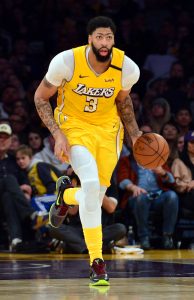 We’ll likely soon be able to apply these numbers to contracts for free agents Anthony Davis and Brandon Ingram. They’re also relevant for players who signed maximum-salary extensions in 2019 that will go into effect in ’20/21, such as Jamal Murray.
Listed below are the maximum-salary contracts for players signing contracts that start in 2020/21. The first chart shows the maximum salaries for a player re-signing with his own team — a player’s previous team can offer five years instead of four, and 8% annual raises instead of 5% raises. The second chart shows the maximum salaries for a player signing with a new team.
A player’s maximum salary is generally determined by his years of NBA experience, so there’s a wide gap between potential earnings for younger and older players. In the charts below, the “6 years or less” column details the maximum contracts for players like Ingram and Murray; the “7-9 years” column applies to free agents like Davis; and the “10+ years” column applies to the league’s most experienced vets, none of whom are particularly strong candidates for max deals this fall.
Here are the maximum salary figures for 2020/21:
A player re-signing with his own team (8% annual raises, up to five years):
| Year | 6 years or less | 7-9 years | 10+ years |
|---|---|---|---|
| 2020/21 | $27,285,000 | $32,742,000 | $38,199,000 |
| 2021/22 | $29,467,800 | $35,361,360 | $41,254,920 |
| 2022/23 | $31,650,600 | $37,980,720 | $44,310,840 |
| 2023/24 | $33,833,400 | $40,600,080 | $47,366,760 |
| 2024/25 | $36,016,200 | $43,219,440 | $50,422,680 |
| Total | $158,253,000 | $189,903,600 | $221,554,200 |
A player signing with a new team (5% annual raises, up to four years):
| Year | 6 years or less | 7-9 years | 10+ years |
|---|---|---|---|
| 2020/21 | $27,285,000 | $32,742,000 | $38,199,000 |
| 2021/22 | $28,649,250 | $34,379,100 | $40,108,950 |
| 2022/23 | $30,013,500 | $36,016,200 | $42,018,900 |
| 2023/24 | $31,377,750 | $37,653,300 | $43,928,850 |
| Total | $117,325,500 | $140,790,600 | $164,255,700 |
There’s also one last category of maximum salary worth outlining for 2020/21. Sixers guard/forward Ben Simmons and Raptors forward Pascal Siakam both signed rookie scale extensions last year that would have been worth the maximum allowable starting salary for players with their experience level (25% of the cap).
However, because Rose Rule language was written into each player’s contract, and both Simmons and Siakam made All-NBA teams in 2020, they’ll be eligible for a slightly higher starting salary worth 28% of the cap. It’s a sort of pseudo-max, since the two stars could technically have received up to 30% of the cap in 2020/21 if they’d made the All-NBA First Team.
Here’s what Simmons’ five-year deal and Siakam’s four-year pact will look like:
| Year | Ben Simmons | Pascal Siakam |
|---|---|---|
| 2020/21 | $30,559,200 | $30,559,200 |
| 2021/22 | $33,003,936 | $33,003,936 |
| 2022/23 | $35,448,672 | $35,448,672 |
| 2023/24 | $37,893,408 | $37,893,408 |
| 2024/25 | $40,338,144 | — |
| Total | $177,243,360 | $136,905,216 |
Finally, it’s worth noting that none of the maximum-salary figures listed above will apply to extension-eligible players whose new contracts would start in 2021/22.
This group includes players like Giannis Antetokounmpo, who is eligible for a super-max extension with the Bucks. It also includes veterans who have already signed maximum-salary extensions, like Damian Lillard with the Trail Blazers, and players who could sign rookie scale extensions in the coming weeks, such as Celtics forward Jayson Tatum and Kings guard De’Aaron Fox.
Even if they sign new deals sooner rather than later, the exact value of their next contracts will depend on where the cap lands for ’21/22. The NBA has announced that the cap for next year could increase anywhere from 3-10% on this season’s figure, so there’s still a wide range of possible values for those future deals.
Photo courtesy of USA Today Sports Images.
Rockets Close To Hiring Jeff Hornacek As Assistant
Former NBA head coach Jeff Hornacek is “very close” to joining the Rockets as an assistant coach on Stephen Silas‘ new staff, reports Mark Berman of FOX 26 Houston (Twitter link). Jonathan Feigen of The Houston Chronicle first reported that the Rockets were in talks with Hornacek.
A former shooting guard who made an All-Star team and appeared in a pair of NBA Finals, Hornacek transitioned into coaching in 2011 when he was hired as an assistant by the Jazz. He subsequently coached the Suns from 2013-16 and the Knicks from 2016-18.
Hornacek led Phoenix to a 48-34 record in his first year as a head coach, but didn’t finish above .500 in a season after that. He has an overall record of 161-216 (.427) as a head coach.
Since Silas is a first-time head coach, there was an expectation that the Rockets would want to make sure he had an experienced staff around him. Feigen previously reported that Houston wanted to get at least two former head coaches on Silas’ staff, and it seems the club has achieved that goal — assuming Hornacek finalizes a deal with the Rockets, he’ll join John Lucas, who has decided to remain with the organization as an assistant.
The Rockets also aggressively pursued veteran coach Nate McMillan, but McMillan is reportedly on the verge of joining the Hawks.