
Former Rockets Assistant Coach, GM Carroll Dawson Passes Away
Former Rockets assistant coach and general manager Carroll Dawson died on Monday at the age of 86, the team announced in a statement mourning his loss (Twitter link).
Dawson, who joined the Rockets as an assistant coach in 1980 under Del Harris, remained on the staff under Bill Fitch and Don Chaney, then helped convince Rudy Tomjanovich to become Houston’s head coach in 1992, writes Jonathan Feigen of The Houston Chronicle (subscription required).
Health issues, including vision loss related to being struck by lightning in 1989, eventually necessitated a move away from the sidelines for Dawson, who was named the Rockets’ general manager in 1996. His most notable moves in that role included drafting Yao Ming in 2002 and trading for Tracy McGrady in 2004. He was eventually succeeded by Daryl Morey in 2007 after spending 27 seasons with the franchise.
As Feigen details, Dawson’s impact on the Rockets was so significant that a jersey bearing his initials (“CD”) hangs in the rafters of the Toyota Center alongside the team’s retired numbers.
“For nearly three decades, CD was a cornerstone of our organization, instrumental in shaping the careers of stars like Hakeem Olajuwon and Ralph Sampson,” the Rockets said in their statement announcing his passing. “A proud Texas native, CD served as the only coach to be present for all four of Houston’s NBA Finals appearances, including the back-to-back championship teams.
“As general manager, he brought iconic talents to Houston including Charles Barkley, Steve Francis, Yao Ming, and Tracy McGrady, while also assembling the four-time WNBA champion Houston Comets.
“While CD’s contributions to basketball were remarkable, it was his character that truly stood out. We will deeply miss his uplifting spirit, infectious humor, and kind-hearted nature. We are proud that CD’s legacy will forever be honored with his banner hanging from the rafters of Toyota Center, alongside our other Rockets legends.”
We at Hoops Rumors send our condolences to Dawson’s family and friends.
2024/25 NBA Over/Unders: Southeast Division
With the 2024/25 NBA regular season set to tip off next month, we’re getting serious about predictions for the upcoming campaign and continuing an annual Hoops Rumors tradition.
With the help of the lines from a series of sports betting sites – including Bovada and BetOnline – we’re running through the predicted win totals for each of the NBA’s 30 teams, by division. In a series of team-by-team polls, you’ll get the chance to weigh in on whether you think those forecasts are too optimistic or too pessimistic.
In 2023/24, our voters went 16-14 on their over/under picks. Can you top that in ’24/25?
We’ll continue our series today with the Southeast Division…
Orlando Magic
- 2023/24 record: 47-35
- Over/under for 2024/25: 47.5 wins
- Major offseason moves:
- Added: Kentavious Caldwell-Pope, Cory Joseph, Tristan Da Silva
- Lost: Markelle Fultz, Joe Ingles, Chuma Okeke
How many games will the Magic win in 2024/25?
-
Over 47.5 57% (205)
-
Under 47.5 43% (154)
Total votes: 359
Miami Heat
- 2023/24 record: 46-36
- Over/under for 2024/25: 44.5 wins
- Major offseason moves:
- Added: Alec Burks, Kel’el Ware, Pelle Larsson
- Lost: Caleb Martin, Delon Wright, Patty Mills, Orlando Robinson
How many games will the Heat win in 2024/25?
-
Under 44.5 63% (215)
-
Over 44.5 37% (126)
Total votes: 341
Atlanta Hawks
- 2023/24 record: 36-46
- Over/under for 2024/25: 35.5 wins
- Major offseason moves:
How many games will the Hawks win in 2024/25?
-
Under 35.5 66% (241)
-
Over 35.5 34% (122)
Total votes: 363
Charlotte Hornets
- 2023/24 record: 21-61
- Over/under for 2024/25: 29.5 wins
- Major offseason moves:
- Added: Josh Green, Tidjane Salaun, Taj Gibson
- Lost: Davis Bertans, JT Thor, Aleksej Pokusevski, Bryce McGowens
How many games will the Hornets win in 2024/25?
-
Under 29.5 63% (217)
-
Over 29.5 37% (127)
Total votes: 344
Washington Wizards
- 2023/24 record: 15-67
- Over/under for 2024/25: 20.5 wins
- Major offseason moves:
How many games will the Wizards win in 2024/25?
-
Under 20.5 57% (201)
-
Over 20.5 43% (154)
Total votes: 355
Previous voting results:
- Boston Celtics (58.5 wins): Over (69.7%)
- New York Knicks (53.5 wins): Over (58.8%)
- Philadelphia 76ers (52.5 wins): Under (51.7%)
- Toronto Raptors (30.5 wins): Under (58.7%)
- Brooklyn Nets (19.5 wins): Over (54.3%)
- Dallas Mavericks (49.5 wins): Over (78.0%)
- Memphis Grizzlies (47.5 wins): Under (65.6%)
- New Orleans Pelicans (46.5 wins): Under (60.6%)
- Houston Rockets (43.5 wins): Under (51.4%)
- San Antonio Spurs (36.5 wins): Under (52.9%)
Players Currently Affected By Trade Restrictions
The NBA has no shortage of rules affecting which players can and can’t be traded at any given time, which complicates our understanding of which players are actually moveable. That’s especially true leading up to the regular season, when players who recently signed free agent contracts, extensions, and rookie contracts all face different sets of trade restrictions.
In an effort to clear things up, we’re looking today at which players around the NBA are currently affected by trade restrictions of one kind or another. Let’s dive in…
Recently signed free agents
In most cases, a free agent who signed a contract in the offseason is ineligible to be traded until December 15.
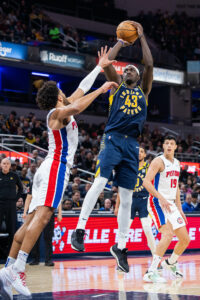 Currently, our list of players who will become trade-eligible on December 15 features 85 names, including several of the guys who signed the biggest free agent contracts of the summer, such as Paul George, Pascal Siakam, and Isaiah Hartenstein.
But the list is technically even longer than that, since we haven’t included players who signed non-guaranteed Exhibit 10 contracts. Most of those players will be waived by opening night, but if they earn spots on regular season rosters, the December 15 trade restriction would apply to them as well.
A free agent who signs after September 15 won’t become trade-eligible until three months after his signing date.
Any player who has his two-way contract converted to a standard deal during the offseason also doesn’t become trade-eligible until December 15 or until three months after the move, whichever comes later. However, no players were promoted from two-way contracts to standard deals this summer. All the players who finished last season on two-ways either became free agents on July 1, were waived, or are still on their previous contracts.
A select group of players who signed free agent contracts this offseason won’t become trade-eligible until January 15. These 16 players all meet a specific set of criteria. Not only did they re-sign with their previous team this offseason, but they got a raise of at least 20%, their salary is worth more than the minimum, and their team was over the cap, using Bird or Early Bird rights to sign them. That group includes Tyrese Maxey, Immanuel Quickley, and Nic Claxton, among others.
The above rules apply to players who sign standard contracts, not two-way deals. A player who signs a two-way contract is ineligible to be traded for 30 days. So Luke Travers, who signed with the Cavaliers on August 28, will become trade-eligible on September 27. Two-way players are almost never traded, but it happens every now and then, like when RaiQuan Gray was included in this summer’s three-team DeMar DeRozan sign-and-trade.
Recently signed draft picks
Like a player who signs a two-way contract, a draftee who signs his first NBA contract is ineligible to be traded for 30 days. Currently, this restriction only impacts Jazz second-rounder Kyle Filipowski, who signed a four-year contract on August 12 and will become trade-eligible on September 11.
The rest of this year’s draftees can currently be traded.
That list of tradable 2024 draftees includes all the players besides Fililpowski who have signed, since more than 30 days have passed since their officially completed their deals.
It also includes the two players who remain unsigned – Nikola Djurisic and Quinten Post – since their draft rights can be traded until they sign their contract. If Djurisic and Post officially sign NBA contracts for 2024/25, they’ll become trade-ineligible for 30 days.
Players with veto ability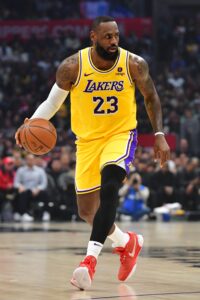
Suns guard Bradley Beal and Lakers forward LeBron James are the only NBA players who have genuine no-trade clauses in their contracts, but several other players have the ability to veto trades this season due to various quirks of the Collective Bargaining Agreement.
Clippers guard James Harden, Grizzlies sharpshooter Luke Kennard, Sixers guard Kyle Lowry, and Nuggets center DeAndre Jordan are some of the notable players whose consent will be required to trade them during the 2024/25 season.
Under the new CBA, a player who would normally meet the no-trade criteria due to re-signing with his current team on a one-year contract (or a two-year deal with a second-year option) can opt to waive his right to veto a trade.
Eleven players have done so this season, including Knicks big man Precious Achiuwa and Sixers forward Kelly Oubre, so once they become trade-eligible (on either December 15 or January 15), they can be moved without any issue.
Players who have signed veteran extensions
A player who signs a rookie scale extension becomes more difficult to trade due to the “poison pill provision,” but he could theoretically be moved immediately.
That’s not necessarily the case for a player who signs a veteran contract extension. A player who signs a veteran extension becomes ineligible to be traded for the next six months if the deal locks him up for more than four total years (including his current contract), includes a first-year bump higher than 20%, and/or includes a raise exceeding 5% anytime after the first year of the extension.
With the help of our extension trackers, here are the players currently affected by that rule, along with the dates they’ll become trade-eligible:
- October 11: Jrue Holiday (Celtics)
- October 16: Grayson Allen (Suns)
- January 6: Bam Adebayo (Heat), Jonathan Isaac (Magic), Derrick White (Celtics)
- January 7: Donovan Mitchell (Cavaliers)
- January 12: Jalen Brunson (Knicks)
- January 23: Sam Hauser (Celtics)
- January 26: Andrew Nembhard (Pacers)
- February 2: Jarrett Allen (Cavaliers)
- February 7: Lauri Markkanen (Jazz)
- March 3: T.J. McConnell (Pacers), Ivica Zubac (Clippers)
Since the trade deadline will land on February 6, Markkanen, McConnell, and Zubac won’t be eligible to be traded until the 2025 offseason.
This restriction will also apply to any player who signs an extension meeting the terms outlined above between now and the trade deadline, such as Jamal Murray, who has reportedly agreed to terms on a new four-year extension with the Nuggets.
Warriors star Stephen Curry and Wizards big man Richaun Holmes also signed extensions this offseason, but those deals didn’t exceed four total years or include raises greater than 5%, meaning Curry and Holmes remain eligible to be traded. Obviously, that’s a far more realistic outcome for Holmes than Curry.
Players who have signed Designated Veteran extensions
A Designated Veteran contract is also known as a “super-max” deal — it’s a maximum-salary contract that starts at 35% of the cap instead of 30% because the player has met certain performance criteria before achieving 10 years of NBA service.
A player who signs a Designated Veteran contract or extension can’t be traded for one full year after his signing date.
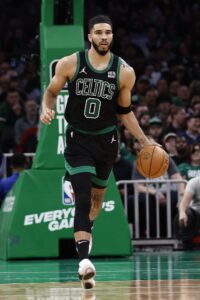
Only one player has signed a super-max contract this offeason: Celtics forward Jayson Tatum. He’ll become trade-eligible on July 6, 2025, the one-year anniversary of his signing.
Players affected by aggregation restrictions
When a team trades for a player via salary-matching or using an exception (ie. not by absorbing the player into cap room), that team can’t “aggregate” the player in another trade for two months. Aggregating a player means combining his salary with another player’s for matching purposes.
The majority of the trades made this offseason so far were completed before July 9, so this restriction only applies to two players at the moment. Here are those players, along with the dates when they’ll become aggregation-eligible:
- September 19: Ziaire Williams (Nets)
- September 29: David Roddy (Hawks)
Any player who is traded this season after December 16 (without being acquired via cap room) won’t be eligible to be flipped prior to the trade deadline in a second deal that aggregates his salary with another player’s.
This aggregation restriction also applies indefinitely to any player on a team who is operating over the second tax apron. Currently, four teams fit that bill: the Suns, Celtics, Bucks, and Timberwolves.
Northwest Notes: Hartenstein, Edwards, Gobert, Nuggets
The debate over whether or not Isaiah Hartenstein should start for the Thunder remains a hot topic among fans in Oklahoma City as training camp nears, writes Joel Lorenzi of The Oklahoman.
Lorenzi expects Hartenstein to toggle back and forth between the starting five and the second unit depending on matchups, writing that whether or not he starts matters less than the lineups he’ll play with.
Lorenzi wouldn’t be surprised if the Thunder’s top free agent addition plays alongside Chet Holmgren frequently at the start of the season, as head coach Mark Daigneault gathers information on how the duo performs together, but Hartenstein will also be a crucial piece in non-Holmgren lineups, which badly needed a rim protector last season, Lorenzi notes.
Here’s more from around the Northwest:
- The ongoing development of Anthony Edwards is the key to the Timberwolves continuing to raise their ceiling, according to John Schuhmann of NBA.com, who breaks down some numbers and film in considering how the All-NBA guard could keep getting better.
- Referring to the four-time Defensive Player of the Year as the league’s “favorite pin cushion,” Jon Krawczynski of The Athletic defends Timberwolves center Rudy Gobert from some of the criticism he’s taking this offseason after being on the wrong end of a Luka Doncic highlight in the Western Conference Finals and playing limited minutes for France during their run to a silver medal at the Paris Olympics. Gobert was a huge part of Minnesota’s success last season and will be even more critical in 2024/25, Krawczynski contends.
- In a subscriber-only mailbag for The Denver Post, Bennett Durando explores several Nuggets-related topics, including what Michael Porter Jr.‘s next contract might look like and where Zeke Nnaji stands as he enters a four-year, $32MM extension. General manager Calvin Booth has made it clear he still believes in Nnaji, Durando writes, but the big man’s deal “obviously looks terrible” after a poor 2023/24 showing.
Darius Bazley, Will Barton Joining Chinese Team
A pair of NBA veterans are reportedly headed to China, with forward/center Darius Bazley and guard Will Barton joining the Guangdong Southern Tigers, as Dario Skerletic of Sportando relays.
Bazley, the 23rd overall pick in the 2019 draft, spent his first three-and-a-half NBA seasons with the Thunder, appearing in 221 games for the club. The 24-year-old has bounced around the NBA since being dealt to Phoenix at the 2023 trade deadline, enjoying brief stints with the Suns, Sixers, and Jazz.
In 237 total NBA contests (118 starts), Bazley has averaged 8.9 points, 5.2 rebounds, and 1.2 assists in 23.4 minutes per game, posting a shooting line of .414/.309/.677. He signed a multiyear deal with Utah in March, but it wasn’t guaranteed beyond 2023/24, so he was waived in July, making him a free agent.
Barton, an 11-year NBA veteran, made 679 regular season appearances for Portland, Denver, Washington, and Toronto from 2012-23. His best years came with the Nuggets, where he finished in the top four in Sixth Man of the Year voting twice and averaged 14.0 points per game on .438/.362/.789 shooting across seven-and-a-half seasons.
Barton didn’t play in the NBA last season. He initially signed with CSKA Moscow in January, but that contract was voided before he appeared in a game for the Russian club. He subsequently caught on with teams in Spain and Puerto Rico to close out the 2023/24 season.
Guangdong posted a 37-15 record in Chinese Basketball Association competition last season, but was eliminated from the postseason by the Liaoning Flying Leopards, who went 43-9 during the season and eventually won the 2024 CBA title.
Five Teams Who May Pursue Cost-Cutting Trades
Most of the 29 trades completed so far this offseason by NBA teams have been made with financial considerations in mind. In some cases, those considerations were obvious -- when the Timberwolves sent Wendell Moore to Detroit, the Nuggets dealt Reggie Jackson to Charlotte, or the Grizzlies traded Ziaire Williams to Brooklyn, saving money was the primary motivating factor.
For other trades, cap savings were just one part of the equation. For example, Portland's July deal with the Wizards was primarily about acquiring Deni Avdija, but by including Malcolm Brogdon in their package for Avdija, the Trail Blazers were able to duck out of luxury tax territory. The same is true of the Hawks in the Dejounte Murray trade, which reduced their team salary for 2024/25 and helped them sneak below the tax line.
While some teams have already made their cost-cutting moves for '24/25, there are others who are worth keeping an eye on this fall and winter. Based on their proximity to the luxury tax line or the tax aprons, they look like potential candidates to pursue deals that would shed some salary.
Let's take a closer look at some of those teams...

And-Ones: Eastern Contenders, Amazon, Tax Teams, Regrettable Contracts
Although the Sixers‘ projected starting lineup (Joel Embiid, Paul George, Tyrese Maxey, Kelly Oubre and Caleb Martin) is versatile defensively and features plenty of shooting, Martin projects to be the NBA’s shortest starting power forward this season, according to Tim Bontemps of ESPN, who suggests that Philadelphia could benefit from adding some more size to its frontcourt.
Philadelphia is one of five Eastern Conference threats to Boston discussed by Bontemps as he identifies one piece each of those teams is missing. Some of those pieces are positional — the Knicks could use another center, while the Cavs would like to add a two-way wing, Bontemps writes.
Other missing pieces are more general traits. For example, Bontemps says the Bucks are lacking “dynamism,” pointing to the team’s dearth of dunks by players besides Giannis Antetokounmpo last season as a sign that Milwaukee would benefit from adding more athletic, explosive pieces to its roster.
Here are a few more odds and ends from around the basketball world:
- Although Amazon reportedly scrapped plans to make a $115MM investment in Diamond Sports Group, it sounds like the mega-corporation and the parent company of the Bally Sports networks are still in discussions. As Josh Kosman of The New York Post reports, Amazon is exploring a deal to stream Bally Sports broadcasts of 12 NBA teams for the coming season. According to Kosman, under the proposed deal, Bally Sports would continue its local broadcasts, but Amazon would give customers the option of paying approximately $20 per month to access their home team’s games through Prime Video.
- Keith Smith of Spotrac takes a look at how the teams operating in tax apron territory approached the offseason, breaking down the moves they made and considering how the apron-related restrictions affected them.
- While few teams have a contract as onerous as Zach LaVine‘s on their books, the Bulls aren’t the only club carrying a deal they may regret. Eric Pincus of Bleacher Report identifies one possible such contract on the books for all 30 teams, ranking each one out of 10 in terms of “potential regret level.” LaVine’s deal is the only one that scores a 10/10, but Pincus gives a 9/10 to Bradley Beal (Suns), Jordan Poole (Wizards), and Michael Porter Jr. (Nuggets).
Lakers Sign Jordan Goodwin To Camp Deal
SEPTEMBER 6: The Lakers have officially signed Goodwin, the team announced in a press release. After signing and waiving Alex Fudge, the club is now back to a full 21-man offseason roster.
SEPTEMBER 3: Free agent guard Jordan Goodwin has agreed to sign with the Lakers, according to veteran NBA reporter Chris Haynes (Twitter link).
Haynes describes it as a “camp deal” for Goodwin, which suggests the contract will be non-guaranteed and worth the veteran’s minimum. It will likely include Exhibit 9 language and possibly Exhibit 10 language too, though that hasn’t been confirmed.
Goodwin, who will turn 26 in October, spent the first half of the 2023/24 season with the Suns before being sent to Brooklyn as part of the three-team trade that landed Royce O’Neale in Phoenix. After being waived by the Nets, the former Saint Louis standout inked a 10-day contract and then a two-way deal with the Grizzlies, finishing the season in Memphis.
In total, Goodwin appeared in 57 games for the Suns and Grizzlies, averaging 6.5 points, 4.4 rebounds, and 2.7 assists in 18.5 minutes per contest. His shooting efficiency dropped off significantly, however, as he made just 36.9% of his field goal attempts, including 29.8% of his three-pointers.
Goodwin previously appeared in 64 games for the Wizards from 2021-23, averaging 6.4 PPG, 3.2 RPG, and 2.6 APG in 17.4 MPG, with a shooting line of .444/.319/.768.
The Lakers have a full 15-man standard roster, with all three of their two-way slots filled, so the club would need to trade or waive one of those players in order to create a path for Goodwin to earn a regular season roster spot. For what it’s worth, if he signs an Exhibit 10 contract, Goodwin would be eligible to be converted to a two-way deal prior to opening night.
NBA 2024 Offseason Check-In: New York Knicks
Hoops Rumors is checking in on the 2024 offseason for all 30 NBA teams, recapping the summer’s free agent signings, trades, draft picks, departures, and more. We’ll take a look at each team’s offseason moves and consider what might still be coming before the regular season begins. Today, we’re focusing on the New York Knicks.
Free agent signings
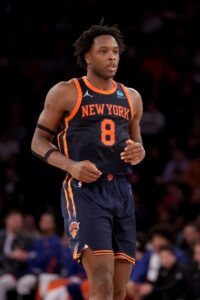 OG Anunoby: Five years, $212,500,000. Fifth-year player option. Includes 15% trade kicker. Re-signed using Bird rights.
- Precious Achiuwa: One year, $6,000,000. Re-signed using Bird rights. Waived right to veto trade.
- Cameron Payne: One year, minimum salary. Signed using minimum salary exception.
- Chuma Okeke: One year, minimum salary. Non-guaranteed (Exhibit 10). Signed using minimum salary exception.
Trades
- Acquired the draft rights to Dillon Jones (No. 26 pick) and the No. 51 pick in the 2024 draft from the Wizards in exchange for the draft rights to Kyshawn George (No. 24 pick).
- Acquired either the Celtics’ or Grizzlies’ 2025 second-round pick (whichever is more favorable); the Warriors’ 2026 second-round pick; the Timberwolves’ 2027 second-round pick; either the Thunder’s, Rockets’, Heat’s, or Pacers’ 2027 second-round pick (whichever is second-most favorable), and either the Thunder’s, Rockets’, Heat’s, or Pacers’ 2027 second-round pick (whichever is third-most favorable) from the Thunder in exchange for the draft rights to Dillon Jones (No. 26 pick).
- Acquired the draft rights to Tyler Kolek (No. 34 pick) from the Trail Blazers in exchange for the Timberwolves’ 2027 second-round pick; either the Pacers’ or Wizards’ 2029 second-round pick (whichever is least favorable); and the Knicks’ 2030 second-round pick.
- Acquired the draft rights to Ariel Hukporti (No. 58 pick), the draft rights to Petteri Koponen, and cash ($1MM) from the Mavericks in exchange for the draft rights to Melvin Ajinca (No. 51 pick).
- Acquired the draft rights to Oso Ighodaro (No. 40 pick) and cash ($500K) from the Thunder in exchange for the draft rights to Ajay Mitchell (No. 38 pick).
- Acquired the draft rights to Kevin McCullar (No. 56 pick) and the Celtics’ 2028 second-round pick (top-45 protected) from the Suns in exchange for the draft rights to Oso Ighodaro (No. 40 pick).
- Acquired Mikal Bridges, Keita Bates-Diop, the draft rights to Juan Pablo Vaulet, and either the Pistons’, Bucks’, or Magic’s 2026 second-round pick (whichever is least favorable) from the Nets in exchange for Bojan Bogdanovic, Shake Milton (sign-and-trade), Mamadi Diakite, the Knicks’ 2025 first-round pick, the Bucks’ 2025 first-round pick (top-four protected), the Knicks’ 2027 first-round pick, the Knicks’ 2029 first-round pick, the Knicks’ 2031 first-round pick, the right to swap a 2028 first-round pick (the Nets’ or the Suns’; whichever is most favorable) for the Knicks’ 2028 first-round pick, and the Nets’ 2025 second-round pick.
Draft picks
- 1-25: Pacome Dadiet
- Signed to rookie scale contract (four years, $13,012,968).
- 2-34: Tyler Kolek
- Signed to four-year, $9,062,682 contract. First three years guaranteed. Fourth-year team option.
- 2-56: Kevin McCullar
- Signed to two-way contract.
- 2-58: Ariel Hukporti
- Signed to two-way contract.
Two-way signings
Departed/unsigned free agents
- Charlie Brown Jr. (unsigned)
- Alec Burks (Heat)
- Isaiah Hartenstein (Thunder)
- DaQuan Jeffries (unsigned)
- Shake Milton (Nets)
- Duane Washington (Partizan Belgrade)
Other moves
- Signed Jalen Brunson to a three-year, $156,549,124 veteran extension that begins in 2025/26. Includes fourth-year player option and 15% trade kicker.
- Exercised Jericho Sims‘ 2024/25 team option ($2,092,344).
Salary cap situation
- Operating over the cap ($140.6MM), over the luxury tax line ($170.8MM), and between the first tax apron ($178.1MM) and second tax apron ($188.9MM).
- Carrying approximately $179.2MM in salary.
- Hard-capped at $188,931,000.
- Taxpayer mid-level exception ($5.2MM) available.
- Two traded player exceptions frozen/unavailable (largest worth $5,241,072).
The offseason so far
Considered a potential landing spot for top free agents and trade candidates for several seasons, the Knicks managed to climb up the Eastern Conference standings in recent years without ever swinging a major deal for a star.
Their biggest free agent addition during that time, Jalen Brunson, has evolved into an All-NBA player in New York, but that was far from a given when he signed in 2022 — to that point, he only had one season as a full-time starter under his belt and had posted a career average of 11.9 points per game. The Knicks’ biggest trade during that same time period, made midway through the 2023/24 season for OG Anunoby, didn’t involve a single outgoing first-round pick.
If not for injuries to key players like Anunoby, Julius Randle, and Mitchell Robinson, among others, the Knicks had a real shot to advance to the Eastern Conference Finals in 2024. They nearly made it anyway, taking the Pacers to seven games in the Eastern Semifinals after winning 50 regular season games for just the second time since 2000.
With the club on the verge of title contention, the time was right this offseason for the Knicks to finally take their big swing and cash in some of those first-round picks they’d been hoarding. They struck a deal with the Nets to acquire Mikal Bridges in exchange for a package that featured four unprotected first-round picks, a fifth lightly protected first-rounder, and a first-round pick swap.
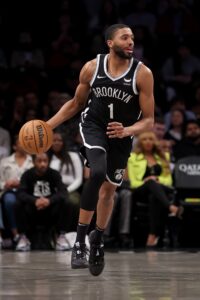 It was a stunning move for multiple reasons. For one, the Knicks and Nets are unlikely trade partners — the two New York clubs hadn’t made a deal with one another since 1983.
Bridges wasn’t widely considered to be available, since the Nets didn’t control their 2025 or 2026 first-round selections and appeared more inclined to build around the forward than to bottom out to increase the value of lottery picks they didn’t own. But at the same time they sent Bridges to New York, the Nets reached a separate agreement with Houston to regain control of their ’25 and ’26 picks, setting them up to rebuild in earnest over the next year or two.
It was also a substantial price to pay for a player who has never made an All-Star team or won a major NBA award. The price wasn’t far off from the one Minnesota paid for Rudy Gobert in 2022 — that package included more useful veterans (Jarred Vanderbilt, Malik Beasley, Patrick Beverley) than what the Knicks gave up (Bojan Bogdanovic, Shake Milton), but the draft-pick compensation the Jazz received (three unprotected first-round picks, one lightly protected first-rounder, the rights to No. 22 pick Walker Kessler, and a first-round swap) was nearly identical.
Although the Bridges acquisition was a surprising one, it made perfect sense for the Knicks in many respects. Most of the other trade candidates linked to New York in recent years – such as Donovan Mitchell and Karl-Anthony Towns – were big-time scorers who wouldn’t help much on defense, making them questionable fits on a roster coached by Tom Thibodeau. Bridges, on the other hand, is a two-way force who has hovered around 20 points per game for the past two seasons, has knocked down 37.5% of his career three-point attempts, and finished second in Defensive Player of the Year voting in 2022.
Acquiring Bridges also allowed the Knicks to add to their set of Villanova alumni — like new teammates Brunson, Josh Hart, and Donte DiVincenzo, Bridges played for the Wildcats from 2015-17. All four players were on the 2016 championship roster, while Brunson, DiVincenzo, and Bridges won a second national title in 2018. Whether that Villanova connection actually improves the Knicks’ title odds is up for debate, but having a group of long-time friends who genuinely like each other certainly helped create good vibes in New York last season. Bridges’ arrival should only help in that regard.
As steep a price as the Knicks paid to acquire Bridges, the team hasn’t yet fully exhausted its cache of draft assets, so another smaller move or two isn’t out of the question. Plus, if they were going to splurge on anyone, it makes sense for the Knicks to do so on a player on a team-friendly contract who comes with little to no fit concerns.
After agreeing to trade for Bridges, New York re-signed his new partner on the wing, Anunoby, to an eye-popping five-year, $212.5MM contract. The move gives the Knicks two of the NBA’s top three-and-D players, putting them in a great position to match up with a defending-champion Celtics team led by Jayson Tatum and Jaylen Brown.
It’s a high price to pay for an oft-injured player like Anunoby, who has missed 29, 34, 15, and 32 games in the past four regular seasons and was hurt again in the second round of the playoffs. His impact, which goes far beyond his scoring output, is so significant that if he manages to play 65-70 games per season for the next few years, the investment will be worthwhile, but it’s a risky one.
The fact that the Knicks were able to lock up Brunson to a below-market contract extension (four years, $156.5MM) on the heels of his fifth-place finish in MVP voting helps offset the high price the club paid to retain Anunoby. Both players are now under contract through at least 2027/28, with player options for ’28/29, and while Anunoby will earn higher salaries than Brunson for the next four years, the overall price the club will pay for the duo is a reasonable one.
While Brunson was the only Knicks player to receive an extension this summer, the team also completed a new long-term deal with Thibodeau, who was set to enter the final year of his existing contract. Thibodeau has his share of critics who argue his tendency to lean too heavily on certain players leads to injuries, but it’d be hard to claim he hasn’t gotten the most out of his rosters during the past couple years, deftly navigating those injury issues to keep the Knicks competitive.
The Knicks also made several minor moves in the draft and free agency to fill out their roster, re-signing Precious Achiuwa, adding Cameron Payne, and drafting Pacome Dadiet and Tyler Kolek.
It wasn’t all good news in New York though, as the club’s spending limitations prevented a new deal with Isaiah Hartenstein, the backup center who became the starter for much of the season due to Robinson’s health problems.
Because they only held Hartenstein’s Early Bird rights, the Knicks were limited to offering approximately $72.5MM for four years, and not quite all of that money would’ve been guaranteed. New York put its best offer on the table, but the Thunder topped it with a three-year, $87MM bid that included nearly $60MM in guaranteed money over the first two seasons. The Knicks’ offer included only about $30MM in guaranteed salary during those same two years.
It’s a significant loss for the Knicks, who benefited greatly from Hartenstein’s defensive versatility and rim-protecting ability, as well as his screening and play-making on offense. Robinson is a very good rim-runner and defender who is more athletic than Hartenstein, but he has dealt with injuries in recent years and isn’t the type of player who can be relied upon for 30 to 35 minutes per night (his career high is 27.5 MPG). His offensive game is somewhat limited too, as he’s not much of a shooter or passer.
Achiuwa, Randle, and Jericho Sims will soak up some minutes at center during the regular season, and the Knicks can probably get by with those options for a while, but it’s safe to assume the team will remain on the lookout for a more reliable and more traditional backup center after failing to land one this offseason.
Up next
As detailed above, the hunt for a backup center figures to continue into the fall — and potentially well into the regular season if no good options materialize in the next month-and-a-half.
Although New York still has its full taxpayer mid-level exception ($5.2MM) available, there are no free agent centers still on the market who warrant more than minimum-salary investments, so barring a surprise preseason cut, a trade will likely be necessary to address the position. The Knicks can freely aggregate players’ contracts in a trade, but can’t take back more salary than they send out.
The Knicks have an open spot on their projected 15-man regular season roster, but may keep it open to maximize their flexibility. That would line them up to bring in a 15th man later if one of their two-way players emerges, injuries necessitate an acquisition at a specific position, or they simply want to add more depth.
Randle isn’t the only extension-eligible player on the roster (Robinson or Sims are also in that group), but he’s certainly the most noteworthy one. He holds a player option for the 2025/26 season, giving him an opportunity to reach unrestricted free agency next July.
Obviously the Knicks won’t want to lose Randle for nothing, but it wouldn’t surprise me if they take extension talks into the season and wait to see how the three-time All-Star looks coming off shoulder surgery as part of the new-look rotation. He could sign a new contract at any time until June 30 as long as he declines his player option as part of the deal (up until October 21, he could exercise the option as part of an extension), so there should be no rush from the team’s perspective.
Clippers Sign RayJ Dennis To Exhibit 10 Deal
SEPTEMBER 6: The deal is now official, according to RealGM’s NBA transaction log.
JUNE 27: The Clippers and undrafted rookie RayJ Dennis have agreed to an Exhibit 10 deal, reports Jon Chepkevich of DraftExpress.com (Twitter link).
According to Chepkevich, the expectation is that Dennis will be with the team in Summer League and training camp and will be given the chance to compete for one of L.A.’s two-way slots. An Exhibit 10 contract can be converted into a two-way deal any time between when it’s signed and the start of the regular season.
A fifth-year super-senior at Baylor in 2023/24, Dennis averaged 13.6 points, 6.7 assists, and 3.9 rebounds in 34.3 minutes per game across 35 contests (all starts). His shooting line was .479/.328/.731.
The 6’2″ guard also played for Boise State for two seasons and Toledo for two more before transferring to Baylor. He earned Mid-American Conference Player of the Year honors in 2023 with Toledo.