
Community Shootaround: Northwest Division
Every team would like to think during this time of the year it could at least compete for a division championship and automatic playoff berth. In reality, virtually every division has at least one team that has no realistic shot at doing that.
That’s confirmed by VegasInsider.com’s odds for each of the six NBA divisions. In all but one of them, there’s at least one team posted with odds of 25-1 or higher to beat out its four division foes.
The lone exception is the Northwest Division. That division appears to be wide open and even the team with the longest odds — the Trail Blazers — is given a 6-1 chance to win it. The Thunder and Jazz are co-favorites at 9-4, with the Nuggets at 9-2 and the Timberwolves (prior to a potential Jimmy Butler trade) listed at 5-1.
This should come as no surprise, since the division was hotly contested last season. Portland won it with a 49-33 record. All the other Northwest Division teams had at least 46 wins. Denver finished last with a 46-36 mark and just missed the playoffs.
Paul George‘s decision to re-sign with Oklahoma City is the primary reason why it’s a co-favorite. The Jazz have essentially the same mix that made them one of the pleasant surprises in the league last season. Star guard Donovan Mitchell should be even better is his second season.
The Nuggets are loaded with offensive talent and most of their core players are just entering their prime. Even if Butler is dealt, the Timberwolves still have one of the league’s top big men in Karl-Anthony Towns. And defending division champ Portland still has the league’s highest-scoring backcourt duo in Damian Lillard and CJ McCollum.
This leads us to our question of the day: Which team do you think will finish first in the Northwest Division this season and why?
Please take to the comments section and weigh in on this topic. We look forward to what you have to say.
2018 Offseason In Review: Memphis Grizzlies
Hoops Rumors is breaking down the 2018 offseason for all 30 NBA teams, revisiting the summer’s free agent signings, trades, draft picks, departures, and more. We’ll evaluate each team’s moves from the last several months and look ahead to what the 2018/19 season holds for all 30 franchises. Today, we’re focusing on the Memphis Grizzlies.
Signings:
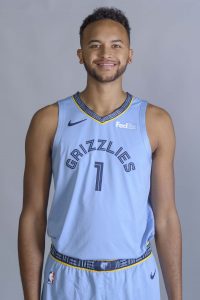 Standard contracts:
- Kyle Anderson: Four years, $37.16MM. Signed using mid-level exception. Spurs’ declined to match offer sheet.
- Omri Casspi: One year, minimum salary. Signed using minimum salary exception.
- Shelvin Mack: One year, minimum salary. Signed using minimum salary exception.
- Two-way contracts:
- Non-guaranteed camp contracts:
- Markel Crawford: One year, minimum salary.
- Brandon Goodwin: One year, minimum salary.
- Ismaila Kane: One year, minimum salary.
- Doral Moore: One year, minimum salary.
Trades:
- Acquired Garrett Temple from the Kings in exchange for Ben McLemore, Deyonta Davis, the Grizzlies’ 2021 second-round pick, and cash ($1,544,951).
- Acquired Dakari Johnson and the draft rights to Tyler Harvey from the Magic in exchange for Jarell Martin and cash ($1,037,980).
- Note: Johnson later waived.
Draft picks:
- 1-4: Jaren Jackson Jr. — Signed to rookie contract.
- 2-32: Jevon Carter — Signed to two-year, $2.26MM contract. Fully guaranteed. Signed using minimum salary exception.
Departing players:
- Mario Chalmers
- Deyonta Davis
- Tyreke Evans
- Myke Henry (two-way; waived)
- Omari Johnson (waived)
- Jarell Martin
- Ben McLemore
- Kobi Simmons (two-way; waived)
Other offseason news:
- Retained interim head coach J.B. Bickerstaff, naming him permanent head coach.
- Hired Jerry Stackhouse as assistant coach; finalized coaching staff.
- Hired Brad Jones as head coach of G League affiliate Memphis Hustle.
- Named Glen Grunwald a consultant.
Salary cap situation:
- Remained over the cap.
- Carrying approximately $120.8MM in guaranteed salaries.
- Hard-capped at $129.82MM.
- No cap exceptions left besides minimum salary exception.
Check out the Memphis Grizzlies’ full roster and depth chart at RosterResource.com.
Story of the summer: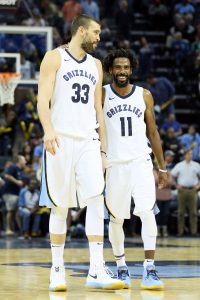
Following a colossally disappointing 22-win season, the Grizzlies found themselves in a very difficult spot. With three fat contracts (Marc Gasol, Mike Conley, Chandler Parsons) eating up a good chunk of their cap space, they couldn’t simply go into full rebuild mode. So rather than waving the white flag, the Grizzlies’ front office thought the best approach would be to embrace their old roots. Instead of seeking out more shooters and embracing a high-powered attack, Memphis opted to surround Gasol and Conley with defensive-minded players possessing length and athleticism.
Selecting Jaren Jackson Jr. with their high lottery pick tipped the Grizzlies’ hand on what type of personnel moves they’d make this summer. Jackson is an all-around talent but his greatest strength is his shot-blocking. Jackson Jr. swatted over 100 shots in his lone college season at Michigan State despite averaging just 21.8 MPG. Second-round pick Jevon Carter carved out a reputation for toughness and gritty play at West Virginia.
Their successful pursuit of restricted free agent swingman Kyle Anderson showed creativity on a limited budget. The Grizzlies knew it would be tough for San Antonio to match the offer sheet on a four-year player who’s never averaged more than 7.9 PPG. But Memphis isn’t looking for Anderson to put up big offensive numbers. Defensive analytics show Anderson to be one of the league’s underrated defenders. His defensive box rating last season posted by Basketball Reference was an excellent 4.3.
The front office also chose continuity by retaining coach J.B. Bickerstaff. Endorsements from Conley and Gasol certainly helped his cause.
Five Rookie Scale Options That May Not Be Exercised
Team and player options on veteran contracts must be exercised by the end of June before the new league year begins on July 1, but the same rules don’t apply to team options in rookie scale contracts. First-round picks who signed standard rookie contracts have third- and fourth-year options included in their deals, and those options must be exercised – or declined – seven months early.
The deadline for rookie scale option decisions is October 31, which means that teams have about another month to decide whether to pick up those options for the 2019/20 season.
It’s an unusual structure, one that forces teams to make decisions before seeing how their players will perform on the court that season. Last fall, for instance, the Magic turned down their fourth-year option on Mario Hezonja for 2018/19. Hezonja subsequently enjoyed his best season as a pro, and instead of entering the final year of his rookie contract with Orlando, he was able to hit the open market and secure a larger salary with the Knicks.
Cases like Hezonja’s are rare, however. For the most part, teams will exercise their rookie scale options, particularly third-year options. Third-year options are generally pretty affordable, and decisions are due after a player has been in the NBA for just one season, so clubs are reluctant to give up on their first-round picks that early.
Still, while many of this year’s rookie scale option decisions will be no-brainers, there are at least a small handful of players who aren’t locks to have their options picked up. Here’s a look at five players who fall into that category:
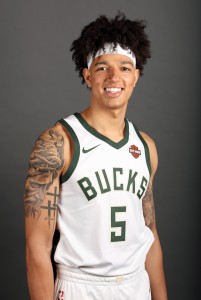 D.J. Wilson, Bucks (third year, $2,961,120): Wilson had some good games in the G League last season, but his overall NBAGL numbers were just okay for a first-round pick, and he only played 72 minutes in 22 NBA games. As noted above, teams often don’t give up this early on first-round picks, and Wilson’s cap charge is affordable enough that it’s probably worth securing him for at least one more year. This isn’t a slam-dunk though.
- Malachi Richardson, Raptors (fourth year, $2,581,597): When the Raptors sent Bruno Caboclo to Sacramento in exchange for Richardson at last season’s trade deadline, it reduced their 2017/18 payroll and increased their flexibility to make a move on the buyout market. But it also meant taking on Richardson’s guarantee for 2018/19, while Caboclo’s contract expired. Richardson seems unlikely to have any sort of role this season on a deep, talented Toronto team, and with the club at risk of being in the tax again in 2019/20, I don’t expect the Raps to lock in Richardson for another year.
- Guerschon Yabusele (third year, $3,117,240): While the “Dancing Bear” has no shortage of fans in Boston, it’s hard to see how he’ll earn playing time in a frontcourt that features Al Horford, Aron Baynes, Semi Ojeleye, Daniel Theis, and first-rounder Robert Williams — especially if Jayson Tatum and/or Gordon Hayward see significant minutes at the four. Yabusele has promise, but with the Celtics now in the tax, it might make sense to use his roster spot on a minimum-salary player starting in 2019/20.
- Malik Beasley, Nuggets (fourth year, $2,731,714): Denver’s lack of reliable backcourt depth bodes well for Beasley, who could parlay a solid Summer League showing into a regular backup role at shooting guard. The Nuggets don’t have serious tax concerns for 2019/20, so exercising Beasley’s modestly-priced option wouldn’t be a major risk. Still, it would be an easier decision if he’d shown more improvement in his sophomore season. Instead, he posted just 3.2 PPG on 41.0% shooting in 62 games in 2017/18.
- Justin Patton, Timberwolves (third year, $3,117,240): After missing nearly all of his rookie season due to foot problems, Patton has undergone another foot procedure this month, raising some doubts about his availability for the 2018/19 season. Nonetheless, I expect the Timberwolves will want to give Patton another chance to get healthy before cutting their losses on him, particularly since he may soon be the lone piece remaining from last summer’s trade with the Bulls.
For a full breakdown of this year’s decisions on 2019/20 rookie scale options, click here.
Photo courtesy of USA Today Sports Images.
Oldest, Youngest Players On NBA Rosters
The NBA’s second-oldest player called it a career earlier this offseason, as longtime Spurs guard Manu Ginobili announced his retirement. Meanwhile, the third-oldest player in the league – veteran guard Jason Terry – remains unsigned, and while he has expressed repeated interest in returning for a 20th NBA season, it’s not clear if or when he’ll get that opportunity.
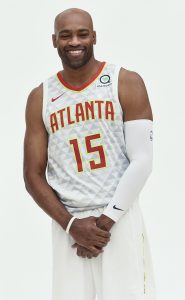 Although Ginobili has retired and Terry is without an NBA home, the league’s oldest player – 41-year-old Vince Carter – keeps on trucking, having officially signed with the Hawks last month. Here’s the full list of the 10 oldest players currently on NBA rosters, led by Carter:
- Vince Carter, Hawks (born 1/26/1977)
- Dirk Nowitzki, Mavericks (born 6/19/1978)
- Udonis Haslem, Heat (born 6/9/1980)
- Pau Gasol, Spurs (born 7/6/1980)
- Kyle Korver, Cavaliers (born 3/17/1981)
- Zach Randolph, Kings (born 7/16/1981)
- Jose Calderon, Pistons (born 9/28/1981)
- Dwyane Wade, Heat (born 1/17/1982)
- Tony Parker, Hornets (born 5/17/1982)
- Nene, Rockets (born 9/13/1982)
On the other end of the spectrum, all 10 of the youngest players on NBA rosters were selected in the 2018 draft, which doesn’t come as a real surprise. Many undrafted free agents have gone right from college to an NBA roster within the last few months, but the youngest of this year’s rookies are the ones who left school after their freshman years — and most of those early entrants were strong enough prospects to be drafted.
Here are the 10 youngest players currently on NBA rosters:
- Isaac Bonga, Lakers (born 11/8/1999)
- Jaren Jackson Jr., Grizzlies (born 9/15/1999)
- Kevin Knox, Knicks (born 8/11/1999)
- Troy Brown, Wizards (born 7/28/1999)
- Anfernee Simons, Trail Blazers (born 6/8/1999)
- Zhaire Smith, Sixers (born 6/4/1999)
- Dzanan Musa, Nets (born 5/8/1999)
- Wendell Carter, Bulls (born 4/16/1999)
- Marvin Bagley III, Kings (born 3/14/1999)
- Luka Doncic, Mavericks (born 2/28/1999)
Photo courtesy of USA Today Sports Images.
Five Notable Veterans Not On NBA Camp Rosters
Training camp has begun for all 30 NBA teams, and while there will still be some roster shakeups to come, particularly if injuries start to pile up, most clubs have a pretty good sense of what their 15-man rosters will look like for the start of the regular season.
For veteran free agents, that means there are fewer viable landing spots than ever. Still, whether it happens before or after opening night, there are a number of unsigned players who seem like good bets to eventually sign with an NBA team.
Here are five of the most notable veterans who are without an NBA home for training camps this week:
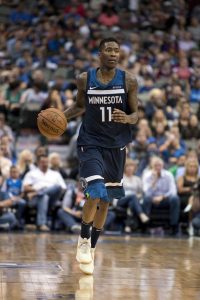 Jamal Crawford, G: Crawford said last week that he’s “staying ready and staying patient” as he considers where he’ll end up. The Warriors, Celtics, Sixers, and Lakers are reportedly among the teams that have shown interest, but haven’t made contract offers. Since turning down his $4.5MM option with the Timberwolves for 2018/19, the 38-year-old has talked about finding the perfect fit — we’ll see if that happens within the next few weeks.
- Nick Young, G/F: Having won his first NBA championship with the Warriors last season, Young is free to prioritize other considerations, whether that means seeking out the most lucrative offer, the most expansive role, or something else. It’s not clear exactly what he’s looking for, but it’d be a surprise if a 33-year-old who has made more than 39% of his three-pointers over the last two seasons doesn’t land somewhere.
- Corey Brewer, G/F: After spending most of last season with the Lakers, Brewer enjoyed a productive run with the Thunder down the stretch, averaging 10.1 PPG, 3.4 RPG, and 2.1 SPG in 18 contests (16 starts) to finish the regular season. So far, that run doesn’t appear to have earned the 32-year-old an NBA roster spot to start 2018/19, but perhaps – like Crawford – he’s holding out for the right fit.
- Joe Johnson, F: Johnson turned 37 years old in June and may not have a whole lot left in the tank — his .406 FG% and .276 3PT% for Utah and Houston last season were the worst marks of his career. Still, it’d be a surprise to see the seven-time All-Star fade away without bouncing back for one last run for a contender.
- Mario Chalmers, G: Even on a Grizzlies team that was in rebuilding mode for much of the 2017/18 campaign, Chalmers earned regular minutes, averaging 7.7 PPG and 3.0 APG in 66 games (21.5 MPG). The 32-year-old is now another year removed from his Achilles tear, but has yet to line up a new NBA job.
Ten more noteworthy veterans who remain unsigned:
- Quincy Acy, F/C
- Arron Afflalo, G/F
- Luke Babbitt, F
- Jordan Crawford, G
- Richard Jefferson, F
- Ty Lawson, G
- Jameer Nelson, G
- Willie Reed, F/C
- Ramon Sessions, G
- Jason Terry, G
Photo courtesy of USA Today Sports Images.
Checking In On NBA’s Camp Roster Counts
With training camps underway across the NBA, most teams have filled their 20-man offseason squads, leaving just a small handful of open roster spots around the league. While teams can carry 20 players for now, they’ll have to trim their rosters to a maximum of 17 players (15 on standard contracts and two on two-way deals) before the 2018/19 regular season begins.
Here’s a brief breakdown of each team’s current roster situation:
Teams with 15 guaranteed contracts and two two-way contracts:
- Atlanta Hawks
- Boston Celtics
- Dallas Mavericks
- Denver Nuggets
- Detroit Pistons
- Los Angeles Clippers
While it’s possible that these teams could waive a player on a guaranteed contract or make a change to their two-way contract slots, their rosters look fairly set for the start of the season. The one exception is the Clippers — with Patrick Beverley on a non-guaranteed contract, L.A. will have to trade or release at least one guaranteed salary in order to fit Beverley on the 15-man squad.
Teams with 15 guaranteed contracts and at least one open two-way contract slot:
- Brooklyn Nets
- Portland Trail Blazers
- Sacramento Kings
The 15-man rosters for these clubs look fairly set, but they each still have a two-way opening to fill, perhaps with one of their camp invitees.
Teams with 13 or 14 guaranteed contracts and two two-way contracts:
- Cleveland Cavaliers
- Indiana Pacers
- Los Angeles Lakers
- Miami Heat
- Milwaukee Bucks
- Minnesota Timberwolves
- New York Knicks
- Oklahoma City Thunder
- Orlando Magic
- Philadelphia 76ers
- San Antonio Spurs
- Utah Jazz
- Washington Wizards
All of these teams are carrying 14 guaranteed contracts except for the Timberwolves – who have 13, plus James Nunnally‘s partially guaranteed deal – and the Spurs, who still technically have Manu Ginobili under contract as their 15th guaranteed salary.
With Nunnally a near-lock to make Minnesota’s roster, and Ginobili certain to be waived at some point, those two teams will find themselves in the same situation as every other team on this list, with 14 roster players and a pair of two-way guys. Some of these clubs will carry a 15th man, giving some of their non-guaranteed players a chance to compete for that spot. Others will keep their 15th roster spot open to start the season in order to save a little money.
Teams with fewer than 15 guaranteed contracts and fewer than two two-way contracts:
- Charlotte Hornets
- Chicago Bulls
- Golden State Warriors
- Houston Rockets
- Memphis Grizzlies
- New Orleans Pelicans
- Phoenix Suns
- Toronto Raptors
There may be multiple roster spots up for grabs on some of these teams, such as the Pelicans, who only have 12 fully guaranteed contracts and one two-way deal. The Rockets, meanwhile, also have just 12 fully guaranteed deals on their books – though Michael Carter-Williams has a substantial partial guarantee – and are one of the only NBA teams without a two-way player signed so far.
For a full breakdown of the roster counts for each NBA team, be sure to check out our roster counts page, which is updated daily. Our lists of non-guaranteed contracts and two-way contracts by team may also be useful reference points.
Weekly Mailbag: 9/17/18 – 9/23/18
We have an opportunity for you to hit us up with your questions in this, our weekly mailbag feature. Have a question regarding player movement, the salary cap or the NBA draft? Drop us a line at HoopsRumorsMailbag@Gmail.com.
Besides Jimmy Butler, who is and who should be on the radar of the Brooklyn Nets? — D-Rock, via Twitter
The Nets haven’t been successful for a long time, so it was a bit of a surprise to see them included on the list of preferred destinations Butler submitted to the Timberwolves when he made his trade request. Brooklyn has less than $17MM committed right now for 2019/20, although that number could rise depending on what Allen Crabbe does with his $18.5MM player option and how the team handles D’Angelo Russell and Rondae Hollis-Jefferson. Regardless, the Nets will be in position to offer at least one max deal to an extremely talented free agent class available. It’s hard to say specifically who they will be looking at between now and next summer, but when the next Butler-style situation crops up with an unhappy star — and it’s been a frequent occurrence of late — Brooklyn will be in position to pounce.
Do you think the Spurs will be championship contenders this season with the addition of DeMar DeRozan? Kawhi Leonard hardly played last season and yet the Spurs played well.– Greg Dizon
Championship contender is a hard level to define in an era where the Warriors have dominated, but the Spurs should be better than casual fans probably expect. Leonard was a non-factor last season, playing in just nine games, but San Antonio still posted a 47-win season and finished just two games behind the third seed. DeRozan is a four-time All-Star who will help replace some of Leonard’s scoring punch. Jakob Poeltl, who was acquired in the same deal, with bring some youthful energy to a veteran front line, and the return of Marco Belinelli bolsters the outside shooting. The Spurs may not be in the mix for the NBA title, but they should remain a factor in the playoff race and could have home court advantage in a first-round series.
Why hasn’t anybody signed Jamal Crawford yet? Can’t someone use an explosive scorer off the bench? — Bobby M, via Twitter
There was a report at the start of the week that Crawford and the Celtics have “mutual interest,” but nothing has happened yet on that front. Boston may have a roster spot open after Jabari Bird‘s legal troubles, and Crawford could fill the team’s need for more 3-point shooting. The Sixers, Warriors and Lakers have also shown interest, Marc J. Spears of the Undefeated reported this week. Crawford is still getting paid by the Hawks as part of last year’s buyout, so he doesn’t have to be in a hurry to find a new team. Expect him to land a job with a contender before the season starts.
Community Shootaround: Tom Thibodeau’s Future
Now that Tom Thibodeau’s most prized addition appears headed out of Minnesota, should the coach and president of basketball operations be right behind?
The Jimmy Butler saga appears headed to an inevitable conclusion after a week that began with him making a trade request and ended with the front office granting him permission to skip what would have been an awkward media day on Monday. Shams Charania of The Athletic confirmed tonight that the team is now “aligning its organizational focus” toward trading Butler (Twitter link).
Wolves owner Glen Taylor confirmed Friday that Butler is available and is advising rival owners to make trade offers directly to him if necessary. That followed news earlier in the day that the organization wasn’t listening to teams that were calling about Butler.
Those conflicting reports suggest a rift in the front office that’s just as big as the one rumored to be in the locker room. And it’s not hard to figure out who’s on which side. Thibodeau has been a long-time supporter of Butler dating back to their days in Chicago. He also understands that his chances of returning to the playoffs — and maybe keeping his job — are much better with Butler on the roster.
However, Butler’s intense attitude hasn’t been good for team chemistry. There have been reports of frequent clashes with young stars Karl-Anthony Towns and Andrew Wiggins, and Charania suggested this week that Towns wouldn’t commit to an extension until he was sure Butler wouldn’t be back. Tonight’s announcement that Towns has accepted a five-year, supermax contract could be the surest sign yet that Butler’s fate is sealed.
But if Butler is gone, is there much of an argument for keeping Thibodeau? He’s the architect of the current “Timber-Bulls” roster that brought former Chicago players Derrick Rose, Taj Gibson and Luol Deng to Minnesota along with Butler. He has a 78-86 record in two seasons with Minnesota, and the veteran-laden roster he has helped to assemble doesn’t fit the timeline of an organization that figures to be constructed around its two young stars.
We want to get your opinion. Should the Wolves get rid of Thibodeau now or should they be patient and see if he can have create a better relationship between the younger and older factions once Butler is gone? Please leave your responses in the space below.
2018 Offseason In Review: Dallas Mavericks
Hoops Rumors is breaking down the 2018 offseason for all 30 NBA teams, revisiting the summer’s free agent signings, trades, draft picks, departures, and more. We’ll evaluate each team’s moves from the last several months and look ahead to what the 2018/19 season holds for all 30 franchises. Today, we’re focusing on the Dallas Mavericks.
Signings: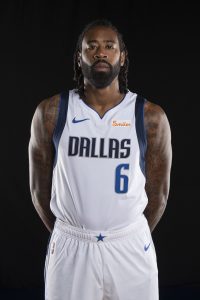
- Standard contracts:
- DeAndre Jordan: One year, $22.9MM. Signed using cap space.
- Dirk Nowitzki: One year, $5MM. Signed using cap space.
- Ryan Broekhoff: Two years, minimum salary. Second year non-guaranteed. Signed using minimum salary exception.
- Devin Harris: One year, minimum salary. Signed using minimum salary exception.
- Salah Mejri: One year, minimum salary. Signed using minimum salary exception.
- Two-way contracts:
- Non-guaranteed camp contracts:
- Jalen Jones: One year, minimum salary.
- Codi Miller-McIntyre: One year, minimum salary.
- Ding Yanyuhang: One year, minimum salary.
- Notes: Terry Larrier signed camp deal and was later waived; Donte Ingram has reportedly agreed to camp deal.
Trades:
- Acquired the draft rights to Luka Doncic (No. 3 pick) from the Hawks in exchange for the draft rights to Trae Young (No. 5 pick) and the Mavericks’ 2019 first-round pick (top-5 protected).
- Acquired the draft rights to Ray Spalding (No. 56 pick) and Kostas Antetokounmpo (No. 60 pick) from the Sixers in exchange for the draft rights to Shake Milton (No. 54 pick).
- Acquired the draft rights to Maarty Leunen and cash ($50K) from the Clippers in exchange for Johnathan Motley and the draft rights to Renaldas Seibutis.
- Acquired Chinanu Onuaku, cash ($1,544,951), and the right to swap the Warriors’ 2020 second-round pick for the Rockets’ 2020 second-round pick from the Rockets in exchange for the draft rights to Maarty Leunen.
- Note: Onuaku later waived.
Draft picks:
- 1-3: Luka Doncic — Signed to rookie contract.
- 2-33: Jalen Brunson — Signed to four-year, $6.11MM contract. First three years guaranteed. Signed using cap space.
- 2-56: Ray Spalding — Signed to four-year, minimum salary contract. First year guaranteed. Signed using cap space.
- 2-60: Kostas Antetokounmpo — Signed to two-way contract.
Departing players:
- Kyle Collinsworth (waived)
- Seth Curry
- Yogi Ferrell
- Aaron Harrison
- Doug McDermott
- Johnathan Motley
- Nerlens Noel
Other offseason news:
- Sanctioned by NBA for workplace misconduct by former and current employees.
Salary cap situation:
- Used cap space; now over the cap.
- Carrying approximately $104.8MM in guaranteed salaries.
- Full room exception ($4.45MM) still available.
Check out the Dallas Mavericks’ full roster and depth chart at RosterResource.com.
Story of the summer: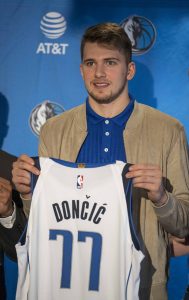
The future has arrived in Dallas, and the Mavericks were willing to be aggressive on draft night to make it happen. The team traded up to the No. 3 spot to nab European star Luka Doncic, who is the reigning EuroLeague MVP at age 19. It cost Dallas the No. 5 pick plus next year’s first-rounder [top five protected], but the price will be well worth it if Doncic develops into what the Mavericks expect.
Team officials, including normally reserved coach Rick Carlisle, are already raving about Doncic’s potential as both a scorer and a creator for the offense. He will team with last year’s star rookie, Dennis Smith, to create one of the NBA’s best young backcourts and provide a foundation for the Mavericks to rebuild around.
The Dallas media expect Doncic to become a strong candidate for Rookie of the Year honors, comparing him to last year’s winner, Ben Simmons, but with a better shooting touch. Doncic tied for third in a Rookie of the Year poll among his fellow draftees and is the current favorite to win the award in odds set by the sportsbook company Bovada.
Hoops Rumors Originals: 9/15/18 – 9/22/18
Every week, the writing team here at Hoops Rumors creates original content to complement our news feed. Below are our segments and features from the past seven days:
- In three Community Shootaround posts, we asked:
- What does the future hold for the Timberwolves?
- What are the Spurs’ chances of making the playoffs this season?
- Will Jimmy Butler end up with another team this season?
- We continued our 2018 Offseason in Review, and analyzed the following teams: