
Offseason In Review: Portland Trail Blazers
Hoops Rumors is in the process of looking back at each team’s offseason, from the end of the playoffs in June right up until opening night. Trades, free agent signings, draft picks, contract extensions, option decisions, camp invitees and more will be covered as we examine the moves each franchise made over the last several months.
Signings
- Cliff Alexander: Two years, $1.4MM. Signed via minimum salary exception. First year partially guaranteed for $100K.
- Al-Farouq Aminu: Four years, $30MM. Signed via cap space.
- Ed Davis: Three years, $20MM. Signed via cap room.
- Luis Montero: Three years, $2.414MM. Signed via cap room. First year partially guaranteed for $100K.
Extensions
Trades
- Acquired Gerald Henderson and Noah Vonleh from the Hornets in exchange for Nicolas Batum.
- Acquired Mason Plumlee and the draft rights to Pat Connaughton from the Nets in exchange for Steve Blake and the draft rights to Rondae Hollis-Jefferson.
- Acquired the draft rights to Daniel Diez from the Jazz in exchange for $1.5MM.
- Acquired Maurice Harkless from the Magic in exchange for Portland’s 2020 second round pick (top-55 protected).
- Acquired Mike Miller, Brendan Haywood, the better of the Lakers’ and Timberwolves’ 2019 second-round picks and Cleveland’s 2020 second-round pick from the Cavaliers in exchange for $75K. Miller and Haywood were subsequently waived.
Waiver Claims
- None
Draft Picks
- Pat Connaughton (Round 2, 41st overall). Signed via cap room for three years, $2.5MM. Third year is non-guaranteed.
- Daniel Diez (Round 2, 54th overall). Playing overseas.
Camp Invitees
Departing Players
- Arron Afflalo
- LaMarcus Aldridge
- Nicolas Batum
- Joel Freeland
- Alonzo Gee
- Robin Lopez
- Wesley Matthews
- Dorell Wright
Rookie Contract Option Decisions
- C.J. McCollum (fourth year, $3,219,579) — Exercised.
- Mason Plumlee (fourth year, $2,328,530) — Exercised.
- Noah Vonleh (third year, $2,751,360) — Exercised.
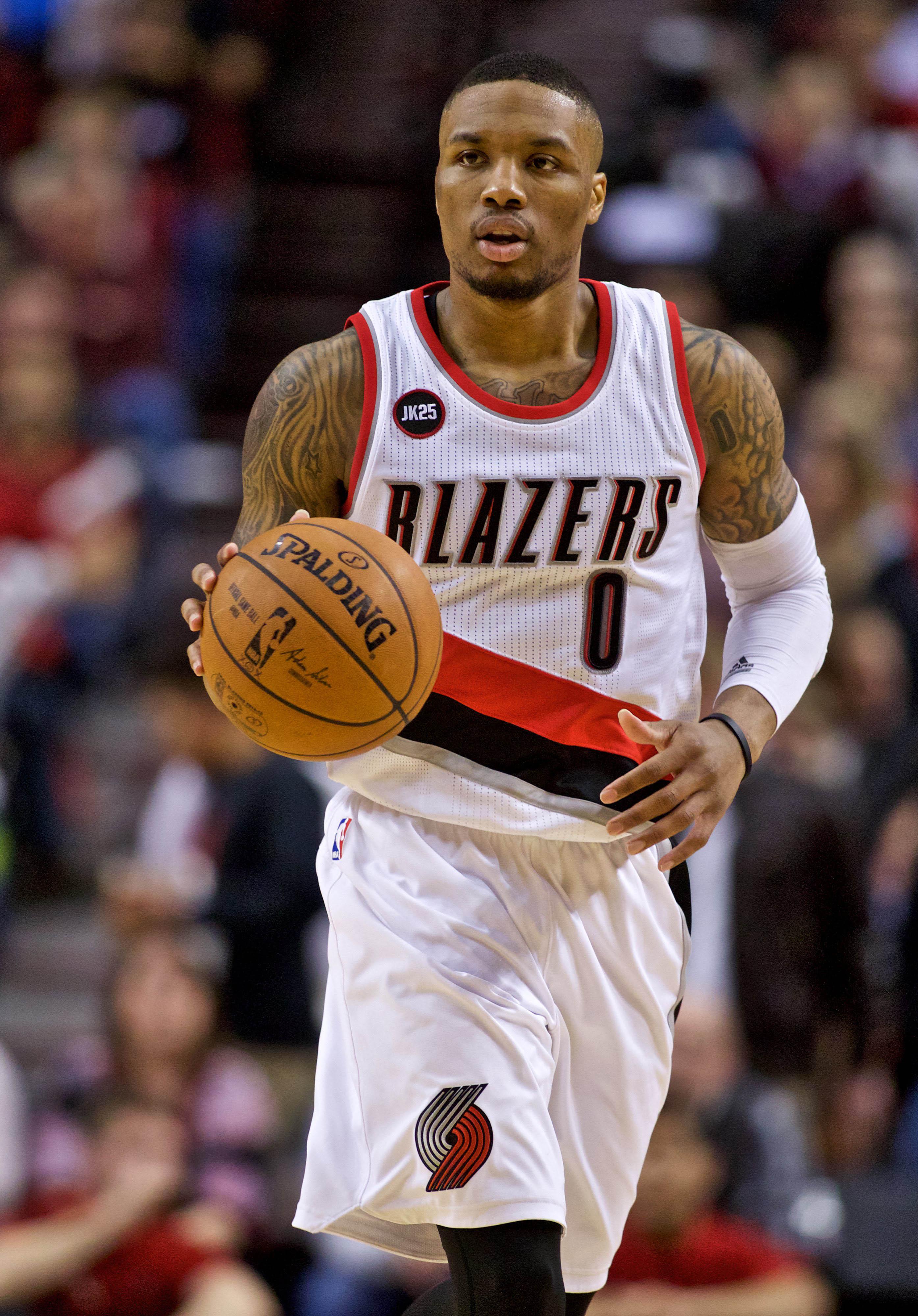
The Trail Blazers as a franchise have been snakebitten by injuries and bad luck over the years, and 2014/15 was no different. The team had begun 41-19 and was playing some of its best basketball when swingman Wesley Matthews went down with a devastating Achilles injury with just six weeks remaining in the regular season. Portland limped into the playoffs after going 10-12 the rest of the way. A first-round ouster at the hands of the Grizzlies sent the franchise into the offseason with far more questions than answers. Gone are all but one starter from a season ago, and the franchise has transformed from a possible contender to a lottery-bound team in the span of but a few months.
Unfortunately for Blazers fans, the offseason was defined more by whom they lost than by any positive strides they might have made. Power forward LaMarcus Aldridge departed as an unrestricted free agent for the Spurs, who offered him an opportunity to play in his home state as well as to contend for a title immediately. It doesn’t appear that the Blazers had a legitimate chance to retain Aldridge, whose top two choices were San Antonio and Phoenix, as Adrian Wojnarowski of Yahoo Sports reported. Players of Aldridge’s caliber are especially difficult to come by, so his departure truly stings. The franchise reportedly explored potential sign-and-trade deals for both Aldridge and Matthews, but found no takers, according to GM Neil Olshey.
Forty percent of the starting lineup Portland put on the floor for the final game of its series against Memphis headed east to New York. Shooting guard Arron Afflalo, who replaced the injured Matthews, signed with the Knicks for two years and $16MM. Robin Lopez is set to terrorize local mascots for the next four years to the tune of $54MM. Portland will certainly feel the departure of Afflalo and Lopez in the short term. But neither player figured to be a part of the team’s rebuild anyway, and maintaining cap flexibility as well as clearing slots for younger players to develop is far more important for the Blazers in the long run than trying to eke out a few more victories this season.
The same thinking applies to allowing Matthews to depart to Dallas for a maximum salary deal. Matthews’ production will be missed, but his Achilles injury puts his future reliability in doubt, and at 29 years of age, he doesn’t fit with Portland’s rebuilding motif. The subtraction of Matthews opens the door for third-year shooting guard C.J. McCollum, whose fourth year option was picked up by Portland, to slide into a starting role. McCollum has been fantastic thus far in 2015/16, averaging 20.1 points per game as of this writing. It certainly appears as though the Blazers have found a second star to pair alongside franchise player Damian Lillard.
Speaking of Lillard, there were reports that Aldridge was jealous of the attention he received, and while both players have publicly denied any rift, the Blazers gave the impression that Lillard was the face of the franchise, a move that couldn’t have sat well with Aldridge. Lillard is a fantastic player who has ice water running through his veins at crunch time, and he’s talented enough to anchor the franchise for years to come. That’s an assessment the team almost certainly agrees with judging by the five-year maximum salary extension the team signed him to this offseason.
Portland was quite active on the trade front this summer, swinging three deals of significance. The first shipped swingman Nicolas Batum to the Hornets in exchange for 2014 lottery pick Noah Vonleh and shooting guard Gerald Henderson. Batum’s versatility will be missed, but I love the team nabbing Vonleh, whom Charlotte surprisingly gave up on after he missed all but 25 games of his rookie campaign due to injury. The 20-year-old is still extremely raw, but Vonleh is certainly talented and could evolve into a solid replacement for Aldridge down the line.
While Vonleh represents the future for the team, acquiring Mason Plumlee from the Nets in exchange for the rights to No. 23 overall pick Rondae Hollis-Jefferson was a move for the present. Plumlee seemingly never earned the trust of Brooklyn coach Lionel Hollins and had regressed slightly during the 2014/15 season. Plumlee has the potential to be a breakout player for Portland, though his ceiling isn’t close to what Vonleh’s could be. While I like the addition of Plumlee, as well uber-athletic swingman Pat Connaughton, acquired in the same deal, Hollis-Jefferson would have been the perfect replacement for Matthews’ athleticism and defense. Portland picked up Vonleh’s third-year option and Plumlee’s fourth-year option, ensuring both will remain in the fold for at least one more season.
The franchise also swung a deal with Orlando that brought over 22-year-old small forward Maurice Harkless in exchange for a heavily protected 2020 second-rounder. Harkless has been a disappointment thus far in the league since being nabbed with the No. 15 overall pick back in 2012. A change of scenery could be just what the (shot) doctor ordered for Harkless, and if he doesn’t produce in Portland, the team could simply allow him to depart as a restricted free agent next summer without having given up much for taking a chance on him.
The Trail Blazers dipped their toes into the free agent pool and came away with Al-Farouq Aminu and Ed Davis for their efforts. Both players should help the team and contribute immediately, though four years for Aminu seems a bit risky given his career 6.6 PPG scoring average. Still, Aminu’s contract is front-loaded, and with the 6’9″ forward set to earn just $6.957MM in the final year, it’s hardly crippling or untradeable if things don’t work out.
Portland’s offseason was a mixture of disappointment and potential, though the franchise has clearly taken a step or two back talent-wise. The departures of Aldridge, Matthews and Batum certainly hurt, and while GM Neil Olshey made a number of savvy moves to try to plug the holes, the Blazers are no longer a Western Conference playoff contender. But there is hope for the future, and with Lillard and McCollum on the roster, the cupboard certainly isn’t bare. The organization is likely to have in excess of $40MM in cap space to play with next offseason, so a relatively quick turnaround to prominence is certainly within the realm of possibility.
The Basketball Insiders salary pages were used in the creation of this post.
Offseason In Review: Minnesota Timberwolves
Hoops Rumors is in the process of looking back at each team’s offseason, from the end of the playoffs in June right up until opening night. Trades, free agent signings, draft picks, contract extensions, option decisions, camp invitees and more will be covered as we examine the moves each franchise made over the last several months.
Signings
- Kevin Garnett: Two years, $16.5MM. Signed via Bird rights.
- Andre Miller: One year, $1.499MM. Signed via minimum salary exception.
- Tayshaun Prince: One year, $1.499MM. Signed via minimum salary exception.
Extensions
- None
Trades
- Acquired the draft rights to Tyus Jones (No. 24 overall pick) from the Cavaliers in exchange for the draft rights to Cedi Osman (31st overall pick), the draft rights to Rakeem Christmas (36th overall pick), and Minnesota’s 2019 second round pick.
- Acquired Damjan Rudez from the Pacers in exchange for Chase Budinger.
Waiver Claims
- None
Draft Picks
- Karl-Anthony Towns (Round 1, 1st overall). Signed via rookie exception to rookie scale contract.
- Tyus Jones (Round 1, 24th overall). Signed via rookie exception to rookie scale contract.
- Nemanja Bjelica (2010 Round 2, 35th overall). Signed for three years, $11.7MM via mid-level exception.
Camp Invitees
- Kleon Penn — Waived.
- Nick Wiggins — Waived.
Departing Players
Rookie Contract Option Decisions
- Anthony Bennett (fourth year, $7,318,289) — waived (declined by default)
- Gorgui Dieng (fourth year, $2,348,783) — exercised.
- Zach LaVine (third year, $2,240,880) — exercised.
- Shabazz Muhammad (fourth year, $3,046,299) — exercised.
- Adreian Payne (third year, $2,022,240) — exercised.
- Andrew Wiggins (third year, $6,006,600) — exercised.
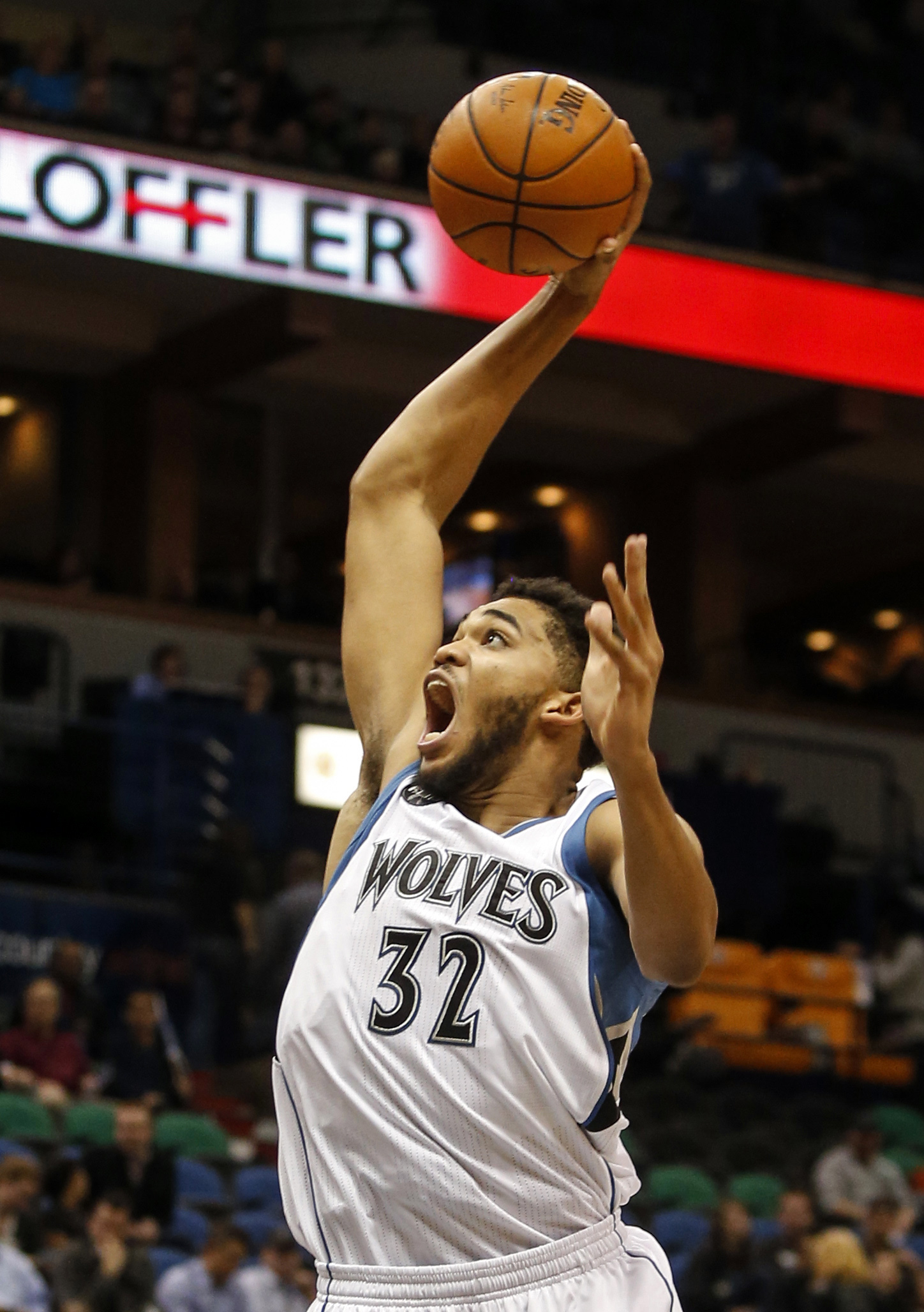
Following a decade of futility, the Timberwolves finally have real hope of becoming a perennial playoff contender in the near future. Via trade and the lottery, they have the top picks in the last two drafts and both have shown a world of talent. There are also some talented pieces around the duo of small forward Andrew Wiggins and power forward Karl-Anthony Towns. Tragically, the architect of the rebuilding project will not get to see his vision of the franchise’s rebirth come to fruition.
The Timberwolves, as well as the entire league, suffered a shocking blow when coach and president of basketball operations Flip Saunders died at the age of 60 on Oct. 25th due to complications from Hodgkin’s lymphoma. Originally, Saunders and his doctors were highly optimistic he would beat the disease. When it announced his diagnosis in August, the team referred to his ailment as a “very treatable and curable form of cancer” and said that he could continue his dual role. Saunders took a leave of absence the following month and when owner Glen Taylor revealed late in training camp that Saunders would not return this season, it was clear that the situation was dire.
Former Raptors coach Sam Mitchell, one of Saunders’ ex-players, replaced him on the bench while GM Milt Newton added the duties of running the team’s basketball operations. Mitchell’s future as the team’s coach beyond this season is unresolved but as Patrick Reusse of the Minneapolis Star Tribune recently pointed out, his lineup decisions in the early going suggest that he’s focused on the franchise’s long-term success.
It certainly helps to have a large building block, literally, to solidify that foundation. Their options, once they won the lottery, boiled down to two big men — Towns and Jahlil Okafor. In the weeks leading up to the draft, Saunders became enamored with Towns and there was no drama on draft night concerning their selection. Saunders fell in love with Towns’ versatility, noting that he could not only score in the low post but also hit shots from the perimeter. Saunders was also impressed with Towns’ ball handling and shot blocking.
The early-season results have fortified the notion that the Timberwolves made the right choice, even though Okafor and Kristaps Porzingis have also made strong impressions. He recorded eight double-doubles in the team’s first 13 games while averaging 2.4 blocks.
Minnesota added another first-rounder when it traded three second-rounders to the Cavaliers for the 24th overall pick. The Timberwolves made the trade for the rights to Duke point guard Tyus Jones, who had the floor vision and leadership to develop into a quality NBA point guard, as Eddie Scarito of Hoops Rumors noted in his Prospect Profile. Thus far, Jones hasn’t gotten much of an opportunity to show those skills as he’s buried behind starter Ricky Rubio, Zach LaVine and Andre Miller. But he adds depth to that position and may gain a more prominent role if the team decides to trade Rubio down the road.
That was the only trade the Timberwolves made during the offseason, other than a minor swap with the Pacers of two small forwards. They acquired Euro veteran Damjan Rudez for Chase Budinger, a move that cleared some salary cap space. Rudez is making $1.15MM this season while Budinger exercised a $5MM option on his contract, but the teams were able to swing the deal because of prior trade exceptions that they exercised.
A move of greater consequence came in July when Minnesota agreed to a three-year deal with one of Europe’s top big men, Nemanja Bjelica. Minnesota had held the power forward’s draft rights for five years and the reigning Euroleague MVP decided it was time to give the NBA a try. He negotiated a buyout agreement with his Turkish team with some monetary assistance from the Timberwolves. Bjelica earned a rotation spot during training camp, though he has been slowed recently by a knee injury.
The other notable moves the club made involved the signings of longtime veterans to help nurture the young talent on the roster, as well as divorcing themselves from young power forward Anthony Bennett. The frontcourt upgrades that the Timberwolves made removed any meaningful role for Bennett, whom the team acquired in the 2014 blockbuster with the Cavs that delivered Wiggins while shipping disgruntled Kevin Love out of town. A buyout agreement allowed Bennett to join the Raptors once he cleared waivers.
There was little debate that Kevin Garnett would re-sign with the club that originally drafted him and end his storied career in Minnesota. Garnett inked a two-year contract and has not only contributed on the court but has also served as an ideal mentor for Towns. Towns recently told NBA.com’s David Aldridge that he learns something new every day from Garnett.
Another old Saunders favorite, Tayshaun Prince, signed a one-year contract. Prince was Saunders’ starting small forward during his three years as head coach of the Pistons. Prince has played regularly in the early going, though his stats have been modest. But his impact also goes beyond the court, as he serves as a role model for the team’s wing players, particularly Wiggins.
Miller has similar responsibilities as a backup point guard, though he still has enough left in the tank to play effectively when oft-injured Rubio is sidelined. He can offer sage advice to LaVine and Jones and assist in their development.
The Timberwolves were not interested in making a lot of big moves this offseason. They were mainly concerned with molding their young core into a winning unit, with the aid of trusted veterans that could impart their knowledge to the likes of Towns and Wiggins. The future certainly looks bright, even though it’s likely Minnesota is headed for its 11th consecutive losing season. Sadly, the man responsible for the rebuilding project won’t be around to see the improvement, but his impact will be felt for many years to come.
Eddie Scarito contributed to this post. The Basketball Insiders salary pages were used in the creation of it.
Offseason In Review: Philadelphia 76ers
Hoops Rumors is in the process of looking back at each team’s offseason, from the end of the playoffs in June right up until opening night. Trades, free agent signings, draft picks, contract extensions, option decisions, camp invitees and more will be covered as we examine the moves each franchise made over the last several months.
Signings
- Pierre Jackson: Four years, $3.727MM. Signed via cap room. First year is fully guaranteed, remaining three years are non-guaranteed. Includes a team option for the final year. Subsequently waived.
- Kendall Marshall: Four years, $8MM. Signed via cap room. First year is fully guaranteed, remaining three years are non-guaranteed.
- T.J. McConnell: Four years, $3.503MM. Signed via cap room. First year is partially guaranteed for $100K, remaining three years are non-guaranteed. Includes a team option for the final year.
- Scottie Wilbekin: Four years, $3.503MM. Signed via cap room. First year is partially guaranteed for $200K, remaining three years are non-guaranteed. Includes a team option for the final year.
- Christian Wood: Four years, $3.503MM. Signed via cap room. First year is partially guaranteed for $50K, remaining three years are non-guaranteed. Includes a team option for the final year.
Extensions
- None
Trades
- Acquired Nik Stauskas, Carl Landry, Jason Thompson, Sacramento’s 2018 first-round pick and the right to swap first-rounders in 2016 and 2017 from the Kings in exchange for the rights to Arturas Gudaitis and Luka Mitrovic, the 47th and 60th picks, respectively, in this year’s NBA draft.
- Acquired Gerald Wallace, cash, and the right to swap the lesser of the 2016 first-round picks coming their way from the Heat and the Thunder for Golden State’s 2016 first-round pick from the Warriors in exchange for Thompson. Wallace was subsequently waived.
- Acquired cash and New York’s second round picks in 2020 and 2021 from the Knicks in exchange for the draft rights to Guillermo Hernangomez, the No. 35 overall pick in this year’s draft.
Waiver Claims
- None
Draft Picks
- Jahlil Okafor (Round 1, 3rd overall). Signed via rookie scale exception to rookie scale contract.
- Richaun Holmes (Round 2, 37th overall). Signed via cap room for four years, $4.203MM. Final two years are non-guaranteed. Final season is a team option.
- Arturas Gudaitis (Round 2, 47th overall). Traded to Sacramento. Signed overseas.
- J.P. Tokoto (Round 2, 58th overall). Signed via minimum-salary exception to a one-year, non-guaranteed, $525K deal. Waived.
- Luka Mitrovic (Round 2, 60th overall). Traded to Sacramento. Extended overseas contract.
- Jordan McRae (2014, Round 2, 58th overall). Signed via minimum-salary exception to a one-year, non-guaranteed, $525K deal. Waived.
Camp Invitees
Departing Players
- Luc Mbah a Moute
- Jason Richardson
- Thomas Robinson
- Glenn Robinson III
- Henry Sims
- Ish Smith
- Jason Thompson
- Gerald Wallace
Rookie Contract Option Decisions
- Joel Embiid (third year, $4,826,160) — Exercised.
- Nerlens Noel (fourth year, $4,384,490) — Exercised.
- Nik Stauskas (third year, $2,993,040) — Exercised.

“Two years away from being two years away.” That was ESPN’s Fran Fraschilla’s infamous analysis of Brazilian prospect Bruno Caboclo during the 2014 draft. That’s also an accurate timeline of when the Sixers can reasonably expect to be contenders for the playoffs in the Eastern Conference again. The Sam Hinkie regime envisions putting a perennial championship contender on the floor, and while you can start to see some of the pieces coming together, it’s starting to look like the plan may take longer than initially expected.
The team suffered a major setback in its quest toward a championship when it found out that center Joel Embiid, who was taken No. 3 overall in that same 2014 draft, needed a second surgery on his right foot and would most likely miss the entire 2015/16 campaign. The news didn’t get any better from there. Embiid reportedly put off surgery this summer to party and play basketball in Las Vegas and rumors swirled that the team has been frustrated with his attitude and insubordination. Hinkie apparently expressed his desire for Embiid to be more focused on his rehab, and the center’s diet and conditioning have reportedly worried the team as well. Some of the club’s minority owners are reportedly losing patience with Hinkie, but despite this and the Embiid setback, majority owner Josh Harris remains firmly in Hinkie’s corner.
When you examine Philadelphia’s transactions this summer, you can see why. Hinkie fleeced the Kings for a first-round pick in 2018 and the rights to swap picks in 2016 and 2017 when he acquired Jason Thompson, Carl Landry and 2014 No. 8 overall pick Nik Stauskas. The team then dealt Thompson to the Warriors for Gerald Wallace, who was waived later on in the summer, and snagged a pick swap in the process.
After the trade, Jake Fischer of SI Now reported that the Sixers were looking to move Landry, who is set to make $13MM over the remaining two years of his deal, and that if the team couldn’t find a trade partner, they would look to reach a buyout or waive him outright. Hinkie has since indicated that the team intends to keep him, citing the importance of his veteran voice on the team. The 31-year-old is still recovering from his offseason surgery and is expected to be out until 2016, but when the veteran does return to the court, he’ll be the team’s most experienced player by far.
Stauskas, whose option for the 2016/17 campaign the team picked up last month, has seen court time and the results have varied. During his first two games in Philly, he shot 41.7% from behind the arc, but he has only made just over 26.0% of his 3-pointers since and his player efficiency rating for the year sits lowly at 8.6. Still, he has improved since his dreadful rookie campaign and the coaching staff intends to give him the minutes to allow him to develop. The backcourt mate of “Sauce Castillo” was supposed to be Kendall Marshall, whom the team signed to a four-year, $8MM deal, but the 24-year-old Marshall is still recovering from a knee injury and hasn’t been able to suit up yet. Marshall has shown glimpses of the ability to be a starting-caliber point guard and Hinkie deserves recognition for the move, as the team will be paying somebody who has proven he belongs in the league less than the No.17 overall pick in the 2015 draft is set to earn over the the next four years.
Once he returns, Marshall may not get as many minutes as expected due to the presence of T.J. McConnell. The undrafted point guard out of Arizona has been a pleasant surprise this season and his contract, which will pay him roughly $3.5MM over the next four seasons, looks like one of the best bargains in the league, as Chuck Myron noted in a recent edition of the Hoops Rumors Weekly Mailbag. McConnell has been ravenous on the defensive end, frustrating opposing guards and making the hustle plays that you’d like to see every professional athlete at least go for. He’s averaging 5.1 rebounds, 1.2 steals and 0.4 blocks per game. He’s also dishing out 6.4 assists per contest and making nearly every team second guess its decision not to draft him.
The Sixers had mixed results with their selections in the 2015 draft. Second-rounder Richaun Holmes, who told Zach Links of Hoops Rumors prior to the draft that he thought he had a chance to be a first-rounder, looks like an NBA player, and he has impressed in limited minutes thus far. The team’s other second-round picks either had their rights traded away or have been waived.
The gem of the Sixers’ draft is Jahlil Okafor. Many of the team’s young players are projects, but this center came preassembled with the footwork of a seasoned veteran and an offensive game that allows him to contribute right away. He’s averaging 17.9 points and 7.7 rebounds per game and although he isn’t a great defender, he’s shown some nice defensive awareness, blocking 1.6 shots per contest. The 19-year-old has legitimate All-Star potential, but a peril with Okafor may be his ceiling. He doesn’t project to be the type of player who will dominate games and single-handedly elevate the team to real contender status, especially if he can’t transform himself into a tenacious rim protector.
The issue with drafting the center, as I discussed in the team’s offseason outlook, is the redundancies on the team, as the only other player who definitively belongs in a playoff contender’s rotation also plays the same position. Nerlens Noel is playing nearly two-thirds of his time this season at the four and he’s been excellent on the defensive end, masterfully denying passing lanes and smothering opposing power forwards inside the paint and on the perimeter. However, the experiment with Noel at the four will come to an end eventually, as he simply doesn’t possess the offensive skills to play the position. Concerns over the fit are prompting the team to ponder a change. Coach Brett Brown is thinking about playing Okafor at the four, but he’s obviously a center long-term, so playing him out of position carries the risk of stunting his growth.
Philadelphia doesn’t have all the answers right now and nearly all the pieces to the championship puzzle aren’t currently on the roster. The hope for the Sixers is that the bounty of draft picks they’ve acquired, along with team’s own lottery selections, will produce at least one true game-changer over the next few seasons. This offseason wasn’t about winning games; the team isn’t there yet. The Sixers still need to acquire that franchise player, and even if they get him, it’ll take a few years to start winning. Anthony Davis didn’t even make the playoffs until his third season. Same with Kevin Durant and LeBron James. Maybe the pingpong balls will land Philly’s way at the end of the season and the team lands a potential star like Ben Simmons. It’s still going to be a few years before the Sixers sniff the playoffs, let alone the finals, and by the time that happens, James’ reign over the Eastern Conference may be over, we will most likely have a new collective bargaining agreement, and the league’s landscape should look dramatically different. Hinkie, Harris and the rest of the club’s management know this and the team is simply remaining flexible with its roster until it’s time to strike.
Eddie Scarito contributed to this post. The Basketball Insiders salary pages were used in the creation of it.
Offseason In Review: Atlanta Hawks
Hoops Rumors is in the process of looking back at each team’s offseason, from the end of the playoffs in June right up until opening night. Trades, free agent signings, draft picks, contract extensions, option decisions, camp invitees and more will be covered as we examine the moves each franchise made over the last several months.
Signings
- Justin Holiday: Two years, $1.96MM. Signed via minimum-salary exception.
- Paul Millsap: Three years, $60.216MM. Signed via cap space. Third year is a player option.
- Lamar Patterson: Two years, $1.4MM. Signed via minimum-salary exception.
- Terran Petteway: Two years, $1.4MM. Signed via minimum-salary exception. First year partially guaranteed for $75K, second year is non-guaranteed. Waived.
- Jason Richardson: One year, $1.499MM. Signed via minimum-salary exception. Richardson subsequently retired and was waived by the team.
- Edy Tavares: Three years, $3.014MM. Signed via cap space. First two years are fully guaranteed, third year is non-guaranteed.
Extensions
- None
Trades
- Acquired Washington’s 2015 first round pick (No. 19 overall) and Washington’s second round picks in 2016 and 2019 from the Wizards in exchange for the Hawks’ 2015 first round pick (No. 15 overall).
- Acquired Tim Hardaway Jr. from the Knicks in exchange for Washington’s 2015 first round pick (No. 19 overall).
- Acquired Tiago Splitter from the Spurs in exchange for the draft rights to Georgios Printezis and Atlanta’s 2017 second round pick (top 55 protected).
Waiver Claims
- None
Draft Picks
- Marcus Eriksson (Round 2, 50th overall). — Playing overseas.
- Dimitrios Agravanis (Round 2, 59th overall). — Playing overseas.
Camp Invitees
- Earl Barron — Waived.
- DeQuan Jones — Waived.
- Arsalan Kazemi — Waived.
- Edgar Sosa — Waived.
Departing Players
Rookie Contract Option Decisions
- Tim Hardaway Jr. (fourth year, $2,281,605) — Exercised.
- Dennis Schröder (fourth year, $2,708,582) — Exercised.
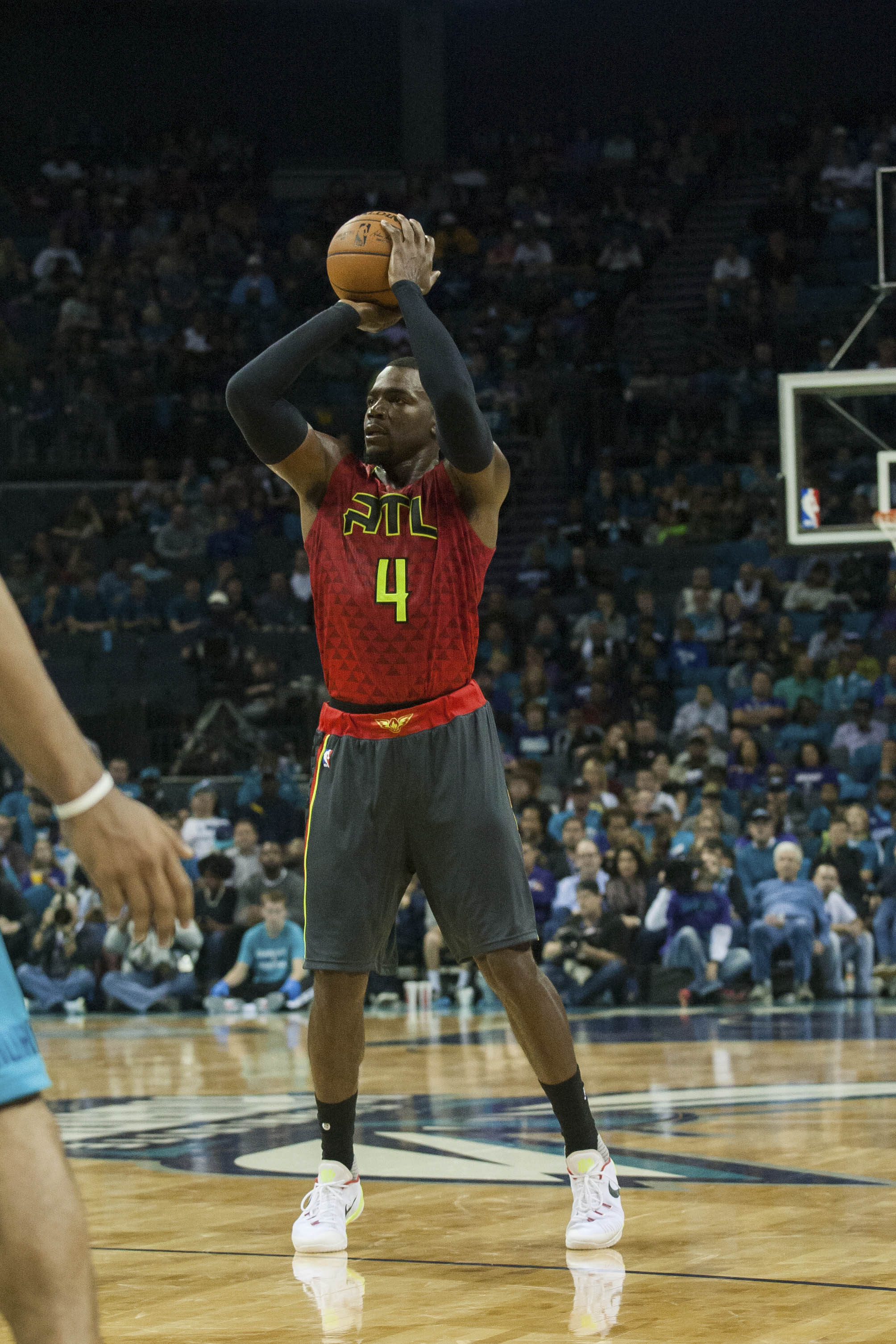
The Hawks won a franchise-best 60 games in 2014/15, but the campaign ended with disappointment when the Cavaliers eliminated them in the Eastern Conference Finals. Injuries certainly played a role in Atlanta’s ouster, including the loss of swingman Thabo Sefolosha, who missed the entire 2014/15 playoffs after suffering a broken leg at the hands of police outside a New York City nightclub back in April. The franchise began its offseason with the free agent departure of a significant piece when DeMarre Carroll left for the Raptors and their four-year, $58MM offer, making a repeat of last season’s success an even more daunting task.
Atlanta was in a bit of a financial bind entering the summer, with Carroll and Paul Millsap both unrestricted free agents, and the team possessing only their Early Bird Rights, meaning the Hawks couldn’t exceed the salary cap to re-sign them. Coach/executive Mike Budenholzer had said before the 2014/15 season that the team wanted to keep Millsap, whose previous two-year, $19MM deal from 2013 turned out to be one of the most team-friendly arrangements in recent memory. Budenholzer held true to his word and Millsap re-joined the team to the tune of three years and $60.216MM.
It will certainly be difficult to replace the defense, energy and outside shooting of Carroll, but I believe Atlanta chose wisely in deciding to retain Millsap over him. The 30-year-old Millsap has been a remarkably consistent performer in the NBA for the last five seasons, and a three-year commitment to him isn’t a tremendous risk, though he has almost certainly reached his plateau as a player and is more than likely going to begin regressing toward the end of this pact. But with the salary cap set to see a significant increase next summer, his deal won’t cripple the franchise if he underperforms.
While I certainly like what Carroll brings to the hardwood as a player, he has only averaged double-figure scoring twice in his six-year NBA career, topping out with the 12.6 points per game he contributed last season. Carroll’s value does stretch beyond the box score, but a four-year deal with an average annual value of close to $15MM seems a bit risky for a late-blooming player who is on the threshold of his 30s. The Hawks’ offer to the small forward reportedly topped out at $50MM on a four-year arrangement, as Kevin Arnovitz of ESPN.com reported. That still would have been a risk, but a much more palatable one for the franchise from my perspective.
Atlanta also made a number of low-risk, low-reward signings over the summer, adding Justin Holiday, Edy Tavares, Lamar Patterson and Jason Richardson, though Richardson subsequently retired, and the team waived him. Out of the group, Tavares is the most intriguing given his height (7’3″) and youth (23 years old). He’s most definitely a project, and it could be years before he produces in the NBA, if ever.
The Hawks made three trades over the summer, acquiring Tiago Splitter from San Antonio for virtually nothing, swapping first-round picks with the Wizards, and flipping Washington’s pick to the Knicks for swingman Tim Hardaway Jr. Landing Splitter was a solid move, especially given how little Atlanta gave up to acquire him. Given the similarities between the Hawks’ and Spurs’ systems, Splitter should fit right in and become a solid rotation player for Budenholzer. The only negative is that he’s not on an expiring contract and will earn $8.55MM in 2016/17. That’s hardly a king’s ransom, but it’s a significant amount for a team that, with Splitter taken into account, has about $52.7MM in guaranteed salary committed for 2016/17. That amount doesn’t include center Al Horford, who is slated to become an unrestricted free agent after this season is done.
The most questionable move of the Hawks’ offseason was the acquisition of Hardaway, a one-dimensional player who regressed during his second season with the Knicks, and who doesn’t fit a clear need for the team. I firmly believe that Atlanta would have been better served to hold onto its original pick, which the Wizards used to select Kelly Oubre. Oubre has a much higher upside than Hardaway, and he also has the capability of developing into a legitimate two-way threat in the NBA. I would even go as far as to say that the team would have been better served to stand pat after its first pick swap and nab Jerian Grant at No. 19 instead of letting him go to the Knicks. Hardaway has yet to log a single regular season minute for the team as of this writing, making the trade even more of a head-scratcher from my perspective.
Drafting Grant would have also had an important secondary benefit for the club, as it would have provided the flexibility to explore potential trades for point guard Dennis Schröder. The team currently has no plans to part ways with the young German point guard, but he is stuck behind Jeff Teague on the depth chart, something that has reportedly displeased Schröder, with the player telling Sport Bild magazine in his native Germany that he would “explore other possibilities” if the Hawks don’t give him a chance to start. However, Schröder did make it clear that he likes playing in Atlanta. The 22-year-old is under contract through 2016/17, after which he is eligible to become a restricted free agent, so there is no pressure on the Hawks to deal him quite yet, though he is one of their most valuable trade assets, and he could bring back a significant return if they trade him. Atlanta exercised both his and Hardaway’s fourth-year rookie scale options prior to the deadline this month.
The franchise will have a major decision to make this coming offseason regarding Horford. He will almost assuredly command a maximum salary, or close to it. If Horford were to depart, the franchise would be hard-pressed to find a player who could replace him, though he is another player about to enter his 30s, and big men don’t tend to age well in the league.
Atlanta is unlikely to duplicate its magic from 2014/15, and the franchise was more than likely headed back toward the pack in the East prior to losing Carroll in free agency anyway. While a playoff berth is certainly attainable, it would be a surprise if the team reached the Eastern Conference Finals for a second straight campaign. The offseason was a mixed bag for the team, with retaining Millsap a success while the draft day trade for Hardaway tarnishes it somewhat. Regardless of anyone’s opinion of the trade, it’s difficult to argue that Atlanta didn’t regress from last season talent-wise. With numerous other Eastern Conference teams improving themselves over the summer, the Hawks and their fans may be left wondering what might have been during the 2014/15 postseason if the team had remained healthy.
The Basketball Insiders salary pages were used in the creation of this post.
Offseason In Review: Brooklyn Nets
Hoops Rumors is in the process of looking back at each team’s offseason, from the end of the playoffs in June right up until opening night. Trades, free agent signings, draft picks, contract extensions, option decisions, camp invitees and more will be covered as we examine the moves each franchise made over the last several months.
Signings
- Andrea Bargnani: Two years, $2.9MM. Signed via minimum salary exception. Second year is a player option.
- Ryan Boatright: Two years, $1.4MM. Signed via minimum salary exception. First year includes $75K in partially guaranteed salary and the second year is non-guaranteed. Waived.
- Wayne Ellington: Two years, $3MM. Signed via taxpayer’s mid-level exception. Second year is a player option.
- Shane Larkin: Two years, $3MM. Signed via taxpayer’s mid-level exception. Second year is a player option.
- Brook Lopez: Three years, $63MM. Signed via Bird rights.
- Willie Reed: One-year, $947K. Signed via minimum salary exception. Includes partial guarantee of $500K.
- Thomas Robinson: Two years, $2MM. Signed via minimum salary exception. Second year is a player option.
- Donald Sloan: One year, $947K. Signed via minimum salary exception. Includes partial guarantee of $50K.
- Thaddeus Young: Four years, $50MM. Signed via Bird rights. Fourth season is a player option.
Extensions
- None
Trades
- Acquired the rights to 2015 No. 23 overall pick Rondae-Hollis Jefferson and Steve Blake from the Trail Blazers in exchange for Mason Plumlee and the rights to Pat Connaughton, the 41st overall pick in the 2015 Draft.
- Acquired Quincy Miller from the Pistons in exchange for Blake. Miller was subsequently waived.
Waiver Claims
- None
Draft Picks
- Chris McCullough (Round 1, 29th overall). Signed via rookie exception to rookie scale contract.
Camp Invitees
Departing Players
Rookie Contract Option Decisions
- Sergey Karasev (fourth year, $2,463,754) — Declined.
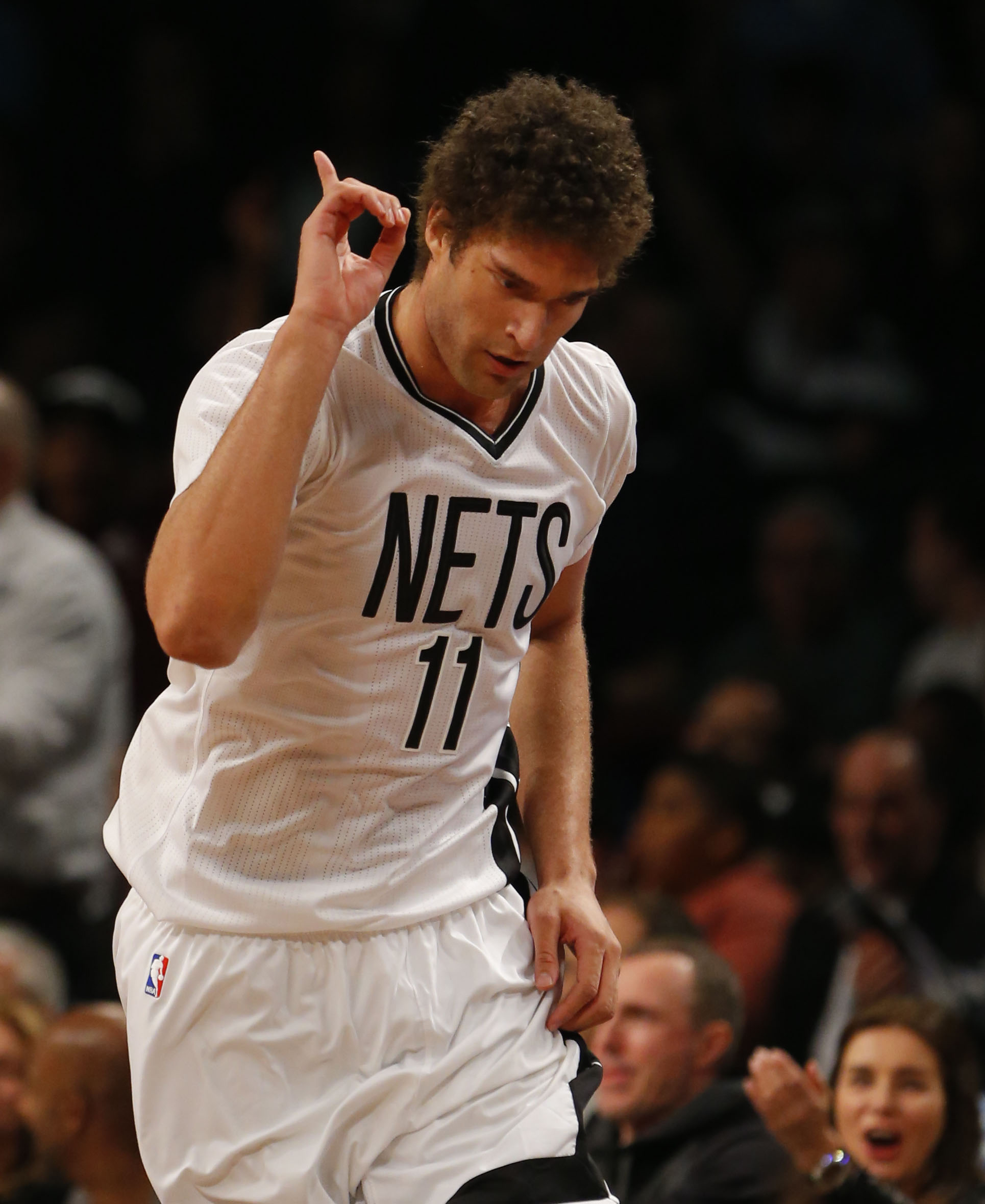
The Nets as a franchise are still recovering from their ill-advised attempt to win a title by going all-in on an aging roster that never gelled. The aging group of Kevin Garnett, Paul Pierce, Jason Terry, Joe Johnson and Deron Williams won a total of one playoff series for Brooklyn during their tenure, and they cost the franchise numerous future first-round picks to assemble, which will serve to make the team’s current rebuilding process especially daunting. While I appreciate the verve the Nets had in shooting for the stars, the franchise has been set back years as a result.
Brooklyn is attempting to move on and pick up the pieces as best it can. All of the players from the ill-advised Boston deal are gone, as is Deron Williams, whom the Nets waived via the stretch provision this offseason, ending his difficult and disappointing tenure with the team. The point guard was acquired to anchor the franchise, as well as to drum up extra interest in the team since the Nets, moving from New Jersey to Brooklyn, desired to make a dent in the Knicks’ hold over New York basketball fans. Injuries, a questionable work ethic and an occasionally combative attitude toward coaching sunk Williams, reducing him to a shell of the player he was while with the Jazz. Waiving Williams will cost the team $5,474,787 per season through 2019/20, but with the salary cap rising next season the team shouldn’t feel the sting that much. Plus, all parties are better served by breaking up and moving on.
Entering this offseason, the Nets’ plan was relatively straightforward. The team wanted to get younger, cheaper and to work its way from out of the pile of player-friendly deals that it had committed to with less than successful results. Depending on your perception of the values of Brook Lopez and Thaddeus Young, the team was relatively successful at achieving this goal over the offseason.
Lopez, who had been the subject of copious trade rumors involving the Thunder for the better part of the 2013/14 campaign, is one of the top offensive-minded centers in the game, but he remains a constant injury concern, having missed a combined 160 contests over the past four seasons. But inking the 27-year-old to a three-year pact will temper the risk the franchise is taking, and the escalating salary cap will also serve to provide some breathing room for the front office, not only to try and build the roster around Lopez, but also to find a suitable fill-in if the big man were to miss significant time in the future due to injury. I’m not quite sure Lopez is worth an average annual salary of $21MM, given his less-than-stellar defense and merely adequate rebounding, but such are the economics of today’s game. Plus, he’s a player the Nets could ultimately not afford to lose, especially given their lack of future draft picks.
With the Nets unable to go after the top names on the free agent market this offseason, retaining their own players became paramount for the team if it wished to have any chance at remaining competitive in 2015/16. That mindset clearly influenced the team’s negotiations with Lopez, as well as unrestricted free agent combo forward Thaddeus Young. Young is a solid complementary player who hasn’t had the opportunity to play alongside much talent over the course of his career, and he remains underrated as a result. Young isn’t a franchise-altering talent, but if utilized the proper way, he can be a solid producer and valuable rotation piece. His four-year, $50MM deal, which includes a player option for the final season, is a fair one based on today’s market, though he’s destined to be a productive player on what are likely to be some lousy Brooklyn teams the next few seasons.
The team supplemented the signings of Young and Lopez with a number of smaller deals for players who aren’t likely to do more than fill a roster slot for the near future. Brooklyn added oft-injured power forward Andrea Bargnani, under-performing shooting guard Wayne Ellington, reserve playmaker Donald Sloan, combo forward Thomas Robinson, as well as promising young point guard Shane Larkin this offseason. I do like the addition of Larkin, a player who in the right system could be successful in the NBA. With Williams gone and Jarrett Jack the starter, the Nets need to improve at the one spot, and Larkin may offer a glimmer of hope in that regard, though his ceiling is likely of a solid reserve, and not a starting-caliber guard.
Brooklyn also took to the trade market this summer in an effort to reshape its roster, dealing away promising young big man Mason Plumlee to the Blazers in exchange for the draft rights to Arizona defensive whiz Rondae Hollis-Jefferson. This was a risky but interesting move by the team. Plumlee is a talented big who has the potential to be a breakout player, but he wasn’t a favorite of coach Lionel Hollins, and he will be better served by a change of scenery. But for the Nets to deal away their best option in the event that Lopez goes down again may invite some second guessing at some point down the line.
If the team did have to part ways with Plumlee, adding an uber-athletic wing who can defend multiple positions like Hollis-Jefferson was a solid move for the future. Likewise the team taking a chance on injured Syracuse power forward Chris McCullough with the No. 29 overall pick in this year’s draft. McCullough is extremely raw, with only 16 games of college experience under his belt, and some level of uncertainty exists about how well he’ll recover from the torn ACL he suffered last season. But if he is able to make a full recovery, the Nets landed themselves a player who had lottery potential at the bottom of the first round.
The Nets also needed to make a decision regarding Sergey Karasev‘s fourth year rookie scale option, and they elected not to exercise it. Karasev underwent season-ending surgery on his right knee in March, but he was ready in time for the start of this season. The 22-year-old nonetheless hasn’t been an integral part of the team’s rotation, and the Nets’ decision to decline the option despite their need to retain players says a lot about how the team values the Russian’s services. Rumors of his desire for a trade aren’t entirely surprising.
This is likely going to be a lost season for the franchise and its fanbase. The team likely improved its overall chemistry by parting ways with Williams, and it managed to tread water talent-wise by retaining Lopez and Young, though I doubt anyone would argue that this year’s Brooklyn squad is an improvement over last season’s. The team added some intriguing young pieces in McCullough and Hollis-Jefferson, whom the Nets desperately need to pan out, given their lack of draft picks and tradeable assets. The light on the horizon is that Brooklyn could have in the neighborhood of $40MM in cap space next summer, though it remains to be seen how attractive a free agent destination the team will be after what is likely to be a soul-crushing 2015/16 campaign.
The Basketball Insiders salary pages were used in the creation of this post.
Offseason In Review: Golden State Warriors
Hoops Rumors is in the process of looking back at each team’s offseason, from the end of the playoffs in June right up until opening night. Trades, free agent signings, draft picks, contract extensions, option decisions, camp invitees and more will be covered as we examine the moves each franchise made over the last several months.
Signings
- Leandro Barbosa: One year, $2.5MM. Signed via taxpayer mid-level exception.
- Ian Clark: One year, $947K. Signed via minimum salary exception. Partially guaranteed for $474K.
- Draymond Green: Five years, $82MM. Signed via Bird Rights.
Extensions
- None
Trades
- Acquired Gerald Wallace and Chris Babb from the Celtics in exchange for David Lee. Babb was subsequently waived.
- Acquired Jason Thompson from the Sixers in exchange for Wallace, $1MM in cash, and the right to swap Golden State’s 2016 first-round pick with the lesser of the 2016 first-round picks that the Heat and the Thunder owe Philadelphia.
Waiver Claims
- None
Draft Picks
- Kevon Looney (Round 1, 30th overall). Signed via rookie exception to rookie scale contract.
Camp Invitees
- Jarell Eddie — Waived.
- Ben Gordon — Waived.
- Xavier Henry — Waived.
- Tony Mitchell — Waived.
- Juwan Staten — Waived.
- Chris Udofia — Waived.
Departing Players
Rookie Contract Option Decisions
- None
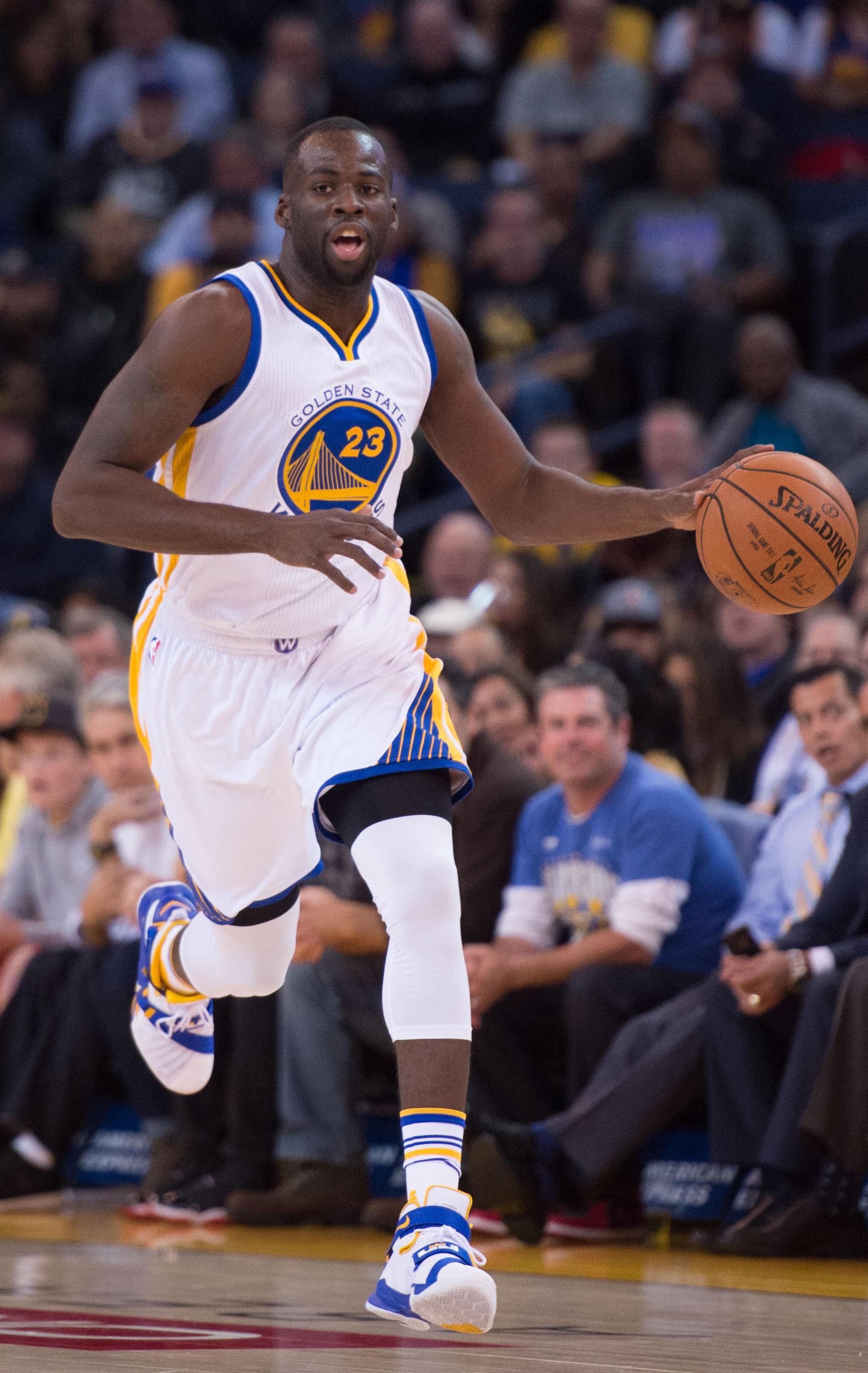
Teams that win 67 regular season games and the NBA championship usually have little room to improve. The 2015 offseason and the start of the 2015/16 season provide strong evidence that the Warriors are the exception to the rule.
Golden State has started 12-0 in spite of the absence of Steve Kerr, who was perhaps the team’s most significant offseason addition in 2014. That Luke Walton, who was no better than third in command last season behind Kerr and former top assistant Alvin Gentry, has been able to pilot the Warriors without a hiccup thus far is testament to the system Kerr put in place but more so to the Warriors front office, a collaborative group with GM Bob Myers in the lead role. Myers, the reigning Executive of the Year, delivered an encore performance as the team accomplished the two most critical player personnel tasks it faced this past summer.
The first was to secure Draymond Green for the long term. Little doubt existed, even amid rumors that tied him to his home-state Pistons, that the B.J. Armstrong client would remain with the Warriors, by dint of Golden State’s ability to match all competing bids in his restricted free agency. The questions were whether he would sign directly with the Warriors or with another team on an offer sheet, and just how close he would come to the maximum salary. Adrian Wojnarowski of Yahoo Sports raised the notion that the Warriors would prefer that if he signed for the max, he do so via offer sheet, thus absolving themselves of first-hand blame if Green were to end up making more than Thompson, who conceded to slightly less than the max on the extension he signed in 2014.
The Warriors wound up avoiding such a thorny scenario when Green somewhat surprisingly agreed to a deal with the Warriors that totals some $12MM less than the max over five years. Green was willing to take a discount to help keep the team together in the face of a mounting tax bill, as Marcus Thompson of the Bay Area News Group heard shortly before the start of free agency, but apparently the former 35th overall pick and the Warriors had their differences about just how much he should sacrifice. Regardless, Green’s value continues to escalate. He’s shooting 40.4% on 3-pointers after last season’s career-best 33.7% mark, and he’s suddenly become the team’s leader in assists, with 6.9 per game, almost double last season’s average of 3.7. Time will tell if those numbers are sustainable, but the 25-year-old has shown vast improvement with each passing year, and it looks like that trend will continue. He’s no longer the colossal bargain he was when he was making the minimum salary, but the Warriors are probably still underpaying him.
The opposite was true for the man Green replaced in the starting lineup last season. An offseason David Lee trade seemed inevitable as he disappeared from the rotation. If his sudden re-emergence in the Finals cast any doubt on that idea, it vanished mere hours after the Warriors won the title, when Marc Stein of ESPN.com reported that the Warriors and Lee’s reps had agreed to work together to find a new home for him. ESPN’s Zach Lowe reported shortly thereafter that the team’s cut of gate receipts from its run to the Finals were vast enough that the team would see fit to trade him and take a lesser salary in return rather than simply trading him into another team’s cap space and taking no salary back. That was fortuitous for the Warriors, since apparently no one made them an offer that would have taken his entire salary of almost $15.494MM off their hands. The Knicks and Lakers reportedly considered trading for the Mark Bartelstein client, but ultimately it was the Celtics who did so in a deal that took nearly full advantage of the salary-matching cushion and cleaved about a third of Lee’s salary from Golden State’s books. That was only step one, however.
It seemed almost obvious in the immediate wake of the deal that the Warriors would waive Gerald Wallace, whom they acquired in the Lee trade, and spread his salary via the stretch provision, a tool they couldn’t use with Lee because he signed his deal prior to the 2011 collective bargaining agreement. Stretching Wallace would have pushed the majority of his salary, and the associated tax burden, off to future seasons, when the tax threshold will be higher in accordance with the rising cap. Instead, the Warriors clung to Wallace and deftly flipped him to the Sixers in a trade that achieved the dual ends of lowering the payroll and adding a productive player. Essentially, the Warriors parlayed Lee into Jason Thompson through a pair of moves that saved Golden State nearly $8.6MM in salary and an estimated $22.1MM in luxury tax payments. The collateral costs were minimal: $1MM in cash to the Sixers plus a pick swap that only comes into play if the Heat or the Thunder end up with a better record than the Warriors do. Chris Babb came in the deal with the Celtics, but his salary was non-guaranteed and he didn’t make the Warriors out of training camp.
The primary benefit was financial, as Golden State has yet to find much of a need for Thompson in its already-stacked rotation, even though Andrew Bogut missed time with a concussion. Still, Thompson is at the ready, and while he lacks the offensive pop of Lee, the ex-King was a double-figure scorer three times with Sacramento and can capably perform should the need arise. He ultimately represents an insurance policy with a more sensible premium for Golden State. His salary also makes him a handier trade chip if such an opportunity presents itself.
The Warriors weren’t quite as frugal when they brought back Leandro Barbosa for $2.5MM this season. Clearly, Myers and company wanted to keep as much of last season’s roster as possible, even if it meant shelling out more than what it was worth for a 32-year-old who was out of the league for much of 2013/14, the season before he first joined Golden State. Barbosa saw just 14.7 minutes per game in the regular season and 10.9 in the playoffs last year. It’s possible that the Pelicans, reportedly likely to have interest thanks to Gentry, drove up his price, but even so, the Warriors might have found a better use for the roughly $1.5MM difference between what they’re spending on Barbosa and what they would be shelling out on a minimum-salary deal. That $1.5MM triggers an estimated $5.625MM in extra taxes.
First-round pick Kevon Looney, by contrast, costs only slightly more than the veteran’s minimum this season, so it made sense for the Warriors to keep their pick and use it on a player who would sign this year rather than going the draft-and-stash route. Looney is expected to miss about half the season after August hip surgery, but the Warriors nonetheless have a prospect they can develop once he gets healthy, and Green is a conspicuous reminder of how players drafted with a pick in the 30s can blossom.
The Warriors mastered the elusive art of building a championship roster. The task that began this summer is to sustain it, and they’ve so far proven just as adept.
Eddie Scarito contributed to this post. The Basketball Insiders salary pages were used in the creation of it.
Offseason In Review: Milwaukee Bucks
Hoops Rumors is in the process of looking back at each team’s offseason, from the end of the playoffs in June right up until opening night. Trades, free agent signings, draft picks, contract extensions, option decisions, camp invitees and more will be covered as we examine the moves each franchise made over the last several months.
Signings
- Chris Copeland: One year, $1.150MM. Signed via room exception.
- Khris Middleton: Five years, $70MM. Signed via Bird Rights. Fifth year is a player option.
- Greg Monroe: Three years, $51.438MM. Signed via cap room. Third year is a team option.
Extensions
Trades
- Acquired Washington’s 2020 second round pick (top 55 protected) from the Wizards in exchange for Jared Dudley.
- Acquired Dallas’ 2018 second round pick (top 55 protected) from the Mavericks in exchange for Zaza Pachulia.
- Acquired Greivis Vasquez from the Raptors in exchange for the Clippers’ 2017 first round pick and the Bucks’ 2015 second round pick (No. 46 overall).
- Acquired Caron Butler and Shawne Williams from the Pistons in exchange for Ersan Ilyasova. Butler and Williams were subsequently waived.
Waiver Claims
- None
Draft Picks
- Rashad Vaughn (Round 1, 17th overall). Signed via rookie scale exception to rookie scale contract.
Camp Invitees
- Jorge Gutierrez — Waived.
- Jon Horford — Waived.
- Marcus Landry — Waived.
- Josh Powell — Waived.
- Charlie Westbrook — Waived.
Departing Players
Rookie Contract Option Decisions
- Giannis Antetokounmpo (fourth year, $2,995,421) — Exercised.
- Michael Carter-Williams (fourth year, $3,183,526) — Exercised.
- Tyler Ennis (third year, $1,733,880) — Exercised.
- Jabari Parker (third year, $5,374,320) — Exercised.
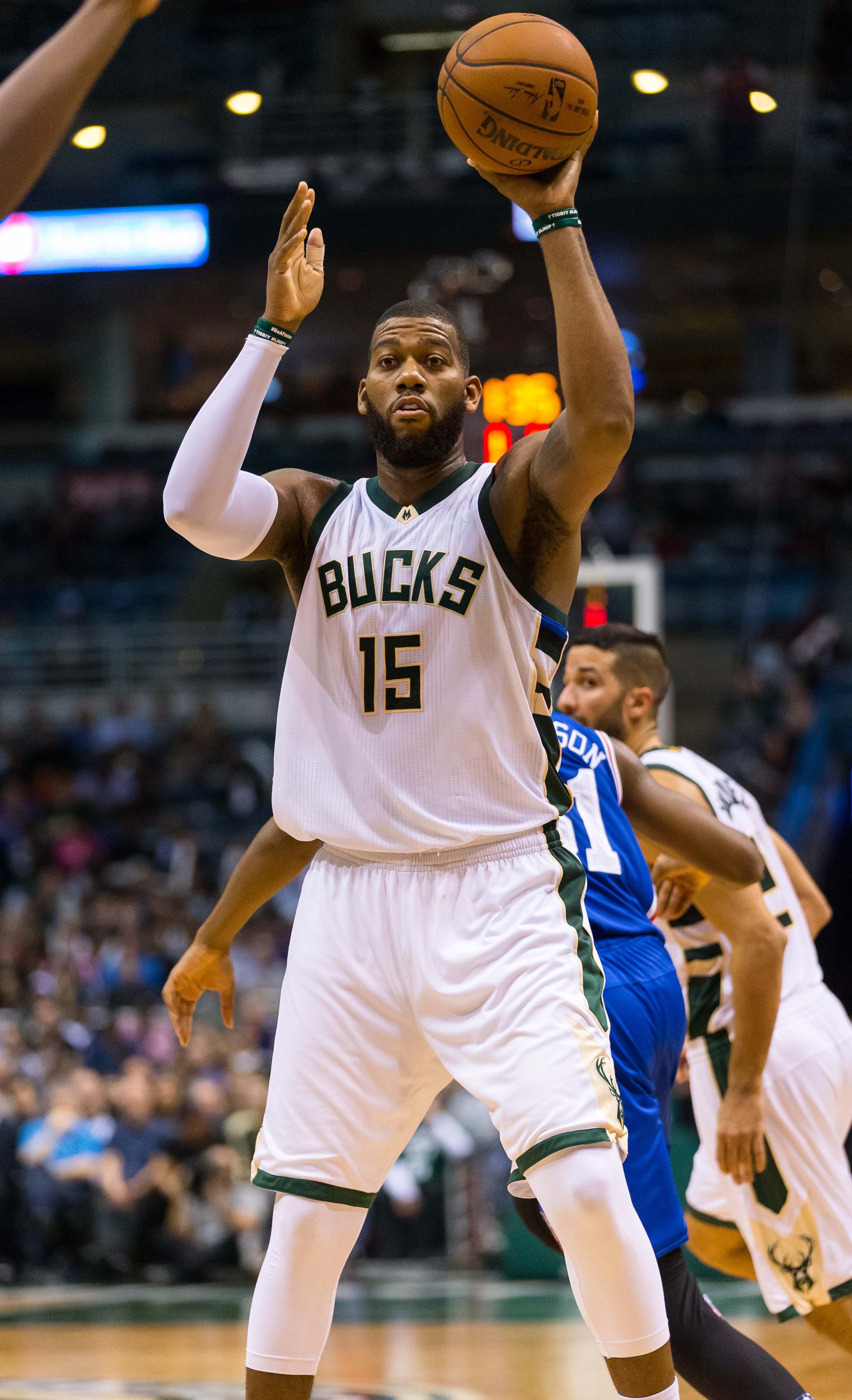
The Bucks entered this past offseason riding high after increasing their win total from an anemic 15 during the 2013/14 campaign to a respectable 41 victories last season, and Milwaukee earned itself a playoff berth as a result. Despite being eliminated in the first round of the 2014/15 postseason by the Bulls, the future is certainly brighter than it has been for Milwaukee basketball in quite some time.
The biggest move for the Bucks this offseason, and perhaps one of the summer’s most surprising developments, was Milwaukee landing free agent big man Greg Monroe. The former Piston accepted a three-year max deal from the Bucks, passing on similar offers from the Lakers, Knicks and Blazers in order to do so. Milwaukee has not traditionally been viewed as a free agent destination over the years, but with the franchise landing one of the top free agents of the offseason, that perception may need to change. Monroe isn’t necessarily a franchise-level talent, and he’s not quite at the level of Marc Gasol and LaMarcus Aldridge, both of whom were also free agents this summer, but he is a player who could aid in vaulting the Bucks toward the upper echelon of the Eastern Conference when combined with the rest of the young talent assembled. There were reports that the Bucks had also interest in Robin Lopez and Brook Lopez, but landing Monroe was a far more exciting move for the team given his age and potential.
Milwaukee didn’t limit itself to throwing cash at just Monroe. The team also re-signed restricted free agent Khris Middleton to a five-year, $70MM deal, and agreed to an extension with John Henson that will keep him in the fold through the 2019/20 campaign. Middleton is certainly one of the league’s success stories, having gone from a second-round pick in 2012 to a max player. While I certainly can see Middleton’s value on both ends of the court, he is a player who has never averaged more than 13.4 points per contest in his career, which makes this deal a bit of a risk for Milwaukee if he is at his plateau talent-wise. But Middleton’s value does extend beyond the numbers in the box score, and with the salary cap set to increase next season, his deal has the opportunity to look better over time.
Signing Henson to an extension was a solid move for the team, though his career averages of 8.1 PPG and 5.5 RPG are more fitting for a reserve than someone who will be paid an average annual salary of $11MM per season over the life of the extension. On the plus side for Milwaukee is that Henson’s deal is front-loaded, and his salary will decrease each season. The 24-year-old would have likely commanded a higher salary if he hit the open market, considering the league’s propensity to overpay big men, so Milwaukee did well for itself with this decision to lock down the center through 2019/20.
The Bucks were active on the trade front during the offseason, executing a series of minor deals that cleared valuable salary cap room for the team’s other dealings but provided little in the way of a return for the team. Monroe rendered center Zaza Pachulia unnecessary, so the Bucks essentially gave him away to the Mavs, who were in desperate need of a big man after DeAndre Jordan spurned them. Milwaukee also parted ways with Jared Dudley, shipping him to the Wizards for another heavily protected second-rounder, and the Bucks cut ties with Ersan Ilyasova, a solid stretch four whom they sent to the Pistons in exchange for two veterans they subsequently waived.
The only player acquired via trade this summer who still remains on the roster is point guard Greivis Vasquez, who cost the Bucks the Clippers’ 2017 first round pick and the rights to Norman Powell, the No. 46 overall pick in this year’s draft. Vasquez certainly fills a need for the team behind starter Michael Carter-Williams, and his outside shooting should prove vital to any success that Milwaukee hopes to achieve this season. While surrendering a first round pick may not sit well with some of the team’s fans, it was likely to be a late first-rounder given the Clippers’ expected success over the next few seasons, and Vasquez is likely to prove more valuable than any player who would have been selected that late in 2017’s draft.
Speaking of the draft, the Bucks did extremely well for themselves when they nabbed UNLV freshman shooting guard Rashad Vaughn with the No. 17 overall pick. Vaughn is a project who isn’t ready to defend NBA-caliber players, and he isn’t likely to contribute anything of significance in 2015/16. But he is also a player who has the potential to develop into a top-10 scorer in the league, and he may turn out to be one of the steals of the draft if the team shows patience in bringing him along. The sky is the limit for Vaughn, and he, alongside the team’s other young talents, should form a solid young core for the Bucks as they move into their new arena in the near future.
The opening of the arena has been pushed back to the 2018/19 season, but the new building should aid the team in future free agent pursuits, as well as ensure that the Bucks remain in Milwaukee, where they should be, well into the future. In fact, the arena-to-be has already aided the team, with Monroe noting to David Aldridge of NBA.com that he took the team’s new facility into account when making his free agent choice this summer. “When I signed, it wasn’t all the way done yet, but now, they have a new stadium coming,” Monroe said. “And I saw how the fans were. We played there, been coming there for years now, multiple times a year in the division. I know what kind of fan base they have. And I talked to a couple of my former teammates in Detroit who played here before, and they had nothing but great things to say about the city and the organization. So with all of that combined, I just definitely felt I made the right decision.”
Milwaukee also made a number of front office decisions over the summer that will shape the organization moving forward. The team inked GM John Hammond to a one-year extension that will keep him in the fold through the 2016/17 campaign. Team co-owner Wesley Edens told Charles F. Gardner of The Milwaukee Journal-Sentinel that he felt it important to align the end of Hammond’s contract with that of coach Jason Kidd, whose deal also expires after the 2016/17 season is complete. The Bucks also hired longtime NBA executive Rod Thorn as a special consultant, and he is expected to work closely alongside Hammond. Thorn most recently served as the NBA’s president of basketball operations, a job in which he oversaw the league’s day-to-day business under commissioner Adam Silver.
The addition of Monroe this offseason was huge for the franchise, not just because of what he can provide on the court, but for the perception of the franchise as a viable destination for free agents. The retention of Middleton was equally important, and the team did well to re-sign the young wing. The return of Jabari Parker, who missed all but 25 games of his rookie campaign, and the continued development of the roster’s younger players, including star-in-waiting Giannis Antetokounmpo, give the Bucks an extremely bright future in the improving Eastern Conference. Milwaukee’s roster does lack athleticism beyond the Greek Freak, which could slow the team’s growth somewhat, and it’s an issue that the team may need to address via the trade market if it becomes a glaring issue. But for now, it’s a good time to be a fan of Milwaukee basketball, given the team’s solid direction and growing collection of talent.
The Basketball Insiders salary pages were used in the creation of this post.
Offseason In Review: Dallas Mavericks
Hoops Rumors is in the process of looking back at each team’s offseason, from the end of the playoffs in June right up until opening night. Trades, free agent signings, draft picks, contract extensions, option decisions, camp invitees and more will be covered as we examine the moves each franchise made over the last several months.
Signings
- Brandon Ashley: Three years, $2.414MM. Signed via cap space. First year is partially guaranteed for $50K. Waived.
- J.J. Barea: Four years, $16MM. Signed via cap space.
- Samuel Dalembert: One year, $1.499MM. Signed via minimum salary exception. Waived.
- Jeremy Evans: Two years, $2.328MM. Signed via minimum salary exception.
- Jarrid Famous: Three years, $2.414MM. Signed via cap space. First year is partially guaranteed for $10K. Waived.
- John Jenkins: Three years, $3.211MM. Signed via cap space. Second and third years are non-guaranteed.
- Wesley Matthews: Four years, $70.060MM. Signed via cap space. Fourth year is a player option.
- JaVale McGee: Two years, $2.675MM. Signed via minimum salary exception. First year is partially guaranteed for $750K.
- Salah Mejri: Three years, $2.414MM. Signed via cap space. First year is fully guaranteed.
- Maurice Ndour: Three years, $2.414MM. Signed via cap space. First year is fully guaranteed, second year is partially guaranteed for $437K. Waived.
- Charlie Villanueva: One year, $1.499MM. Signed via minimum salary exception.
- Deron Williams: Two years, $11MM. Signed via cap space. Second year is a player option.
- Jamil Wilson: Three years, $2.414MM. Signed via cap space. First year is partially guaranteed for $50K. Waived.
Extensions
- None
Trades
- Acquired Zaza Pachulia from the Bucks in exchange for Dallas’ 2018 second round pick (top-55 protected).
Waiver Claims
- None
Draft Picks
- Justin Anderson (Round 1, 21st overall). Signed via rookie exception to rookie scale contract.
- Satnam Singh (Round 2, 52nd overall). Signed in the D-League.
Camp Invitees
Departing Players
- Al-Farouq Aminu
- Tyson Chandler
- Monta Ellis
- Bernard James
- Richard Jefferson
- Rajon Rondo
- Greg Smith
- Amar’e Stoudemire
Rookie Contract Option Decisions
- None
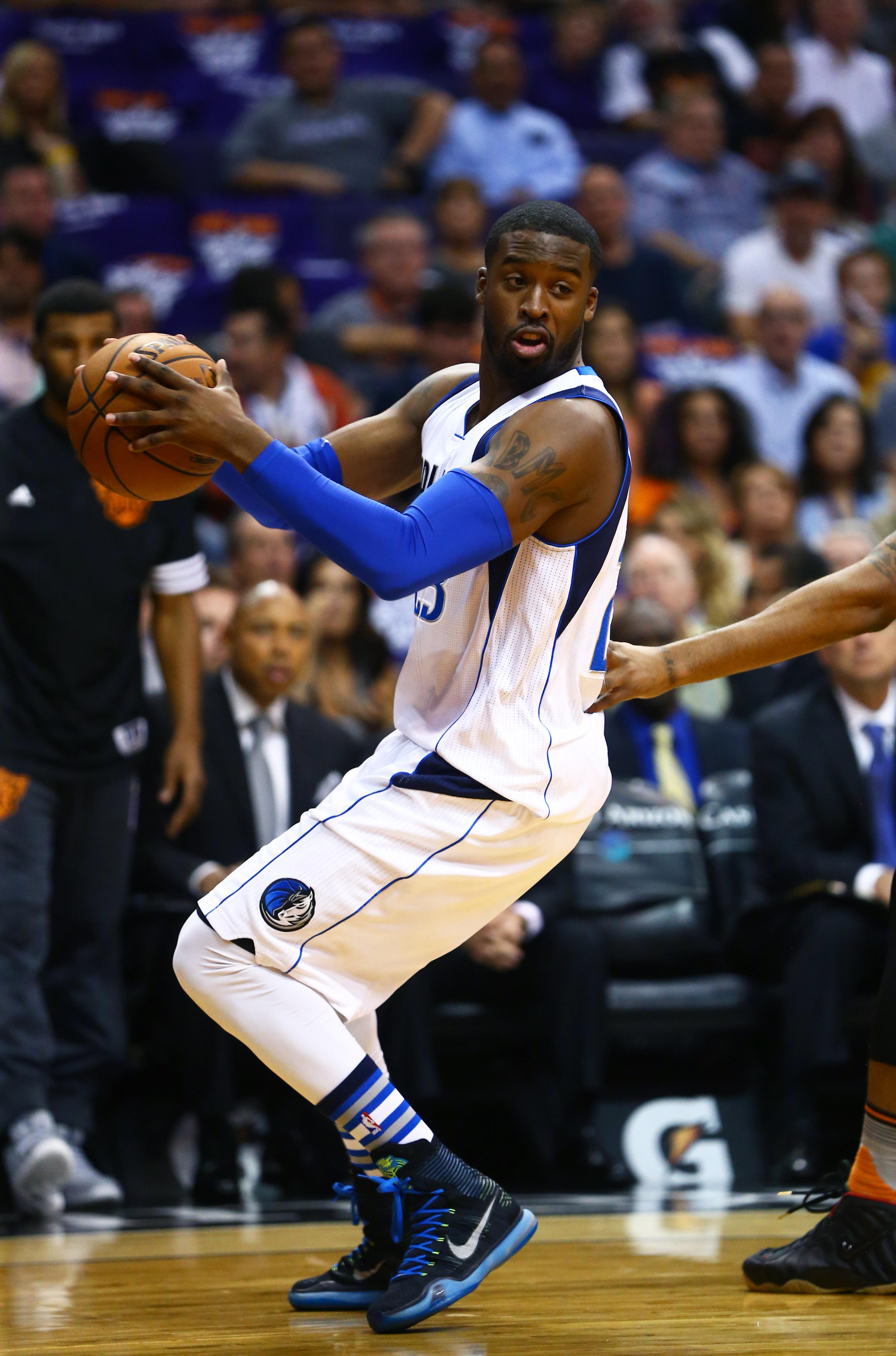
The offseason was a lesson in the differences between the terms “free agency” and “team control.” DeAndre Jordan famously taught the Mavs and the NBA world about the vagaries of the July Moratorium, too, with his infamous flip-flop that left Dallas with no alternative that was nearly as attractive as Jordan following through on his commitment to the Mavs would have been. Tyson Chandler, surprised by the team’s decision to prioritize Jordan instead of him, had already bolted for the Suns. Only the defensively challenged Enes Kanter, essentially a mirror opposite of Jordan, was left among marquee free agent centers by the time Jordan signed with the Clippers, and as the Thunder proved when they matched the offer sheet that Kanter signed with the Trail Blazers, he wouldn’t have ended up in Dallas, anyway.
The Pacers had already committed to trade Roy Hibbert to the Lakers, and the Kings clung fast to DeMarcus Cousins in spite of all the rumors. So, the Mavs came up with a low-cost alternative, sending virtually nothing to the Bucks for Zaza Pachulia, whom Dallas absorbed into its cap space. It was not a heralded acquisition, to be sure, yet Pachulia has long proven a valuable part of winning teams. He was a mainstay on the Joe Johnson/Josh Smith Hawks, and he started 45 regular season games and all six postseason contests for a resurgent Milwaukee squad last season. He’s only once been a full-time starter, but as his averages of nearly a double-double so far for the Mavs prove, he’s capable of filling that role with the right supporting cast around him.
Of course, it’s debatable whether the Mavs have enough around him to make the playoffs. Dirk Nowitzki had another birthday in June, his 37th, and the month before that, Chandler Parsons had right knee surgery that’s limited his playing time this season. Plus, Wesley Matthews, who inherited both a max contract and the mantle of having been the team’s most prominent offseason addition when Jordan turned tail, hasn’t quite looked himself yet as he returns from a torn Achilles tendon.
Matthews was a gamble on the four-year, $57MM deal to which Dallas originally signed him, and he comes with an even greater risk at the four-year max of about $70MM that he wound up with post-Jordan. The Mavs reached agreement with Matthews before their ill-fated deal with Jordan, and when they did, they promised Matthews they’d give him $57MM, the most they’d have left over if they signed Jordan, and the max if they didn’t, according to Tim MacMahon of ESPNDallas.com. They honored that commitment when Jordan backed out and even gave Matthews the chance to get out of his deal, but the Jeff Austin client decided to stick to it, as MacMahon detailed. It all added up to a contract for the former Blazers shooting guard that at least one opposing GM called “insane”, but the Mavs nonetheless have a player who wants to be part of the team and who’s determined to return to form as perhaps the best three-and-D wing in the game.
He replaces Monta Ellis, whom the team appeared to show little interest in retaining. The same was true of backcourt partner Rajon Rondo, as three-fifths of last year’s starting lineup, which the team had appeared eager to keep together in the days shortly after the Rondo trade, departed via free agency. Filling Rondo’s place is Deron Williams, whom the Mavs reportedly emerged as a strong bet to sign even before he worked his buyout with the Nets. His presence on the Mavs roster at not quite $5.379MM this season represents a touch of optimism about the team’s plight this summer, not necessarily because of his ability to outplay that salary, but because the Mavs would be paying him more than $20MM this year if he had picked Dallas when he was the No. 1 free agent target in 2012. The 31-year-old is clearly no longer an elite talent, and he’s averaging his fewest points, assists and minutes per game since he was a rookie, but at a salary akin to the mid-level, his production is commensurate with his pay.
The Dallas bench is devoid of a couple of key figures from last season, including Al-Farouq Aminu, who quickly committed to the Blazers and thus was unavailable when Jordan’s return to L.A. meant the Mavs suddenly had the cap space necessary to keep the combo forward who’d blossomed under coach Rick Carlisle. The specter of the broken Jordan deal also painted the departure of Richard Jefferson, who backed out of his deal to re-sign to instead ink with the Cavs, albeit with owner Mark Cuban’s blessing.
J.J. Barea, like Matthews, received a bump in his pay because of Jordan’s indecision, going from a two-year, $5.7MM arrangement to $16MM over four years. The 31-year-old spark plug still provides a lift off the bench and a link to the franchise’s championship squad, but while $4MM isn’t too much to pay at this point, a strong chance exists that he won’t be nearly as productive by the fourth year. It’s a front-loaded contract, but it still calls for him to make more than $3.71MM in the final season.
The Mavs didn’t invest nearly as much in JaVale McGee, whom they hope will be just as integral as Barea is, if not more so. McGee’s slow-healing leg hasn’t allowed him to play despite the team’s commitment of a $750K partial guarantee, but the Mavs could use a jolt, especially at center. They can go until January without committing more than $1MM to see if the 27-year-old can rekindle the promise he once showed with the Nuggets, and with a team salary just slightly above the cap, it’s a justifiable gamble.
That’s especially so with the team’s strong contributions for minimum-salary players Dwight Powell and John Jenkins so far. The Mavs elected to keep Powell and cut others with fully guaranteed deals despite Powell’s quiet rookie season, and he’s rewarded them with 10.5 points and 8.1 rebounds in just 22.1 minutes per game. Jenkins, a former first-round pick who has struggled to find his footing in the NBA, was a preseason sensation for Dallas after signing in the offseason, and he had a 17-point game against the Clippers in his second regular season game for the Mavs.
It’s a testament to Carlisle’s skill and further reason why the Mavs signed him to a five-year, $35MM extension this month, picking up his 2016/17 team option in the process. He’d made the case for it time and again over the years, and while speculation mounted about Carlisle’s future before the deal, it didn’t seem as though Cuban and the Mavs would ever let one of the game’s best coaches get away.
Carlisle’s fingerprints are all over the team’s surprising 7-4 start. It was a most heartbreaking offseason for the Mavs, but they remain a threat on the market for next summer, and with Carlisle, Matthews, Parsons, whatever Nowitzki can give them and perhaps a budding mainstay in Powell, who’ll be a restricted free agent next summer, they have an attractive supporting cast. It’s just that the superstar addition they’ve longed for still remains out of reach, and out of their hands.
Eddie Scarito contributed to this post. The Basketball Insiders salary pages were used in the creation of it.
Offseason In Review: Orlando Magic
Hoops Rumors is in the process of looking back at each team’s offseason, from the end of the playoffs in June right up until opening night. Trades, free agent signings, draft picks, contract extensions, option decisions, camp invitees and more will be covered as we examine the moves each franchise made over the last several months.
Signings
- Keith Appling: Two years, $1.4MM. Signed via minimum-salary exception. First year partially guaranteed for $100K, second year is non-guaranteed. Waived.
- Melvin Ejim: Two years, $1.4MM. Signed via minimum-salary exception. First year partially guaranteed for $150K, second year is non-guaranteed. Waived.
- Tobias Harris: Four years, $64MM. Signed via Bird Rights.
- Jordan Sibert: One year, $525K. Signed via minimum-salary exception. Partially guaranteed for $100K. Waived.
- Jason Smith: One year, $4.3MM. Signed via cap room.
- C.J. Watson: Three years, $15MM. Signed via cap room. Third year is partially guaranteed for $1MM.
Extensions
- None
Trades
- Acquired the draft rights to Janis Timma from the Grizzlies in exchange for Luke Ridnour.
- Acquired $100K and the right to swap 2019 second rounders from the Knicks in exchange for Kyle O’Quinn via a sign-and-trade.
- Acquired Portland’s 2020 second round pick (top-55 protected) from the Trail Blazers in exchange for Maurice Harkless.
- Acquired Shabazz Napier and $1.1MM in cash from the Heat in exchange for Orlando’s 2016 second round pick (top-55 protected).
Waiver Claims
- None
Draft Picks
- Mario Hezonja (Round 1, 5th overall). Signed via rookie exception to rookie scale contract.
- Tyler Harvey (Round 2, 51st overall). Signed to play in NBA D-League.
Camp Invitees
- Nnanna Egwu — Waived.
- Greg Stiemsma — Waived.
Departing Players
Rookie Contract Option Decisions
- Aaron Gordon (third year, $4,351,320) — Exercised.
- Shabazz Napier (third year, $1,350,120) — Exercised.
- Victor Oladipo (fourth year, $6,552,960) — Exercised.
- Elfrid Payton (third year, $2,613,600) — Exercised.
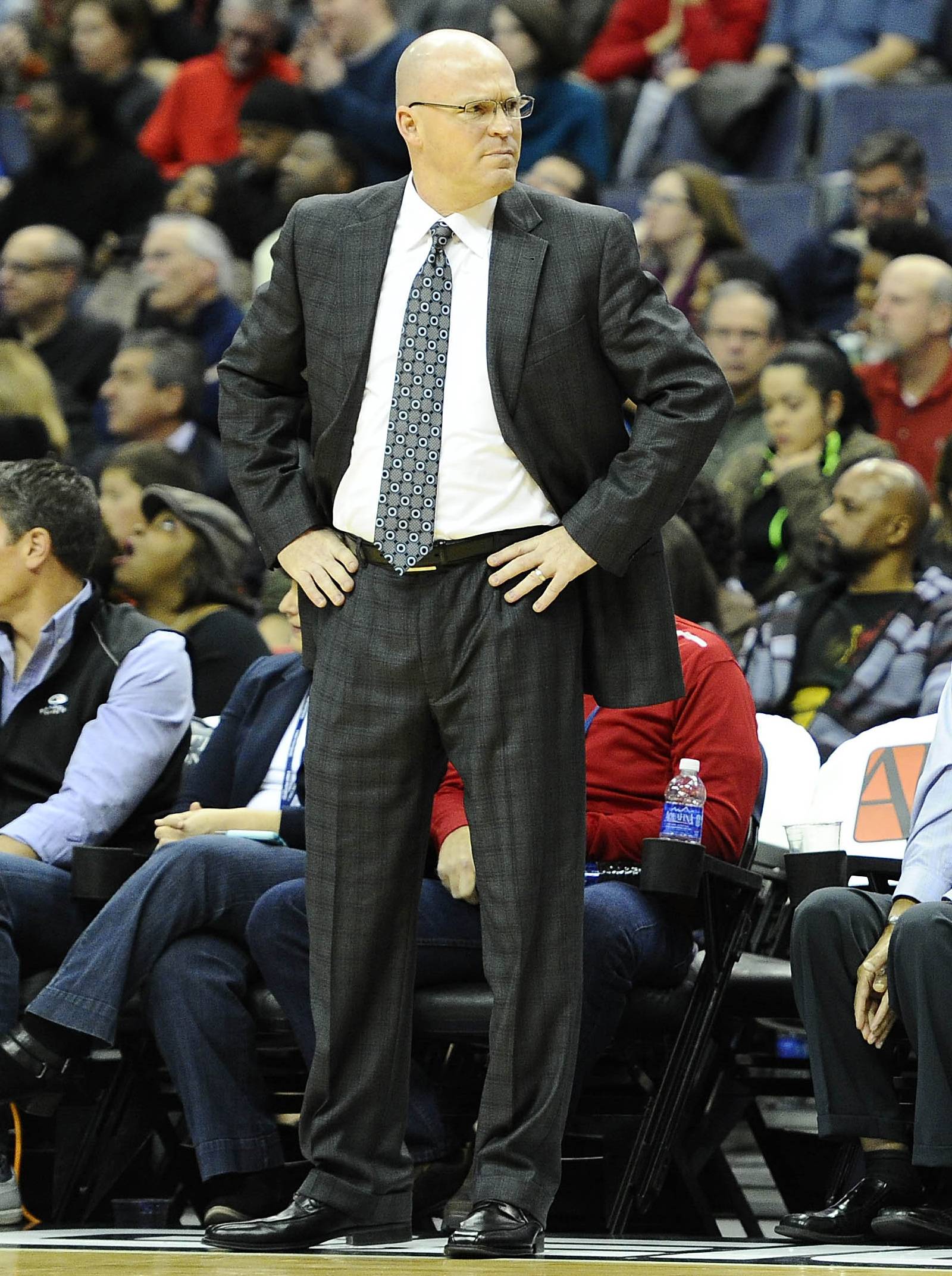
The Magic’s most significant offseason acquisition has not appeared in a game with them since 1994. The reason they brought him back was that many of the players on the current roster weren’t even born when he was wearing the Magic uniform.
Orlando spent the last few years acquiring young talent. GM Rob Hennigan needed a defensive-minded taskmaster to mold that group into a cohesive unit. Hennigan and the rest of the Orlando front office sought a proven NBA head coach who fit that description and chose an old fan favorite in Scott Skiles. “Our young roster will benefit greatly from Scott’s extensive head coaching experience and commitment to teaching smart, physical, unselfish basketball,” Hennigan said when he announced the decision. “We believe in Scott’s ability to establish a culture of winning habits and accountability that will help guide our team in a positive direction.”
The Magic also interviewed Mike Woodson for the job and a number of high-profile coaches, including Tom Thibodeau, Alvin Gentry and Scott Brooks, were reportedly potential candidates. Skiles received a four-year deal in late May, with a team option on the last season. It’s fair to wonder whether Skiles will last that long, or whether he’ll live up to his reputation of improving his team in the short run and then quickly wearing out his welcome.
That’s essentially what happened with Skiles in his previous head coaching stints with the Suns, Bulls and Bucks. But as Steve Aschburner of NBA.com recently noted, none of his successors won championships. He also had the chance to step back after those experiences and learn from his mistakes, which will theoretically make him a better coach as he tries to get the most out of his youth-laden roster.
Orlando is so young that reserve center Dewayne Dedmon, who is in his third NBA season, is the fourth-oldest player on the team. That a 26-year-old with 90 games of experience entering the season would be considered a graybeard by Magic standards shows just how green a group Skiles has inherited. The Magic have 10 players 25 or younger, while just two players have reached their 30th birthday.
Instilling a defensive mentality was the most crying need for the kiddie corps. The Magic finished 28th in defensive field-goal percentage last season at 46.3% and second-to-last in defensive 3-point percentage (36.8%). Thus far, the results have been promising. Through their first 11 games, the Magic are holding opponents to 42.3% shooting overall and 31.9% from long range.
Orlando added another top-five draft pick to its collection in June, choosing swingman Mario Hezonja. The 6’8″ Hezonja provides depth at both wing positions and has jumped right into the rotation. Hezonja’s athleticism and outside shooting elevated him to the top of the draft among shooting guard/small forward prospects but there’s no obvious starting spot for him in the foreseeable future unless the Magic fail to re-sign impending restricted free agent Evan Fournier.
The Magic made a couple of under-the-radar signings to bring in some experienced players, inking point guard C.J. Watson to a three-year deal and big man Jason Smith to a one-year pact. Watson not only gives starter Elfrid Payton a voice of experience to consult as he learns the intricacies of the position, he’s also a valuable rotation piece. Watson is averaging 19.5 minutes per game.
Smith has also gotten some minutes in a backup role at power forward and center, mainly due to an early-season injury to center Nikola Vucevic. But Smith seems more like an insurance policy, especially since Skiles has often used a smaller lineup.
The biggest development in free agency was the Magic’s decision to retain forward Tobias Harris. Orlando opened its vault and locked him up with a four-year, $64MM deal three days into free agency, rather than waiting for a suitor to extend an offer sheet and being forced to match those figures. The Magic were reportedly unwilling to match a maximum salary offer sheet, but Harris didn’t receive such an offer when the free agent signing period officially commenced. Several teams, including Hawks, Knicks, Pistons, and Celtics, had interest in him.
The club could find itself in a similar spot next summer with Fournier becoming a restricted free agent. The two parties passed on a rookie scale extension, setting up the scenario of Orlando doling out a sizable deal to retain him. Fournier has gotten off to such a strong start that his foray into free agency could determine the direction of the franchise, according to Keith P. Smith of RealGM.com.
By adding Hezonja and re-signing Harris, the Magic didn’t have a role for another young swingman, Maurice Harkless. They found a new home for him, shipping him to the Trail Blazers for a future second-rounder. They also fortified their backcourt by acquiring Shabazz Napier from the Heat. Napier, who recently had a 22-point outing with Watson sidelined by a minor injury, made them deep at the point guard spot at the cost of a protected second-round pick for next season.
Personnel moves aside, the biggest change for the Magic this season is the man running the show. It’s almost certain that a team loaded with so many young players will improve. The extent of that improvement — and Skiles’ ability to learn from the past and stick around long enough to turn this core group into a perennial playoff contender — will decide how meaningful this offseason was for the Magic.
Eddie Scarito contributed to this post. The Basketball Insiders salary pages were used in the creation of it.
Offseason In Review: Los Angeles Lakers
Hoops Rumors is in the process of looking back at each team’s offseason, from the end of the playoffs in June right up until opening night. Trades, free agent signings, draft picks, contract extensions, option decisions, camp invitees and more will be covered as we examine the moves each franchise made over the last several months.
Signings
- Brandon Bass: Two years, $6.135MM. Signed via cap room. Second year is a player option.
- Michael Frazier: Two years, $1.4MM. Signed via minimum salary exception. First year partially guaranteed for $50K, second year is non-guaranteed. Waived.
- Jonathan Holmes: Two years, $1.4MM. Signed via minimum salary exception. First year partially guaranteed for $100K, second year is non-guaranteed. Waived.
- Marcelo Huertas: One year, $525K. Signed via minimum salary exception. Non-guaranteed.
- Robert Upshaw: Two years, $1.4MM. Signed via minimum salary exception. First year partially guaranteed for $35K, second year is non-guaranteed. Waived.
- Lou Williams: Three years, $21MM. Signed via cap room.
- Metta World Peace: One year, $1.499MM. Signed via minimum salary exception. Non-guaranteed.
Extensions
- None
Trades
- Acquired Roy Hibbert from the Pacers in exchange for Los Angeles’ 2019 second round pick.
Waiver Claims
- None
Draft Picks
- D’Angelo Russell (Round 1, 2nd overall). Signed via rookie exception to rookie scale contract.
- Larry Nance Jr. (Round 1, 27th overall). Signed via rookie exception to rookie scale contract.
- Anthony Brown (Round 2, 34th overall). Signed a three-year, $2.59MM deal. Third year is non-guaranteed.
Departing Players
- Vander Blue
- Carlos Boozer
- Jabari Brown
- Ed Davis
- Wayne Ellington
- Jordan Hill
- Wesley Johnson
- Jeremy Lin
- Ronnie Price
Rookie Contract Option Decisions
- Julius Randle (third year, $3,267,120) — Exercised.
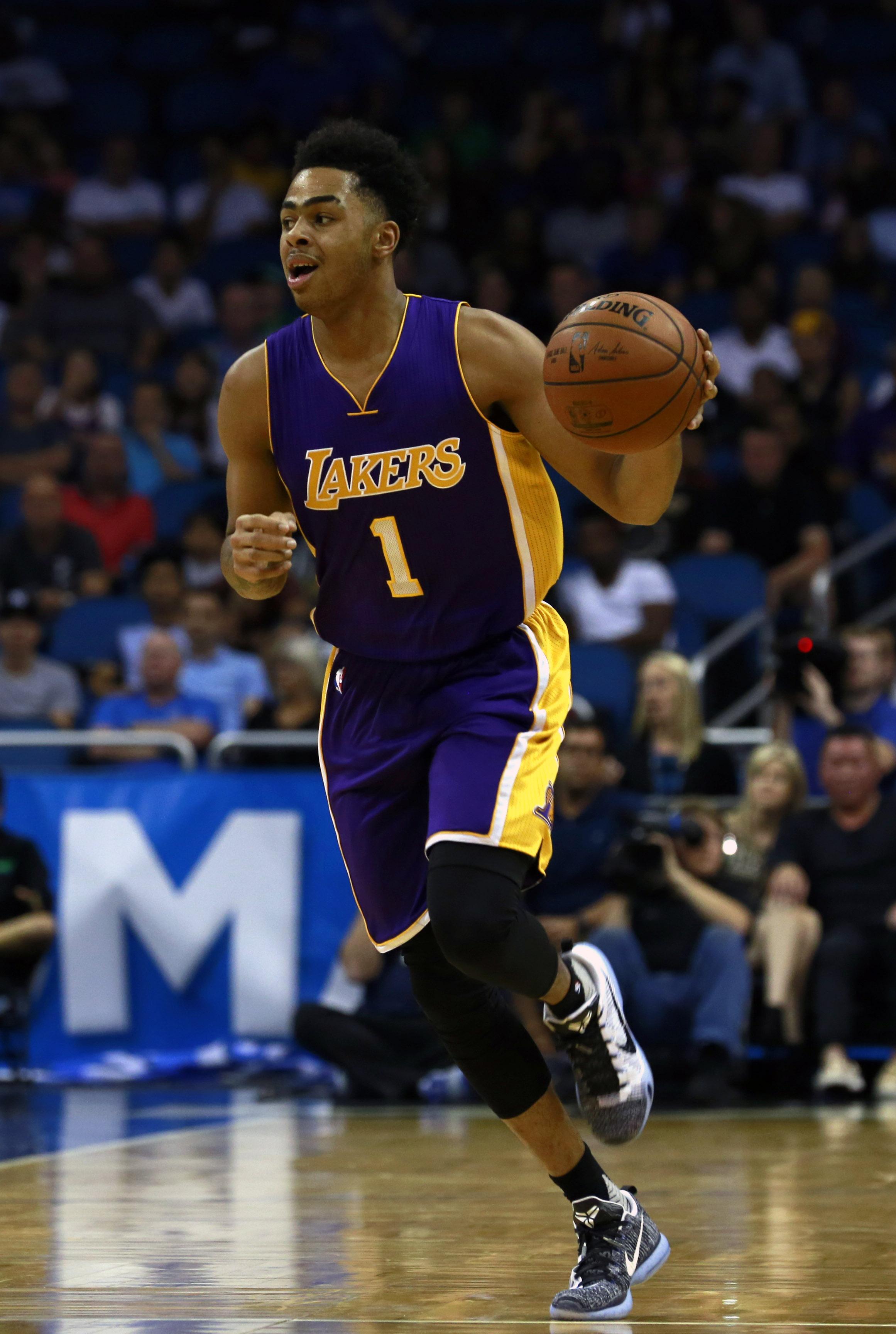
More than half of last year’s roster is gone, so in one sense, this is a new beginning for the Lakers. Still, the purple-and-gold are stuck in the same non-contending circumstances in which they’ve found themselves since their star-studded 2012/13 underwhelmed, and whether the Lakers are any closer to escaping that realm is in the eye of the beholder. Executive VP of basketball operations Jim Buss believes the Lakers are “in dynamite position,” and though he meant it favorably with regard to the state of the franchise, some might have raised an eyebrow at his use of a term most commonly defined as an explosive.
Indeed, the Lakers’ reputation as a pre-eminent free agent destination has suffered serious damage over the past few years. The team’s presentation to LaMarcus Aldridge missed the mark, focusing far too much on business and not enough on basketball for the power forward’s liking. Their pitch to DeAndre Jordan was “somewhat underwhelming,” a source told Broderick Turner of the Los Angeles Times. Rumors consistently linked former UCLA standout Kevin Love to the Lakers, but he recommitted to the Cavs on the first day of free agency. The Lakers reportedly planned to target Goran Dragic but lost interest when they became enamored with D’Angelo Russell before the draft, according to Mark Medina of the Los Angeles Daily News.
The addition of Russell turned out to be the most significant offseason move for the team, though early returns aren’t particularly favorable, thanks in large measure to coach Byron Scott‘s reluctance to play him during fourth quarters. Still, he’s only 19, and the Lakers clearly believe in him, taking a risk as they did to defy the conventional wisdom that center Jahlil Okafor and his polished offensive talents represented the best option outside of No. 1 pick Karl-Anthony Towns. Part of that had to do with the team’s belief that it could snag one of the top big men on the free agent market, which turned out to be misguided. Still, it became clear that the Lakers fell in love with Russell’s diverse offensive skill set. He played shooting guard at Ohio State, so it was a bit odd to see Scott use Russell’s acumen at the point as a rationale for picking him instead of Emmanuel Mudiay, who slipped to the Nuggets at No. 7. Mudiay probably has a higher ceiling, as Russell doesn’t have super athleticism, but scouts and executives had much more to go on with Russell, whose stock rose as he performed deftly for Ohio State last season.
Russell joins Julius Randle, who’s returned from a broken leg, along with an upgraded cast of veterans that had the team hoping it could focus on player development and win more games at the same time, as Medina told us in a recent edition of The Beat. The winning part hasn’t happened much yet, but Randle and Jordan Clarkson represent two of the top four Lakers in shots per game, so Scott hasn’t been afraid to go young. Naturally, Kobe Bryant leads the team in field goal attempts, but the other player in that top four, Lou Williams, joined the Lakers at the peak of his powers. Williams is coming off a Sixth Man of the Year award with the Raptors, though the team decided against offering him a chance to return as it instead decided to focus on defense. That’s an indictment of Williams, but his scoring prowess isn’t lacking, and the Lakers pounced on him for $7MM a year over the next three seasons, a bargain, especially considering the rising salary cap.
The Lakers will shell out much more than that for their lone trade acquisition. Roy Hibbert was the team’s fallback option when the marquee free agent big men went elsewhere, though GM Mitch Kupchak has expressed optimism that Hibbert will nonetheless become a core player. This is a trial season of sorts for the former All-Star whose game regressed in his last season and a half with Indiana. He’s on an expiring contract that’ll pay him nearly $15.6MM this season, though he’ll have to perform to make a case for a similar salary again next season, not to mention to keep his newfound spot as the Lakers starting center. Like Williams, he’s another player his old team seemingly didn’t want anymore. Still, the Lakers are asking him to concentrate on just one end of the floor, and if he can prove the game-changing defender he was in his heyday at Indiana, the Lakers will have Bird rights and seemingly an inside track to re-signing a key player.
The Lakers did come away with a well-regarded inside player, though Brandon Bass is apparently on the roster for his abilities as a complementary player and as a veteran mentor for Randle, whom the Lakers have chosen to start instead of Bass at power forward. Bass is also ostensibly around to aid the development of Larry Nance Jr., the power forward out of Wyoming who was the team’s other first-round pick this year. The 30-year-old Bass is making a positive contribution on the court even in limited minutes, doing the finest per-36-minute work on the glass of his career so far. He comes cheaply at a salary of just $3MM this season, but the Lakers may only benefit from him for a year, since he has a player option for next season.
No such early exit clause is a part of Nick Young‘s contract, perhaps a factor in the team’s inability to find a trade partner willing to take him in a deal the Lakers found palatable. The team reportedly abandoned its exploration of the trade market for him over the summer after coming up empty. It leaves the scorer in a reduced role with Russell and Williams in the backcourt, but he’s still a part of the rotation, and with salaries of $5-6MM a year between now and 2017/18, he doesn’t eat too much of the cap.
The Lakers can offset salaries they don’t want with bargain finds like Marcelo Huertas, who’s at the back end of the rotation on a deal for the rookie minimum salary. They also have Metta World Peace on a minimum-salary deal, but he hasn’t been an on-court factor and seems to chiefly be around as another mentor for Randle.
World Peace and Bryant are reminders of the Lakers’ gloried past, one that casts a broad shadow over the team’s rebuilding project. It’s one that seems likely to take time, and ultimately, the Lakers will probably have to reckon with the interpretation primary owner Jeanie Buss takes of her brother’s promise to step down if the team isn’t contending again soon. Jeanie Buss believes it’s a vow to resign if the team doesn’t reach the Western Conference Finals this season or next, though Kupchak apparently doesn’t see it that way, and Jim Buss isn’t focused primarily on making the playoffs for this season.
Kupchak sees Clarkson and Russell as the team’s backcourt of the next 10 to 12 years, and if they show signs this year that they’re capable of becoming a long-term starting guard tandem, it’ll also serve as a positive bellwether of the team’s ability to draft. The Lakers owe a top-three protected first-round pick to the Sixers this season, and they still must give a first-rounder to Orlando to pay off the ill-fated Dwight Howard trade. The draft will nonetheless be as important a tool as any for a franchise that’s clearly no longer the free agent draw it once was.
Eddie Scarito contributed to this post. The Basketball Insiders salary pages were used in the creation of it.