
Atlantic Notes: Lowry, Raptors, Celtics, Thibodeau
Don’t expect the Raptors to trade Kyle Lowry before the March 25 deadline, according to Michael Grange of Sportsnet.ca, who makes the case that the odds of a deal happening are “remote.” Grange covers some of the same ground that a Wednesday report from Sam Amick did, noting that the point guard’s $30.5MM salary limits the number of suitors who could realistically acquire him and give the Raptors the sort of turn they’d be looking for.
[RELATED: Kyle Lowry Addresses Trade Rumors]
As Grange observes, the Raptors would be more inclined to move Lowry if he wanted out, but despite rumors to the contrary, that doesn’t appear to be the case. Grange cites multiple league sources who say the six-time All-Star isn’t pushing for a deal, and agent Mark Bartelstein also confirmed as much.
“He has clearly not told anybody that he wants out of Toronto,” Bartelstein said of Lowry. “(Raptors president of basketball operations) Masai (Ujiri) and (GM) Bobby (Webster) and I talk all the time. You can never put anything in concrete in this business, things change, but there is literally nothing to all this chatter about Kyle wanting out or telling his team he wants to go there. That’s just not true.”
Here’s more from around the Atlantic:
- Eric Koreen and Blake Murphy of The Athletic consider whether the Raptors should buy, sell, or hold steady at the upcoming trade deadline, suggesting the team is in position to seriously consider all three options.
- Appearing this morning on Toucher & Rich on 98.5 WBZ-FM in Boston, Celtics president of basketball operations Danny Ainge once again said that his preference would be to use the team’s $28.5MM trade exception in the offseason, when the club will have more options (Twitter link via Sean Deveney of Heavy.com). “That’s for sure. I’ve always felt that,” Ainge said. “We’re hard-capped (this season), using the full thing on one player would be less likely. It’s not impossible.”
- During that same radio appearance, Ainge suggested that if the Celtics make a trade this month, they’d prefer to acquire a player under contract beyond this season, since rival suitors with cap room this summer could make it challenging to re-sign a free-agent-to-be (Twitter link via Keith Smith of RealGM).
- Knicks head coach Tom Thibodeau talked to Nick Friedell of ESPN.com about the lessons he learned in his past jobs that he brought to New York. The conversation also touches on a handful of other topics, including what it means to Thibodeau to reunite with former Bulls star Derrick Rose.
Lakers Sign Damian Jones To Second 10-Day Deal
MARCH 11: The Lakers have officially re-signed Jones to a second 10-day deal, the team announced today in a press release. It’ll run through March 20, covering L.A.’s next five games.
MARCH 10: The Lakers intend to re-sign center Damian Jones to a second 10-day contract, sources tell Adrian Wojnarowski of ESPN (Twitter link).
Jones made a good impression during his first 10 days as a Laker prior to the All-Star Game, putting up eight points in eight minutes in his first appearance and earning a start in Sacramento last Wednesday. Head coach Frank Vogel said prior to the break that Jones should be “optimistic about what’s ahead of him,” hinting that the big man could get another 10-day deal.
The Lakers have two open spots on their roster, so no corresponding move will be necessary to bring back Jones. With the March 25 trade deadline fast approaching, the team may leave its final roster spot open to maximize its flexibility for possible trades or buyout targets.
Since the Lakers aren’t in action until Friday, Jones likely won’t be officially re-signed until then — that would allow his new 10-day deal to run through March 21, covering the club’s first six second-half games. The contract will pay him $119K, with a $111K cap hit, per ESPN’s Bobby Marks, who tweets that L.A. remains about $1.5MM below the hard cap.
A player can only sign two 10-day contracts with the same team during a season, so if the Lakers want to bring back after his next deal expires, they’d need to sign him for the rest of 2020/21. That’s probably only a likely outcome if the team misses out on its top trade and buyout targets.
Raptors Sign Henry Ellenson To 10-Day Contract
5:18pm: The signing is official, the team announced in a press release.
10:11am: The Raptors will fill the open spot on their 15-man roster by signing free agent power forward Henry Ellenson to a 10-day contract, reports ESPN’s Adrian Wojnarowski (via Twitter).
Ellenson, who was in camp with Toronto in December, had been playing for the Raptors 905 in the G League bubble for the last month. Toronto’s NBAGL affiliate was eliminated from the postseason on Tuesday night, and it appears the Raptors are wasting no time in calling up the 24-year-old to the NBA club.
The 18th overall pick in 2016, Ellenson has appeared in a total of 81 NBA regular season contests for the Pistons, Knicks, and Nets, averaging just 4.0 PPG and 2.4 RPG in 9.2 minutes per game.
He has played a more regular role in the G League across 74 career NBAGL games. This season, he recorded 21.2 PPG and 8.1 RPG on .493/.427/.882 shooting in 15 games (30.6 MPG) as a key contributor for a Raptors 905 squad that earned the No. 1 seed heading into the single-elimination playoffs. The team was knocked out in the semifinals.
Ellenson, who received a $50K partial guarantee on his initial preseason deal with the Raptors, will earn approximately $119K on his new 10-day deal, with Toronto taking on a $111K cap hit, per ESPN’s Bobby Marks (Twitter link). He’ll fill the roster spot that was vacated when Donta Hall‘s 10-day deal with the club expired over the weekend.
Sixers Have Reportedly Inquired On Will Barton
Nuggets guard Will Barton is among the players the Sixers have inquired on as they seek another play-making wing, a source tells Jason Dumas of Bleacher Report.
Dumas also names Delon Wright, George Hill, and P.J. Tucker as potential trade targets for Philadelphia. He has previously reported on the 76ers’ inquiries into Wright and Hill, while the club’s interest in Tucker has been mentioned repeatedly elsewhere, including on Tuesday by Bleacher Report’s Jake Fischer.
Barton, 30, is a key rotation player in Denver, averaging 11.6 PPG, 4.1 RPG, and 3.1 APG on .442/.388/.755 shooting in 33 games (29.9 MPG). However, as Dumas observes, the veteran wing has seen his role cut back a little due to the ongoing emergence of Michael Porter Jr. Barton’s 18.3% usage rate is the lowest mark of his career.
Still, it may be hard for two teams in win-now mode to work out a trade that would benefit both clubs in the short term.
While Danny Green‘s expiring $15.4MM contract would match up well with Barton’s $13.7MM deal, it’s not clear if the Nuggets would have any interest in the 33-year-old sharpshooter, since they have no shortage of floor-spacers — nine of their 10 most-used players are shooting 36% or higher on three-pointers with at least one make per game (Gary Harris, at 32.0%, is the lone exception). And while Green is a solid defender, he lacks Barton’s play-making ability.
Whether or not they can strike a deal for Barton, the 76ers seem more focused on adding a complementary player than on making a splashier move for a star like Kyle Lowry, according to Dumas, who says that landing the Raptors‘ guard is considered “far-fetched.”
Jazz Sign Ersan Ilyasova
MARCH 10: The Jazz have officially signed Ilyasova, according to NBA.com’s transactions log.
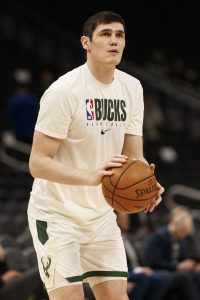 MARCH 9: Free agent power forward Ersan Ilyasova has agreed to a sign a rest-of-season, minimum-salary contract with the Jazz, sources tell Jordan Schultz of ESPN (Twitter link). According to Schultz, Ilyasova is expected to officially sign on Wednesday after completing the COVID-19 protocol.
Ilyasova, who made his NBA debut back in 2006, has appeared in over 800 regular season contests for the Bucks and five other teams. In 2019/20, he averaged 6.6 PPG and 4.8 RPG with a .466/.365/.828 shooting line in 63 games (15.7 MPG) for Milwaukee.
Last season’s 36.5% mark from three-point range matches Ilyasova’s career rate, and his ability to stretch the floor from the power forward spot has been valuable over the years. While he’s not the most switchable or versatile defender, the 33-year-old has shown an uncanny knack over the years for taking charges on the defensive end.
Utah has had plenty of success this season with a forward rotation that includes Bojan Bogdanovic, Joe Ingles, Royce O’Neale, and Georges Niang, so it’s unclear if Ilyasova will see action outside of garbage time or if he’ll simply provide some extra frontcourt depth.
The Jazz had been carrying 13 players on standard contracts since waiving Shaquille Harrison on February 24. Since the NBA allows teams to dip below the required 14-player minimum for only two weeks at a time, they needed to add a player before the second half got underway this week, as we detailed on Monday. After signing Ilyasova, Utah will still have an open spot on its 15-man roster, but won’t have to fill it immediately — or at all.
Ilyasova will earn $17,567 per day for the rest of the regular season, with Utah’s cap hit working out to $11,100 per day. The exact rest-of-season figures will depend on when he officially signs — assuming it happens on Wednesday, he’ll earn $1,194,542 with a cap charge of $754,783.
Photo courtesy of USA Today Sports Images.
NBA Trade Candidate Watch: Mid-Sized Expiring Contracts
With the March 25 trade deadline fast approaching, Hoops Rumors is taking a closer look at players around the NBA who are candidates to be moved this month, breaking them down into several categories based on their age, contracts, on-court value, and other categories. Today, we’ll zero in on players with mid-sized expiring contracts who could be useful salary-matching pieces for deadline buyers.
NBA players on expiring contracts are, by definition, nearly all trade candidates. Many of those players aren’t in their teams’ long-term plans, and even the ones that are viewed as keepers could be shopped if a team isn’t fully confident in its ability to re-sign them.
There are a few exceptions, especially among players who have already been recently traded. The Lakers and Cavaliers gave up first-round picks to acquire Dennis Schröder and Jarrett Allen, respectively — given the price they paid, it seems clear they plan to re-sign those players and aren’t expected to shop them this month. That’s especially true for the Bucks and Jrue Holiday, whose price tag via trade was much steeper.
Most players on expiring contracts are at least at a little risk of being dealt though, so many of those players will be the ones we explore in our Trade Candidate series this week and next week.
On Monday, we examined several players who will be eligible for restricted free agency this summer. Today, we’re shifting our focus to a group of players on mid-sized expiring contracts who may be viewed as expendable salary-matching pieces by teams looking to upgrade their rosters.
Let’s dive in…
Regular rotation players who would be available for an upgrade:
- Danny Green, Sixers
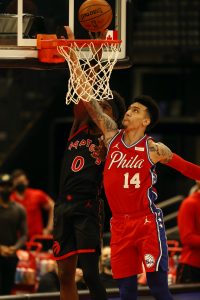
- Cody Zeller, Hornets
- Andre Iguodala, Heat
- Kelly Olynyk, Heat
- Will Barton, Nuggets
- Tony Snell, Hawks
- Doug McDermott, Pacers
These players are ones who are earning regular minutes for teams with playoff – or championship – aspirations. Some of them are having pretty nice seasons — Snell, for instance, is shooting an otherworldly 56.5% on three-point shots through 23 games. McDermott is averaging a career-best 13.2 points per game.
However, it’s hard to imagine any of these guys would be off-limits if their teams had the opportunity to include them in a package for an impact player, or even just a rotation upgrade.
Green, Zeller, and Iguodala are three of the most intriguing trade chips here. They all earn right around $15MM, so even without attaching another player, they could be used to acquire anyone earning in the $10-20MM range. All three teams are good bets to pursue deadline upgrades too — the Sixers and Heat will be among the top threats to come out of the East, while the Hornets would like to secure a playoff spot for the first time since 2016.
Olynyk ($12.6MM), Barton ($13.7MM), and Snell ($12.2MM) are also interesting salary-matching pieces for their respective teams, though trade partners may be wary of Barton’s $14.7MM player option for 2021/22 — if there’s any expectation he’ll pick up that option, he can’t be viewed as a true expiring contract.
At just $7.3MM, McDermott is a less versatile trade chip than the rest, but he’s still worth mentioning, since he’s the highest-paid Pacer who doesn’t have at least one more guaranteed year left on his deal after 2020/21. He’s also a relative bargain at that price and an excellent shooter whose Bird rights would be valuable. Presumably, he’d only be available in a package for a borderline star.
Players who would primarily be salary ballast:
- Gorgui Dieng, Grizzlies
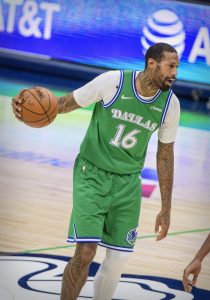
- James Johnson, Mavericks
- Rodney Hood, Trail Blazers
- Meyers Leonard, Heat
- Cristiano Felicio, Bulls
Dieng ($17.3MM) and Johnson ($16MM) are still certainly capable of playing good minutes, but they’ve been racking up DNP-CDs as of late, and their pricey salaries hurt their value.
While Dieng is a viable trade candidate, Dallas is probably more likely than Memphis to attempt to make a splash at the deadline. If so, Johnson would be more expendable than Tim Hardaway Jr. ($19MM), who is also on an expiring deal but is playing a key role for the Mavericks.
Hood ($10MM) may need more time before he’s fully recovered from the Achilles tear that sidelined him in 2019/20 — he has had his worst season since entering the NBA and his $10.9MM salary for next season is non-guaranteed, so he’ll be the Trail Blazers’ most logical salary-matching candidate as they peruse the trade market.
Leonard ($9.4MM) is one of three Heat veterans on expiring contracts who could be on the move, and has become the most dispensable, due to a season-ending shoulder injury and an off-court incident that involved him uttering an anti-Semitic slur. If he’s dealt, it’s probably safe to assume his new team will cut him pretty quickly.
As for Felicio ($7.5MM), he has been a trade candidate almost since the moment he signed an outsized four-year contract in 2017. It’s not clear yet if the Bulls will be buyers or sellers, but if they seek out a minor upgrade, Felicio would be far easier to move than Otto Porter ($28.5MM).
The wild cards:
- Rudy Gay and Patty Mills, Spurs
- Kelly Oubre, Warriors
- Spencer Dinwiddie, Nets
- Aron Baynes, Raptors
These players don’t comfortably fit into either of the first two categories for a handful of reasons. In the cases of Gay ($14.5MM), Mills ($13.5MM), and Oubre ($14.4MM), it’s simply not clear what the Spurs’ and Warriors’ deadline intentions are.
If San Antonio is ready to hand the reins to its young players, the team could fetch a decent return for veterans like Gay and Mills. But the Spurs are currently 18-14 and don’t generally make major deadline deals, so their vets may just stay put — that applies to LaMarcus Aldridge as well, whose $24MM expiring salary is too large to be considered “mid-sized.”
The Warriors, meanwhile, have the assets necessary to be aggressive and pursue an upgrade at the deadline, perhaps using Oubre and the Timberwolves’ 2021 first-round pick. But Golden State is a No. 9 seed in the West and won’t have Klay Thompson available this season, so going all-in might not make sense. The club could just as easily shop Oubre for an asset or two that could eventually be packaged with the Wolves’ pick in a future package.
I nearly put Dinwiddie ($11.5MM) in the “salary ballast” group above, since he’ll likely miss the rest of 2020/21 due to a knee injury. But he averaged 20.6 PPG a year ago and his Bird rights have value — he may be expendable from the Nets’ point of view, since he won’t play this season and the team has a pair of All-Stars in its backcourt going forward, but he’s more than just a salary throw-in.
As for Baynes ($7MM), he could theoretically be placed in either of the first two sections above. He has started 26 games at center for the Raptors and remains a rotation regular, but he’s having a down year and almost certainly won’t be a part of the club’s future plans. If Toronto makes a deadline deal, whether as a seller or buyer, Baynes seems like a good bet to be part of it.
Photos courtesy of USA Today Sports Images.
Celtics’ Marcus Smart Cleared To Return
Celtics guard Marcus Smart, who has been sidelined since January 30 due to a calf injury, has been cleared to return for Boston’s second-half opener on Thursday in Brooklyn, he said today (Twitter link via Gary Washburn of The Boston Globe).
As long as Smart avoids any setbacks before tomorrow night, he’ll be active vs. the Nets, though the plan is for him to be on a minutes restriction, as Tim Bontemps of ESPN tweets.
Prior to his injury, Smart was averaging career highs in points (13.1) and assists (6.1) per game to go along with his usual stout perimeter defense. He started all 17 games he played, though the Celtics were missing Kemba Walker or Jayson Tatum for many of those contests — we’ll have to wait to see if Smart is reinserted into Boston’s starting five.
The 19-17 Celtics had an up-and-down first half, dipping to two games below .500 before winning their last four games leading into the All-Star break. Now that they’re nearly fully healthy for the first time this season, they’ll be looking to make a second-half push and secure a top-four seed in the Eastern Conference.
According to head coach Brad Stevens, Romeo Langford is the only Celtic who is currently unavailable. It sounds as if Langford is ready to return from his wrist injury, but has been placed in the health and safety protocols, as Chris Forsberg of NBC Sports Boston tweets.
Hoops Rumors Glossary: Traded Player Exception
Relying on the trade machines at ESPN.com or TradeNBA.com may be the simplest way for NBA fans to verify whether or not a trade will work under league rules, but it’s worth examining the primary tool in the NBA’s Collective Bargaining Agreement that determines a trade’s viability — the traded player exception.
Teams with the cap room necessary to make a trade work don’t need to abide by traded player exception rules. However, if a team makes a deal that will leave its total salary more than $100K above the salary cap, the club can use a traded player exception to ensure the trade is legal under CBA guidelines.
There are two different types of traded player exceptions used in NBA deals. One applies to simultaneous trades, while the other applies to non-simultaneous deals.
In a simultaneous trade, a team can send out one or more players and can acquire more salary than it gives up. In a non-simultaneous trade, only a single player can be dealt, and the team has a year to take back the equivalent of that player’s salary, plus $100K.
Let’s look into each scenario in greater detail….
Simultaneous:
In a simultaneous trade, different rules applies to taxpaying and non-taxpaying clubs. A non-taxpaying team can trade one or more players and take back….
- 175% of the outgoing salary (plus $100K), for any amount up to $6,533,333.
- The outgoing salary plus $5MM, for any amount between $6,533,333 and $19,600,000.
- 125% of the outgoing salary (plus $100K), for any amount above $19,600,000.
Here’s a recent example of these rules in effect:
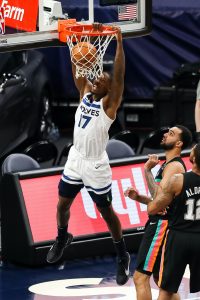 Last November, the Timberwolves
Amick’s Latest: Celtics, Barnes, Clippers, Lowry, Bagley
Many front office people around the NBA believe the Celtics might trade for Kings forward Harrison Barnes prior to this month’s deadline, according to Sam Amick of The Athletic. Boston’s interest in Barnes has been reported multiple times this season, including on Tuesday by Chris Mannix of SI.com.
As Amick explains, Barnes is probably a more realistic target for the Celtics than players like Jerami Grant and Nikola Vucevic, whose teams would likely seek a more substantial return. Sources tell The Athletic that the Kings appear to be shifting into seller mode, so they could be intrigued by Boston’s first-round picks and young prospects, who would match Sacramento’s timeline.
Here’s more from Amick:
- Sources tell The Athletic that the Celtics‘ interest in James Harden – and their involvement in the Harden sweepstakes – was more serious than Danny Ainge‘s comments at the time would suggest. Amick has previously reported that Boston was still in the mix during the later stages of negotiations.
- The Clippers feel good about their core and if they make any trades, they’ll likely just address the margins of their roster, according to Amick, who hears from sources that Lou Williams no longer appears available, as he was in the offseason.
- People around the NBA believe Kyle Lowry‘s $30.5MM cap hit will be an obstacle that may prevent the Raptors guard from being dealt, says Amick. The Clippers are among the teams with interest in Lowry, but may not be able to make the money work, according to Amick, who points to the Thunder‘s George Hill as a more affordable and attainable alternative for teams in need of a veteran point guard.
- Finances will also be a factor for teams considering making a play for Kings forward Marvin Bagley III, per Amick. Bagley will make $11.3MM in 2021/22 and his qualifying offer in ’22 would be worth nearly $15MM.
Knicks Notes: Front Office, Thibodeau, Quickley, More
In an entertaining, in-depth story for The New York Post, Yaron Weitzman takes a deep dive into the inner workings of the Knicks‘ front office, exploring how president of basketball operations Leon Rose has skillfully managed a handful of competing viewpoints and voices in the basketball operations department.
As Weitzman details, Rose has had to consider input from head coach Tom Thibodeau, who has little patience for a rebuild and wondered if RJ Barrett and Mitchell Robinson could be traded for “seasoned veterans”; from executive VP William Wesley – aka “World Wide Wes’ – who frequently zeroed in on players who attended the University of Kentucky or signed with CAA; and from cap expert Brock Aller, who advocated for a patient, flexible approach to using the team’s cap room.
Rose has managed to make everybody happy so far — he acquired Derrick Rose, like Thibodeau wanted, drafted Immanuel Quickley, which Wesley “pushed for like crazy,” and used the Knicks’ cap room primarily on affordable one-year signings, which was Aller’s preference.
“His job is to sort through different opinions from different people and make the best decision,” a rival executive said of Rose. “It certainly seems like he’s doing that well.”
Here are a few more highlights from Weitzman’s story, which is worth checking out in full:
- Wesley, who had been hyping up Quickley for months, badly wanted the Knicks to select him at No. 23 and was “furious” when the team made a last-second decision to trade back to No. 25, loudly declaring, “Coach says we need shooting, Quickley’s the best shooter.” The Knicks ultimately landed the Kentucky point guard with the 25th pick.
- According to Weitzman, when conversations in the front office focused on players who had no connections to Kentucky or to CAA, Wesley would often close his eyes. “When Wes said ‘we,’ people weren’t sure if he was referring to the Knicks or Kentucky,” one source said of World Wide Wes, who has a long-standing friendship with Wildcats coach John Calipari.
- Meetings between Thibodeau and Aller sometimes became heated, given their diametric points of view on winning now vs. rebuilding. Weitzman says Thibodeau would sometime mockingly refer to Aller as “Hinkie,” a reference to Sam Hinkie, who infamously took an extreme long-term view when he rebuilt the Sixers.
- Thibodeau pushed for the Knicks to use their cap room to pursue veteran free agents such as Gordon Hayward, Marcus Morris, and Bogdan Bogdanovic, per Weitzman. While the Knicks were said to be in the mix for Hayward, they ultimately used their space to sign veterans like Nerlens Noel, Alec Burks, and Elfrid Payton to one-year deals.