
Layoffs, Cutbacks Underway For Jazz
The Larry H. Miller Group has begun laying off some Jazz employees, according to ESPN’s Adrian Wojnarowski (Twitter link).
Sources tell ESPN that the cutbacks so far are affecting non-basketball employees. Wojnarowski adds that some employees are accepting reductions in compensation.
“Due to the impact on our customer-facing businesses from his unprecedented pandemic, the Larry H. Miller Group of Companies, of which the Utah Jazz are a part, unfortunately had to make difficult decisions to reduce a small percentage of our workforce,” the company said in a statement to ESPN. “Over the past several weeks, we have worked to manage and reduce costs, including executive compensation, and have reached a point where we have had to say farewell to a limited number of our valued employees.”
In addition to the Jazz, the Larry H. Miller Group owns the Megaplex Theatres chain, ad agency Saxton Horne, dozens of auto dealerships, and a number of other companies, many of which have been hit as hard as – or worse than – the Jazz by the coronavirus pandemic.
While we haven’t yet heard much about other NBA teams being hit by layoffs and cutbacks, the Jazz are unlikely to be the last team to take such measures, since the league is expected to be on hiatus for months.
Community Shootaround: DeMar DeRozan’s Future
The odds of the NBA finishing the full remainder of its 2019/20 regular season are essentially zero, which means the chances of the Spurs overcoming a four-game deficit in the standings and extending their playoff streak to 23 consecutive years are on life support as well. Even if the NBA is able to hold a postseason in 2020, San Antonio almost certainly won’t be a part of it, so the team may feel more pressure than usual to shake things up in the offseason.
One key storyline to watch after the season ends will be DeMar DeRozan‘s future. He holds a $27.7MM player option for the 2020/21 campaign, and with little league-wide cap room available, his best bet may be simply to pick it up. As John Hollinger of The Athletic wrote this week, the veteran guard would have a better shot at a big payday in the summer of 2021.
It’s not clear whether DeRozan is leaning in that direction though. A March 11 report from Chris Haynes of Yahoo Sports suggested the Spurs’ leading scorer plans to opt out of his contract in the offseason if he and the team don’t agree to a contract extension. The timing of that report is important though — it surfaced mere hours before news of Rudy Gobert‘s positive coronavirus test broke and the NBA landscape was thrown into disarray.
Given all the revenue the NBA projects to lose as a result of its stoppage – and given how that lost revenue may impact the salary cap – it would make sense if DeRozan re-evaluates his position and decides that opting in and securing a $27.7MM guarantee is the right move for next season.
There are other factors in play here though. For one, we don’t know for sure how much DeRozan actually likes playing in San Antonio. During a March radio appearance on ESPN San Antonio (audio link), Jabari Young of CNBC – who previously covered the Spurs for the San Antonio Express-News and The Athletic – asserted that the 30-year-old wasn’t thrilled with his current situation.
“I don’t have to sugarcoat anything: DeMar DeRozan is not happy in San Antonio,” Young said, per Jeff Garcia of Spurs Zone. “The offense is not running as smoothly as one should think with a guy like him in the lineup. There are problems there. You have to decide if you’re going to take that money (and) come back to a situation that’s just not suitable.”
As Garcia observes, shortly after that ESPN San Antonio segment, DeRozan tweeted, “Who comes up with this s–t?” in an apparent reference to Young’s comments. Young followed up by publishing a long Twitter thread in which he highlighted his previous Spurs-related scoops and stood by his reporting.
Even if Young is right that DeRozan isn’t happy in San Antonio, the extent of that unhappiness is unclear — being frustrated with this season’s results and wanting out as soon as possible are two very different things. If DeRozan’s stance is closer to the former than the latter, he won’t be looking for an escape hatch at any cost in the offseason.
While DeRozan’s player option will give him a degree of power over whether or not he continues his career with the Spurs, the team could have a significant say too. San Antonio has typically been open to extensions for its veteran players in recent years and could go down a similar path with DeRozan, who is coming off one of the most efficient and productive offensive seasons of his career.
However, despite his impressive scoring and play-making, DeRozan remains a below-average defender. The Spurs’ 113.9 defensive rating with DeRozan on the court this season was noticeably worse than the team’s 106.7 mark when he sat. Overall, the Spurs had a negative net rating in DeRozan’s minutes and a positive rating while he was on the bench. Even if he opts in for 2020/21, perhaps San Antonio decides to make him available on the trade market in the hopes of retooling its roster and going a little younger.
What do you think? What does the future hold for DeRozan and the Spurs? Should either side be pursuing an extension? Will DeRozan pick up his player option for 2020/21? If he does, should San Antonio shop him? If he doesn’t, which teams could be fits in free agency?
Head to the comment section below to weigh in with your thoughts!
Draft Notes: Early Entrants, Haliburton, Hayes, Avdija
The list of early entrants for the 2020 draft continues to grow, with a trio of guards among the latest underclassmen to announce their intent to test the waters this spring.
Wichita State sophomore guard Dexter Dennis, Colgate junior guard Jordan Burns, and UNC Greensboro junior guard Isaiah Miller all made their draft announcements on Twitter.
Dennis averaged 9.2 PPG and 5.0 RPG in 28 games (25.8 MPG) for the Shockers in 2019/20; Burns, a former Patriot Tournament MVP, posted 15.8 PPG, 4.5 APG, and 1.7 SPG in 34 games (32.4 MPG) for the Raiders; and Miller recorded a team-high 17.8 PPG to go along with 2.8 SPG as he earned Player of the Year – and Defensive Player of the Year – honors in the Southern Conference.
Here are a few more draft-related updates:
- Even after the departure of Leon Rose, the head of the agency’s basketball department, Creative Artists Agency is having no problem continuing to fill out its roster with promising young players. CAA announced on Thursday (via Twitter) that projected lottery pick Tyrese Haliburton will be represented by the firm.
- Ethan Strauss of The Athletic shares his “unconventional” top five for the 2020 draft, valuing efficiency and production over hype and athleticism and focusing on versatile players who have at least one elite skill. Based on those criteria, French wing Killian Hayes top Strauss’ board, followed by Obi Toppin, Haliburton, Onyeka Okongwu, and Isaac Okoro.
- With the help of draft expert Fran Fraschilla, Chris Fedor of Cleveland.com takes an in-depth look at Israeli swingman Deni Avdija, who is another candidate to be one of the first five players off the board in the 2020 draft. Fraschilla cautions that Avdija’s shot needs some work, but views him as this year’s top international prospect – above Hayes – and believes he belongs in the upper tier of the draft class.
Bulls To Seek Interviews With Karnisovas, Webster, Others
1:24pm: Pacers GM Chad Buchanan will join Karnisovas and Webster on the Bulls’ list of first-wave interview targets, per K.C. Johnson of The Chicago Tribune (via Twitter). Sources tell Darnell Mayberry and Shams Charania of The Athletic (Twitter link) that Heat assistant GM Adam Simon will be part of that group as well.
According to Mayberry (Twitter link), the Bulls won’t pursue Ujiri or Thunder head of basketball operations Sam Presti and won’t go the player-agent route like New York and other teams have.
12:41pm: The Bulls have formally launched their search for a new top front office executive who will have full authority on basketball decisions, reports ESPN’s Adrian Wojnarowski. We had previously heard in a series of February reports that the team was laying the groundwork for front office changes.
Those February reports suggested that executive VP of basketball operations John Paxson would retain a “valuable seat at the table” amidst the front office upheaval and that general manager Gar Forman would have his responsibilities cut back.
Wojnarowski confirms that Paxson is expected to continue in an advisory role and says that the club will have more conversations with Forman about his future. Previous reports indicated Forman would likely be re-assigned to a scouting position.
According to Wojnarowski, Chicago plans to seek permission to interview Nuggets general manager Arturas Karnisovas and Raptors GM Bobby Webster, among others. The club’s goal is to complete its planned front office changes “well before” the NBA resumes play, per Woj, who hears that interviews will begin next week and will be conducted virtually rather than in person due to the coronavirus.
Neither Karnisovas nor Webster is the head of basketball operations for his respective team — Tim Connelly serves as Denver’s president of basketball operations, while Masai Ujiri holds that position in Toronto. However, the two GMs have risen through their respective organizations in recent years and have played important roles in building the Nuggets’ and Raptors’ talented rosters.
According to K.C. Johnson of NBC Sports Chicago, who identified Karnisovas and Webster as two possible targets for the Bulls in a March mailbag, Pacers GM Chad Buchanan, Heat assistant GM Adam Simon, Jazz GM Justin Zanik, and Clippers GM Michael Winger are among the other executives on Bulls president/COO Michael Reinsdorf‘s list of potential candidates (Twitter link).
Many of those executives are under contract beyond the 2019/20 season, but likely wouldn’t be held back by their respective teams if the Bulls’ job is viewed as a promotion from their current roles. Based on Woj’s description, it should be.
The timing of Chicago’s search is interesting. Ujiri spoke earlier this week about putting business like contract extensions for himself and Nick Nurse on hold during the NBA’s stoppage, and we heard on Thursday that the Knicks aren’t pursuing front office changes or a new head coach during the hiatus. Nets GM Sean Marks also said this week that his team isn’t moving forward with its head coach search at this time.
However, no official hiring or firing freeze has been instituted by the NBA, and the Bulls’ situation is a little different from that of those other teams — a new top front office executive would lead the team’s decisions in the draft and free agency, making that search a more pressing matter than a head coaching hire, lower-level front office changes, or extensions for current execs and coaches.
Pacific Notes: Lakers, Warriors, Wiggins, Johnson
Two Lakers tested positive for the coronavirus last month, but head coach Frank Vogel said on a conference call on Thursday that he wasn’t tested at that time and he doesn’t think his assistants were either. As Dave McMenamin of ESPN outlines, Lakers players underwent tests even if they weren’t experiencing any COVID-19 symptoms, but the coaching staff wasn’t given the same directions.
“It’s just, we were not told to be tested,” Vogel said. “And obviously everybody recognized the shortage of tests and we were only going to do what the local health department told us to do. So, we weren’t asked to be tested at that point.”
Interestingly, according to Vogel, it’s not just the general public that doesn’t know the identities of the Lakers players who were affected by the coronavirus. The veteran coach told ESPN’s Jackie MacMullan that he’s also in the dark about which two players who tested positive.
“I don’t even know who are they,” Vogel said, “and I’m totally fine with that.”
Here’s more from around the Pacific:
- On Thursday’s call with reporters, Vogel also said it would be a “huge disappointment” if the Lakers don’t get a chance to compete for a title this summer, but said he and his team understand the situation. “We get it, and this is bigger than basketball,” he said, per Bill Oram of The Athletic. “And us getting back on the court is not the most important thing for the world right now. Hopefully we have that chance, and if we’re not able to, it would be a big disappointment.”
- The Warriors‘ ability to spend on free agents during the 2020 offseason will be limited, but Anthony Slater of The Athletic suggests there are dozens of players who could be fits, ranging from long-shots like Paul Millsap to lower-cost options like D.J. Augustin or Meyers Leonard. In Slater’s view, veteran wing Jae Crowder would be the best fit for Golden State among the realistic mid-level-type targets.
- Can Andrew Wiggins, who has a .372 winning percentage in 454 career NBA games, be a reliable contributor on a contender? That will be one of the key questions facing the Warriors during the 2020 offseason as they decide whether to stick with Wiggins or flip him in a trade, according to Mark Schanowski of NBC Sports Chicago.
- With the help of Gina Mizell of The Athletic, Suns rookie Cameron Johnson details his recovery from mononucleosis and how that experience gave him something of a “head start on the whole quarantine thing.”
WNBA Postpones Training Camps, 2020 Season
The WNBA announced today in a press release that it has postponed the opening of its training camps and the start of the 2020 season, which had been scheduled to tip off on May 15. Although the league didn’t make it official until today, the move was long expected due to the coronavirus pandemic.
“While the league continues to use this time to conduct scenario-planning regarding new start dates and innovative formats, our guiding principle will continue to be the health and safety of the players, fans, and employees,” commissioner Cathy Engelbert said in a statement.
Considering the NBA isn’t expected to have a chance to resume until June or July at the earliest, it’s safe to say the same is true of the WNBA. Like the NBA, the women’s league figures to explore experimental ideas and pragmatic solutions – including the possibility of playing behind closed doors – as it looks to salvage its season.
Despite the fact that the WNBA season has been delayed indefinitely, the league will move forward with its draft on April 17, two weeks from today. Instead of being an in-person event, the 2020 draft will be virtual, with prospects taking part remotely.
Depending on how the COVID-19 situation evolves in the coming months, it’s possible the NBA will have to take similar steps with its own draft, which is still tentatively scheduled for June 25.
Some Knicks Were Frustrated By Randle’s Playing Style
Some Knicks players, including prized rookie RJ Barrett, were frustrated during the 2019/20 season by Julius Randle‘s approach on offense, according to Marc Berman of The New York Post.
As Berman explains, Barrett – who is accustomed to having the ball in his hands – was among the players put off by Randle’s tendency to hang onto the ball too long and overdribble. While Berman suggests that the chemistry between Barrett and Randle will be worth keeping an eye on going forward, he notes that 2019’s No. 3 overall pick wasn’t the only player who was irked by Randle’s playing style.
“A lot of players felt like that with the exception of Elfrid Payton,” one source told The Post.
Unlike every other free agent signed by the Knicks during the 2019 offseason, Randle received a guaranteed multiyear commitment. He’ll earn $18.9MM in 2020/21, so it’s safe to say he’ll be back with the team unless there’s an offseason trade.
Reports before February’s trade deadline indicated that the Knicks were willing to discuss Randle, with Ian Begley of SNY.tv writing this week that the club engaged with the Hornets on a potential swap that would have included Randle, Dennis Smith, Terry Rozier, and Malik Monk, among other assets.
Assuming Randle returns, one Eastern Conference personnel person who spoke to Berman thinks the Knicks would be wise to avoid tasking him with the lead scoring role, despite the fact that the big man put up a team-high 19.5 PPG in 2019/20 (Marcus Morris scored 19.6 PPG as a Knick, but was traded in February). Randle struggled when he found himself receiving the brunt of opposing defenses’ attention, turning the ball over frequently.
“He absolutely should not be your No. 1 or even No. 2 option, maybe not even No. 3 on a serious contender,” that personnel man told Berman. “He doesn’t have a good enough feel (and is) much too ball-dominant. I don’t trust his decisions with the ball. As sixth man, he would fit perfectly because I don’t think he gives you much defensively either. That’s more in line with a sixth-man role.”
NBL: Sale Of Illawara Hawks To LaMelo Ball, Manager Not Yet Final
10:06pm: Australia’s National Basketball League issued a statement confirming discussions with Ball and Jackson, but stressing that a sale of the Illawarra Hawks hasn’t been finalized.
“At this point we are continuing to work with current licence holder Simon Stratford on a number of options for what we hope will be a fruitful outcome for Illawarra and the NBL,” the league’s statement reads. “The NBL has final approval on any transfer of licence and no application has been made to date. The NBL has no further comment at this stage.”
12:13pm: After playing for Australia’s Illawarra Hawks for most of the 2019/20 season, draft prospect LaMelo Ball – along with manager Jermaine Jackson – has purchased the National Basketball League franchise, per an ESPN report.
“We own the team,” Jackson told ESPN. “It’s a done deal.”
The youngest Ball brother ended up playing in just 12 games for Illawarra, with a foot injury bringing his season to an early end. However, as Jackson explained to ESPN, Ball enjoyed his time in Australia with the Hawks so much that he wanted to get involved when the team faced financial issues.
“Melo loves the Illawarra fans,” Jackson said. “He loves that community. They opened their arms to him. They made us feel like we are at home. When we started hearing about the issues they were going through, we talked about it and decided, ‘Let’s own the team.'”
Jackson went on to talk about hiring “the right people” to oversee the franchise with the goal of creating an elite basketball program that may appeal to other top high school prospects who are considering following in Ball’s footsteps by playing overseas rather than in the NCAA.
“When high school kids hear LaMelo owns the team, they will want to come,” Jackson said. “They’ll know they will be taken care of. We’re going to put the organization on steroids, building it into a program that guys want to play for. I’m in touch with several former NBA GMs that want to go there to help out and high-level coaches that won every championship you can imagine.”
While Ball won’t be the first NBA player to own a basketball franchise in an international league, the fact that he’s in position to make such an investment before even entering the league is fascinating. At this point, we don’t have specific details on how bad the Hawks’ financial situation was or what the purchase price was for Ball and Jackson.
Ball, who averaged 17.0 PPG, 7.5 RPG, and 7.0 APG in the NBL, with multiple triple-doubles, is viewed as a near-lock to be a top-five pick in the 2020 NBA draft. He’s currently the No. 2 overall prospect on ESPN’s big board.
Hoops Rumors Glossary: Cap Holds
The Lakers only have about $68MM in guaranteed money committed to player salaries for 2020/21, per Basketball Insiders. However, that doesn’t mean the team will begin the 2020 offseason with tens of millions in cap room to spend, even if the five veterans who hold player options turn them down.
In fact, the Lakers won’t open the new league year with any cap space at all. Each of Los Angeles’ own free agents will be assigned a free agent amount – or “cap hold” – until the player signs a new contract or the Lakers renounce his rights.
The general purpose of a cap hold is to prevent teams from using room under the cap to sign free agents before using Bird rights to re-sign their own free agents. If a team wants to take advantage of its cap space, it can renounce the rights to its own free agents, eliminating those cap holds. However, doing so means the team will no longer hold any form of Bird rights for those players — if the team wants to re-sign those free agents, it would have to use its cap room or another kind of cap exception.
The following criteria are used for determining the amount of a free agent’s cap hold:
- First-round pick coming off rookie contract: 300% of the player’s previous salary if prior salary was below league average; 250% of previous salary if prior salary was above league average.
- Bird player: 190% of previous salary (if below league average) or 150% (if above average).
- Early Bird player: 130% of previous salary.
- Non-Bird player: 120% of previous salary.
- Minimum-salary player: Two-year veteran’s minimum salary, unless the free agent only has one year of experience, in which case it’s the one-year veteran’s minimum.
- Two-way player: One-year veteran’s minimum salary.
A cap hold for a restricted free agent can vary based on his contract status. A restricted free agent’s cap hold is either his free agent amount as determined by the criteria mentioned above, or the amount of his qualifying offer, whichever is greater.
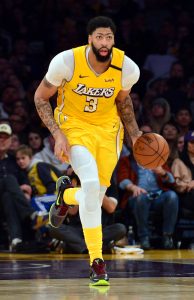 No cap hold can exceed the maximum salary for which a player can sign. For instance, the cap hold for a Bird player with a salary above the league average is generally 150% of his previous salary, as noted above. But for someone like Anthony Davis, who is earning $27,093,018 this season, 150% of his previous salary would be over $40MM, well beyond the projected maximum salary threshold.
Davis’ cap hold – assuming he turns down his 2020/21 player option – will be equivalent to the maximum salary for a player with between 7-9 years of NBA experience. That figure was projected to be $34.5MM based on a $115MM salary cap, but it won’t be that high if lost revenue further reduces the projected ’20/21 cap.
One unusual case involves players on rookie contracts whose third- or fourth-year options are declined, such as Harry Giles, who had his fourth-year option for ’20/21 turned down by Sacramento. Because they declined that option, the Kings wouldn’t be able to pay Giles a starting salary higher than what he would have earned in the option year ($3,976,510).
That rule is in place so a team can’t circumvent the rookie scale and decline its option in an effort to give the player a higher salary — the rule applies even if the player is traded, so if a team had acquired Giles before this year’s deadline, that team would have faced the same limit. Rather than coming in at 300% of this year’s salary (as would be the case with most players coming off rookie scale contracts) or at 190%, (the usual figure for unrestricted free agents with Bird rights), Giles’ 2020 cap hold will equal the amount of his option: $3,976,510.
If a team holds the rights to fewer than 12 players, cap holds worth the rookie minimum salary are assigned to fill out the roster. So, even if a front office chooses to renounce its rights to all of its free agents and doesn’t have any players under contract, the team wouldn’t be able to fully clear its cap. In 2019/20, an incomplete roster charge was worth $898,310, meaning a team with 12 of those charges would have had nearly $11MM on its cap even before adding any players.
Cap holds aren’t removed from a team’s books until the player signs a new contract or has his rights renounced by the club. For example, the Warriors are still carrying cap holds on their books for retired players David West and Matt Barnes, who never signed new contracts since playing for Golden State. Keeping those cap holds allows teams some degree of cushion to help them remain above the cap and take advantage of the mid-level exception and trade exceptions, among other advantages afforded capped-out teams.
Note: This is a Hoops Rumors Glossary entry. Our glossary posts will explain specific rules relating to trades, free agency, or other aspects of the NBA’s Collective Bargaining Agreement. Larry Coon’s Salary Cap FAQ and the Basketball Insiders salary pages were used in the creation of this post.
Earlier versions of this post were published in previous years by Luke Adams and Chuck Myron. Photo courtesy of USA Today Sports Images.
2020/21 Salary Cap Preview: Atlanta Hawks
Hoops Rumors is looking ahead at the 2020/21 salary cap situations for all 30 NBA teams. Due to the coronavirus pandemic and its impact on the NBA calendar, it’s impossible to know yet where the cap for 2020/21 will land. Given the league’s lost revenue, we’re assuming for now that it will stay the same as the ’19/20 cap, but it’s entirely possible it will end up higher or lower than that.
After adding two more young cornerstones – De’Andre Hunter and Cam Reddish – to their roster in the 2019 draft lottery, the Hawks looked like one of the Eastern Conference’s most exciting young teams entering the 2019/20 campaign.
However, despite a monster offensive season from Trae Young, the Hawks didn’t take a major step forward this year. The team didn’t have a whole lot of effective veteran depth and its young players weren’t fully ready to carry the load — a 25-game John Collins suspension didn’t help either. Atlanta will head into ’20/21 hoping for continued growth from its young core and with the cap flexibility necessary to continue adding talent.
Here’s where things stand for the Hawks financially in 2020/21, as we launch our Salary Cap Preview series:
Guaranteed Salary
- Clint Capela ($16,000,000)
- Dewayne Dedmon ($13,333,333)
- De’Andre Hunter ($7,422,000)
- Trae Young ($6,571,800)
- Cam Reddish ($4,458,000)
- John Collins ($4,137,302)
- Kevin Huerter ($2,761,920)
- Bruno Fernando ($1,517,981)
- Brandon Goodwin ($100,000) — Partial guarantee. Non-guaranteed portion noted below. 1
- Total: $56,302,336
Player Options
- None
Team Options
- None
Non-Guaranteed Salary
- Brandon Goodwin ($1,601,593) 1
- Total: $1,601,593
Restricted Free Agents
- DeAndre’ Bembry ($3,752,338 qualifying offer / $7,811,946 cap hold): Bird rights
- Skal Labissiere ($3,484,882 qualifying offer / $7,016,541 cap hold): Bird rights
- Damian Jones ($3,457,586 qualifying offer / $6,915,172 cap hold): Bird rights
- Charlie Brown Jr. (two-way qualifying offer / $1,445,697 cap hold): Non-Bird rights
- Total (cap holds): $23,189,356
Unrestricted Free Agents / Other Cap Holds
- Jeff Teague ($28,500,000): Bird rights
- No. 6 overall pick ($5,813,640)
- Vince Carter ($1,620,564): Early Bird rights
- Treveon Graham ($1,620,564): Early Bird rights
- Total: $37,554,768
Offseason Cap Outlook
Regardless of where the cap for the 2020/21 league year ends up, the Hawks are in a good spot and should have more room than virtually any other NBA team. If the cap remains the same as it was in ’19/20, Atlanta could still easily get to $44MM+ in space.
Although that would be more than enough cap room to make a play for a maximum-salary player, I’m skeptical that GM Travis Schlenk would want to go that route, even if team ownership is getting antsy to make a major splash.
Cap Exceptions Available
- Room exception: $4,767,000 2
Footnotes
- Goodwin’s new salary guarantee date is unknown.
- This is a projected value.
Note: Minimum-salary and rookie-scale cap holds are based on the salary cap and could increase or decrease depending on where the cap lands.
Salary information from Basketball Insiders and Early Bird Rights was used in the creation of this post. Photo courtesy of USA Today Sports Images.