
Hoops Rumors Glossary: Minimum Salary Exception
The minimum salary exception is something of a last resort for capped-out teams looking to add players, as well as for players seeking NBA contracts, but it’s one of the most commonly used cap exceptions. It allows an over-the-cap team to sign a player to a one- or two-year minimum-salary deal, as its name suggests.
Teams can use the exception multiple times in a league year, giving clubs that have used all of their cap room and other exceptions an avenue to fill out their rosters. The exception also accommodates teams’ acquisitions of minimum-salary players via trade, as players signed via the minimum salary exception don’t count as incoming salary for salary-matching purposes.
Players are entitled to varying minimum salaries based on how long they’ve been in the NBA. In 2019/20, a player with no prior NBA experience was eligible for a $898,310 minimum salary, while a player with 10 or more years of experience was eligible for $2,564,753.
[RELATED: NBA Minimum Salaries For 2019/20]
Over the course of the current Collective Bargaining Agreement, the minimum salary will be adjusted each season to reflect the year-to-year salary cap change. For instance, if the cap increases by 5%, so will minimum salaries.
There’s a wide disparity between the minimum salary for rookies and for long-tenured players, with a minimum-salary veteran of 10+ seasons earning nearly three times as much as a rookie making the minimum next season. The NBA doesn’t want those pricier deals to discourage clubs from signing veterans, however, so the league reimburses teams for a portion of a minimum-salary player’s cost if he has three or more years of experience, as long as the contract is a one-year deal.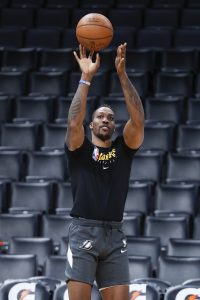
For example, when the Lakers signed 15-year veteran Dwight Howard to a one-year pact for 2019/20 using the minimum salary exception, the contract called for a salary of $2,564,753, but the team’s cap hit was just $1,620,564. The league would reimburse the Lakers for the remaining $944,189 at season’s end.
Most salary cap exceptions can only be used once each season. For example, when a team uses its full mid-level exception to sign one or more players, the club can no longer use that exception until the following season. Unlike the mid-level and other cap exceptions though, the minimum salary exception can be used any number of times in a single season. The Lakers, for instance, used the minimum salary exception to sign Jared Dudley and Troy Daniels in addition to Howard.
While many exceptions begin to prorate on January 10, the minimum salary exception prorates from the first day of the regular season. The season is typically 177 days long, so if a player signs after 28 days have passed, he would only be paid for 149 days.
That’s what happened this season with Carmelo Anthony, who joined the Trail Blazers via the minimum salary exception on November 19, the 29th day of the regular season, making his salary and cap hit 149/177ths of their usual amounts. Instead of a $1,620,564 cap charge for Portland, Anthony’s cap charge is $1,364,204. His salary is $2,159,029 instead of $2,564,753.
Here are a few more notes on the minimum salary exception:
- Players signed using the minimum salary exception are eligible for trade bonuses, but not incentive bonuses. A minimum-salary player with a trade bonus cannot be acquired in a trade using the minimum salary exception unless he waives that bonus.
- A minimum-salary player also can’t be acquired in a trade using the minimum salary exception if his contract is for more than two years or if his salary exceeded the minimum in any previous year of the contract.
- When a minimum-salary player is traded during the season, any reimbursement from the NBA is split between his two teams. It’s prorated based on the number of days he spends with each club.
- If a minimum-salary player with a non-guaranteed salary is waived before he exceeds the minimum for a two-year veteran, his team won’t be reimbursed for any portion of his salary.
- Virtually every 10-day contract is for the minimum salary — often the minimum salary exception is the only way for clubs to accommodate any 10-day deals. The NBA also reimburses teams for a portion of the 10-day minimum salary for veterans with three or more years of experience. We have more details here.
Note: This is a Hoops Rumors Glossary entry. Our glossary posts will explain specific rules relating to trades, free agency, or other aspects of the NBA’s Collective Bargaining Agreement. Larry Coon’s Salary Cap FAQ and the Basketball Insiders salary pages were used in the creation of this post.
Earlier versions of this post were published in previous years by Luke Adams and Chuck Myron. Photo courtesy of USA Today Sports Images.
Warriors Notes: Coronavirus, Thompson, TPE
Unlike a handful of other NBA teams, the Warriors haven’t had any of their players tested for the coronavirus, as Mark Medina of USA Today writes. The franchise hasn’t had any players show symptoms of COVID-19 and is wary of the fact that tests aren’t widely available to the general public at this time.
“We’ve been told that testing’s in short supply,” Warriors president of basketball operations Bob Myers said on Tuesday. “We’re treating ourselves like people, which is what we are. We’re not better than anybody. We’re not worse. We’re just a basketball team, like any company. Right now, we’re not interacting with anybody. I’ve been told by our doctors that we shouldn’t be testing asymptomatic people in California.”
With the city of San Francisco advising people to stay at home except for essential needs, the Warriors’ facility is closed for workout purposes, but the team has remained in daily communication with its players, and is prepared to take action if players start showing symptoms. For now though, that hasn’t been the case.
“Every team’s responsibility is to check in with their players each day and staff members or anybody for that matter, even me, to report symptoms,” Myers said, per Medina. “So we’re doing that. But outside of that, we’re not mandating, nor do I think we should be at this time until testing becomes more available that everybody gets tested.”
Here’s more on the Warriors:
- The club has allowed three unnamed players to travel out of the Bay Area this week, Myers said on Tuesday (per Medina). The NBA is allowing players to leave their team’s market as long as they get approval to do so and remain in contact with the franchise.
- With the Warriors completely “shut down,” Myers acknowledged that an injured player like Klay Thompson doesn’t have access to the team’s facilities for rehab purposes. “Yes, that’s the thing,” Myers said, according to Anthony Slater of The Athletic (Twitter link). “It’s hard. Privately by himself. Maybe with one of the trainers at his house.”
- Myers said the Warriors aren’t concerned about losing their $17MM+ traded player exception from last summer’s Andre Iguodala deal, which is currently scheduled to expire after July 7. “I imagine that they’ll figure that out,” Myers said, suggesting the expiry date would likely be adjusted (Twitter link Nick Friedell of ESPN). ESPN’s Bobby Marks wrote earlier today that those TPE expiry dates seem likely to be pushed back along with the start of the 2020/21 league year.
Ripple Effect Of Hiatus On Contracts, Cap, Offseason Dates
Given the typically rigid nature of the NBA’s annual calendar, the current hiatus threatens to complicate a number of dates and deadlines that will arrive in the coming months. In his latest Insider-only article for ESPN.com, Bobby Marks takes a closer look at how those dates – linked to contracts and the salary cap – may be impacted, noting that the NBA and NBPA are expected to collectively bargain a set of transition rules once the league establishes a return timeline.
For instance, there are 29 player options and 12 team options that are currently scheduled to be exercised or declined before the end of June. Those dates will almost certainly have to be adjusted. The same goes for certain salary guarantee dates and the expiry dates on traded player exceptions, as Marks explains. Of course, the start of the 2020/21 league year will have to be pushed back too, so players with expiring contracts don’t become free agents on July 1.
Contract incentives will also be an issue worth keeping an eye on. Marks observes that during the lockout-shortened 2011/12 season, players’ incentives were prorated based on the fact that the league played 66 games instead of 82 games. The NBA could take similar measures this season. For instance, if a player needs to play 1,000 minutes to earn a bonus and his team ends up playing just 70 of 82 games, his incentive requirement would be adjusted so he only needs to play 70/82nds of 1,000 minutes (854 minutes).
Marks’ article is jam-packed with interesting info and is worth checking out in full if you have an Insider subscription. Here are a few more highlights:
- Although the NBA’s basketball related income for 2019/20 is projected to take a huge hit as a result of this hiatus and the controversy with China in the fall, it’s too early to say what that will mean for the 2020/21 salary cap, according to Marks. In situations like this, the NBA and NBPA generally negotiate in good faith a cap adjustment that satisfies both sides, so we’re unlikely to see a big drop-off next year.
- Still, with the cap for the next year or two no longer expected to increase by nearly as much as the NBA initially projected, the ripple effect could be significant. Maximum-salary contract extensions scheduled to go into effect next season or in 2021/22 for players like Jamal Murray, Ben Simmons, Pascal Siakam, and Damian Lillard won’t be as lucrative as previously estimated, and teams will no longer have as much cap or tax flexibility as expected. As Marks points out, that could influence players with option decisions — they may be more inclined to opt in for ’20/21, with less leaguewide spending power available in the offseason.
- Resuming the regular season – rather than just jumping straight to the playoffs – may not be a top priority for many fans, but there are reasons why the NBA won’t want to skip that step, Marks writes. Teams that wanted to make roster moves prior to the postseason wouldn’t get a chance to do so if the NBA moves straight from its current moratorium to the playoffs. For example, in that scenario, the Thunder wouldn’t get the opportunity to convert two-way player Luguentz Dort to their 15-man roster. As such, the NBA may want to play a few regular season games or at least give teams a few days to make necessary roster moves.
Isaiah Thomas Not Worried About His NBA Future
When the NBA went on hiatus, Isaiah Thomas had been a free agent for several weeks, but he’s not worried about finding another opportunity down the road once the league resumes play. Responding to a question from a Twitter follower earlier this week, Thomas dismissed the idea that he may have to look overseas for his next job.
“Why wouldn’t I get another (NBA) shot though?” Thomas said. “I started 40 games this season (and) got thrown in a trade to make it work to a team that didn’t want me. Nothing more, nothing less. All you need is ONE team to want you. I’ll get back to it real soon.”
Thomas, 31, signed a one-year contract with the Wizards last summer and had a solid bounce-back year in D.C., averaging 12.2 PPG and 3.7 APG with a career-best .413 3PT% in 40 games (37 starts; 23.1 MPG). He was sent to the Clippers in the three-team deadline-day deal that saw Jerome Robinson land in Washington, and was subsequently released by L.A.
It was a somewhat concerning sign for Thomas that the Wizards and Clippers both viewed him as expendable, despite the fact that each team added a point guard at or after the deadline, with Washington trading for Shabazz Napier and Los Angeles signing Reggie Jackson.
Thomas’ defensive shortcomings may have played a part in both teams’ willingness to move on from him — the Wizards had an ugly 120.2 defensive rating during his minutes, and he ranked 500th out of 503 players in defensive real plus-minus this season, per ESPN. Still, he’s likely right that his scoring ability will continue to intrigue NBA teams, if not before the end of a resumed 2019/20 season then perhaps during the offseason.
Where Traded Draft Picks Would Land If Season Doesn’t Resume
Earlier today, we explored what the lottery odds for the 2020 NBA draft would look like if the regular season doesn’t resume. We’re now applying that hypothetical to another aspect of the draft and examining which traded 2020 picks would and wouldn’t change hands based on the current standings.
Our projections below assume that the NBA will sort its standings by winning percentage in scenarios where teams haven’t played the same number of games this season. Again, this is just a hypothetical exercise — if the season resumes, the order below would likely change.
With that in mind and with the help of our reverse standings, let’s take a closer look at where this year’s traded draft picks would land if the NBA has played its last regular season game of 2019/20.
First round:
- Minnesota Timberwolves (from Nets)
- Boston Celtics (from Grizzlies)
- Brooklyn Nets (from Sixers)
- Note: Could be No. 20 depending on random tiebreaker.
- Milwaukee Bucks (from Pacers)
- Note: Could be No. 19 depending on random tiebreaker.
- Philadelphia 76ers (from Thunder)
- Note: Could be No. 22 depending on random tiebreaker.
- Denver Nuggets (from Rockets)
- Note: Could be No. 21 depending on random tiebreaker.
- Oklahoma City Thunder (from Nuggets)
- New York Knicks (from Clippers)
- Boston Celtics (from Bucks)
Protected picks:
- Golden State Warriors (to Nets; top-20 protected)
- Cleveland Cavaliers (to Pelicans; top-20 protected)
- Utah Jazz (to Grizzlies; top-7 and 15-30 protected)
Notes:
- The Thunder pick would be the one worth watching closest if the season does resume. It’s top-20 protected, so OKC would keep it if it were to move up a spot or two, sending the Sixers second-round picks in 2022 and 2023 instead.
Second round:
- Dallas Mavericks (from Warriors)
- Charlotte Hornets (from Cavaliers)
- Philadelphia 76ers (from Hawks)
- Sacramento Kings (from Pistons)
- Philadelphia 76ers (from Knicks)
- Washington Wizards (from Bulls)
- New York Knicks (from Hornets)
- New Orleans Pelicans (from Wizards)
- Memphis Grizzlies (from Suns)
- Boston Celtics (from Nets)
- Chicago Bulls (from Grizzlies)
- Golden State Warriors (from Mavericks)
- Atlanta Hawks (from Rockets)
- Note: Could be No. 51 depending on random tiebreaker.
- Sacramento Kings (from Heat)
- Golden State Warriors (from Jazz)
- Brooklyn Nets (from Nuggets)
- Charlotte Hornets (from Celtics)
- Philadelphia 76ers (from Lakers)
- New Orleans Pelicans (from Bucks)
Protected picks:
- Indiana Pacers (to Nets; 45-60 protected)
- Portland Trail Blazers (to Nets; top-55 protected)
Notes:
- The Hawks will receive the more favorable of Houston’s and Miami’s second-round picks, while the Kings will receive the less favorable of those two picks. Those two picks could end up right next to one another, since the Rockets (40-24) and Heat (41-24) have nearly identical records.
- The Celtics’ pick looks like it will be one of the rare second-rounders with heavy protection that will actually change hands. Boston would have kept it if it had fallen in the top 53.
Four Nets Players Test Positive For Coronavirus
Four Nets players have tested positive for the coronavirus, the team announced today in a press release. Brooklyn didn’t identify those players in its announcement, but said that all four are isolated and under the care of team doctors. Three of the four players aren’t exhibiting symptoms, according to the club.
[UPDATE: Kevin Durant among four Nets players who tested positive]
The Nets are in the process of notifying anyone who recently had known contact with the affected players, including recent opponents, and has asked all members of its travel party to remain isolated and closely monitor their health, the team said in its release.
The latest news means that the total number of NBA players diagnosed with COVID-19 is up to seven, as the four affected Nets join a list that already included Jazz stars Rudy Gobert and Donovan Mitchell and Pistons big man Christian Wood.
Neither the Jazz nor the Pistons recently faced the Nets, so it doesn’t appear there are any obvious connections between all the cases. Brooklyn’s three most recent opponents were the Lakers (March 10), Bulls (March 8), and Spurs (March 6) — none of those teams played Utah or Detroit recently either.
The Nets had been scheduled to face the Warriors in a game without fans last Thursday night before Gobert’s positive test prompted the NBA to suspend its season on Wednesday.
Draft Notes: UAC, Hayes, Early Entrants
NBA executive vice president of basketball operations Kiki VanDeWeghe issued a memo to NCAA coaches on Tuesday morning telling them that the league will be accepting applications from college players seeking feedback from the Undergraduate Advisory Committee, per Adrian Wojnarowski and Jonathan Givony of ESPN.
The UAC provides potential early entrants with feedback on their stock – based on input from NBA executives – to help them make informed decisions on whether or not to declare for the draft. Prospects who want to test the draft waters must first apply for an evaluation from the UAC.
This year’s deadline to apply for that evaluation is April 16 — it’s not clear whether that date will be pushed back in the coming weeks, given the uncertain nature of the NBA’s hiatus. Adam Zagoria of Forbes tweeted today that multiple sources expect the draft to be postponed until July or August.
Whether or not the UAC application deadline changes, the process figures to be more important than usual this spring for prospects seeking feedback, as ESPN duo points out. Team executives are preparing for the possibility that scouting and workout opportunities will be extremely limited, if not entirely eliminated, leading up to this year’s draft.
According to Wojnarowski and Givony, VanDeWeghe acknowledged the “rapidly evolving” situation in his memo, noting that the league would advise NCAA coaches and players of any changes to the pre-draft process “whenever such information is available.”
Here’s more on the 2020 NBA draft:
- Chris Stone of Sporting News has updated his 2020 big board, with French guard Killian Hayes jumping up to No. 3, surpassing bigger-name prospects such as James Wiseman.
- Yale forward Jordan Bruner is expected to forgo his final year of college eligibility to enter the 2020 draft, as Jim Fuller of The New Haven Register writes. Meanwhile, SMU sophomore guard Kendric Davis will test the draft waters (link via Sam Blum of The Dallas Morning News), as will suspended Nebraska sophomore guard Cam Mack (Twitter link).
- Earlier today, we examined what the 2020 NBA draft lottery odds would look like if the 2019/20 regular season doesn’t resume and the current standings become the final standings.
What 2020 Lottery Odds Would Look Like If Season Doesn’t Resume
While the NBA hopes that resuming the 2019/20 season will be possible, there are scenarios in which the league could proceed directly to the postseason or has to cancel the rest of the ’19/20 campaign entirely. If such measures are necessary, it would mean that the NBA’s current standings will be its final standings.
It’s tricky to say exactly what that would mean for an event like the 2020 NBA draft, which hinges in large part on the previous season’s standings. After all, some teams have played as few as 64 games, while others have played as many as 67.
Teams like the Hawks (20-47) and Cavaliers (19-46) are an equal number of games back of the clubs ahead of them the standings, but Atlanta has the better winning percentage. Presumably, that would mean Cleveland moves ahead of the Hawks in the projected draft order and for lottery odds purposes. Based on winning percentage, the Cavs would also have better lottery positioning than the Timberwolves (19-45), despite having the same number of wins.
With that in mind, we’re looking today at what the lottery odds would be if the NBA’s regular season doesn’t resume and the league ranks its teams by winning percentage. It’s a hypothetical exercise, but one which could become increasingly relevant the longer the league’s hiatus extends.
For a full breakdown of how the NBA draft lottery works, be sure to check out our glossary entry on the subject. The standard odds chart for the new draft lottery format is included in our glossary entry, but the numbers in that chart don’t quite match up with 2020’s lottery, since the Kings and Pelicans currently have identical records. That tie would impact the odds for this year’s lottery.
With the help of our reverse standings and data from Tankathon.com – which is worth bookmarking for all sorts of draft-related info – we’ve listed the new, hypothetical odds for 2020 in the chart below.
The numbers in the chart indicate percentages, so the Warriors, for example, have a 14% chance of landing the No. 1 pick and a 47.9% chance of ending up at No. 5. If a team’s odds are listed as >0, that percentage is below 0.1%.
Here’s the full chart:
| Team | 1 | 2 | 3 | 4 | 5 | 6 | 7 | 8 | 9 | 10 | 11 | 12 | 13 | 14 |
|---|---|---|---|---|---|---|---|---|---|---|---|---|---|---|
| GSW | 14 | 13.4 | 12.7 | 12 | 47.9 | – | – | – | – | – | – | – | – | – |
| CLE | 14 | 13.4 | 12.7 | 12 | 27.8 | 20 | – | – | – | – | – | – | – | – |
| MIN | 14 | 13.4 | 12.7 | 12 | 14.8 | 26 | 7.1 | – | – | – | – | – | – | – |
| ATL | 12.5 | 12.2 | 11.9 | 11.5 | 7.2 | 25.7 | 16.8 | 2.2 | – | – | – | – | – | – |
| DET | 10.5 | 10.5 | 10.6 | 10.5 | 2.2 | 19.6 | 26.7 | 8.8 | 0.6 | – | – | – | – | – |
| NYK | 9 | 9.2 | 9.4 | 9.6 | – | 8.6 | 29.6 | 20.6 | 3.8 | 0.2 | – | – | – | – |
| CHI | 7.5 | 7.8 | 8.1 | 8.5 | – | – | 19.7 | 34.1 | 12.9 | 1.3 | >0 | – | – | – |
| CHA | 6 | 6.3 | 6.7 | 7.2 | – | – | – | 34.5 | 32.1 | 6.7 | 0.4 | >0 | – | – |
| WSH | 4.5 | 4.8 | 5.2 | 5.7 | – | – | – | – | 50.7 | 25.9 | 3 | 0.1 | >0 | – |
| PHX | 3 | 3.3 | 3.6 | 4 | – | – | – | – | – | 65.9 | 18.9 | 1.2 | >0 | >0 |
| SAS | 2 | 2.2 | 2.4 | 2.8 | – | – | – | – | – | – | 77.6 | 12.6 | 0.4 | >0 |
| SAC* | 1.3 | 1.4 | 1.6 | 1.8 | – | – | – | – | – | – | – | 86.1 | 7.6 | 0.1 |
| NOP* | 1.2 | 1.3 | 1.5 | 1.7 | – | – | – | – | – | – | – | – | 92.0 | 2.3 |
| POR | 0.5 | 0.6 | 0.6 | 0.7 | – | – | – | – | – | – | – | – | – | 97.6 |
* The Kings and Pelicans have matching 28-36 records and would be subject to a random tiebreaker to determine which team gets the No. 12 slot and which gets No. 13. Their spots in this list (and their odds) could be flipped.
Christian Wood Among Knicks’ Potential Offseason Targets
We’re not sure exactly when the 2020 NBA offseason will happen, but when it does, Christian Wood is among the free agents expected to be of interest to the Knicks. According to Ian Begley of SNY.tv, some members of New York’s front office are “enamored” with the Pistons‘ big man.
Begley’s report doesn’t make it clear whether those members of the Knicks’ front office who like Wood will all remain involved in basketball decision-making going forward. A source tells Begley that the Knicks have been monitoring Wood for much of the 2019/20 season, which suggests the team had its eye on him before Leon Rose was hired as president of basketball operations. Rose is expected to make some changes to the front office now that he has officially taken over, and it’s possible the new executives will zero in on different players.
Still, assuming the Knicks create a good chunk of cap room by turning down team options and waiving a handful of players with non-guaranteed 2020/21 salaries, Wood might make sense as a target. The 24-year-old, one of three NBA players who has tested positive for the coronavirus, is in the midst of a career year, with 13.1 PPG and 6.3 RPG in 62 games (21.4 MPG).
Wood has been particularly effective since Andre Drummond was moved at the trade deadline, averaging 22.8 PPG, 9.9 RPG, and 2.0 APG with a .562/.400/.757 shooting line in his last 13 games.
As Begley points out, Bobby Portis, Taj Gibson, and Maurice Harkless are among the players who aren’t locks to return to New York next season, to the club could have some minutes to fill at the four and five. Wood’s age would also line up well with the Knicks’ rebuilding timeline.
The Pistons, who will hold Wood’s Early Bird rights, are expected to make an effort to lock him up when he reaches free agency, and he has expressed interest in re-signing with the team that gave him an opportunity to play.
Hiatus Notes: Conference Call, Gallinari, Olympics
The NBA is holding another conference call with its Board of Governors on Tuesday to talk about the hiatus and the league’s plans going forward, tweets ESPN’s Adrian Wojnarowski.
It will be the third time since last Wednesday that the league has conducted a call with ownership representatives from all 30 teams, according to Wojnarowski, who notes that there’s plenty to discuss and analyze as the coronavirus situation continues to rapidly evolve.
As we wait to hear what gets discussed during today’s meeting, let’s round up a few more notes related to the NBA’s stoppage…
- A team of ESPN writers, including Eric Woodyard, Tim Bontemps, Nick Friedell, and Malika Andrews, takes a closer look at what the extended layoff will mean for every team in the Eastern Conference. As ESPN details, top teams like the Bucks and Raptors had been dealing with injuries prior to the suspension and should be a whole lot healthier if and when the season resumes.
- While many NBA players didn’t fully understand the serious nature of the coronavirus outbreak until Rudy Gobert‘s positive test and the NBA’s shutdown last week, Thunder forward Danilo Gallinari had been keeping up on the situation for weeks as he saw how it impacted his home country, writes Marc Stein of The New York Times. “Of course we did a mistake not taking it seriously in Italy and now we are the second- or third-worst country in the world for this virus,” Gallinari said. “Hopefully we’re not going to make the same mistake in the States.”
- FIBA announced today (via Twitter) that the draw for the 2020 Olympic basketball tournaments, which was scheduled for March 20, has been postponed indefinitely. The U.S., Spain, Australia, France, Argentine, Iran, Japan, and Nigeria will participate in the Olympic tournament, with four more countries set to qualify this summer. However, given the current global pandemic, the odds of those Olympic games in Tokyo going forward as planned seem increasingly shaky.