
Atlantic Notes: Mazzulla, Bridges, Thibodeau, Rajaković
Despite moving 2022 Defensive Player of the Year Marcus Smart and key reserve forward Grant Williams in separate summer trades, Celtics head coach Joe Mazzulla intends to employ similar defensive principles in 2023/24, writes Adam Himmelsbach of The Boston Globe.
Himmelsbach adds that newly acquired big man Kristaps Porzingis has always been a solid defender around the rim, and can aid Boston at that end of the floor, too.
“With Marcus gone, we don’t want our defensive identity to go out the door as well, so we have to really emphasize that at the start of training camp,” Mazzulla said. “I think what Kristaps can bring to us defensively, and the additions some of our other guys can bring to us defensively, I want to make sure that’s where we hang our hats this year.”
There’s more out of the Atlantic Division:
- As the Nets’ No. 1 option, small forward Mikal Bridges is striving to hone his play-making this offseason, according to Brian Lewis of The New York Post (subscriber link). “Yeah, you could do [drills] … but it’s more of a mindset, and having that mindset coming in and watching film,” Bridges said of how he intended to improve. “That’s the biggest thing, to have that mindset of playmaking.”
- The 2023/24 Knicks roster has been constructed with an eye towards the preferences of head coach Tom Thibodeau, under whom the team has had its most success in years, writes Zach Braziller of The New York Post. Braziller notes that the trade addition of Josh Hart and the signing of Donte DiVincenzo, two defensively versatile wings, plus the subtractions of talented-but-raw forwards Cam Reddish and Obi Toppin, all seem to be in line with Thibodeau’s ethos to team-building.
- In an interview with Sportski zurnal (as translated by Eurohoops), new Raptors head coach Darko Rajaković explained how he has always had major goals in mind with regard to his coaching career. “Since the beginning of my coaching career, I have always been very ambitious, but at the same time I knew that a coaching career is not a 100-meter race, but a long marathon,” Rajaković said. “I have only just run half a marathon, I still have a long way to go. I am currently in my 27th year of coaching. of work and I hope that I will stay in coaching for as long as possible. I’m enjoying it and it’s nice.”
International Notes: Doncic, Embiid, Gobert, Lessort
Mavericks star Luka Doncic was introduced Saturday as the new captain of the Slovenian national team for the FIBA World Cup competition, writes Johnny Askounis of Eurohoops. He takes over for Edo Muric, who will miss the tournament with a torn ACL.
“I am honored to be the captain. The coach and the rest of the players made the decision,” Doncic said. “It is a pleasure to play for the national team. I have not played since April 10, so I can’t wait for the games.”
At 24, Doncic is already a veteran of international competitions. He was among the stars at the last Summer Olympics and competed twice in EuroBasket, helping Slovenia capture the gold medal in 2017. His team failed to defend its title at last year’s tournament, getting upset by Poland in the quarterfinals.
“As in every tournament, the goal is to win the championship,” Doncic said. “Last year’s failure in the EuroBasket did not make (me) too angry, but instead motivated me. You must look ahead. We don’t care what happened last year. I feel better this year. It is apparent. Much praise to the fitness coach pushing me.”
There’s more international news to pass along:
- After saying earlier this week that he’s hoping to have Sixers center Joel Embiid for the 2024 Olympics, Team USA managing director Grant Hill expanded on those comments Saturday on Marc Stein’s podcast (hat tip to HoopsHype). Hill expressed guarded optimism about landing Embiid, who also has citizenship with France and Cameroon, stating that talks will continue as he puts the team together. “Joel Embiid is an incredible talent and he has options,” Hill said. “And I guess that’s a good thing. I’ll just say this: I’ve had some discussions with him, and he knows our desire to have him a part of our program. So we’ll see sort of where that goes. But we’ll certainly, as we get through this World Cup and start to sort of plan for next summer, we’ll continue with those conversations, and hopefully by then, I’ll have some numbers and percentages to give you in terms of where the possibility stands.”
- Rudy Gobert had doubts about participating in the World Cup after the season ended, but now he believes France has a good shot at a gold medal, according to Eurohoops. Gobert said he continued to work hard after the Timberwolves were ousted in the first round of the playoffs. “The break after the end of the season wasn’t one,” Gobert said. “I trained a lot in June and July, I feel good and that’s also why I’m here.”
- France may be without draft-and-stash player Mathias Lessort, whose NBA rights are owned by the Knicks, Eurohoops reports. Lessort has an ankle issue that will force him to miss an exhibition game with Tunisia next week.
Mavericks Not Pursuing Jaylen Nowell?
A recent report indicated that the Mavericks are considering an offer for Timberwolves shooting guard Jaylen Nowell, but Marc Stein hears that may not be true. In a podcast Saturday, the veteran NBA reporter said Dallas’ interest is exaggerated (hat tip to RealGM).
“I know there were some recent reports that Jaylen Nowell from Minnesota is a potential target. I was actually told the Mavericks are not really in that race at this point,” Stein said. “So, to this point, I would scratch Nowell as a target for the Mavericks, at least that was that’s what I was told yesterday.”
Nowell, 24, is an unrestricted free agent after spending the last four years in Minnesota. He is coming off his best NBA season, appearing in 65 games and averaging 10.8 points, 2.6 rebounds and 2.0 assists in 19.3 minutes per night.
Nowell has developed into a reliable bench player for the Wolves since being selected with the 43rd pick in the 2019 draft. He’s seeking his second NBA contract after signing a four-year deal at the time and is hoping for a raise after making $1.93MM last season.
With 14 players holding standard contracts, the Timberwolves have one open roster spot, but committing money to Nowell may not be in the team’s plans. They recently gave a three-year, $42MM extension to Naz Reid and signed Shake Milton and Troy Brown Jr. as free agents. An extension is also expected for Jaden McDaniels at some point this summer.
Hornets Notes: Washington, Bouknight, Jones, Martin
The situation surrounding Hornets forward P.J. Washington has been “amazingly quiet,” Marc Stein states in his latest Substack chat. With nearly a month elapsed since free agency began, Washington remains the most prominent player without a new contract and there’s little indication that the impasse will be resolved soon.
Washington is restricted, so Charlotte can match any offer sheet he might receive, but free agency money dried up weeks ago. No one has the resources to offer him a contract starting at more than the non-taxpayer mid-level exception of about $12.4MM without working out a sign-and-trade. Stein speculates that Washington may decide to accept the Hornets’ $8.5MM qualifying offer and test the market again next summer when he’s unrestricted.
That same theory is floated by Roderick Boone of The Charlotte Observer, who notes that threatening to take the QO is the only way Washington can gain any leverage in negotiations. Like Stein, Boone reports that everything appears to be “status quo,” but cautions that doesn’t mean progress isn’t being made behind the scenes.
There’s more from Charlotte:
- There’s no clear path to playing time for either James Bouknight or Kai Jones, Boone adds in the same piece. The selection of Brandon Miller with the No. 2 pick in the draft creates another obstacle for Bouknight, who hasn’t made a significant impression during his first two NBA seasons. Another wing player may have to be injured for Bouknight to get a shot at rotation minutes. As for Jones, he’s third on the depth chart behind Mark Williams, a first-round pick last year, and Nick Richards, who recently signed a three-year, $15MM extension. Boone states that coach Steve Clifford doesn’t like using three centers, so there doesn’t seem to be a role for Jones.
- The Hornets may be in the market for a ball-handling guard after Dennis Smith Jr. signed with the Nets, according to Boone. He notes that there’s no one on the roster who would be a natural backup to LaMelo Ball, so that role would likely go to Terry Rozier, which would push his minutes above where the team wants them to be.
- It’s encouraging that Cody Martin hasn’t undergone surgery for the knee issues that limited him to seven games last season, Boone adds. However, he points out that the Hornets won’t know how Martin’s knee will hold up until he resumes playing a regular schedule. The small forward has three seasons left on his four-year, $31MM contract.
Former Warriors Exec Bob Myers Likely To Get Job Offers
Bob Myers indicated that he wanted some time away from the game when he stepped down as president of basketball operations and general manager of the Warriors, but fans should expect to hear his name mentioned in connection to any openings that arise in the next few months, writes Jake Fischer of Yahoo Sports.
The most obvious team for Myers, according to Fischer, is the Clippers because of his longtime association with team consultant Jerry West and the working relationship they developed during their time together with Golden State. Myers spent more than a decade with the Warriors and helped to win four championships, so Fischer believes he’ll be among the first names that any team will call if it decides to shake up its front office.
Fischer identifies a few other former general managers who may be in line for a second chance, including ex-Utah GM Dennis Lindsey, who is currently working in the Mavericks‘ front office, Kings assistant GM Wes Wilcox, who has rebuilt his reputation after his experience in Atlanta, and former Orlando GM Rob Hennigan, who is VP of basketball operations with the Thunder.
Fischer passes along more information about rising stars in NBA front offices:
- Pelicans general manager Trajan Langdon was among the candidates to become the Wizards’ president of basketball operations and he’ll likely be considered for similar jobs in the future, Fischer writes. Raptors GM Bobby Webster, Cavaliers GM Mike Gansey and new Clippers GM Trent Redden all appear headed for team president roles someday, Fischer adds.
- Jeff Peterson, the Nets‘ assistant GM, is considered one of the league’s best young executives, according to Fischer. Peterson interviewed for the Pistons’ GM slot in 2020, and Fischer hears that he’s viewed as one of the favorites to take over the Hornets if they decide to replace Mitch Kupchak, who’s in the final year of his contract. Pelicans assistant GM Bryson Graham could be first in line to replace Langdon if he leaves, but league sources tell Fischer that he might get an opportunity with another team before that happens.
- Tayshaun Prince is a valuable member of the Grizzlies‘ front office and has received overtures about running other teams, according to Fischer. Among other former NBA players, Jameer Nelson has built a strong reputation in the Sixers‘ front office for his work with their G League affiliate, and Acie Law appears headed for a promotion with the Thunder after Will Dawkins was hired by the Wizards.
- Fischer identifies CAA’s Austin Brown as an agent who might move into a front office role, noting that he was a candidate to run the Bulls in 2020. Fischer also singles out agents Jason Glushon and Todd Ramasar, along with Kirk Berger, a legal counsel with the players’ union.
Bulls Notes: Dosunmu, Carter, LaVine, DeRozan
Ayo Dosunmu understood that nothing would be guaranteed when he decided to re-sign with the Bulls, writes Darnell Mayberry of The Athletic. After receiving a three-year deal worth $21MM as a restricted free agent, Dosunmu now has to prove that he’s worthy of consistent playing time.
With Lonzo Ball out for the season, Chicago appears to have a three-man competition for the starting point guard role. The organization also invested in the re-signed Coby White, who got $33MM over three years, and free agent addition Jevon Carter, who signed for three years at $20MM.
“You know I always want to come out here and compete,” Dosunmu said. “Anybody who says they don’t want to start, they would be not telling the truth. But that’s something that will be taken care of in training camp. … I’m going to make a way. That’s all I can say. I’ve always found a way. I’m going to continue to find a way.”
There’s more on the Bulls:
- Carter, a native of the Chicago area, credits Derrick Rose for inspiring his NBA career (video link). Carter is thrilled to be playing in his hometown after spending time with four teams in his first five seasons. “When I started to watch Derrick Rose, he was really one of the ones that made me believe that going to the NBA was possible,” Carter said.
- Trade speculation surrounding Zach LaVine has calmed down, but it’s likely to resume when the season begins, according to Joe Cowley of The Chicago Sun-Times. League sources told Cowley they got the impression that the Bulls were exploring their options with LaVine this summer. Even though executive vice president of basketball operations Arturas Karnisovas was pleased with the strong finish to the regular season, Cowley cautions that changes could be coming if the team doesn’t get off to a good start this fall. Cowley also points out that LaVine is Chicago’s only maximum-salary player, and the new CBA could make teams reluctant to add big money in trades.
- Appearing on Iman Shumpert‘s podcast, DeMar DeRozan said it feels like the NBA is trying to de-emphasize the mid-range game, but he doesn’t mind going against the tide (hat tip to Josh Buckhalter of Heavy.com). “The threes, that’s cool. I’m not never against that or anything,” DeRozan told Shumpert. “But sometimes it’s a complete game that you could have too, playing basketball. And I think so much of that gets lost by so many threes being shot.”
Cavaliers Notes: L. Nance Jr., P. Nance, Travers, Roster Opening
In an appearance on the Wine and Gold Talk podcast, Larry Nance Jr. said he feels fortunate that his younger brother will get a chance to carry on the family tradition of playing for the Cavaliers. Pete Nance will reportedly be offered an Exhibit 10 contract after being part of the Cavs’ Summer League team. Nance Jr. played several seasons in Cleveland, and his father was a star with the Cavaliers in the 1980s and ’90s.
Nance Jr. was in Las Vegas to watch his Pelicans teammates in action as well as his younger brother, who is trying to earn a spot in the NBA as an undrafted prospect. He believes his brother can succeed at the professional level and offered him some advice on how to deal with his first Summer League.
“We talk all the time,” Nance Jr. said. “Going into Summer League, I think the biggest thing I told him was, he had such momentum, coming off obviously a rough college season, but then the momentum he built going into draft workouts and then being (at the draft combine) in Chicago training for it, just carrying that over into Summer League was great. Just go be aggressive, shoot your shots when you decide you want to shoot them and play your game.”
There’s more on the Cavaliers:
- Nance also talked about the circumstances that led to him being traded to Portland prior to the 2021/22 season. The team had just drafted Evan Mobley, whom Nance said was obviously headed for stardom, and gave a five-year extension to Jarrett Allen. With Kevin Love also on the roster, Nance didn’t believe he would get regular rotation minutes if he stayed in Cleveland. “It had gone from me really enjoying playing the Larry Nance Jr. thing, in my dad’s footsteps … and at a certain point it became a little redundant. I still loved being in Cleveland, still loved having my family around and loved playing for the Cavs, but I needed to step away from all this and go play on a playoff team and really go show what I’ve got.”
- The Cavaliers and Luke Travers reached a mutual decision that he will continue to play in Australia, he told Australian media outlet Code Sports (hat tip to Mike Battaglino of Cavaliers Nation). A second-round pick in 2022, Travers was one of the Cavs’ top players in Las Vegas as they won the Summer League title. “The talk is just one more year (in the NBL) and hopefully it’s a good one,” he said. “To be able to come back, it’s what I wanted to do to continue to develop my game in Melbourne and I’m coming here to win. Coming over here, there’s a lot of clarity. They (Cleveland and Melbourne United) have been awesome about it, so getting that (uncertainty) out of the way makes everything else easier.”
- In a subscriber-only story, Chris Fedor of Cleveland.com looks at 10 possible free agent options for the Cavaliers with their open roster spot, including Kelly Oubre, Terrence Ross, Derrick Jones and T.J. Warren.
Warriors Hiring Chuck Hayes Away From Rockets
The Warriors will hire longtime Rockets player and front office member Chuck Hayes as their new director of basketball operations, according to Danielle Lerner of The Houston Chronicle.
Hayes, 40, joined Houston’s management team six years ago as a pro player personnel scout and worked his way up to assistant director of player personnel. He told Lerner that his position with Golden State will involve some college and professional scouting but will also “enhance my responsibilities with free agency and some trade strategy.”
Hayes is originally from San Leandro, California, so the new job will bring him close to home.
The 6’6″ forward signed with the Rockets after going undrafted out of Kentucky in 2005 and spent his first six NBA seasons with the team. He also played for the Kings and Raptors before rejoining Houston for two games in his final season. Hayes averaged 3.7 points and 5.0 rebounds in 644 career games.
How 2024 Cap Increase Will Determine Value Of Brown’s Record-Setting Contract
When Jaylen Brown agreed to a five-year, super-max extension with the Celtics, it was widely reported to be a $304MM deal. That number is subject to change though, since the value of the contract will depend on the value of the NBA’s 2024/25 salary cap, which won’t be officially determined until next June.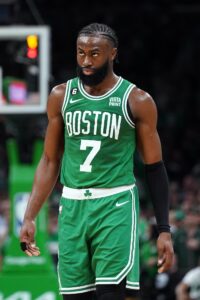
Brown’s contract will start at 35% of the ’24/25 cap and will feature 8% annual raises after that.
The $304MM estimate for Brown’s super-max deal is based on a projected salary cap increase of 10%. The NBA and NBPA have agreed not to increase the cap by more than 10% per year in order to avoid a repeat of the 2016 offseason, when a 34.5% bump helped create a Warriors super-team and resulted in a number of regrettable contracts for other teams around the league.
With that ceiling in mind, a 10% cap increase next summer would represent a best-case scenario for Brown. But it’s also a realistic outcome — the cap has risen by 10% in each of the past two offseasons, so it’s forecasting it to happen again is certainly within reason.
If the cap were to increase 10% for 2024/25, Brown’s contract would look like this:
| Year | Salary |
|---|---|
| 2024/25 | $52,368,050 |
| 2025/26 | $56,557,494 |
| 2026/27 | $60,746,938 |
| 2027/28 | $64,936,382 |
| 2028/29 | $69,125,826 |
| Total | $303,734,690 |
Of course, the NBA hasn’t actually formally projected a 10% cap increase for 2024/25, so it’s a little early to lock in those figures for Brown.
If the cap were to instead increase by a more modest 5%, his deal would instead look like this:
| Year | Salary |
|---|---|
| 2024/25 | $49,987,700 |
| 2025/26 | $53,986,716 |
| 2026/27 | $57,985,732 |
| 2027/28 | $61,984,748 |
| 2028/29 | $65,983,764 |
| Total | $289,928,660 |
In either case, Brown’s contract would become the richest deal in NBA history, comfortably surpassing Nikola Jokic‘s five-year, $276,122,630 deal that begins in 2023/24. The only scenario in which Brown’s extension wouldn’t exceed Jokic’s is if the salary cap doesn’t increase at all in a year — then Brown’s deal would look exactly the same as Jokic’s.
A lot could happen in the next 11 months, but it would require very unusual circumstances for the cap not to rise at all. Since 2010, that has only happened amidst shortened seasons (due to a lockout and the COVID-19 pandemic). So we can confidently project Brown’s contract to be worth more than Jokic’s.
For what it’s worth, Brown won’t be the only player earning 35% of the cap in 2024/25. Devin Booker and Karl-Anthony Towns also signed super-max contracts that will go into effect a year from now, and their deals will look exactly the same as Brown’s from 2024-28. The only reason those aren’t considered record-setting contracts in their own right is because they’ll cover four years instead of five, since Booker and Towns signed extensions with two years left on their respective contracts rather than just one.
Of course, even Brown’s record is unlikely to stand for long. With an in-season tournament being introduced later this year and a new media rights deal around the corner, the NBA’s revenue and salary cap will likely only continue to grow in the coming years.
Brown’s Celtics teammate Jayson Tatum, who met the super-max performance criteria this spring and will meet the service time criteria in 2024, is the best bet to be the next recipient of the richest contract in league history. If the cap increases by 10% next year and another 10% in 2025, this is what a super-max deal for Tatum could look like:
| Year | Salary |
|---|---|
| 2025/26 | $57,604,750 |
| 2026/27 | $62,213,130 |
| 2027/28 | $66,821,510 |
| 2028/29 | $71,429,890 |
| 2029/30 | $76,038,270 |
| Total | $334,107,550 |
Hoops Rumors Glossary: Mid-Level Exception
The mid-level exception is the most common way for over-the-cap NBA teams to sign free agents from other clubs for more than the minimum salary. It helps ensure that virtually every team heads into the offseason with a little spending flexibility.
Teams are eligible to use specific types of mid-level exceptions depending on their proximity to the salary cap. The most lucrative form of mid-level is available to teams that are over the cap but below the first tax apron. Clubs above the first apron, and even those operating under the cap, have access to lesser versions of the MLE.
Here’s a breakdown of how the various forms of the exception are structured:
For teams over the cap and below the first tax apron:
- Commonly called either the full mid-level exception or the non-taxpayer mid-level exception.
- Contract can cover up to four seasons.
- First-year salary is worth $12,405,000 in 2023/24; maximum four-year value is $53,341,500.
- Once used, the team cannot surpass the first tax apron (approximately $7MM above the tax line in 2023/24) for the remainder of the season.
- Beginning in 2024/25, this form of mid-level exception can be used to acquire a non-free-agent via trade or waiver claim, as long as his contract fits into the exception (in terms of years and dollars). Only the player’s current-year salary must fit into the MLE.
For teams operating under the cap:
- Commonly called the room exception.
- Contract can cover no more than three seasons.
- First-year salary is worth $7,723,000 in 2023/24; maximum three-year value is $24,327,450.
- Beginning in 2024/25, this form of mid-level exception can be used to acquire a non-free-agent via trade or waiver claim, as long as his contract fits into the exception (in terms of years and dollars). Only the player’s current-year salary must fit into the room exception.
For teams over the cap and the first tax apron, but below the second apron:
- Commonly called the taxpayer mid-level exception.
- Contract can cover up to two seasons.
- First-year salary is worth $5,000,000 in 2023/24; maximum two-year value is $10,250,000.
- Once used, the team cannot surpass the second tax apron ($17.5MM above the tax line in 2023/24) for the remainder of the season.
For teams over the cap and both tax aprons:
- No mid-level exception is available.
Each form of the mid-level allows for annual raises of up to 5% of the value of the first season’s salary.
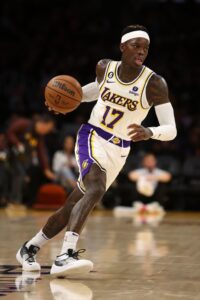 Teams can use their entire mid-level exception to sign one player. However, only one club has taken this route so far in 2023/24, with the Raptors signing Dennis Schröder to a multiyear contract that’s worth $12,405,000 in year one.
Teams are also allowed to split the mid-level among multiple players, and that has become an increasingly common course of action. For instance, the Mavericks have used their MLE to sign Seth Curry ($4MM) and Dante Exum ($3MM) so far in ’23/24 and still have more than $5MM remaining.
In the past, players drafted in the second round often signed contracts using a portion of the mid-level because the exception allows teams to offer more years and more money than the minimum salary exception provides. However, the new second-round pick exception has all but eliminated the need for teams to use the MLE on second-round picks.
Still, if a team wants to sign an undrafted free agent to a longer-term contract or convert a two-way player to a multiyear deal, the mid-level can come in handy. The Pelicans used their MLE this summer to move E.J. Liddell from his two-way deal to a three-year contract that begins at the minimum ($1,801,769).
Some front offices prefer to leave all or part of their mid-level exception unused in the offseason so it’s still available during the second half of the regular season. At that point, a contender could dangle its MLE in an effort to outbid rivals for top players on the buyout market. A non-contending club, on the other hand, could use its MLE to lock up an intriguing developmental player to a long-term contract.
Unlike the bi-annual exception, the mid-level exception can be used every season. So whether or not a team uses any of its mid-level in 2023/24, each club below the second tax apron in ’24/25 will have the opportunity to use some form of the MLE.
The amount of each form of mid-level exception increases – or decreases – at the same rate as the salary cap, ensuring that its value relative to cap room remains about the same from year to year. So if the salary cap rises by 10%, the mid-level values would rise by the same amount.
Here are a few more notes related to the mid-level exception:
- A contract signed using a mid-level exception can include bonuses as long as the player’s maximum potential compensation doesn’t exceed the maximum value of the exception. For example, in 2023/24, a team can’t sign a player to a contract using the non-taxpayer mid-level exception that has a base salary of $12,405,000 and another $1MM in incentives. But a contract with a base salary of $11,405,000 and $1MM in incentives is permitted.
- A team is only allowed to use one form of mid-level exception in a given season. For instance, an over-the-cap club that uses a portion of its non-taxpayer mid-level exception before shedding salary and dipping below the cap would not then be permitted to use the room exception.
- On the day after the trade deadline, the value of a team’s unused mid-level exception begins to prorate downward. The exact amount of proration depends on how much of the MLE was unused as of January 10 and how many total days there are in the regular season. For example, if a team had $3MM of its mid-level left on January 10 and there are 174 days in that season, the MLE would decrease in value by $17,241 per day (1/174th of $3MM).
Note: This is a Hoops Rumors Glossary entry. Our glossary posts will explain specific rules relating to trades, free agency, or other aspects of the NBA’s Collective Bargaining Agreement. Larry Coon’s Salary Cap FAQ was used in the creation of this post.
Earlier versions of this post were published in previous years.