
Cavs Sign Isaiah Mobley, Craig Porter To Two-Way Deals
The Cavaliers have filled two of their three two-way slots for the 2023/24 season by signing forward Isaiah Mobley and guard Craig Porter to two-way contracts, per NBA.com’s official transaction log.
Neither move comes as a surprise. Mobley was on a two-way deal last season and received a two-way qualifying offer last week that made him a restricted free agent. As for Porter, his agreement with Cleveland was reported shortly after he went undrafted on June 22.
Mobley, the older brother of rising Cavs star Evan Mobley, appeared in just 12 games and logged 84 total minutes at the NBA level last season after being drafted 49th overall out of USC. He played a much bigger role for the Cleveland Charge, the Cavs’ G League affiliate, averaging 21.0 points, 8.6 rebounds, and 4.0 assists with a .517/.353/.730 shooting line in 33.2 minutes per game across 22 regular season contests.
Porter, who went undrafted out of Wichita State, was a fifth-year senior who played three seasons with the Shockers after transferring from Vincennes. He had by far his best year in 2022/23, averaging 13.5 points, 6.2 rebounds and 4.9 assists in 31 games (33.6 MPG) and earning third-team All-AAC honors.
The Cavs have one open two-way slot left and it’s not yet clear who will fill it. Last season’s other two-way player, Mamadi Diakite, didn’t receive a qualifying offer, so No. 49 pick Emoni Bates looks like the leading candidate, unless he earns a spot on the standard 15-man roster.
Hoops Rumors Glossary: Second-Round Pick Exception
When an NBA team selects a player in the first round of the draft, there’s never any concern about how the player will be signed, regardless of how far over the salary cap the team might be. The rookie scale exception allows teams to sign as many first-round picks as they need to, within a predetermined salary range, without requiring cap room.
However, there hasn’t historically been a similar cap exception for second-round picks. That means clubs intent on locking up their second-rounders to three- or four-year contracts have had to use cap space or a portion of the mid-level exception to do so. If a team wanted to give its second-round pick more than the minimum salary, it would require cap room, the mid-level, or another exception such as the room or bi-annual.
In the 2023 Collective Bargaining Agreement, the NBA and NBPA addressed this issue by adding a new second-round pick exception, which looks like a win for both sides. Teams will have more freedom to sign their young players to multiyear contracts without having to worry about carving out cap room or exception money for them.
Players, meanwhile, don’t have to worry that their new team’s cap situation might force them to accept a minimum-salary contract or a two-way deal. Of course, some late second-rounders will still sign a two-way deal or for the minimum salary, but a team will no longer be able to point to its lack of spending power to explain why that’s the only offer on the table.
Like the rookie scale exception, the second-round pick exception isn’t limited to a single use. It can be deployed as many times as needed in a given league year.
The second-round exception can be used to sign a player to either a three-year contract that includes a third-year team option or a four-year contract that features a fourth-year team option. Here’s what the salary structure looks like:
Three-year deal
- The first year can be worth up to the minimum salary for a player with one year of NBA experience.
- The second and third years are worth the second- and third-year minimum salaries for a rookie.
- The third year is a team option.
As our chart of minimum salaries shows, in 2023/24, the maximum three-year salary for a contract with this structure would be about $5.9MM. Here’s the year-by-year breakdown (option year in italics):
| Year | Salary |
|---|---|
| 2023/24 | $1,801,769 |
| 2024/25 | $1,891,857 |
| 2025/26 | $2,221,677 |
| Total | $5,915,303 |
Four-year deal
- The first year can be worth up to the minimum salary for a player with two years of NBA experience.
- The second year can be worth up to the second-year minimum salary for a player with one year of experience.
- The third and fourth years are worth the third- and fourth-year minimum salaries for a rookie.
- The fourth year is a team option.
In 2023/24, the maximum four-year salary for a contract with this structure would be nearly $8.8MM. Here’s what it looks like from year to year (option year in italics):
| Year | Salary |
|---|---|
| 2023/24 | $2,019,706 |
| 2024/25 | $2,120,693 |
| 2025/26 | $2,221,677 |
| 2026/27 | $2,406,205 |
| Total | $8,768,281 |
In any deal that uses this four-year contract structure, the salary increase or decrease between the first and second season can’t exceed 5%. For instance, a team wouldn’t be permitted to negotiate a contract that starts at the rookie minimum ($1,119,563) and jumps to $2,120,693 in year two.
Players who are signed using the second-round pick exception won’t count against a team’s cap between July 1 and July 30 of their first season. That will allow teams to preserve all the cap room they need until July 31 without having to worry about their second-rounders cutting into it. And it will position those players to sign their first NBA contracts before taking part in Summer League games.
The introduction of the second-round exception doesn’t mean that teams must use it to sign their second-round picks. They’re still permitted to use cap room or another exception to negotiate deals with those players. That would be necessary in situations where the player has the leverage to command a salary greater than the two-year veteran’s minimum.
This has already happened a couple times in 2023/24. Second-round picks Vasilije Micic (Thunder) and Sasha Vezenkov (Kings) have reportedly agreed this offseason to three-year contracts worth $23.5MM and $20MM, respectively.
Both players are experienced EuroLeague stars who will be arriving in the NBA several years after being drafted in the second round, so their new deals will exceed what a team can offer using the second round pick exception. They’ll be signed using either cap space or the room exception.
Finally, it’s worth noting that no matter how his NBA career plays out, Kings rookie wing Colby Jones has already earned a minor claim to fame by being the first player to ever sign a contract that uses the second-round exception.
Note: This is a Hoops Rumors Glossary entry. Our glossary posts will explain specific rules relating to trades, free agency, or other aspects of the NBA’s Collective Bargaining Agreement.
Grizzlies Sign Derrick Rose To Two-Year Deal
JULY 3: Rose’s two-year, minimum-salary deal is official. The Grizzlies put out a press release announcing the signing.
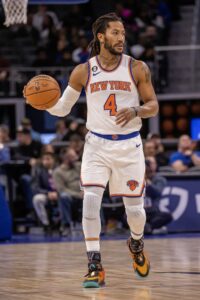 JUNE 30: Free agent point guard Derrick Rose intends to sign a multiyear contract with the Grizzlies, sources tell Ian Begley of SNY.tv (Twitter link).
According to Adrian Wojnarowski of ESPN (Twitter link), it will be a two-year deal for the former MVP. Shams Charania of The Athletic has more details, tweeting that it’ll be a fully guaranteed minimum-salary contract.
A former Memphis Tigers star before he entered the NBA, Rose has battled injuries over the last several seasons and fell out of the Knicks’ rotation this past season even when he was healthy. In 27 total appearance for New York in 2022/23, he averaged a career-worst 5.6 points per game on .384/.302/.917 shooting.
Still, Rose put up solid numbers during the two prior seasons (13.8 PPG, 4.1 APG, .462/.394/.886 shooting in 76 games), and the Grizzlies seem to believe the 34-year-old still has something left in the tank.
According to Wojnarowski, Memphis envisions Rose as a player who can contribute on the floor and be a leader in the locker room. He and recently acquired guard Marcus Smart will give a new look to a Grizzlies backcourt that no longer features Tyus Jones and will be without star point guard Ja Morant for the first 25 games of the season.
The Grizzlies already have 14 players on guaranteed salaries for 2023/24 even before adding Rose, but that doesn’t necessarily mean they have to complete the signing and call it an offseason. The team still has flexibility to make trades or to use the mid-level exception.
Fischer’s Latest: Lillard, Harden, Saric, Christopher, N. Powell
After a busy first two days of free agency on Friday and Saturday, the pace has slowed down on Sunday and Monday, with minimum-salary deals, rookie agreements, and two-way signings dominating headlines at Hoops Rumors.
While that shift is partly due to the fact that most of this year’s top free agents have come off the board, it’s also related to the trade requests submitted by Damian Lillard and James Harden, according to Jake Fischer of Yahoo Sports, who suggests that neither the Trail Blazers nor the Sixers are in a rush to make a deal. Some areas of the free agency market may be on hold until those situations are resolved, Fischer explains.
For instance, the Heat – who are Lillard’s top suitor – have told several free agents, including Malik Beasley, that they won’t be moving forward with veteran’s minimum signings until they have more clarity on the Lillard situation. Miami would presumably be a more attractive destination for veteran free agents with Lillard on the roster — and would have more roster openings to fill.
According to Fischer, Dario Saric and Josh Christopher are among the players who “could be involved” with the Heat depending on what happens with Lillard. Saric is a free agent, while Christopher is reportedly being traded from Houston to Memphis, so perhaps there are scenarios in which he’d be re-routed to Miami. Beasley apparently decided not to wait on the Heat, having agreed to sign with Milwaukee.
Here’s more from Fischer:
- Like Lillard with the Heat, Harden has conveyed a strong preference that he end up with the Clippers, according to Fischer. The fact that the two stars are each focused on a single destination is one reason why the Trail Blazers and Sixers are moving so deliberately, Fischer notes, since they don’t want to be “backed into a corner” and accept pennies on the dollar. It will be a challenge for Portland and Philadelphia to extract the best possible package they can for their respective stars without opening up the market to other teams, either as potential Lillard/Harden destinations or as third or fourth clubs in multi-team deals that get the star guards to their desired landing spots.
- The Clippers appear better positioned to work out a deal with the Sixers for Harden than the Heat are with the Trail Blazers for Lillard, in part because Philadelphia is prioritizing expiring contracts and Los Angeles has plenty of those to offer, Fischer says. Still, he wonders if Clippers swingman Norman Powell – who has three years left on his contract – might hold some appeal for the Sixers, whose new head coach Nick Nurse had Powell on his 2019 title team in Toronto.
- The fact that Harden has just one year left on his contract – compared to Lillard’s four – may make a dark-horse suitor more comfortable about rolling the dice on the Sixers guard, knowing that if it doesn’t go well, he’ll be off the books in a year and it won’t be a long-term problem, Fischer writes. On the other hand, team executives around the NBA aren’t necessarily convinced that Lillard, who has a reputation for being a consummate professional and can’t reach free agency until at least 2026, would play hardball and refuse to report to camp if he’s sent to a non-Heat team, Fischer adds.
Bucks Sign Robin Lopez
JULY 6: Lopez is back with the Bucks. His deal with Milwaukee is official, per NBA.com’s transaction log.
JULY 3: The Bucks are reuniting the Lopez twins, having agreed to sign free agent center Robin Lopez, according to Shams Charania of the Athletic (Twitter link).
 Milwaukee reached a two-year, $48MM deal with Brook Lopez on Saturday. While Charania didn’t specify the terms of Robin’s agreement, Brook’s brother will likely earn the minimum salary, given the team’s cap constraints and the fact that he’s coming off a minimum deal.
A 15-year NBA veteran, Robin spent the 2022/23 campaign with the Cavaliers, playing limited minutes in a frontcourt led by Jarrett Allen and Evan Mobley. He appeared in just 37 games, averaging 3.0 points and 1.4 rebounds in 8.1 minutes per night. Those numbers were all career lows.
Although Robin’s on-court role in Milwaukee may not be any more expansive than what it was in Cleveland, he’ll provide the Bucks with another veteran leader in the locker room and an experienced option up front if called upon.
It will be Robin’s second go-round with the Bucks. He and Brook also played together for the team in 2019/20.
Having also agreed to bring back free agents Khris Middleton and Jae Crowder, Milwaukee still has at least two or three roster spots to fill, with limited financial resources to do so. The full $5MM taxpayer mid-level exception won’t be available to the team, barring a cost-cutting move.
Atlantic Notes: J. Brown, Embiid, Knicks, Raptors
A handful of players have agreed to contract extensions since the new league year began on Saturday, but Celtics wing Jaylen Brown isn’t among them — yet.
Appearing on ESPN’s SportsCenter on Monday (YouTube video link), Brian Windhorst said the Celtics and Brown have mutual interest in getting something done and that he expects things to “head in that direction.” However, he also referred to the deal as “fragile.” Asked to clarify what he meant by that, Windhorst explained that Brown having qualified for a super-max extension doesn’t mean no negotiations will be required.
“I think it’ll get done, but he’s eligible for up to 35% of the salary cap, but he doesn’t have to get that,” Windhorst said. “The Celtics could negotiate on that. They could negotiate on a player option. They could negotiate on several things. So it’s not as simple as saying, ‘Jaylen, here’s your contract, sign it or not.'”
While most players who have signed designated veteran (super-max) contracts have received a full 35% starting salary, Rudy Gobert is one notable exception. When he signed his super-max extension with Utah, it began at 31.4% of the cap.
Here’s more from around the Atlantic:
- Rival executives have no expectation that the drama in Philadelphia related to James Harden‘s trade request will prompt Sixers center Joel Embiid to seek a change of scenery himself, writes Sean Deveney of Heavy.com. “No, just no way,” one general manager replied when asked about the possibility. “He is a different kind of character. He is a lot more like (Damian) Lillard and (Bradley) Beal because he wants to be loyal to the team, he wants to stay there, he has a lot of appreciation for how he has been treated there.” Of course, Lillard and Beal eventually did request trades, so – as the GM notes – if the 76ers haven’t moved any closer to title contention two or three years from now, it could be a different story.
- While the Knicks got better by adding a shot-maker and creator in Donte DiVincenzo, their rotation took a hit with the trade of Obi Toppin, who was the power forward on the second unit, writes Zach Braziller of The New York Post. It remains to be seen what the plans are for that spot, according to Braziller, who notes that New York’s excess backcourt depth could set the team up for a roster-balancing trade.
- Barring a trade that shakes up the roster, the Raptors aren’t in position to make another significant move this offseason. So in order for the team to take any sort of step forward after losing Fred VanVleet, Toronto may need the hiring of head coach Darko Rajakovic to be its most impactful move of the offseason, Doug Smith of The Toronto Star suggests.
Latest On Damian Lillard
Reports over the weekend indicated that the Trail Blazers are “open for business everywhere in the league” when it comes to Damian Lillard trade talks and are casting a wide net in an effort to get the best possible return.
However, the star guard has been “unwavering” in his desire to join the Heat, according to Barry Jackson and Anthony Chiang of The Miami Herald, who say that Lillard has conveyed to the Blazers that Miami is the only place he wants to play.
Chris Haynes essentially said the same thing in the latest episode of his #thisleague UNCUT podcast with Marc Stein. Asked by Stein if Lillard could be talked into another landing spot or if he’s dead-set on ending up with the Heat, Haynes simply replied, “Miami. Miami, Stein, Miami.”
Shams Charania of The Athletic also says that Lillard’s sole focus is on the Heat, acknowledging that the Blazers are exploring other scenarios but suggesting that there’s a “strong belief” around the league that Miami will be 32-year-old’s ultimate destination.
The two sides both appear at this point to be using media leaks to exercise as much leverage as possible. The Blazers’ discussions with other teams can be viewed as an effort to extract as much value out of the Heat as possible, whereas Lillard’s insistence on being sent to Miami may make other suitors wary of surrendering their top assets to acquire him, knowing that he’d be dissatisfied with the outcome, as Jackson, Chiang, and Charania write.
Here’s more on Lillard:
- In the #thisleague UNCUT podcast, Stein suggested that there’s a widespread belief around the NBA that Sixers guard James Harden will end up being traded to the Clippers. Haynes responded by noting that the Clippers have also been in touch with the Trail Blazers to inquire on Lillard, though he adds that L.A. seems unlikely to acquire Dame.
- The Timberwolves, Pelicans, and Celtics are among the other teams who “reached out to see what it would take” to land Lillard, Haynes reports. A deal with Minnesota would have had to involve Karl-Anthony Towns, according to Haynes, who says that idea was “quickly eliminated.”
- Haynes also spoke on the podcast about the timeline that led to Lillard’s Saturday trade request, explaining that after Portland landed the No. 3 overall pick in the draft lottery, the longtime Blazer was told the team would look into trading it for win-now help. However, GM Joe Cronin called him two days before the draft to let him know Portland would likely keep its pick. In Lillard’s meeting with the Blazers this past Monday, he expressed his feeling that “promises weren’t kept,” per Haynes, but vowed to give the team a little more time to see if it could upgrade the roster on the trade market when free agency opened. When that didn’t happen right away, Lillard submitted his trade request to ensure that teams interested in acquiring him – such as the Heat – didn’t make other moves in free agency that would preclude such a deal.
- According to Haynes, Lillard first entertained the idea of requesting a trade out of Portland in 2021. One of the reasons he decided against it at the time was because the Blazers hired Chauncey Billups, whom Dame greatly respects, as their head coach that summer. As Haynes details, Lillard didn’t want to put Billups in a position like Stephen Silas in Houston — Harden and Russell Westbrook requested trades shortly after Silas was hired in 2020, which derailed the veteran assistant’s first head coaching opportunity.
- In case you missed it, we passed along a couple notes on the Lillard sweepstakes in a trade rumors round-up earlier today.
Suns Officially Sign Drew Eubanks, Keita Bates-Diop
The Suns have made it official with two free agents who agreed to join the team early in free agency, having officially signed center Drew Eubanks and forward Keita Bates-Diop, according to NBA.com’s transaction log.
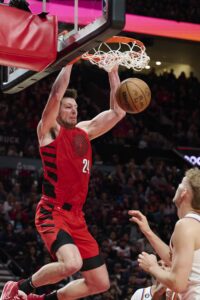 While many deals reported over the weekend can’t be formally completed until this Thursday, minimum-salary signings are one of the transactions that can be finalized during the July moratorium. Both Eubanks and Bates-Diop agreed to two-year, veteran’s minimum deals that feature second-year player options.
Eubanks, 26, emerged as a reliable rotation player in Portland over the last season-and-a-half, averaging 8.4 points, 6.0 rebounds, and 1.1 blocks in 22.3 minutes per game across 100 appearances (50 starts). He also shot 64.3% from the floor during his time as a Blazer. He’ll have an opportunity to back up Deandre Ayton in Phoenix, with Jock Landale leaving the Suns for the Rockets and Bismack Biyombo seemingly unlikely to return.
Bates-Diop, a second-round pick in 2018, is coming off his best season as an NBA player. He averaged 9.7 points, 3.7 rebounds, and 1.5 assists with a .508/.394/.793 shooting line in 67 games (21.7 MPG), including 42 starts, for the Spurs last season. He’ll be among the Suns’ minimum-salary signings who will vie for minutes in a rotation headed by the star trio of Devin Booker, Kevin Durant, and Bradley Beal.
The Suns still have several more reported signings to officially complete, including minimum-salary deals with veteran guard Eric Gordon and forward Yuta Watanabe.
Trade Rumors: Maxey, Lillard, Jazz, Heat
The Sixers‘ stance so far this offseason – as conveyed to multiple reporters – has been that Tyrese Maxey is off the table in trade talks, even for a superstar player. Discussing that subject on the latest Hoop Collective podcast, ESPN’s Brian Windhorst, Tim MacMahon, and Tim Bontemps expressed some skepticism about just how untouchable Maxey really is.
“They want you to know that you can’t have Tyrese Maxey,” Windhorst said. “Prime Michael Jordan is available? Don’t call. 25-year-old LeBron James is available? Lose our number. Giannis Antetokounmpo says, ‘I want to be a Sixer’? If Tyrese Maxey is the ask, just keep walking. … I don’t trust them at all on that, but I will say to you that is what is being said.”
While the Sixers are by no means looking to move Maxey, ESPN’s trio believes the front office’s stance on the young guard would be more malleable than what’s been reported if the team has a legitimate chance to acquire a star, including perhaps Trail Blazers guard Damian Lillard.
As Windhorst and Bontemps observe, while Philadelphia’s plan not to sign Maxey to a rookie scale extension is ostensibly about maximizing cap room in 2024, he would also be easier to trade if he’s not extended, since he wouldn’t be subject to poison pill provision rules in 2023/24.
Here are a few more trade-related rumors and notes:
- Although he’s not reporting that any trade discussions have taken place with the Trail Blazers or that the Jazz will make a run at Lillard, MacMahon said on The Hoop Collective podcast that he has heard Utah is “intrigued by the possibility” of acquiring the All-Star guard, confirming previous reports. MacMahon, Windhorst, and Bontemps ultimately believe the Jazz aren’t ready to make significant deal for a win-now player who’s about to turn 33, but they note that Lillard has a connection to Utah, having played his college ball at Weber State, and the Jazz’s collection of future first-round picks would dwarf what Miami could offer.
- At the trade deadline, the Jazz‘s position was that Lauri Markkanen, Walker Kessler, and Ochai Agbaji were their only players who were off the table in trade talks, according to MacMahon, who believes that if Utah did pursue a star this offseason, Markkanen and Kessler would be the only untouchables.
- Appearing on NBA TV (Twitter video link), Ira Winderman of The South Florida Sun Sentinel says the Heat are willing to discuss anyone except their two All-Stars as they negotiate a possible deal with Portland for Lillard, who wants to play in Miami. “Put it this way, they basically have loaded up one of those PODS dumpsters in front of the Trail Blazers and said, ‘Take anyone out of here you want besides Bam Adebayo and Jimmy Butler,'” Winderman said. “Maybe they’ll go back and forth on Caleb Martin a little, but it’s basically, sort of, ‘Come and pick and choose. Tell us what you want. Anything else is yours.’ The Heat are all-in on this. This is their moment. There’s a reason they didn’t go hard after Bradley Beal. There’s a reason they held off on some other moves. This is their play.”
2023 NBA Draft Pick Signings
Free agent and trade news has dominated NBA headlines over the last few days, but teams around the league are also taking care of the rookies they drafted on June 22, signing them to their first NBA contracts. Because cap holds for first-round picks count for 120% of the rookie scale instead of 100% in the current Collective Bargaining Agreement, there’s little incentive for teams to wait to lock up their first-rounders.
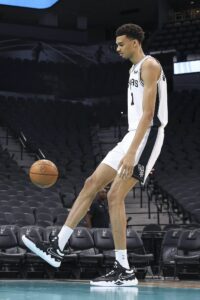 For first-round picks, rookie contracts are fairly rigid, having essentially been predetermined. The NBA’s rookie-scale structure dictates that first-rounders will be signed to four-year deals, which include two guaranteed years, then team options in years three and four.
The value of those contracts depends on where a player was drafted. This year, No. 1 overall pick Victor Wembanyama signed a four-year deal worth in excess of $55MM, which represents the maximum allowable 120% of his scale amount. No. 30 pick Kobe Brown, on the other hand, would be in line for a four-year contract worth about $12.4MM.
The full breakdown of this year’s first-round rookie salaries and contracts can be found right here — if you see a first-rounder listed below as “signed,” you can assume his contract looks like that, unless otherwise indicated.
Second-round picks, meanwhile, aren’t assured of two guaranteed seasons, though some players will receive them. The NBA’s latest Collective Bargaining Agreement introduced a new salary cap exception for second-rounders, which will allow teams to sign those players to contracts of up to four years with a starting salary worth up to the equivalent to the minimum for a two-year veteran. In the past, such a deal would have required cap room or another exception such as the mid-level.
Some second-rounders won’t sign standard NBA deals immediately. They may get two-way contracts, play in the G League, or head overseas to refine their games while their NBA teams retain their rights. We’ll make note of that below too, wherever it’s applicable.
Here’s a breakdown of 2023’s draft pick signings. This list will continue to be updated as more draftees sign their first NBA contracts:
First Round:
- San Antonio Spurs: Victor Wembanyama, C, Metropolitans 92: Signed
- Charlotte Hornets: Brandon Miller, F, Alabama: Signed
- Portland Trail Blazers: Scoot Henderson, G, G League Ignite: Signed
- Houston Rockets: Amen Thompson, G, Overtime Elite: Signed
- Detroit Pistons: Ausar Thompson, G, Overtime Elite: Signed
- Orlando Magic: Anthony Black, G, Arkansas: Signed
- Washington Wizards: Bilal Coulibaly, F, Metropolitans 92: Signed
- Indiana Pacers: Jarace Walker, F, Houston: Signed
- Utah Jazz: Taylor Hendricks, F, UCF: Signed
- Oklahoma City Thunder: Cason Wallace, G, Kentucky: Signed
- Orlando Magic: Jett Howard, G, Michigan: Signed
- Dallas Mavericks: Dereck Lively II, C, Duke: Signed
- Toronto Raptors: Gradey Dick, G, Kansas: Signed
- New Orleans Pelicans: Jordan Hawkins, G, UConn: Signed
- Atlanta Hawks: Kobe Bufkin, G, Michigan: Signed
- Utah Jazz: Keyonte George, G, Baylor: Signed
- Los Angeles Lakers: Jalen Hood-Schifino, G, Indiana: Signed
- Miami Heat: Jaime Jaquez Jr., F, UCLA: Signed
- Golden State Warriors: Brandin Podziemski, G, Santa Clara: Signed
- Houston Rockets: Cam Whitmore, F, Villanova: Signed
- Brooklyn Nets: Noah Clowney, F, Alabama: Signed
- Brooklyn Nets: Dariq Whitehead, G/F, Duke: Signed
- Portland Trail Blazers: Kris Murray, F, Iowa: Signed
- Dallas Mavericks: Olivier-Maxence Prosper, F, Marquette: Signed
- Detroit Pistons: Marcus Sasser, G, Houston: Signed
- Indiana Pacers: Ben Sheppard, F, Belmont: Signed
- Charlotte Hornets: Nick Smith Jr., G, Arkansas: Signed
- Utah Jazz: Brice Sensabaugh, F, Ohio State: Signed
- Denver Nuggets: Julian Strawther, F, Gonzaga: Signed
- Los Angeles Clippers: Kobe Brown, F, Missouri: Signed
Second Round:
- Charlotte Hornets: James Nnaji, C, Barcelona: Will play overseas
- Denver Nuggets: Jalen Pickett, G, Penn State: Signed
- Four-year, $8,227,882 contract. First three years guaranteed. Fourth-year team option.
- Minnesota Timberwolves: Leonard Miller, F, G League Ignite: Signed
- Four-year, $8,319,739 contract. First two years guaranteed. Third year partially guaranteed. Fourth-year team option.
- Sacramento Kings: Colby Jones, G, Xavier: Signed
- Four-year, $8,768,279 contract. First two years guaranteed. Fourth-year team option. Includes likely incentives.
- Four-year, $8,768,279 contract. First two years guaranteed. Fourth-year team option. Includes likely incentives.
- Chicago Bulls: Julian Phillips, F, Tennessee: Signed
- Four-year, $8,119,739 contract. First three years guaranteed. Fourth-year team option.
- Four-year, $8,119,739 contract. First three years guaranteed. Fourth-year team option.
- Milwaukee Bucks: Andre Jackson Jr., G, UConn: Signed
- Four-year, minimum-salary contract. First year guaranteed. Second year partially guaranteed. Fourth-year team option.
- Four-year, minimum-salary contract. First year guaranteed. Second year partially guaranteed. Fourth-year team option.
- Denver Nuggets: Hunter Tyson, F, Clemson: Signed
- Four-year, minimum-salary contract. First three years guaranteed. Fourth-year team option.
- Boston Celtics: Jordan Walsh, F, Arkansas: Signed
- Four-year, minimum-salary contract. First two years guaranteed. Third year partially guaranteed. Fourth-year team option.
- Atlanta Hawks: Mouhamed Gueye, F, Washington State: Signed
- Four-year, minimum-salary contract. First two years guaranteed. Fourth-year team option.
- Los Angeles Lakers: Maxwell Lewis, F, Pepperdine: Signed
- Four-year, minimum-salary contract. First two years guaranteed. Third year partially guaranteed. Fourth-year team option.
- Charlotte Hornets: Amari Bailey, G, UCLA: Signed
- Two-way contract.
- Washington Wizards: Tristan Vukcevic, F, Partizan Belgrade: Signed
- Two-year, $4,849,784 contract. First year guaranteed. Second-year team option.
- Two-year, $4,849,784 contract. First year guaranteed. Second-year team option.
- Portland Trail Blazers: Rayan Rupert, G, New Zealand Breakers: Signed
- Three-year, minimum-salary contract. First two years guaranteed. Third-year team option.
- Three-year, minimum-salary contract. First two years guaranteed. Third-year team option.
- San Antonio Spurs: Sidy Cissoko, G, G League Ignite: Signed
- Three-year, minimum-salary contract. First two years guaranteed. Third year non-guaranteed.
- Three-year, minimum-salary contract. First two years guaranteed. Third year non-guaranteed.
- Memphis Grizzlies: GG Jackson, F, South Carolina: Signed
- Two-way contract.
- Atlanta Hawks: Seth Lundy, G, Penn State: Signed
- Two-way contract.
- Indiana Pacers: Mojave King, G, G League Ignite: Will play in G League
- Los Angeles Clippers: Jordan Miller, F, Miami: Signed
- Two-way contract.
- Cleveland Cavaliers: Emoni Bates, G/F, Eastern Michigan: Signed
- Two-way contract.
- Oklahoma City Thunder: Keyontae Johnson, F, Kansas State: Signed
- Two-way contract.
- Brooklyn Nets: Jalen Wilson, F, Kansas: Signed
- Two-way contract.
- Phoenix Suns: Toumani Camara, F, Dayton: Signed
- Four-year, minimum-salary contract. First year guaranteed. Fourth-year team option.
- Four-year, minimum-salary contract. First year guaranteed. Fourth-year team option.
- Minnesota Timberwolves: Jaylen Clark, G, UCLA: Signed
- Two-way contract.
- Sacramento Kings: Jalen Slawson, F, Furman: Signed
- Two-way contract.
- Indiana Pacers: Isaiah Wong, G, Miami: Signed
- Two-way contract.
- Memphis Grizzlies: Tarik Biberovic, G/F, Fenerbahce: Will play overseas
- Golden State Warriors: Trayce Jackson-Davis, F, Indiana: Signed
- Four-year, minimum-salary contract. First two years guaranteed. Fourth-year team option.
- Milwaukee Bucks: Chris Livingston, F, Kentucky: Signed
- Four-year, minimum-salary contract. First two years guaranteed. Fourth-year team option.
Note: The Bulls and Sixers forfeited second-round picks due to free agency gun-jumping. They would have been No. 57 and No. 58, respectively.