
NBA Fines Warriors Owner Joe Lacob $500K
The NBA has fined Warriors owner Joe Lacob $500K for violating the league’s policy regarding publicly discussing collective bargaining talks, which are currently ongoing between the league and the Players Association, sources tell Adrian Wojnarowski of ESPN.
Lacob described the NBA’s luxury tax system as “very unfair” last week on the Point Forward podcast hosted by Andre Iguodala and Evan Turner, per Wojnarowski.
“The hardest thing of all is navigating this luxury tax, unfortunately,” Lacob said. “I went back to New York this week for labor meetings. I’m on the committee. And you know, obviously, the league wants everyone to have a chance and right now, there’s a certain element out there that believes we ‘checkbook win…’ We won because we have the most salaries on our team.
“The truth is, we’re only $40 million more than the luxury tax. Now, that’s not small but it’s not a massive number. We’re $200 million over in total because most of that is this incredible penal luxury tax. And what I consider to be unfair and I’m going to say it on this podcast and I hope it gets back to whoever is listening. Obviously, it’s self-serving for me to say this, but I think it’s a very unfair system because our team is built by….all top eight players are all drafted by this team.”
Lacob was referring to the “repeater” luxury tax penalties given to teams, like the Warriors, that have been taxpayers in three of the previous four seasons. Last season, Golden State was hit with a record $170,331,194 luxury tax payment — nearly breaking the previous league-wide record for total luxury tax payments, which was $173.3MM back in 2002/03. The seven taxpaying teams in ’21/22 shattered that record with a staggering combined total of $481,021,386.
The Warriors are projected to have a $181.3MM luxury tax bill in ’22/23, according to ESPN’s Bobby Marks, who tweets that the bill could balloon to over $200MM in ’23/24 if the team gives Andrew Wiggins and Jordan Poole extensions.
Lakers, Pacers Reengage In Buddy Hield Trade Talks
The Lakers and Pacers have reengaged in trade talks centered around Indiana sharpshooter Buddy Hield, ESPN’s Dave McMenamin reported on Wednesday during an appearance on NBA Today (video link).
The Lakers, of course, nearly traded for Hield last summer, but instead pivoted to acquire Russell Westbrook, so the deal fell apart. However, Hield has been linked to L.A. numerous times over the past month, with reports indicating that general manager Rob Pelinka continues to express interest in the veteran guard, who was Pelinka’s former client when he was an agent.
McMenamin doesn’t specify whether the recent talks involved Westbrook this time around or not, noting that it’s possible that Talen Horton-Tucker could have been dangled by the Lakers instead. Hield’s declining contract structure — he made $23MM last season but $21.2MM in 2022/23 — makes it easier for the Lakers to match his incoming salary without including Westbrook.
Hield, 29, appeared in 81 games last season (32 starts, 30.9 MPG) split between the Kings and Pacers, averaging a combined 15.6 PPG, 4.4 RPG and 2.8 APG on .406/.366/.874 shooting. He was dealt to the Pacers as part of the trade that sent Tyrese Haliburton to Indiana and Domantas Sabonis to Sacramento.
Hield has been a poor defensive player his entire career, but his best skill is something that’s always in demand — he’s a high-volume three-point shooter who has converted 39.8% of his career attempts behind the arc, and the Lakers struggled in that department last season, ranking 22nd in the league in three-point percentage. By contrast, Westbrook shot just 29.8% from deep last season, and Horton-Tucker was even worse at 26.9%.
McMenamin, like his ESPN colleague Brian Windhorst, reiterates that there’s “no traction” on a Westbrook/Kyrie Irving swap between the Lakers and Nets.
Trade Breakdown: De’Anthony Melton To Sixers
This is the fourth entry in our series breaking down the major trades of the 2022 offseason. As opposed to giving out grades, this series will explore why the teams were motivated to make the moves. Let’s dive into a draft-day swap between the Sixers and Grizzlies…
On the night of the 2022 draft, the Sixers traded the No. 23 pick (David Roddy) and Danny Green to the Grizzlies in exchange for De’Anthony Melton. Unfortunately, Green suffered a torn ACL and LCL in his left knee during Philadelphia’s season-ending Game 6 loss to Miami in the second-round of last season’s playoffs, so he’s likely to miss a significant part of the 2022/23 season, if not the entire year.
The Sixers’ perspective:
Why were the Sixers motivated to trade their first-round pick for a bench player?
For starters, there’s a lot of variability with first-round picks, especially as you get down into the 20s. The likelihood of the No. 23 pick becoming an immediate contributor on a team with championship aspirations is pretty slim.
As an example, look no further than Philadelphia’s last couple first-round selections, who showcase the inherent risk involved in trading a first-rounder, as well as that aforementioned variability.
In 2020, the Sixers picked Tyrese Maxey at No. 21 overall. He had a decent rookie season, appearing in 60 games (15.3 MPG) with averages of 8.0 PPG, 1.7 RPG and 2.0 APG on .462/.301/.871 shooting. You could see his speed and ability to get to his shots, and his free throw percentage was encouraging, but it wasn’t exactly predictable what would happen with him last season.
In year two, Maxey exploded onto the scene as an emerging star, appearing in 75 games (74 starts, 35.3 MPG) with averages of 17.5 PPG, 3.2 RPG and 4.3 APG on .485/.427/.866 shooting. Maxey went from a trade chip to the Sixers reportedly viewing him as basically untouchable in the span of months, finishing sixth in the Most Improved Player Award race (I personally had him second behind Desmond Bane and had no qualms with anyone who thought he should’ve won).
By contrast, the Sixers selected Jaden Springer with the No. 28 pick in 2021. Springer appeared in just two regular season games as a rookie last season, spending the majority of the season in the G League with Philadelphia’s affiliate, the Delaware Blue Coats (he also made five cameos in the postseason). In 20 regular season games with the Blue Coats, he averaged 14.2 PPG, 4.4 RPG, 2.5 APG and 1.7 SPG on .470/.241/.651 shooting.
Springer, one of the youngest players in his draft class, is still just 19 years old (he turns 20 in September), but he looked rough around the edges in Summer League action and doesn’t seem close to contributing at the NBA level anytime soon. This isn’t a personal knock against Springer, it’s just an example of the roll of the dice that comes with drafting any player.
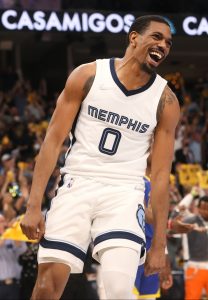 Melton, on the other hand, is a more proven commodity, and he was reportedly coveted by teams around the league. Now entering his fifth season, Melton is still only 24 years old, so it’s not like he’s a finished product by any means, but he’s shown he can be a productive player at the NBA level.
A big part of what made Melton such a hot commodity on the trade market is his defense. Although he stands just 6’2”, Melton has a 6’8” wingspan and is one of the better guard defenders in the NBA. I’m not a big fan of using advanced stats for measuring defensive impact, but they almost universally love Melton on that end of the court.
A very good athlete who plays with physicality, lots of energy, and a knack for the ball, Melton gets plenty of deflections (2.8 per game), steals (1.4) and blocks (0.5) for a guard. In fact, he was one of the league leaders at his position in all of those categories on a per-minute basis (he averaged 22.7 MPG last season).
He’s also an outstanding rebounder (4.5 RPG) who likes to push the pace in transition. Those are hugely beneficial attributes for a Sixers team that ranked 29th in rebounding and 25th in pace last season.
Melton should be an excellent complement next to Maxey or James Harden, or even both. Harden tends to play better defensively against bigger players, so allowing Melton, who is a far superior defender than either of his new backcourt mates, to defend the opposing team’s best guard sounds good on paper.
He’s an immediate and major upgrade over both Shake Milton and Furkan Korkmaz defensively, and a better offensive player than Matisse Thybulle. Those were Philadelphia’s three primary backup guards at the end of last season.
Melton will earn $8.25MM next season and his $8MM salary in 2023/24 is partially guaranteed at $1.5MM, so he’s on a reasonable contract and is eligible for an extension this offseason, though Philadelphia might want to take a wait-and-see approach before making that decision.
There are a few other things worth noting about Melton’s acquisition. Sixers president of basketball operations Daryl Morey actually drafted Melton with Houston back in 2018 prior to attaching him to Ryan Anderson in a salary dump move, so Morey has been familiar with the guard’s game dating back to his lone college season with USC.
Melton was basically treated as a non-shooter during his first couple of NBA seasons, making just 29.4% of his three-pointers in that time, but he has improved drastically in that area over the past two seasons, shooting 38.8% from deep on much higher volume. Being able to space the floor around Joel Embiid is vital for Philadelphia’s offensive flow and spacing, so while Melton can run hot and cold, he should get plenty of open looks.
Finally, Melton is a combo guard, and because Harden, Embiid and Maxey control the ball so much, the fact that Melton will be an ancillary player instead of a primary ball-handler is an added benefit. That’s not to say he’s bad at playing the point, it just isn’t his main strength.
The Grizzlies’ perspective:
If Melton is such a solid young player, why were the Grizzlies willing to deal him? Why not just keep him?
Memphis is one of the few teams in the league that has a luxury of riches at multiple positions, and backcourt depth is perhaps the team’s greatest strength. Led by starters Ja Morant and Desmond Bane, the Grizzlies had Tyus Jones, Melton, John Konchar and Ziaire Williams vying for minutes at guard (Williams also spent a lot of time at forward last season and could open the season there due to Jaren Jackson Jr.‘s injury and Kyle Anderson‘s departure to Minnesota in free agency).
Melton’s strengths weren’t necessarily redundant among that group of players — he was the best defender of the guards — but moving him clears additional minutes for his former teammates. Jones re-signed with Memphis as an unrestricted free agent on a two-year, $30MM deal, and the Grizzlies later gave Konchar an extension (Williams was a rookie last season and still has three years left on his first NBA contract).
Melton also saw his role reduced and his offensive production decline significantly in two consecutive postseasons, averaging just 5.8 PPG, 3.1 RPG and 1.4 APG on .333/.266/.667 shooting in 15 career playoff games (16.9 MPG). That may have contributed to Memphis’ decision to move him.
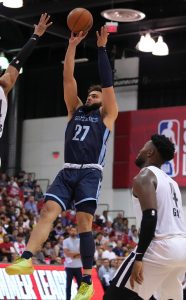 Acquiring first-round picks isn’t easy, but GM Zach Kleiman has been consistently aggressive in dealing for them in his tenure, and he got an experienced college player in Roddy, a forward built like a linebacker (6’5″, 252 pounds) with a unique skill set. He had an excellent junior season for Colorado State, averaging 19.2 PPG, 7.5 RPG, 2.9 APG, 1.2 SPG and 1.1 BPG on .571/.438/.691 shooting in 31 games (32.9 MPG).
There’s no guarantee that Roddy will turn into the level of player that Melton is, but as I said, there was a minutes logjam in the backcourt, and Roddy’s contract will pay him just shy of $13MM over four years, compared to the $16.25MM ($9.75MM guaranteed) Melton will earn over the next two.
Both financially and as long-term upside swing, it was an understandable gamble. If Roddy makes the type of leap that Maxey was able to in his second year, it could look like a home run. Only time will tell.
As previously mentioned, the Grizzlies also acquired Green, though his future with the team is far less certain. One of the most reliable 3-and-D players in the league over the past decade, hopefully Green will be able to make an NBA return and eventually go out on his terms. At 35 years old, it’s hard to say how much he has left in the tank, but he has had a great career, winning three championships with the Spurs, Raptors and Lakers.
In the meantime, he’s a good veteran to have around for a young Memphis squad, and mid-size contracts like his $10MM expiring deal are always useful for trade purposes even if he doesn’t wind up making any on-court contributions this season.
Trade Breakdown: Nuggets/Wizards Swap
This is the third in our series breaking down the major trades of the 2022 offseason. As opposed to giving out grades, this series will explore why the teams were motivated to make the moves. Let’s dig into a pair of transactions made by the Nuggets, including a four-player deal with the Wizards…
One of the advantages of exploring trades a few weeks after they occur is that you have the benefit of hindsight and a clearer view of a team’s big-picture focus. The Nuggets went into the offseason with the goal of improving their perimeter size, athleticism, defense and depth, so let’s take a look at some of the moves they’ve made to accomplish their intended goal.
First, the Nuggets traded JaMychal Green to the Thunder. Green had been a solid player for the past handful of seasons, but his three-point shooting cratered in his second year with Denver, dropping to 26.6% – a full 10% below his career rate of 36.6% – and with the impending return of Michael Porter Jr., plus Zeke Nnaji, Aaron Gordon and Jeff Green already at the forward spots, JaMychal became an expendable piece.
The Nuggets accomplished a few different things with the deal: they moved off Green’s mid-sized contract and created a roster spot; acquired the 30th pick (used to select Peyton Watson) and a couple of future second-rounders (2023 and 2024); and created a $8.2MM traded player exception (the amount of Green’s 2022/23 salary).
The Thunder used some of their cap space to essentially punt the last pick of the first round to 2027 (top-five protected from 2027-29) in the hope that Denver’s pick will be of greater value than the last pick of the first round in 2022. Green is unlikely to ever play for the Thunder, so it’s possible they could get a second-round pick of their own if they move him, but would probably have to take on an unwanted contract in the process.
In the draft, the Nuggets selected Christian Braun with their own first-rounder (21st), an experienced, athletic wing who helped Kansas win the NCAA tournament in 2021/22. Head coach Michael Malone has praised Braun, implying that he might have a regular role as a rookie.
As previously noted, the 30th pick was used on Watson, another athletic wing with good size (6’8″). Watson was a McDonald’s All-American in high school yet rarely saw on-court action during his freshman season at UCLA, but obviously the Nuggets were high on him and he showed flashes of upside during Summer League.
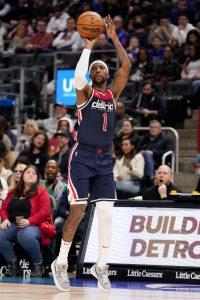 Those moves essentially served as a preamble to Denver’s major trade with Washington, sending Monte Morris and Will Barton to the Wizards in exchange for Kentavious Caldwell-Pope and Ish Smith.
In a vacuum, without thinking about roster construction, it seems like the Nuggets might have been able to get more in return for two players who started last season. So why didn’t they?
A key aspect of this trade are the salaries involved. Morris is under contract at a reasonable rate – $9.1MM in ‘22/23, $9.8MM in ‘23/24 – while Barton is on an expiring deal worth $14.4MM.
Caldwell-Pope was recently extended for two seasons (with a player option in year two) after the Nuggets indicated at the time of the deal that they wanted to keep him around. For the upcoming season, he’ll make $14MM, while Smith is on expiring $4.7MM deal.
The Nuggets project to be a taxpayer next season, so shedding about $4.77MM in salary in the deal was certainly a factor, especially for a team that could be facing the repeater tax (and stiffer penalties) in subsequent seasons.
Morris is one of the top backup point guards in the league and capably served as a low-end starter last season. But with Jamal Murray projected to return to the lineup in the fall and Bones Hyland emerging as a rotation piece as a rookie, the backcourt – particularly for the smaller guard spot – was looking pretty crowded. That’s not to say the Nuggets didn’t value Morris – far from it. But the Wizards needed a point guard, and they got a good one in Morris.
Barton had been with Denver for eight years, making him the team’s longest-tenured player. While his production looked solid on paper – he averaged 14.7 PPG, 4.8 RPG and 3.9 APG on .438/.365/.803 shooting in 71 games (32.1 MPG) last season – a series of injuries have sapped his athleticism, and he’s a subpar defender with questionable shot selection.
Caldwell-Pope was the primary target for the Nuggets, as evidenced by his recent extension. He doesn’t need the ball in his hands to be effective on offense, has developed into a very good spot-up shooter, and is a solid defender. He should be a very nice complementary piece and will take over some of the defensive assignments that were perhaps given to Gordon too often last season.
The Nuggets surely haven’t forgotten battling against Caldwell-Pope in the Western Conference Finals a couple of seasons ago, and they’ve said they value his championship experience and defense. KCP was the third-best player when the Lakers won the title in 2020, bringing a new element to a Denver squad that aspires to reach those same heights in ‘22/23.
The veteran backup Smith, who will break a league record by playing for his 13th NBA team once he appears in a game for Denver, will likely serve as a backup to Murray and Hyland. However, since the Nuggets plan to ease Murray back into action, there’s a real chance Smith could get regular minutes in the upcoming season, so he wasn’t just a throw-in piece.
Based on the return the Nuggets received, it appears that Barton’s contract was viewed as a negative asset by opposing teams. Morris was the main trade chip here, but he wasn’t projected to start next season and could reasonably be viewed as a luxury rather than a necessity, particularly since Caldwell-Pope is the best defender of the group and a cleaner fit for Denver’s starting lineup.
During free agency, Denver’s biggest signing was adding Bruce Brown via the taxpayer mid-level exception. The 25-year-old is the type of player who doesn’t need the ball on offense and can switch onto virtually anyone defensively, making him an ideal fit for a team that has been looking to upgrade its defense. He’s a solid rebounder and passer and very strong for his size – he also reportedly had offers for more money, but chose the Nuggets due to fit.
The Nuggets also promoted Davon Reed, another strong defender who shot 43% from deep while on a two-way contract last season, to a minimum-salary deal. The other free agency moves were re-signing Vlatko Cancar, a restricted free agent who hasn’t seen much action during his three seasons, and signing DeAndre Jordan to a minimum deal. I didn’t love the Jordan signing, but for the sake of Nuggets fans, maybe he won’t play much.
So far this offseason, the Nuggets have essentially replaced JaMychal Green, Morris, Barton, Facundo Campazzo, Bryn Forbes, Austin Rivers, and DeMarcus Cousins with Caldwell-Pope, Smith, Braun, Watson, Brown, Reed (now playoff-eligible), and Jordan. I would definitely say they’ve accomplished their goal of improving the team’s perimeter size, athleticism, defense and depth.
The Wizards, meanwhile, entered the offseason intent on re-signing Bradley Beal and bolstering the backcourt around him, particularly at point guard.
Their first move came in the draft, when they selected Wisconsin guard Johnny Davis with their lottery pick (10th overall). It’s unclear how much playing time Davis will receive as a rookie, but some evaluators viewed him as a combo guard who could bring some much-needed toughness to D.C.
Then came the deal with the Nuggets. As previously mentioned, in a vacuum, based on production both last year and over the previous seasons, it’s hard to not view this trade as a win for the Wizards.
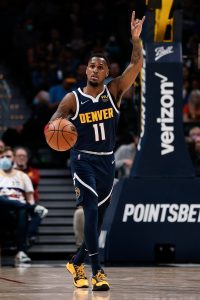 Morris was the clear target, a 27-year-old point guard who averaged averaged 12.6 PPG, 3.0 RPG and 4.4 APG on .484/.395/.869 shooting in 75 games (29.9 MPG). On top of his solid shooting efficiency, Morris is one of the best in the league at taking care of the ball, with a career assist-to-turnover ratio of 4.77:1.
According to Mike Singer of The Denver Post, the Nuggets received more than 20 calls inquiring about Morris, so he was clearly in-demand around the league.
The Wizards also got a buy-low candidate in Barton, who had similar offensive production to Caldwell-Pope and will provide depth on the wing. Both players are familiar with head coach Wes Unseld Jr., who used to be an assistant with the Nuggets.
The next major domino fell when the team re-signed Beal to a five-year, $251MM maximum-salary deal that includes a no-trade clause – a rarity in the NBA.
The Wizards also signed Delon Wright to a two-year, $16MM deal in free agency to further bolster the point guard position. Like Morris, Wright is a sometimes reluctant shooter despite solid averages (.453/.354/.799 career split), but he does a good job taking care of the ball.
Wright possesses excellent size at 6’5” and has a knack for being in the right place at the right time and making good decisions. I also personally rate him as one of the best point guard defenders in the league, which made him an attractive option for several teams in free agency. He recently said he joined the Wizards due to a chance at an expanded role.
Morris, Barton and Wright all have multiple seasons of playoff experience under their belts, which must have been attractive to a Wizards team that has missed out on the postseason in three of the last four seasons.
So far this offseason, the Wizards have swapped out Raul Neto, Tomas Satoransky, Caldwell-Pope and Smith for Davis, Morris, Barton and Wright. Like the Nuggets, I would say the Wizards have also accomplished their goal of improving their backcourt rotation and depth, particularly at point guard.
Essentially, I view the Nuggets/Wizards swap as a win for both teams and as a deal that contributed to clear upgrades in the clubs’ respective areas of emphasis.
Suns Re-Sign Deandre Ayton After Matching Pacers’ Offer Sheet
JULY 18: The Suns have officially re-signed Ayton, Duane Rankin of the Arizona Republic tweets via a team press release.
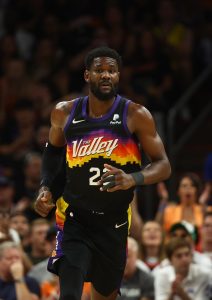 “Deandre is a force at both ends of the floor, who has elevated his game every year and will continue to do so,” GM James Jones said in a statement. “DA is so important to what we do and without him we could not have reached our recent levels of success.”
JULY 14, 7:28pm: The Suns have indeed opted to match the Pacers’ offer sheet for Ayton, tweets Shams Charania of The Athletic. Ayton’s four-year deal is fully guaranteed, according to Bobby Marks of ESPN (YouTube video link).
As detailed below, Ayton is now ineligible to be traded until January 15, and will possess veto power over any trade after that until next July.
With the new Ayton deal on their books, the Suns are facing a projected $32MM tax penalty for the 2022/23 season, per Marks (via Twitter).
7:10pm: Ayton has now signed his offer sheet with the Pacers, starting the clock for the Suns to match, Woj reports (via Twitter).
2:54pm: The Suns haven’t shown any inclination to work out a sign-and-trade with Indiana for Ayton, but they are expected to match the offer sheet once Ayton signs it, sources tell Wojnarowski (Twitter link).
2:02pm: The Pacers are signing restricted free agent Deandre Ayton to a four-year, $133MM offer sheet, his agents Nima Namakian and Bill Duffy tell ESPN’s Adrian Wojnarowski.
Once Ayton inks the deal, the Suns will have 48 hours to match the largest offer sheet in league history, Wojnarowski adds. ESPN’s Bobby Marks tweets that Phoenix technically has until 11:59pm ET on Saturday to match the deal.
Sign-and-trades are not permissible once an offer sheet has been signed, so a potential swap for Pacers center Myles Turner is off the table once Ayton signs the deal. As Marks notes, if the Suns match the offer sheet, Ayton will have the ability to veto any trade starting January 15, which is when he’d be trade-eligible. He also cannot be traded to Indiana for a year.
However, in a follow-up tweet, Marks says that because Ayton hasn’t put pen to paper yet, the Suns and Pacers have until midnight ET to work out a possible sign-and-trade that might be mutually beneficial. What Indiana might get out of that arrangement is unclear.
John Gambadoro of Arizona Sports 98.7 FM Phoenix reports (Twitter links) that Ayton’s agents had been waiting for the right moment when they thought the Suns wouldn’t match an offer. The Pacers have no interest in a sign-and-trade, according to Gambadoro, who says Indiana knows the Suns don’t want to give Ayton — or any other center — a max deal.
According to Wojnarowski, the Suns never made Ayton a formal offer in free agency. Ayton’s agents told the team they’d be able to find a max offer, and now the Pacers are putting the Suns to the test.
As Marks observes (via Twitter), the Pacers technically can’t sign Ayton without making moves to clear additional cap space. They need to clear another $4.7MM to reach Ayton’s first-year starting salary of $30.9MM in 2022/23, so more maneuvers are imminent.
Marks noted in a recent appearance on 107.5 The Fan that the Pacers have multiple pathways to clear the needed cap space, as James Boyd of The Indianapolis Star relayed. Once those moves are made, they cannot be reversed if Phoenix decides to match.
Ayton, who turns 24 on July 23, was the No. 1 overall pick of the 2018 draft. In 58 games last season (29.5 MPG), the 6’11” center averaged 17.2 PPG and 10.2 RPG while shooting 63.4% from the floor and 74.6% from the line.
Ayton holds career averages of 16.3 PPG and 10.5 RPG in 236 regular season games (30.7 MPG). He was a key component of the Suns’ run to the NBA Finals in ’20/21, averaging 15.8 PPG, 11.8 RPG and 1.1 BPG in 22 postseason games (36.4 MPG).
An excellent finisher around the basket with a soft touch, Ayton has developed into a very solid defensive player over the past couple of years, anchoring Phoenix’s third-ranked defense last season. However, some have been critical about his shortcomings, mainly that he doesn’t get to the free throw line much despite a muscular frame.
The Pacers have been repeatedly linked to Ayton over the past several weeks, and clearly that interest did not wane.
If the Suns match, they project to be a taxpaying team, something owner Robert Sarver has consistently avoided during his tenure. If they don’t, Myles Turner seems very likely to be headed out of Indiana.
It also complicates Phoenix’s pursuit of Kevin Durant, since the Suns will lose Ayton as a possible trade chip. Even if they match the offer, as was previously noted, Ayton can’t be traded until January 15 and can veto any deal for a full year.
Kings Sign Chima Moneke, Won’t Bring Over Sasha Vezenkov
JULY 18: The Kings have officially signed Moneke, Jason Anderson of the Sacramento Bee tweets.
JULY 15: The Kings are signing free agent forward Chima Moneke, sources tell Sean Cunningham of Fox 40 KTXL (All Twitter links).
According to RealGM, Moneke started his college career with Northeast Community College prior to transferring to UC Davis. In 21 games (30 MPG) as a senior for the Aggies, he averaged 18.4 PPG, 9.6 RPG, 1.0 SPG and 1.1 BPG on .515/.375/.714 shooting.
After going undrafted in 2018, Moneke has played internationally for teams in France and Spain, first competing in the French LNB Pro B league before receiving a promotion to Orléans Loiret Basket of LNB Pro A, the top league in France, in 2020/21.
Last season he played for Baxi Manresa of Liga ACB, the top Spanish league, averaging 14.5 PPG, 8.2 RPG and 1.6 SPG on .521/.290/.735 shooting in 36 games (30 starts, 24.1 MPG). He was also named the MVP of the Basketball Champions League with Baxi Manresa in ’21/22.
As Cunningham details, Moneke has ties to the organization due to the Nigerian national team, which was led by head coach Mike Brown and also featured associate head coach Jordi Fernandez and assistant coach Luke Loucks. The 6’6″ forward should bring an infusion of defense and athleticism to Sacramento, Cunningham adds.
According to Cunningham’s sources, the Kings will not be bringing over Sasha Vezenkov for the upcoming season. Sacramento acquired Vezenkov’s rights in a draft-day swap with the Cavaliers. The Kings still might bring him over in the future, just not for 2022/23, Cunningham reports.
The terms of Moneke’s contract were not disclosed by Cunningham, but as our roster count tracker shows, the Kings only have 12 players on the standard 15-man roster at the moment, so he could be given a chance for one of those spots.
Keldon Johnson Signs Four-Year Extension With Spurs
JULY 18: The Spurs have officially announced Johnson’s new deal, issuing a press release to confirm the move.
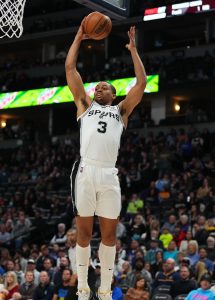 JULY 15: Keldon Johnson is signing a four-year, $80MM extension with the Spurs, according to Shams Charania of The Athletic (Twitter link).
Johnson was the 29th pick of the 2019 draft. As a former first-round pick entering his fourth season, he was eligible for a rookie scale extension, and he has agreed to a lucrative deal to remain with San Antonio.
Johnson spent most of his rookie season in the G League, but emerged as a potential building block during the team’s run in the Orlando bubble. He started to put things together nicely during his second season in 2020/21, showing glimpses of upside while averaging 12.8 PPG, 6.0 RPG and 1.8 APG on .479/.331/.740 shooting in 69 games (28.5 MPG).
The 22-year-old was one of San Antonio’s best players last season, appearing in 75 games (31.9 MPG) with averages of 17.0 PPG, 6.1 RPG and 2.1 APG on .466/.398/.756 shooting. Nicknamed “Big Body” for his strong frame and hard drives to the rim, Johnson showed improvement as an outside shooter in ’21/22, with his three-point percentage increasing by nearly seven percent.
The young small forward figures to see an increased role during the upcoming season after All-Star Dejounte Murray was traded to the Hawks for first-round picks.
For the sake of comparison, Johnson’s extension is in between what a couple of other small forwards received for their rookie extensions: OG Anunoby got $72MM over four years from the Raptors in 2020 (the last year being a player option), while Mikal Bridges received $90MM over four years from the Suns last summer. Johnson hasn’t been the defender that either of those two were through their third seasons, but he’s been a more productive offensive player — part of that is due to opportunity, but he’s still a talented player with plenty of room for improvement.
Johnson’s extension will kick in during the ’23/24 season. As our extension tracker shows, he is the first player to receive a rookie scale extension that isn’t a maximum-salary deal.
Trade Breakdown: Jerami Grant To Trail Blazers
This is the second in our series breaking down the major trades of the 2022 offseason. As opposed to giving out grades, this series will explore why the teams were motivated to make the moves. Let’s dive into a pre-draft deal between the Trail Blazers and Pistons…
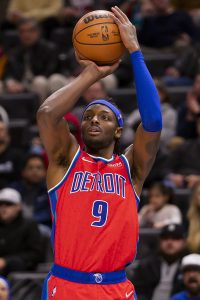 One of the most anticipated – and highly-rumored – trades of the offseason came to fruition when the Trail Blazers acquired Jerami Grant from the Pistons in exchange for Milwaukee’s 2025 first-rounder (top-four protected), a second-round pick swap (No. 46 for No. 36, used on draft-and-stash sharpshooter Gabriele Procida), and two future second-rounders (2025 and 2026).
Portland used its $21MM traded player exception (created by sending CJ McCollum to New Orleans) to accommodate Grant’s $20.96MM salary for 2022/23 without having to send any back. Grant is only under contract through next season, so he’s on an expiring deal.
There were rumors that the Trail Blazers might be willing to include their lottery pick (No. 7 overall, used to select Shaedon Sharpe) in a package for Grant, but that never made sense for a number of different reasons. Grant is a good player, no doubt, but he’s 28 years old, has never been an All-Star and only has one year left on his deal – I’m not trying to imply Grant can’t improve, but one year of team control vs. a mid-lottery pick with four years of control at a friendlier rate isn’t a particularly hard choice, especially since the latter has up to nine years of potential control due to restricted free agency.
So why did Portland deal away a future first-round pick, a second-round pick swap and two future seconds for Grant?
The Trail Blazers have been looking for forwards with good size and versatility to complement star Damian Lillard for several years. They’ve gone through several iterations of forwards since Lillard entered the league in 2012, with perhaps the most successful duo being Al-Farouq Aminu and Maurice Harkless, two defensive-minded players who started when the team made the Western Conference Finals in 2019 (that’s not to say they were the “best,” but the team had the most success that season).
Like McCollum, Lillard is a below-average defensive player. Those limitations on defense made their on-court fit questionable, despite their good relationship and stellar offensive contributions. The Trail Blazers still have question marks at the second guard spot, as Anfernee Simons — who re-signed with the team for $100MM over four years as a restricted free agent — is also a defensive liability.
The club did add Gary Payton II in free agency for backcourt depth, and he’s one of the league’s top perimeter defenders. The Blazers also got Josh Hart in the McCollum trade, another solid defender and good rebounder, though he could start next season at small forward.
Which brings us back to Grant, who has proven to be a player capable of contributing on both ends of the court. He was a high-level “3-and-D” role player for the Thunder and Nuggets before signing a three-year, $60MM contract with Detroit, where he showed he was capable of packing more of an offensive punch.
Across two seasons with the Pistons from 2020-22, Grant averaged 20.9 PPG, 4.4 RPG, 2.6 APG and 1.1 BPG on .428/.353/.842 shooting in 101 games (33 MPG). While his field goal percentage wasn’t the greatest, keep in mind that he was Detroit’s leading scorer during his tenure, and got to the line (6.0 attempts per game) and converted his free throws at a good clip.
Admittedly, the fact that Grant averaged over 20+ PPG the past couple of seasons is less impressive considering the team struggled mightily during that time. He’s also not a great passer, but likely won’t be asked to do that much for Portland.
Having said that, if you actually watched him play for the Pistons, you would have seen that Grant was a three-level scorer who can create his own shot against a variety of defenses and did so with league-average efficiency (55.6% true shooting percentage). That’s no easy task when opposing teams have scouting reports specifically designed to prevent you from scoring.
The last time Lillard played with a 20-point scorer in the frontcourt was from 2012-15 (Lillard’s first three seasons) with LaMarcus Aldridge, but that was short-lived – Aldridge left for San Antonio in free agency in July of 2015. Grant likely won’t average 20+ PPG for Portland, but the fact that he’s talented enough to do so is a nice bonus.
Prior to his offensive emergence with Detroit, Grant was known as a highly versatile defensive player, capable of switching across multiple positions. He’s athletic, slides his feet well, and uses his length to deter shots. He was the Nuggets’ primary wing defender during the team’s run to the Conference Finals in 2020, frequently guarding LeBron James.
Grant is still more than capable of contributing on that end — he just wasn’t as focused on it the past couple of seasons. His primary weakness on the defensive end is that he’s a below-average rebounder, with a career mark of just 3.9 RPG in 26.0 MPG.
It’s also worth noting that Lillard and Grant have experience playing together, winning a gold medal at the Tokyo Olympics last Summer with Team USA. Lillard was effusive in his praise of the move a couple of weeks ago.
“I loved it. That was like the No. 1 thing I wanted to get done,” he said. “Jerami has been on winning teams in OKC and Denver. He brings something to the game that we haven’t had at that position.”
Lillard also recently signed a two-year extension with the Blazers, keeping him with the only franchise he’s ever known for the foreseeable future.
If Grant is such a solid two-way player, why did the Pistons deal him away?
Well, for starters, since Grant is 28 years old and in the midst of his prime, he fits much better on a team trying to make the playoffs again next season like the Blazers than he does with a team full of players on their rookie contracts.
As previously mentioned, Grant only has one year left on his deal, and does it really make sense for the Pistons to pay him when he’s going to be looking for a long-term contract at a higher rate than his current deal? No, not really.
 Would there be benefits of keeping around a good veteran player? Sure. Part of the reason Grant signed with Detroit is because he had a good relationship with GM Troy Weaver during their time together in Oklahoma City, plus he was drawn by a bigger offensive role and the chance to play for an organization led by an African American coach (Dwane Casey) and GM.
However, having a player who is too good to not start impeding the minutes and development of your young players can be an awkward fit, particularly for a team focused on the future like Detroit. Grant was a desirable player for a number of teams, and he had good value, as evidenced by Detroit’s return package.
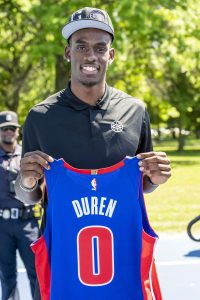
The Pistons later flipped the Bucks’ first-rounder in a draft-day deal with the Knicks to land the draft rights to Jalen Duren, the No. 13 pick, and Kemba Walker‘s expiring contract. At 18 years old, Duren is one of the youngest players in the draft class and is considered a rim-running center with a good amount of upside, particularly on defense. Walker is unlikely to play a game for Detroit, as he’s reportedly being bought out in order to become a free agent.
So in the end, the Pistons acquired a late-lottery pick in Duren, upgraded the No. 46 pick to No. 36, got a couple of future second-rounders, and freed up some cap space in exchange for a good player on an expiring deal who wasn’t in the team’s long-term plans. All in all, a very solid piece of business for Weaver.
Kentavious Caldwell-Pope Signs Two-Year Extension With Nuggets
JULY 16: Caldwell-Pope’s extension is now official, per NBA.com’s transactions log.
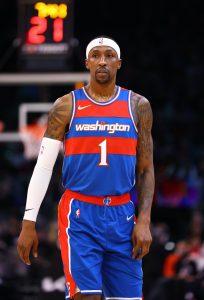 JULY 13: Kentavious Caldwell-Pope is signing a two-year, $30MM extension with the Nuggets, with the second year being a player option, his agent Rich Paul tells ESPN’s Adrian Wojnarowski.
As ESPN’s Bobby Marks tweets, Caldwell-Pope was eligible for an extension despite recently being traded to Denver as long as the total length of the new contract did not exceed two years and the salary increase did not exceed 5%. He was on an expiring deal worth $14MM in 2022/23, so the extension will keep him under contract for at least one more season.
Caldwell-Pope and Ish Smith were sent to the Nuggets from the Wizards in exchange for Monte Morris and Will Barton. Mike Singer of The Denver Post reported at the time of the deal that Denver had been targeting Caldwell-Pope for some time and had interest in retaining him beyond next season, which is now coming to fruition.
Singer notes (via Twitter) that the Nuggets had no intention of trading away two starters from last season unless the team was confident it could sign Caldwell-Pope to an extension.
Caldwell-Pope, known colloquially as KCP, had a solid first season with Washington in ’21/22, averaging 13.2 PPG, 3.4 RPG, 1.9 APG and 1.1 SPG on .435/.390/.890 shooting. The Nuggets reportedly value his championship experience and solid defense.
The 29-year-old shooting guard was the Lakers’ third-best player when they won the title in 2020 and has become a much more reliable outside shooter in recent years. At 6’5″, he’s capable of defending both guard positions and is also an active off-ball cutter, which should pair well with the incredible vision and passing of Nikola Jokic.
KCP’s skill set is always in-demand in the NBA because he doesn’t need the ball to be effective on offense and is a pretty good defender. The Nuggets, in particular, are always looking for role players in that mold to complement their stars, but he’d be a decent fit on most teams.
The Nuggets now project to have their entire starting lineup under contract through at least ’23/24. With the impending returns of Michael Porter Jr. and Jamal Murray, plus the back-to-back MVP in Jokic, Denver has championship aspirations for the upcoming season.
Lakers Notes: Reaves, Pippen Jr., Buss, Impatience
Lakers guard Austin Reaves earned a spot on the 15-man roster prior to training camp and became a rotation regular as a rookie, accomplishing two of his goals last season. However, the team fell woefully short of his third goal, which was winning a championship.
“Individually, I think it went about as good as it could have gone for me,” Reaves told Jovan Buha of The Athletic. “Doing all those things was special. And as a team, I mean, to say the least, it sucked, to be honest. We had high expectations for ourselves and felt like we just couldn’t piece it together throughout the year.
“For me, the main goal is always to win, so it sucked in that aspect.”
After going undrafted out of Oklahoma, Reaves signed a two-way contract with the Lakers and was later promoted to a standard deal, although his salary for 2022/23 is non-guaranteed. As Buha details, Reaves has been diligent in his offseason approach, focused on improving his outside shot and getting stronger to avoid a second-year slump — he has bulked up to 209 pounds with weight training, up from 197 last season.
“It’s my big focus,” Reaves said. “I go in there with a good attitude every day, and whatever they tell me to do, I do. Just putting my body in the best position so the rookie wall or whatever, it doesn’t hit you like that. And you can more push through it because you’re in better shape and better conditioning.”
Here’s more on the Lakers:
- Undrafted rookie Scotty Pippen Jr., son of Hall of Famer Scottie Pippen, is trying to forge his own path in the league, writes Kyle Goon of The Southern California News Group. The younger Pippen was signed to a two-way deal after the draft and his father recently came to watch him play in Summer League. “I think just having my dad supporting me is kinda just like a full-circle moment, I think especially for him seeing his son make it,” he said. “But I think it’s a dream come true. I’ve dreamt of this moment.”
- In a lengthy Q&A with Mark Medina of NBA.com, Lakers owner Jeanie Buss was asked whether she expected a major deal to happen this offseason, to which she replied, “Nothing would surprise me. We’re not making change for the sake of change. It has to be good, basketball decisions that help us now and doesn’t compromise our ability to deal in the future.
- On ESPN’s First Take on Friday (video link), Brian Windhorst interpreted Buss’ quote as meaning she might not have faith in the current roster, with the key aspect being the last line about not compromising the team’s ability to make future moves. As currently constructed, in an optimistic scenario, Windhorst thinks the team might win 45 games in ’22/23 and make the play-in tournament.
- With LeBron James eligible for an extension at the beginning of next month, a rival executive thinks the Lakers are getting antsy to secure his long-term commitment to the franchise, according to Sean Deveney of Heavy.com. “They’re eager to do something,” the Western Conference executive said. “The team they have is just not good enough right now. Everyone there wants to see a resolution to the (Russell) Westbrook situation. They want to see about Kyrie (Irving). They want to get what they can from Indiana once they start selling off pieces, whether it is Buddy Hield or Myles Turner or both. So there is some major impatience, and they are looking at LeBron maybe getting an extension next month and they want to have everything in place. Well, nothing’s in place yet.”
- In case you missed it, Westbrook parted ways with his longtime agent earlier today.