
And-Ones: NCAA, Mozgov, Whitehead, Wroten
The NCAA’s Board of Governors announced today in a press release that it’s moving toward allowing student-athletes to receive compensation for third-party endorsements and promotions. According to the announcement, athletes would be allowed to identify themselves by sport and school, but conference and school logos and other trademarked items would remain prohibited.
The guidelines, which are expected to go into effect when the 2021/22 academic year begins, aren’t a direct response to the NBA recently ramping up its G League developmental program and substantially increasing the amount of money that top high school recruits can make by going the NBAGL route. After all, the NCAA’s new rules will apply to student-athletes across the board, not just basketball players.
Still, top basketball prospects figure to take these forthcoming changes into account as they consider whether to play college ball or take the G League path. The NCAA has historically issued strict penalties for student-athletes found to be accepting even modest benefits — today’s announcement signals that those restrictions are on the verge of loosening to some extent.
Here are more odds and ends from around the basketball world:
- Former NBA center Timofey Mozgov, who signed with Russian team Khimki last summer, missed the entire 2019/20 season due to knee issues. However, the club’s sports director, Pavel Astakhov, told Mosregtoday.ru that Mozgov is expected to remain with the team next season and should be healthy enough to play, as Emiliano Carchia of Sportando relays. The NBA permitted the Magic to remove Mozgov’s remaining cap hits from their books after determining that his health issues were likely career-ending.
- Isaiah Whitehead, a Nets guard from 2016-18, has signed a contract extension with BC Mornar Bar, according to agent Misko Raznatovic (Twitter link). The club, which Whitehead joined in January, is based in Montenegro.
- Former NBA guard Tony Wroten and Joventut Badalona have reached an agreement to termine his contract, two months before it was set to expire, the Spanish team announced (via Twitter). It’s unclear what the next step will be for Wroten, who spoke recently about wanting to make it back to the NBA.
Raptors Notes: Free Agency, Miller, Davis
The Raptors haven’t had meaningful cap room since 2015, so it remains to be seen whether the organization’s reputation has improved enough since then to make Toronto an appealing free agent destination for top free agents, Blake Murphy of The Athletic writes in a mailbag.
While Toronto hasn’t historically competed with big-market U.S. teams for stars on the open market, Murphy notes that last year’s championship should go a long way toward boosting the team’s appeal around the league.
Hosting a recent All-Star Weekend and establishing themselves as one of the league’s best-run franchises are also points in the Raptors favor, according to Murphy. So is the fact that quality players like Kyle Lowry, DeMar DeRozan, and Serge Ibaka chose to sign new contracts with Toronto rather than jumping ship, and Marc Gasol waived his trade kicker to join the club last season.
Here’s more on the Raptors:
- Murphy touched on several other subjects in that mailbag, addressing Fred VanVleet‘s and Ibaka’s upcoming free agencies, Stanley Johnson‘s player option, and the possibility of an OG Anunoby rookie scale extension, among other topics.
- In a separate story for The Athletic, Murphy profiles Malcolm Miller, who has been a bench piece for the Raptors for the last three seasons. Although Toronto has liked Miller enough to keep him around that long, he has never really played regular minutes, so it’s unclear what his future holds as he prepares for restricted free agency this offseason.
- On a conference call, undrafted rookie Terence Davis admitted that he expected to spend half the 2019/20 season in the G League (Twitter link via Murphy). Instead, Davis has become a reliable rotation player at the NBA level — he’s the only player on the Raptors’ roster to appear in all 64 of the team’s games so far.
- In case you missed it earlier this afternoon, we explored how a spot on an All-NBA team could impact Pascal Siakam‘s future earnings.
How 2020 All-NBA Picks Could Impact Contract Situations
All-NBA selections have become more important than ever in recent years, since teams can agree to increase the overall value of certain maximum-salary contracts based on whether or not a player has earned All-NBA honors in a given season.
Those higher max salaries are also available to players who win MVP or Defensive Player of the Year, but there’s only one of each of those awards per year. There are 15 All-NBA players annually, creating more opportunities for players to become eligible for those more lucrative contracts, informally known as “super-max” deals.
As we explain in our glossary entry on the “Designated Veteran Extension,” a player with between seven and nine years of NBA experience who meets certain contract criteria and hasn’t changed teams since the end of his rookie contract become eligible for a maximum salary worth 35% of the cap – instead of 30% – if he was named to an All-NBA team in the most recent season, or in two of the last three seasons.
Similar incentives are available for players coming off their rookie scale contracts, as noted in our glossary entry on the “Derrick Rose Rule.” Those players can earn max deals worth up to 30% of the cap instead of 25% if they were named to an All-NBA team in the most recent season, or in two of the last three seasons.
The differences between the various levels of maximum salaries can be substantial over the course of a long-term contract. For instance, in 2019/20, a five-year max contract that starts at 25% of the cap and includes 8% annual raises is worth just over $158MM. By comparison, a five-year deal that starts at 35% of the cap with 8% annual raises is worth over $221MM. A five-year contract at the 30% max falls in between, at about $190MM.
We don’t know yet what this year’s All-NBA teams will look like – or even when voting will take place – but as our informal polls last week showed, there are a number of candidates whose future earnings could be affected by whether or not they earn one of those 15 spots.
Let’s take a closer look at some of those players…
Players who have already qualified for super-max contracts: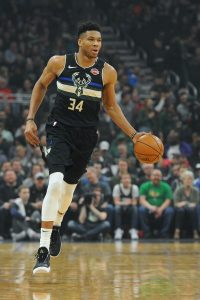
- Giannis Antetokounmpo (Bucks)
- Rudy Gobert (Jazz)
Antetokounmpo and Gobert didn’t even need to rely on All-NBA spots to qualify for super-max contracts — Giannis’ MVP award last year and Gobert’s back-to-back Defensive Player of the Year awards in 2018 and 2019 secured their eligibility.
Because both players only had six years of experience entering the 2019/20 season, they had to wait one more year to be eligible to actually receive super-max extension offers, which would be worth 35% of the cap instead of 30%.
Antetokounmpo is a lock to receive such an offer from the Bucks, who have publicly said they’ll put it on the table as soon as they can. That was supposed to happen this July, but the NBA’s hiatus has thrown that timeline into flux. Whenever Milwaukee makes its offer, it would be for a five-year extension that would start in 2021/22 and be worth 35% of that season’s cap.
Gobert’s outlook is cloudier. He could also sign a five-year, 35% max-salary extension that would start in 2021/22, but he’s not at the same level of superstardom that Giannis is, so it remains to be seen how aggressive the Jazz will actually be in attempting to lock him up beyond next season.
Players whose already-signed rookie extensions would be impacted by an All-NBA selection:
- Pascal Siakam (Raptors)
- Ben Simmons (Sixers)
Siakam and Simmons signed maximum-salary rookie scale extensions with their respective teams last fall. Both contracts will go into effect in 2020/21 and both include Rose Rule language, meaning they’ll be among the players closely monitoring this year’s All-NBA results.
In our series of polls, Siakam earned a spot on the All-NBA Second Team. However, I think there’s a real possibility he could end up on the Third Team. Antetokounmpo, LeBron James, and Kawhi Leonard will likely receive more votes than Siakam. Anthony Davis will place higher than Siakam too if voters consider him a forward. And even if Davis is listed as a center, Jayson Tatum is among those who should give Siakam a strong push for that Second Team forward spot.
While Siakam might be satisfied to end up on any All-NBA team, a spot on the Second Team would be far more satisfying from a financial perspective. His deal calls for a starting salary worth 28% of the cap if he earns All-NBA Second Team honors, but just 25% if he makes the Third Team.
As we outlined in the fall, that difference would have been worth nearly $16MM over four years based on a $116MM cap. The cap is no longer expected to get that high, but even so, missing out on a Second Team spot would cost Siakam millions.
As for Simmons, he wasn’t one of the 15 players voted to an All-NBA team by Hoops Rumors readers, but he looks to me like a viable candidate for the Third Team. If he makes the Third Team, his starting salary would be 28% of next year’s cap, rather than the 25% he’d get if he doesn’t make an All-NBA squad. Those three percentage points would impact Simmons even more than they would Siakam over the life of their contracts, since Simmons’ five-year deal runs for an extra season and the amount of the annual raises are based on the starting salary.
Nuggets guard Jamal Murray also signed a rookie scale extension with Rose Rule language, but isn’t a realistic candidate for an All-NBA nod.
Players whose next contract could be impacted by an All-NBA selection this season:
- Joel Embiid (Sixers)
- Brandon Ingram (Pelicans)
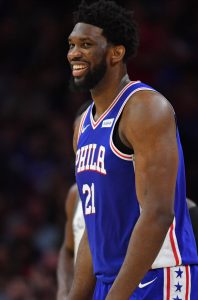 If Embiid – who was voted onto Hoops Rumors’ All-NBA Third Team – earns an All-NBA spot this season after doing so last year, he’d be in the same position heading into 2020/21 that Antetokounmpo and Gobert were entering 2019 — he’d have qualified for a super-max extension, but wouldn’t yet be eligible to sign one.
Once the 2021/22 league year begins, Embiid would have seven years of NBA experience, with All-NBA nods in at least two of the last three years, making him eligible to sign a four-year super-max extension that would begin in 2023/24, with a starting salary worth 35% of the cap. Even if Embiid doesn’t make an All-NBA team this season, doing so next year would still make him eligible for that same deal.
As for Ingram, he’s a long shot to be named to an All-NBA team, but in the unlikely event that he is, he’d be eligible to sign for a starting salary of up to 30% of the cap on a new free agent contract with the Pelicans. No other team looking to sign him to an offer sheet could exceed 25% of the cap in that scenario.
Other players to start monitoring if they earn All-NBA honors this season:
- Bam Adebayo (Heat)
- Devin Booker (Suns)
- Luka Doncic (Mavericks)
- Nikola Jokic (Nuggets)
- Donovan Mitchell (Jazz)
- Jayson Tatum (Celtics)
- Trae Young (Hawks)
These players fall into a few separate sub-categories. Jokic and Booker, for instance, are in their fifth seasons and on their second NBA contracts. An All-NBA spot – which is far likelier for Jokic – would be a good start toward earning super-max eligibility, but they’d still have to make another All-NBA team in either 2021 or 2022 to become eligible to sign a Designated Veteran Extension in 2022.
Doncic, an All-NBA lock, and Young, a lesser candidate, are only in their second NBA seasons. If they were to make All-NBA teams this year and next, they’d be eligible to sign rookie scale extensions with starting salaries worth up to 30% of the cap during the 2021 offseason. Those deals would go into effect in 2022/23.
Adebayo, Mitchell, and Tatum are all in their third seasons and will be extension-eligible during the 2020 offseason. Earning an All-NBA spot this year actually wouldn’t do much for their Rose Rule eligibility — they’d still have to do it again in 2021 to qualify, since the criteria calls for an All-NBA berth in either the season before the new contract begins or in two of the three prior seasons.
Still, earning All-NBA honors this year would give those three players additional leverage to negotiate Rose Rule language into their potential rookie scale extensions, which would go into effect in 2021/22.
Strong All-NBA candidates who are notably ineligible for super-max contracts:
- Bradley Beal (Wizards)
- Anthony Davis (Lakers)
Beal was in position to qualify for a super-max extension if he had earned All-NBA honors this season, but the short-term contract extension he signed last October eliminated that possibility. By the time that extension expires, he’ll have 10 years of NBA experience and will be eligible for the 35% max anyway.
Davis has the right amount of NBA experience to gain eligibility and should be an All-NBA lock, but the fact that he changed teams last summer ensures he’ll no longer qualify for a Designated Veteran Contract this offseason — he missed out on the possibility of the super-max as soon as he left the Pelicans.
Various other All-NBA candidates won’t meet the super-max criteria for various reasons. Some, like James Harden, are already on a super-max contract. Others, such as LeBron James, already have 10+ years of experience and can’t qualify for a higher max than the 35% they already get. Recently changing teams (ie. Jimmy Butler) or signing new long-term deals (ie. Khris Middleton) also remove certain players from super-max contention.
Photos courtesy of USA Today Sports Images.
Northwest Notes: Z. Collins, Conley, Beasley
Trail Blazers big man Zach Collins, who underwent shoulder surgery in November, is one of many injured NBA players whose return timelines has been complicated by the league’s hiatus. A report in January indicated that Collins was still on track to make it back in March, but he didn’t suit up before the league suspended its season on March 11.
Without the ability to participate in full-contact practices and scrimmages, Collins in a bit of a holding pattern as he nears the final stage of his rehab process. Still, as Chris Burkhardt of NBC Sports Northwest writes, Collins’ comments during a conversation with Trail Blazers Courtside strike an optimistic tone when it comes to a potential return this summer.
“I definitely think I am on the right track,” said the Trail Blazers’ big man. “Right now it’s tough because the last part of my development was playing and we can’t play right now. I’m just trying to simulate that as much as I can right now without going through contact with other players. It feels really good. Like I said before, I haven’t really had any setbacks in my rehab. From day one it’s all been pretty smooth, it’s just a long process. But it feels great. I’m really happy with where I’m at.”
Here’s more from around the Northwest:
- Although his first season with the Jazz has been a little up and down on the court, Mike Conley said in a Twitter Q&A on Tuesday that the transition to Utah itself has been as smooth as he could have hoped. “Salt Lake has been unbelievable to me,” Conley said, per Sarah Todd of The Deseret News. “My family loves it. Obviously some of the best fans in the world. Truly a different experience for us, I think being in the mountains and altitude has been an adjustment. But, everywhere you go everyone is a diehard Jazz fan and truly care about you and your family.”
- With restricted free agency looming for Malik Beasley, Jon Krawczynski of The Athletic examines the swingman’s value, openly wondering if Beasley’s impressive play in 14 games with the Timberwolves will be enough to earn him a contract in the range of four years and $60MM+.
- Before today, our most recent collection of Northwest notes was posted on Monday night. You can found that round-up right here.
NBA Increasingly Willing To Delay Start Of 2020/21 Season
While some other top basketball leagues around the world are setting deadlines to decide the fate of their 2019/20 seasons, the NBA is increasingly willing to be patient as it considers if and when to resume its own season, ESPN’s Adrian Wojnarowski said this week during an appearance on SportsCenter (video link).
Previous reports have indicated that the NBA would prefer not to have the current season run beyond August or early September. However, Wojnarowski suggests that the league’s timeline is becoming more flexible.
“More than ever, I think this is a league that is really willing to push the calendar on this season,” Wojnarowski told ESPN’s Scott Van Pelt. “I had reported (previously) that the league wanted to have the Finals wrapped up ideally by Labor Day weekend. They’re more willing than ever to delay the start of next season.”
As Wojnarowski explains, one key factor influencing the NBA’s thinking is the fact that it could be a while before teams can host games with fans in attendance. If clubs are still required to play behind closed doors in the fall, there would be less incentive for the league to push to start next season at its usual time. In that scenario, delaying opening night could increase the odds of being able to play more games next season in front of fans.
“If they were going to start at the normal time, mid-to-late October, it’s hard to imagine that there would be fans in the stands,” Woj said. “And so I think as much time as they can buy for themselves, the league is willing to do that right now. They’re trying to look at everything. This isn’t just, ‘Let’s figure out the next couple months and this season.’ This is a two-, three-, four-year look moving forward.”
Based on Wojnarowski’s report, it sounds as if the idea of finishing the current season in the fall and starting the 2020/21 campaign in December – or maybe even later – isn’t out of the question.
We’re still a ways off from getting a real sense of what a reshaped NBA schedule might look like for the next couple years, but Woj’s report echoes a point we’ve heard repeatedly since the league suspended its season seven weeks ago — the NBA is willing to think outside the box and consider a wide variety of possible scenarios as it weighs all its options.
Knicks To Retain GM Scott Perry For 2020/21
The Knicks have opted to retain Scott Perry as their general manager for at least another year, reports Steve Popper of Newsday. The team confirmed the decision in a statement to Newsday.
“Scott is a well-respected basketball executive who I have known for more than 20 years, and I look forward to continuing to work closely with him as we look to build a winning team in New York,” president of basketball operations Leon Rose said in that statement.
Perry had been New York’s GM under former team president Steve Mills, and there was speculation that replacing Perry would be among the changes made by the newly-hired Rose as he reshapes the club’s front office. However, given the unusual circumstances created by the coronavirus pandemic, the Knicks had been expected to keep Perry on board at least to run their draft — now, they’ve decided to extend their relationship a little beyond that.
As Popper writes, the Knicks and Perry had a May 1 deadline on their mutual option for the 2020/21 season, necessitating a decision on his future this week. A source tells Popper that the two sides have agreed to a one-year contract, which will allow Rose and Perry to work together without the team having to make a long-term commitment to the GM.
The Knicks’ decision on Perry doesn’t necessarily mean the rest of the front office holdovers are safe for next season. The contracts for those executives don’t require an immediate decision like Perry’s did, according to Popper, who hears from a source that Rose will continue to do due diligence on the rest of the staff.
205 Early Entrants Declare For 2020 NBA Draft
The NBA has released the official list of early entrants for the 2020 NBA draft, announcing in a press release that 205 players have filed as early entry candidates. Of those prospects, 163 are from colleges, while 42 are international early entrants.
That number falls just short of the previous record for early entrants, established in 2018. Two years ago, 236 early entrants declared for the draft, though ultimately only 91 of those prospects remained in the draft by the final deadline. A year ago, 233 early entrants declared, with 98 remaining in the draft.
This year’s total of 205 early entrants also figures to shrink significantly by June 3 and again by June 15, the two tentative deadlines for players to withdraw their names from the draft pool — assuming those dates aren’t pushed back. But it still looks like the pool will remain crowded, with the eventual number of early entrants likely to exceed 60, the number of picks in the draft.
Our list of early entrants is now up to date and can be found right here. Here are today’s updates:
College underclassmen:
The following players were listed on the NBA’s official breakdown today, but weren’t yet noted on our own list.
- Timmy Allen, F, Utah (junior)
- Nojel Eastern, G, Purdue (junior)
- Tony Goodwin II, G/F, Redemption Academy (N/A)
- Jalen Hill, F/C, UCLA (sophomore)
- Jay Huff, F, Virginia (junior)
- Chance Hunter, G, Long Beach State (sophomore)
- Damien Jefferson, G/F, Creighton (junior)
- Dakari Johnson, G, Cape Fear CC (freshman)
- Jalen Johnson, F, Louisiana (junior)
- Colbey Ross, G, Pepperdine (junior)
- Joe Saterfield, G/F, Ranger CC (freshman)
- Justin Smith, F, Indiana (junior)
- Ben Stanley, F, Hampton (sophomore)
- Justin Thomas, G, Morehead State (junior)
- Ethan Thompson, G, Oregon State (junior)
- Alonzo Verge Jr., G, Arizona State (junior)
- Ibi Watson, G, Dayton (junior)
The following players reportedly declared for the draft or planned to, but weren’t named in the NBA’s official announcement today. As such, we’ve removed them from our list.
- Paul Atkinson Jr., F, Yale (junior)
- Chaundee Brown, G, Wake Forest (junior)
- Devon Daniels, G, North Carolina State (junior)
- Ceasar DeJesus, G, UCF (junior)
- Cartier Diarra, G, Kansas State (junior)
- Jimma Gatwech, G, Huntington Prep (N/A)
- TeShaun Hightower, G, Tulane (junior)
International players:
The following players were listed on the NBA’s official breakdown today, but weren’t yet noted on our list.
- Philippe Bayehe, F, Italy (born 1999)
- Vinicius Da Silva, C, Spain (born 2001)
- Imru Duke, F, Spain (born 1999)
- Michele Ebeling, F, Italy (born 1999)
- Dut Mabor, C, Italy (born 2001)
- Sergi Martinez, F, Spain (born 1999)
- Joel Parra, F, Spain (born 2000)
- Mouhamed Thiam, C, France (born 2001)
- Andrii Voinalovych, F, Ukraine (born 1999)
2020/21 Salary Cap Preview: Los Angeles Clippers
Hoops Rumors is looking ahead at the 2020/21 salary cap situations for all 30 NBA teams. Due to the impact of the coronavirus pandemic on the NBA, it’s impossible to know yet where the cap for 2020/21 will land. Given the league’s lost revenue, we’re assuming for now that it will stay the same as the ’19/20 cap, but it’s entirely possible it will end up higher or lower than that.
After going all-in during the 2020 offseason, giving up a boatload of draft picks – and rising star Shai Gilgeous-Alexander – in order to land Kawhi Leonard and Paul George, the Clippers were one of the NBA’s best teams in 2019/20. Despite only firing on all cylinders a handful of times throughout the season due to some injury and chemistry issues, the club entered the league’s hiatus with a 44-20 record, good for second in the West.
The Clippers will be one of the teams hit hardest if the NBA can’t resume its 2019/20 season and play out its postseason. After all, Leonard and George will be entering contract years in ’20/21, so it’s unclear how long the team’s window will be open. As for the 2020 offseason, the Clips have some big free agent decisions to make and may have to go into tax territory if they want to retain Montrezl Harrell, Marcus Morris, and JaMychal Green.
Here’s where things stand for the Clippers financially in 2020/21, as we continue our Salary Cap Preview series:
Guaranteed Salary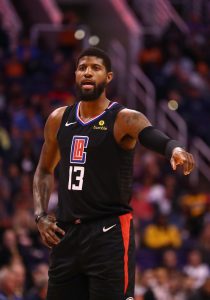
- Paul George ($35,450,412)
- Kawhi Leonard ($34,379,100)
- Patrick Beverley ($13,333,333)
- Lou Williams ($8,000,000)
- Ivica Zubac ($7,000,000)
- Rodney McGruder ($5,192,307)
- Landry Shamet ($2,090,040)
- Mfiondu Kabengele ($2,075,880)
- Terance Mann ($1,517,981)
- Total: $109,039,053
Player Options
- JaMychal Green ($5,005,350)
- Total: $5,005,350
Team Options
- None
Non-Guaranteed Salary
- Joakim Noah ($2,692,991)
- Amir Coffey (two-way)
- Total: $2,692,991
Restricted Free Agents
- Johnathan Motley ($1,678,854 qualifying offer / $1,678,854 cap hold): Bird rights
- Total (cap holds): $1,678,854
Unrestricted Free Agents / Other Cap Holds
- Marcus Morris ($18,000,000): Non-Bird rights
- Montrezl Harrell ($11,400,000): Bird rights
- Reggie Jackson ($1,620,564): Non-Bird rights
- Patrick Patterson ($1,620,564): Non-Bird rights
- Total: $32,641,128
Offseason Cap Outlook
With $109MM+ in guaranteed money committed to nine players for 2020/21, the Clippers aren’t in bad shape — even if the cap doesn’t increase, that would give them plenty of wiggle room below the tax line to fill out the final five or six spots on their roster.
However, if they intend to bring back all their key free-agents-to-be, they may need all that wiggle room and then some. Harrell is due a significant raise on his current $6MM salary; Morris will likely be in line for another eight-figure salary; and Green will add another $5MM+ to the books if he simply exercises his player option. Team salary would increase further if the club wants to make use of its mid-level exception to bring in more talent.
For now, we’re assuming the Clippers will do all they can to retain their rotation players, which will likely mean entering tax territory. But the team could gain more cap flexibility if one or two of those key free agents don’t return.
Cap Exceptions Available
- Taxpayer mid-level exception: $5,718,000 1
- Trade exception: $3,567,720 (expires 2/8/21)
- Trade exception: $1,445,697 (expires 2/8/21)
Footnotes
- This is a projected value. If the team doesn’t approach the tax apron, it could have the full mid-level exception ($9,258,000) and bi-annual exception ($3,623,000) available.
Note: Minimum-salary and rookie-scale cap holds are based on the salary cap and could increase or decrease depending on where the cap lands.
Salary information from Basketball Insiders and Early Bird Rights was used in the creation of this post. Photo courtesy of USA Today Sports Images.
Pacific Notes: Warriors, Avdija, Lakers, Clippers
Even if the NBA is able to resume its 2019/20 season and play some regular season games before the playoffs begin, a team like the Warriors may not be involved, writes Anthony Slater of The Athletic. In fact, one source who spoke to Slater this week predicted that there’s “basically zero chance” of Golden State playing another regular season game this summer, even if other teams do.
As Slater explains, it’s possible the NBA will establish a new end-of-season schedule that doesn’t include the league’s 10 worst teams or so. That would allow playoff teams to get back to game speed and could give some teams just outside the playoff picture an outside shot at a postseason berth. In that scenario, clubs like the Warriors – who have no chance to make the playoffs – wouldn’t be required to return under unique circumstances only to play a handful of meaningless games.
Slater notes that there are other paths the NBA could take that might also exclude a team like the Warriors. The league could set up a play-in tournament for the last couple postseason spots or could advance directly to the playoffs based on the current standings without rescheduling any regular season games.
As we wait to see if any of those options will be viable, let’s round up a few more notes from out of the Pacific…
- The Warriors were among the teams that took “a long look” at Israeli prospect Deni Avdija in Europe this season, according to Monte Poole of NBC Sports Bay Area, who examines whether the young forward might be a fit in Golden State.
- With Los Angeles’ shelter-at-home order in place through at least May 15, it’s not clear when the city’s NBA teams might be able to reopen their practice facilities. According to ESPN’s Dave McMenamin, the Lakers have been in touch with the Los Angeles mayor’s office to explore whether it might be possible to open their facility before that stay-at-home order is lifted. As McMenamin details, the Lakers have a series of precautionary measures planned to ensure player safety and would establish a set schedule for when players are permitted to visit their practice facility.
- As Andrew Greif of The Los Angeles Times writes, the Clippers are happy to retain assistant general manager Mark Hughes, who was one of several candidates to interview for Chicago’s open GM job. Greif takes an in-depth look at the role Hughes plays in Los Angeles and how he has become one of the most well-liked members of the Clips’ front office.
Hoops Rumors Glossary: Maximum Salary
There are many NBA players technically on maximum salary contracts, but most of those players aren’t earning identical salaries this season, making the league’s “maximum salary” something of a misnomer. While each NBA player has a maximum salary that he can earn in a given season, that number varies from player to player, with a handful of factors playing a part in determining the exact figure.
The primary factor in determining a player’s maximum salary is his years of service. If a player has been in the NBA for no more than six years, he can earn up to 25% of the salary cap in the first year of his deal. Players with seven to nine years of experience can earn up to 30%, while veterans with 10 or more years in the NBA are eligible for up to 35% of the cap. In 2019/20, the salary cap is $109,140,000, meaning the maximum salaries are as follows:
| Years in NBA | Salary |
|---|---|
| 0-6 | $27,285,000 |
| 7-9 | $32,742,000 |
| 10+ | $38,199,000 |
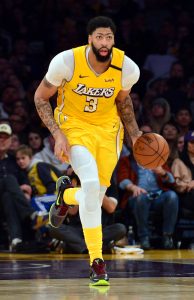 The figures above help explain why nine-year veteran Kemba Walker, who signed a maximum salary contract as part of a sign-and-trade to the Celtics last July, is earning a salary of $32,742,000 this season. But they don’t explain why Lakers star Anthony Davis, who is also in that 7-9 year window and is on a max contract of his own, is earning just $27,093,018.
The reason Davis’ maximum salary is a few million shy of Walker’s is that those league-wide maximum salary figures only apply to the first year of a multiyear contract. When a player signs a maximum contract, he can receive annual raises of up to either 8% or 5%, depending on whether he signs with his previous team or a new team. So by the third, fourth, or fifth year of his contract, he could be earning significantly more or less than the updated max for that season.
Davis signed his maximum salary contract extension in 2015 and it went into effect in 2016/17, when he had fewer than six years of NBA experience. Although he has received annual 8% raises since then, those raises haven’t been enough to keep up with the annual cap growth and with his move into the 7-9 year window. As a result, he’s earning about $5.65MM less than his actual max in 2019/20, despite being on a “max contract.”
Davis will get to start over on a new max deal in ’20/21, assuming he turns down his player option this offseason. If he wants to maximize his earnings going forward, he’ll likely opt for a shorter-term deal that gives him the opportunity to sign a new contract in 2022 when he gains 10 years of NBA experience and qualifies for a starting salary of up to 35% of the cap.
Here are a couple more ways a player’s usual maximum salary can fluctuate:
- A free agent’s maximum salary is always at least 105% of his previous salary. For example, Warriors star Stephen Curry is earning $40,231,758 this season. He’s under contract for two more years after 2019/20, but if he were eligible for free agency this offseason, he’d be able to sign for a starting salary of up to $42,243,346 (105% of this year’s salary), even if that figure exceeds 35% of the 2020/21 cap.
- In certain situations, players eligible for new contracts can earn the maximum salary for the level above the one they’d typically fall into. For instance, a player receiving a designated rookie extension can earn up to 30% of the cap instead of 25% if he meets certain criteria. A veteran can become eligible to earn up to 35% of the cap instead of 30% if he meets the same criteria, which are related to MVP, Defensive Player of the Year, or All-NBA honors.
A player who signs a maximum salary contract can receive a trade kicker as part of his deal, but he can’t cash in on that bonus for any amount beyond his maximum salary in a given league year. For instance, Karl-Anthony Towns‘ max salary contract with the Timberwolves features a 5% trade kicker, but if he had been traded this season, he wouldn’t have been eligible to receive that bonus, since he’s already earning his maximum salary of $27,285,000.
Similarly, a maximum salary player whose team finishes the season below the minimum salary floor isn’t eligible to receive a share when the team distributes that money to its players, since his max salary for that year can’t be exceeded.
Note: This is a Hoops Rumors Glossary entry. Our glossary posts will explain specific rules relating to trades, free agency, or other aspects of the NBA’s Collective Bargaining Agreement. Larry Coon’s Salary Cap FAQ was used in the creation of this post.
Earlier versions of this post were previously published by Luke Adams and Chuck Myron. Photo courtesy of USA Today Sports Images.