
Draft Notes: J. Williams, Sasser, LaRavia, Houstan, Minott, More
Santa Clara wing Jalen Williams was perhaps the standout of last week’s draft combine in Chicago, while Houston guard Marcus Sasser looked like the best player at the G League Elite Camp, John Hollinger and Sam Vecenie of The Athletic write as part of their analysis of the combine.
Hollinger and Vecenie suggest that Williams’ stock has “exploded into the stratosphere” as a result of his performance in Chicago and that he looks like a safe bet to be a first-round pick. As for Sasser, he got “nearly unanimous praise” from scouts, who believe he has a chance to start his rookie season on a standard NBA contract, rather than a two-way deal.
The Athletic’s duo shares several more combine-related tidbits in their full story, including identifying Wake Forest forward Jake LaRavia as a prospect who is drawing legitimate interest from contending teams in the last 10 picks of the first round.
Hollinger and Vecenie also say that chatter about Michigan forward Caleb Houstan having received a promise continues to circulate among league insiders. Those insiders have speculated that Oklahoma City at No. 30 could be the team eyeing Houstan, given the Thunder‘s history of shutting down their targets well ahead of draft night.
Here are a few more draft-related notes:
- Josh Minott, the No. 48 player on ESPN’s 2022 big board, will be keeping his name in the NBA draft, according to his uncle (Twitter link via Jon Rothstein of CBS Sports). The freshman forward played fewer than 500 total minutes in his first and only college season at Memphis in 2021/22.
- Wyoming guard Hunter Maldonado tells Rothstein (Twitter link) that he’ll withdraw from the draft and use his final year of NCAA eligibility. Maldonado had a big senior year in 2021/22, averaging 18.5 PPG, 6.3 APG, and 5.7 RPG and making the All-Mountain West Conference first team.
- George Washington junior guard James Bishop will withdraw from the draft and return to school for at least one more year, tweets Rothstein. Bishop has been the Colonials’ go-to scorer since transferring for his sophomore season, averaging 17.6 PPG in 47 games over the last two years.
- Senior guard Emmanuel Bandoumel will also withdraw from the draft as he transfers from SMU to Nebraska, tweets Rothstein.
- Former Louisiana senior center Theo Akwuba has withdrawn from the draft and Oklahoma State junior guard Avery Anderson III and Tennessee junior guard Santiago Vescovi are expected to do the same, according to Jeff Goodman of Stadium (all Twitter links). Goodman notes that Akwuba will be transferring to Ole Miss for his final college season.
2022 NBA Offseason Preview: Los Angeles Clippers
The Clippers had one of the NBA’s most expensive rosters in 2021/22, but with Kawhi Leonard spending the year recovering from the ACL tear he sustained in last year’s playoffs, the team’s ceiling was never as high as its payroll suggested.
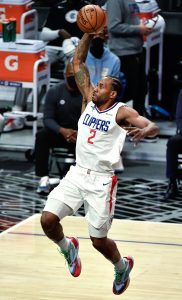 Even with Leonard unavailable and with George limited to 31 games due to injury issues of his own, the Clippers stayed competitive all season. Head coach Tyronn Lue had an impressive year, getting the most out of minimum-salary players such as Terance Mann, Isaiah Hartenstein, and Amir Coffey and veterans like Reggie Jackson, Ivica Zubac, Nicolas Batum, and Luke Kennard.
A record just above .500 (42-40) put the Clippers in the play-in tournament, where they still could have been dangerous if Leonard and George were available. But Kawhi wasn’t yet ready to return from his long rehab process and an ill-timed positive COVID-19 test for George prevented him from suiting up for the second play-in game, which L.A. lost.
Given how much money they spent on the roster and how little they had to show for it as season’s end (their lottery pick was sent to Oklahoma City as part of the 2019 George deal), it’s easy to view 2021/22 as a lost year for the Clippers. But the opportunities that some of the team’s role players received, and the strides they made, could pay dividends going forward as the roster gets healthier.
The Clippers’ Offseason Plan:
The Clippers got a head-start on their offseason at the trade deadline in February when they sent Eric Bledsoe, Justise Winslow, Keon Johnson, and a second-round pick to Portland in exchange for Norman Powell and Robert Covington.
It was the sort of move the Clippers couldn’t have waited until the offseason to make, since Bledsoe’s non-guaranteed contract for 2022/23 would’ve complicated salary matching. And it essentially allowed the team to make a pair of veteran “free agent” additions without having the cap space to do so this summer. Powell is under contract for four more seasons, while Covington recently signed a two-year extension that allowed L.A. to secure his rights through 2024. It’s safe to assume both will be key parts of next season’s roster.
With Powell and Covington locked up, Leonard and George hopefully healthier going forward, and Marcus Morris, Kennard, Jackson, Zubac, Mann, and Brandon Boston Jr. all still under team control, the Clippers have a roster capable of seriously contending even without any further additions. However, the team will still have some cap- and roster-related questions to answer.
For one, just how much tax is Steve Ballmer willing to pay? If we assume the Clippers bring back all 10 players listed above, along with 2021 second-rounder Jason Preston, the team’s salary is already up to $168.6MM, far beyond the projected luxury tax line of $149MM. Filling out the roster, including potentially negotiating new deals for Batum, Coffey, and/or Hartenstein, will only push that figure higher.
If Ballmer is willing to pay up, the Clippers have the flexibility to bring their own players back and continue pursuing roster upgrades. Batum’s Early Bird rights and Coffey’s Bird rights should allow for new deals, even if Batum turns down his $3.3MM player option.
L.A. only has Non-Bird rights on Hartenstein, so bringing him back might be trickier, but the team could use some or all of its $6.4MM taxpayer mid-level exception to make him a competitive offer or to sign an adequate replacement. If the team would rather not spend more than the minimum on its backup center, that MLE could be used to address another position.
Should Ballmer feel at all uneasy about his growing tax bill, a trade to shed salary is a possibility. Morris and Kennard are good players, but they may be a little more expendable following the additions of Covington and Powell — one or both could be shopped this offseason.
Even if cutting costs isn’t a priority, the Clippers figure to explore the trade market, since adding one more play-maker – potentially at point guard – has long been on their to-do list. They have a pair of trade exceptions worth between $8-10MM that could come in handy in certain scenarios. If there are no viable trades out there, the Clippers may have to rely on the free agent market to add a lower-cost solution — Ricky Rubio would be an intriguing target if and when he’s healthy.
Salary Cap Situation
Note: Our salary cap figures are based on the league’s latest projection ($122MM) for 2022/23.
Guaranteed Salary
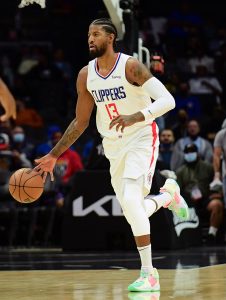 Paul George ($42,492,492)
- Kawhi Leonard ($42,492,492)
- Norman Powell ($16,758,621)
- Marcus Morris ($16,372,093)
- Luke Kennard ($14,415,545)
- Robert Covington ($12,307,692)
- Reggie Jackson ($11,215,260)
- Terance Mann ($1,930,681)
- Brandon Boston Jr. ($1,563,518)
- Jason Preston ($1,563,518)
- Total: $161,111,912
Player Options
- Nicolas Batum ($3,328,530): Early Bird rights
- Total: $3,328,530
Team Options
- Ivica Zubac ($7,518,518): Bird rights
- Total: $7,518,518
Non-Guaranteed Salary
- None
Restricted Free Agents
- Amir Coffey ($2,076,674 qualifying offer / $2,076,674 cap hold): Bird rights
- Total (cap holds): $2,076,674
Two-Way Free Agents
- Jay Scrubb ($1,811,516 qualifying offer / $1,811,516 cap hold): Early Bird rights
- Xavier Moon ($1,616,044 cap hold): Non-Bird rights
- Total: $3,427,560
Draft Picks
- No. 43 overall pick (no cap hold)
Extension-Eligible Players
Note: These are players who are either already eligible for an extension or will become eligible before the 2022/23 season begins.
- Marcus Morris (veteran)
- Ivica Zubac (veteran)
Unrestricted Free Agents / Other Cap Holds
- Isaiah Hartenstein ($1,811,516 cap hold): Non-Bird rights
- Rodney Hood ($1,811,516 cap hold): Non-Bird rights
- Total: $3,623,032
Offseason Cap Outlook
It’s hard to imagine a scenario where the Clippers aren’t a taxpayer in 2022/23. To get below the tax line, they’d have to turn down Zubac’s option, let all their free agents walk, and then shed at least $20MM+ more in guaranteed salary before filling out their roster with minimum contracts.
I don’t see that happening, so the Clips will be limited to the taxpayer portion of the mid-level exception this offseason and won’t be able to use the bi-annual exception or acquire anyone via sign-and-trade.
Cap Exceptions Available
- Taxpayer mid-level exception: $6,392,000 1
- Trade exception: $9,720,900
- Trade exception: $8,250,000
Footnotes
- This is a projected value.
Salary and cap information from Basketball Insiders and RealGM was used in the creation of this post.
Gary Payton II Expected To Return In NBA Finals
The Warriors have been without their best backcourt defender, Gary Payton II, since he suffered a fractured left elbow early in Game 2 of the Western Conference Semifinals vs. Memphis. However, it appears that Payton is on track to return to the court during the NBA Finals.
Sources tell Shams Charania of The Athletic and Stadium (video link) that Payton is expected to be play in the Finals and could even be available as soon as Game 1 next Thursday.
The Warriors never put out an official announcement estimating Payton’s recovery timeline, but Chris Haynes of Yahoo Sports was among those who reported that the 29-year-old was expected to be sidelined for three-to-five weeks — that was a little over three weeks ago. If Payton is able to suit up for Game 1 of the Finals next week, he’ll be 30 days removed from having sustained the injury.
While it remains to be seen whether or not Payton can be as effective as he was before breaking his elbow, he could help the Warriors out significantly on defense if he’s anywhere close to 100%, giving them another option to throw at players like Jaylen Brown, Jayson Tatum, and Marcus Smart (if the Celtics advance) or Jimmy Butler, Tyler Herro, and Victor Oladipo (if the Heat make a comeback).
As we detailed last weekend, Payton has said there’s no lingering bad blood with Grizzlies forward Dillon Brooks, whose hard foul resulted in the awkward fall that caused Payton’s injury.
Nuggets Notes: Jokic, Connelly, Morris, Booth
Echoing Mike Singer’s reporting from earlier this week, Shams Charania and Sam Amick of The Athletic confirm that Nikola Jokic remains fully committed to the Nuggets and intends to sign a five-year, super-max extension this offseason.
According to The Athletic’s duo, Jokic’s brothers Strahinja and Nemanja have met with general manager Calvin Booth and assistant GM Tommy Balcetis in the days since Tim Connelly‘s departure to discuss the team’s future, while Booth and head coach Michael Malone have spoken on the phone to Jokic, who is in Serbia. Everyone is in the same page going forward, per Charania and Amick.
As the Nuggets continue to build around Jokic, Jamal Murray, and Michael Porter Jr., the focus for Booth and the new-look front office this offseason will be to add long, versatile, defensive-minded players, sources tell The Athletic.
The team will be open to surrendering more of its draft assets if that helps open up favorable opportunities to acquire win-now talent, according to Charania and Amick, since the goal is to compete for a championship and make the most of Jokic’s prime years.
Here’s more on the Nuggets:
- The Timberwolves’ willingness to include equity in their offer to Connelly was viewed by the Nuggets as an obstacle they couldn’t overcome, say Charania and Amick. In addition to the Nuggets, the Kroenkes own franchises in other sports – including the NFL’s Rams and the NHL’s Avalanche – and had no interest in setting a new precedent on equity that might affect future negotiations with team executives.
- John Hollinger of The Athletic takes a close look at the Nuggets’ situation going forward, wondering if the team will be open to trading Will Barton and/or Monte Morris this offseason. Hollinger suggests Morris could be more expendable due to Murray’s return and Bones Hyland‘s emergence.
- Within his story, Hollinger notes that Connelly’s salary during his last season in Denver put him in the bottom half of the NBA’s lead basketball executives and suggests that the Nuggets have a history of investing minimally in their basketball operations department and organizational infrastructure.
- Mike Singer of The Denver Post takes a closer look at what Calvin Booth will bring to the Nuggets’ head of basketball operations job, speaking to several people who have worked with him over the years. One source told Singer that Booth is more “structured” than Connelly and predicted he’ll have a lower tolerance for “locker room headaches.”
Hoops Rumors Glossary: Qualifying Offers
Players eligible for restricted free agency don’t become restricted free agents by default. In order to make a player a restricted free agent, a team must extend a qualifying offer to him — a player who doesn’t receive one becomes an unrestricted free agent instead.
The qualifying offer, which is essentially just a one-year contract offer, varies in amount depending on a player’s service time and previous contract status.
If a player reaches free agency with three or fewer years of NBA service time under his belt, his qualifying offer is worth 125% of his prior salary, or his minimum salary plus $200K, whichever is greater.
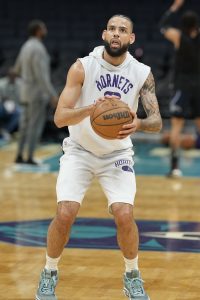 For instance, after earning $1,782,621 this season, Hornets wing Cody Martin projects to have a minimum salary worth $1,876,674 in 2022/23. Adding $200K to that figure works out to $2,076,674, whereas 125% of his prior salary is $2,228,276. His qualifying offer will be worth the higher amount ($2,228,276).
On the other hand, a player like Wizards forward Anthony Gill earned a $1,517,981 salary in 2021/22. Calculating 125% of that amount works out to $1,897,476, whereas his projected minimum salary ($1,811,516) plus $200K would be $2,011,516.
The precise value of Gill’s qualifying offer will depend on where exactly the ’21/22 salary cap ends up, since minimum salaries increase or decrease at the same rate as the cap, but it’s a safe bet his QO will be worth his minimum salary plus $200K.
For a player earning the minimum or something close to it, it’s not always immediately apparent which formula will render the higher qualifying offer. However, it’s more obvious for players earning well above the minimum, such as Nuggets guard Facundo Campazzo. He’ll be eligible for restricted free agency this offseason after earning $3.2MM in 2021/22, and his qualifying offer will be worth 125% of his previous salary: $4MM.
The qualifying offer for a former first-round pick coming off his rookie scale contract is determined by his draft position. The qualifying offer for a first overall pick is 130% of his fourth-year salary, while for a 30th overall pick it’s 150% of his previous salary — QOs for the rest of the first-rounders fall somewhere in between. The full first-round scale for the draft class of 2018, whose first-rounders will be hitting free agency this summer, can be found here, courtesy of RealGM.
Here are a pair of examples for this offseason: 2018’s first overall pick, Suns center Deandre Ayton, is coming off a fourth-year salary of $12,632,950, so he must be extended a qualifying offer of $16,422,835 (a 30% increase) to become a restricted free agent. Meanwhile, the 24th overall pick, Trail Blazers guard Anfernee Simons, will be eligible for a qualifying offer of $5,758,552, a 46.2% increase on this season’s $3,938,818 salary.
A wrinkle in the Collective Bargaining Agreement complicates matters for some RFAs-to-be, since a player’s previous usage can impact the amount of his qualifying offer. Certain players who meet – or fail to meet – the “starter criteria,” which we break down in a separate glossary entry, become eligible for higher or lower qualifying offers. Here’s how the starter criteria affects QOs:
- A top-14 pick who does not meet the starter criteria will receive a same qualifying offer equal to 120% of the amount applicable to the 15th overall pick.
- Note: In 2022, the value of this QO will be $7,228,448.
- A player picked between 10th and 30th who meets the starter criteria will receive a qualifying offer equal to 120% of the amount applicable to the ninth overall pick.
- Note: In 2022, the value of this QO will be $7,921,300.
- A second-round pick or undrafted player who meets the starter criteria will receive a qualifying offer equal to 100% of the amount applicable to the 21st overall pick.
- Note: In 2022, the value of this QO will be $4,869,012.
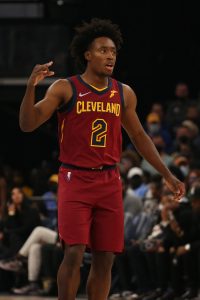 Cavaliers guard Collin Sexton is one example of a player who falls into the first group, since he didn’t meet the starter criteria this year. The No. 8 overall pick in 2018, Sexton will be eligible this offseason for a QO worth $7,228,448 instead of $8,559,357.
Conversely, Hornets forward Miles Bridges (a former No. 12 overall pick) met the starter criteria and will now be eligible for a QO worth $7,921,300 instead of $7,459,974.
[RELATED: Potential 2022 RFAs Whose Qualifying Offers Will Be Impacted By Starter Criteria]
A qualifying offer is designed to give a player’s team the right of first refusal. Because the qualifying offer acts as the first formal contract offer a free agent receives, his team then receives the option to match any offer sheet the player signs with another club.
A player can also accept his qualifying offer, if he so chooses. He then plays the following season on a one-year contract worth the amount of the QO, and becomes an unrestricted free agent at season’s end, assuming he has at least four years of NBA experience. A player can go this route if he wants to hit unrestricted free agency as early as possible, or if he feels like the QO is the best offer he’ll receive. Accepting the qualifying offer also gives a player the right to veto trades for the season.
Nets guard Bruce Brown was the only noteworthy restricted free agent to accept his qualifying offer during the 2021 offseason. As a result, he’ll be an unrestricted free agent in 2022.
Finally, while the details outlined above apply to players on standard NBA contracts who are eligible for restricted free agency, a different set of rules applies to players coming off two-way contracts. For most of those players, the qualifying offer would be equivalent to a one-year, two-way salary, with $50K guaranteed.
A player who is coming off a two-year, two-way deal, has already been on two-way deals with his current team for at least two seasons, or has accumulated four years of NBA service would be eligible for a qualifying offer equivalent to a standard, minimum-salary NBA contract. The guarantee on that QO would have to match or exceed a two-way salary.
Note: This is a Hoops Rumors Glossary entry. Our glossary posts will explain specific rules relating to trades, free agency, or other aspects of the NBA’s Collective Bargaining Agreement. Larry Coon’s Salary Cap FAQ and salary information from Basketball Insiders was used in the creation of this post. Earlier versions of this post were published in previous years.
Mark Cuban On Jalen Brunson: “I Think He Wants To Stay”
In the wake of their season-ending loss to Golden State on Thursday, the Mavericks will soon shift their attention to offseason roster moves, and no decision this summer will be bigger than the one they make on point guard Jalen Brunson.
Brunson will be an unrestricted free agent, so if he wants to leave, the Mavericks won’t necessarily get the opportunity to match an offer he gets from another team. But team owner Mark Cuban is confident in both the Mavs’ ability to make a strong offer and in Brunson’s desire to remain in Dallas.
“We can pay him more than anybody,” Cuban told Marc Stein on Bally Sports Southwest (video link), referring to the fact that Brunson’s Bird rights allow the Mavs to give him more years and more money than any other team. “And I think he wants to stay and that’s most important.”
Cuban went on to highlight the impact that Jason Kidd had on Brunson this past season, suggesting that the 2018 second-round pick “blossomed” under Dallas’ new head coach.
In 79 regular season games (31.9 MPG), Brunson established new career highs in PPG (16.3), APG (4.8), RPG (3.9), and a handful of other categories, while posting an impressive shooting line of .502/.373/.840. He had a strong postseason too, putting up 21.6 PPG, 4.6 RPG, and 3.7 APG on .466/.347/.800 shooting in 18 games (34.9 MPG).
The Mavs’ team salary for 2022/23 is already approaching the tax line and will blow past that threshold if they re-sign Brunson to a deal in the range of $20-25MM per year, so there has been some speculation that he could pried away from Dallas. The Knicks, Pistons, and Pacers have frequently been cited as teams with interest in the 25-year-old.
However, dating back to before February’s trade deadline, the Mavs have been steadfast in their insistence that they want to bring back Brunson, and Cuban’s post-game comments on Thursday showed no sign that stance has changed. Now, it’s a matter of seeing how aggressive they’ll have to be to ward off his rival suitors.
Stephen Curry Wins Inaugural Magic Johnson Trophy As Western Finals MVP
Warriors guard Stephen Curry has been awarded the inaugural Magic Johnson Trophy as the Most Valuable Player of the 2022 Western Conference Finals, the NBA announced following Game 5 on Thursday night.
The league introduced the award – along with the Larry Bird Trophy for the Eastern Finals MVP – earlier this month, and Curry has become the first-ever player to win it after leading Golden State to a 4-1 series victory over Dallas.
The award was voted on by nine local and national media members covering the series — Curry received all nine votes.
Although he only had 15 points in the Warriors’ close-out victory on Thursday, Curry was the team’s leading scorer in the five-game series, averaging 23.8 PPG on .444/.439/.840 shooting to go along with 7.4 APG and 6.6 RPG. His best performances came in Game 2 (32 points and six 3-pointers) and Game 3 (31 points and 11 assists) as he helped Golden State build an insurmountable series lead.
The Warriors are back in the NBA Finals after making it five consecutive times from 2015-19. They await the winner of the Eastern Conference Finals between the Celtics and Heat.
Khem Birch Undergoes Arthroscopic Surgery On Knee
Raptors center Khem Birch underwent arthroscopic surgery on his right knee on Wednesday in Los Angeles, the team announced today in a press release. The procedure took place at the Cedars-Sinai Kerlan-Jobe Institute, a day after Zach LaVine underwent a similar procedure there.
According to the Raptors, the surgery cleaned up “loose debris” in Birch’s knee. The expectation is that he’ll be ready to go for the start of training camp in September.
After joining the Raptors on the buyout market during the second half of the 2020/21 season, Birch signed a new three-year, $20MM contract with the club last offseason. Hampered by his troublesome right knee and other injuries in ’21/22, the 29-year-old appeared in just 55 games, starting 28 of them. He averaged 4.5 PPG and 4.3 RPG with a career-worst .485 FG% in 18.0 minutes per contest.
Still, Birch’s deal is fully guaranteed for all three years, so barring a trade, he’ll be back in Toronto next season. It’s unclear whether he’ll have an opportunity to reenter the starting lineup, however, given the emergence of young big man Precious Achiuwa, as well as the Raptors’ willingness to start three forwards – Pascal Siakam, OG Anunoby, and Scottie Barnes – in lieu of a center.
Southeast Notes: Hawks, Lowry, Strus, Wizards, Magic
By earning a spot on the All-NBA Third Team this week, Hawks guard Trae Young ensured that his five-year, maximum-salary rookie scale extension will start at 30% of the 2022/23 cap rather than 25%, as we outlined on Tuesday. Based on the current maximum-salary projections, that means Atlanta’s projected team salary for next season will increase by $6.1MM.
As Chris Kirschner of The Athletic writes, Young’s salary bump means Atlanta is more likely to be over the luxury-tax line in 2022/23 and perhaps less likely to bring back Danilo Gallinari, whose $21.45MM salary is only partially guaranteed for $5MM. According to ESPN’s Bobby Marks (Twitter link), the Hawks currently project to be about $7.8MM over the tax line, so they could, at least temporarily, get out of tax territory by waiving Gallinari and saving that $16MM+.
Young’s more lucrative contract may place a few more constraints on the Hawks over the next five years as they attempt to build a championship-caliber roster around him. However, as Kirschner observes, the team will at least no longer have to worry about Young being disgruntled as a result of missing out on an All-NBA spot and an extra $35MM.
Here’s more from around the Southeast:
- With Kyle Lowry still clearly being affected by the left hamstring injury that has forced him to miss eight playoff games, Ira Winderman of The South Florida Sun Sentinel and Joe Vardon of The Athletic believe the Heat have to seriously consider whether or not Lowry should start – or even play – in a do-or-die Game 6. Vardon says the team should probably bench both Lowry and Max Strus, who are a combined 1-of-28 from the floor in the last two games.
- Josh Robbins and John Hollinger of The Athletic take a look at the Wizards‘ future, discussing whether a full-fledged rebuild or building around Bradley Beal would be a better course of action for the franchise. Hollinger wonders if the team missed an opportunity to get a Jrue Holiday-esque haul (or better) for Beal by not moving him a year or two ago, but believes that the best course of action at this point would be to re-sign the All-Star guard, since he could always be traded later.
- Khobi Price of The Orlando Sentinel explores what the Magic‘s starting five may look like next season, depending on whether the team drafts Jabari Smith or Chet Holmgren. In Price’s view, floor-spacing issues mean that Cole Anthony may be a better fit alongside Holmgren, while Jalen Suggs could make more sense alongside Smith.
2022 NBA Offseason Preview: New York Knicks
The Knicks were one of the most pleasant surprises of the 2020/21 NBA season, outperforming expectations by finishing 10 games above .500 and returning to the playoffs for the first time since 2013. Instead of building on that progress in ’21/22, however, the team took a step backward, falling eight games below .500 and missing the playoffs and the play-in tournament entirely.
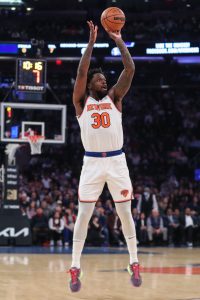 There were a variety of reasons for the Knicks’ letdown of a season. Regression affected certain players, including Julius Randle, who came back to earth after earning a spot on the All-NBA Second Team and a Most Improved Player award a year ago. Injuries were an issue, with point guard Derrick Rose limited to just 26 appearances. And New York’s offseason personnel changes didn’t pay dividends. Kemba Walker, in particular, was a bust — knee issues continued to diminish his effectiveness, and his offensive production was no longer good enough to make up for his subpar defense.
The Knicks built a reputation as a hard-nosed defensive team under Tom Thibodeau in 2020/21, placing fourth in the NBA in defensive rating, but didn’t look like that same club in the first half of last season. The good news? New York had the NBA’s best defensive rating after the 2022 All-Star break. The team will try to carry over that success to the fall, though it’s safe to assume next season’s roster will look a little different than the one that finished 2021/22.
The Knicks’ Offseason Plan:
The Knicks’ offseason intentions are difficult to ascertain, and not just because president of basketball operations Leon Rose has zero interest in ever speaking to the media. The team doesn’t project to have any cap room, but it also has very few long-term veteran contracts on its books and has an excess of future draft picks, so there’s some flexibility to make significant changes this summer if the front office wants to take that path.
Rose, Walker, Alec Burks, and Nerlens Noel will earn a combined $43MM in 2022/23, but all four are on either expiring contracts or de facto expiring deals that include a 2023/24 team option, making them intriguing trade chips, either in the offseason or at next year’s trade deadline.
Even the team’s two most expensive veterans, who are on longer-term deals, are potential trade candidates. Randle and Evan Fournier will be more difficult to move since they’re pricier and aren’t coming off their best seasons, which will make it challenging to agree on fair value. But it’s safe to assume the Knicks would listen on either one if they receive inquiries from potential trade partners.
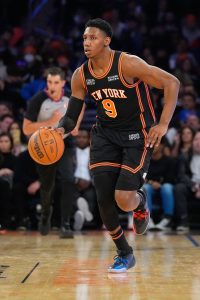
While no player on the Knicks’ roster should be considered a mortal lock to return, RJ Barrett is pretty close. The former No. 3 overall pick struggled to maintain his level of scoring efficiency in 2021/22 as his usage rate continued to increase, but he has shown enough upside to be viewed as a long-term cornerstone in New York.
Barrett will be eligible for a rookie scale extension this offseason and it will be interesting to see how the Knicks approach those negotiations. If the 21-year-old isn’t willing to sign for anything less than the maximum salary, the club is probably better off waiting another year to further assess whether he’s worthy of that kind of financial commitment.
Besides Barrett, the Knicks will probably be inclined to hang onto most of the rest of their 24-and-under group, including Obi Toppin, Immanuel Quickley, Quentin Grimes, Miles McBride, and Cam Reddish. Perhaps one or two of them could be used to sweeten a trade package for an impact player, but if that sort of deal isn’t available, the team will want to continue evaluating its youngsters to determine which ones are keepers.
Reddish, like Barrett, is extension-eligible this offseason, but the Knicks haven’t seen enough from him yet to guarantee him anything long-term.
As the Knicks consider potential trades or free agent signings, adding a starting point guard remains a top priority. Jalen Brunson has been repeatedly linked to New York for months, and his connections to the franchise (via Rose and his father Rick Brunson) have been well documented, but it won’t be easy to pry him away from the Mavericks, who have repeatedly conveyed a desire to keep him.
Since they won’t have any cap room, the Knicks would either have to shed a couple contracts via trade to create the cap room necessary to make a serious offer for Brunson, or negotiate a sign-and-trade deal with a Dallas team that won’t be eager to help them out.
Neither one of those scenarios is out of the question, especially since Brunson will be unrestricted — if he wants to go to New York, he can make it happen. But the Knicks may be wary about giving up assets (in a sign-and-trade or in salary-dump trades) in order to give an undersized point guard upwards of $20-25MM per year. They weren’t interested in seriously pursuing a similar player (Fred VanVleet) at a similar rate a year ago when they had cap room available, so we’ll see if they make a real push for Brunson or look elsewhere for point guard help.
Trades may be the focus of the offseason for the Knicks, since 13 of their 15 standard-roster players remain under contracts, but there’s one key free agent to watch: big man Mitchell Robinson.
Like Brunson, Robinson signed a four-year contract as a second-round pick and will be an unrestricted free agent this summer, having never had to deal with restricted free agency. That will reduce the Knicks’ leverage and allow Robinson to sign outright with a new team without giving his current team a chance to match. It wouldn’t surprise me if he departs, given that he didn’t always seem thrilled about his role in New York — that could open the door for a new team to sell the young center on its vision for him.
Salary Cap Situation
Note: Our salary cap figures are based on the league’s latest projection ($122MM) for 2022/23.
Guaranteed Salary
- Julius Randle ($23,760,000)
- Evan Fournier ($18,000,000)
- Derrick Rose ($14,520,730)
- RJ Barrett ($10,900,635)
- Alec Burks ($10,012,800)
- Nerlens Noel ($9,240,000)
- Kemba Walker ($9,165,471)
- Cam Reddish ($5,954,454)
- Obi Toppin ($5,348,280)
- Immanuel Quickley ($2,316,240)
- Quentin Grimes ($2,277,000)
- Miles McBride ($1,563,518)
- Feron Hunt (two-way)
- Jericho Sims (two-way)
- Total: $113,059,128
Player Options
- None
Team Options
- None
Non-Guaranteed Salary
- Taj Gibson ($5,155,500)
- Total: $5,155,500
Restricted Free Agents
- None
Two-Way Free Agents
- None
Draft Picks
- No. 11 overall pick ($4,508,640)
- No. 42 overall pick (no cap hold)
- Total: $4,508,640
Extension-Eligible Players
 Note: These are players who are either already eligible for an extension or will become eligible before the 2022/23 season begins.
- RJ Barrett (rookie scale)
- Cam Reddish (rookie scale)
Unrestricted Free Agents / Other Cap Holds
- Mitchell Robinson ($1,811,516 cap hold): Bird rights
- Ryan Arcidiacono ($1,811,516 cap hold): Non-Bird rights
- Total: $3,623,032
Offseason Cap Outlook
The Knicks currently project to operate over the cap. Their guaranteed salary and the cap hold for their first-round pick total approximately $118MM, so the mid-level and bi-annual exceptions would push team salary well past the projected $122MM cap.
The Knicks remain far below the projected luxury tax line ($149MM), so they should have the flexibility to re-sign Robinson and use the full mid-level exception, if they so choose. Theoretically, New York could even clear a little cap space by moving a mid-sized salary or two, but to take that route, the team would probably need to have a specific free target in mind and be very confident about its chances to secure that target.
Cap Exceptions Available
- Mid-level exception: $10,349,000 1
- Bi-annual exception: $4,050,000 1
- Trade exception: $1,175,818
Footnotes
- These are projected values. If the Knicks decide to go under the cap and use cap room, they’ll forfeit these exceptions (and their trade exception) and instead gain access to the room exception ($5,329,000).
Salary and cap information from Basketball Insiders and RealGM was used in the creation of this post.