
2026 NBA Offseason Preview: Oklahoma City Thunder
No NBA team has won back-to-back championships since the Warriors did it in 2017 and 2018. In fact, no club since 2019 has even appeared in two consecutive NBA Finals. For most of the 2025/26 season though, it looked like the Thunder were in a great position to accomplish both feats.
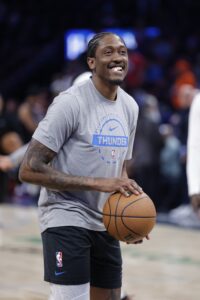 After missing Chet Holmgren, a member of their “big three,” for over half the season in 2024/25, the Thunder found themselves in a similar boat in ’25/26. While Holmgren was healthy again after making just 32 regular season appearances a year earlier, All-NBA forward Jalen Williams was limited to 33 regular season outings in ’25/26. Williams got a late start in the fall after recovering from elbow surgery, then dealt with recurring hamstring issues during the second half.
However, the Thunder have such a deep roster that – for a second straight season – they barely missed a beat despite being without a top starter for a significant chunk of the year. They followed up a 68-14 season in ’24/25 with 64 more wins this past season, once again securing the No. 1 seed in the Western Conference and recording the NBA’s best overall record.
After blowing through the first two rounds of the playoffs with eight consecutive victories over the Suns and Lakers, the Thunder squared off in the Western Conference finals against an unexpected powerhouse in the Spurs, who went from 34 wins in ’24/25 to 62 in ’25/26. With Williams set to return from his latest hamstring strain, San Antonio’s starting point guard De’Aaron Fox out for the start of the third round due to an ankle injury, and the defending champion Thunder holding a significant playoff experience edge over the young Spurs, Oklahoma City entered the Western finals as favorites and held leads of 2-1 and 3-2 over the course of the series.
However, the Spurs – who won four out of five games against the Thunder during the regular season – were always a tricky matchup for OKC. And it certainly didn’t help matters that Williams re-injured his hamstring in Game 2 and his replacement in the starting lineup, Ajay Mitchell, suffered a calf strain that sidelined him for the last four games of the series.
Oklahoma City’s “next man up” approach to injuries over the past two years had been effective because the team’s “next man up” was, almost without fail, another high-level contributor. But with Williams and Mitchell, two of the Thunder’s top ball-handlers and play-makers, out against San Antonio, the club’s offense sputtered — two-time MVP Shai Gilgeous-Alexander struggled to shoulder so much of the shot-creation burden against one of the league’s best defensive teams, led by Defensive Player of the Year Victor Wembanyama. The Thunder were blown out in Game 6 and then lost at home in Game 7, extinguishing their hopes of becoming the NBA’s first repeat champions in nearly a decade.
Could the Spurs series have turned out differently if Williams and Mitchell were available and 100% healthy? Possibly. But that doesn’t necessarily mean the Thunder should be content to run back the same roster and hope for better results — or even that they can take that route.
Williams, who was plagued by injuries all season, and Holmgren, whose inability to impact the game against Wembanyama and the Spurs was a cause for concern, both have maximum-salary rookie scale extensions taking effect this July, pushing team salary into tax (and apron) territory for the first time since 2020. That could force the front office to make some difficult decisions on veterans who have played critical rotation roles in recent years for a Thunder team that has turned into a perennial contender.
The Thunder’s Offseason Plans
Before we dig into the offseason decisions facing the Thunder in greater detail, it’s worth stressing that there’s technically nothing stopping the organization from bringing back every single one of the players that finished the 2025/26 season on the 15-man roster. Each of them has either a guaranteed salary, a partially guaranteed salary, or a team option for ’26/27, so those decisions are entirely in the Thunder’s hands.
But taking that route would require the Thunder to pay a massive luxury tax bill and would push the team’s salary far beyond the second apron, restricting its ability to make additional moves during the coming league year. If a club is happy with its current roster and believes it’s capable of winning a championship, those second apron restrictions aren’t a major deterrent. But if Oklahoma City were to exercise everyone’s options and bring all 15 players back, its team salary would be nearly $250MM, which would work out to a tax bill of roughly $210MM.

2026 NBA Offseason Preview: Detroit Pistons
The Pistons have experienced an unprecedented turnaround over the past two years, going from a franchise-worst 14 wins in the 2023/24 season to 44 victories in ’24/25 and then to 60 in ’25/26.
What makes Detroit’s meteoric rise up the Eastern Conference standings all the remarkable is the fact that the team hasn’t made a series of major free agent signings or trade acquisitions since that forgettable 14-68 season, after which J.B. Bickerstaff replaced Monty Williams as head coach.
Veteran role players like Tobias Harris, Duncan Robinson, and Caris LeVert have been added as free agents, and forward Ron Holland was selected fifth overall in the 2024 draft. But Holland’s and LeVert’s contributions have been relatively modest, and while Harris and Robinson have played key roles, starting every game they’ve played since arriving in Detroit, the primary reason the Pistons have improved so much in the last two years is that their young core has taken huge strides forward, with more than one of those players turning into All-Stars.
It starts with Cade Cunningham, 2021’s No. 1 overall pick, who has emerged as one of the game’s brightest young stars over the past two seasons. During that time, he has made his first two All-Star teams, earned All-NBA third and first team nods, and finished seventh and fifth in MVP voting. Cunningham has averaged 25.1 points and 9.5 assists per game since the start of the 2024/25 season while showing that he’s capable of being the best player on a legitimate title contender.
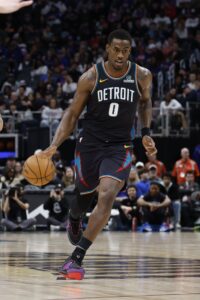 Big man Jalen Duren, drafted a year after Cunningham in 2022, displayed promise during his first three seasons before taking his game to a new level in 2025/26, when he averaged 19.5 points and 10.5 rebounds in just 28.2 minutes per game, finished second in Most Improved Player voting, and claimed a spot on the All-NBA third team.
Meanwhile, Ausar Thompson, a 2023 lottery pick, is already one of the NBA’s best defensive players at age 23. In just his third season, Thompson led the NBA in steals per game (2.0) and forced opposing offenses to game-plan around him. He was named to the All-Defensive first team and was a Defensive Player of the Year finalist, finishing third in votes.
While he’s slightly older than his rising star teammates and doesn’t play quite as significant a role, 25-year-old big man Isaiah Stewart, a 2020 first-round pick, also deserves to be mentioned for the role he has played in establishing the culture in Detroit. Stewart is a terrific defender and rim protector who earned Sixth Man of the Year votes this past season and whose physicality makes him the most obvious throwback on the current roster to the “Bad Boy” Pistons of the late 1980s and early ’90s.
As encouraging as the Pistons’ progress in recent years has been, it was still hard not to feel as if their 60-win season in 2025/26 ended on a bit of a sour note.
Detroit fell behind 3-1 to No. 8 Orlando in the first round of the playoffs and may not have been able to come back from that deficit if star Magic forward Franz Wagner hadn’t strained his calf in Game 4, forcing him to miss the last three games of the series. After eking past the Magic, the Pistons lost in round two to an inconsistent Cavaliers team that needed seven games to beat the Raptors in the Eastern quarterfinals and was hammered by the Knicks in a four-game sweep in the Eastern finals.
There was a sense that president of basketball operations Trajan Langdon could’ve increased Detroit’s odds of coming out of the East by adding more ball-handling and/or scoring at the February trade deadline. Instead, it was a relatively quiet deadline for the Pistons, who did add Kevin Huerter but focused more on the future by acquiring a first-round pick swap that allowed them to move up seven spots to No. 21 in this year’s draft.
If Langdon was reluctant to sacrifice long-term assets or put more pressure on his young, still-developing players before getting a better sense of what they could do on their own in the postseason, that’s defensible. But the postseason results were ultimately disappointing for a team that won 60 regular season games and claimed the conference’s top seed.
The abbreviated playoff run means Langdon may feel more urgency this summer to upgrade his roster around Cunningham at the same time that he and his front office will face major contractual decisions on two of the most valuable members of the star point guard’s supporting cast.
The Pistons’ Offseason Plans
While finding ways to improve this roster will be a goal for Langdon and the Pistons this summer, the team’s top long-term priorities involve their own players, starting with Duren, who will be eligible for restricted free agency after not agreeing to terms on a rookie scale extension in 2025.
2026 NBA Offseason Preview: Atlanta Hawks
After finishing 10th in the Eastern Conference in 2023/24, the Hawks entered the 2024/25 postseason with a 40-42 record, good for No. 8 in the East. Atlanta didn’t advance to the playoffs in either year — the team was quickly eliminated by Chicago in the 9/10 play-in game in ’23/24, then lost consecutive games at Orlando and vs. Miami in the 2025 play-in tournament.
Rather than being content with the current roster, new general manager Onsi Saleh recognized changes were necessary last offseason and completed multiple trades with an eye on both the present and the future. The first major domino was trading last year’s No. 13 overall pick (Derik Queen) to New Orleans for the 23rd pick (Asa Newell) and the most favorable of the Pelicans’ and Bucks’ 2026 first-round picks.
It was a controversial trade from New Orleans’ perspective, and the Pelicans and Bucks both missed the playoffs, giving Atlanta a 40.2% chance at a top-four pick in what’s widely considered a loaded draft. However, the Hawks instead moved down a spot from No. 7 to No. 8 at the draft lottery, as New Orleans was leapfrogged by Chicago while Milwaukee’s pick remained at No. 10.
The eighth pick in a strong draft is still an excellent asset, but not moving into the top four (or even just staying at No. 7) is slightly disappointingm given the potential high-end outcome in a class that’s widely viewed as having at least three elite prospects and potentially a few more beyond that. The Hawks also control the 23rd pick in next week’s draft (via Cleveland); there has been speculation they might look to move that selection.
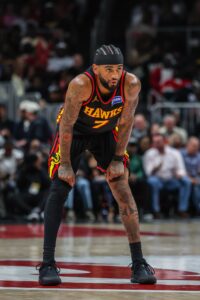 Back to last offseason: the Hawks also traded Terance Mann, Georges Niang and the No. 22 overall pick (Drake Powell) to acquire Kristaps Porzingis in a three-team deal with Boston and Brooklyn. Then they picked up a future second-round pick and a traded player exception when they signed-and-traded Clint Capela to Houston, acquired Nickeil Alexander-Walker in a sign-and-trade (they gave up a second-rounder) with Minnesota, and added Luke Kennard in free agency on a one-year, $11MM deal.
Atlanta’s front office decided against extending four-time All-Star Trae Young last summer and also tabled extension talks with Porzingis until the team could evaluate how that duo fit together. But Young sprained his knee early in 2025/26 and only ended up playing 10 games for the Hawks this season, while Porzingis was limited to just 17 appearances.
Young, who holds a $49MM player option for next season, was traded to the Wizards in January in a deal that brought back CJ McCollum and Corey Kispert. McCollum is extension-eligible through June 30 and will be an unrestricted free agent if a deal isn’t reached, while Kispert has three years and $40MM remaining on his contract (the last of those three years is a team option).
That turned out to be the first in a series of dominoes to fall, as the Hawks were quite busy ahead of the February deadline. Porzingis was traded to the Warriors for Jonathan Kuminga and Buddy Hield; Kennard was sent to the Lakers for Gabe Vincent and a second-round pick; Vit Krejci was moved to the Blazers for a pair of second-rounders; and the Hawks acquired Jock Landale from Utah for cash.
The series of transactions resulted in a significant amount of roster turnover and also significantly improved results down the stretch. The 27-31 Hawks were in the lower end of play-in territory after a blowout loss at Miami on February 20, but they secured a guaranteed playoff berth before the final game of the regular season by reeling off a 19-5 record down the stretch.
There was a minor controversy prior to the final game, as the Hawks decided to rest all of their regulars when they had the chance to clinch the No. 5 seed to face the No. 4 Cavaliers rather than the No. 3 Knicks. They lost their regular season finale and the Raptors moved up to No. 5 while Atlanta moved down to No. 6. The Hawks went up 2-1 in their first-round matchup against the Knicks, who proceeded to reel off the final three games of that series in lopsided fashion to kick off a 15-1 run that culminated in their first NBA championship since 1973.
The Hawks’ Offseason Plans
2026 NBA Offseason Preview: Miami Heat
After being eliminated in the first round of the 2025 playoffs, the Heat had a pretty successful offseason a year ago, re-signing role players Davion Mitchell and Dru Smith to team-friendly deals and pulling off one of the trade heists of the summer by landing Norman Powell in exchange for Kyle Anderson and Kevin Love.
Mitchell, who played the best basketball of his career after being traded to Miami at the 2025 deadline, carried over that strong performance to his first full year in Miami, averaging a career-high 6.5 assists per game and making 39.5% of his three-point tries while providing his usual excellent defense as the team’s starting point guard. Smith, who had made just 38 total NBA appearances and was coming off a torn Achilles, turned into a reliable reserve for head coach Erik Spoelstra, appearing in 70 games.
And after being acquired for two veteran backups who weren’t in the Heat’s plans going forward, Powell earned the first All-Star nod of his career, averaging 23.0 PPG on a terrific .474/.396/.843 shooting line prior to the break before nagging injuries slowed him down in the second half.
Still, the Heat’s roster remained short on impact talent, especially with 2025 All-Star Tyler Herro missing the first month of the season while recovering from ankle surgery and being limited to 33 overall appearances due to a series of additional ailments. It also didn’t help that Miami was devoting more than $26MM of its team salary to Terry Rozier, who had a miserable 2024/25 season and then didn’t play at all in ’25/26 after being arrested in connection with a federal investigation into illegal gambling.
 Bam Adebayo continued to serve as an effective defensive anchor for the Heat and submitted one of the most unexpected historic scoring performances in recent league history when he racked up 83 points on March 10 against the Wizards. But Adebayo also shot a career-low 44.2% from the field for the season and isn’t a superstar-level alpha capable of contending for MVP awards and single-handedly leading his team to the postseason.
The Heat did improve their regular season record to 43-39, winning six more games than they had the year before, but that wasn’t enough to make the playoffs in a more competitive Eastern Conference. In fact, it wasn’t even enough to earn Miami more than a single postseason contest — the team was eliminated by the Hornets in the 9/10 play-in game, which Adebayo exited early due to a back injury.
Since making the NBA Finals as a No. 8 seed in 2023, the Heat have performed more like a typical middle-of-the-pack team than one capable of turning it on in the playoffs, losing back-to-back first-round series in 2024 and 2025 and then failing to crack the top eight this spring. Based on the draft lottery changes the NBA is implementing, which will give play-in teams a more viable chance to earn a top draft pick, being stuck in the middle may no longer be as undesirable as in the past, but it’s clear Pat Riley and the Heat are sick of it.
Under Riley, Miami has never shown any desire to go into rebuilding mode. When the team starts to get stuck in a rut, the Heat don’t take a step back — they take bigger swings. That philosophy helped them land LeBron James and Chris Bosh in 2010 and Jimmy Butler in 2019. And by all accounts, they’re going star hunting again this offseason, pushing to add Giannis Antetokounmpo‘s name to the list of notable players who have taken their talents to South Beach.
While trading for Antetokounmpo is clearly the Heat’s top priority entering the 2026 offseason, the front office will have a ton of work to do whether or not its pursuit of the Bucks star is successful, either to build out a supporting cast around him and Adebayo or to pivot to a viable Plan B.
The Heat’s Offseason Plans
By all accounts, the Heat are the leader in the clubhouse for Antetokounmpo. Reports at the trade deadline indicated that Miami’s offer was the one the Bucks considered most seriously, and the Heat’s package has only gotten more compelling now that they can add this year’s No. 13 overall pick, which wasn’t possible back in February due to the Stepien rule. Still, while no team has been connected to Giannis more frequently in recent weeks than Miami, I’d be wary about assuming that those rumors mean Antetokounmpo will end up with the Heat.
2026 NBA Offseason Preview: Boston Celtics
After winning their 18th title two years ago, the Celtics decided to run back the same core roster to try to defend their title in 2024/25, operating over the restrictive second tax apron to do so. A mysterious ailment caused Kristaps Porzingis‘ significant issues in the second half of that campaign, but Boston still entered last year’s playoffs with an excellent 61-21 record and the team was considered to be on a short list of legitimate contenders.
After beating Orlando in a physical first-round matchup, the Celtics were upset by the 51-31 Knicks in a six-game second-round series. Disaster struck in Game 4, when star forward Jayson Tatum tore his Achilles tendon in the fourth quarter of a game Boston ultimately lost to fall behind 3-1 in the series.
Boston’s unwillingness to be further hamstrung by the second apron led to the moves president of basketball operations Brad Stevens made last summer, when he traded Jrue Holiday‘s long-term deal for the expiring salary of Anfernee Simons (we’ll circle back to him shortly) and sent Porzingis to Atlanta in a deal that brought back Georges Niang, who was subsequently flipped to Utah.
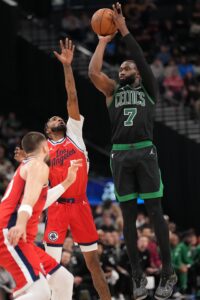 The cost-cutting maneuvers, combined with Tatum’s injury, contributed to an outside perception that the Celtics wouldn’t necessarily be upset if 2025/26 ended up being a “gap year.” They were projected to win 42.5 games by sportsbooks, yet they wound up going 56-26, far exceeding external expectations and earning Joe Mazzulla a Coach of the Year award.
Boston’s season was highlighted by the play of Jaylen Brown, who thrived as the primary offensive option with Tatum sidelined; the emergence of Neemias Queta as a starting-caliber center; another strong season from Payton Pritchard; the heady two-way play of Derrick White, who was named first-team All-Defense but struggled throughout 2025/26 with his outside shot (32.7% after converting 38.7% of his three-point looks in the three seasons prior); and the March return of Tatum, who looked healthy and capable of playing at or above his previous All-NBA level.
The Celtics also received positive contributions from their minimum-salary free agent additions (Luka Garza and Josh Minott, though Minott was later traded to Brooklyn); first-rounder Hugo Gonzalez was a pleasant surprise as a rookie; and young players like Jordan Walsh and Baylor Scheierman continued to improve and played rotation roles on the wing at different times.
Boston made another series of cost-cutting moves before the deadline to duck the luxury tax, including trading Simons to Chicago for Nikola Vucevic. Then Tatum came back, and suddenly the Celtics looked like contenders again.
However, after building a 3-1 lead in their first-round series against the Sixers, the Celtics collapsed, dropping the final three games to lose in seven. Tatum was reportedly dealing with some knee discomfort in Game 6 and wound up missing Game 7.
The Celtics’ Offseason Plans
The Celtics have had a ton of success with Tatum and Brown as their top two players, making the Eastern Conference finals multiple times, advancing to the NBA Finals in 2022, and winning the championship in 2024. However, the team’s heavy reliance on three-point shooting does lead to a considerable amount of offensive volatility. Boston doesn’t put a lot of pressure on the rim or score much in the paint, which Stevens noted after the season; those comments subsequently led to speculation about a possible pursuit of Giannis Antetokounmpo.
2026 NBA Offseason Preview: Houston Rockets
The Rockets took major strides toward relevancy in the Western Conference playoff picture in both 2023/24 and 2024/25, increasing their win total from 22 to 41 to 52, and entering the ’24/25 playoffs as the No. 2 seed.
However, the upstart Rockets were upset by the seasoned Warriors in the first round of last year’s playoffs, with the lack of a go-to scoring option being a major factor in the team’s seven-game loss. Houston averaged just 104 points per game in that series after averaging 114.3 PPG in the regular season.
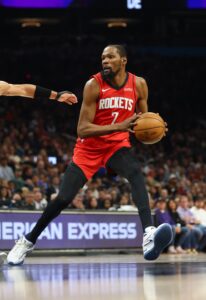 Recognizing they needed a top offensive talent to complement their young core of Alperen Sengun, Amen Thompson, Jabari Smith Jr., Tari Eason and Reed Sheppard, the Rockets traded Jalen Green, the 10th pick in last year’s draft (Khaman Maluach) and Dillon Brooks to Phoenix for 12-time All-NBA forward Kevin Durant, a four-time scoring champion still playing at a high level late in his career.
Houston also re-signed Fred VanVleet to a more affordable contract ($50MM over two years instead of $45MM for one), extended Steven Adams, who played an important role anchoring the team’s defense and bludgeoning opponents on the offensive boards, and signed three-and-D forward Dorian Finney-Smith using the non-taxpayer mid-level exception.
While the Durant trade mostly worked the way the Rockets hoped during the 2025/26 regular season, when he averaged 26.0 points, 5.5 rebounds, 4.8 assists and 0.9 blocks in 78 games (36.4 minutes per contest), the playoffs were another story: the 37-year-old managed to play in just one game during Houston’s first-round loss to the Lakers due to knee and ankle injuries.
It was a disappointing outcome for the Rockets, who won 52 games again despite missing their on- and off-court leader in VanVleet, who tore his ACL last September and missed all of 2025/26. They also only had Adams for 32 games before he tore ligaments in his ankle in December, and Finney-Smith was a disappointing non-factor in 37 appearances after his ’25/26 debut was delayed by offseason ankle surgery.
In some ways it’s impressive that Houston managed to have the success that it did considering how little the team received in aggregate from those three players, who were earning a combined $51.8MM this season. The development of the Rockets’ young players was an overall positive but was slightly choppy as well, with Smith and Sheppard taking strides forward while Sengun, Thompson and Eason were more up and down.
The Rockets have been a paper tiger for the past two seasons, ranking seventh and sixth in the NBA in net rating. They were in the top 10 in the NBA in both offensive (eighth) and defensive (sixth) rating in 2025/26, but struggled to replicate that success in the playoffs. Houston’s core is still pretty young, but the team projects to be considerably more expensive in both 2026/27 and ’27/28, leaving lingering questions about its long-term future.
The Rockets’ Offseason Plans
General manager Rafael Stone didn’t strike me as someone eager to make major changes when he discussed the Rockets at the end of the season. Instead, Stone projected confidence in the group he had assembled and lamented the injuries that never gave the roster a chance to reach its ceiling.
2026 NBA Offseason Preview: Charlotte Hornets
The Hornets finished the 2024/25 campaign with the third-worst record in the NBA (19-63) and missed the playoffs for the ninth consecutive year, which is the longest active drought in the league. Charlotte moved down one spot in the 2025 draft lottery, landing the fourth overall pick.
While Kon Knueppel was viewed as a contender to be selected at that spot, it wasn’t considered a lock, with Ace Bailey and Tre Johnson among the other candidates. But the Hornets were absolutely right in believing in the 20-year-old wing, who exceeded all expectations in his debut season, nearly outdueling his former teammate and close friend Cooper Flagg for Rookie of the Year after averaging 18.5 points, 5.4 rebounds and 3.4 assists in 81 regular season games (31.5 minutes per contest). Knueppel posted an excellent .475/.425/.863 shooting line, became the first rookie in history to lead the league in three-pointers made (273), and helped Charlotte improve from 19 to 44 wins.
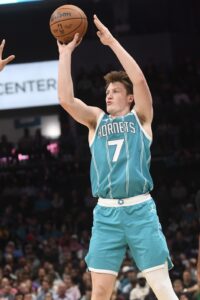 The addition of Knueppel was in retrospect the most noteworthy of the Hornets’ 2025 offseason moves, but it certainly wasn’t the only transaction. The team also added three other draft picks: one late first-rounder (Liam McNeeley, who went 29th overall), which was acquired in the Mark Williams trade with Phoenix, and two early second-rounders (Sion James and Ryan Kalkbrenner, Nos. 33 and 34, respectively), both of whom played rotation minutes as rookies.
Trading veteran center Jusuf Nurkic to Utah for Collin Sexton and a second-round pick was another one of head of basketball operations Jeff Peterson‘s moves last summer, though the 27-year-old guard’s stay in Charlotte was brief. Sexton was traded to Chicago in February — in one of the team’s five deadline moves — for Coby White, another impending free agent guard.
The start of 2025/26 looked like more of the same in Charlotte, as the team was just 11-23 following a one-point loss at Milwaukee on January 2. But the Hornets played like an entirely different team the rest of the season, blowing out the top-seeded Thunder in Oklahoma City a few days into the new year and beating several playoff teams later that month en route to a nine-game winning streak. The Hornets closed ’25/26 with a 33-15 mark to finish 44-38, the No. 9 seed in the East.
While the team survived a wild overtime game vs. Miami to eliminate the Heat in the 9/10 matchup, the Hornets were embarrassed in Orlando with a chance to advance as the eighth seed, losing by 31 points and ending their surprising season on a sour note. The aforementioned nine-year playoff drought is now up to 10.
Creating a health plan for LaMelo Ball, who made 72 regular season appearances after averaging just 35 games per year in the three seasons leading up to 2025/26, was a key part of Charlotte’s success. The 24-year-old point guard is a polarizing player for both on- and off-court reasons, but there’s no question the Hornets have been a better team — especially on offense — when he’s in the lineup.
Improved health from former No. 2 overall pick Brandon Miller was another key factor in Charlotte’s 25-win improvement. After being limited to just 27 games in his second season due to wrist surgery, he made 65 appearances (30.3 minutes per game) in 2025/26, averaging 20.2 PPG, 4.9 RPG, 3.3 APG and 1.0 SPG on .435/.383/.892 shooting splits. The 6’7″ wing notably improved his efficiency while playing more solid defense than he had in his first two seasons, despite dealing with a partially dislocated left shoulder he played through for several months.
Another key piece to the puzzle for the Hornets in 2025/26 was Moussa Diabate, an undersized French center with a relentless motor. The team had the equivalent of the top-ranked offense and the fourth-ranked defense when the 24-year-old big man was on the court this past season, which is pretty remarkable considering the Hustle Award winner had played a fairly modest role prior to 2025/26.
Peterson and the rest of Charlotte’s front office have done a nice job utilizing the team’s financial flexibility to add draft assets over the past two years. Now the Hornets need to decide whether their second-half run will lead to sustainable long-term success or whether the team needs outside help to go from a pretty good team — they had the eighth-best net rating in the NBA — to a club that’s capable of making real noise in the playoffs.
The Hornets’ Offseason Plans
The Hornets are one of six NBA teams with two first-round picks in the 2026 NBA draft. The team controls the final lottery pick (No. 14 overall) and has another selection a few spots later (No. 18). Their primary free agent is White, who has a $25MM cap hold, and they have one main extension candidate in Miller.
On the surface, Charlotte’s offseason seems like it could be pretty straightforward: re-sign White, draft a couple of young players to add to their core, extend Miller if the deal is reasonable, and continue to build on the strong results of the latter portion of 2025/26. However, the Hornets also have financial flexibility, a significant cache of draft assets, and the right types of contracts (three mid-sized expiring deals) to be much more aggressive than that if they want to be.
Hoops Rumors Front Office Subscriber Chat Transcript: 6/11/2026
Hoops Rumors’ Arthur Hill held a live chat today exclusively for Trade Rumors Front Office subscribers. Topics included whether the Spurs should trade De’Aaron Fox, the wealth of guard prospects in this year’s draft, the Bucks‘ next moves if they send Giannis Antetokounmpo to Miami, the Bulls‘ chances of landing another lottery pick and more!
2026 NBA Offseason Preview: Denver Nuggets
The Nuggets were widely lauded for the moves they made last offseason. The first domino to fall was a cost-cutting maneuver, as Denver traded Michael Porter Jr. and an unprotected 2031 first-round pick to the Nets for Cameron Johnson.
Swapping out Porter’s $38.3MM cap hit for Johnson’s $21.6MM saved the Nuggets a significant amount of money in 2025/26 and will do the same in 2026/27, when there will be a similar cap disparity between the two players ($40.8MM for Porter vs. $23.1MM for Johnson).
Since depth had been an issue for the Nuggets the past few years, their priority last summer was building out their roster with veterans who could play real minutes. They signed Tim Hardaway Jr. and Bruce Brown to minimum-salary contracts, then traded Dario Saric to Sacramento for Jonas Valanciunas.
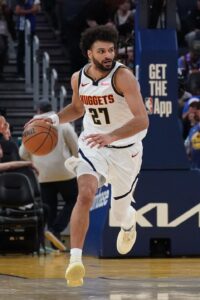 The final big 2025 offseason move for Denver was signing Christian Braun to a five-year, $125MM rookie scale extension shortly before the season started. The Nuggets prioritized locking up Braun, a full-time starter who had a strong third season, over fellow 2022 first-round pick Peyton Watson, who is now headed for restricted free agency.
Denver got off to an excellent start to the 2025/26 campaign, with a 20-6 record that belied the fact that Braun (serious ankle sprain) and Aaron Gordon (hamstring strain) both got hurt in November. Then Johnson (knee sprain/bone bruise) went down in late December, followed by Nikola Jokic (knee sprain/bone bruise) and Valanciunas (calf strain) a few days later. Each player missed multiple weeks.
Jokic was having a career year to that point, and while disaster was certainly averted, his numbers went from otherworldly historic to merely terrific. He wound up appearing in a career-low 65 games, including having to play in the final contest of the season to qualify for major postseason awards. The Serbian superstar tied an NBA record co-held by Celtics legends Bill Russell and Larry Bird by finishing either first or second (he was runner-up again) in MVP voting for a sixth consecutive season.
Watson, the primary beneficiary of all the injury absences, was having a career year prior to suffering a hamstring strain just before the trade deadline in early February. He showed real upside as an on-ball scorer and cutter on top of his defensive instincts, length, athleticism and versatility, which is why the team wants to retain him this summer.
Despite all the injuries — Braun and Gordon combined to play 80 games, while Johnson and Watson played 54 apiece — and a mediocre stretch in the middle of the season, the Nuggets ended the year on a 12-game winning streak and entered the playoffs as the No. 3 seed after going 54-28. Jamal Murray played a major role in the team’s success, appearing in 75 games and posting terrific numbers en route to his first All-Star and All-NBA (third team) appearances.
The Nuggets’ first-round opponent was one of their division rivals, the Timberwolves, who eliminated the Denver in the Western Conference semifinals in a seven-game series in 2024. The Nuggets were attempting to defend their title at the time, having won their first championship the year before.
Denver’s lack of size, athleticism and defense against Minnesota this postseason was jarring. Jaden McDaniels not only prevented Murray from having any kind of offensive success with his smothering defense, he also targeted the Canadian guard on the other end of the floor. And Jokic had the least efficient playoff series of his career against Rudy Gobert. Crucially, Gobert was daring Jokic to shoot, and the superstar center converted just 19.4% of his 6.0 three-point attempts per game.
Injuries were a factor for both teams, with Watson missing the whole series and Gordon suffering yet another soft-tissue injury in Game 2. Donte DiVincenzo tore his Achilles tendon at the start of Game 4 for Minnesota, and Anthony Edwards sprained his knee later in that same contest. But the Wolves were the mentally, emotionally and physically tougher team, winning the series in six games.
After a disappointing first-round exit, the Nuggets have to figure out what steps to take with an aging core that will only get more expensive going forward.
The Nuggets’ Offseason Plans
The main reason Denver’s roster projects to be far more expensive going forward is the fact that Jokic will be eligible this summer for an extension that will pay him a projected $285MM over four years. He’s reportedly expected to sign the deal after reiterating following the team’s postseason elimination that he wants to be a “Nugget forever.”
However, outside of Jokic, everything could potentially be on the table for the Nuggets, as president Josh Kroenke acknowledged at his end-of-season press conference. Murray and Gordon notably can’t be ruled out as possible trade candidates after playing vital roles in the team’s success for the better part of the past decade. A more likely outcome has long been presumed to be shedding Johnson’s salary to re-sign Watson, though that’s far from a fait accompli.
2026 NBA Offseason Preview: Minnesota Timberwolves
After making back-to-back appearances in the Western Conference finals in 2024 and 2025, the Timberwolves faced a cap crunch last summer. The team had three key free agents it hoped to retain, but – not wanting to operate above the second tax apron for a second straight year – ultimately decided it was prudent to re-sign only two.
That meant a new five-year, $125MM investment in big man Naz Reid and a three-year, $100MM contract for forward Julius Randle, while guard Nickeil Alexander-Walker departed for Atlanta on a four-year deal worth a little over $60MM.
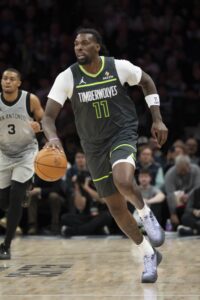 Randle was Minnesota’s second option on offense behind Anthony Edwards, while Reid was an important part of the frontcourt who had emerged as a perennial Sixth Man of the Year contender, winning the award in 2024. So it made some sense that the Timberwolves’ front office prioritized those two players over Alexander-Walker, a backcourt reserve who essentially functioned as a three-and-D role player.
A year later, it’s fair to wonder if the Wolves should’ve given Alexander-Walker a chance to earn more responsibilities on offense. In his first year with the Hawks, the 27-year-old more than doubled his scoring average (from 9.4 to 20.8 points per game) while setting new career highs in field goal percentage (45.9%) and three-point percentage (39.9%). He was named the NBA’s Most Improved Player this spring.
Hindsight is 20/20, of course, and it’s not as if Alexander-Walker’s exit resulted in a huge fall-off for the Timberwolves, who finished with a 49-33 regular season record identical to the one they posted in 2024/25. But with Mike Conley no longer playing a featured role in the backcourt and 2024 lottery pick Rob Dillingham not stepping up to earn more consistent minutes, Minnesota felt the need to add another guard at the trade deadline, sending Dillingham and four second-round picks to Chicago as part of a package for Ayo Dosunmu.
A year after opting against paying Alexander-Walker, the Timberwolves will be under pressure to pony up for a new deal for Dosunmu when he reaches unrestricted free agency this offseason. And even if they’re able to work something out with Dosunmu, running back the same roster probably isn’t an appealing option for president of basketball operations Tim Connelly and his front office after the Wolves failed to make it back to the Western Conference finals in 2026 — an upset victory over the Nuggets in the first round was followed by a second-round loss to the ascendant Spurs.
Few teams have experienced the kind of postseason success that Minnesota has over the past three years. The Timberwolves’ 24 playoff wins during that stretch rank fourth overall, behind two teams that have won titles (Boston and Oklahoma City) and one that’s a pair of victories away from doing so (New York). Those 24 playoff wins across the past three years also exceed the 21 the Wolves registered during the franchise’s 34 years in existence.
But winning just one playoff series this spring after advancing to the third round in each of the previous two years creates the impression that Minnesota took a step back. With Edwards becoming extension-eligible and reportedly feeling as if roster changes are necessary in order to make the Wolves a legitimate title contender, Connelly will have to get creative this summer as he looks to upgrade this squad and keep his superstar guard happy.
The Timberwolves’ Offseason Plans
Before we explore what the Timberwolves could do with their roster in the coming weeks and months, let’s take a quick look at their financial situation entering the summer.