
2017/18 NBA Non-Guaranteed Contracts By Team
As the NBA regular season approaches and teams reduce their rosters from the 20-player offseason limit to the 15-man regular season max, the best way to determine which players will survive preseason cuts is to assess their contracts. Players with guaranteed salaries for 2017/18 are far more likely to earn spots on 15-man rosters than players whose contracts aren’t fully guaranteed.
Keeping that in mind, we’re using the space below to keep tabs on the players on each NBA team who don’t have fully guaranteed contracts, using information from Basketball Insiders and ESPN. The players listed here have non-guaranteed salaries, partially guaranteed salaries, or Exhibit 9 or Exhibit 10 contracts, which essentially function like non-guaranteed deals. Unless otherwise noted, these players are on minimum salary contracts.
Not all of these players will be waived before the regular season begins, so we’ll maintain this list for the next several months, up until January 10, 2018. That’s the day that all players under contract have their salaries fully guaranteed for the rest of the 2017/18 season.
Some players on this list currently have partial guarantees or will have their salaries become guaranteed prior to January 10. We’ve noted those partial guarantees in parentheses, and our list of early salary guarantee dates can be found right here.
Only players who have formally signed contracts are listed below, so if a player has reportedly reached an agreement with a team on a non-guaranteed deal, we’ll add him to our list when that deal becomes official. For now, you can use our roster counts page to find those players whose deals have been reported but not finalized.
Our roster counts page also notes how many guaranteed salaries each team has on its books, which will provide an idea of which players listed below might have a better chance to earn a roster spot — a non-guaranteed player on a roster with 12 guaranteed salaries has better odds to make his team’s 15-man squad than a non-guaranteed player on a roster with 15 guaranteed salaries.
Without further ado, here’s the full list of players without fully guaranteed salaries for 2017/18, broken down by team:
Updated 1-10-17 (11:03am CT)
Atlanta Hawks
- None
Boston Celtics
- None
Brooklyn Nets
- None
Charlotte Hornets
- None
Chicago Bulls
- None
Cleveland Cavaliers
- None
Trade Restrictions On Future Draft Picks By Team
When trade scenarios are proposed and discussed throughout the season by NBA fans and observers, it’s easy enough to suggest that a team ought to throw in an extra first-round pick or two to sweeten the pot. However, sometimes it’s not quite that simple.
The NBA’s Ted Stepien Rule, named after a former Cavaliers owner who was fond of trading draft picks, prevents teams from trading away future first-round selections in back-to-back years. In other words, a club can’t be without at least one first-round pick (its own or another team’s) in consecutive future seasons. A team can still trade its first-round pick every year if it wants to, but if that club has already dealt away its 2018 first-rounder, it will have to wait until after the ’18 draft to trade its 2019 pick.
In some instances, this rule can be applied fairly easily. For example, the Lakers have traded away their unprotected 2018 pick. That prevents the club from trading its 2019 first-round pick unless it acquires a separate 2018 first-rounder. After the 2018 draft though, those restrictions disappear.
In other cases though, the Stepien Rule creates trickier challenges. For example, like the Lakers, the Rockets have traded away their 2018 pick, but Houston put top-three protection on its selection. That top-three protection extends through 2023 before the pick becomes unprotected in 2024.
It’s almost a certainty that Houston’s first-rounder will simply change hands in 2018, since the club is expected to be one of the NBA’s best and the pick figures to fall in the 20s. But because it’s not a sure thing, the Rockets are only allowed to conditionally trade their 2020 pick — there’s a chance that the 2018 pick could be protected and the 2019 pick would then be the one to change hands, so if Houston sent out its unprotected ’20 first-rounder, the team would be without future first-rounders in back-to-back years. So if the Rockets trade their 2020 pick this season, it must include language that calls for it to be pushed back one year for every year that the 2018 pick is (hypothetically) retained.
Confused? We’re here to help. Below, we’ve detailed whether each of the NBA’s 30 teams have any restrictions facing them during the 2017/18 season if they want to trade a first-round pick. Some teams’ restrictions are more complicated than others, so if you have any questions, jump into the comment section to ask.
Here’s the full breakdown:
Atlantic
- Boston Celtics: No trade restrictions
- Owed extra picks in 2018 and 2019.
- Brooklyn Nets: Can’t trade 2019 pick (2018 pick traded).
- Owed Raptors’ 2018 pick, but not guaranteed to receive it, since it’s top-14 protected.
- New York Knicks: No trade restrictions.
- Philadelphia 76ers: No trade restrictions
- Owed an extra pick in 2018 or 2019, making them eligible to trade their own picks in both years.
- Toronto Raptors: Can’t trade 2019 pick (2018 pick traded). Can only trade future picks conditionally (traded 2018 pick is protected through 2023).
Central
- Chicago Bulls: No trade restrictions.
- Cleveland Cavaliers: Can’t trade 2018 or 2020 pick (2019 pick traded). Can only trade 2021 pick conditionally (traded 2019 pick is protected through 2020).
- Have traded away their own 2018 pick, but still hold Nets’ pick.
- Have traded away their own 2018 pick, but still hold Nets’ pick.
- Detroit Pistons: Can’t trade 2019 pick (2018 pick traded). Can only trade 2020, 2021, and 2022 picks conditionally (traded 2018 pick protected until 2021).
- Indiana Pacers: No trade restrictions.
- Milwaukee Bucks: Can’t trade 2019 pick (2018 pick traded). Can only trade 2020, 2021, and 2022 picks conditionally (traded 2018 pick protected until 2021).
Southeast
- Atlanta Hawks: No trade restrictions
- Owed extra picks in 2018 and 2019.
- Charlotte Hornets: No trade restrictions.
- Miami Heat: Can’t trade 2019, 2020, or 2022 picks (2018 and 2021 picks traded).
- Orlando Magic: No trade restrictions.
- Washington Wizards: No trade restrictions.
Northwest
- Denver Nuggets: No trade restrictions.
- Minnesota Timberwolves: Can’t trade 2019 pick (2018 pick traded). Can only trade 2020 and 2021 picks conditionally (traded 2018 pick is protected through 2020).
- Owed Thunder’s 2018 pick, but not guaranteed to receive it, since it’s top-14 protected.
- Oklahoma City Thunder: Can’t trade 2019 or 2021 picks (2018 and 2020 picks traded). Can only trade 2022 and 2023 picks conditionally (traded 2020 pick is protected through 2022).
- Portland Trail Blazers: No trade restrictions.
- Utah Jazz: No trade restrictions.
Pacific
- Golden State Warriors: No trade restrictions.
- Los Angeles Clippers: Can’t trade 2020 pick (2019 pick traded). Can only trade 2021 pick conditionally (traded 2019 pick is protected through 2020).
- Owed an extra 2018 pick, making them eligible to trade one of the two.
- Los Angeles Lakers: Can’t trade 2019 pick (2018 pick traded).
- Phoenix Suns: No trade restrictions
- Owed extra picks in 2018 and 2021.
- Sacramento Kings: Can’t trade 2018 or 2020 pick (2019 pick traded).
Southwest
- Dallas Mavericks: No trade restrictions.
- Houston Rockets: Can’t trade 2019 pick (2018 pick traded). Can only trade future picks conditionally (traded 2018 pick is protected until 2024).
- Memphis Grizzlies: Can’t trade 2018 or 2020 pick (2019 pick traded). Can only trade 2021 and 2022 picks conditionally (traded 2019 pick is protected until 2021).
- New Orleans Pelicans: No trade restrictions.
- San Antonio Spurs: No trade restrictions.
Information from RealGM was used in the creation of this post.
Hoops Rumors Retro: Antonio McDyess To The Nuggets
Before the chair, before Grandpa Pierce, before DeAndre Jordan‘s infamous change of heart and the Emoji War that inspired it, there was Antonio McDyess. McDyess, obviously, but then of course French-Canadian ice hockey legend Patrick Roy, an impromptu charter flight across the southwest, dozens of unanswered pager calls and a good old-fashioned Rocky Mountain blizzard.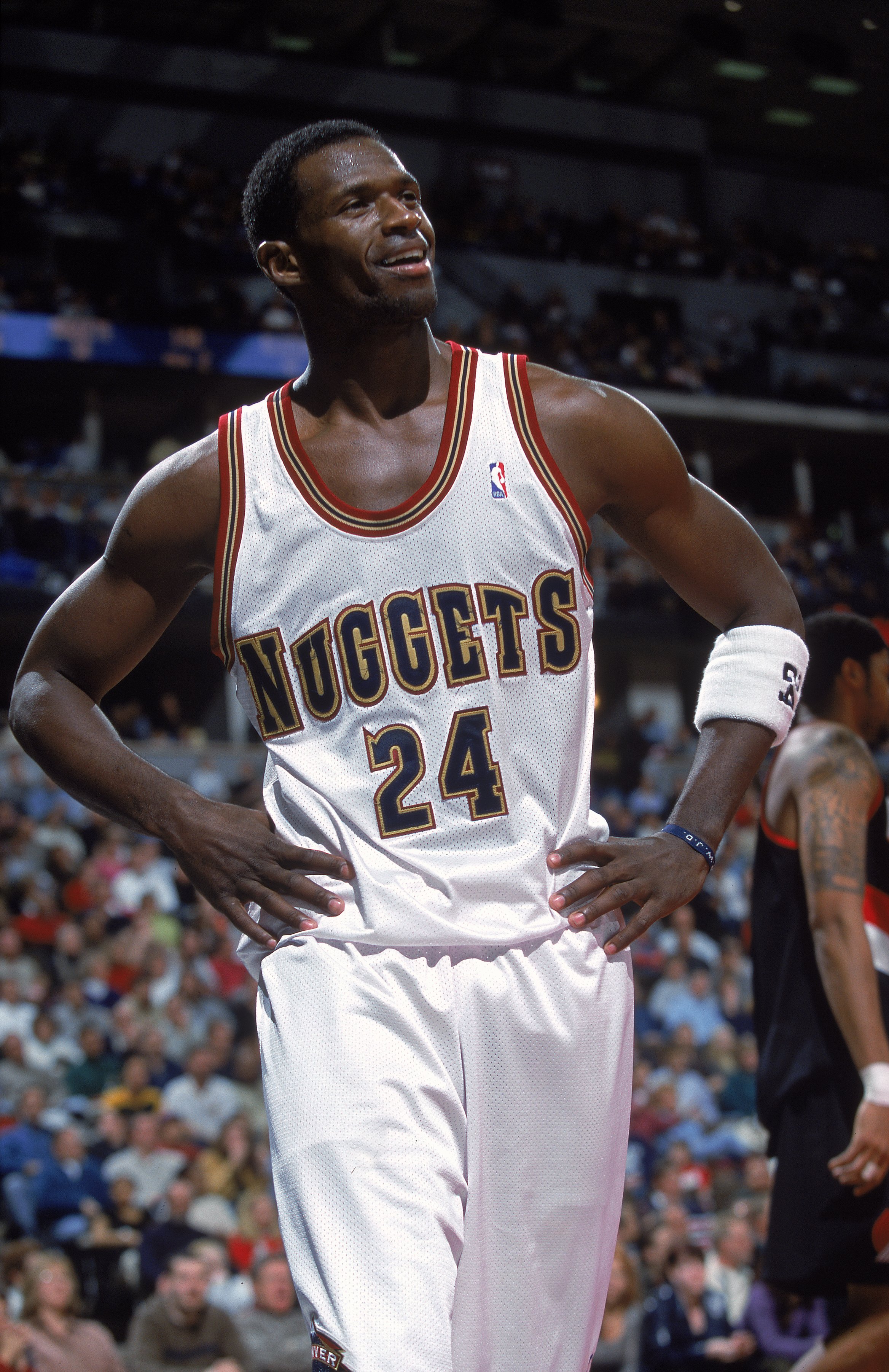
In January 1999, a 24-year-old with jetpacks for calves and long sinewy arms found himself at an emotional fork in the road. Fresh off of his third season in the NBA and his first in the desert, Suns power forward Antonio McDyess had the choice between re-signing with the team he just won 56 games with or returning to the basement-dwelling franchise that shipped him out of town less than 18 months prior.
After playing his first two seasons with the Nuggets and establishing himself as one of the most satisfyingly athletic big men in the game, McDyess enjoyed his first taste of team success following his arrival in Phoenix. The trade that sent him from Denver to the Suns prior to that 1997/98 season was precipitated by the fact that McDyess and his representative, Arn Tellem, were seeking a six-year, $100MM contract extension back when the club’s front office refused to go any higher than $70MM.
“I guess they had no choice but to trade me,” he said at the time, adding shortly thereafter that he didn’t think there was any possible way he would return to the Nuggets when he hit free agency seven months later.
Of course it was seven months later when things got unprecedentedly interesting.
2017 Extension Candidate Series
Multiple NBA players have signed contract extensions so far this offseason, as James Harden secured a new deal with the Rockets and John Wall committed to the Wizards for several more years. In each of those instances, the All-Star guard in question received a Designated Veteran Extension worth the maximum allowable 35% of the cap, meaning negotiations weren’t exactly required.
For most players eligible for contract extensions this year, however, that won’t be the case. So up until the regular season begins, we’ll be focusing on several of those extension-eligible players, examining their case for a new deal and the likelihood that they get something done with their team.
We’ll continue to update the list below each time we write about a new player, so be sure to check back for the latest links. Here are the extension-eligible players we’ve discussed so far:
- Clint Capela, Rockets (link)
- Joel Embiid, Sixers (link)
- Jusuf Nurkic, Trail Blazers (link)
- Jabari Parker, Bucks (link)
- Julius Randle, Lakers (link)
- Andrew Wiggins, Timberwolves (link)
Updates On Players Who Received 2017 Qualifying Offers
At the start of the 2017 NBA offseason, 20 players eligible for restricted free agency received qualifying offers from their respective teams. Two months after the free agent period officially got underway, a handful of those players remain unsigned, while the rest have had their contract situations resolved for the coming season.
Here’s a breakdown of what has happened this summer with those 20 players:
Ron Baker (Knicks)
Baker’s new pact was among the first batch of deals revealed following the start of the free agency period. It wasn’t until August, however, that the contract was made official.
Re-signed: 2 years, 9MM
Bojan Bogdanovic (Wizards)
With bigger fish to fry this offseason, the Wizards withdrew their qualifying offer for the 28-year-old Bogdanovic. Almost immediately after, the Pacers emerged as contenders for the free agent sharpshooter.
QO Rescinded, Signed with Pacers: 2 years, $21MM
Kentavious Caldwell-Pope (Pistons)
When the Avery Bradley trade fell in their lap, the Pistons rescinded their qualifying offer to the man that Bradley would be replacing. Within a week, Caldwell-Pope signed with the Lakers on a one-year deal, which will give him another crack at free agency next summer.
QO Rescinded, Signed with Lakers: 1 year, $18MM
Nando De Colo (Raptors)
The Raptors extended a qualifying offer to De Colo in order to maintain his rights should be ever return to the NBA. The 30-year-old has played overseas since 2014/15, and will remain with CSKA Moscow for the coming season.
Unsigned: $1.8MM QO Extended
Cristiano Felicio (Bulls)
The Bulls wasted no time coming to terms with Felicio. Almost immediately after the free agent period opened, it was reported that the 25-year-old would be returning to Chicago.
Re-signed: 4 years, $32MM
JaMychal Green (Grizzlies)
Green remains unsigned through early September as the Grizzlies have been reluctant to meet the forward’s contract demands. Last week we wrote that Memphis is apparently willing to offer more than the qualifying offer.
Unsigned: $2.8MM QO Extended
Tim Hardaway Jr. (Hawks)
A few days into free agency, the Knicks dropped a bombshell on Hawks fans, extending an exorbitant offer sheet to the 25-year-old shooting guard. Within two days, Atlanta elected not to match.
Unmatched Offer Sheet (Knicks): 4 years, $71MM
Joe Ingles (Jazz)
The Jazz extended the versatile Ingles a respectable offer almost immediately after free agency began. Three weeks later, when dust from Gordon Hayward‘s exit began to settle, the parties made it official.
Re-signed: 4 years, $52MM
Joffrey Lauvergne (Bulls)
It’s not clearly exactly why but the Bulls withdrew their qualifying offer for Lauvergne, but the fact that they were able to secure Cristiano Felicio to a four-year deal may have contributed to the decision. Lauvergne signed on with the Spurs in the middle of July.
QO Rescinded, Signed with Spurs: 2 Years, $3MM
Alex Len (Suns)
The Suns have a solid young core that they’re focused on developing and it’s unclear whether Len fits into that or not. The Suns have plenty of cap flexibility to bring him back, but nothing has been reported about those negotiations as of late.
Unsigned: $4.2MM QO Extended
Nikola Mirotic (Bulls)
The Bulls are apparently interested in bringing Mirotic back, but clearly didn’t race out to throw big money in his direction. While the 26-year-old big man could slot into Chicago’s rebuild, the organization has little incentive to overpay for him, considering the club’s current state of affairs.
Unsigned: $7.2MM QO Extended
Shabazz Muhammad (Timberwolves)
The Timberwolves initially extended a qualifying offer to Muhammad but withdrew it in order to free up the cap space to sign Taj Gibson. A possibility of him returning to Minnesota has been floated and he’s also been linked to the Lakers.
QO Rescinded: Available
Nerlens Noel (Mavericks)
Noel’s camp came out seeking big money for the 23-year-old, but the parties never came to terms. Fast forward two months and one change in representation later and the big man had little choice but to bet on himself and accept the qualifying offer.
QO Signed: 1 year, $4.2MM
Kelly Olynyk (Celtics)
The Celtics needed to rescind their qualifying offer to Olynyk in order to sign Gordon Hayward. Having missed out on Hayward themselves, the Heat moved quickly on Olynyk when he became unrestricted and officially signed him a few days later.
QO Rescinded, Signed with Heat: 4 years, $46MM
Mason Plumlee (Nuggets)
The Nuggets paid a substantial price for Plumlee in a midseason trade but haven’t rushed to lock him in for next season. Denver supposedly views the big man as a part of their core, but there has been little reported progress toward an agreement, and Paul Millsap‘s arrival makes Plumlee’s role in Denver murkier.
Unsigned: $4.6MM QO Offered
Otto Porter (Wizards)
The Wizards were willing to let the market dictate Porter’s price tag and didn’t hesitate to match when the forward earned max money through an aggressive offer sheet from the Nets.
Matched Offer Sheet: 4 years, $107MM
Andre Roberson (Thunder)
It only took a few days for the Thunder to come to terms with Roberson on a long-term deal and a week later the two parties finalized it.
Re-signed: 3 years, $30MM
Jonathon Simmons (Spurs)
The Spurs surprised many when they withdrew Simmons’ qualifying offer but it was quickly revealed that the request came from the free agent’s own camp. Within days, the shooting guard signed on with the Magic.
QO Rescinded, Signed with Magic: 3 years, $18MM
Tony Snell (Bucks)
The Bucks came to terms with restricted free agent almost immediately after July 1. The revelation of the signing was Adrian Wojnarowski’s first Woj Bomb of his ESPN tenure.
Re-signed: 4 years, $44MM
Alan Williams (Suns)
About a month into free agency, the Suns came to terms with Williams and the second-year forward jumped at a three-year offer. Only the first year of the undrafted big man’s contract is guaranteed.
Re-signed: 3 years, $17MM
Hoops Rumors’ 2017 NBA Free Agent Tracker
With 2017/18 training camps fast approaching, Hoops Rumors is here to help you keep track of which NBA players signed new contracts this offseason. To that end, we present our Free Agent Tracker, a feature we’ve had each year since our inception in 2012. Using our tracker, you can quickly look up deals, sorting by team, years, salary, and a handful of other variables.
A few notes on the tracker:
- Some of the information you’ll find in the tracker will reflect reported agreements, rather than finalized deals. As signings become official, we’ll continue to update and modify the data.
- Similarly, contract years and dollars will be based on what’s been reported to date, so in many cases those amounts will be approximations rather than official figures. Listed salaries aren’t necessarily fully guaranteed either.
- A restricted free agent who agrees to or signs an offer sheet will be included in the tracker, but the team won’t be specified until his original club matches or passes on the offer sheet, in order to avoid confusion.
- Two-way contracts and draft pick signings aren’t included in the tracker.
- Click on a player’s name for our full report on his deal.
- If you’re viewing the tracker on mobile, be sure to turn your phone sideways to see more details.
Our 2017 Free Agent Tracker can be found anytime on the right sidebar under “Hoops Rumors Features,” and it’s also under the “Tools” menu atop the site. It will be updated throughout the offseason, so be sure to check back for the latest info. If you have any corrections, please let us know right here.
Our lists of free agents by position/type and by team break down the players who have yet to reach contract agreements.
Extension Candidate: Jabari Parker
It’s been a long three seasons for Bucks forward Jabari Parker, longer still if you consider that there was a brief period in time ahead of the vaunted 2014 NBA Draft that the Chicago native was in the running to be selected with the first overall pick.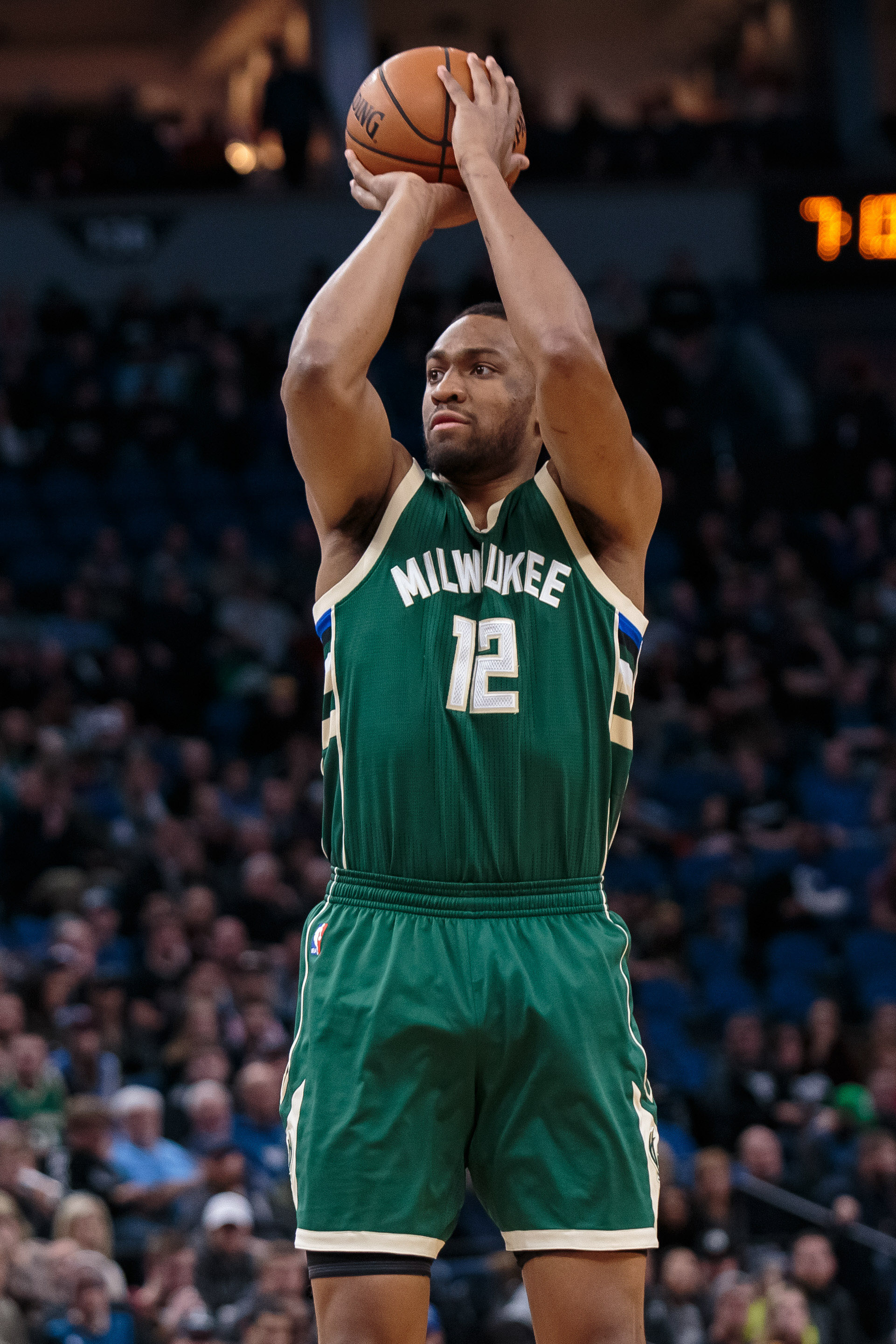
Fast forward three seasons and Parker hasn’t exactly had the franchise-altering impact on the organization that fans may have hoped for but that doesn’t mean he hasn’t shown flashes of legitimate value either.
Through three significantly compromised injury-shortened campaigns, it’s been rather difficult to get a handle on what Parker is and what he isn’t. Such uncertainty doesn’t help teams plan for the future in the simplest of times, let alone when there are contract extensions to be negotiated, as is the case now for the forward coming off the third year of his rookie deal.
In 50 2016/17 contests the 21-year-old showed glimpses of the future that draft prognosticators predicted, averaging 20.1 points and 6.2 rebounds per game while shooting .365 from beyond the arc.
This wasn’t empty production either, it came alongside Giannis Antetokounmpo in a Bucks lineup that finished sixth in the Eastern Conference and firmly established itself as a force to be reckoned with for the foreseeable future.
Alas, Parker’s particular role in Milwaukee’s ascension – not to mention future – is a complicated one and the new-age power forward fell by the wayside with a torn ACL in early February, remained out for the duration of the campaign and is now expected to be sidelined until the 2018 All-Star Game.
We wrote last week that Basketball Insiders’ Steve Kyler had heard the Bucks were open to getting a deal done ahead of the Oct. 31 rookie scale extension deadline but sought team-friendly terms. That’s not surprising, all things considered.
Even though the organization believes Parker will ultimately make a full recovery from the latest ACL tear, it’s hard to blame them for being reluctant to commit big money to a player with Parker’s track record.
The February, 2017 ACL tear was actually Parker’s second tear in the same knee. In December, 2014 – his rookie season – he tore the ACL for the first time, missed the remainder of the 2014/15 campaign and didn’t get back into full swing until well into the 2015/16 season.
If history repeats itself, Parker may recover along the previously forecast timeline and take the court following the All-Star Break next February, but it could be months after that before he’s physically capable of playing a full work load at his highest level.
It’s not unreasonable to think that Parker could expand upon his impressive 2016/17 line eventually, but if that’s unlikely to happen prior to the 2018/19 season, then venturing into a long-term commitment in the form of a contract extension due less than two months from now seems unnecessarily risky for a franchise at a critical juncture on its path to contention.
Given the context of Parker’s latest injury and the recovery process that stretched well after he returned to the court the last time, the Bucks would be wise to hold off on earmarking a significant portion of their payroll for him sooner than they absolutely have to – nothing is precluding them from throwing money at him next summer.
That said, if Parker’s camp was interested in a locking in a guaranteed deal at a team-friendly rate rather than gambling on restricted free agency after a fourth-straight injury-impacted campaign, the Bucks would have no reason not to listen.
Photo courtesy of USA Today Sports Images.
Community Shootaround: Eastern Darkhorse
Well before their stunning blockbuster trade, the Cavaliers and Celtics were considered the top two teams in the Eastern Conference. Nothing has changed in that regard, despite some major pieces swapping uniforms. It’s generally assumed we’ll see LeBron James, Isaiah Thomas and Jae Crowder squaring off against Al Horford, Kyrie Irving and Gordon Hayward in the Eastern Conference Finals next spring.
A majority of the other teams are in the conference have either plunged into rebuild mode or are simply trying to show significant improvement following frequent trips to the lottery. Only a precious few seem capable of pulling a surprise and preventing another Cavs-Celtics matchup in the conference finals.
That group includes the Raptors, who shelled out big bucks this summer to retain their top free agents, Kyle Lowry and Serge Ibaka. The supporting cast seems a little weaker since Toronto shed some salary (DeMarre Carroll, Cory Joseph) to keep the trio of Lowry, Ibaka and DeMar DeRozan intact. But the core group from a 51-win season remain intact.
The Wizards’ offseason had a similar feel as they needed to make Otto Porter their highest-paid player for the next two seasons by matching an offer sheet from the Nets. Then they locked up John Wall with a max extension, ensuring that the trio of Wall, Porter and Bradley Beal will continue their efforts to climb the Eastern Conference ladder in the near future.
The Bucks and Heat, who overcame major injuries last season to finish around the .500 mark, could also make a leap into major contention. In particular, Milwaukee might be poised for a big run led by Giannis Antetokounmpo, especially if Jabari Parker can provide a second-half boost after recovering from his latest knee injury.
This leads us to our question of the day: Which Eastern team has the best chance of knocking out either the Cavaliers or Celtics in next year’s playoffs and reaching the conference finals?
Please take to the comments section to share your thoughts on this topic. We look forward to what you have to say.
Weekly Mailbag: 8/28/17 – 9/3/17
We have an opportunity for you to hit us up with your questions in this, our weekly mailbag feature. Have a question regarding player movement, the salary cap or the NBA draft? Drop us a line at HoopsRumorsMailbag@Gmail.com.
Do you think the Celtics are strong enough to reach the NBA Finals this season after acquiring Gordon Hayward and Kyrie Irving? — Greg Dizon
It’s easy to get excited about the Celtics. They obviously had a tremendous offseason, and the defending Eastern champs in Cleveland did not. However, there are two areas of need that stick out in Boston. One is the lack of a rebounding and rim-protecting inside presence, which could be helped by a healthy Andrew Bogut, whom the team has contacted. The other is the loss of two aggressive perimeter defenders in Jae Crowder and Avery Bradley. There are a lot of roster moves to be made between now and the playoffs and a lot of unknown variables, such as how long the Cavs’ Isaiah Thomas will be sidelined by his hip injury. The Celtics have the talent to dethrone Cleveland, but don’t forget that LeBron James hasn’t lost an Eastern Conference playoff series over the past seven years. The Cavaliers will be a very tough matchup as long as he’s there.
What’s going with the Carmelo Anthony situation in New York? Is he gonna be traded before the season starts? — Big Red Lucas, via Twitter
There hasn’t been much movement in the past month, as the parties are entrenched in the same positions. The Knicks are willing to move Anthony, but only if they feel it’s a good deal. He wants to go to Houston and won’t waive his no-trade clause for anyone else. The Rockets need to unload Ryan Anderson‘s salary to fit Anthony on their roster and haven’t been able to find another team or two willing to facilitate a deal. The only way a trade is going to happen is if somebody changes their stance, which might happen as training camp gets closer. If no one relents, it wouldn’t be a surprise if Anthony starts the season with the Knicks. But expect a deal sometime before the February 8 deadline because New York doesn’t want him to opt in for nearly $28MM for 2018/19 and drain their cap room for next summer.
In a recent workout with LeBron James, the Wizards’ John Wall proclaimed himself to be “the best two-way point guard player in the league.” How strong is his argument? — D.C. Dacey, via Twitter
Fans who don’t watch Wall on a regular basis might be surprised at how good he is defensively. He averaged 2.0 steals and 0.6 blocks per game last season and just missed a spot on the All-Defensive team. There’s no questioning Wall’s abilities on offense, where he is coming off a career best 23.1 points and 10.7 assists per game, and he seems worth every penny of the $170MM extension he just signed. Chris Paul may still be the league’s best two-way point guard, but Wall is certainly in the conversation and is on his way to being number one.
Hoops Rumors Originals: 8/26/17 – 9/2/17
Every week, the Hoops Rumors writing team compiles original content to complement our news feed. Enjoy our favorite segments and features from the past seven days:
- We looked at players whose draft rights are held by teams in the Atlantic, Central, Southeast, Northwest, Pacific and Southwest divisions.
- Luke Adams examined the NBA’s rules for stretching salaries of waived players ahead of the August 31 deadline.
- Check out our free Trade Rumors app available for IOS and Android.
- Here are the questions we asked you in our Community Shootaround discussions and polls this week:
- How much extra should the Celtics have been willing to give to complete the Kyrie Irving trade?
- Should the NBA consider changes to its buyout rules?
- Can the Warriors top their projected win total of 66.5 games? Can the Celtics win more than 55.5?
- What role will Derrick Rose have with the Cavaliers?