
Hoops Rumors Chat Transcript: 7/19/2022
Hoops Rumors hosted a live chat at 12:00 pm Central time today. Click here to read the transcript.
Our next live chat will take place on Thursday, July 21 at 11:00 am CT and will be hosted by Dana Gauruder.
Suns GM Jones On Ayton: “We Wanted Deandre Here”
Although the Suns never offered center Deandre Ayton the five-year maximum-salary deal he originally sought, they told him throughout his free agency that they intended to match any offer sheet he signed with another team, according to Marc J. Spears of ESPN.
The Suns made good on that promise, immediately matching Ayton’s offer sheet once they received it from the Pacers. In a phone conversation with Spears, Suns general manager James Jones said the team felt it was “critical” not to waste any time making that move.
“We wanted Deandre here,” Jones said. “He’s vital to what we do, at the core of everything that we do. And throughout this whole process it was, it rang true. We wanted to keep him here, and the moment we can come to an agreement, we would. So, waiting 24 hours, 48 hours, that wasn’t something we needed to do because going into it, we knew this is where he wanted to be and where we wanted him to be.
“I’m one to just be direct. And if you’re convicted, if you know what you want to do, you do it. But if there’s any doubt from anyone that we wanted him, I think that the matching did that. It was urgent for us. It was important. It was critical for us. So, we just wanted to make sure that we handled our business quickly.”
While Jones insists that Phoenix was “where (Ayton) wanted to be,” ESPN’s Adrian Wojnarowski hears from sources that the former No. 1 overall pick was intrigued by the possibility of teaming up with Tyrese Haliburton and becoming a core player in Indiana. Speaking to Spears, Ayton indicated he was happy to be back with his former team, but also praised the club he nearly joined for how it handled the restricted free agency process.
“I got to give a lot of respect to the Pacers organization. They were aggressive from the start and showing a lot of love. And we agreed to a max offer sheet. The Suns matched. Now, I’m back in Phoenix as a Sun,” Ayton said, adding that his new contract will have a “generational impact” on his family and on the community work he can do in Phoenix and in the Bahamas, his home country.
There was plenty of chatter earlier in the offseason about the possibility of Ayton leaving Phoenix, but the Suns never showed a willingness to discuss a sign-and-trade deal with the Pacers, despite Indiana’s interest in doing so, according to ESPN.
Ayton’s final 2021/22 appearance played a part in the speculation about his offseason departure — he logged a playoff-low 17 minutes in a blowout Game 7 loss to Dallas in the Western Conference Semifinals, and was seen jawing with head coach Monty Williams on the sidelines.
However, the two men downplayed that incident in their respective interviews with Spears. Williams referred to it as a “bad day,” while Ayton said it was “in the past,” adding that he and his coach are on good terms.
“Game 7 was an anomaly,” Ayton said. “We let that get away from us as a team. That is all in the past. We’re going to look forward. We are going to move on.”
Bucks Sign Serge Ibaka To One-Year Deal
JULY 19: Ibaka’s deal is now official, according to NBA.com’s transactions log.
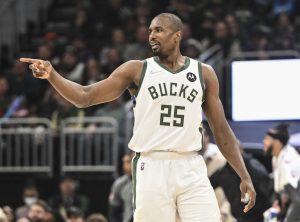 JULY 4: Free agent big man Serge Ibaka has agreed to re-sign with the Bucks on a one-year contract, according to Shams Charania of The Athletic (Twitter link).
Ibaka, 32, was traded from the Clippers to the Bucks at the 2022 trade deadline and appeared in 19 regular season games for Milwaukee down the stretch, averaging 7.0 PPG and 5.3 RPG with a .519/.351/.800 shooting line in 17.8 MPG. He wasn’t part of the team’s playoff rotation.
Ibaka is a three-time All-Defensive player who led the NBA in blocks per game in 2012 and 2013 and was a key member of the Raptors’ 2019 championship team.
However, back issues have slowed him down to some extent in recent years — he underwent surgery in 2021 and didn’t look like his old self upon returning.
While terms of Ibaka’s new deal aren’t yet known, it appears the Bucks are confident in his ability to be a useful depth piece in the frontcourt now that he’s another year removed from that procedure on his back.
Ibaka is the fifth free agent to agree to terms with the Bucks in the last few days, joining Bobby Portis, Joe Ingles, Jevon Carter, and Wesley Matthews. Milwaukee also has eight players on existing guaranteed contracts, with first-rounder MarJon Beauchamp set to join that group.
How Teams Are Using 2022/23 Mid-Level Exceptions
In addition to receiving approximately $123.7MM in cap room and being allowed to surpass that threshold in order to sign players using Bird Rights or the minimum salary exception, each NBA team also receives a mid-level exception. The value of this exception varies depending on a club’s total team salary.
A team that goes under the cap to use its available cap room, for instance, receives only a modest form of the MLE known as the room exception. An over-the-cap team receives the full mid-level exception, unless that team is also over the tax apron, in which case it gets a taxpayer version of the MLE that falls in between the full MLE and the room exception. We detailed the exact values of each form of mid-level exception earlier this offseason, but here’s a quick breakdown:
- Room exception: Can be used for contracts up to two years, with a starting salary worth up to $5,401,000.
- Taxpayer mid-level exception: Can be used for contracts up to three years, with a starting salary worth up to $6,479,000.
- Full/non-taxpayer mid-level exception: Can be used for contracts up to four years, with a starting salary worth up to $10,490,000.
- Note: Though its name suggests otherwise, using the non-taxpayer mid-level exception doesn’t mean a team can’t or won’t be above the tax line ($150,267,000) at season’s end; it simply means the team’s total salary can’t surpass the tax “apron” ($156,983,000).
Now that most of the NBA’s teams have used up their cap space, it’s worth keeping an eye on which teams still have part or all of their mid-level exceptions available, which we’ll do in the space below.
This list will be kept up to date throughout the 2022/23 league year, with new MLE deals added once those signings are officially completed and we confirm the contract details.
Note: As of January 10, the value of the exceptions below will begin to prorate downward.
Here’s where things currently stand:
Mid-Level Exception:
Non-taxpayer: $10,490,000
Taxpayer: $6,479,000
Atlanta Hawks
- Used: $0
Boston Celtics
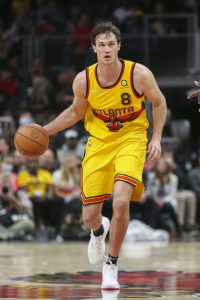 Used: $6,479,000 (Danilo Gallinari)
- Note: Limited to taxpayer mid-level exception.
Brooklyn Nets
- Used: $0
- Note: Limited to taxpayer mid-level exception.
Charlotte Hornets
- Used: $1,075,000 (Bryce McGowens)
Chicago Bulls
- Used: $3,200,000 (Andre Drummond); $357,717 (Carlik Jones)
Cleveland Cavaliers
- Used: $5,853,659 (Ricky Rubio); $2,000,000 (Danny Green); $850,000 (Sam Merrill)
Dallas Mavericks
- Used: $5,461,219 (JaVale McGee); $1,017,781 (Jaden Hardy)
- Note: Limited to taxpayer mid-level exception.
Denver Nuggets
- Used: $6,479,000 (Bruce Brown)
- Note: Limited to taxpayer mid-level exception.
Golden State Warriors
- Used: $4,500,000 (Donte DiVincenzo); $1,017,781 (Ryan Rollins)
- Note: Limited to taxpayer mid-level exception.
Houston Rockets
- Used: $2,717,391 (Bruno Fernando)
Los Angeles Clippers
- Used: $6,479,000 (John Wall)
- Note: Limited to taxpayer mid-level exception.
Los Angeles Lakers
- Used: $6,479,000 (Lonnie Walker)
- Note: Limited to taxpayer mid-level exception.
Memphis Grizzlies
- Used: $1,200,000 (Kennedy Chandler); $1,000,000 (Kenneth Lofton Jr.)
Miami Heat
- Used: $6,479,000 (Caleb Martin)
Milwaukee Bucks
- Used: $6,479,000 (Joe Ingles)
- Note: Limited to taxpayer mid-level exception.
Minnesota Timberwolves
- Used: $8,780,488 (Kyle Anderson); $1,017,781 (Josh Minott)
New Orleans Pelicans
- Used: $0
Oklahoma City Thunder
- Used: $2,000,000 (Jaylin Williams); $1,836,090 (Isaiah Joe); $1,927,896 (Lindy Waters III)
Orlando Magic
- Used: $2,000,000 (Caleb Houstan)
Philadelphia 76ers
- Used: $10,490,000 (P.J. Tucker)
Phoenix Suns
- Used: $474,851 (Ish Wainright)
- Note: Limited to taxpayer mid-level exception.
Portland Trail Blazers
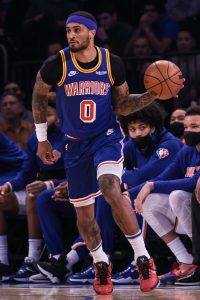 Used: $8,300,000 (Gary Payton II); $1,017,781 (Jabari Walker)
Sacramento Kings
- Used: $9,472,219 (Malik Monk)
Toronto Raptors
- Used: $6,000,000 (Otto Porter Jr.); $1,500,000 (Christian Koloko)
Utah Jazz
- Used: $3,205,128 (Simone Fontecchio); $735,819 (Kris Dunn); $432,795 (Luka Samanic); $100,000 (Vernon Carey Jr.)
Washington Wizards
- Used: $7,804,878 (Delon Wright); $900,000 (Jordan Goodwin); $140,384 (Xavier Cooks)
Room Exception:
Available: $5,401,000
Detroit Pistons
- Used: $269,445 (Eugene Omoruyi)
Indiana Pacers
- Used: $0
New York Knicks
- Used: $300,000 (DaQuan Jeffries) $400,000 (Isaiah Roby)
San Antonio Spurs
- Used: $0
Hoops Rumors Glossary: Minimum Salary Exception
The minimum salary exception is something of a last resort for capped-out teams looking to add players, as well as for players seeking NBA contracts, but it’s one of the most commonly used cap exceptions.
As its name suggests, the minimum salary exception allows an over-the-cap team to sign a player to a minimum-salary deal. A contract signed using the minimum salary exception can be a one- or two-year deal, but can’t cover more than two seasons.
Teams can use the exception multiple times in a league year, giving clubs that have used all of their cap room and other exceptions an avenue to fill out their rosters. The exception also accommodates teams’ acquisitions of minimum-salary players via trade, as players signed via the minimum salary exception don’t count as incoming salary for salary-matching purposes.
Players are entitled to varying minimum salaries based on how long they’ve been in the NBA. In 2022/23, a player with no prior NBA experience is eligible for a $1,017,781 minimum salary, while a player with 10 or more years of experience is eligible for $2,905,851.
[RELATED: NBA Minimum Salaries For 2022/23]
During the current Collective Bargaining Agreement, the minimum salary is adjusted each season to reflect the year-to-year salary cap change. If the cap increases by 5%, so will minimum salaries. If the cap doesn’t change from one season to the next, neither will minimum salaries.
There’s a wide disparity between the minimum salary for rookies and for long-tenured players, with a minimum-salary veteran of 10+ seasons earning nearly three times as much as a rookie making the minimum next season. The NBA doesn’t want those pricier deals to discourage clubs from signing veterans, however, so the league reimburses teams for a portion of a minimum-salary player’s cost if he has three or more years of experience, as long as the contract is a one-year deal.
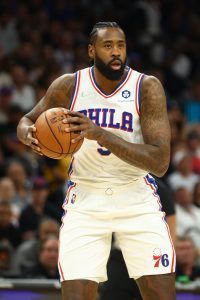 For example, when the Nuggets signed 14-year veteran DeAndre Jordan to a one-year pact for 2022/23 using the minimum salary exception, he locked in a salary of $2,905,851, but the team’s cap hit is just $1,836,090, equivalent to the minimum salary for a player with two years of NBA experience. The league will reimburse the Nuggets for the difference between Jordan’s salary and cap hit ($1,069,761).
Most salary cap exceptions can only be used once each season. For instance, when a team uses its full mid-level exception to sign one or more players, the club can no longer use that exception until the following season. Unlike the mid-level and other cap exceptions though, the minimum salary exception can be used any number of times in a single season.
The Suns, for example, have used the minimum salary exception to sign Bismack Biyombo, Damion Lee, Josh Okogie this season. They also used it to acquire Jock Landale in a trade, since he was entering the second year of a two-year, minimum-salary contract he signed in 2021.
While many exceptions begin to prorate on January 10, the minimum salary exception prorates from the first day of the regular season. If a season is 174 days long and a player signs a minimum-salary deal after 25 days have passed, he would only be paid for 149 days.
An extreme example of a prorated minimum salary occurred when the Nets converted Kessler Edwards to a minimum-salary contract on the final day of the 2022/23 season. Last year’s rookie minimum was $925,258, so Edwards received 1/174th of that amount: $5,318.
When a veteran player signs a one-year contract using the minimum salary exception midway through a season, his cap hit is prorated in the same way that his salary is.
For instance, when Goran Dragic signed with the Nets on February 22, 2022, there were 48 days left in the ’21/22 season. He earned a rest-of-season salary of $728,742 (48/174ths of his full-season minimum of $2,641,691), while his cap hit was $460,464 (48/174ths of $1,669,178, the minimum salary for a player with two years of experience).
Finally, it’s worth noting that the minimum salary exception can be used to claim a player off waivers in the same way that it can be used to trade for a player. However, in both cases, a minimum-salary player can’t be acquired in a trade using the minimum salary exception if his contract is for more than two years or if his salary exceeded the minimum in any previous year of the contract.
For example, when the Thunder waived Isaiah Roby in early July, he was earning a minimum salary for 2022/23 ($1,930,681). But Roby was entering the fourth year of his contract and had earned more than the minimum in his first season of that deal ($1.5MM in ’19/20) — both of those factors made him ineligible to be claimed using the minimum salary exception, so the Spurs had to use cap room to place a claim on him.
Here are a few more notes on the minimum salary exception:
- Players signed using the minimum salary exception are eligible for trade bonuses, but not incentive bonuses. A minimum-salary player with a trade bonus cannot be acquired in a trade using the minimum salary exception unless he waives that bonus.
- When a minimum-salary player is traded during the season, any reimbursement from the NBA is split between his two teams. It’s prorated based on the number of days he spends with each club.
- If a minimum-salary player with a non-guaranteed salary is waived before he exceeds the minimum for a two-year veteran, his team won’t be reimbursed for any portion of his salary.
- Virtually every 10-day contract is for the minimum salary — often the minimum salary exception is the only way for clubs to accommodate any 10-day deals. The NBA also reimburses teams for a portion of the 10-day minimum salary for veterans with three or more years of experience.
Note: This is a Hoops Rumors Glossary entry. Our glossary posts will explain specific rules relating to trades, free agency, or other aspects of the NBA’s Collective Bargaining Agreement. Larry Coon’s Salary Cap FAQ and the Basketball Insiders salary pages were used in the creation of this post.
Earlier versions of this post were published in previous years by Luke Adams and Chuck Myron.
Poll: Where Will Kyrie Irving Start 2022/23 Season?
It appeared early in free agency as if some momentum was building toward a trade that sent Kyrie Irving from Brooklyn to Los Angeles, but there has been no indication recently that an agreement between the Lakers and Nets is close.
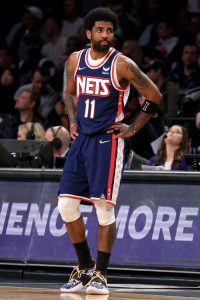 One report last week said that the vibe coming out of Brooklyn was that the Nets are comfortable entering training camp this fall with Irving and Kevin Durant still on their roster. Another report, citing a source close to Irving, suggested that Kyrie hadn’t asked to be traded since opting in for 2022/23 and has “every intention” of playing in Brooklyn next season.
Appearing on ESPN’s Get Up on Monday, Adrian Wojnarowski didn’t rule out the possibility of Irving being traded to Los Angeles, but the language he used – referring to the talks as “not completely dead” – didn’t inspire a ton of confidence.
Additionally, as NetsDaily relays, Jake Fischer of Bleacher Report said on the most recent episode of his podcast that Irving seems to be increasingly accepting of the fact that he’s “overwhelmingly likely to be back in Brooklyn.”
The Lakers aren’t the only team that can make a trade for Irving, but they’re the only one that has been seriously and repeatedly linked to him this offseason. Teams like the Mavericks, Sixers, and Heat have been floated as potential suitors, but those scenarios have been shot down pretty quickly by local beat reporters. Michael Scotto of HoopsHype described Irving’s trade market last week as “Lakers or bust.”
If Irving doesn’t want to be in Brooklyn – and multiple reports this month have suggested he’s interested in joining the Lakers – his best strategy may be to report to camp without making any waves, rebuild his value after a lost 2021/22 season, and either hope for a trade at the 2023 deadline or simply sign elsewhere when he becomes a free agent next summer.
However, it’s unclear how patient Irving is willing to be. Reporting from several outlets in June indicated that he was seriously exploring other destinations and only opted into his contract with the Nets after it became clear that none of the teams on his wish list were prepared to make him a lucrative, long-term offer in free agency. If the team is able to find a suitable trade for his good friend Durant, Kyrie seems even less likely to happily stick around Brooklyn for another season.
It’s also worth noting that recent reports about the Nets’ willingness to open the season with Durant and Irving on their roster could simply be posturing, with Brooklyn trying to regain leverage in trade discussions. Even if a Kyrie trade isn’t imminent today, we still have over two months until training camps begin — that gives the Nets plenty of time to try to find an offer they like.
With all that in mind, we want to know what you think. Which team will Irving open the 2022/23 season with? Will he remain in Brooklyn or end up elsewhere? And if he’s still a Net this fall, how much longer will that last?
Vote in our poll, then head to the comment section below to share your thoughts!
Which opening night roster will Kyrie Irving be on?
-
Brooklyn Nets 54% (1,134)
-
Los Angeles Lakers 33% (697)
-
Another team 12% (261)
Total votes: 2,092
Lakers Rumors: Irving, Trade Targets, Westbrook
It remains to be seen whether or not the Lakers will be able to work out a trade with the Nets for Kyrie Irving, but Adrian Wojnarowski of ESPN believes L.A. has at least one more major roster move up its sleeve this offseason, as he stated on Monday during the network’s latest episode of Get Up (video link).
“I think the Lakers will make a deal. Maybe more than one deal,” Wojnarowski said. “It may not be for Kyrie Irving, it may not be for an All-NBA player, an All-Star. But players like Eric Gordon in Houston, Buddy Hield in Indiana, players like Patrick Beverley, who came to the Jazz in a trade from Minnesota, who are role players are winning teams. What is the price for those kind of moves? I think they’re going to continue to be active on all those things.”
As Wojnarowski explains, the Lakers aren’t eager to part with all of their most valuable trade assets for modest short-term upgrades, but they still feel the need to add more talent to the roster to take advantage of LeBron James‘ remaining prime years.
“When LeBron’s putting pressure on the front office, on the organization, teams are asking for a lot to do a deal with the Lakers,” Wojnarowski said. “Rob Pelinka‘s trying to keep from trading the 2027, 2029 unprotected first-round picks that obviously LeBron James doesn’t value greatly because he may not be around. He wants to win now. That’s the balance of being in the front office vs. having to serve the fact that you’ve got LeBron James still playing at an incredibly high level at an age we’ve never seen a player play at that level.”
Here’s more on the Lakers:
- A potential trade sending Irving to the Lakers is “not completely dead,” per Wojnarowski, but such a deal still hinges in large part on what the Nets do with Kevin Durant. “The Nets are more focused on trying to find a deal for KD before they would even move Kyrie Irving,” Woj said. “I think there’s a good chance that Kyrie Irving is back in Brooklyn to start the season if Kevin Durant is back in Brooklyn.”
- Russell Westbrook‘s public split with his longtime agent doesn’t bode well for the former MVP’s relationship with the Lakers, according to Jovan Buha of The Athletic, who says that dynamic between Westbrook and the team is becoming “more untenable with each passing week.” League sources tell Buha that the divorce between Westbrook and agent Thad Foucher caught several people around the Lakers by surprise.
- Foucher’s statement, which hinted that Westbrook is seeking another change of scenery, may further hurt the Lakers’ leverage in trade talks, Buha writes. Multiple league sources tell The Athletic that potential trade partners are already asking for at least L.A.’s 2027 or 2029 first-round pick in order to take on Westbrook’s pricey expiring contract.
- Marc Stein says in his latest Substack article that the Knicks and Jazz are viewed by some people around the league as possible landing spots for Westbrook if the two teams complete a Donovan Mitchell trade. Stein explains that the Knicks may be more inclined to trade away Julius Randle and his long-term contract for a big expiring deal like Westbrook’s in that scenario, though it strikes me as a long shot that New York and L.A. would be able to find a mutually beneficial swap involving those two players.
Keegan Murray Named Las Vegas Summer League MVP
Kings forward Keegan Murray has been named the Most Valuable Player of the 2022 Las Vegas Summer League, according to an announcement from the NBA (Twitter link).
Murray, the fourth overall pick in this year’s draft, averaged 23.3 points, 7.3 rebounds, 2.0 assists, and 1.3 steals in his four Summer League games. He also made 50% of his shots from the field and knocked down 40% of his 8.8 three-point attempts per contest.
It was a terrific start for a rookie who figures to play a major role for a Kings team that badly wants to end its 16-year playoff drought. The first player selected after the consensus top three prospects were off the board, Murray was rated behind No. 5 pick Jaden Ivey on some experts’ draft boards, so the two youngsters will likely be measured against one another for at least the first year or two of their professional careers.
Murray looks like he’ll be an excellent fit on a Kings roster led by De’Aaron Fox and Domantas Sabonis, two talented scorers who aren’t elite defenders or reliable outside shooters. The former Iowa standout is capable of stretching the floor and handling a variety of defensive assignments, so he’ll presumably see plenty of action alongside Sacramento’s two stars.
Tari Eason (Rockets), Quentin Grimes (Knicks), Sandro Mamukelashvili (Bucks), and Cam Thomas (Nets) joined Murray on the All-Summer League First Team, according to the league (Twitter links). Thomas and another King, Davion Mitchell, shared the Summer League MVP award in 2021.
This year’s All-Summer League Second Team is made up of Santi Aldama (Grizzlies), Bennedict Mathurin (Pacers), Marko Simonovic (Bulls), Trendon Watford (Trail Blazers), and Lindell Wigginton (Bucks).
Jazz In No Rush To Move Mitchell, Expected To Reengage With Knicks
After engaging in trade talks with the Knicks about Donovan Mitchell last week, the Jazz aren’t in any rush to make a deal before further gauging his value around the NBA, ESPN’s Adrian Wojnarowski said on Monday during an appearance on Get Up (video link).
“I think for the Jazz, they go out now around the league and see what else is out there for Donovan Mitchell, get a sense of what the market is, what teams are willing to do,” Wojnarowski said. “And I do think the Knicks and the Jazz will reengage at some point. Maybe it’s this week, maybe it’s next week, maybe it’s in two or three weeks. But the Jazz are not going to necessarily move quickly.”
As Wojnarowski observes, Utah’s Rudy Gobert trade discussions played out over multiple weeks – or even months – before the Jazz received an offer they couldn’t refuse from Minnesota. Although the Knicks are motivated to land Mitchell, according to Woj, they also don’t want to “just give up everything” to land him.
“Utah and New York talked last week, and I think the Jazz got a sense of what New York might be willing to do,” Wojnarowski said. “It’s not just one particular deal — I think there’s options. It’s almost like a sliding scale. The more players you put in a deal, the less draft picks you want to give up. The more draft assets you put in a deal, you want to put less players in. If you’re the Jazz, ‘I want the players and I want the picks,’ so that’s where it starts.”
Here’s more on Mitchell:
- Wojnarowski said during his Get Up appearance that the Jazz are significantly more interested in the Knicks’ own first-round picks than the ones New York can offer from other teams. “People talk about (the Knicks being able to trade) seven or eight (first-round) picks. A lot of those picks are conditional, protected picks that are coming from places like Detroit and Washington,” Wojnarowski said. “The Jazz certainly don’t value those the way they do New York’s unprotected picks.”
- During early discussions between the Jazz and Knicks, Utah asked about a package that would’ve included RJ Barrett, Mitchell Robinson, other players, and at least three first-round picks, reports Ian Begley of SNY.tv. Robinson has since come off the table after officially re-signing with New York, but it’s a moot point — the Knicks felt Utah’s asking price was too high and wouldn’t have met it anyway, Begley writes, adding that he believes the Knicks have the draft capital necessary to get a Mitchell deal done without including Barrett.
- Some members of the Knicks’ organization still felt the Jazz’s asking price was too high during the more recent talks between two teams, Begley writes. Those Knicks executives felt as if they had made competitive offers and wanted to leave it at that, rather than continuing to sweeten the pot for Utah.
NBA Teams With Hard Caps For 2022/23
The NBA salary cap is somewhat malleable, with various exceptions allowing every team to surpass the $123,655,000 threshold once their cap room is used up. In some cases, teams blow past not only the cap limit, but the luxury tax line of $150,267,000 as well — the Clippers and Warriors are among the clubs that project to have massive tax bills this season as a result of their spending.
The NBA doesn’t have a “hard cap” by default, which allows clubs like L.A. and Golden State to build a significant payroll without violating CBA rules. However, there are certain scenarios in which teams can be hard-capped, as we explain in a glossary entry.
When a club uses the bi-annual exception, acquires a player via sign-and-trade, or uses more than the taxpayer portion of the mid-level exception (up to three years and/or $6,479,000), that club will face a hard cap for the remainder of the league year.
When a team becomes hard-capped, it cannot exceed the “tax apron” at any point during the rest of the league year. The tax apron for 2022/23 was set at $156,983,000.
So far, a third of the NBA’s teams have been willing to hard-cap themselves this offseason. Some teams will have to be aware of that hard cap when they consider any roster move for the rest of the season, but for others it’s just a technicality that won’t affect their plans in any meaningful way.
Listed below are the hard-capped teams for the 2022/23 league year, along with how they created a hard cap.
Memphis Grizzlies
- Used non-taxpayer mid-level exception on Kennedy Chandler.
Miami Heat
- Used bi-annual exception on Kevin Love.
Minnesota Timberwolves
- Used non-taxpayer mid-level exception on Kyle Anderson and Josh Minott.
Oklahoma City Thunder
- Used non-taxpayer mid-level exception on Jaylin Williams.
Orlando Magic
- Used non-taxpayer mid-level exception on Caleb Houstan.
Philadelphia 76ers
- Used non-taxpayer mid-level exception on P.J. Tucker.
- Used bi-annual exception on Danuel House.
Portland Trail Blazers
- Used non-taxpayer mid-level exception on Gary Payton II.
Sacramento Kings
- Used non-taxpayer mid-level exception on Malik Monk.
Toronto Raptors
- Used non-taxpayer mid-level exception on Otto Porter Jr. and Christian Koloko.
Utah Jazz
- Acquired Collin Sexton via sign-and-trade.
Washington Wizards
- Used non-taxpayer mid-level exception on Delon Wright.
This list, which could continue to grow, will continue to be updated throughout the 2022/23 league year as necessary. It can be found anytime in the “Hoops Rumors Features” menu on the right-hand sidebar of our desktop site, or in the “Features” menu on our mobile site.