Checking In On Traded 2018 First Round Picks
While it’s possible that more 2018 first round picks will be on the move at this season’s trade deadline, nearly one third of the NBA’s teams have already moved their own first-rounders. In total, eight of 30 first-rounders for 2018 are owed to new teams, and many of those picks include conditional protections. As such, it’s worth checking in on the likelihood of all those selections actually changing hands this June, now that we’re more than halfway through the 2017/18 season.
With the help of our 2017/18 Reverse Standings, let’s dive in and see where things stand for those eight traded picks…
No drama:
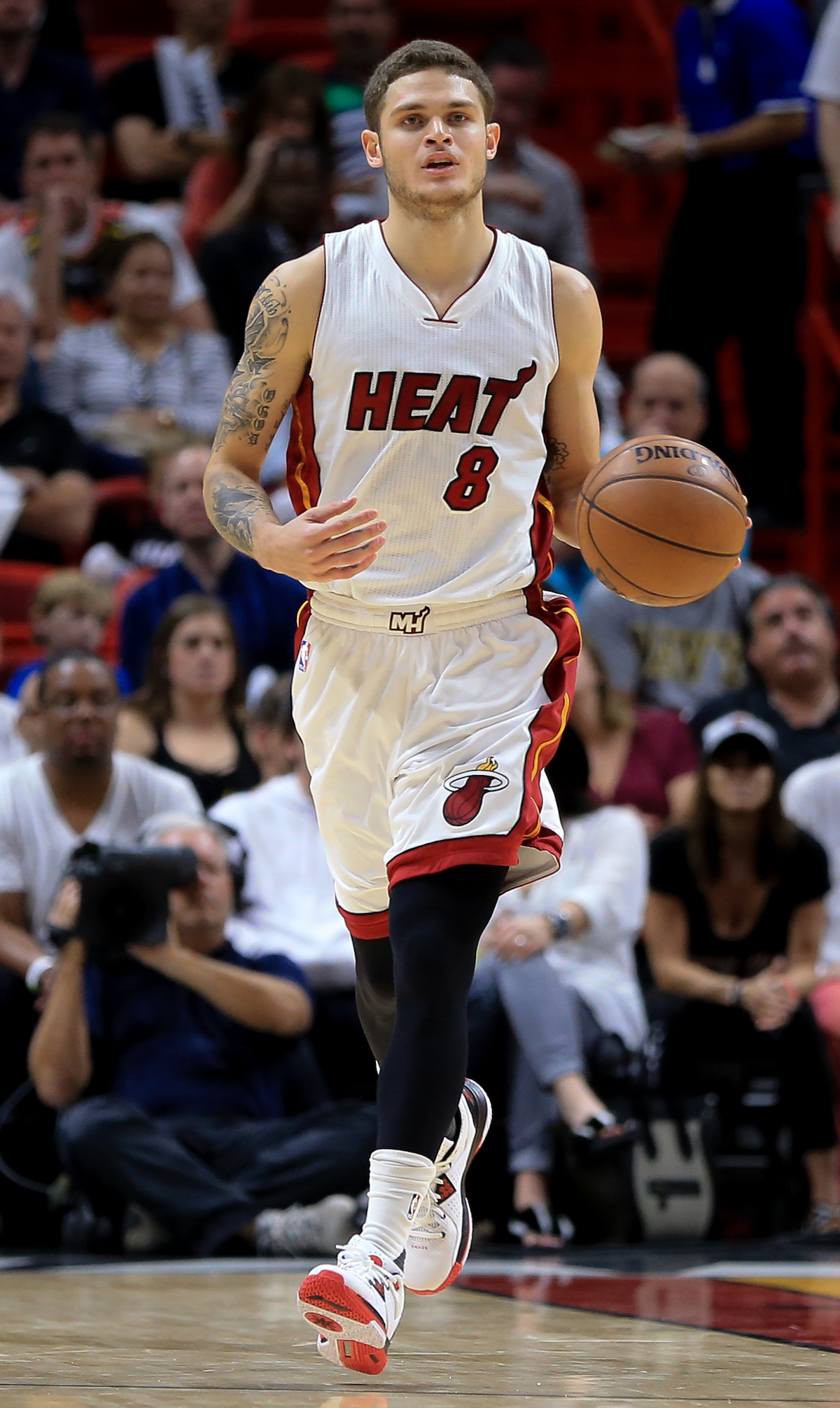
- Suns to acquire Heat‘s pick (top-seven protected). Currently projected to be No. 23.
- Hawks to acquire Timberwolves‘ pick (lottery-protected). Currently projected to be No. 25.
- Nets to acquire Raptors‘ pick (lottery-protected). Currently projected to be No. 27.
- Hawks to acquire Rockets‘ pick (top-three protected). Currently projected to be No. 28.
We’ll start with the picks that are locks to change hands. The four selections listed above appear very likely to fall somewhere in the 20s, well out of their protected ranges.
Given how streaky the Heat have been over the last year and a half, it’s possible they could slip down the standings a little, but their pick is extremely unlikely to land in the top seven, so the Suns will get it this season. That actually could be good news for the Heat, since it would create a little flexibility for them when it comes to trading future first-rounders going forward.
Worth watching:
- Cavaliers to acquire Nets‘ pick (unprotected). Currently projected to be No. 7 or 8 (tie).
- Timberwolves to acquire Thunder‘s pick (lottery-protected). Currently projected to be No. 21 or 22 (tie).
Since the Nets‘ first-rounder is unprotected, there’s no question that Brooklyn will lose it, but it’s still a pick worth monitoring all season. Its value could increase or decrease significantly depending on how the Nets play in the second half, and there’s also no guarantee that the Cavaliers will still own it by the time June rolls around.
As for Oklahoma City’s pick, we nearly put the club in the “no drama” list above, but OKC is only two games ahead of the ninth-seeded Nuggets. Even though the Thunder seem very likely to hang onto a playoff spot in the West, it’s probably a bit premature to call them a lock. Nonetheless, the Timberwolves should get that pick.
Very much up in the air:
- Sixers or Celtics to acquire Lakers‘ pick (Sixers receive it if it’s No. 1 or between 6-30; Celtics get it if it’s between 2-5). Currently projected to be No. 5.
- Suns to acquire Bucks‘ pick (top-10 protected and protected between 17-30). Currently projected to be No. 16, 17, 18, or 19 (four-way tie).
The fate of the Lakers‘ 2018 pick is one of the most fascinating off-court storylines of this season. Both the Sixers and Celtics have very solid foundations of young talent in place already, so acquiring another top-10 pick would just be an added bonus for either team. The Lakers currently have the fifth-worst record in the NBA, but even if they finish the season in that same slot, the lottery could flip the pick from Boston to Philadelphia — the Sixers would get the pick if the Lakers won the lottery, or if another team leapfrogged L.A. and slid the Lakers’ pick out of the top five.
Meanwhile, while the Bucks have been up and down this season, they seem like a good bet to make a second-half push and avoid finishing in the middle of the pack. For now though, their first-rounder is still very much in play for the Suns, who would receive it if it falls in the 11-16 window.
Seven Southeast Trade Candidates To Watch
The NBA trade deadline is just over three weeks away, and there’s no shortage of players around the league who could change teams. Over the next week, we’ll be taking a closer look at some of those top trade candidates, breaking them down by division.
While our focus will be primarily on teams expected to be sellers at the deadline, our lists may also include some players on contenders who could be used as trade chips when those teams look to make upgrades.
We’re examining the Southeast Division today, so let’s dive in and identify seven players who could be on the move on or before February 8…
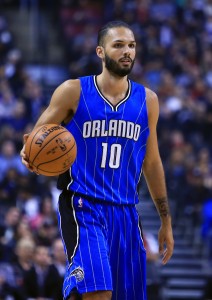 Evan Fournier, SG (Magic): Fournier has been the subject of several trade rumors already in 2018. Marc Stein of the New York Times said this week that rival executives expect Orlando to actively shop him; Steve Kyler of Basketball Insiders suggested last week that Fournier is the Magic player drawing the most trade interest from rival teams; and ESPN’s Adrian Wojnarowski reported earlier in January that the Pistons pursued a deal for the veteran sharpshooter. Fournier, who is scoring a career-high 18.0 PPG this season to go along with a very respectable .396 3PT%, would certainly be an intriguing addition to a contender, but his contract may complicate matters. He’s owed $17MM annually through at least 2019/20, with a $17MM player option for 2020/21. Matching that salary with contracts the Magic are willing to take on won’t necessarily be easy for Fournier’s suitors.
- Nikola Vucevic, C (Magic): Vucevic, Fournier’s frontcourt teammate, has the more palatable contract of the two — he’s earning $12.25MM this season and then will make $12.75MM in the final year of his deal in 2018/19. That single year of control beyond this season may make him attractive to teams that want more than a rental but prefer not to make long-term commitments. Vucevic is also enjoying a nice bounce-back year after struggling in 2016/17, averaging 17.4 PPG and 9.3 RPG. He has even added a semi-reliable three-point shot to his game. However, a broken hand suffered last month throws a wrench into the Magic‘s chances of moving Vucevic. That injury is expected to sideline the big man for six to eight weeks, which would put him on track to return around the time of the deadline, or right after it. Any team with interest in Vucevic will be keeping a very close eye on his recovery process over the next few weeks.
- Dewayne Dedmon, C (Hawks): While DeAndre Jordan‘s name has popped up in trade rumors more frequently, Dedmon looks to me like a more prudent investment for teams targeting centers. With an increased role in Atlanta this season, Dedmon is enjoying a career year, posting 10.8 PPG and 7.8 RPG. And after attempting just one three-pointer in his first four NBA seasons, Dedmon has made 16 of 39 (41.0%) from outside in 2017/18. Although he missed 19 games with a left tibia stress reaction, Dedmon is back on the court now, and at $6MM, his cap hit makes him an attractive target for contenders with potential luxury-tax concerns and a need at center, such as the Cavaliers and Bucks. The only downside is that his $6.3MM player option for 2018/19 means he’ll probably opt out this summer and would be a rental for any club acquiring him.
- Ersan Ilyasova, PF (Hawks): Like Dedmon, Ilyasova has a reasonable $6MM cap charge for this season, and will be eligible for unrestricted free agency this summer. However, Ilyasova figures to receive interest from teams looking for a different sort of skill set — he won’t offer much rim protection or rebounding for a big man, but Ilyasova’s ability to shoot three-pointers (.393 3PT% this season) is valuable for a club looking to stretch the floor and give another frontcourt player more room to operate down low. A return to the Sixers might make some sense for Ilyasova. I could also see him fitting in with the Thunder in the role that Patrick Patterson has struggled to fill. Ilyasova is unlikely to push a team over the top, but he’s the sort of player who should be capable of making an important shot or two in the postseason.
- Marco Belinelli, SG (Hawks): Speaking of shot-makers, teams in need of outside shooting may prefer a backcourt option like Belinelli over a stretch four like Ilyasova. The Italian swingman has been as effective as ever from three-point range this year, making 39.2% of his attempts, and playing for a new team is unlikely to derail him — he’s currently suiting up for his eighth NBA squad, so he’s accustomed to bouncing around. At $6.6MM, Belinelli is yet another Hawk with an affordable expiring deal, and I expect him to be on the move in the coming weeks if Atlanta can extract a solid second-round pick from a trade partner.
- Marvin Williams, F (Hornets): Identifying the top trade candidates on the Hornets is tricky. Some of the team’s higher-paid players, including Nicolas Batum, have negative trade value, but Charlotte likely won’t want to move a bargain like Kemba Walker or a prospect like Malik Monk. If the team wants to cut long-term costs and avoid flirting with the luxury-tax line again next season, Williams would make the most sense as a trade chip. He’s well-compensated, but at $14MM in 2018/19 and $15MM (player option) in 2019/20, his contract isn’t as pricey or as lengthy as Batum’s. Williams is also enjoying an excellent season as a three-and-D wing in Charlotte, with career highs in FG% (.485) and 3PT% (.448). There haven’t been many rumors swirling around Williams yet, but the Hornets are generally active at the deadline, and the former UNC standout is one of a small handful of Charlotte players that would appeal to contenders — and that the Hornets might be open to moving.
- Hassan Whiteside, C (Heat): Whiteside’s super-sized contract, which will pay him $25.4MM next year and features a $27MM+ player option for 2019/20, would be a major roadblock to a deal. There have also been no legitimate indications that the Heat are interested in dealing him. Still, Bam Adebayo has been impressive in his rookie season, and Miami’s go-to fourth quarter lineups no longer include Whiteside. Since returning from his knee injury last month, Whiteside has averaged just 23.6 minutes per game, way down from the 32.6 he averaged last season. I don’t expect Whiteside to go anywhere at this point, but there are hints that the Heat would consider the possibility.
Here are a few more potential Southeast trade candidates to monitor:
- Elfrid Payton, PG (Magic): Rival executives reportedly expect the Magic to shop Payton and Mario Hezonja.
- Kent Bazemore, G/F (Hawks): Bazemore is said to be drawing some interest, and the Hawks are open to listening.
- Justise Winslow, F (Heat): Winslow has been identified as a potential trade chip and probably makes more sense in a deal than Whiteside.
- Kemba Walker, PG (Hornets): Walker almost certainly won’t be dealt by February 8, but the Hornets appear lottery-bound and the point guard’s free agency looms in 2019, so he’s worth watching.
- Ian Mahinmi, C (Wizards): The Wizards surely wouldn’t mind moving Mahinmi and his over-sized contract, which is out of proportion with his modest role. He has negative value though, so Washington would likely have to attach draft picks to ship him out.
Community Shootaround: All-Star Starters
The NBA’s new All-Star format will re-shuffle the Eastern and Western Conference players once the 24 All-Stars are selected, but up until that point, the voting process remains essentially unchanged. That means that, as usual, fan voting will help determine the 10 players – five from each conference – dubbed starters for next month’s game. Voting concluded last night, and this year’s All-Star starters will be announced later in the week.
As of the last update on voting results, there were no huge surprises in either conference. In the East, Kyrie Irving and DeMar DeRozan were the top backcourt vote-getters, while LeBron James, Giannis Antetokounmpo, and Joel Embiid led the way in the frontcourt. Out West, teammates Stephen Curry, Kevin Durant, and Draymond Green were all among the top vote-getters, with James Harden and Anthony Davis joining them.
Those 10 players would be worthy starters, but they’re hardly the only candidates for the job. In an ESPN Insider piece published several days ago, ESPN’s Kevin Pelton makes the case for Al Horford and DeMarcus Cousins to join the starting ranks for the All-Star Game. Last week, Eddie Sefko of The Dallas Morning News argued on behalf of Kristaps Porzingis in the East, and left out some big names in the West in favor of Russell Westbrook, LaMarcus Aldridge, and Karl-Anthony Towns.
There are other players – including Jimmy Butler and Victor Oladipo – with legitimate cases for starting roles, but we’re limited to 10, five in each in conference. With that being said, which five Eastern and five Western players do you think should be selected as All-Star starters for 2017/18?
Jump into the comment section below to share your thoughts!
Checking In On NBA’s Two-Way Contracts
Two-way contracts were introduced in the NBA’s newest Collective Bargaining Agreement, which went into effect for the 2017/18 league year. That means this is the first season that NBA teams have had two-way deals at their disposal, so we’re learning as we go along how those clubs intend to use them and how much turnover there will be in the two-way ranks.
[RELATED: Hoops Rumors Glossary: Two-Way Contracts]
Over the past several days, there has been plenty of turnover — January 15 represented the deadline for teams to sign players to two-way contracts for the 2017/18 season. As such, several teams moved to fill empty two-way slots in recent days, while other teams decided to replace one two-way player with another before it was too late to do so.
By the time the dust settled, 59 of 60 two-way slots around the NBA had been filled. The Wizards are the only club not to use both of its two-way slots. Washington is one of just four NBA teams that doesn’t have a G League affiliate of its own, limiting the control the franchise has over the development of its two-way players. Additionally, the Wizards’ lone two-way player, Devin Robinson, has yet to appear in an NBA game for Washington, so perhaps the club felt adding another two-way player would be an unnecessary investment.
Another deadline looms for two-way players, as all their 2017/18 salaries are set to become fully guaranteed on January 20. It’s possible that a two-way player could be waived before then, denying him his full-season salary, but I don’t expect we’ll see many of those moves — two-way players have very modest salaries, which don’t count against the cap, and replacements can no longer be signed, so there would be little upside to cutting a player at this point.
The full list of players currently on two-way contracts is below, sorted by team. Once these players reach their 45-day NBA limit (or a pro-rated version of that limit), they’ll no longer be eligible to play in NBA games unless their contracts are converted to standard NBA deals.
Atlanta Hawks
- Josh Magette, PG
- Andrew White, G/F
Boston Celtics
- Kadeem Allen, G
- Jabari Bird, SG
Brooklyn Nets
- Milton Doyle, G
- James Webb III, SF
Charlotte Hornets
- Mangok Mathiang, C
- Marcus Paige, G
Chicago Bulls
- Ryan Arcidiacono, PG
- Antonio Blakeney, SG
Cleveland Cavaliers
- John Holland, G/F
- London Perrantes, PG
Dallas Mavericks
- Jalen Jones, SF
- Johnathan Motley, PF
Denver Nuggets
- Torrey Craig, SF
- Monte Morris, PG
Detroit Pistons
- Kay Felder, PG
- Reggie Hearn, SG
Golden State Warriors
- Chris Boucher, PF
- Quinn Cook, PG
Houston Rockets
- Markel Brown, SG
- R.J. Hunter, SG
Indiana Pacers
- Ben Moore, F
- Edmond Sumner, PG
Los Angeles Clippers
- Tyrone Wallace, PG
- C.J. Williams, SG
Los Angeles Lakers
- Alex Caruso, G
- Gary Payton II, PG
Memphis Grizzlies
- Myke Henry, F
- Kobi Simmons, PG
Miami Heat
- Derrick Jones, SF
- Derrick Walton Jr., PG
Milwaukee Bucks
- Xavier Munford, SG
- Marshall Plumlee, C
Minnesota Timberwolves
- Anthony Brown, SG
- Amile Jefferson, PF
New Orleans Pelicans
- Charles Cooke, SG
- Mike James, PG
New York Knicks
- Isaiah Hicks, PF
- Luke Kornet, C
Oklahoma City Thunder
- P.J. Dozier, SG
- Daniel Hamilton, G/F
Orlando Magic
- Jamel Artis, SF
- Adreian Payne, PF
Philadelphia 76ers
- Demetrius Jackson, PG
- James Young, SG
Phoenix Suns
- Danuel House, SF
- Alec Peters, PF
Portland Trail Blazers
- Wade Baldwin, PG
- C.J. Wilcox, SG
Sacramento Kings
- Jack Cooley, PF
- JaKarr Sampson, SF
San Antonio Spurs
- Matt Costello, C
- Darrun Hilliard, G/F
Toronto Raptors
- Lorenzo Brown, PG
- Malcolm Miller, SF
Utah Jazz
- Erik McCree, F
- Georges Niang, PF
Washington Wizards
- Devin Robinson, SF
Community Shootaround: First-Half MVP
We’ve reached the midpoint of the NBA season and several players have stood out during the first half of the schedule.
Certainly, last season’s runner-up in the MVP chase has made his mark once again. Entering Monday’s action, Rockets superstar guard James Harden topped the scoring column by a significant margin. He was averaging 32.3 PPG before being sidelined by a hamstring issue. Led by Harden, who is expected to return this week, the Rockets got off to a 25-4 start.
The Greek Freak, Bucks point forward Giannis Antetokounmpo, leads the All-Star voting while taking another step in his development. He’s averaging 28.4 PPG, second only to Harden, while also ranking in the Top 20 in rebounding, steals and blocks for a playoff contender.
LeBron James is showing no signs of wear and tear despite all the minutes he’s logged during his storied career. The Cavaliers forward ranks third in scoring (27.1 PPG), 24th in rebounding (8.0) and fourth in assists (8.8) while being forced to carry a heavy load with Kyrie Irving in Boston and Isaiah Thomas recently returning from a hip injury.
Speaking of Irving, he’s doing quite well in his new home. The Celtics point guard is averaging 24.0 PPG as Boston cruised into the second half of the season atop the East despite the season-opening loss of Gordon Hayward.
Kevin Durant (26.3 PPG) is enjoying another banner season and carried the Warriors for a stretch when Stephen Curry suffered an ankle injury. Jimmy Butler (21.5 PPG) might not boast the gaudy numbers of the aforementioned group but he’s sparked the resurgent Timberwolves with his defensive intensity and offensive versatility.
That leads us to today’s question: Which player do you feel was the league’s first-half MVP and what is your reasoning behind your selection?
Please weigh in below in our comments section. We look forward to your opinion on this topic.
2018 Free Agent Stock Watch: New York Knicks
The Knicks may not end up in the Eastern Conference playoff picture, but there’s no denying that the franchise is headed in a better direction than it was this time last year. Addition by subtraction in the organization has given the rest of the franchise room to grow.
Although the Knicks have shown that they’re capable of winning ball games this year, it would be foolish for the team to abandon what has morphed into an organic rebuild to chase short-term gains.
This summer, the Knicks would be wise to stick to their plan and manage their growth responsibly. While they’ll have their hands tied financially where it matters most, how they handle their few free agents could shed light on their mentality heading forward.
Ron Baker, PG, 25 (Down) – Signed to a two-year, $8.9MM deal in 2017
Baker endeared himself to head coach Jeff Hornacek last season and immediately became the wealthiest third-or-fourth-string point guard in the NBA. The Knicks may envision Baker as Frank Ntilikina‘s eventual primary backup, hence their paying more than they needed to re-sign him, but that doesn’t even matter. As much as we all love Ron Burgundy, he won’t find more than the $4.5MM 2018/19 player option he has with the Knicks anywhere else in the NBA.
Michael Beasley, PF, 29 (Up) – Signed to a one-year, $2.1MM deal in 2017
There’s simply no denying that Beasley is capable of filling the stat sheet when given an opportunity. He’s done it sporadically throughout his career but most recently last month while Tim Hardaway Jr. nursed a leg injury. Beasley signed a one-year, “prove it” deal with the Knicks last summer, but the only thing up for debate is whether or not he can dutifully transition back out of the Madison Square Garden limelight and become a consistent producer off the bench for a team trending in the right direction. Beasley’s likely too old to attract attention from a team amid a traditional rebuild, so he’ll have to establish himself as an emotionally mature, volume scorer off the bench if he wants to get paid. If he does, I’d buy in.
Jarrett Jack, PG, 34 (Up) – Signed to a one-year, $2.4MM deal in 2017
The Knicks brought a face familiar to New Yorkers in to keep the starting point guard position warm until Ntilikina is ready to take over. By all accounts, the former Nets guard has done everything one could expect from a 34-year-old journeyman who had played just 34 games across the previous two seasons. The Knicks will presumably have the option to bring him back on the cheap next season if they’d like to extend their current backcourt arrangement, but he’ll have more interest from contenders now that he’s shown he can stay on the court.
Enes Kanter, C, 26 (Up) – Signed to a four-year, $70MM deal in 2015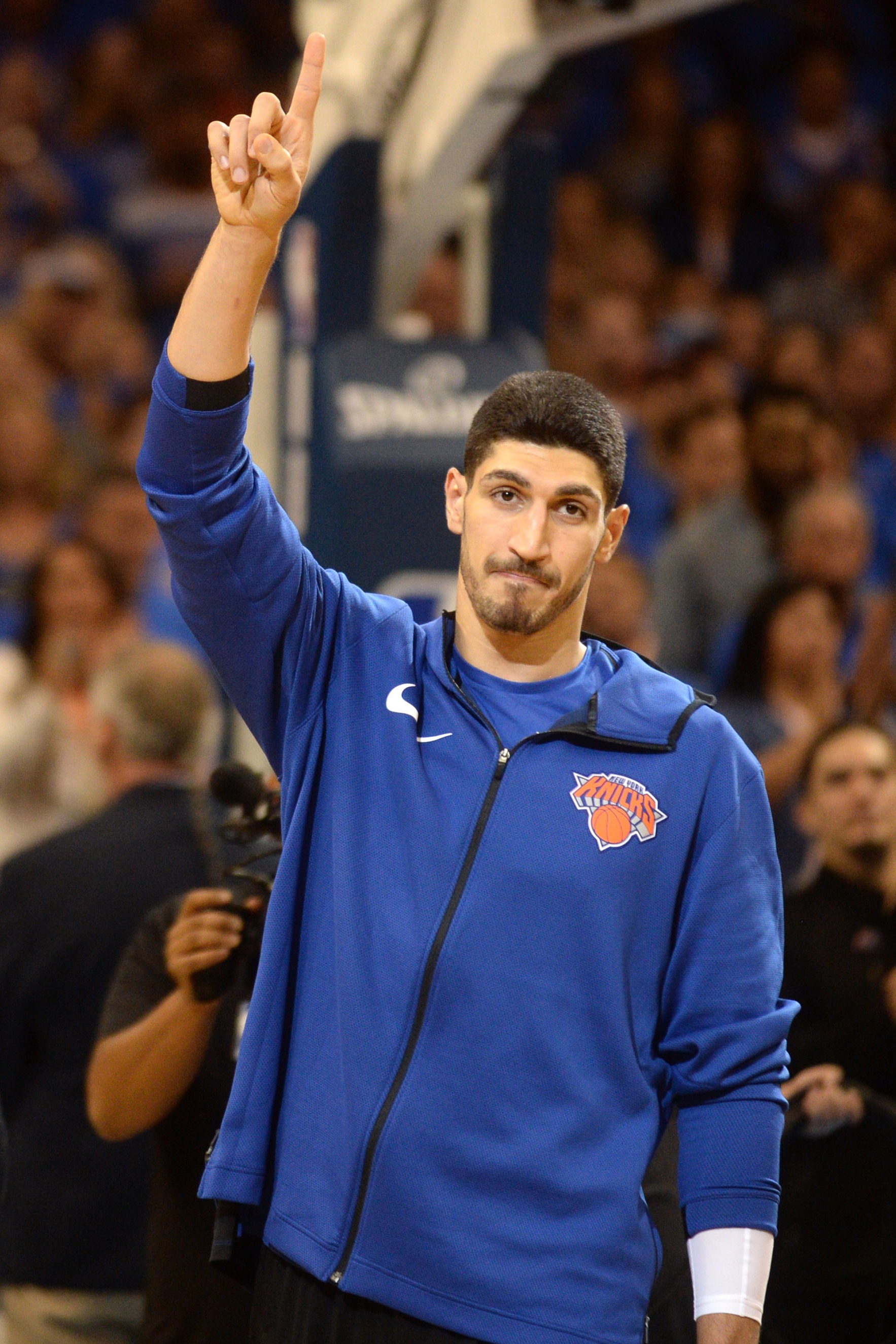
A move to the spotlight in New York City has brought Kanter’s value close to where it was in 2016 when he signed a substantial contract extension in the wake of an excellent half-season stint with the Thunder. Kanter has deficiencies, no doubt, but the basketball collective seemed to overreact slightly when he didn’t immediately live up to his lofty contract in the first few years of the NBA’s Small Ball Era. I expect Kanter back in New York with his 2018/19 player option because the city seems to suit him and I can’t envision a situation in which he’d be more immediately valuable than the one he lucked into thanks to the Carmelo Anthony deal.
Doug McDermott, SF, 26 (Down) – Signed to a four-year, $10.4MM deal in 2014
While McDermott has done a fine job providing solid minutes off the bench in his first Knicks season, the biggest takeaway from his 2017/18 campaign so far is that his ceiling is right about where people thought it was after a ho-hum career start in Chicago. McDermott could be a low-key valuable add for a team seeking a minor piece, though the Knicks may be better off letting him walk and freeing up the space for a more ambitious signing.
Kyle O’Quinn, C, 28 (Up) – Signed to a four-year, $16MM deal in 2015
O’Quinn is a consistently efficient big man who has bulldozed his way into New York’s frontcourt logjam because he’s simply too effective to keep on the sidelines. Despite his production, however, the Knicks would benefit from flipping him for something, because it would clear more minutes for players like Kanter and Willy Hernangomez. Wherever O’Quinn ends up, he would hit free agency this summer as a lumbering big man in a bear market. For that reason, expect him back on his $4.3MM player option with an eye on 2019.
Photo courtesy of USA Today Sports Images.
Weekly Mailbag: 1/8/18 – 1/14/18
We have an opportunity for you to hit us up with your questions in this, our weekly mailbag feature. Have a question regarding player movement, the salary cap or the NBA draft? Drop us a line at HoopsRumorsMailbag@Gmail.com.
Do you think LeBron James has a good chance of playing for the Lakers next season as he just bought a new house in Los Angeles? — Greg Dizon
The LeBron-to-L.A. rumors started shortly after last year’s NBA Finals and will keep going until he announces a decision this summer. The Lakers seem committed to clearing enough cap space to offer two maximum contracts, and LeBron surely recognizes the historical significance of lifting L.A. back to championship status. Nobody knows for sure what he is thinking or if he plans to give much though to free agency until this season is done. If he has taken a good look at the Lakers, he has surely noticed the chaos of the past week related to LaVar Ball’s comments about coach Luke Walton and the delayed response from the team’s front office. He would also see a team with a 15-27 record and a recent nine-game losing streak. The best-case scenario for the Lakers would be to sign James and Paul George, but that means getting rid of Julius Randle and Jordan Clarkson first. Would that roster be enough be enough to get through the West with the Warriors, Rockets and Spurs standing in the way? That thought will influence LeBron’s decision much more than a new home.
What kind of package would Andre Drummond bring in a trade? — Mark Holmes
Drummond’s improvement this season makes him much less likely to be traded than he was a year ago. Coach/executive Stan Van Gundy’s concerns about his intensity level seem to be a thing of the past, and Drummond has added a playmaking element to his game, averaging a career-best 3.8 assists per night to go with a league-leading 15.0 rebounds. Drummond is only 24 and is signed through 2019/20 with a player option for the following season. He has become the cornerstone of the franchise and won’t be dealt unless the Pistons decide to rebuild. It’s hard to picture an offer the Pistons might consider right now, but if they want to get out of the most expensive years of Drummond’s contract and replace Reggie Jackson at point guard, they could match salary by sending them to Miami for Goran Dragic and Hassan Whiteside.
What are the latest Bucks trade rumors besides DeAndre Jordan, Zaza Pachulia, JaVale McGee and Tyson Chandler? — ROBZ, via Twitter
Milwaukee is obviously after centers, and we noted in a recent Mailbag that Knicks backup Kyle O’Quinn is a possibility. They will continue to make a push for Jordan until the February 8 trade deadline and will probably opt for one of the lower-cost options if they can’t work out a deal with the Clippers. If you want a complete wild card to consider, how about Dwight Howard? His salary is similar to Jordan’s ($23MM vs. $22,642,350), with the main difference being that Howard is under contract for another year at more than $23.8MM, while Jordan has a player option. The Hornets are sliding out of the East race at 16-25 and probably wouldn’t mind unloading Howard’s contract. His reputation has suffered in recent years, but Howard’s numbers have been fairly steady since he left Orlando. He is averaging 15.3 points, 12.3 rebounds and 1.3 blocks per night and could give the Bucks everything that Jordan would.
Community Shootaround: Cleveland Cavaliers
A total collapse in Cleveland is almost unthinkable, especially with LeBron James putting up MVP numbers, but the three-time defending Eastern Conference champions are coming off a nightmarish week.
It began with a 28-point loss in Minnesota, followed by a 34-point loss in Toronto. Last night, an early 26-6 lead turned into a 97-95 loss at Indiana. Those games wrapped up a 1-4 road trip for a Cavs team that is now a distant third to the Celtics and Raptors in the race for the best record in the East.
The problems in Cleveland start with defense. The Cavaliers are the second-worst team in the league in points allowed per 100 possessions (109.5), and the roster doesn’t contain many outstanding individual defenders. There’s no rim protection with Kevin Love starting at center, and opponents are taking advantage.
With less than four weeks to go before the trade deadline, Cleveland has to be considering deals to bolster its defense. Rumors have linked the Cavs to Clippers center DeAndre Jordan, but he may not be available now that L.A. is back in the playoff race. The Clippers reportedly want the Nets’ unprotected first-rounder in return, and the Cavaliers are reluctant to part with it.
The core of this Cleveland team has been through mid-season swoons before and has always rebounded in time for the postseason. It’s possible that things will get better on their own, but the Cavs have another tough stretch ahead with the Warriors, Thunder and Spurs coming up in the next 10 days. Cleveland’s lead over the ninth-place Sixers has shrunk to four games in the loss column, and a sense of urgency seems to be developing in the organization.
“We all got to be accountable for our actions, accountable for how well we play, how we play, how hard we play, and what we do for one another,” James said after the blowout in Toronto. “And there were just some plays that you should come up with, that you should make, and when you’re losing, you tend to not wanna make those plays, or tend to let some plays get away from you. And we can’t afford that right now the way we’re playing ball. So just trying to hold everybody accountable and move on, which we did.”
We want to get your input. What moves do the Cavaliers need to make before the deadline to keep their spot as the East’s best team? Jump into the comments section below and give us your feedback.
Hoops Rumors Originals: 1/6/18 – 1/13/18
Every week, we at Hoops Rumors strive to create interesting original content to complement our news feed. Below are our original segments and features from the last 7 days:
- Chris Crouse offered fantasy hoops advice focusing on Tyler Johnson and Josh Richardson in the wake of Dion Waiters‘ season-ending injury, as well as Eric Gordon and Jabari Parker, among others.
- In two different Community Shootaround posts, we asked:
- After being waived by the Lakers, which team is now the best fit for Andrew Bogut? Do you believe he can still help a contender?
- In other Lakers news, what should the team do, if anything, in response to LaVar Ball?
- In a Weekly Mailbag segment, Arthur Hill answered questions involving trade targets of the Wizards, Pistons, and Blazers.
- Luke Adams recapped in detail the recent non-guaranteed contract decisions around the NBA.
- We reminded our readers of the 10-Day Contract Tracker feature.
- Our Free Agent Stock Watch focused on the Sacramento Kings.
Fantasy Hoops: Heat, Parker, Fultz, Rockets
We’re at the halfway mark in the 2017/18 regular season and Hoops Rumors wants to help you dominate in both season-long and daily fantasy leagues. Here are some notes and analysis from around the NBA:
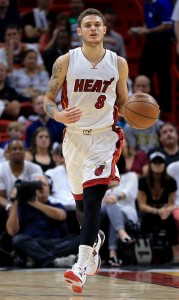 Check your waiver wire for Tyler Johnson (available in over 80% of ESPN leagues). The Heat combo guard is dealing with a pinched nerve, but with Dion Waiters expected to miss the remainder of the season, Johnson becomes a must add. Over his last 11 games played, the 25-year-old is averaging 15.6 points, 4.5 rebounds and 1.3 steals per contest.
- Heat swingman Josh Richardson becomes even more valuable if Waiters does, in fact, miss the rest of the season. Over his last six games, Richardson is averaging 14.2 points, 4.5 assists, 1.5 steals and 1.3 blocks per game while knocking down 1.7 shots per night from behind the arc.
- Bucks forward Jabari Parker is making progress and is expected to return before the All-Star break. Although he’s owned in over 30% of ESPN leagues, his talent warrants a higher ownership percentage.
- Is it time to pick Markelle Fultz back up? I’m bearish on his game, but the No. 1 overall pick apparently looked good in five-on-five drills earlier in the week. For those who don’t need immediate production and have a roster spot to spare, the Sixers guard worth an add.
- Eric Gordon has benefited since James Harden exited the Rockets‘ lineup with a hamstring injury. The shooting guard is averaging 23.2 points per game (16th in the NBA over that stretch) on nearly 19 shot attempts per contest (13th in the league) since the game in which Harden suffered his injury. Gordon isn’t the only player to benefit from The Beard’s absence. Both Gerald Green and Clint Capela are seeing their fantasy stock rise, as we noted in last week’s edition of Fantasy Hoops. However, now might be the time to trade any of the three, as these next couple weeks will likely be the high point for each of their season-long values.
- Gordon is a good daily play tonight against the Suns. Phoenix has allowed the second-most points and sixth-highest field goal percentage to opposing shooting guards this season.
- Devin Booker is also a good play tonight, as no team has allowed the opposing shooting guards to make a higher percentage of their shots than the Rockets have this season.